


Complete Guide to Damp and Timber Report Cost in 2025: What UK Property Owners Need to Know
Discovering moisture damage or timber decay in your property can be a homeowner’s worst nightmare, but understanding the damp and timber report cost before commissioning an inspection can help you budget effectively and make informed decisions about your property’s structural integrity.
Whether you’re buying a new home, selling an existing property, or dealing with suspected moisture issues, a professional damp and timber survey provides crucial insights into potential problems that could cost thousands to remedy if left untreated. The investment in a comprehensive report often saves property owners significant money in the long run by identifying issues early and providing clear guidance on necessary remedial work.
Key Takeaways
• Average damp and timber report costs range from £300-£800 depending on property size, location, and complexity of inspection required
• Regional variations significantly impact pricing, with London and Southeast England commanding premium rates compared to Northern regions
• Property size and type directly influence survey duration and cost, with larger or older properties requiring more extensive inspection
• Additional services such as thermal imaging, moisture mapping, and detailed remedial specifications can increase overall report costs by 20-50%
• Choosing qualified surveyors with relevant certifications ensures comprehensive reporting that meets insurance and mortgage requirements
Understanding Damp and Timber Survey Fundamentals
What Is a Damp and Timber Report?
A damp and timber report represents a comprehensive assessment of a property’s structural timber and moisture-related conditions. Professional surveyors examine wooden elements throughout the building, including floor joists, roof timbers, window frames, and structural beams, while simultaneously investigating potential damp issues such as rising damp, penetrating damp, and condensation problems.
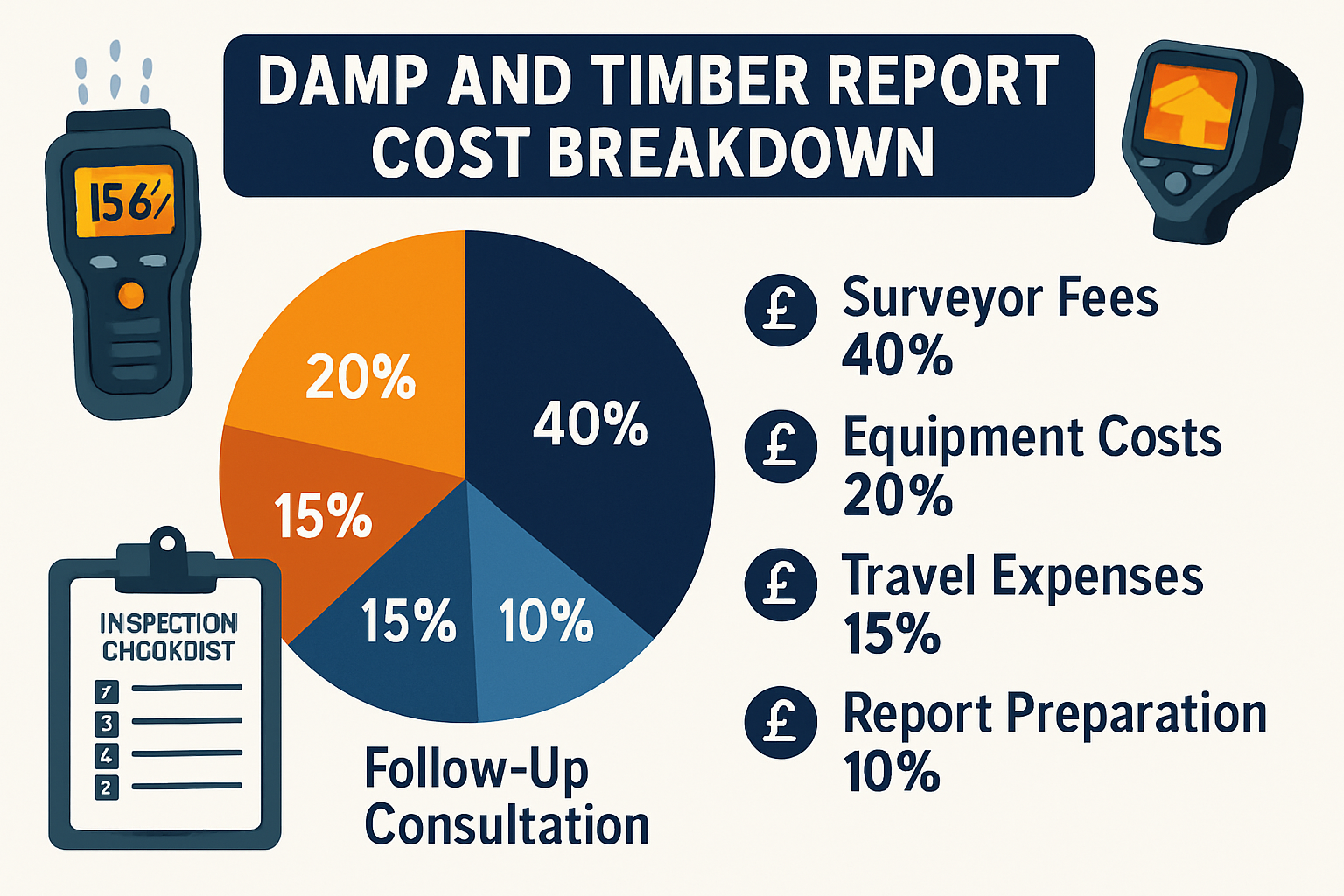
The inspection process involves both visual examination and technical testing using specialized equipment including moisture meters, thermal imaging cameras, and endoscopes to access hidden areas. Surveyors document their findings in a detailed report that identifies existing problems, assesses the extent of damage, and provides recommendations for remedial treatments.
When Do You Need a Damp and Timber Survey?
Several situations warrant commissioning a professional damp and timber inspection:
Property Purchase Scenarios:
- Buying older properties (pre-1960s construction)
- Properties with visible signs of damp or timber damage
- Buildings with previous damp treatment history
- Mortgage lender requirements for specialist surveys
Existing Property Concerns:
- Musty odors or visible mold growth
- Peeling paint or wallpaper
- Warped or damaged wooden floors
- Condensation issues on windows and walls
Understanding party wall procedures can be equally important when planning remedial work that might affect neighboring properties.
Types of Damp and Timber Surveys Available
Different survey types cater to varying needs and budgets:
| Survey Type | Duration | Coverage | Typical Cost Range |
|---|---|---|---|
| Basic Visual Survey | 1-2 hours | Surface inspection only | £200-£400 |
| Standard Survey | 2-4 hours | Visual + moisture testing | £350-£600 |
| Comprehensive Survey | 4-6 hours | Full technical assessment | £500-£800 |
| Specialist Investigation | 6+ hours | Detailed forensic analysis | £700-£1,200+ |
Detailed Breakdown of Damp and Timber Report Cost Factors
Property Size and Complexity Impact on Pricing
The damp and timber report cost varies significantly based on property characteristics. Larger properties require more time for thorough inspection, while complex layouts with multiple levels, extensions, or converted spaces demand additional expertise and equipment.
Property Size Categories:
- Small properties (1-2 bedrooms): £300-£500
- Medium properties (3-4 bedrooms): £450-£650
- Large properties (5+ bedrooms): £600-£900
- Commercial properties: £800-£1,500+
Complexity Factors Affecting Cost:
- Age of property – Victorian and Edwardian buildings often require more detailed inspection
- Construction type – Solid wall construction versus cavity walls
- Previous alterations – Extensions and conversions create additional inspection points
- Accessibility issues – Restricted access areas requiring specialized equipment
Geographic Location and Regional Pricing Variations
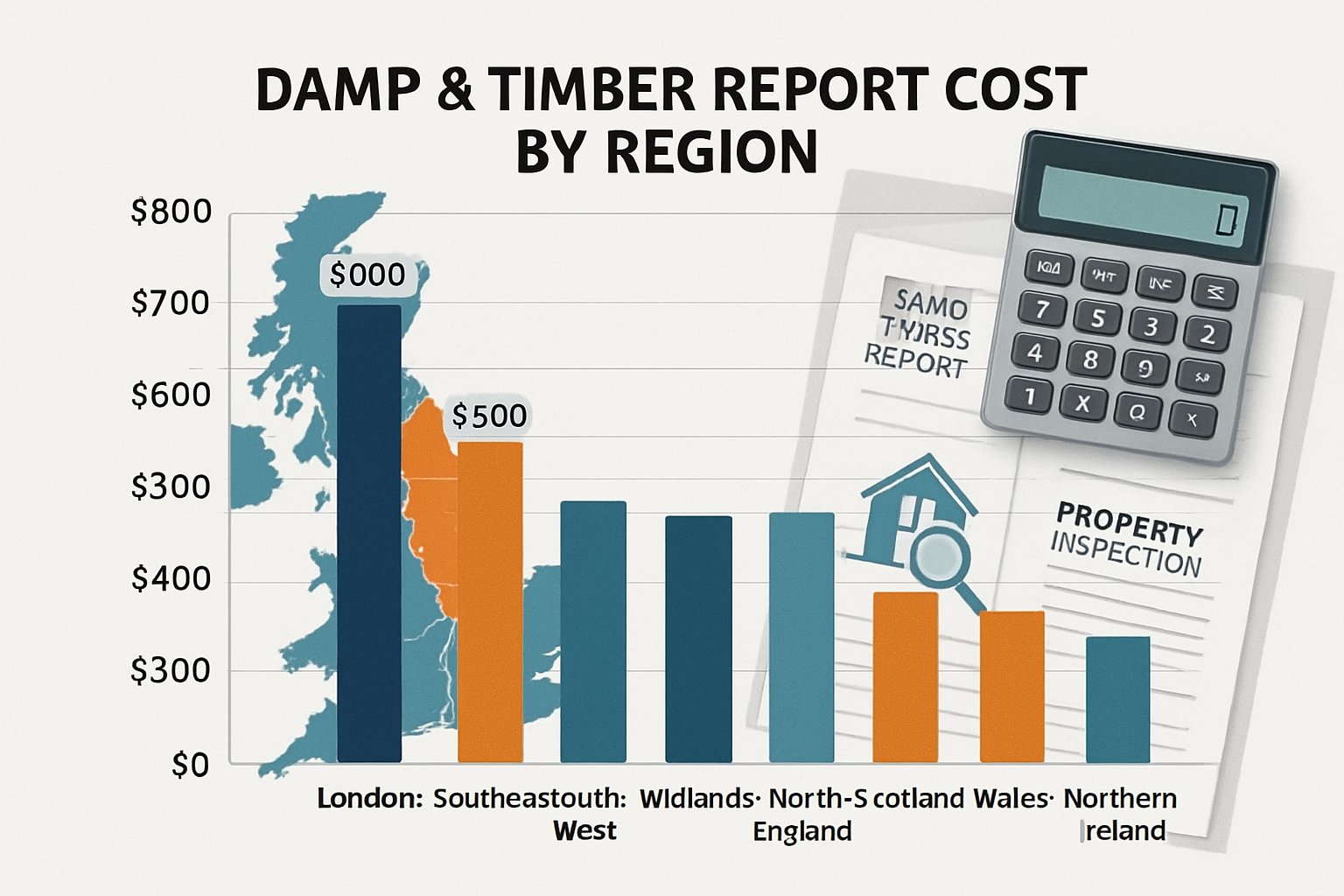
Location significantly influences damp and timber report cost across the UK, with London and the Southeast commanding premium rates due to higher operating costs and demand for specialist services.
Regional Cost Breakdown:
🏙️ London and Southeast: £500-£800+
- Higher surveyor fees reflect increased living costs
- Greater demand for specialist services
- Premium for experienced London-based surveyors
🌍 Southwest and Home Counties: £400-£700
- Moderate pricing reflecting regional economy
- Good availability of qualified surveyors
🏭 Midlands and Northern England: £350-£600
- Competitive pricing in regional markets
- Lower operational overheads
🏴 Scotland and Wales: £300-£550
- Generally lower costs outside major cities
- Regional specialists with competitive rates
When dealing with properties requiring adjoining owner considerations, location-specific expertise becomes particularly valuable.
Surveyor Qualifications and Experience Premium
The expertise level of your chosen surveyor directly impacts both cost and report quality. Highly qualified professionals with specialized certifications command higher fees but provide more comprehensive assessments and detailed recommendations.
Surveyor Qualification Levels:
🎓 Basic Qualified Surveyors:
- RSPH Level 2 certification
- 2-5 years experience
- Cost range: £300-£500
🏆 Experienced Specialists:
- CSRT (Certificated Surveyor in Remedial Treatment)
- 5-10 years experience
- Cost range: £450-£700
👨🎓 Senior Consultants:
- RICS membership
- 10+ years specialized experience
- Cost range: £600-£900+
Additional Services and Enhanced Reporting Options
Many surveyors offer supplementary services that can increase the overall damp and timber report cost but provide valuable additional insights:
Enhanced Diagnostic Services:
- Thermal imaging surveys (+£100-£200)
- Moisture mapping (+£75-£150)
- Air quality testing (+£150-£300)
- Timber species identification (+£50-£100)
Extended Reporting Options:
- Detailed remedial specifications (+£100-£250)
- Cost estimates for repairs (+£75-£150)
- Priority ranking of issues (+£50-£100)
- Follow-up consultation calls (+£100-£200)
Understanding how to keep costs down in related property matters can help inform your approach to managing survey expenses.
Factors That Influence Final Survey Pricing
Property Age and Construction Type
Older properties typically require more extensive investigation due to traditional construction methods and increased likelihood of historic damp or timber issues. Victorian and Edwardian buildings often feature solid wall construction, original timber frames, and basement areas that demand specialized assessment techniques.
Construction Era Considerations:
Pre-1920s Properties:
- Solid wall construction requires different assessment approaches
- Original timber may show signs of historic beetle infestation
- Basement areas prone to rising damp issues
- Survey duration: 4-6 hours typically
1920s-1960s Properties:
- Introduction of cavity wall construction
- Potential for cavity wall tie corrosion
- Original damp proof courses may be failing
- Survey duration: 3-4 hours typically
Post-1960s Properties:
- Modern construction standards
- Focus on condensation and ventilation issues
- Newer timber treatments and materials
- Survey duration: 2-3 hours typically
Accessibility and Safety Requirements
Properties with restricted access areas or safety concerns require additional time and specialized equipment, directly impacting the damp and timber report cost. Surveyors must factor in equipment needs, safety protocols, and extended inspection times when pricing surveys.
Access Challenges Affecting Cost:
- Roof space inspection – requires proper access equipment
- Basement or cellar areas – may need additional lighting and safety measures
- Sub-floor voids – requires crawl space access and protective equipment
- External wall inspection – may require ladders or scaffolding access
Urgency and Scheduling Flexibility
Survey timing can significantly influence pricing, with urgent inspections often commanding premium rates while flexible scheduling may offer cost savings opportunities.
Timing Factors:
- Emergency surveys (within 24-48 hours): +20-30% premium
- Standard booking (1-2 weeks notice): Standard rates
- Flexible scheduling (3+ weeks notice): Potential 5-10% discount
- Off-peak periods (winter months): Possible seasonal discounts
Professional surveyors who also handle building owner responsibilities often provide integrated services that can offer value for complex property situations.
Getting Value for Money: What to Expect in Your Report
Comprehensive Documentation Standards
A professional damp and timber report should provide detailed documentation that justifies the damp and timber report cost through comprehensive analysis and clear recommendations. Quality reports include photographic evidence, technical readings, and prioritized action plans.
Essential Report Components:
📋 Executive Summary
- Clear identification of all issues found
- Priority ranking of problems requiring attention
- Overall property condition assessment
📸 Photographic Evidence
- High-quality images of all identified problems
- Before and after comparison photos where relevant
- Technical equipment readings and measurements
📊 Technical Analysis
- Moisture content readings throughout the property
- Timber condition assessments with species identification
- Structural integrity evaluations
🔧 Remedial Recommendations
- Detailed treatment specifications for each identified issue
- Timeline recommendations for addressing problems
- Estimated cost ranges for remedial work
Professional Standards and Certifications
Ensuring your surveyor meets industry standards provides confidence that your investment in a damp and timber survey delivers genuine value. Look for professionals with recognized qualifications and insurance coverage.
Key Professional Credentials:
- CSRT certification (Certificated Surveyor in Remedial Treatment)
- RICS membership (Royal Institution of Chartered Surveyors)
- RSPH qualifications (Royal Society for Public Health)
- Professional indemnity insurance (minimum £1 million coverage)
Follow-up Support and Consultation
Quality surveyors provide ongoing support beyond the initial report delivery, helping property owners understand findings and implement recommendations effectively.
Post-Survey Support Services:
- Telephone consultation to discuss findings
- Contractor recommendation for remedial work
- Progress monitoring during treatment implementation
- Re-inspection services to verify completed work
When coordinating multiple property assessments, understanding party wall notice procedures ensures comprehensive property management.
Regional Cost Analysis and Market Trends
London and Southeast England Premium Pricing
The capital and surrounding areas consistently show the highest damp and timber report cost due to elevated operational expenses, higher demand for services, and premium positioning of experienced surveyors.
London Market Characteristics:
- Average survey cost: £550-£800
- Premium for urgent surveys: 25-35%
- Specialist consultations: £150-£250 per hour
- Travel charges: Often included within M25
Southeast Regional Factors:
- High property values driving demand for thorough surveys
- Competitive market with numerous qualified surveyors
- Transport links enabling efficient service delivery
- Insurance requirements often demanding comprehensive reporting
Northern England and Scotland Value Opportunities
Regional markets outside the Southeast often provide excellent value for comprehensive damp and timber surveys while maintaining high professional standards.
Northern Market Advantages:
- Competitive pricing: £350-£600 average range
- Local expertise in regional construction types
- Flexible scheduling with shorter waiting times
- Comprehensive service at lower cost points
Scotland-Specific Considerations:
- Climate factors requiring specialized damp assessment
- Traditional construction expertise readily available
- Regulatory knowledge of Scottish building standards
- Value pricing reflecting regional economic conditions
Market Trends Affecting 2025 Pricing
Several factors influence current damp and timber report cost trends across the UK property market:
Demand Drivers:
- Increased awareness of indoor air quality issues
- Insurance requirements becoming more stringent
- Property transaction volumes driving survey demand
- Climate change impacts increasing moisture-related problems
Technology Integration:
- Advanced diagnostic equipment improving accuracy but increasing costs
- Digital reporting platforms enhancing delivery speed
- Thermal imaging standardization becoming expected rather than optional
- Data integration with other property surveys
For properties requiring multiple specialist assessments, coordinating with professional surveyor services can provide integrated solutions and potential cost efficiencies.
Making Informed Decisions About Survey Investment
Cost-Benefit Analysis for Property Owners
Understanding the relationship between damp and timber report cost and potential savings helps property owners make informed investment decisions. A comprehensive survey typically costs less than 1% of most property values while potentially identifying issues worth thousands in remedial work.
Investment Perspective:
💰 Survey Cost vs. Potential Savings:
- Average survey cost: £500
- Typical damp remediation: £2,000-£15,000
- Timber treatment costs: £1,500-£8,000
- Early detection savings: 60-80% of full remediation costs
🏠 Property Value Protection:
- Unaddressed damp issues can reduce property value by 10-20%
- Professional documentation supports insurance claims
- Clear remediation plans facilitate property sales
- Preventive maintenance reduces long-term costs
Choosing the Right Survey Level for Your Needs
Different property situations require varying levels of investigation, and understanding these needs helps optimize the damp and timber report cost relative to value received.
Survey Selection Guide:
🔍 Basic Visual Survey – Best For:
- New properties with no obvious issues
- Recent previous surveys available
- Budget-conscious initial assessments
- Insurance requirement compliance
📋 Standard Comprehensive Survey – Ideal For:
- Most residential property purchases
- Visible signs of potential problems
- Properties over 30 years old
- Mortgage lender requirements
🔬 Detailed Specialist Investigation – Required For:
- Extensive visible damage
- Previous treatment failures
- Commercial property assessments
- Legal dispute documentation
Timing Your Survey for Maximum Value
Strategic timing of damp and timber surveys can optimize both cost and effectiveness while ensuring adequate time for decision-making and remedial planning.
Optimal Timing Strategies:
Property Purchase Timeline:
- Early in buying process – allows negotiation leverage
- After structural survey – coordinates with other assessments
- Before exchange of contracts – provides exit opportunity if needed
- Seasonal considerations – avoid peak moisture periods for accurate readings
Existing Property Maintenance:
- Annual inspections for high-risk properties
- Post-remediation verification – confirms treatment effectiveness
- Insurance renewal periods – maintains coverage compliance
- Pre-sale preparation – addresses issues before marketing
Understanding party wall costs and processes helps coordinate multiple property-related expenses effectively.
Conclusion
Understanding damp and timber report cost empowers property owners to make informed decisions about protecting their most significant investment. With prices typically ranging from £300-£800 depending on property size, location, and survey complexity, professional damp and timber surveys represent excellent value when considering the potential costs of undetected moisture and timber problems.
The key to maximizing value lies in selecting appropriately qualified surveyors who provide comprehensive documentation, clear remedial recommendations, and ongoing support. Regional variations mean property owners outside London and the Southeast can often access high-quality surveys at competitive rates, while those in premium markets benefit from extensive specialist expertise.
Take Action Today:
- Research qualified surveyors in your area with relevant certifications
- Request detailed quotations that specify exactly what’s included in the survey
- Schedule surveys strategically to allow adequate time for decision-making
- Coordinate with other property assessments to maximize efficiency and value
- Maintain documentation for insurance and future property transactions
Investing in professional damp and timber assessment provides peace of mind, protects property values, and often saves thousands in remedial costs through early problem identification. The relatively modest cost of a comprehensive survey represents one of the most cost-effective ways to safeguard your property’s structural integrity and your family’s health.