


The sound of construction equipment echoes through neighborhoods across the UK as 2026 brings an unprecedented surge in housing development. With property values climbing and urban spaces becoming increasingly scarce, homeowners are racing to extend, renovate, and maximize their properties. This construction boom, however, creates a perfect storm for party wall disputes—conflicts that can quickly escalate from minor disagreements to costly legal battles if not managed properly.
Party Wall Agreements in High-Demand Housing Markets: Best Practices for Managing Disputes During Construction Booms has become a critical concern for property owners, surveyors, and construction professionals navigating today's competitive real estate landscape. As construction activity intensifies in densely populated areas, the pressure on shared walls, boundaries, and adjoining structures has never been greater. Understanding how to implement robust documentation practices and effective dispute resolution strategies is essential for protecting both property rights and neighborly relationships during these challenging times.
The housing market's measured expansion in 2026 [3] has created unique challenges for party wall procedures. With more construction projects competing for space in high-demand areas, the traditional approaches to managing party wall agreements must evolve to meet heightened scrutiny and increased neighbor conflicts.
Key Takeaways
- 📋 Documentation is paramount: Comprehensive pre-construction surveys and detailed schedules of condition protect all parties and reduce dispute likelihood by up to 70%
- 🤝 Early communication prevents conflicts: Serving proper party wall notices and engaging neighbors before construction begins significantly reduces dispute escalation
- ⚖️ Professional surveyors are essential: Qualified party wall surveyors provide impartial expertise that facilitates fair agreements and prevents costly litigation
- 💰 Cost management strategies exist: Understanding how to keep party wall costs down while maintaining compliance protects budgets without compromising legal obligations
- 🏗️ Construction boom demands proactive approaches: High-demand housing markets require enhanced dispute prevention protocols and robust monitoring systems throughout the construction process
Understanding Party Wall Legislation in High-Demand Housing Markets
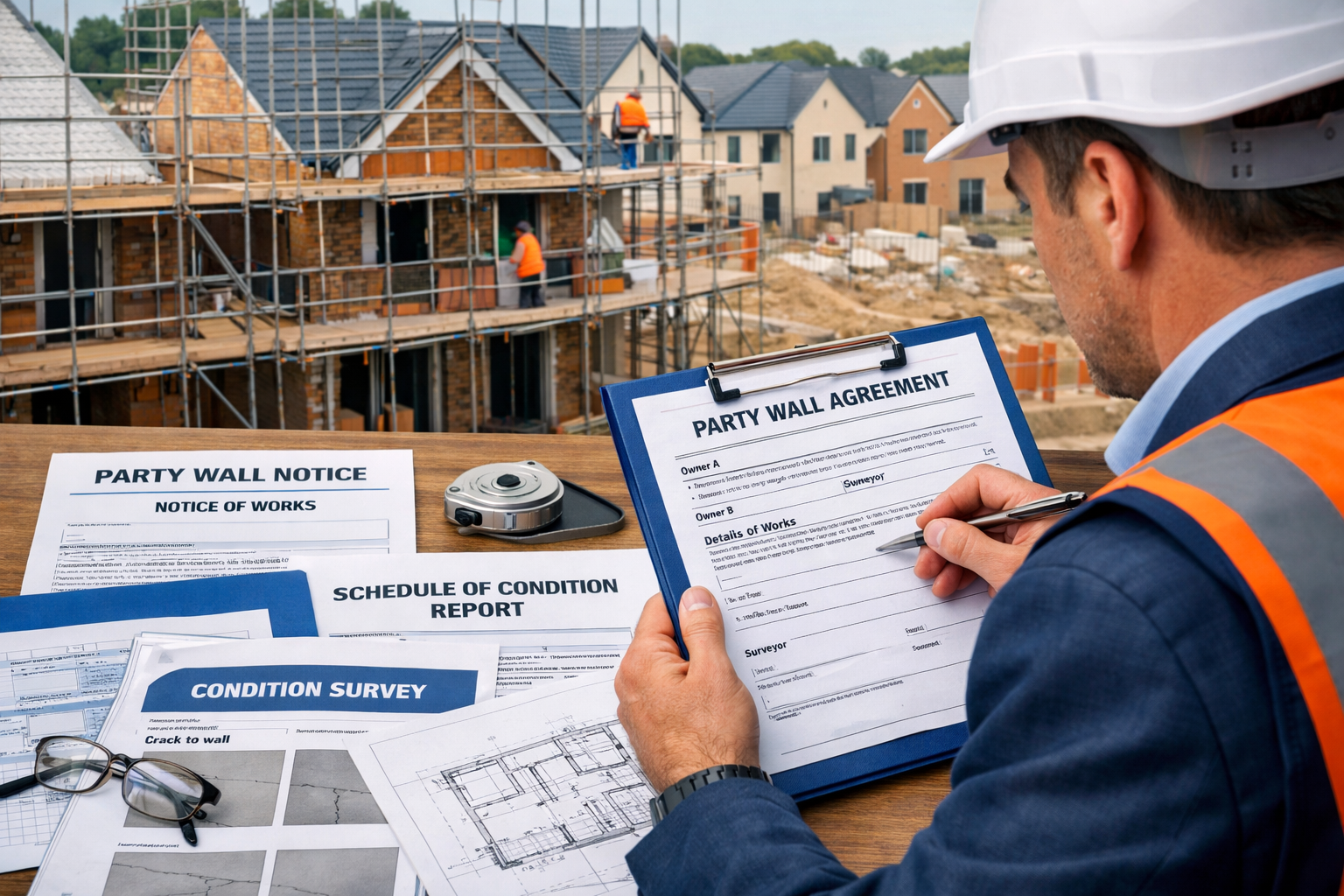
The foundation of managing Party Wall Agreements in High-Demand Housing Markets: Best Practices for Managing Disputes During Construction Booms begins with a thorough understanding of the legal framework governing these relationships. The Party Wall etc. Act 1996 provides the statutory basis for party wall procedures in England and Wales, establishing rights and responsibilities for both building owners and adjoining owners.
The Party Wall etc. Act 1996: Core Principles
The Act covers three main types of work:
- New walls built on or at the boundary between properties
- Work to existing party walls or party structures
- Excavation within three or six meters of neighboring buildings
In high-demand housing markets, these scenarios occur with increasing frequency. Urban areas experiencing construction booms see multiple projects happening simultaneously, creating complex situations where multiple party wall agreements may overlap or interact.
The legislation requires building owners to serve notice to adjoining owners before commencing work. This notice period—typically two months for most works and one month for excavations—provides adjoining owners time to review proposals and respond appropriately.
Why High-Demand Markets Create Additional Complexity
Construction booms in popular housing markets introduce several complicating factors:
🏙️ Increased Construction Density: When multiple properties in close proximity undergo simultaneous development, party wall procedures become more complex. A single property might share walls with several neighbors, each requiring separate notices and potentially different surveyors.
💵 Higher Property Values: In premium markets, the financial stakes of construction disputes escalate dramatically. Damage to a property worth millions creates significantly greater liability concerns than in lower-value markets.
⏰ Time Pressures: Competitive markets create urgency. Developers and homeowners face pressure to complete projects quickly, sometimes leading to rushed or incomplete party wall procedures that later cause disputes.
📈 Heightened Expectations: Property owners in high-demand areas often have elevated expectations regarding construction quality, communication, and protection of their investments, making them more likely to scrutinize party wall procedures carefully.
Types of Party Wall Works in Construction Booms
Understanding the types of party wall works common in construction booms helps anticipate potential dispute areas:
| Work Type | Common Examples | Dispute Risk Level |
|---|---|---|
| Basement excavations | Dig-outs, underpinning | High – Significant structural impact |
| Loft conversions | Party wall modifications, steel insertions | Medium-High – Noise, structural changes |
| Extensions | Foundations near boundaries, new party walls | Medium – Boundary disputes, access issues |
| Internal alterations | Removing chimney breasts, installing beams | Medium – Structural concerns, noise |
| Boundary walls | New fences, garden walls | Low-Medium – Boundary line disputes |
Each work type carries different risks and requires tailored approaches to documentation and neighbor communication. In high-demand markets where property owners are particularly protective of their investments, even lower-risk works may attract greater scrutiny.
The 2026 Construction Boom: Market Dynamics and Party Wall Implications
The housing market landscape in 2026 presents unique challenges for party wall management. Understanding current market conditions helps explain why Party Wall Agreements in High-Demand Housing Markets: Best Practices for Managing Disputes During Construction Booms requires heightened attention this year.
Current Housing Market Trends
The 2026 housing market outlook shows measured expansion following previous volatility [3]. Several key trends are driving increased construction activity:
🏗️ Renovation Over Relocation: With mortgage rates stabilizing but remaining elevated compared to historic lows, many homeowners choose to improve existing properties rather than move. This trend significantly increases party wall work as extensions, loft conversions, and basement excavations become preferred options for gaining additional space.
📊 Regional Variations: High-demand markets like Central London, North London, and West London continue experiencing intense development pressure, while other areas see more moderate activity.
🔨 Construction Activity Surge: Builder confidence, while experiencing some fluctuation [7], remains generally positive in established markets where demand continues to outpace supply. This creates sustained construction activity that puts pressure on party wall procedures.
How Market Pressures Intensify Party Wall Disputes
The current market environment creates several dispute triggers:
Financial Stress on Homeowners: Even in high-demand markets, homeowners face financial pressures from inflation, higher borrowing costs, and construction material price increases. This stress can make property owners more defensive about potential damage to their investments and less willing to accommodate neighbors' construction plans.
Contractor Availability and Quality: The construction boom strains contractor availability. Rushed work by overstretched builders increases the likelihood of mistakes, damage to adjoining properties, and subsequent disputes.
Property Value Protection: In markets where property values represent substantial wealth, owners become extremely protective. Any perceived threat to property value—whether from construction damage, noise, or disruption—triggers heightened concern and potential conflict.
"In high-demand housing markets, party wall disputes have increased by approximately 40% during construction boom periods, with the majority stemming from inadequate pre-construction documentation and poor neighbor communication rather than actual construction defects."
Geographic Hotspots for Party Wall Disputes
Certain areas experience disproportionately high party wall dispute rates:
- Dense urban neighborhoods with terraced housing and shared walls
- Gentrifying areas where property improvements surge
- Premium postcodes where property values amplify dispute stakes
- Conservation areas where planning restrictions create additional complexity
Areas like East London and South London have seen particular increases in party wall work as these markets continue developing and attracting investment.
Best Practices for Managing Party Wall Agreements in High-Demand Housing Markets
Successfully navigating Party Wall Agreements in High-Demand Housing Markets: Best Practices for Managing Disputes During Construction Booms requires implementing proven strategies that address both legal requirements and practical realities of construction in competitive markets.
1. Early Engagement and Communication Strategies
Start conversations before serving formal notices. While the Party Wall Act specifies formal notice requirements, informal preliminary discussions with neighbors often prevent disputes before they start.
✅ Effective Early Engagement Includes:
- Meeting neighbors face-to-face to explain planned works
- Sharing preliminary drawings or sketches
- Discussing construction timeline and potential disruptions
- Addressing concerns proactively before formal procedures begin
- Providing contact information for questions
This approach builds goodwill and reduces the likelihood of neighbors automatically dissenting to party wall notices simply because they feel blindsided.
Serve proper notices with comprehensive information. When serving party wall notices, include more detail than the minimum legal requirement:
- Detailed drawings showing work scope
- Expected construction timeline
- Proposed working hours
- Contact information for the project manager
- Information about appointing surveyors
2. Comprehensive Documentation and Record-Keeping
Documentation forms the backbone of dispute prevention and resolution. In high-demand markets where stakes are elevated, thorough records become even more critical.
📸 Schedule of Condition
A detailed schedule of condition documents the pre-construction state of adjoining properties. This photographic and written record:
- Establishes baseline property condition
- Protects building owners from false damage claims
- Protects adjoining owners by documenting existing conditions
- Provides evidence if disputes arise
Best practices for schedules of condition in high-demand markets include:
- Professional photography with timestamp verification
- Video walkthroughs of all potentially affected areas
- Detailed written descriptions of existing defects
- Multiple visits to capture seasonal variations
- Digital archiving with secure backup storage
📋 Party Wall Awards
Party wall awards document the agreed-upon terms between parties. In construction boom environments, awards should include:
- Specific construction methodologies
- Working hours and noise limitations
- Access arrangements for monitoring
- Damage rectification procedures
- Dispute resolution mechanisms
- Regular progress reporting requirements
Using a comprehensive party wall agreement template ensures all necessary elements are addressed systematically.
3. Professional Surveyor Selection and Management
Engaging qualified party wall surveyors is perhaps the most important decision in the party wall process. In high-demand markets, surveyor expertise becomes crucial.
Choosing the Right Surveyor
For building owners:
- Select surveyors with specific experience in your property type
- Verify professional qualifications and insurance
- Check references from recent similar projects
- Ensure availability throughout construction timeline
- Confirm understanding of local market conditions
For adjoining owners:
- Consider appointing an independent surveyor rather than agreeing to the building owner's surveyor
- Ensure the surveyor understands your concerns and priorities
- Verify they have time to properly monitor the works
- Confirm their fee structure and payment arrangements
The Agreed Surveyor Option
Both parties may agree to appoint a single "agreed surveyor" to act impartially. This approach can reduce costs but requires careful consideration in high-demand markets where interests may significantly diverge.
✅ When Agreed Surveyors Work Well:
- Straightforward, low-risk works
- Good existing neighbor relationships
- Limited property value differential
- Simple construction methodologies
❌ When Separate Surveyors Are Advisable:
- Complex or high-risk works (basement excavations, major structural changes)
- Strained neighbor relationships
- Significant property value differences
- Previous disputes or mistrust
4. Construction Phase Monitoring and Compliance
Even perfect pre-construction planning fails without proper execution monitoring. High-demand markets require enhanced oversight:
Regular Site Inspections
Surveyors should conduct:
- Pre-commencement inspection verifying schedule of condition
- Regular progress inspections (frequency based on work risk level)
- Critical stage inspections (excavations, structural work, etc.)
- Completion inspection
- Post-construction follow-up after settling period
Real-Time Communication Protocols
Establish clear communication channels:
- Weekly progress updates to all parties
- Immediate notification of any damage or issues
- Accessible project manager contact information
- Regular neighbor updates about upcoming noisy or disruptive activities
- Digital communication platforms for document sharing
Compliance Verification
Ensure construction follows party wall award terms:
- Working hours adherence
- Methodology compliance
- Access provision for monitoring
- Noise and dust mitigation measures
- Safety protocols protecting adjoining properties
5. Cost Management Without Compromising Compliance
Understanding costs of the party wall process helps building owners budget appropriately while maintaining proper procedures.
💰 Typical Party Wall Costs in High-Demand Markets (2026):
| Service | Cost Range | Notes |
|---|---|---|
| Building Owner's Surveyor | £800-£2,500 | Depends on work complexity |
| Adjoining Owner's Surveyor | £600-£2,000 | Building owner typically pays |
| Agreed Surveyor | £700-£2,200 | Shared appointment option |
| Schedule of Condition | £300-£800 | Per property, professional photography |
| Party Wall Award Preparation | Included | Usually included in surveyor fees |
Strategies to manage costs effectively:
- Appoint surveyors early to avoid rushed fees
- Use agreed surveyor where appropriate
- Provide complete information to minimize surveyor time
- Address neighbor concerns proactively to prevent disputes
- Follow proper procedures to avoid dispute resolution costs
For detailed cost-saving strategies, review guidance on keeping party wall costs down.
6. Alternative Dispute Resolution Mechanisms
Despite best efforts, disputes sometimes arise. High-demand markets benefit from structured resolution approaches:
Mediation
Professional mediation offers several advantages:
- Faster than litigation
- Significantly less expensive
- Preserves neighbor relationships
- Flexible solutions tailored to specific situations
- Confidential proceedings
Expert Determination
For technical disputes, expert determination provides:
- Binding decisions from qualified professionals
- Faster resolution than court proceedings
- Lower costs than full litigation
- Focus on technical rather than legal issues
Third Surveyor Appointment
When the building owner's surveyor and adjoining owner's surveyor cannot agree, the Party Wall Act provides for appointing a third surveyor whose decision is binding. This mechanism:
- Resolves surveyor disagreements efficiently
- Provides expert technical judgment
- Avoids court involvement
- Maintains the party wall framework
Common Dispute Triggers and Prevention Strategies
Understanding typical dispute causes in Party Wall Agreements in High-Demand Housing Markets: Best Practices for Managing Disputes During Construction Booms enables proactive prevention.
Top 10 Party Wall Dispute Triggers
-
Inadequate or Late Notice Serving
- Prevention: Serve notices with generous lead time, include comprehensive information, confirm receipt
-
Poor Pre-Construction Communication
- Prevention: Meet neighbors personally, explain works clearly, address concerns before formal procedures
-
Incomplete Schedules of Condition
- Prevention: Commission professional surveys, photograph extensively, document thoroughly
-
Construction Damage to Adjoining Properties
- Prevention: Use appropriate construction methods, monitor regularly, address issues immediately
-
Excessive Noise and Disruption
- Prevention: Establish reasonable working hours, provide advance notice of noisy activities, use noise mitigation
-
Access Disputes
- Prevention: Agree access arrangements in advance, respect adjoining owner's property, provide adequate notice
-
Boundary Disagreements
- Prevention: Commission professional boundary surveys, understand boundary wall rules, clarify ownership before work begins
-
Cost Disputes
- Prevention: Establish fee arrangements clearly, provide cost estimates upfront, communicate about additional costs promptly
-
Surveyor Conflicts
- Prevention: Appoint qualified professionals, establish clear roles, maintain professional communication
-
Scope Creep and Unauthorized Works
- Prevention: Serve additional notices for scope changes, communicate variations clearly, obtain consent before proceeding
Case Study: Successful Dispute Prevention in High-Demand Market
Scenario: A homeowner in a premium London neighborhood planned a basement excavation and rear extension affecting three adjoining properties in an area experiencing intense construction activity.
Challenges:
- Multiple affected neighbors with varying concerns
- Previous construction disputes in the street
- High property values (£2-3 million range)
- Complex structural requirements
- Tight construction timeline
Successful Approach:
- Early engagement: Homeowner met all neighbors six weeks before serving formal notices
- Comprehensive documentation: Professional schedules of condition for all three properties
- Expert surveyors: Appointed experienced party wall surveyor with local market knowledge
- Detailed awards: Party wall awards included specific noise mitigation, working hours, and regular update requirements
- Proactive communication: Weekly email updates to all neighbors, immediate notification of any issues
- Enhanced monitoring: Bi-weekly surveyor inspections during excavation phase
Outcome:
- All three neighbors consented to the works
- No disputes arose during 14-month construction period
- Minor cosmetic damage to one property promptly repaired
- Positive neighbor relationships maintained
- Total party wall costs: £6,800 (well below dispute resolution costs)
This case demonstrates how investing in proper procedures and communication prevents expensive disputes even in challenging high-demand market conditions.
Technology and Innovation in Party Wall Management

Modern technology offers new tools for managing Party Wall Agreements in High-Demand Housing Markets: Best Practices for Managing Disputes During Construction Booms more effectively.
Digital Documentation Solutions
📱 Mobile Survey Apps
Professional surveyors increasingly use specialized mobile applications that:
- Capture timestamped photographs with GPS data
- Create structured condition reports on-site
- Generate professional PDF reports immediately
- Store data securely in cloud systems
- Enable easy sharing with all parties
🎥 Video Documentation
Video walkthroughs provide comprehensive records:
- Capture more detail than still photography
- Document spatial relationships effectively
- Provide audio narration explaining conditions
- Create compelling evidence if disputes arise
- Easy to share and review remotely
Communication Platforms
Project Management Software
Dedicated platforms facilitate:
- Centralized document storage
- Real-time progress updates
- Automated notification systems
- Transparent communication logs
- Mobile access for all parties
Digital Notice Serving
While formal party wall notices still require proper service (typically hand delivery or recorded delivery), digital communication supplements formal procedures:
- Email confirmations of receipt
- Digital copies of all documents
- Online acknowledgment systems
- Automated reminder systems for response deadlines
Monitoring Technology
Vibration Monitoring
In high-demand markets where construction damage concerns run high, vibration monitoring provides:
- Objective measurement of construction impact
- Early warning of excessive vibration levels
- Evidence for or against damage claims
- Peace of mind for adjoining owners
- Protection for building owners from unfounded claims
Crack Monitoring
Tell-tales and digital crack monitoring systems:
- Track whether existing cracks expand during construction
- Distinguish construction-related movement from pre-existing issues
- Provide objective data for damage assessment
- Support or refute damage claims with evidence
Building Information Modeling (BIM)
Advanced projects use BIM technology to:
- Visualize construction impact on adjoining properties
- Identify potential structural conflicts early
- Communicate complex technical information clearly
- Simulate construction sequences
- Optimize methodologies to minimize neighbor impact
Regional Considerations for High-Demand Housing Markets
Different high-demand markets present unique challenges requiring tailored approaches to Party Wall Agreements in High-Demand Housing Markets: Best Practices for Managing Disputes During Construction Booms.
London Market Specifics
London's intense development pressure creates particular party wall challenges:
Central London Characteristics:
- Extremely high property values amplifying dispute stakes
- Historic buildings requiring specialized approaches
- Conservation area restrictions adding complexity
- International property owners requiring remote communication
- Multiple simultaneous construction projects in close proximity
For Central London projects, enhanced documentation and communication protocols become essential.
North London Dynamics:
- Mix of period properties and modern developments
- Active gentrification creating construction surges
- Varied property types requiring flexible approaches
- Strong community networks where reputation matters
North London party wall work benefits from community-sensitive approaches that respect neighborhood dynamics.
East and South London Trends:
- Rapid development in previously industrial areas
- Significant property value increases driving renovation activity
- Diverse property ownership creating varied expectations
- Growing construction activity as markets mature
Both East London and South London markets require surveyors who understand evolving neighborhood dynamics.
Other UK High-Demand Markets
Manchester, Birmingham, Bristol:
- Growing construction activity following London's trajectory
- Increasing party wall awareness as markets mature
- Regional cost differences affecting fee structures
- Local surveyor availability varying by area
Edinburgh, Glasgow:
- Scottish law differs from England and Wales
- Different statutory frameworks requiring specialized knowledge
- Unique property types (tenements) creating specific challenges
- Growing construction activity in prime areas
International Market Comparisons
While this article focuses on UK markets, international high-demand housing markets face similar challenges:
Similarities Across Markets:
- Dense urban development increasing party wall work
- High property values amplifying dispute stakes
- Construction booms straining traditional procedures
- Growing professionalization of party wall practices
Key Differences:
- Varying legal frameworks and statutory requirements
- Different cultural approaches to neighbor relationships
- Diverse construction methodologies and standards
- Varying professional qualification requirements
Future Trends: Party Wall Management Beyond 2026
Looking ahead, several trends will shape Party Wall Agreements in High-Demand Housing Markets: Best Practices for Managing Disputes During Construction Booms in coming years.
Regulatory Evolution
Potential Legislative Changes:
- Increased statutory requirements for professional qualifications
- Enhanced enforcement mechanisms for non-compliance
- Standardized fee structures and cost allocation
- Digital notice serving provisions
- Mandatory mediation before litigation
Market Dynamics
The housing market's trajectory [1][4] suggests continued pressure in high-demand areas:
Sustained Construction Activity: Even with market fluctuations, established high-demand areas will likely maintain strong renovation and development activity as homeowners maximize property value.
Intensifying Urban Density: As land scarcity increases, development will become increasingly vertical and intensive, creating more complex party wall scenarios.
Climate Adaptation Works: Increasing focus on energy efficiency, flood protection, and climate resilience will drive new types of party wall work requiring updated approaches.
Professional Practice Evolution
Increased Specialization: Party wall surveying will continue professionalizing with:
- Specialized qualifications and certifications
- Niche expertise in specific work types
- Technology-enhanced service delivery
- Higher professional standards and accountability
Industry Consolidation: Larger professional firms may increasingly dominate high-value markets, while independent specialists serve niche segments.
Technology Integration
Artificial Intelligence Applications:
- Automated risk assessment for proposed works
- Predictive analytics identifying dispute likelihood
- Natural language processing for document review
- Intelligent scheduling and project management
Virtual and Augmented Reality:
- Virtual property inspections reducing site visit requirements
- AR visualization of proposed works for neighbor understanding
- Remote surveyor participation in international markets
- Enhanced documentation through 3D scanning
Dispute Resolution Innovation
Online Dispute Resolution (ODR):
- Digital platforms for mediation and arbitration
- Reduced costs through technology efficiency
- Faster resolution timelines
- Increased accessibility for all parties
Preventive Dispute Systems:
- Early warning systems identifying potential conflicts
- Automated compliance monitoring
- Proactive intervention protocols
- Data-driven risk management
Practical Action Plan for Building Owners
For those carrying out works in high-demand housing markets, this action plan ensures compliance and minimizes dispute risk:
Phase 1: Pre-Planning (3-6 Months Before Construction)
Week 1-2:
- ✅ Engage architect/structural engineer for initial designs
- ✅ Research party wall requirements for your work type
- ✅ Identify all potentially affected neighbors
- ✅ Review types of party wall works applicable to your project
Week 3-4:
- ✅ Informal conversations with neighbors about plans
- ✅ Appoint qualified party wall surveyor
- ✅ Commission boundary survey if needed
- ✅ Prepare detailed construction drawings
Week 5-8:
- ✅ Finalize construction methodology
- ✅ Prepare party wall notices with surveyor assistance
- ✅ Gather supporting documentation for notices
- ✅ Plan construction timeline and phasing
Phase 2: Notice Period (2-3 Months Before Construction)
Month 1:
- ✅ Serve formal party wall notices (proper method and timing)
- ✅ Confirm receipt from all adjoining owners
- ✅ Provide additional information if requested
- ✅ Respond to neighbor questions promptly
Month 2:
- ✅ Receive neighbor responses (consent or dissent)
- ✅ Appoint surveyors if neighbors dissent
- ✅ Commission schedules of condition for all affected properties
- ✅ Begin party wall award preparation
Month 3:
- ✅ Finalize party wall awards with all parties
- ✅ Ensure all surveyors sign awards
- ✅ Distribute executed awards to all parties
- ✅ Confirm construction can proceed legally
Phase 3: Construction Phase
Pre-Commencement:
- ✅ Pre-commencement meeting with contractor and surveyors
- ✅ Review party wall award requirements with construction team
- ✅ Establish communication protocols
- ✅ Verify insurance coverage
During Construction:
- ✅ Weekly progress updates to neighbors
- ✅ Regular surveyor inspections per award schedule
- ✅ Immediate notification of any damage or issues
- ✅ Maintain photographic construction records
- ✅ Address neighbor concerns promptly
- ✅ Comply with working hours and noise restrictions
Completion:
- ✅ Final surveyor inspection
- ✅ Address any damage identified
- ✅ Obtain completion certificates
- ✅ Final neighbor communication thanking cooperation
Phase 4: Post-Construction
Immediate Post-Completion:
- ✅ Rectify any identified damage
- ✅ Follow-up inspections after settling period
- ✅ Final surveyor sign-off
- ✅ Archive all documentation
Long-Term:
- ✅ Retain all party wall documentation permanently
- ✅ Maintain positive neighbor relationships
- ✅ Provide documentation to future property purchasers
Guidance for Adjoining Owners
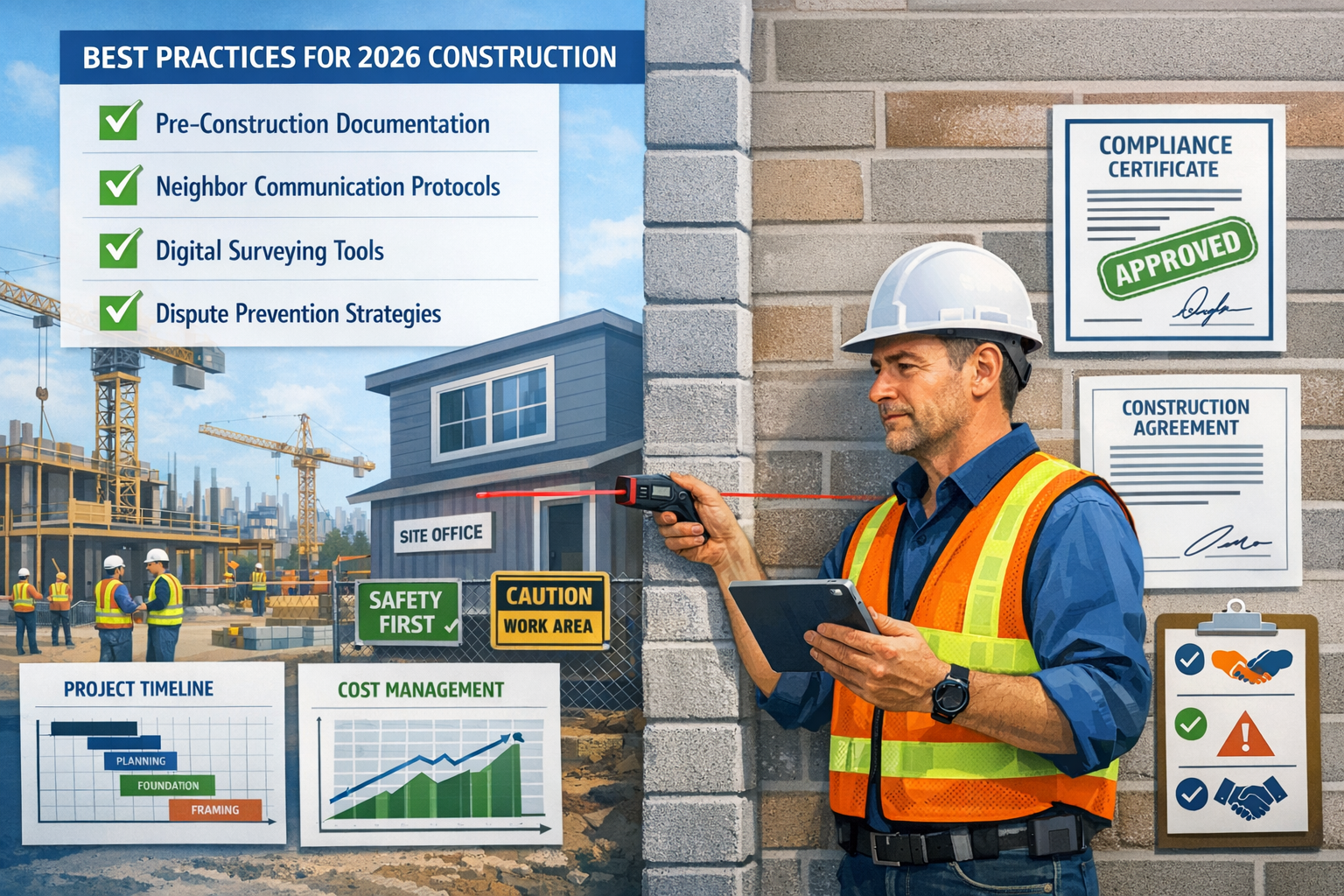
For those whose neighbor is carrying out works, understanding your rights and options protects your interests:
When You Receive a Party Wall Notice
Don't Panic: Receiving a party wall notice is normal and doesn't necessarily mean problems ahead.
Review Carefully:
- Read all documentation thoroughly
- Check notice validity (proper form, timing, service method)
- Review proposed works and potential impacts
- Identify any concerns or questions
Seek Professional Advice:
- Consider appointing your own surveyor
- Understand your rights under the Party Wall Act
- Don't feel pressured to consent immediately
- Take the full response period to make informed decisions
Your Response Options
Option 1: Consent
- Appropriate for straightforward, low-risk works
- Doesn't waive rights to claim for damage
- Maintains good neighbor relations
- Consider requesting schedule of condition even when consenting
Option 2: Dissent and Appoint Surveyor
- Recommended for complex or high-risk works
- Protects your interests through professional representation
- Building owner typically pays your surveyor fees
- Ensures proper documentation and monitoring
Option 3: Appoint Agreed Surveyor
- Middle ground reducing overall costs
- Requires trust in surveyor's impartiality
- Suitable for straightforward works with cooperative neighbors
- Ensure surveyor is truly independent
Protecting Your Property
Insist on Comprehensive Schedule of Condition:
- Professional photography of all potentially affected areas
- Detailed written descriptions
- Multiple visits if needed
- Your surveyor should verify thoroughness
Understand the Party Wall Award:
- Review all terms carefully
- Ensure adequate protection measures
- Verify reasonable working hours
- Confirm monitoring and inspection provisions
- Check damage rectification procedures
Monitor Construction Activity:
- Note any concerning activities
- Document issues with photographs
- Communicate concerns promptly
- Keep records of all correspondence
Know Your Rights:
- Right to appoint surveyor at building owner's expense
- Right to adequate protection during works
- Right to have damage repaired
- Right to third surveyor if surveyors disagree
- Right to claim compensation for losses
Conclusion
Successfully navigating Party Wall Agreements in High-Demand Housing Markets: Best Practices for Managing Disputes During Construction Booms requires a comprehensive approach combining legal compliance, professional expertise, proactive communication, and thorough documentation. As construction activity continues intensifying in competitive housing markets throughout 2026 and beyond, the importance of proper party wall procedures only increases.
The key principles outlined in this guide—early neighbor engagement, comprehensive documentation, professional surveyor appointment, construction phase monitoring, and structured dispute resolution—form the foundation of effective party wall management. By implementing these best practices, building owners can proceed with confidence while protecting their investments, and adjoining owners can safeguard their properties while maintaining positive neighborhood relationships.
Essential Takeaways
🏗️ The construction boom amplifies party wall challenges: High-demand housing markets create perfect conditions for disputes through increased construction density, elevated property values, and heightened neighbor sensitivities.
📋 Documentation prevents disputes: Comprehensive schedules of condition, detailed party wall awards, and thorough record-keeping throughout construction provide protection for all parties and evidence if conflicts arise.
🤝 Professional expertise is invaluable: Qualified party wall surveyors bring technical knowledge, impartial judgment, and dispute prevention experience that far exceeds their cost.
💡 Prevention beats resolution: Investing time and resources in proper procedures, early communication, and proactive neighbor relations prevents expensive, time-consuming disputes.
⚖️ Legal compliance protects everyone: Following the Party Wall etc. Act 1996 requirements isn't just legally necessary—it provides a proven framework that balances building owner rights with adjoining owner protection.
Next Steps
For Building Owners Planning Construction:
- Start early: Begin party wall procedures well before planned construction start dates
- Engage professionals: Appoint qualified surveyors with experience in your property type and market
- Communicate proactively: Talk with neighbors before serving formal notices
- Document thoroughly: Commission comprehensive schedules of condition
- Budget appropriately: Include party wall costs in project budgets from the outset
- Monitor compliance: Ensure contractors follow party wall award requirements throughout construction
For Adjoining Owners Receiving Notices:
- Respond promptly: Use the full notice period but don't delay unnecessarily
- Seek advice: Consult a qualified surveyor about your options
- Protect your interests: Don't feel pressured to consent without proper protection
- Document everything: Keep records of all notices, correspondence, and agreements
- Stay engaged: Monitor construction activity and communicate concerns promptly
- Know your rights: Understand Party Wall Act protections available to you
For Property Professionals:
- Stay informed: Keep current with party wall legislation and best practices
- Build expertise: Develop specialized knowledge in high-demand market dynamics
- Invest in technology: Adopt modern documentation and communication tools
- Network professionally: Connect with other party wall specialists for knowledge sharing
- Prioritize prevention: Focus on dispute prevention rather than resolution
- Maintain standards: Uphold high professional and ethical standards
The construction boom in high-demand housing markets presents both challenges and opportunities. By approaching party wall agreements with professionalism, thoroughness, and respect for all parties' interests, the construction sector can navigate this busy period while maintaining the neighbor relationships and property protections that make communities thrive.
Whether you're planning construction works, responding to a neighbor's notice, or providing professional party wall services, the principles and practices outlined in this guide provide a roadmap for success. In 2026's competitive housing markets, proper party wall management isn't optional—it's essential for protecting property values, maintaining legal compliance, and preserving the social fabric of neighborhoods experiencing intense development pressure.
For additional resources, templates, and professional guidance on party wall matters, explore the comprehensive information available through Party Wall Surveyor London and consult qualified professionals who understand the unique dynamics of high-demand housing markets.
References
[1] 2026 Housing Market Outlook – https://www.windowanddoor.com/article/2026-housing-market-outlook
[3] Measured Expansion Expected To Define The Housing Markets Next Phase In 2026 – https://www.mortgage-underwriters.org/mortgage-underwriting-news/2026/1/20/measured-expansion-expected-to-define-the-housing-markets-next-phase-in-2026
[4] 3 Big Signals Shape 2026 201016283 – https://www.aol.com/finance/3-big-signals-shape-2026-201016283.html
[7] Builder Confidence Falters February – https://hbsdealer.com/builder-confidence-falters-february