
{"cover":"Professional landscape format (1536×1024) hero image with bold text overlay 'Power Facility Party Wall Surveys: Securing Agreements for 2026's 34% Demand Surge' in extra large 72pt white sans-serif font with dark shadow and semi-transparent navy overlay box, centered in upper third. Background shows modern electrical power substation with high-voltage transformers, transmission lines, and adjacent commercial buildings, split-screen composition showing surveyor reviewing blueprints on one side and power infrastructure on other. Color scheme: electric blue, steel gray, safety orange accents. Magazine cover quality, editorial style, high contrast for readability, professional construction industry aesthetic with technical precision.","content":["Detailed landscape format (1536×1024) image showing construction workers and surveyors in hard hats and safety vests examining party wall documentation at active power facility construction site, with electrical substations and high-voltage equipment visible in background. Split composition: left side shows surveyor using laser measuring equipment along shared boundary wall between power station and adjacent property, right side displays annotated technical drawings highlighting party wall locations with red boundary markers. Include clipboard with party wall notice forms, safety barriers, and electrical infrastructure. Professional construction photography style with warm lighting, depth of field, industrial aesthetic, technical precision.","Detailed landscape format (1536×1024) infographic-style image illustrating party wall survey process for power facilities with numbered workflow diagram from 1-6 showing: notice service, surveyor appointment, schedule of condition documentation, award preparation, construction monitoring, and final inspection. Center features cross-section architectural drawing of power facility wall shared with neighboring property, showing foundation depth, high-voltage cable routing, and structural supports. Include icons representing legal documents, safety helmets, measuring tools, and electrical symbols. Color-coded sections in electric blue, safety orange, and professional gray. Clean technical illustration style with annotations and callout boxes.","Detailed landscape format (1536×1024) composite image showing risk management in power facility party wall surveys: foreground displays professional surveyor in PPE conducting thermal imaging scan of shared wall adjacent to electrical transformer station, with thermal camera screen showing heat signatures and structural integrity data. Background shows modern power substation with cooling towers and transmission equipment. Side panel features checklist document highlighting high-voltage safety protocols, vibration monitoring equipment readings, and schedule of condition photographs. Include safety warning signs, technical measurement devices, and professional documentation. Industrial photography style with high contrast, sharp focus, authoritative technical aesthetic with blue and orange safety color scheme."]
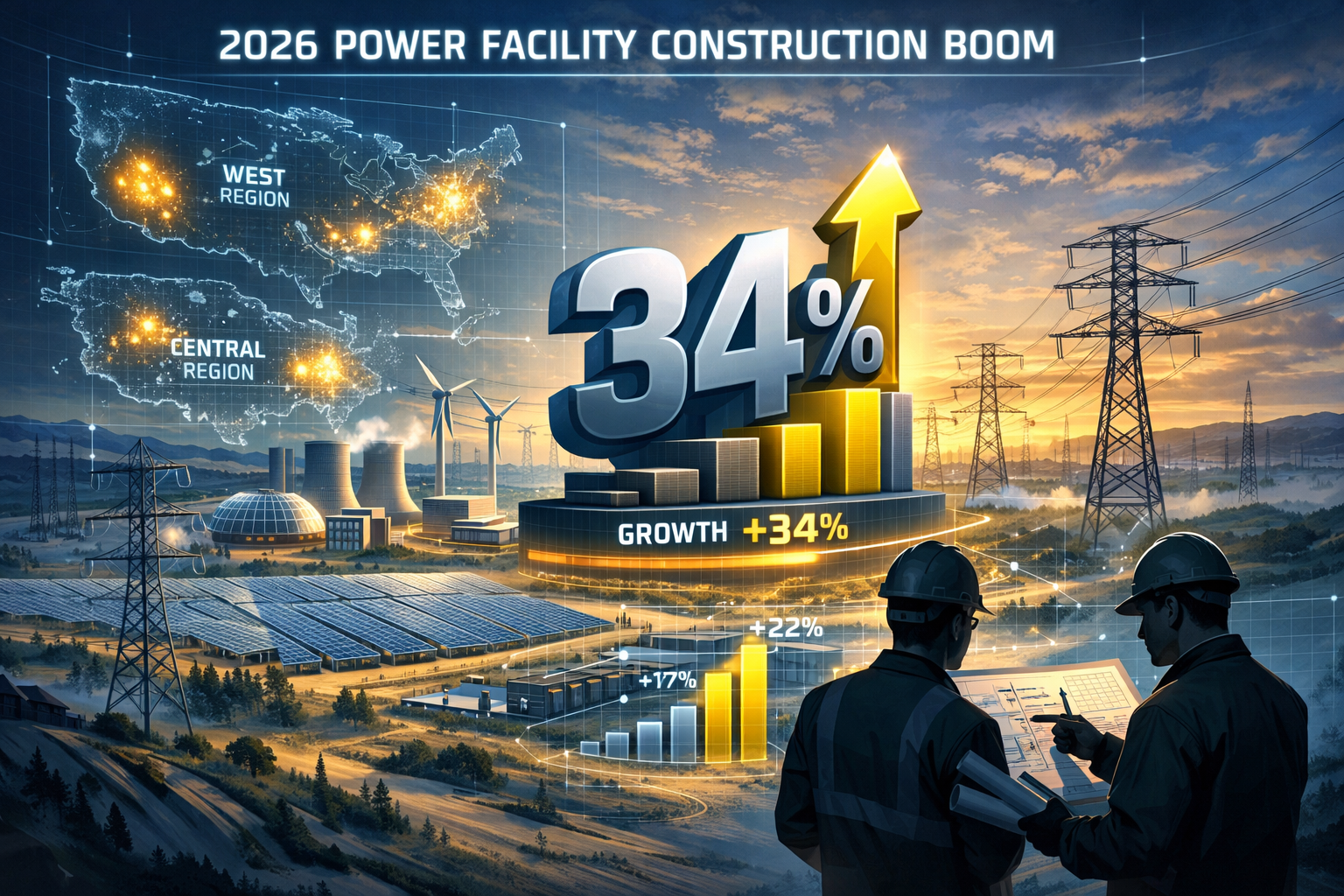
The energy sector is experiencing unprecedented growth in 2026, and with it comes a critical need for specialized party wall expertise. As contractors report a remarkable 34% net reading for power projects[3][4], power facilities are emerging as one of the strongest private sector construction markets this year. This surge in development brings unique challenges when construction involves shared boundaries with adjacent properties—challenges that require meticulous planning, specialized surveys, and robust legal agreements to protect all parties involved.
Understanding how to navigate Power Facility Party Wall Surveys: Securing Agreements for 2026's 34% Demand Surge is essential for developers, property owners, and construction professionals working in this booming sector. The stakes are particularly high when dealing with high-voltage infrastructure adjacent to residential or commercial properties.
Key Takeaways
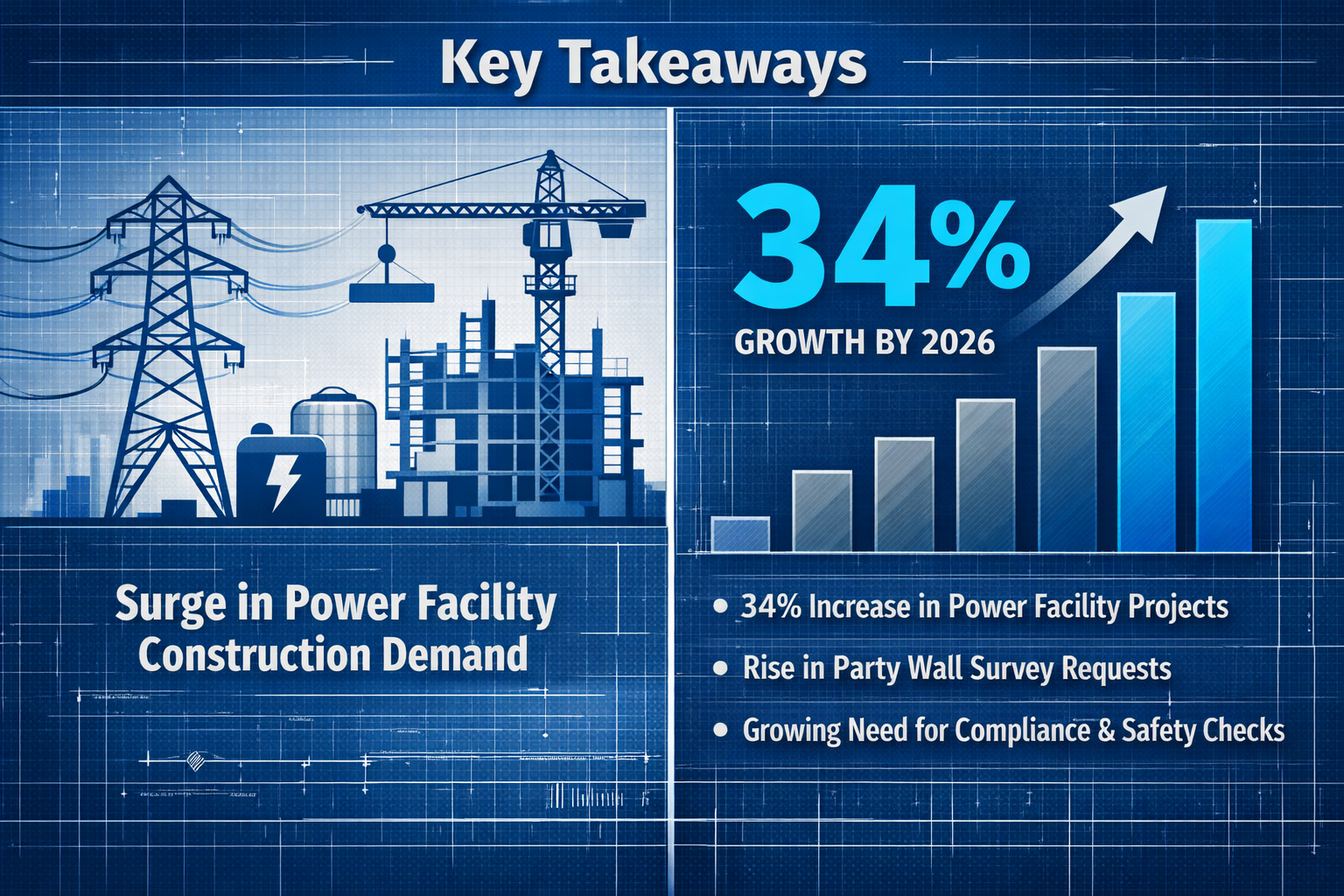
- Power facility construction is experiencing a 34% demand surge in 2026, making it one of the strongest private sector markets alongside data centers and healthcare[3][4]
- Specialized party wall protocols are essential for managing risks associated with high-voltage equipment, vibration, and structural impacts on adjacent properties
- Peak electricity demand is projected to grow 26% by 2035, with data centers alone requiring 176 gigawatts—driving continued power facility expansion[2]
- Proper party wall agreements protect both building owners and neighbors through detailed schedules of condition, awards, and ongoing monitoring
- Early surveyor engagement and comprehensive documentation are critical to avoiding disputes and construction delays in this high-stakes sector
Understanding the 2026 Power Facility Construction Boom
Why Power Projects Are Leading Construction Growth
The construction industry is witnessing a remarkable shift in 2026. While many sectors face dampened expectations, power facilities stand out as a beacon of growth. Contractors have recorded a net reading of 34% for power projects, indicating moderately bullish expectations for construction dollar value growth[3][4]. This represents a significant increase from the previous year, making power one of only two categories showing stronger performance than 2025[4].
Several factors are driving this unprecedented demand:
🔌 Data Center Explosion: Data center demand could reach 176 gigawatts by 2035—a fivefold jump from 2024[2]. These facilities require massive power infrastructure to support their operations.
⚡ Peak Demand Growth: Electricity demand is projected to grow by approximately 26% by 2035[2], necessitating substantial upgrades to generation and distribution capacity.
🏭 Industrial Electrification: Industrial electrification could add 25 GW of demand by 2030[2], requiring new substations and transmission facilities.
📊 Grid Modernization: Approximately 2 terawatts of capacity are stuck in interconnection queues—almost twice the currently installed capacity[2]—creating urgent pressure to expand infrastructure.
What Makes Power Facility Party Wall Work Different
Power facilities present unique challenges that distinguish them from residential or commercial party wall scenarios. These specialized construction projects involve:
- High-voltage equipment requiring extensive safety protocols
- Vibration and electromagnetic interference that can affect adjacent structures
- Deep foundations for transformer stations and substations
- 24/7 operational requirements that complicate construction scheduling
- Strict regulatory compliance with electrical safety standards
When a power facility shares a boundary with neighboring properties, the party wall survey process becomes considerably more complex than standard residential work.
Power Facility Party Wall Surveys: Securing Agreements for 2026's 34% Demand Surge Through Proper Protocols
The Essential Party Wall Notice Process
Before commencing any work that affects a shared boundary, power facility developers must follow strict notification protocols. The Party Wall Act notices serve as the legal foundation for all subsequent agreements.
Three types of notices may apply to power facility construction:
| Notice Type | When Required | Typical Power Facility Applications |
|---|---|---|
| Party Structure Notice | Work directly to a shared wall or structure | Installing cable conduits through shared walls, reinforcing shared foundations |
| Line of Junction Notice | Building new walls on or astride the boundary | Constructing new substation walls along property lines |
| 3/6 Meter Notice | Excavation within specified distance of neighbor's structure | Deep foundation work for transformers, underground cable trenches |
For power facilities, the 3/6 meter notice is particularly common due to the deep excavations required for electrical infrastructure. Understanding what types of party wall works apply to your specific project is crucial for compliance.
Appointing Qualified Surveyors for High-Voltage Projects
Not all party wall surveyors have experience with power facility construction. The complexity of high-voltage installations requires professionals who understand both party wall legislation and electrical infrastructure requirements.
Key qualifications to seek:
✅ Technical expertise in electrical engineering principles
✅ Experience with industrial and utility construction projects
✅ Knowledge of health and safety regulations for high-voltage environments
✅ Understanding of electromagnetic interference and vibration impacts
✅ Familiarity with utility regulatory frameworks
Property owners can choose to work with the same surveyor (an "Agreed Surveyor") or appoint separate professionals. For complex power facility projects, many adjoining owners prefer to appoint their own adjoining owner's surveyor to ensure their interests are fully protected.
Creating Comprehensive Schedules of Condition
The schedule of condition represents one of the most critical documents in power facility party wall work. This detailed record establishes the baseline condition of adjacent properties before construction begins.
For power facilities, schedules of condition must be exceptionally thorough:
Standard Documentation:
- High-resolution photographs of all visible surfaces
- Detailed written descriptions of existing defects
- Measurements and structural assessments
- Documentation of existing cracks, settlement, or damage
Additional Power Facility Requirements:
- Baseline vibration readings to detect future impacts from equipment
- Electromagnetic field measurements to identify pre-existing conditions
- Thermal imaging to document heat signatures before operations
- Acoustic baseline measurements for noise-sensitive properties
- Underground utility mapping to identify existing services
Professional schedule of condition documentation protects both the building owner and adjoining owner by establishing clear evidence of pre-construction conditions.
"In power facility construction, the schedule of condition isn't just about visible cracks—it's about documenting baseline environmental conditions that could be affected by high-voltage operations. This comprehensive approach prevents disputes years down the line."
Managing High-Voltage Adjacent Property Risks in Power Facility Party Wall Surveys
Understanding Unique Risks in Power Infrastructure Development
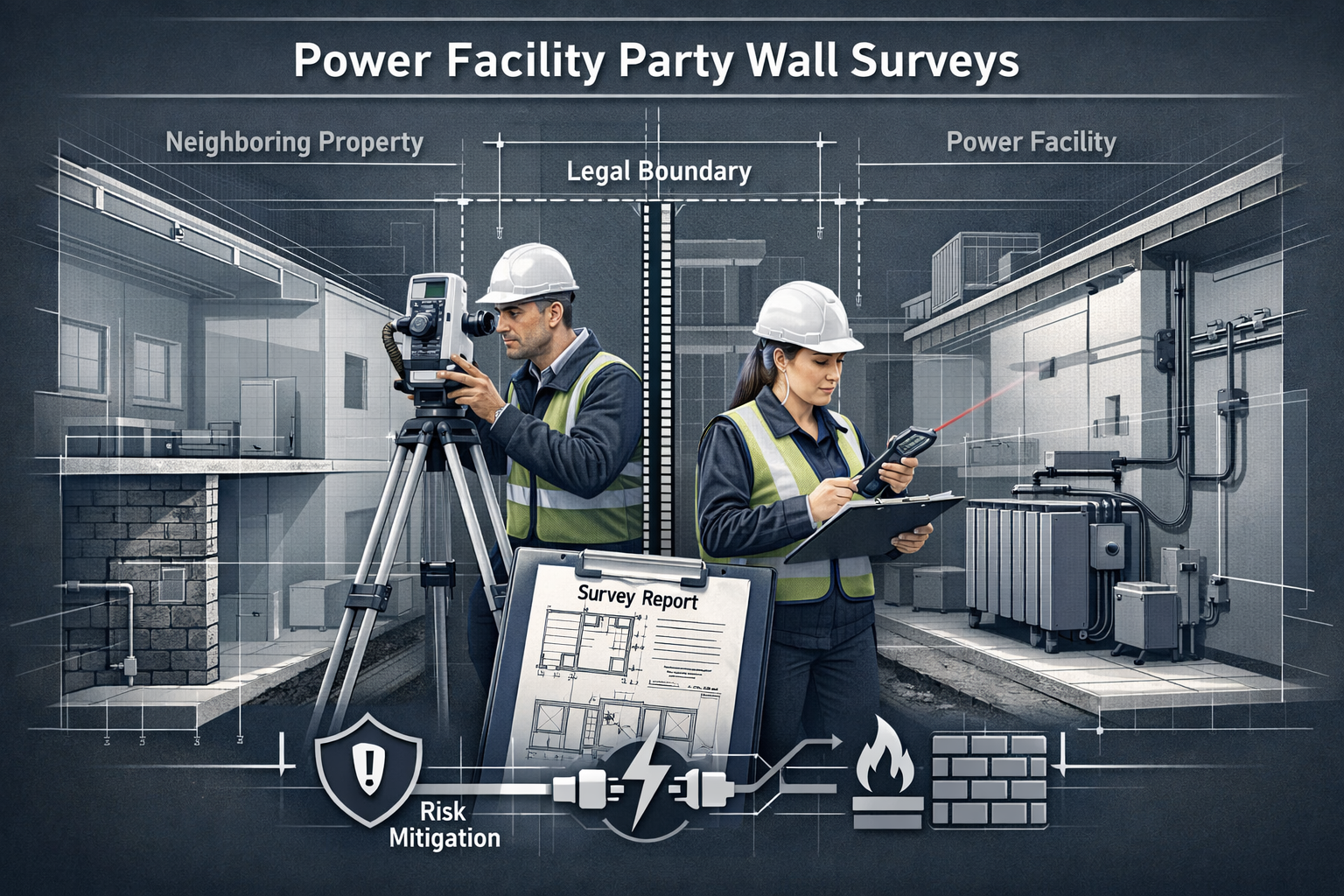
Power facilities introduce risks that simply don't exist in residential party wall scenarios. Building owners and their surveyors must address these specialized concerns in the party wall award:
🔥 Thermal Effects
High-voltage transformers and electrical equipment generate significant heat. Adjacent structures may experience:
- Increased wall temperatures affecting structural materials
- Thermal expansion and contraction cycles
- Potential impacts on moisture barriers and insulation
📳 Vibration and Structural Movement
Large transformers, cooling equipment, and electrical switching gear create ongoing vibration:
- Foundation settlement or movement in adjacent properties
- Cracking in walls and ceilings
- Disturbance to sensitive equipment in neighboring buildings
⚡ Electromagnetic Interference (EMI)
High-voltage equipment generates electromagnetic fields that can:
- Interfere with electronic equipment in adjacent properties
- Affect medical devices or sensitive instruments
- Create concerns for occupants about long-term exposure
🔊 Acoustic Impacts
Power facilities operate continuously, generating:
- Transformer hum and electrical buzzing
- Cooling fan noise
- Switching and relay sounds
Drafting Robust Party Wall Awards for Power Projects
The party wall award serves as the legally binding agreement governing construction work. For power facilities, awards must include provisions far beyond standard residential templates.
Essential Award Components for Power Facilities:
-
Detailed Work Descriptions
- Specific excavation depths and methodologies
- Equipment specifications and locations
- Construction sequencing and timelines
- Safety protocols for high-voltage work
-
Protection Measures
- Underpinning requirements if necessary
- Vibration monitoring thresholds and remediation triggers
- Electromagnetic shielding specifications
- Acoustic barriers and noise mitigation
-
Monitoring Protocols
- Frequency of condition inspections during construction
- Ongoing monitoring requirements post-completion
- Vibration and noise level limits
- Reporting procedures for concerns
-
Access Arrangements
- Rights of access for initial surveys
- Ongoing inspection access during operations
- Emergency access provisions
- Notice periods and scheduling
-
Dispute Resolution Mechanisms
- Procedures for addressing concerns during construction
- Third-party expert appointment provisions
- Mediation and arbitration clauses
Those looking to understand standard agreements can review a sample party wall agreement template, though power facility awards require substantial customization.
Implementing Continuous Monitoring Programs
Unlike residential construction where party wall involvement typically ends shortly after completion, power facilities require ongoing monitoring due to their continuous operation.
Recommended Monitoring Schedule:
| Phase | Monitoring Frequency | Focus Areas |
|---|---|---|
| Pre-Construction | One-time comprehensive survey | Establish baseline conditions |
| During Construction | Weekly or bi-weekly | Structural movement, vibration, damage |
| Commissioning | Daily during equipment testing | Thermal, vibration, EMI impacts |
| First Year Operation | Monthly | Long-term settlement, operational impacts |
| Ongoing | Quarterly or annually | Continued compliance with award terms |
This extended monitoring approach ensures that any impacts from power facility operations are detected and addressed promptly, protecting both the facility operator and neighboring property owners.
Navigating Legal and Regulatory Frameworks for Power Facility Party Wall Surveys: Securing Agreements for 2026's 34% Demand Surge
Integrating Party Wall Act Compliance with Utility Regulations
Power facility developers must navigate multiple regulatory frameworks simultaneously. The Party Wall Act exists alongside:
- Health and Safety Executive (HSE) regulations for electrical work
- Local planning authority requirements for industrial development
- Environmental permits for noise, emissions, and electromagnetic fields
- Grid connection agreements with distribution network operators
- Building regulations for structural and fire safety
Effective project management requires coordinating party wall compliance with these broader regulatory obligations. The Party Wall etc. Act 1996 provides the legal framework, but power facilities must exceed minimum requirements to manage their unique risks.
Cost Considerations and Budget Planning
Power facility party wall work involves higher costs than residential projects due to specialized expertise and extended monitoring requirements. Understanding party wall costs helps developers budget appropriately.
Typical Cost Components:
💰 Surveyor Fees: Higher rates for specialists with power facility experience
💰 Schedule of Condition: More extensive documentation including specialized testing
💰 Award Preparation: Complex agreements requiring additional legal review
💰 Monitoring Programs: Ongoing inspection and testing costs
💰 Mitigation Measures: Vibration isolation, acoustic barriers, electromagnetic shielding
💰 Insurance: Enhanced coverage for high-voltage adjacent property risks
While these costs may seem substantial, they represent a small fraction of overall power facility construction budgets—and provide essential protection against far more expensive disputes and delays.
Developers can explore strategies for keeping party wall costs down while maintaining comprehensive protection.
Regional Considerations Across London and the UK
Power facility development is occurring across urban and industrial areas throughout the UK, each with unique party wall considerations.
London Regions:
Different areas present varying challenges:
- Central London: Dense development with premium properties adjacent to utility infrastructure
- East London: Industrial zones transitioning to mixed-use development
- West London: Residential areas requiring careful community engagement
- North London: Suburban substations serving growing populations
- South London: Mixed industrial and residential contexts
Each region requires surveyors familiar with local property characteristics, planning contexts, and community expectations.
Best Practices for Successful Power Facility Party Wall Agreements
Early Engagement and Stakeholder Communication
The most successful power facility party wall processes begin long before formal notices are served. Early engagement with neighboring property owners builds trust and reduces resistance.
Recommended Engagement Timeline:
- 6-12 Months Before Construction: Initial informal discussions with neighbors
- 4-6 Months Before: Presentation of project plans and party wall implications
- 3 Months Before: Formal notice service under the Party Wall Act
- 2 Months Before: Surveyor appointments and schedule of condition
- 1 Month Before: Award finalization and pre-construction meeting
- Construction Phase: Regular updates and open communication channels
This proactive approach contrasts with the minimum legal requirements but pays dividends in smoother project delivery.
Leveraging Technology for Documentation and Monitoring
Modern technology enhances party wall survey accuracy and provides objective evidence:
🎥 Drone Photography: Comprehensive aerial documentation of sites and adjacent properties
📱 Mobile Apps: Real-time reporting and photo documentation with GPS tagging
📊 Vibration Sensors: Continuous automated monitoring with alert thresholds
🌡️ Thermal Imaging: Baseline and ongoing heat signature documentation
🔬 3D Laser Scanning: Precise structural measurements for comparison
☁️ Cloud Storage: Secure, accessible documentation for all parties
These technologies provide evidence that is difficult to dispute and create clear records protecting everyone involved.
Avoiding Common Pitfalls in Power Facility Party Wall Work
Even experienced developers make mistakes when dealing with power facility party wall requirements. Common pitfalls include:
❌ Assuming standard residential approaches suffice for industrial power projects
❌ Underestimating the time required for proper surveyor engagement and awards
❌ Failing to address operational impacts beyond construction phase
❌ Inadequate baseline documentation of environmental conditions
❌ Poor communication with adjoining owners about project nature
❌ Attempting to proceed without a surveyor to save costs
❌ Ignoring ongoing monitoring requirements after commissioning
Understanding what is a party structure notice and how to serve it properly from the outset prevents many of these issues.
Case Study: Successful Substation Development with Adjacent Properties
A recent London substation project demonstrates best practices in action:
Project Context:
- New 132kV substation serving growing data center demand
- Located adjacent to residential properties and a commercial warehouse
- Required deep excavations within 3 meters of neighboring foundations
Approach:
- Early engagement: Six months of community consultation before formal notices
- Specialized surveyors: Appointed professionals with utility infrastructure experience
- Comprehensive documentation: Baseline vibration, thermal, acoustic, and EMI measurements
- Robust award: Detailed operational monitoring requirements and remediation triggers
- Transparent communication: Monthly updates during construction and quarterly reports during first year of operation
Outcome:
- Zero formal disputes despite complex construction
- All neighbors consented to awards within standard timeframes
- Ongoing monitoring confirmed no adverse impacts
- Project completed on schedule and within budget
This example illustrates how proper party wall protocols support rather than hinder power facility development.
Preparing for Continued Growth Beyond 2026
Long-Term Outlook for Power Infrastructure Development
The 34% demand surge in 2026 is not an isolated spike—it represents the beginning of sustained growth in power infrastructure[3][4]. With peak electricity demand projected to grow 26% by 2035[2] and massive interconnection queue backlogs to clear[2], power facility construction will remain robust for years to come.
This sustained demand means:
📈 Increased party wall work volume for surveyors specializing in power facilities
📈 Growing expertise in managing high-voltage adjacent property risks
📈 Evolution of best practices as the industry learns from early projects
📈 Potential regulatory developments addressing power facility-specific party wall considerations
📈 Greater awareness among property owners about their rights and protections
Building Relationships with Specialized Professionals
Given the ongoing nature of power infrastructure expansion, developers benefit from establishing long-term relationships with qualified party wall surveyors who understand the sector.
Benefits of Ongoing Professional Relationships:
- Faster project initiation with familiar processes
- Accumulated knowledge of regional property characteristics
- Established credibility with local communities
- Consistent documentation standards across multiple projects
- Reduced learning curve for each new facility
For property owners receiving notices, understanding whether you're carrying out works or your neighbor is carrying out works helps determine your role and rights in the process.
Staying Current with Industry Developments
The power facility construction sector evolves rapidly, with new technologies, regulations, and best practices emerging regularly. Staying informed ensures compliance and optimal outcomes.
Resources for Staying Current:
- Industry associations and professional bodies
- Regulatory authority guidance updates
- Technical publications on electrical infrastructure
- Party wall surveyor continuing education programs
- Community forums and peer networks
For general questions about the party wall process, reviewing frequently asked questions provides helpful foundational knowledge.
Conclusion
Power Facility Party Wall Surveys: Securing Agreements for 2026's 34% Demand Surge requires specialized expertise, comprehensive planning, and proactive stakeholder engagement. As the energy sector experiences unprecedented growth—with contractors reporting a 34% net reading for power projects[3][4]—the importance of proper party wall protocols has never been greater.
The unique challenges of high-voltage infrastructure adjacent to residential and commercial properties demand more than standard party wall approaches. Successful projects require:
✅ Early engagement with neighboring property owners
✅ Specialized surveyors experienced in power facility construction
✅ Comprehensive schedules of condition documenting baseline environmental conditions
✅ Robust party wall awards addressing operational as well as construction impacts
✅ Ongoing monitoring programs ensuring long-term protection for all parties
✅ Integration of party wall compliance with broader regulatory frameworks
The projected 26% growth in peak electricity demand by 2035[2], combined with massive data center expansion requiring 176 gigawatts[2], ensures that power facility construction will remain a dominant sector for years to come. Developers who master the party wall process now will be positioned for success throughout this sustained growth period.
Next Steps for Building Owners and Developers
If you're planning power facility construction involving party walls:
- Engage a qualified party wall surveyor with power infrastructure experience at least 3-6 months before construction
- Begin informal neighbor engagement well before serving formal notices
- Budget appropriately for comprehensive surveys, monitoring, and mitigation measures
- Develop detailed project documentation addressing both construction and operational phases
- Establish monitoring protocols that extend beyond construction completion
For property owners receiving party wall notices from power facility developers:
- Understand your rights under the Party Wall Act and respond within 14 days
- Consider appointing your own surveyor given the complexity of power projects
- Ensure the schedule of condition includes baseline environmental measurements
- Verify that the award addresses operational impacts, not just construction
- Confirm ongoing monitoring arrangements and remediation triggers
Final Thoughts
The intersection of rapid power infrastructure growth and party wall legislation creates both challenges and opportunities. With proper protocols, specialized expertise, and proactive communication, Power Facility Party Wall Surveys: Securing Agreements for 2026's 34% Demand Surge can proceed smoothly—protecting property owners, supporting essential infrastructure development, and contributing to the energy transition our society requires.
The 34% demand surge in 2026[3][4] is just the beginning. Those who establish robust party wall practices now will be prepared for the sustained growth ahead, turning potential conflicts into collaborative successes that benefit developers, property owners, and communities alike.
References
[1] utilitydive – https://www.utilitydive.com/news/utility-electricity-trends-outlook-2026/810990/
[2] Power And Utilities Industry Outlook – https://www.deloitte.com/us/en/insights/industry/power-and-utilities/power-and-utilities-industry-outlook.html
[3] Contractors Have Dampened Expectations 2026 Apart Data Centers And Power Projects Amid Worries About – https://www.agc.org/news/2026/01/08/contractors-have-dampened-expectations-2026-apart-data-centers-and-power-projects-amid-worries-about
[4] 2026 Construction Outlook Mixed Trends – https://dailyreporter.com/2026/01/14/2026-construction-outlook-mixed-trends/
[5] Party Wall Surveys Amid 2026 Construction Boom Handling Disputes In High Demand Uk Housing Markets – https://nottinghillsurveyors.com/blog/party-wall-surveys-amid-2026-construction-boom-handling-disputes-in-high-demand-uk-housing-markets