


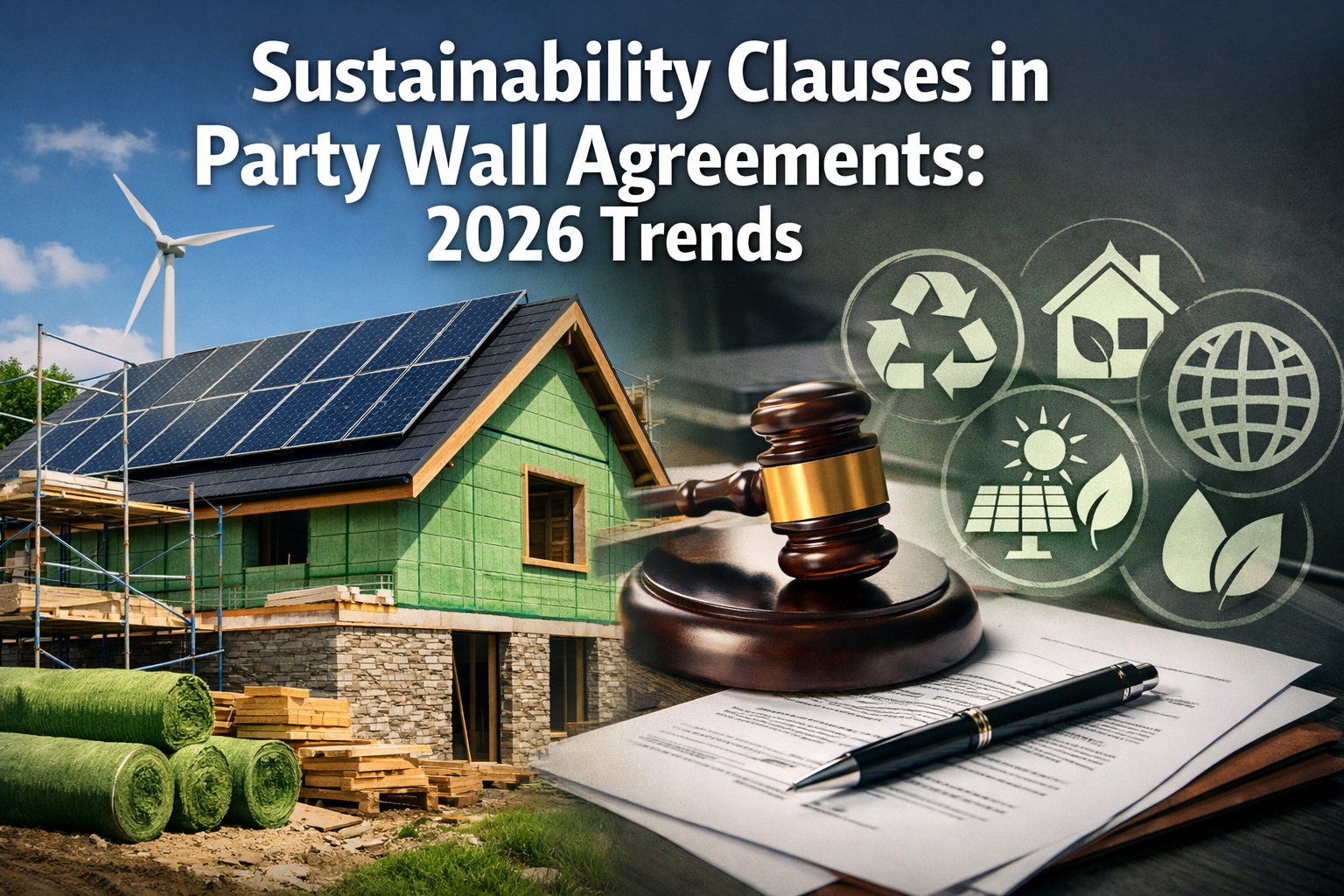
The construction industry stands at a pivotal crossroads in 2026, where environmental responsibility meets legal obligation. As eco-conscious developments reshape urban landscapes, Sustainability Clauses in Party Wall Agreements: 2026 Trends for Eco-Conscious Developments have emerged as essential tools for future-proofing property rights while protecting our planet. Traditional party wall procedures now integrate ecological data, transforming how neighbours collaborate on shared structures and setting new standards for green surveying practices.
Key Takeaways
- 🌱 Sustainability clauses in party wall agreements now address material selection, carbon footprint, and long-term environmental impact
- 📊 Ecological data integration into party wall awards helps properties comply with evolving green building regulations
- ⚖️ Legal frameworks are adapting to require environmental considerations in shared wall construction and maintenance
- 🏗️ Green surveying practices combine traditional party wall procedures with sustainability assessments
- 🔮 Future-proofing agreements against regulatory shifts protects both property values and environmental commitments
Understanding Party Wall Agreements in the Sustainability Era
Party wall agreements have traditionally focused on structural integrity, property rights, and dispute resolution. However, the landscape has dramatically shifted as environmental consciousness permeates every aspect of construction and property law.
The Evolution of Party Wall Legislation
The Party Wall etc. Act 1996 established the foundation for managing shared walls between properties. In 2026, this framework expands to accommodate sustainability requirements that were barely considered three decades ago. Modern interpretations now recognise that party wall works impact not just immediate neighbours, but broader environmental goals.
Property developers and homeowners increasingly face pressure to demonstrate environmental responsibility. This shift means that party wall awards must now address:
- Material sustainability and lifecycle assessments
- Energy efficiency implications of shared wall modifications
- Carbon footprint reduction strategies
- Waste management during construction
- Long-term environmental impact of proposed works
Why Sustainability Clauses Matter
Traditional party wall agreements focused solely on preventing damage and maintaining structural integrity. Today's agreements must balance these concerns with environmental stewardship. Sustainability clauses provide legal mechanisms to:
- Ensure eco-friendly materials are used in shared structures
- Establish accountability for environmental impact
- Create frameworks for ongoing green maintenance
- Protect against future regulatory non-compliance
- Align neighbouring properties' environmental commitments
Integrating Ecological Data into Party Wall Awards
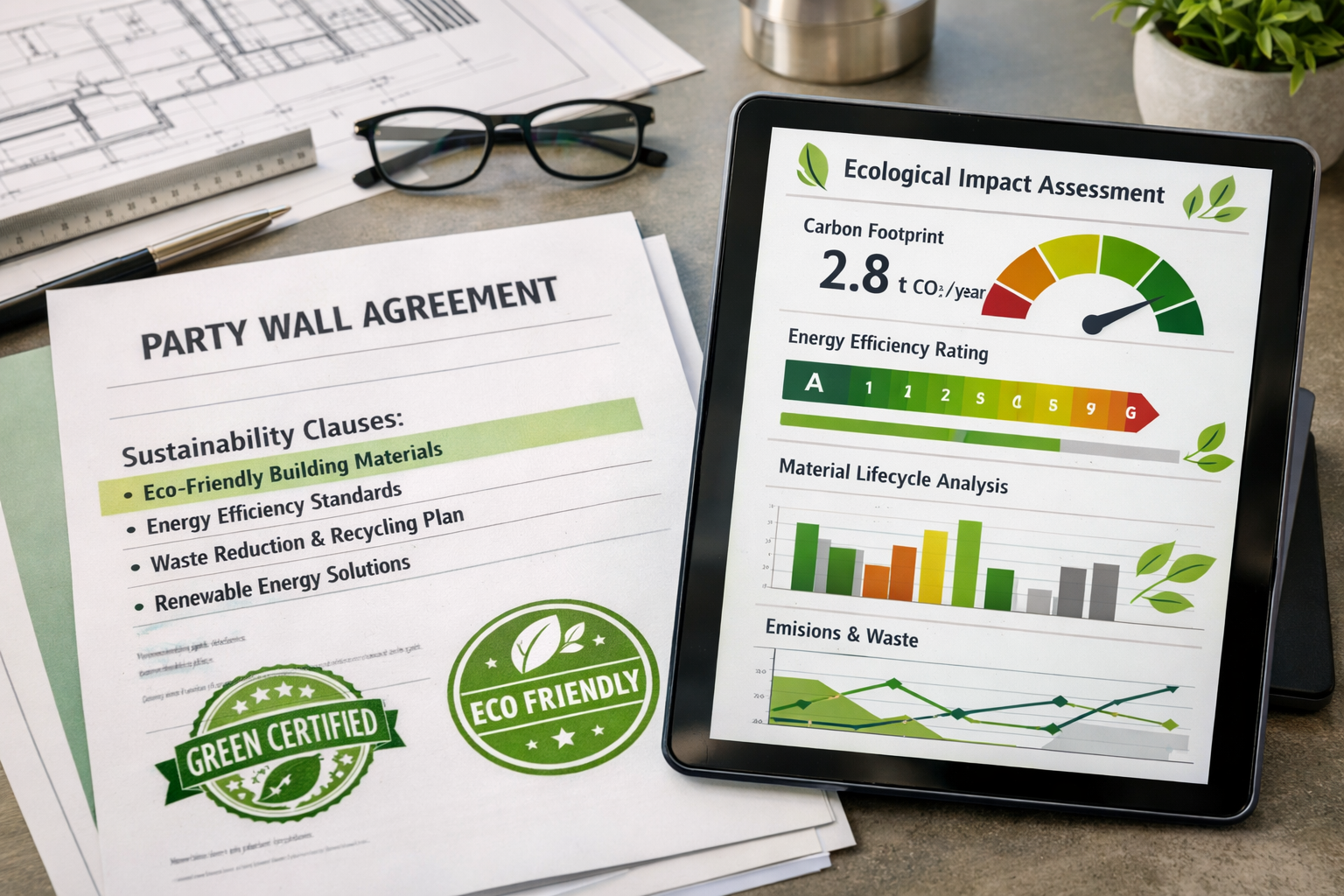
The integration of ecological data into party wall awards represents one of the most significant developments in 2026. This approach transforms traditional surveying into a comprehensive environmental assessment process.
Key Environmental Metrics in Modern Agreements
Contemporary party wall agreements incorporate specific environmental metrics that weren't part of traditional documentation. These include:
Carbon Footprint Calculations
- Embodied carbon in construction materials
- Transportation emissions for material delivery
- Expected operational carbon over the structure's lifetime
- Carbon offset commitments for unavoidable emissions
Material Sustainability Assessments
- Recycled content percentages
- Renewable resource certification
- Toxicity and chemical composition
- End-of-life recyclability ratings
Energy Performance Data
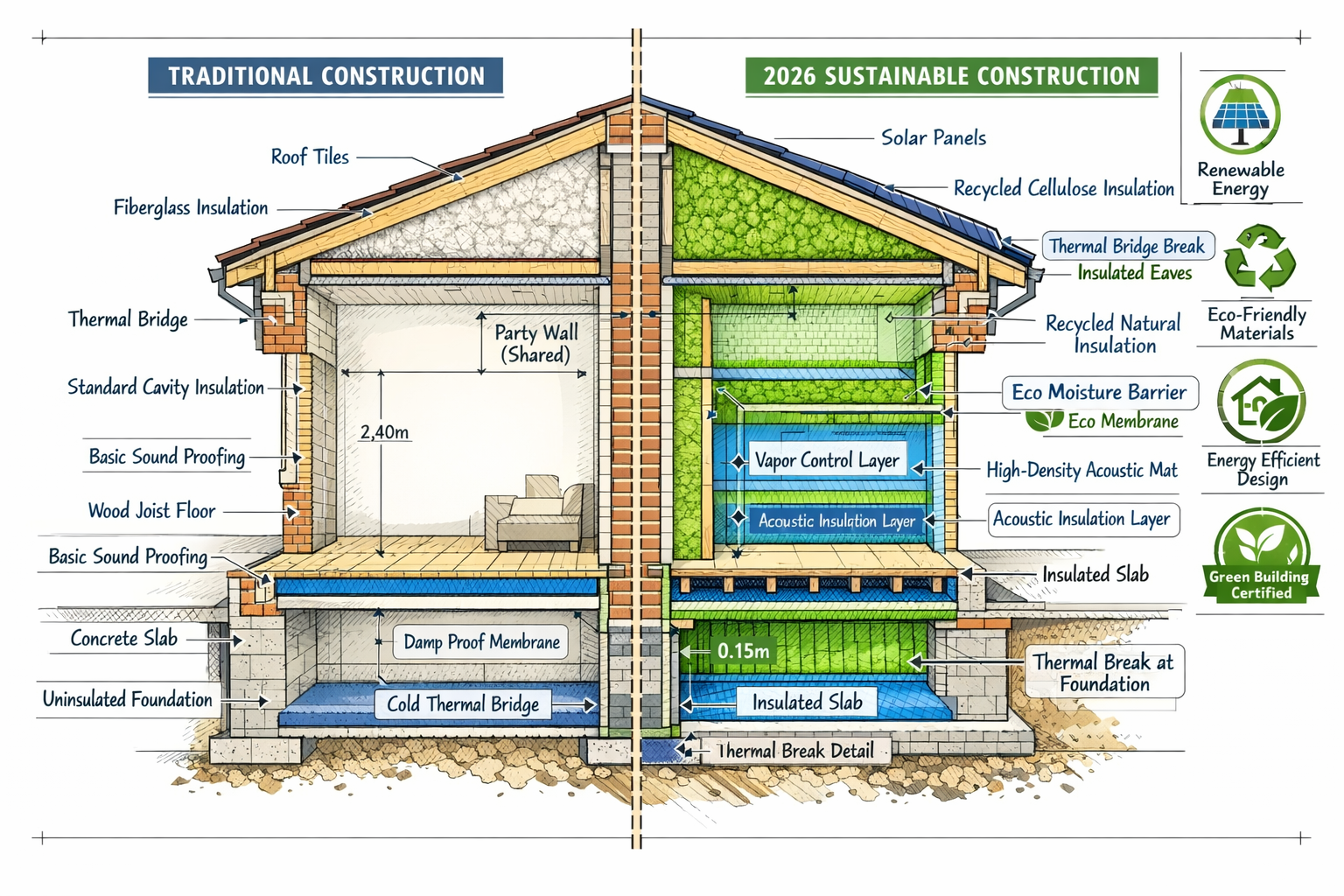
- Thermal bridging prevention measures
- Insulation R-values and U-values
- Air tightness specifications
- Expected energy savings from improvements
The Role of Green Surveying Practices
Green surveying practices merge traditional party wall expertise with environmental assessment capabilities. Surveyors in 2026 require knowledge beyond structural concerns, including:
Environmental Impact Assessment Skills
Professional surveyors now evaluate how proposed works affect:
- Indoor air quality for both properties
- Moisture management and mould prevention
- Acoustic performance using sustainable materials
- Natural light preservation and enhancement
Sustainable Material Verification
Surveyors verify claims about eco-friendly materials through:
- Third-party certification review
- Supply chain transparency checks
- Performance testing documentation
- Compliance with green building standards
Lifecycle Analysis Integration
Modern party wall notices increasingly reference lifecycle considerations, examining materials from extraction through disposal.
Sustainability Clauses in Party Wall Agreements: 2026 Trends for Eco-Conscious Developments
The specific trends shaping Sustainability Clauses in Party Wall Agreements: 2026 Trends for Eco-Conscious Developments reflect both regulatory evolution and market demand for greener construction practices.
Trend 1: Mandatory Sustainability Impact Statements
Many jurisdictions now require sustainability impact statements as part of party wall documentation. These statements outline:
| Component | Description | Verification Method |
|---|---|---|
| Material Sourcing | Origin and sustainability credentials | Supplier certifications |
| Waste Reduction | Planned waste minimisation strategies | Waste management plan |
| Energy Efficiency | Expected thermal performance improvements | Energy modelling reports |
| Water Management | Rainwater handling and moisture control | Drainage specifications |
| Biodiversity Impact | Effects on local ecosystems | Environmental assessment |
Trend 2: Shared Sustainability Commitments
Neighbours increasingly use party wall agreements to establish shared sustainability goals. These collaborative clauses might include:
- Joint investment in high-performance insulation
- Coordinated solar panel installation on shared roofs
- Mutual commitments to sustainable maintenance practices
- Shared monitoring of energy performance
- Collective carbon reduction targets
Trend 3: Future-Proofing Against Regulatory Changes
Environmental regulations continue evolving rapidly. Smart property owners incorporate adaptive clauses that automatically adjust to new requirements. These provisions ensure agreements remain compliant as standards tighten.
Regulatory Anticipation Strategies:
- Periodic review triggers tied to regulation updates
- Flexibility for material substitutions when better options emerge
- Upgrade pathways for enhanced performance
- Cost-sharing mechanisms for mandatory improvements
Trend 4: Digital Documentation and Transparency
The 2026 landscape embraces digital sustainability tracking within party wall agreements. This includes:
- Blockchain-verified material certifications
- Real-time energy performance monitoring
- Digital twins of shared structures
- Transparent supply chain documentation
- Automated compliance reporting
Trend 5: Circular Economy Principles
Modern agreements incorporate circular economy thinking, addressing:
- Material reuse from demolition or alteration
- Design for disassembly considerations
- Recycling commitments for future works
- Extended producer responsibility
- Waste hierarchy compliance
Practical Implementation: Drafting Effective Sustainability Clauses
Creating enforceable and meaningful sustainability clauses requires careful drafting that balances environmental ambition with practical feasibility.
Essential Components of Sustainability Clauses
1. Clear Material Standards
Specify acceptable materials with measurable criteria:
- Minimum recycled content percentages
- Maximum embodied carbon thresholds
- Required certifications (FSC, Cradle to Cradle, etc.)
- Prohibited substances lists
2. Performance Benchmarks
Establish quantifiable targets:
- Thermal performance requirements
- Acoustic rating minimums
- Air quality standards
- Durability expectations
3. Verification Procedures
Define how compliance will be confirmed:
- Third-party inspection requirements
- Documentation submission deadlines
- Testing protocols
- Dispute resolution for non-compliance
4. Maintenance Obligations
Address ongoing environmental responsibilities:
- Sustainable cleaning product requirements
- Periodic performance assessments
- Repair and replacement standards
- Upgrade triggers and procedures
Sample Sustainability Clause Framework
A comprehensive sustainability clause might include:
"All materials used in works affecting the party wall shall achieve a minimum Environmental Product Declaration (EPD) rating of Category A, with embodied carbon not exceeding 150 kgCO2e per square metre. The Building Owner shall provide independently verified documentation of material sustainability credentials within 14 days of commencement. Any proposed substitutions must demonstrate equal or superior environmental performance and receive Adjoining Owner approval."
Balancing Costs and Environmental Goals
One challenge in implementing sustainability clauses involves cost considerations. Eco-friendly materials sometimes carry premium prices, raising questions about fair cost distribution.
Cost Management Strategies:
- Lifecycle cost analysis showing long-term savings
- Phased implementation for major upgrades
- Shared investment in high-performance solutions
- Grant and incentive programme utilisation
- Value engineering to optimise environmental ROI
Understanding how to keep party wall costs down while maintaining sustainability commitments requires creative problem-solving and transparent communication.
Legal Considerations and Dispute Resolution
As sustainability clauses become standard, new legal questions emerge regarding enforcement, interpretation, and dispute resolution.
Enforceability Challenges
Courts increasingly recognise environmental commitments in party wall agreements, but enforcement can be complex:
Common Issues:
- Defining "sustainable" with sufficient specificity
- Verifying material certifications
- Measuring compliance with performance targets
- Determining remedies for environmental breaches
Dispute Resolution Mechanisms
Effective sustainability clauses include clear dispute resolution pathways:
- Technical Expert Determination – Environmental specialists assess compliance
- Mediation with Sustainability Focus – Mediators with green building expertise
- Stepped Enforcement – Graduated responses from notification to legal action
- Performance Bonds – Financial guarantees for environmental commitments
When disputes arise, having established procedures through a proper party wall agreement prevents costly litigation.
Insurance Implications
Sustainability commitments affect insurance coverage and risk assessment:
- Performance guarantees for environmental claims
- Professional indemnity for green surveying advice
- Liability coverage for environmental non-compliance
- Builder's risk policies covering sustainable materials
Regional Variations and Best Practices
Sustainability requirements vary significantly by location, with urban centres often leading regulatory innovation.
London's Leadership in Green Party Wall Practices
London boroughs have pioneered sustainability integration in party wall procedures. Surveyors operating in Central London, North London, South London, East London, and West London frequently encounter enhanced environmental requirements.
London-Specific Trends:
- Stricter embodied carbon limits in conservation areas
- Heritage building adaptation with sustainable materials
- Urban heat island mitigation requirements
- Air quality improvement mandates
International Perspectives
While party walls are primarily a UK legal concept, similar shared structure arrangements worldwide increasingly incorporate sustainability:
- European Union – Building Renovation Passport integration
- Australia – Green Star rating considerations
- Canada – Energy efficiency covenants
- United States – LEED certification requirements in party wall contexts
The Future of Sustainable Party Wall Agreements
Looking beyond 2026, several emerging trends will further transform party wall agreements.
Artificial Intelligence and Automated Compliance
AI-powered tools will revolutionise sustainability monitoring:
- Automated material verification through image recognition
- Predictive maintenance scheduling for optimal performance
- Real-time energy monitoring with anomaly detection
- Compliance forecasting based on regulatory trends
Biophilic Design Integration
Future agreements will address living walls, green roofs, and other biophilic elements on shared structures:
- Maintenance responsibilities for living systems
- Irrigation and drainage considerations
- Biodiversity enhancement commitments
- Urban agriculture provisions
Climate Resilience Clauses
As climate change intensifies, party wall agreements will incorporate resilience planning:
- Flood resistance measures
- Heat wave adaptation strategies
- Extreme weather damage prevention
- Climate-responsive material selection
Net-Zero Commitments
The push toward net-zero buildings will require party wall agreements addressing:
- Renewable energy generation on shared structures
- Carbon sequestration in building materials
- Operational carbon monitoring
- Retrofit pathways for existing party walls
Common Questions About Sustainability in Party Wall Agreements
Do sustainability clauses increase costs significantly?
While eco-friendly materials may have higher upfront costs, lifecycle analysis often reveals long-term savings through energy efficiency, durability, and reduced maintenance. Many sustainable options now compete favourably on initial cost as markets mature.
Can existing party wall agreements be amended for sustainability?
Yes, neighbours can mutually agree to amend existing agreements to incorporate sustainability clauses. This often occurs during planned maintenance or improvement works when both parties recognise environmental benefits.
What happens if sustainable materials aren't available?
Well-drafted clauses include substitution provisions allowing alternative materials that meet equivalent environmental performance standards, subject to mutual agreement or surveyor determination.
How are sustainability commitments verified?
Verification typically involves third-party certifications, material testing, performance monitoring, and professional surveyor inspections. Digital documentation and blockchain verification increasingly provide transparent proof.
Are sustainability clauses legally binding?
When properly drafted and incorporated into formal party wall awards or agreements, sustainability clauses are legally enforceable contracts. Courts increasingly uphold environmental commitments as legitimate property interests.
Conclusion: Building a Sustainable Future Through Party Wall Innovation
Sustainability Clauses in Party Wall Agreements: 2026 Trends for Eco-Conscious Developments represent far more than regulatory compliance—they embody a fundamental shift in how we conceptualise shared property rights and environmental responsibility. As ecological data integration becomes standard practice and green surveying evolves into mainstream expertise, party wall agreements transform into powerful tools for environmental stewardship.
The trends explored throughout this article—from mandatory sustainability impact statements to circular economy principles—demonstrate that environmental considerations are no longer optional add-ons but essential components of responsible property development. By future-proofing agreements against regulatory shifts and embracing collaborative sustainability commitments, property owners protect both their investments and the planet.
Actionable Next Steps
For property owners, developers, and surveyors navigating this evolving landscape:
✅ Review existing agreements – Assess whether current party wall documentation addresses sustainability adequately
✅ Engage qualified professionals – Work with surveyors experienced in green building practices and environmental assessment
✅ Start sustainability conversations early – Discuss environmental goals with neighbours before formal notice procedures begin
✅ Document environmental commitments – Ensure sustainability clauses are specific, measurable, and enforceable
✅ Stay informed on regulations – Monitor evolving environmental standards affecting party wall works
✅ Consider lifecycle costs – Evaluate materials and methods based on total environmental and financial impact
✅ Embrace digital tools – Utilise modern verification and monitoring technologies for transparency
The integration of sustainability into party wall agreements isn't just about compliance—it's about creating lasting value, protecting neighbourly relationships, and contributing to the broader transition toward sustainable built environments. As 2026 unfolds, those who embrace these trends position themselves at the forefront of responsible property development, ready for whatever environmental challenges and opportunities lie ahead.
By understanding and implementing the principles outlined in this guide, property stakeholders can navigate the intersection of traditional party wall law and modern environmental imperatives with confidence, creating agreements that serve both present needs and future generations.