


The UK rental market is experiencing a significant resurgence in 2026, with institutional landlords and property investors racing to expand their portfolios through strategic extensions and conversions. Yet amid this recovery, one critical compliance requirement continues to trip up even experienced developers: the Party Wall Act. Understanding Party Wall Act Essentials for 2026 Buy-to-Let Extensions: Surveyor Protocols in Recovering Markets has become non-negotiable for landlords seeking to maximize returns while maintaining legal compliance and neighborly relations. 🏘️
Whether you're planning a rear extension to add an extra bedroom or converting a loft to boost rental yields, navigating the complexities of party wall legislation requires careful attention to notice requirements, surveyor appointments, and cost management strategies. This comprehensive guide breaks down everything buy-to-let investors need to know about executing compliant extensions in today's competitive market.
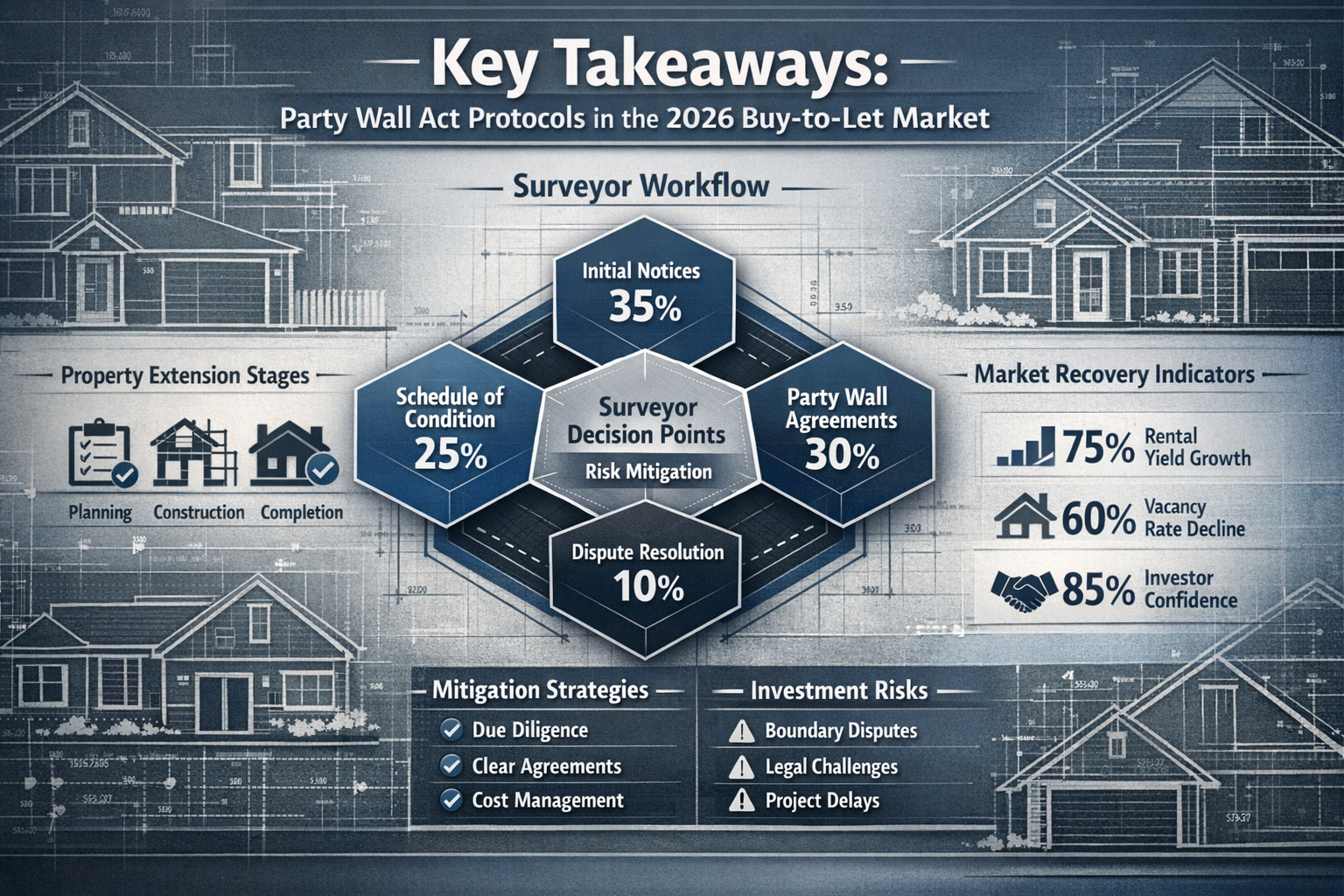
Key Takeaways
- Mandatory notice periods: Serve formal Party Wall Notices at least two months before starting extension work affecting shared walls, with specific notice types depending on your project scope
- Surveyor appointment protocols: When neighbors dissent or don't respond, proper surveyor selection processes protect both parties and ensure legally binding awards
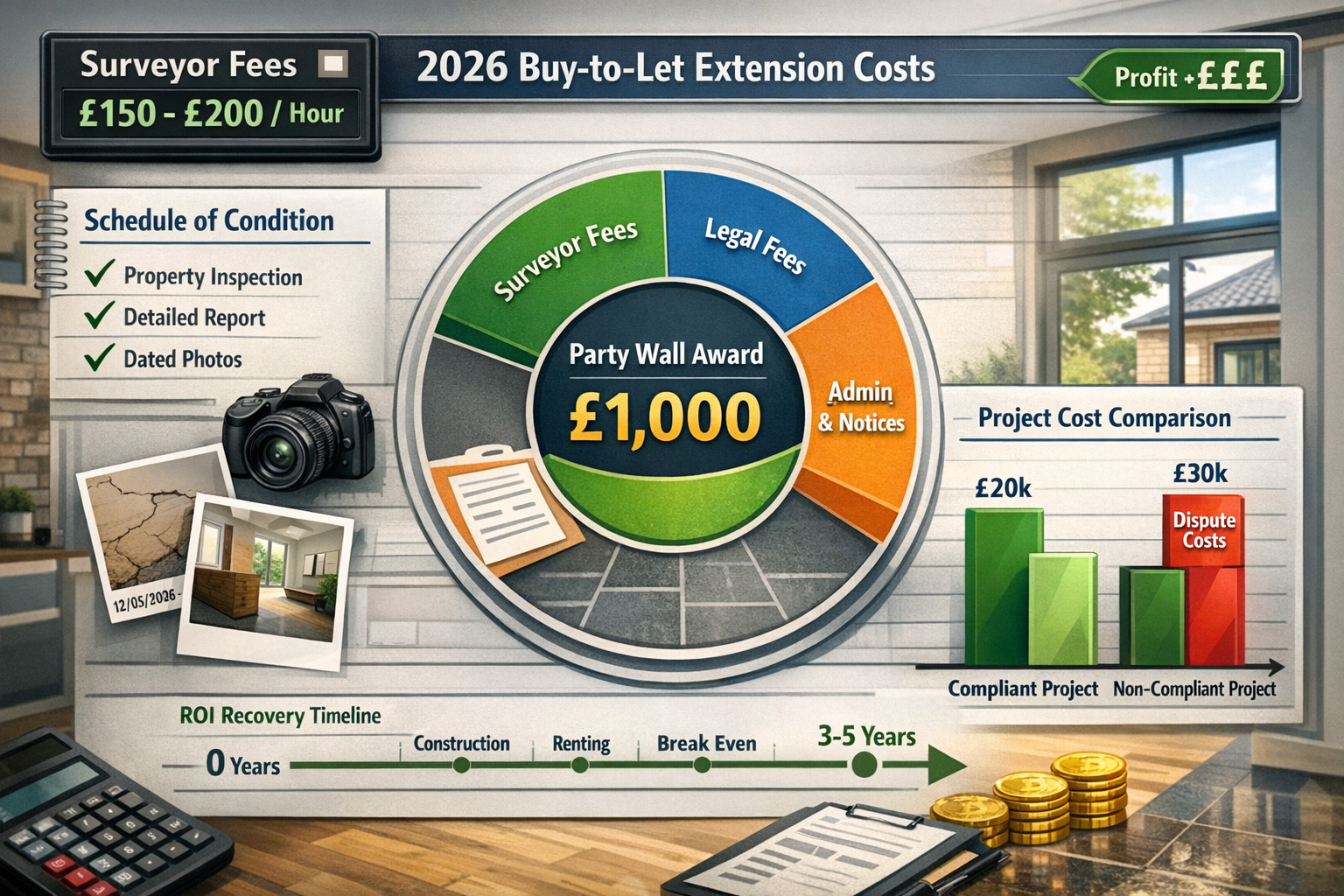
- Cost management in 2026: Party Wall Awards currently cost approximately £1,000 total, with surveyor rates between £150-£200 per hour—all payable by the building owner
- Schedule of condition protection: Pre-work documentation with dated photographs is essential for preventing costly disputes and establishing baseline property conditions
- Written consent advantages: Obtaining neighbor agreement can streamline the process, though professional condition surveys remain recommended for risk mitigation
Understanding Party Wall Act Essentials for 2026 Buy-to-Let Extensions
The Party Wall etc. Act 1996 remains the cornerstone legislation governing building work that affects shared boundaries between properties. For buy-to-let investors in 2026, this Act has taken on renewed importance as rental demand drives extension projects across London and other major UK cities.
What Qualifies as Party Wall Work?
Party wall work encompasses any construction that impacts:
- Shared walls between semi-detached or terraced properties
- Boundary walls built astride the property line
- Excavations within specific distances of neighboring foundations
- Structural alterations to existing party walls or structures
For buy-to-let extensions, the most common scenarios include rear extensions that tie into shared walls, loft conversions affecting party walls between properties, and basement excavations that come within three or six meters of adjoining foundations.
The Three Critical Notice Types
The Party Wall Act mandates different notice types based on your specific work:[1]
Section 1 Notices apply when building a new boundary wall directly on the property line. This notice must be served at least one month before work commences and allows neighbors to request that the wall be built as a party wall at shared expense.
Section 3 Notices cover alterations to existing party walls, including cutting into walls, inserting beams, or raising party walls for extensions. This requires a minimum two-month notice period before starting work.[1]
Section 6 Notices govern excavations near neighboring properties—specifically digging within three meters of a neighbor's structure and below their foundation level, or within six meters and cutting a line at 45 degrees to their foundation base.[1]
Understanding which types of party wall works apply to your buy-to-let extension project is the first step toward compliance.
Why 2026 Compliance Matters More Than Ever
The recovering rental market has created a perfect storm of compliance challenges. With more landlords undertaking extensions simultaneously, surveyor availability has tightened, and neighbors have become more aware of their rights under the Act. Non-compliance can result in:
- ⚠️ Injunctions halting construction mid-project
- 💰 Financial penalties and legal costs
- 📉 Rental income losses from project delays
- 🏛️ Retrospective awards requiring expensive remediation
For institutional landlords managing multiple properties, establishing robust surveyor protocols has become a competitive advantage in 2026's fast-moving market.
Surveyor Protocols and Appointment Procedures for Buy-to-Let Projects

The surveyor appointment process represents a critical juncture in Party Wall Act compliance. Understanding these protocols is essential for Party Wall Act Essentials for 2026 Buy-to-Let Extensions: Surveyor Protocols in Recovering Markets.
The 14-Day Response Window
Once you've served a party wall notice, your neighbor has 14 days to respond in one of three ways:
- Consent in writing to the proposed work
- Dissent and trigger the surveyor appointment process
- Fail to respond (which legally counts as dissent)[1]
Many buy-to-let investors mistakenly assume silence means consent. In reality, non-response activates the same surveyor requirements as formal dissent, making proactive communication with neighbors essential.
Three Surveyor Appointment Options
When dissent occurs or neighbors don't respond, the Act provides three pathways:[1]
Option 1: Agreed Surveyor
Both parties jointly appoint a single surveyor to act impartially. This is typically the most cost-effective approach, with the building owner paying all fees. The agreed surveyor must maintain neutrality while preparing the Party Wall Award.
Option 2: Two Surveyors
Each party appoints their own surveyor—the building owner selects a building owner's surveyor while the adjoining owner chooses an adjoining owner's surveyor. These two professionals then work together to produce the award. If they disagree on any matter, they must appoint a third surveyor to resolve the dispute.
Option 3: Third Surveyor
When the two appointed surveyors cannot reach agreement, they select a neutral third surveyor whose decision becomes binding. This adds another layer of cost but ensures disputes don't derail projects indefinitely.
Surveyor Selection Criteria for 2026 Markets
Choosing the right surveyor can make or break your extension timeline. For buy-to-let projects in recovering markets, prioritize surveyors with:
- ✅ RICS accreditation and party wall specialization
- ✅ Local market knowledge (especially important in London boroughs)
- ✅ Buy-to-let experience understanding investor timelines and ROI concerns
- ✅ Availability to meet 2026's high-demand conditions
- ✅ Clear fee structures with transparent hourly rates
Regional specialists like a party wall surveyor in Central London or party wall surveyor in North London often provide faster service due to their familiarity with local building patterns and common extension types.
The Party Wall Award: Your Legal Protection
The surveyor's primary deliverable is the Party Wall Award—a legally binding document that:
- Describes the proposed work in detail
- Sets conditions for how work must be carried out
- Establishes working hours and access arrangements
- Includes a schedule of condition documenting the adjoining property's current state
- Specifies dispute resolution procedures
Understanding party wall awards and their contents is crucial for buy-to-let investors. This document becomes your primary defense if neighbors later claim damage from your extension work.
"The Party Wall Award serves as both a roadmap for compliant construction and an insurance policy against unfounded damage claims. For buy-to-let investors, it's an essential risk management tool that protects rental income streams."
Can You Proceed Without a Surveyor?
If your neighbor provides written consent following your party wall notice, you technically don't need to appoint a surveyor.[4] However, this approach carries significant risks for buy-to-let investors. Even with having a party wall agreement without a surveyor, you should still commission a condition survey to document the adjoining property's pre-work state.
Without this documentation, you're vulnerable to claims that your extension caused damage that may have existed previously—potentially costing thousands in unwarranted repairs and jeopardizing your rental income during disputes.
Cost Management and Recovery Strategies in Recovering Markets
Understanding the financial implications of Party Wall Act compliance is essential for maintaining healthy buy-to-let margins in 2026's competitive rental market.
2026 Party Wall Cost Breakdown
Current market rates for Party Wall Awards and surveyor services have stabilized at the following levels:[2]
| Cost Component | 2026 Price Range | Who Pays |
|---|---|---|
| Complete Party Wall Award | £900-£1,200 | Building owner |
| Surveyor hourly rate | £150-£200/hour | Building owner |
| Schedule of condition | £300-£500 | Building owner |
| Dispute resolution (third surveyor) | £1,500-£3,000 additional | Building owner |
| Neighbor's surveyor fees | Variable | Building owner |
The building owner bears all party wall costs, including the adjoining owner's surveyor fees if they choose to appoint one.[2] This cost structure makes it essential to factor party wall expenses into your extension budget from the outset.
Strategies to Keep Party Wall Costs Down
For buy-to-let investors managing multiple properties, cost control becomes paramount. Consider these approaches for how to keep party wall costs down:
1. Early Neighbor Communication
Proactive discussions before serving formal notices can prevent dissent and reduce the need for multiple surveyors. Explain your plans, address concerns, and demonstrate your commitment to minimizing disruption.
2. Propose an Agreed Surveyor
Suggest appointing a single agreed surveyor rather than each party selecting their own. This typically cuts costs by 30-50% while maintaining proper compliance.
3. Bundle Multiple Properties
If you're extending several buy-to-let properties in the same area, negotiate volume discounts with surveyors who can handle multiple awards efficiently.
4. Choose Experienced Surveyors
While hourly rates may seem high, experienced surveyors complete awards faster and with fewer complications. A surveyor charging £200/hour who finishes in 5 hours costs less than one charging £150/hour who takes 10 hours.
5. Maintain Clear Documentation
Provide surveyors with comprehensive plans, structural calculations, and contractor details upfront. This reduces back-and-forth and speeds up the award process.
Recovering Costs Through Enhanced Rental Yields
The key to justifying party wall expenses in buy-to-let projects lies in the rental uplift your extension generates. Consider this typical scenario:
Before Extension:
- 2-bedroom terraced house
- Monthly rent: £1,400
- Annual rental income: £16,800
After Rear Extension (Adding 3rd Bedroom):
- 3-bedroom terraced house
- Monthly rent: £1,850
- Annual rental income: £22,200
- Annual uplift: £5,400
With total party wall costs around £1,200, you recover these expenses within 3 months of achieving the higher rent. Over a 5-year holding period, the extension generates an additional £27,000 in rental income—making party wall compliance costs negligible in comparison.
Loft Conversion Compliance in 2026
Loft conversions have surged in popularity among buy-to-let investors in 2026, driven by strong rental demand for additional bedrooms.[3] However, these projects require mandatory party wall compliance when work affects shared walls or structures between adjoining properties.[3]
Common loft conversion scenarios triggering party wall requirements include:
- 🏠 Raising party walls to create additional headroom
- 🔨 Cutting into party walls to install steel beams
- 🪜 Creating new staircases that affect party structures
- 🏗️ Structural alterations to shared roof structures
The 2026 loft conversion surge has created high demand for surveyor services, making early booking essential.[3] Investors planning loft conversions should engage surveyors at least 3-4 months before intended start dates to ensure availability.
Schedule of Condition: Your Insurance Policy
The schedule of condition represents one of the most valuable components of party wall compliance.[2] This detailed record documents the adjoining property's condition before work begins through:
- 📸 Comprehensive dated photographs of all rooms
- 📝 Written descriptions of existing cracks, settlement, or defects
- 📐 Measurements of any pre-existing structural issues
- 🎥 Video walkthroughs (increasingly common in 2026)
This documentation protects buy-to-let investors from claims that their extension caused damage that actually existed beforehand. Without it, you may face expensive remediation costs for problems you didn't create, directly impacting your rental income and property value.
Professional surveyors typically charge £300-£500 for a thorough schedule of condition, but this investment can save thousands in disputed damage claims.
Navigating Regional Variations and Local Considerations
While the Party Wall Act applies across England and Wales, practical implementation varies by region and local market conditions. Buy-to-let investors operating in different areas should understand these nuances.
London Market Dynamics
London's dense housing stock and active buy-to-let market create unique party wall challenges:
- Higher surveyor demand: Competition for experienced surveyors peaks during spring and summer building seasons
- More complex ownership structures: Leasehold properties and freeholder involvement add layers of complexity
- Conservation area restrictions: Additional planning considerations may affect party wall work timing
- Neighbor awareness: London property owners tend to be more informed about their party wall rights
Investors working across London boroughs benefit from engaging regional specialists like a party wall surveyor in West London, party wall surveyor in East London, or party wall surveyor in South London who understand local building patterns and common extension types.
Institutional Landlord Considerations
Larger portfolio landlords and institutional investors face additional strategic considerations when implementing Party Wall Act protocols:
Standardized Processes
Develop template procedures for party wall compliance across all properties, including standard neighbor communication letters, preferred surveyor lists, and documentation requirements.
Relationship Management
For landlords owning multiple properties on the same street or development, maintaining positive neighbor relationships becomes a long-term asset that facilitates smoother future projects.
Risk Assessment
Incorporate party wall compliance timelines and costs into acquisition due diligence when evaluating potential buy-to-let properties for extension or conversion.
Legal Team Coordination
Ensure in-house or external legal advisors understand party wall requirements and can quickly address disputes before they escalate to formal proceedings.
Common Pitfalls and How to Avoid Them
Even experienced buy-to-let investors can stumble on party wall compliance. Here are the most frequent mistakes and their solutions:
❌ Pitfall 1: Starting Work Before Notice Expires
The Problem: Serving a notice doesn't mean you can start immediately. Section 3 Notices require a full two-month waiting period before work can legally commence.[1]
The Solution: Build notice periods into your project timeline from the start. Serve notices at least 10-12 weeks before your planned start date to account for the notice period plus time for surveyor appointments and award preparation.
❌ Pitfall 2: Assuming Silence Means Consent
The Problem: When neighbors don't respond to your notice within 14 days, many landlords assume they can proceed. In reality, non-response legally counts as dissent and triggers surveyor requirements.[1]
The Solution: Follow up proactively with neighbors after serving notices. If they don't respond, immediately initiate the surveyor appointment process rather than assuming consent.
❌ Pitfall 3: Skipping the Schedule of Condition
The Problem: To save costs, some investors skip the pre-work condition survey. This leaves them vulnerable to unfounded damage claims that can cost far more than the survey would have.
The Solution: Always commission a comprehensive schedule of condition, even when neighbors seem friendly and cooperative. Consider it essential insurance for your rental income stream.
❌ Pitfall 4: Using Inexperienced Surveyors
The Problem: Choosing the cheapest surveyor often backfires when they lack party wall expertise, leading to delayed awards, errors requiring correction, or awards that don't adequately protect your interests.
The Solution: Prioritize RICS-accredited surveyors with specific party wall experience and local market knowledge. The modest additional cost pays for itself through faster, more robust awards.
❌ Pitfall 5: Poor Contractor Communication
The Problem: Contractors who don't understand party wall requirements may inadvertently violate award conditions, triggering neighbor complaints and potential injunctions.
The Solution: Ensure your contractor receives and reviews the Party Wall Award before starting work. Include award compliance as a contractual requirement with penalties for violations.
Essential Documentation and Record-Keeping
Proper documentation forms the backbone of successful party wall compliance for buy-to-let extensions. Maintain organized records of:
Pre-Work Documentation
- ✅ Architectural plans and structural calculations
- ✅ Copies of all served notices with proof of delivery
- ✅ Written responses from neighbors (consent or dissent)
- ✅ Surveyor appointment letters and fee agreements
- ✅ Complete Party Wall Award with all schedules
- ✅ Schedule of condition with dated photographs
- ✅ Contractor acknowledgment of award requirements
During-Work Documentation
- ✅ Daily site logs noting any neighbor interactions
- ✅ Photographs of work progress at key stages
- ✅ Records of any variations to the approved work
- ✅ Documentation of access arrangements and timings
- ✅ Incident reports for any damage or complaints
Post-Work Documentation
- ✅ Completion photographs showing finished work
- ✅ Post-work condition survey of adjoining property
- ✅ Written confirmation from neighbors of satisfactory completion
- ✅ Final surveyor sign-off and fee reconciliation
- ✅ Archive of all correspondence and decisions
This comprehensive documentation protects your buy-to-let investment not only during the current project but also for future refinancing, sales, or additional work on the property.
Future-Proofing Your Buy-to-Let Portfolio
As we progress through 2026 and beyond, several trends are shaping party wall compliance for buy-to-let investors:
Digital Documentation Standards
Surveyors increasingly use digital tools for schedules of condition, including 360-degree photography, drone surveys for roof work, and cloud-based document management. Investors should embrace these technologies for better record-keeping and easier access during disputes.
Sustainability and Extension Design
The push toward energy-efficient rental properties means many 2026 extensions incorporate sustainability features. Ensure your party wall notices accurately describe any non-traditional construction methods or materials that might affect adjoining properties.
Tenant Communication Protocols
With extensions increasingly occurring on occupied buy-to-let properties, establishing clear tenant communication protocols about party wall work, access requirements, and potential disruption has become essential for maintaining tenant satisfaction and avoiding void periods.
Regulatory Evolution
While the Party Wall Act itself remains unchanged, case law continues to evolve. Stay informed about significant rulings that might affect surveyor protocols or owner obligations through professional landlord associations and legal updates.
Conclusion
Mastering Party Wall Act Essentials for 2026 Buy-to-Let Extensions: Surveyor Protocols in Recovering Markets has become a fundamental competency for successful property investors. As rental demand drives extension activity across the UK, the landlords who thrive will be those who view party wall compliance not as a bureaucratic hurdle but as a strategic framework for protecting their investments and maintaining productive neighbor relationships.
The key principles bear repeating:
Serve proper notices at least two months before starting work, using the correct notice type for your specific project. Never assume you can skip this step or that informal neighbor agreements suffice.
Engage qualified surveyors early in your planning process, prioritizing RICS-accredited professionals with party wall specialization and local market knowledge. Their expertise prevents costly mistakes and accelerates project timelines.
Document everything thoroughly, particularly through comprehensive schedules of condition that protect you from unfounded damage claims. This documentation is essential insurance for your rental income stream.
Budget appropriately for party wall costs from the outset, recognizing that £1,000-£1,200 in compliance expenses represents a minor fraction of the rental uplift your extension will generate over time.
Communicate proactively with neighbors, contractors, and surveyors to minimize disputes and keep projects on track. In 2026's competitive rental market, time is money.
Next Steps for Buy-to-Let Investors
If you're planning an extension on your rental property, take these immediate actions:
- Review your plans against party wall requirements to identify which notice types apply
- Research qualified surveyors in your area and request fee quotes for your specific project
- Initiate neighbor conversations before serving formal notices to gauge concerns and build goodwill
- Integrate party wall timelines into your overall project schedule, adding buffer time for unexpected complications
- Consult with specialists if you're undertaking complex work or managing multiple properties simultaneously
For investors operating in London, connecting with experienced local surveyors who understand the unique dynamics of the capital's rental market can provide significant competitive advantages.
The recovering buy-to-let market of 2026 offers tremendous opportunities for investors willing to execute extensions strategically and compliantly. By mastering party wall protocols now, you position your portfolio for sustainable growth and maximum rental yields in the years ahead. 🏗️💼
References
[1] Understanding Party Walls – https://www.oakfieldsurveyors.co.uk/party-wall/understanding-party-walls/
[2] Party Wall Agreement – https://hoa.org.uk/advice/guides-for-homeowners/i-am-improving/party-wall-agreement/
[3] Party Wall Surveying Surge In 2026 Loft Conversions Navigating High Demand Compliance During Housing Uptick – https://nottinghillsurveyors.com/blog/party-wall-surveying-surge-in-2026-loft-conversions-navigating-high-demand-compliance-during-housing-uptick
[4] Party Wall Agreements What You Need To Know – https://www.fmb.org.uk/find-a-builder/ultimate-guides-to-home-renovation/party-wall-agreements-what-you-need-to-know.html