


When planning building works that affect a shared wall or boundary, silence from your neighbour isn't golden—it's legally problematic. Many property owners mistakenly assume that when a neighbour fails to respond to a party wall notice, they can simply proceed with their construction plans. However, Resolving Party Wall Notice Disputes When Neighbours Don't Respond: Escalation Protocols and Award Procedures requires understanding a critical legal principle: silence equals dissent, not consent. This automatic trigger activates formal dispute resolution mechanisms that protect both parties' interests and ensure compliance with the Party Wall etc. Act 1996.
In 2026, navigating non-responsive neighbours remains one of the most common challenges in party wall matters. Whether your neighbour is deliberately avoiding engagement, away from the property, or simply doesn't understand their obligations, the law provides clear pathways forward. Understanding these escalation protocols and award procedures prevents costly delays, legal complications, and potential court injunctions that could halt your entire project.
Key Takeaways
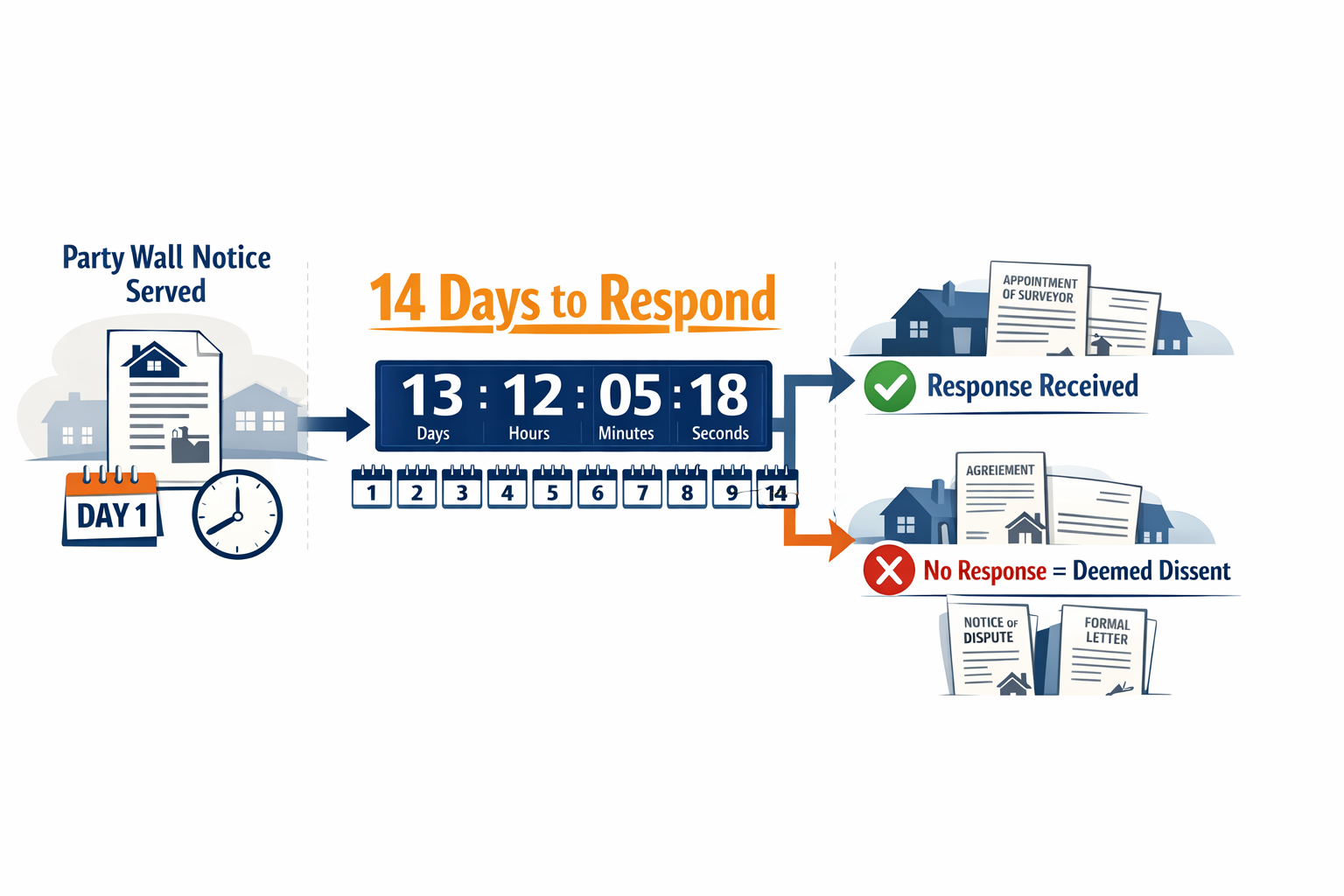
- Silence means dissent: When a neighbour doesn't respond within 14 days of receiving a party wall notice, the law automatically interprets this as disagreement, triggering mandatory dispute resolution procedures[1][4].
- Surveyor appointment is required: Non-response necessitates appointing qualified party wall surveyors who will prepare a legally binding award, regardless of whether your neighbour engages in the process[1].
- Strict timelines apply: Different notice periods exist for various works (2 months for party wall works, 1 month for excavations), and neighbours have exactly 14 days to respond from receipt[1][3].
- Awards are enforceable: Party wall awards created through proper procedures are legally binding documents that allow works to proceed even without neighbour cooperation[5].
- Prevention saves time and money: Early communication and properly prepared notices significantly reduce the likelihood of disputes and streamline the entire process[4].
Understanding the Legal Framework: When Silence Becomes Dissent
The 14-Day Response Rule and Its Implications
Under the Party Wall etc. Act 1996, neighbours have exactly 14 days from receipt of a party wall notice to provide a written response[1][3]. This seemingly straightforward requirement carries profound legal weight that many property owners fail to appreciate.
When those 14 days pass without any response, the law doesn't create ambiguity—it makes a definitive determination. Non-response is legally interpreted as dissent, not consent[1][4]. You cannot assume silence means agreement or proceed as if permission has been granted[3]. This automatic dissent trigger exists to protect adjoining owners' rights and ensure proper procedures are followed.
The same dispute resolution process begins if a neighbour:
- Formally refuses consent in writing[3]
- Responds with conditions you cannot accept
- Fails to appoint a surveyor within 10 days of being requested to do so
- Objects to specific aspects of the proposed works
Notice Period Requirements for Different Works
Understanding which notice period applies to your project is crucial for Resolving Party Wall Notice Disputes When Neighbours Don't Respond: Escalation Protocols and Award Procedures. The Act establishes different timeframes based on work type:
| Work Type | Notice Period | Notice Type |
|---|---|---|
| Works to existing party wall or structure | 2 months | Party Structure Notice |
| Building a new wall at the boundary | 1 month | Line of Junction Notice |
| Excavation within 3 metres (deeper than neighbour's foundation) | 1 month | Adjacent Excavation Notice |
| Excavation within 6 metres (affecting load-bearing capacity) | 1 month | Adjacent Excavation Notice |
These notice periods must be observed before works commence[1][2]. Serving notice too late or proceeding without proper notice constitutes a breach of the Party Wall Act and may result in court injunctions stopping work and potential financial liability for damages[1].
For detailed guidance on different work types, review our comprehensive guide on types of party wall works.
The Escalation Process: From Non-Response to Surveyor Appointment
Step 1: Confirming Proper Notice Service
Before escalating a non-response situation, verify that your original notice was properly served. An improperly prepared or incorrectly served notice may be invalid, potentially delaying your project[4]. Your party wall notice must include:
✅ Accurate property descriptions for both building owner and adjoining owner properties
✅ Detailed scope of works with specific descriptions of what will be done
✅ Proposed start date for the works
✅ Technical drawings and plans showing the extent of works
✅ Your contact information and signature
✅ Clear statement of the neighbour's rights and response obligations
Experts recommend early, open communication with neighbours before serving formal notice to prevent disputes[4]. A courtesy conversation explaining your plans can significantly reduce resistance and misunderstanding.
Step 2: Documenting the Non-Response
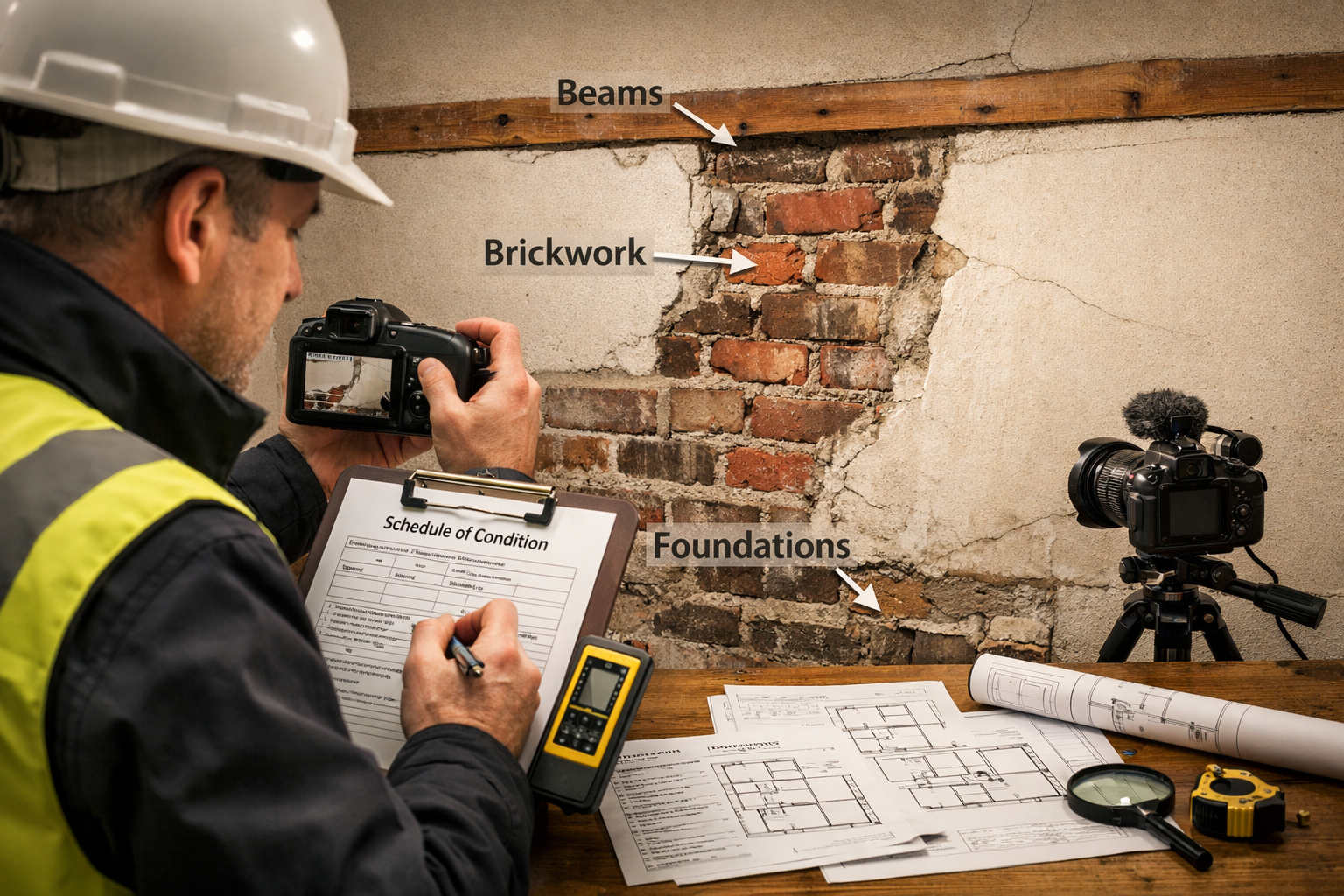
Once the 14-day period expires without response, document this carefully:
📋 Keep records of when and how the notice was served (recorded delivery receipts, hand-delivery acknowledgments)
📋 Note the exact date the 14-day period expired
📋 Document any attempted communications (emails, phone calls, door knocks)
📋 Photograph the property to confirm it appears occupied or vacant
This documentation becomes important if disputes escalate or if questions arise about proper procedure.
Step 3: Appointing Party Wall Surveyors
When a neighbour dissents or doesn't respond, you must appoint a qualified party wall surveyor to prepare a party wall agreement or award[1]. This professional will manage the dispute resolution process and create the legally binding documentation needed to proceed.
You have two surveyor appointment options:
Option 1: Agreed Surveyor 🤝
Both parties mutually agree on a single surveyor who acts impartially for both sides. This approach typically costs less and moves faster, but requires neighbour cooperation to agree on the appointment.
Option 2: Two Surveyors 👥
Each party appoints their own surveyor, and these two professionals work together (potentially appointing a third surveyor to resolve any disagreements between them). This approach works when neighbours won't cooperate or want independent representation.
When your neighbour is non-responsive, you'll typically need to proceed with Option 2. Here's the process:
- Appoint your own surveyor (the "building owner's surveyor")
- Write to your neighbour requesting they appoint their surveyor within 10 days
- If they still don't respond, your surveyor can appoint a surveyor on their behalf (the "adjoining owner's surveyor")
- Both surveyors work together to inspect properties and prepare the award
The appointed surveyors have legal authority to act even if your neighbour remains completely unengaged throughout the process[5]. This ensures your project can move forward despite non-cooperation.
For those carrying out works, understanding this appointment process is essential for maintaining project timelines.
Award Procedures: Creating Legally Binding Documentation
What Party Wall Awards Contain
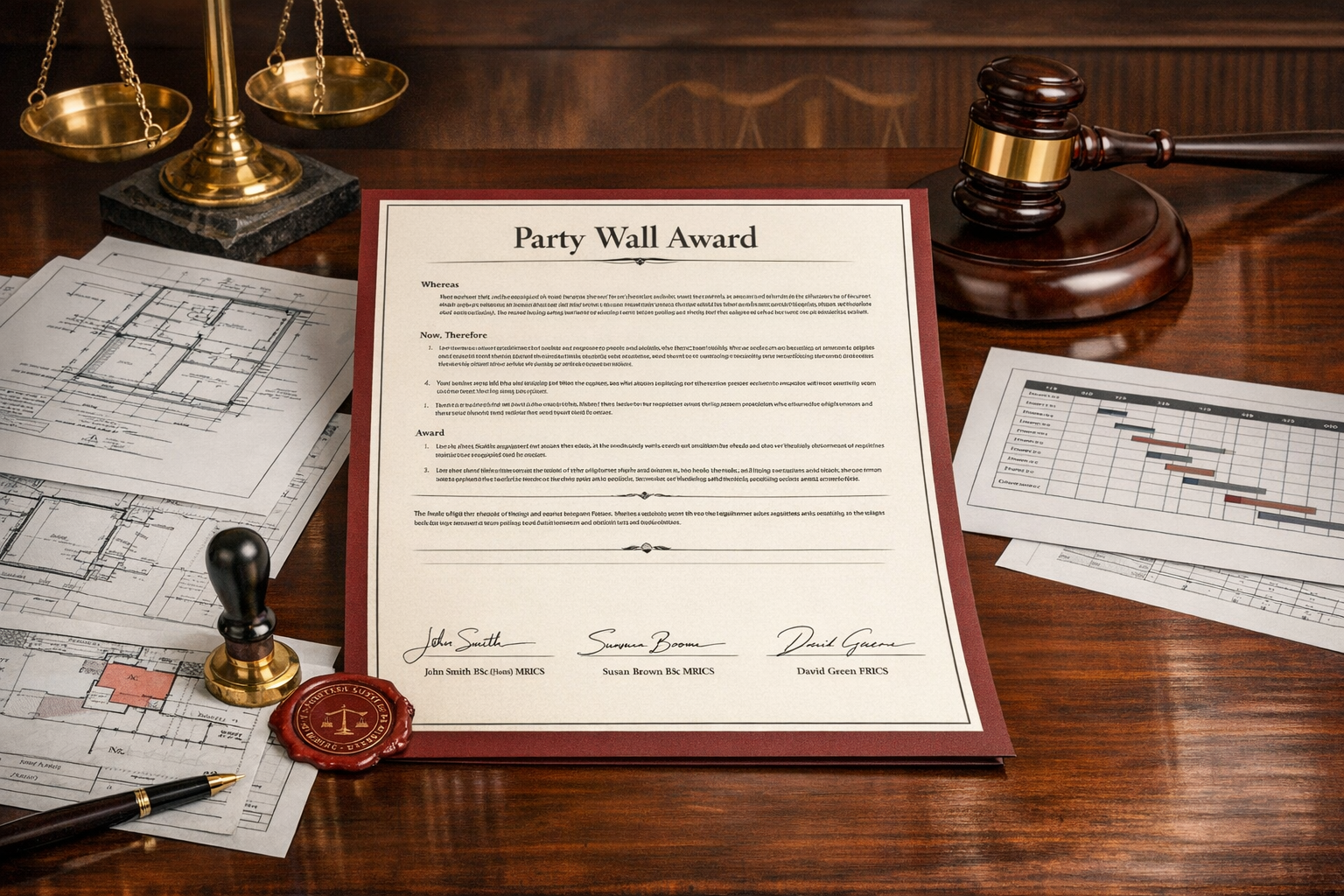
A party wall award is the formal legal document that resolves the dispute and authorizes works to proceed. When appointed, party wall surveyors inspect properties, assess plans, and establish an agreement setting out essential guidelines for how works should progress[1].
The party wall award typically includes:
🔍 Detailed description of proposed works with technical specifications
🔍 Schedule of condition documenting the current state of the adjoining property[2]
🔍 Working hours and access arrangements specifying when work can occur
🔍 Protective measures required to prevent damage
🔍 Insurance requirements for the building owner
🔍 Dispute resolution procedures if problems arise during works
🔍 Cost allocation determining who pays surveyor fees
🔍 Timelines for completion of various work stages
The surveyor must prepare a schedule of condition documenting the current state of the property before works begin[2]. This photographic and written record protects both parties by establishing a baseline for assessing any damage claims.
Timeline for Award Preparation
Understanding realistic timelines helps manage expectations when Resolving Party Wall Notice Disputes When Neighbours Don't Respond: Escalation Protocols and Award Procedures:
Week 1-2: Initial surveyor appointments and property inspections
Week 3-4: Draft award preparation and technical review
Week 5-6: Award finalization and service to both parties
Week 7+: 14-day appeal period (either party can appeal to the Third Surveyor)
Total timeline typically ranges from 6-10 weeks from initial non-response to having an enforceable award in place. This timeline can extend if complications arise or if a third surveyor becomes necessary.
For those concerned about expenses, our guide on how to keep party wall costs down provides practical strategies for managing surveyor fees and related expenses.
Award Enforceability and Legal Standing
Once served, party wall awards are legally binding on both parties and remain attached to the properties, affecting future owners[5]. The award allows you to:
✔️ Proceed with works as specified in the award
✔️ Access the adjoining property if necessary and specified in the award
✔️ Enforce compliance if the neighbour interferes with authorized works
✔️ Seek legal remedies if the neighbour violates award terms
Importantly, awards are enforceable even if the adjoining owner never engaged with the process. The legal framework ensures that one party's non-cooperation cannot indefinitely block legitimate building works.
If either party disagrees with the award, they have 14 days to appeal to the appointed Third Surveyor or, in some cases, to the County Court[5]. However, the grounds for appeal are limited, and awards are generally upheld unless procedural errors occurred.
Best Practices for Preventing and Managing Non-Response Situations
Pre-Notice Communication Strategies
Prevention remains more effective than resolution. Before serving formal notices:
💬 Knock on the door and introduce yourself and your plans
💬 Provide preliminary information about the proposed works
💬 Share visual materials like architect drawings to help neighbours understand
💬 Address concerns proactively before they become formal objections
💬 Explain the party wall process so neighbours understand their rights and obligations
Detailed notice documentation including exact scope of works, accurate dates, plans, and sections supports transparency and acceptance[1]. The more information you provide upfront, the less uncertainty and anxiety your neighbour experiences.
Working with Professional Surveyors
Selecting qualified professionals significantly impacts the smoothness of Resolving Party Wall Notice Disputes When Neighbours Don't Respond: Escalation Protocols and Award Procedures. Look for surveyors who:
🎓 Are members of professional bodies (RICS, FPWS, PYWS)
🎓 Have specific party wall expertise and experience
🎓 Understand local building practices and regulations
🎓 Communicate clearly with all parties
🎓 Have a track record of efficient award preparation
Whether you need a party wall surveyor in North London, South London, or other areas, choosing experienced professionals prevents procedural errors that could delay your project.
Common Pitfalls to Avoid
❌ Assuming silence means consent and proceeding without proper awards
❌ Serving inadequate notices lacking required technical details
❌ Missing statutory deadlines for notice periods
❌ Failing to document service of notices and communications
❌ Choosing unqualified surveyors to save money
❌ Starting works before the award is finalized
❌ Ignoring the schedule of condition requirements
Failing to issue a required party wall notice or proceeding without proper dispute resolution constitutes a breach of the Party Wall Act and may result in court injunctions stopping work and potential financial liability for damages[1].
Special Circumstances: Absentee Owners and Unoccupied Properties
Tracing Absent Neighbours
When properties appear unoccupied or owners cannot be located, additional steps are necessary:
- Check Land Registry records to identify the legal owner
- Contact letting agents if the property appears to be rented
- Leave notices at the property in prominent locations
- Send notices to the last known address via recorded delivery
- Make reasonable enquiries with other neighbours about the owner's whereabouts
If despite reasonable efforts you cannot locate the owner, surveyors can still be appointed to act on their behalf, ensuring the process moves forward[5].
Rental Properties and Tenant Situations
For rental properties, notices must be served on the legal owner (landlord), not the tenant. However, informing tenants as a courtesy helps prevent confusion and access issues during works.
If you're an adjoining owner receiving notice and you're a tenant, inform your landlord immediately as they must respond within the 14-day window.
Cost Implications and Financial Responsibilities
Who Pays for Surveyors and Awards?
Generally, the building owner (person proposing the works) bears the reasonable costs of the party wall process, including:
💰 Their own surveyor's fees
💰 The adjoining owner's surveyor's fees
💰 The third surveyor's fees (if appointed)
💰 Award preparation and administration costs
This cost allocation applies even when the neighbour doesn't respond and a surveyor must be appointed on their behalf[1]. You cannot avoid these costs by claiming the neighbour's non-engagement is their problem.
For detailed information about expenses, review our guide on costs of party wall processes.
Typical Cost Ranges in 2026
Surveyor fees vary based on project complexity and location:
| Scenario | Typical Cost Range |
|---|---|
| Simple works, agreed surveyor | £700 – £1,200 |
| Standard works, two surveyors | £1,500 – £3,000 |
| Complex works, two surveyors + third surveyor | £3,000 – £6,000+ |
| Additional schedule of condition | £300 – £800 |
These costs represent an investment in legal protection and proper procedure. The expense of non-compliance—including potential court injunctions, work stoppages, and damage claims—far exceeds surveyor fees.
Legal Remedies and Enforcement Options
When Neighbours Actively Obstruct Works
If a neighbour moves beyond passive non-response to active obstruction—physically blocking access, threatening contractors, or interfering with authorized works—additional legal remedies become available:
⚖️ Injunction applications to prevent interference
⚖️ Damages claims for delays and additional costs
⚖️ Police involvement if criminal trespass or harassment occurs
⚖️ Contempt proceedings if court orders are violated
Most situations don't reach this level of conflict, but understanding these options provides reassurance that the law protects your right to proceed with properly authorized works.
Appealing Awards
Either party can appeal an award within 14 days of service, but appeals must be based on:
📜 Procedural irregularities in how the award was prepared
📜 Surveyor bias or conflict of interest
📜 Technical errors in the award's provisions
📜 Failure to consider relevant factors
Appeals based simply on disagreement with the award's terms rarely succeed. The surveyors' professional judgment is generally upheld unless clear errors occurred[5].
Conclusion: Navigating Non-Response with Confidence
Resolving Party Wall Notice Disputes When Neighbours Don't Respond: Escalation Protocols and Award Procedures requires understanding that silence triggers automatic legal mechanisms designed to protect all parties' interests. Rather than viewing non-response as an insurmountable obstacle, recognize it as a defined legal situation with clear procedural solutions.
The key principles to remember:
🔑 Non-response equals dissent after 14 days, automatically triggering dispute resolution
🔑 Surveyor appointment is mandatory and can proceed without neighbour cooperation
🔑 Awards are legally binding and enforceable regardless of neighbour engagement
🔑 Proper procedure protects you from injunctions, work stoppages, and liability
🔑 Professional guidance saves time and money compared to procedural mistakes
Actionable Next Steps
If you're currently facing a non-responsive neighbour situation:
- Verify your notice was properly served with all required information
- Document the non-response with dates and attempted communications
- Appoint a qualified party wall surveyor immediately to begin the award process
- Maintain professional communication even if the neighbour remains unengaged
- Don't start works until the award is finalized and any appeal period has passed
- Keep detailed records of all costs, communications, and procedural steps
For building owners preparing to serve notices, invest time in pre-notice communication and comprehensive notice preparation. The effort spent preventing disputes far exceeds the time and cost of resolving them through formal procedures.
Whether you're dealing with a non-responsive neighbour or want to ensure compliance from the start, professional guidance makes the difference between smooth project progression and costly delays. Understanding these escalation protocols and award procedures empowers you to navigate party wall matters with confidence, protecting your project timeline and legal position.
For additional support, explore our resources on party wall agreements and consider consulting with experienced professionals who can guide you through every stage of the process.
References
[1] All You Need To Know About Party Wall Notices – https://www.stephensons.co.uk/site/blog/consumer-law-blog/all-you-need-to-know-about-party-wall-notices
[2] Party Wall Agreement – https://hoa.org.uk/advice/guides-for-homeowners/i-am-improving/party-wall-agreement/
[3] Reaching Agreement With Neighbours – https://www.gov.uk/party-walls-building-works/reaching-agreement-with-neighbours
[4] Neighbour Disputes And Party Walls Legal Insights From The Experts – https://www.adamjoseph.co.uk/neighbour-disputes-and-party-walls-legal-insights-from-the-experts
[5] Resolving Party Wall Disputes A Complete Guide For Property Owners – https://nottinghillsurveyors.com/blog/resolving-party-wall-disputes-a-complete-guide-for-property-owners