


Nearly 70% of property disputes between neighbors stem from construction damage claims that could have been prevented with proper documentation. When planning building works that affect shared structures, the difference between a smooth project and a costly legal battle often hinges on understanding two critical elements: Party Wall Awards and Schedules of Condition. Understanding Party Wall Awards: What Building Owners Need to Know About Schedules of Condition and Protection Measures is essential for anyone undertaking construction work near neighboring properties in 2026.
These legal instruments work together to protect both building owners and adjoining owners throughout construction projects. While many property owners confuse these documents or assume they're interchangeable, each serves a distinct purpose within the framework of the Party Wall etc. Act 1996.
Key Takeaways
- 🏗️ Party Wall Awards are comprehensive legal documents that outline working procedures, access rights, and dispute resolution mechanisms—far more than simple photographic records
- 📸 Schedules of Condition provide crucial evidence of pre-construction property conditions but don't replace the legal protections of a formal Award
- ⚖️ Legal protection remains intact under Section 10 of the Party Wall etc. Act 1996, even when neighbors consent to works without a formal Award[4]
- ⏰ Strict timelines apply: Building owners must serve notices 1-2 months before works begin, and adjoining owners have just 14 days to respond[8]
- 💰 Professional documentation costs are modest compared to potential dispute resolution expenses—Schedule of Condition surveys typically cost around £585 + VAT[1]
What Is a Party Wall Award and Why It Matters
A Party Wall Award represents a legally binding agreement issued under the Party Wall etc. Act 1996 when disputes arise—or are deemed to have arisen—between building owners and adjoining owners. This formal document goes far beyond simple consent, establishing a comprehensive framework for construction works that affect shared structures.
Core Components of Party Wall Awards
Party Wall Awards contain several essential elements that protect all parties involved:
Legal and Technical Specifications:
- Detailed descriptions of proposed works with technical drawings
- Specific methodologies for construction activities
- Timeline for work commencement and completion
- Access provisions to neighboring properties when required[2]
Protection Measures:
- Working hours restrictions (typically 8am-6pm weekdays)
- Noise and vibration control requirements
- Dust suppression and site management protocols
- Structural monitoring arrangements[5]
Dispute Resolution Framework:
- Names and responsibilities of appointed surveyors
- Damage assessment procedures
- Compensation calculation methods
- Appeal mechanisms and timelines[2]
The formal Award resolution process creates a structured approach to managing construction activities. When disagreements arise, surveyors appointed under the Party Wall Award act impartially to resolve disputes while protecting each property's interests[1].
Legal Protection Under Section 10
A critical aspect that many property owners overlook: even if an adjoining owner consents to construction works, they retain full legal protection under Section 10 of the Party Wall etc. Act 1996—regardless of whether a formal Party Wall Award is obtained[4]. This statutory protection ensures that neighbors can seek compensation for any damage caused by building works, even years after completion.
This protection includes:
✅ The right to claim compensation for construction-related damage
✅ Access to statutory dispute resolution mechanisms
✅ Protection against unreasonable construction methods
✅ Rights to structural surveys and condition assessments
Understanding Schedules of Condition in Party Wall Matters
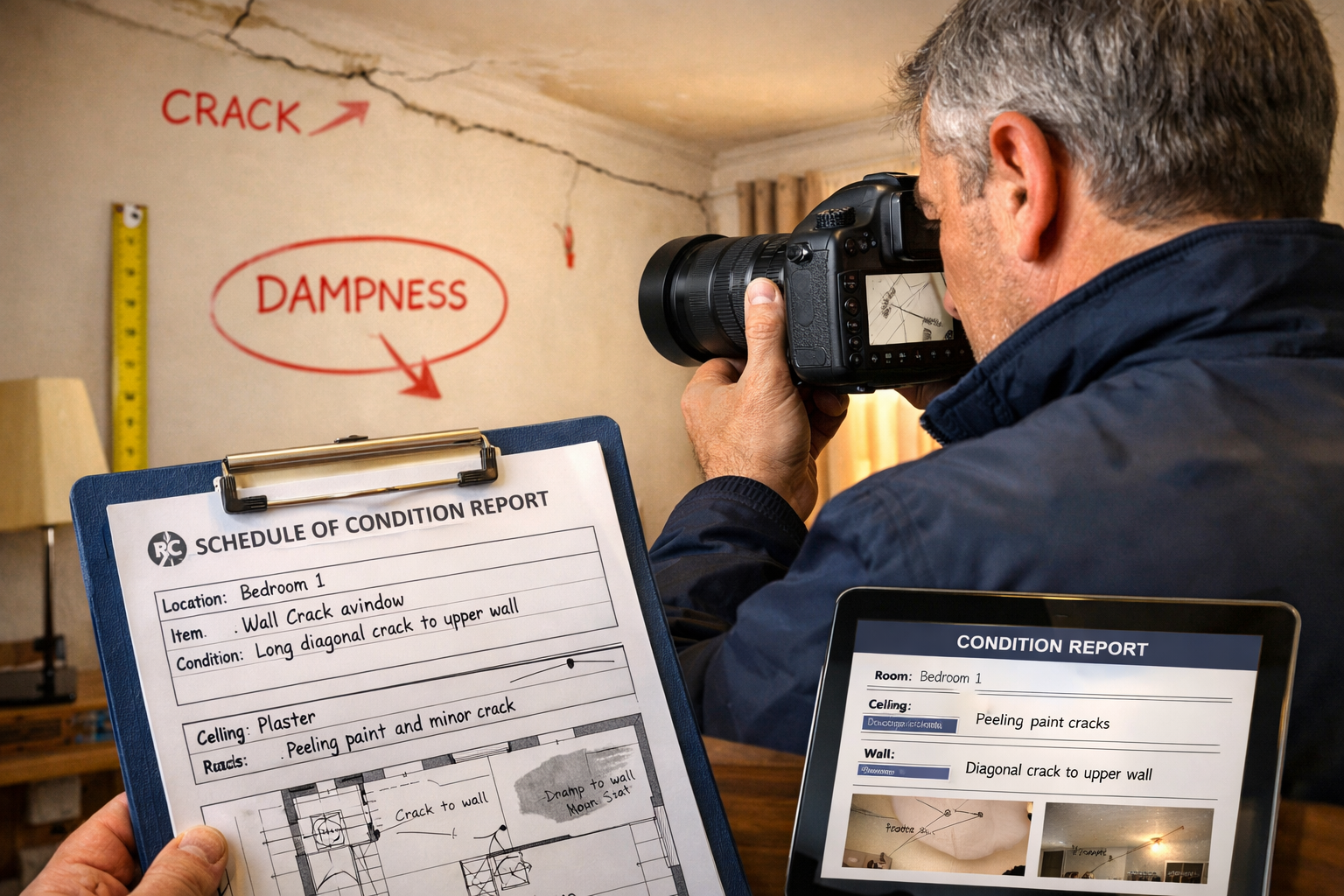
A Schedule of Condition serves as a detailed photographic and written record of a property's condition at a specific point in time—typically before construction works begin. However, it's crucial to understand what this document is and, more importantly, what it isn't.
What Schedules of Condition Actually Provide
According to professional surveying standards, a comprehensive Schedule of Condition includes:
Visual Documentation:
- High-resolution photographs of all relevant areas
- Multiple angles of walls, ceilings, floors, and external features
- Close-up images of existing defects, cracks, or damage
- Date-stamped imagery for verification purposes[6]
Written Records:
- Detailed descriptions of existing conditions
- Measurements of visible cracks or defects
- Notes on structural elements and finishes
- Property layout and room-by-room assessments[3]
Technical Details:
- Building materials identification
- Age and condition assessments
- Notable features or vulnerabilities
- Environmental factors (dampness, subsidence indicators)[6]
The Critical Distinction: Evidence vs. Legal Protection
Here's where many property owners make a costly mistake: A Schedule of Condition is only evidence—it is NOT, by itself, equivalent to the comprehensive protection provided by a Party Wall Award[3].
Think of it this way:
| Schedule of Condition | Party Wall Award |
|---|---|
| 📸 Photographic evidence | 📋 Legal framework |
| 📝 Written observations | ⚖️ Binding agreement |
| 🕐 Point-in-time snapshot | 🔄 Ongoing protection |
| 💡 Proves pre-existing state | 🛡️ Defines rights and remedies |
| 📊 Documentary record | 👥 Surveyor oversight |
A Schedule of Condition proves what existed before works began, but a Party Wall Award establishes the legal mechanisms for addressing any damage that occurs during construction[5].
Who Prepares Schedules of Condition?
Party Wall Surveyors responsible for creating schedules of condition are typically qualified surveyors from the Royal Institution of Chartered Surveyors (RICS) and must operate with fairness and impartiality[6]. Their professional qualifications ensure that documentation meets legal standards and can withstand scrutiny in dispute resolution proceedings.
The typical cost for a Schedule of Condition survey is approximately £585 + VAT, depending on property size[1]—a modest investment compared to the potential costs of disputed damage claims.
Key Protection Measures in Understanding Party Wall Awards
Understanding Party Wall Awards: What Building Owners Need to Know About Schedules of Condition and Protection Measures requires examining the specific protective mechanisms that Awards establish. These measures form the practical framework for safe, considerate construction work.
Working Hours and Access Arrangements
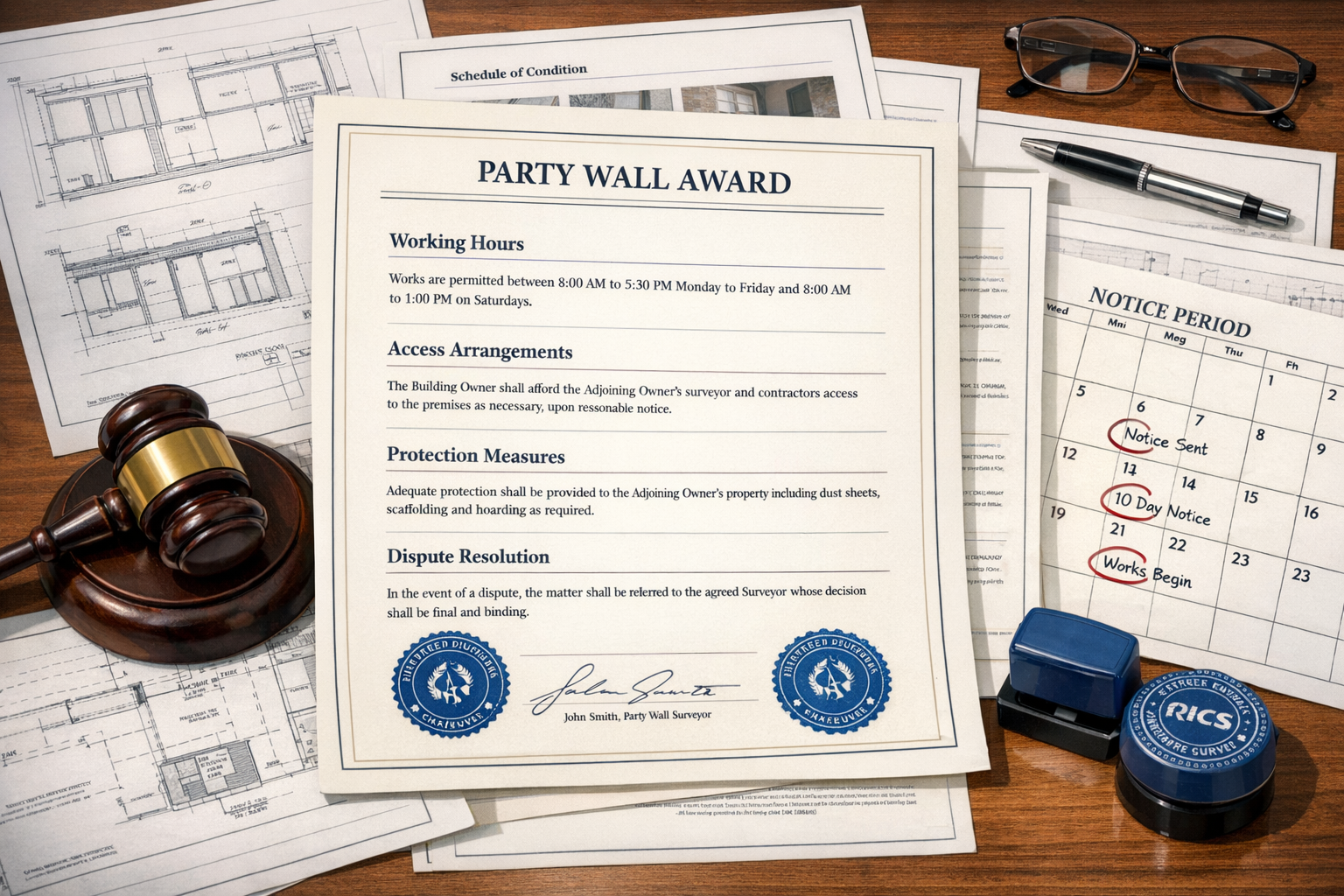
Party Wall Awards typically specify strict working hours restrictions to minimize disruption to adjoining owners. Standard provisions include:
Typical Working Hours:
- Monday to Friday: 8:00 AM – 6:00 PM
- Saturday: 8:00 AM – 1:00 PM
- Sunday and Bank Holidays: No works permitted[2]
Access Provisions:
When construction requires access to neighboring properties, the Award must clearly define:
- Specific dates and times for access
- Areas of the property requiring entry
- Duration of access requirements
- Notice periods before each visit
- Compensation for significant inconvenience[2]
These provisions balance the building owner's need to complete works efficiently with the adjoining owner's right to peaceful enjoyment of their property.
Structural Protection and Monitoring
Comprehensive Party Wall Awards include detailed protection measures designed to prevent or minimize damage:
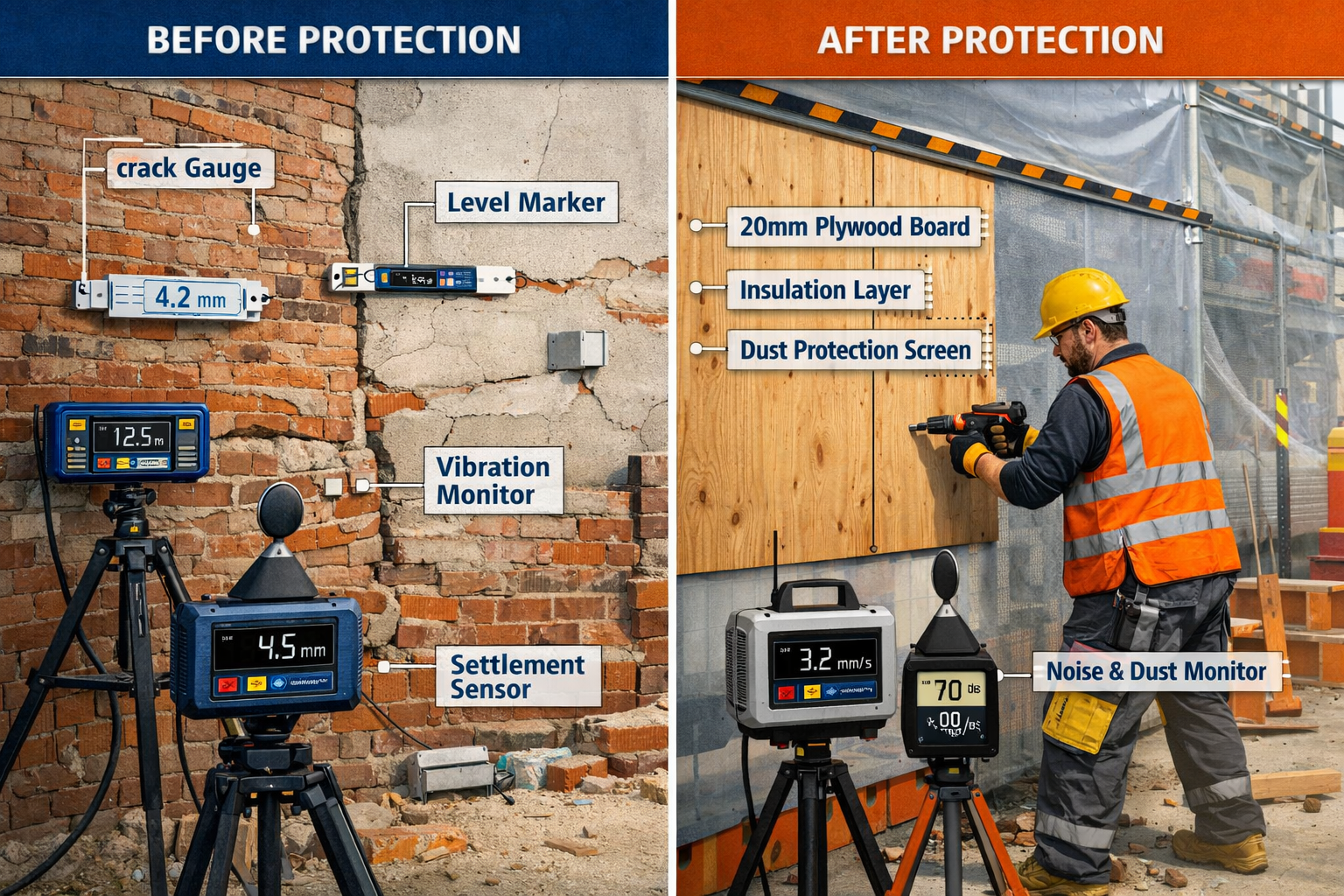
Before Works Begin:
- Installation of vibration monitoring equipment
- Crack monitoring gauges on vulnerable structures
- Photographic surveys (Schedule of Condition)
- Structural assessments of adjoining properties[1]
During Construction:
- Regular monitoring readings and reports
- Protective boarding and dust screens
- Underpinning or temporary support where necessary
- Immediate notification protocols for emerging issues[5]
After Completion:
- Final condition surveys comparing pre- and post-construction states
- Remedial works for any identified damage
- Sign-off procedures confirming satisfactory completion[3]
Damage Resolution Procedures
One of the most valuable aspects of Party Wall Awards is the clear framework for addressing construction-related damage. The Award specifies:
Assessment Process:
- Immediate notification of suspected damage
- Joint inspection by appointed surveyors
- Determination of causation (construction-related or pre-existing)
- Scope of necessary remedial works[2]
Resolution Timeline:
- Initial damage report: Within 48 hours of discovery
- Surveyor inspection: Within 7 days
- Remediation proposal: Within 14 days
- Completion of repairs: As specified in Award[8]
Compensation Framework:
- Direct repair by building owner's contractors
- Financial compensation for equivalent repairs
- Alternative accommodation costs if property becomes uninhabitable
- Professional fees for additional surveys or assessments[5]
The Role of Appointed Surveyors
When disagreements arise during construction, surveyors appointed under the Party Wall Award act as impartial professionals to resolve disputes while protecting each property's interests[1]. Their responsibilities include:
🔍 Monitoring compliance with Award conditions
⚖️ Adjudicating disputes about work methods or damage
📋 Issuing additional awards if circumstances change
🤝 Facilitating communication between parties
✅ Certifying completion and satisfactory remediation
This professional oversight provides crucial protection that a simple Schedule of Condition cannot offer.
The Party Wall Notice Process and Timeline
Understanding Party Wall Awards: What Building Owners Need to Know About Schedules of Condition and Protection Measures requires familiarity with the statutory notice process that precedes Award issuance.
Notice Periods and Requirements
Building owners must provide adjoining owners with proper notice before starting notifiable works under the Party Wall etc. Act 1996:
Notice Periods:
- Two months' notice: For works to existing party walls or party structures
- One month's notice: For excavations within 3-6 meters of neighboring buildings or new walls at boundaries[8]
The Party Wall Notice Service typically costs £65 + VAT per neighbor[1]—a small price for legal compliance.
Response Options for Adjoining Owners
Upon receiving a Party Wall Notice, adjoining owners have 14 days to respond with one of three options:
- Consent to the works (no Award required, but Section 10 protection remains)[4]
- Dissent or fail to respond (triggers Award procedure)
- Request specific conditions or modifications to proposed works[8]
If dissent occurs or no response is received, a "dispute" is deemed to have arisen, requiring the appointment of surveyors and preparation of a Party Wall Award.
Award Challenge and Appeal Rights
Adjoining owners who disagree with Award terms have 14 days to challenge a Party Wall Award in the county court[8]. This appeal window provides an important safeguard against unreasonable or inadequate protective measures.
Grounds for appeal typically include:
- Inadequate protection measures
- Unreasonable working hours or access requirements
- Insufficient compensation provisions
- Procedural irregularities in Award preparation
Practical Benefits of Proper Documentation
The protective documentation framework—combining Schedules of Condition with comprehensive Party Wall Awards—delivers significant benefits to all parties involved in construction projects.
Dispute Prevention and Evidence
Schedules of Condition reduce disputes by providing concrete evidence of property conditions before construction begins[5]. When disagreements arise about whether damage existed before works commenced, photographic and written records provide objective evidence that can:
✅ Quickly resolve false damage claims
✅ Identify genuinely new construction-related damage
✅ Support insurance claims when necessary
✅ Provide court-admissible evidence if disputes escalate
Project Continuity and Peace of Mind
Proper documentation facilitates smooth project progress without interruptions from false damage claims[5]. Building owners benefit from:
- Reduced risk of work stoppages due to neighbor complaints
- Clear procedures for addressing legitimate concerns
- Professional surveyor support throughout construction
- Defined timelines and expectations for all parties
Adjoining owners gain peace of mind knowing that:
- Their property condition is thoroughly documented
- Professional surveyors monitor construction activities
- Clear remediation procedures exist for any damage
- Legal protections are formally established and enforceable[5]
Cost-Effectiveness Compared to Disputes
While some building owners view Party Wall procedures as unnecessary expenses, the costs are minimal compared to potential dispute resolution:
Typical Costs:
- Party Wall Notice Service: £65 + VAT per neighbor[1]
- Schedule of Condition: £585 + VAT[1]
- Party Wall Award preparation: Variable, often shared between parties
- Total upfront investment: Typically £1,000-£3,000
Potential Dispute Costs:
- Legal fees: £5,000-£50,000+
- Court costs and expert witnesses: £10,000-£100,000+
- Project delays: Variable, potentially substantial
- Damaged neighbor relationships: Priceless
For guidance on keeping Party Wall costs down, building owners should engage qualified surveyors early in the planning process.
Common Scenarios Requiring Party Wall Awards
Understanding when Party Wall Awards and Schedules of Condition are necessary helps building owners plan appropriately and avoid legal complications.
Types of Works Requiring Party Wall Procedures
The Party Wall etc. Act 1996 applies to various types of party wall works, including:
Works to Existing Party Walls:
- Cutting into party walls for beam installation
- Raising party walls for loft conversions
- Underpinning party walls
- Inserting damp-proof courses
- Demolishing and rebuilding party walls[8]
Excavations Near Boundaries:
- Digging within 3 meters of a neighbor's structure (deeper than its foundations)
- Digging within 6 meters of a neighbor's structure (below a 45-degree line from foundation base)
- Basement excavations affecting neighboring properties
New Walls at Boundaries:
- Building new walls directly on boundary lines
- Constructing party fence walls between properties
Regional Considerations
While the Party Wall etc. Act 1996 applies throughout England and Wales, practical considerations vary by location. Urban areas with closely-spaced properties require particular attention:
- Party Wall Surveyor Central London
- Party Wall Surveyor North London
- Party Wall Surveyor South London
- Party Wall Surveyor East London
- Party Wall Surveyor West London
Dense urban environments typically require more comprehensive documentation due to the proximity of structures and higher risk of construction impact.
Best Practices for Building Owners
For those planning construction work, following best practices ensures compliance and protects all parties' interests.
Early Planning and Surveyor Engagement
Start the Party Wall process early—ideally 3-4 months before planned construction begins. This timeline allows for:
- Proper notice periods (1-2 months)[8]
- Surveyor appointment and Award preparation
- Schedule of Condition completion
- Resolution of any disputes before construction starts
Engaging a qualified building owner's surveyor at the project planning stage prevents costly delays and ensures proper procedure from the outset.
Clear Communication with Neighbors
While formal notices are legally required, informal communication with neighbors before serving official notices can:
- Explain the planned works in accessible terms
- Address concerns proactively
- Build goodwill and cooperation
- Reduce the likelihood of disputes
Many disputes arise from misunderstandings that could have been prevented through clear, early communication.
Comprehensive Documentation
Ensure that Schedules of Condition cover:
✅ All rooms adjoining the party wall
✅ External features visible from neighboring property
✅ Structural elements potentially affected by works
✅ Existing defects, however minor
✅ Decorative finishes and fixtures
The more comprehensive the pre-construction documentation, the easier it becomes to distinguish new damage from pre-existing conditions.
Professional Surveyor Selection
Choose surveyors who are:
- RICS-qualified with party wall expertise[6]
- Experienced in similar construction projects
- Local to the area (familiar with regional building types)
- Impartial and professional in approach
- Clear communicators with all parties
The right surveyor can make the difference between a smooth process and a contentious dispute.
Best Practices for Adjoining Owners
Adjoining owners also have responsibilities and opportunities to protect their interests when receiving Party Wall Notices.
Responding to Party Wall Notices
When receiving a notice about your neighbor's construction works:
Within 14 days, you should:
- Review the notice carefully and understand proposed works
- Consider whether to consent or dissent
- Appoint your own surveyor if dissenting (or allow the building owner's surveyor to act for both parties)
- Request a Schedule of Condition if not already offered[8]
Don't ignore the notice—failure to respond within 14 days is deemed dissent, triggering the Award procedure anyway.
Appointing Your Own Surveyor
Adjoining owners have the right to appoint their own adjoining owner's surveyor to represent their interests. Benefits include:
- Independent professional advice about proposed works
- Negotiation of stronger protection measures
- Monitoring of construction activities
- Advocacy in damage assessment and remediation
While this adds cost, the building owner typically pays reasonable surveyor fees as part of the Party Wall process.
Understanding Your Rights
Key rights for adjoining owners include:
🛡️ Protection against damage with remediation at building owner's expense
📸 Right to Schedule of Condition documenting pre-construction state
⏰ Reasonable working hours and advance notice of access requirements
👥 Independent surveyor representation in Award preparation
⚖️ Appeal rights if Award terms are unreasonable
Understanding these rights empowers adjoining owners to engage constructively in the process while protecting their property interests.
Conclusion: Protecting Your Property Through Proper Procedures
Understanding Party Wall Awards: What Building Owners Need to Know About Schedules of Condition and Protection Measures is essential for anyone involved in construction work affecting shared structures in 2026. The distinction between these two instruments—Schedules of Condition as evidence and Party Wall Awards as comprehensive legal frameworks—forms the foundation of effective property protection.
The Party Wall etc. Act 1996 provides a robust statutory framework that balances building owners' rights to develop their properties with adjoining owners' rights to protection from construction damage. When properly implemented, this framework facilitates construction projects while minimizing disputes and ensuring fair treatment for all parties.
Key Takeaways for Success
For Building Owners:
- Start the Party Wall process 3-4 months before construction
- Engage qualified RICS surveyors early in planning
- Serve proper notices within statutory timeframes
- Commission comprehensive Schedules of Condition
- Maintain open communication with neighbors throughout the project
For Adjoining Owners:
- Respond to Party Wall Notices within 14 days
- Consider appointing your own surveyor for independent advice
- Insist on thorough Schedule of Condition documentation
- Understand your rights under Section 10 protection
- Engage constructively in the Award process
For Both Parties:
- Recognize that proper documentation protects everyone's interests
- View the process as risk management, not unnecessary bureaucracy
- Maintain professional, courteous relationships throughout construction
- Address concerns promptly through established procedures
- Remember that upfront costs are minimal compared to dispute resolution expenses
Next Steps
If you're planning construction work that may affect party walls or neighboring properties:
- Review your project plans to identify notifiable works under the Party Wall etc. Act 1996
- Consult a qualified party wall surveyor to understand your obligations and timeline
- Prepare and serve appropriate notices to adjoining owners with proper lead time
- Commission a Schedule of Condition before works commence
- Ensure a comprehensive Party Wall Award is prepared if disputes arise
For more detailed guidance, explore resources on party wall awards and building owner responsibilities to ensure your project proceeds smoothly and legally.
By understanding and properly implementing these protective measures, building owners and adjoining owners can navigate construction projects with confidence, knowing that their interests are protected by robust legal frameworks and professional documentation. The modest investment in proper Party Wall procedures pays dividends in dispute prevention, project continuity, and preserved neighbor relationships—benefits that far exceed the initial costs.
References
[1] How Far Can Party Wall Surveyors Go To Protect Adjoining Owners – https://www.houricanassociates.com/party-wall-news/how-far-can-party-wall-surveyors-go-to-protect-adjoining-owners/
[2] What Is A Party Wall Agreement And Party Wall Award – https://westvilleassociates.com/blog/what-is-a-party-wall-agreement-and-party-wall-award
[3] Schedule Of Condition Explained Why It Matters Before Your Neighbour Starts Work – https://www.grandlinesurveyors.co.uk/post/schedule-of-condition-explained-why-it-matters-before-your-neighbour-starts-work
[4] Party Wall Schedule Of Condition – https://grahamkinnear.com/party-wall-schedule-of-condition/
[5] Difference Between Schedule Of Condition Report And Party Wall Award – https://www.expresspartywall.com/difference-between-schedule-of-condition-report-and-party-wall-award/
[6] Schedule Of Condition For Party Wall – https://thepartywallguru.com/schedule-of-condition-for-party-wall/
[8] Party Wall Contract Guide And Party Wall Award Template – https://nottinghillsurveyors.com/blog/party-wall-contract-guide-and-party-wall-award-template