


A single venue can generate up to 40% more revenue per square foot when its internal spaces are designed to shift between multiple event configurations within a single day [5]. That figure is driving one of the most significant changes in event design right now: the rise of flexible transformative party walls that convert ceremony backdrops into dance floors, cocktail zones into conference stages, and intimate lounge areas into full banquet halls — all without a single structural change to the building.
Flexible Transformative Party Walls: Multi-Purpose Designs for Dynamic 2026 Events are no longer a niche luxury. They are becoming the standard expectation for corporate planners, wedding coordinators, and hospitality venues that need to do more with less space and fewer changeover hours [3].
Key Takeaways
- Reconfigurable wall systems allow a single venue space to serve multiple event functions — from ceremony backdrop to dance floor — without structural changes.
- The most effective flexible party wall designs combine modular panel systems, integrated lighting, and acoustic management into one unified solution.
- Corporate event planners in 2026 are prioritizing modular layouts that can be re-zoned quickly between sessions, reducing downtime and increasing venue ROI [3].
- Legal and structural considerations — including party wall regulations — must be addressed before any permanent or semi-permanent wall modifications are made.
- Material choice, panel weight, and track systems are the three most critical technical factors in a successful transformative wall installation.
What Are Flexible Transformative Party Walls and Why Do They Matter in 2026
The term "party wall" carries a specific legal meaning in UK property law — it refers to a shared wall between two adjoining properties. Understanding the Party Wall etc. Act 1996 is essential before any building work that touches or modifies a shared structure. However, in the context of event design, the phrase "party wall" has evolved to describe the decorative, functional, and structural wall elements that define the character of an event space.
Flexible transformative party walls in event design are modular, movable, or rapidly reconfigurable wall systems installed within a venue. They are distinct from load-bearing or boundary walls. Their purpose is aesthetic, acoustic, and spatial — dividing, decorating, and directing flow within an event.
In 2026, three forces are making these systems more relevant than ever:
- Space scarcity — Urban venues, particularly in cities like London, are expensive. Operators need every square metre to earn its keep across multiple event types.
- Experience expectations — Guests expect immersive, visually dynamic environments that feel tailored to each moment of an event [4].
- Operational efficiency — Event planners are under pressure to reduce turnaround times between event segments [3].
"The best venues in 2026 are not the biggest — they are the most intelligent about how their space transforms." — Event Industry News [5]
The Difference Between Decorative and Structural Party Walls
Before specifying any wall system, it is critical to distinguish between decorative event walls (temporary or semi-permanent installations within a venue) and structural party walls (load-bearing or boundary walls shared between properties). Modifying the latter requires formal notices and professional oversight.
If a venue is planning permanent modifications — such as cutting into a shared wall to install a track system for sliding panels — this may trigger obligations under party wall legislation. In those cases, understanding what a party structure notice is and how to serve it becomes a necessary first step.
Core Design Principles for Multi-Purpose Transformative Wall Systems
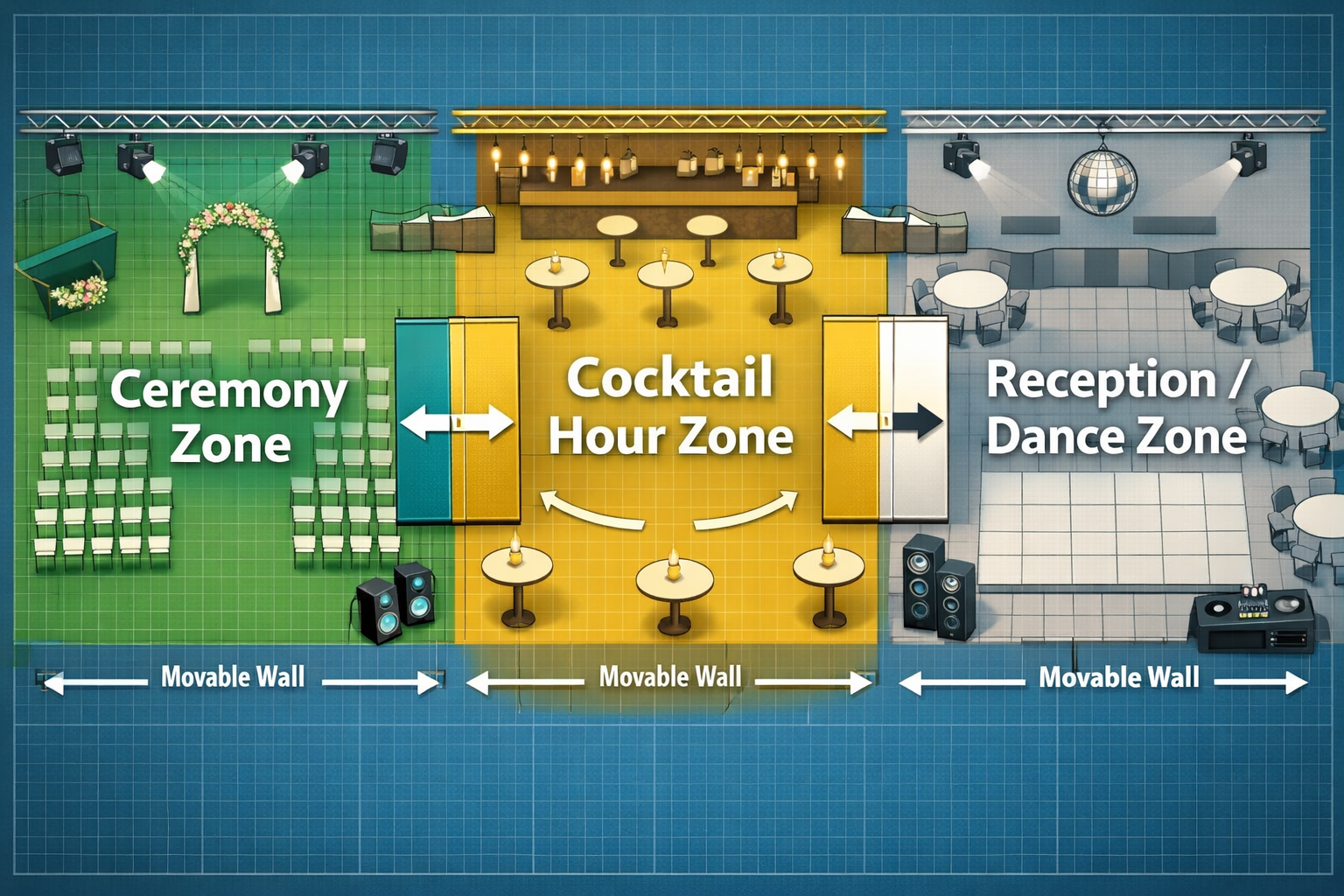
Designing a wall system that genuinely serves multiple event functions requires more than choosing attractive panels. It demands a systems-level approach that accounts for acoustics, lighting integration, load capacity, and changeover speed.
Modular Panel Architecture
The foundation of any flexible wall system is its panel design. The most effective systems in 2026 use panels that share these characteristics:
| Feature | Why It Matters |
|---|---|
| Standardised panel width (600mm–1200mm) | Enables mix-and-match configurations without custom cutting |
| Lightweight core (honeycomb or foam) | Reduces changeover labour and floor load |
| Double-sided finish options | One side serves ceremony, the other serves reception |
| Integrated cable channels | Allows lighting and AV to be built in, not bolted on |
| Tool-free connection systems | Changeovers completed in minutes, not hours |
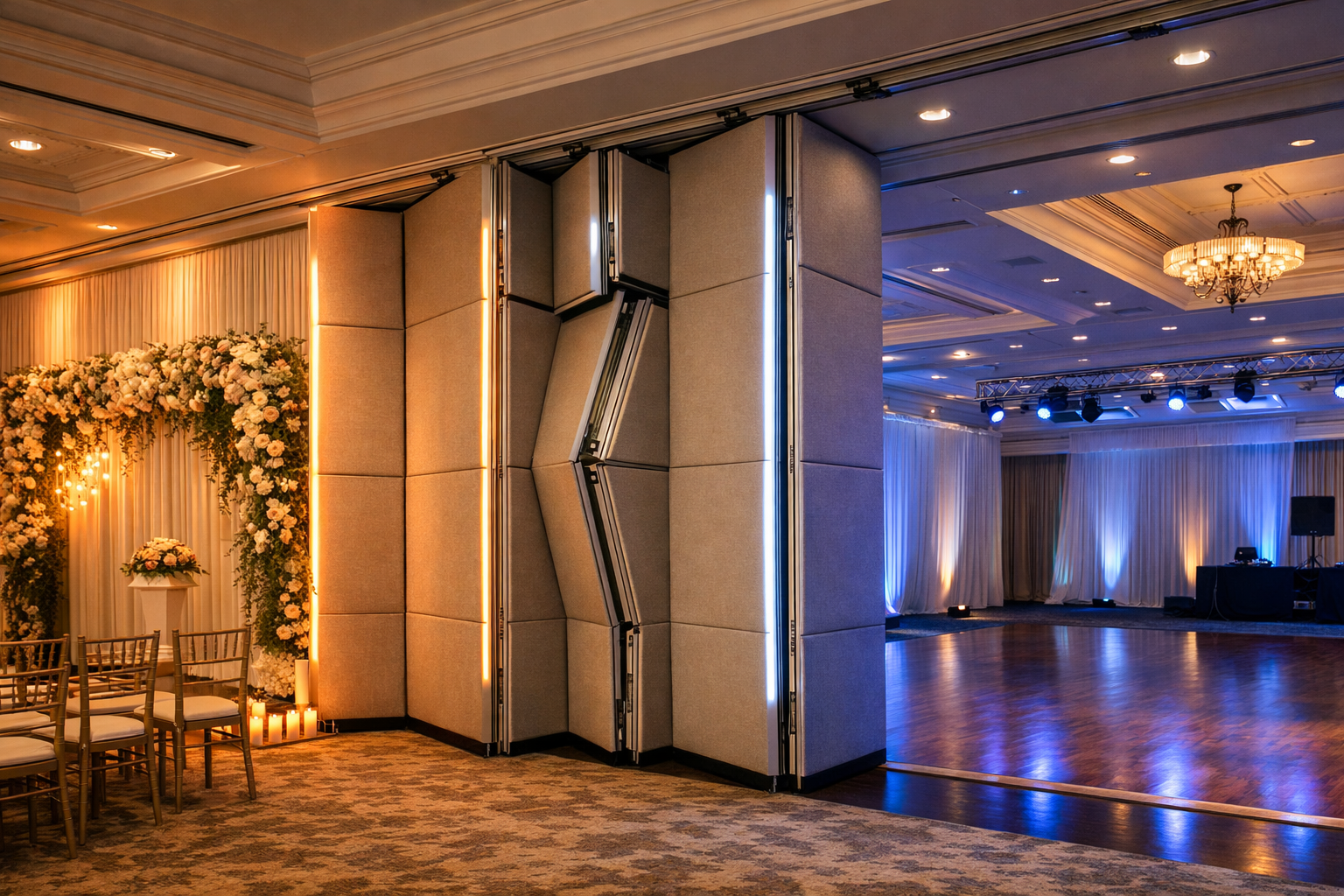
Double-sided panels deserve special attention. A panel finished in ivory fabric on one face and backlit frosted acrylic on the other can serve as a floral ceremony backdrop at 3pm and a glowing dance floor feature wall at 9pm — with a simple 180-degree rotation on its track.
Track and Suspension Systems
The hardware that moves panels is as important as the panels themselves. Three primary systems dominate the market:
- Ceiling-mounted track systems — Panels hang from overhead rails, gliding silently between positions. Ideal for heavy panels and large spans.
- Floor-track systems — Panels roll on base tracks. More stable for very tall configurations but require clean, level floors.
- Free-standing modular frames — No permanent installation required. Panels clip into freestanding aluminium frames. Best for venues that cannot accept any fixed hardware.
For venues where ceiling or floor track installation would affect a shared structure, it is worth consulting guidance on types of party wall works to determine whether formal notices are required before installation begins.
Acoustic Management Within Flexible Wall Designs
One of the most overlooked aspects of transformative wall design is sound control. A wall that looks spectacular but allows noise to bleed between zones destroys the event experience. In 2026, acoustic performance is a primary specification criterion, not an afterthought [5].
Key acoustic considerations include:
- Panel density — Heavier panels block more sound. Specify minimum surface mass for walls dividing live music zones from quiet dining areas.
- Seal quality — Gaps at panel edges, floors, and ceilings are the primary source of sound leakage. Brush seals and compression gaskets are essential.
- Absorption vs. isolation — Fabric-wrapped panels absorb sound within a room; dense panels isolate sound between rooms. Most events need both.
Real-World Applications: From Ceremony Backdrop to Dance Floor
The most compelling use case for Flexible Transformative Party Walls: Multi-Purpose Designs for Dynamic 2026 Events is the wedding or gala format, where a single space must serve a ceremony, cocktail hour, and reception dinner — often with a dance floor reveal as the centrepiece moment.
The Ceremony-to-Reception Transformation
Here is how a well-designed modular wall system executes this transformation in practice:
Stage 1 — Ceremony Configuration (2:00pm)
A 6-metre-wide wall of ivory fabric panels, backlit with warm white LEDs, forms the ceremony backdrop. Floral installations clip onto integrated mounting points. The wall conceals the reception setup behind it.
Stage 2 — Cocktail Hour (4:00pm)
Guests move to an adjacent zone. A small team of two rotates the panels 180 degrees on ceiling tracks, revealing the gold-and-glass reception side. The concealed reception room is now accessible. Total changeover time: 18 minutes.
Stage 3 — Dance Floor Reveal (8:30pm)
The central panel section slides aside on its track, opening a 3-metre passage to the dance floor. RGB LED strips within the panels shift from warm amber to deep blue. The wall becomes a dynamic lighting feature rather than a static barrier.
This sequence — which would have required separate rooms or lengthy venue resets in previous years — is now achievable in a single open-plan space using modular wall technology [4].
Corporate Event Applications
Corporate event planners in 2026 are prioritising modular layouts that can be re-zoned between keynote sessions, workshop breakouts, and networking receptions within the same venue footprint [3]. Flexible wall systems address this directly.
A common corporate configuration uses:
- Operable acoustic walls to divide a large ballroom into three breakout rooms during morning sessions
- Panel retraction to open the space for a full-audience keynote at midday
- Branded panel wraps applied over the base panels for afternoon sponsor showcases
- Lighting mode shifts — from cool white task lighting to warm ambient — as the space transitions to an evening networking reception
The ability to apply branded graphics to panel surfaces is particularly valued in corporate settings. Fabric tension systems allow full-colour printed graphics to be stretched over panels and swapped between events without damaging the underlying panel surface.
Immersive and Experiential Event Formats
Beyond weddings and corporate events, immersive experience designers are using transformative wall systems to create environments that evolve throughout the event [4]. Walls that move, change colour, or reveal hidden spaces create moments of surprise that guests share widely on social media — a measurable benefit for event organisers [6].
Projection mapping onto panel surfaces is one of the fastest-growing techniques in this space. Because modular panels offer flat, consistent surfaces, they are ideal projection targets. A wall that displays a static floral pattern during dinner can transform into an animated landscape during a product launch reveal — using the same physical panels.
Material Selection Guide for Transformative Party Wall Panels
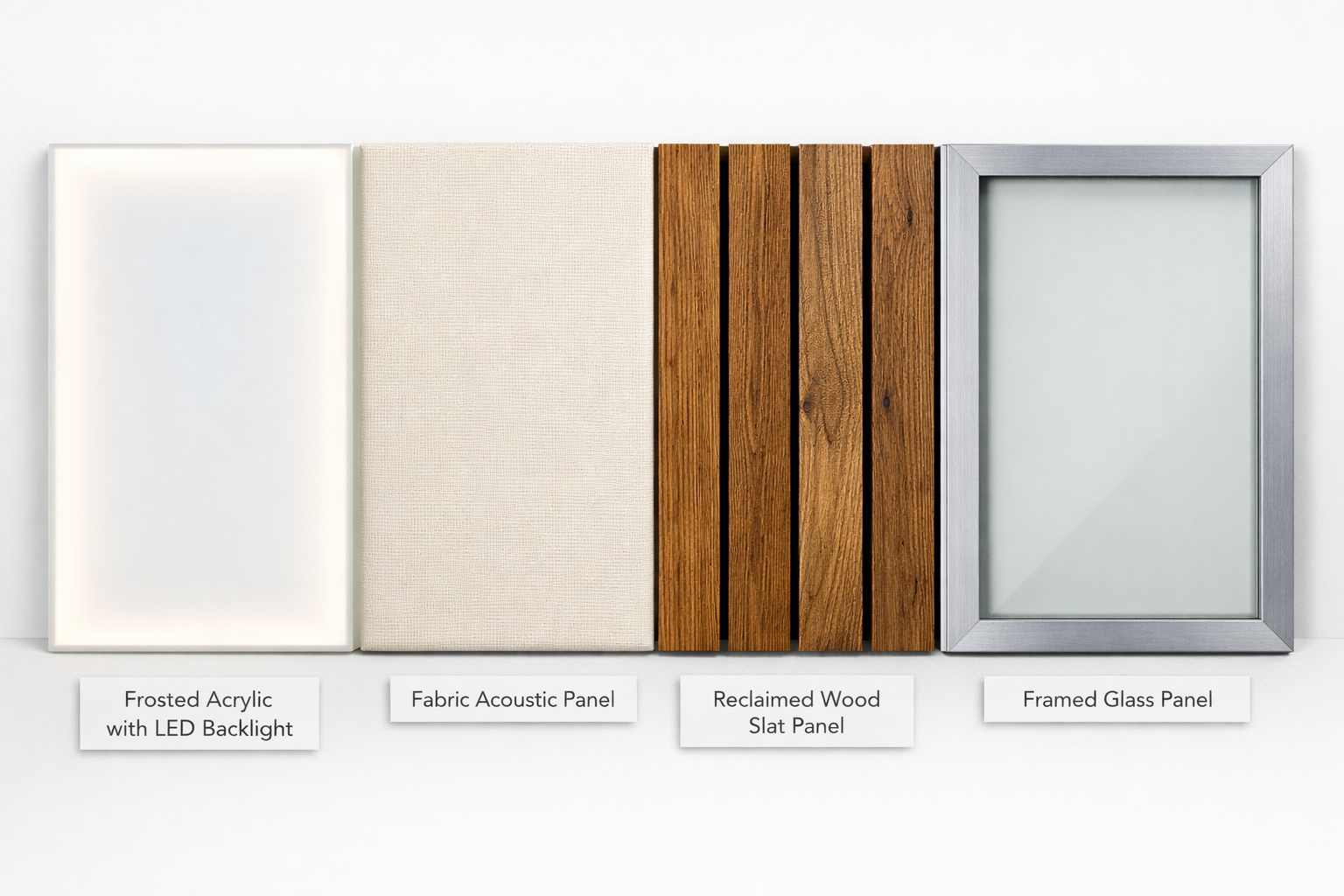
Material choice determines the visual character, acoustic performance, weight, and cost of a flexible wall system. The table below compares the most commonly specified materials in 2026 event design.
| Material | Visual Effect | Acoustic Rating | Weight (per m2) | Best For |
|---|---|---|---|---|
| Fabric-wrapped MDF | Soft, elegant | Medium | 18–22 kg | Ceremonies, galas |
| Frosted acrylic with LED | Modern, luminous | Low | 8–12 kg | Dance floors, product launches |
| Reclaimed wood slats | Warm, textural | Medium-Low | 14–18 kg | Corporate, rustic weddings |
| Brushed aluminium frame + glass | Premium, transparent | Low | 20–28 kg | Luxury venues, fashion events |
| Acoustic foam (fabric-covered) | Neutral, functional | High | 10–14 kg | Conference breakouts, music events |
Fabric-wrapped panels remain the most versatile choice for multi-purpose event walls. They are light enough for ceiling track systems, absorb sound effectively, accept clip-on decor elements, and can be recovered in new fabrics between events at relatively low cost.
LED-integrated acrylic panels are the preferred choice when lighting transformation is the primary design goal. They are lighter than fabric panels but offer minimal acoustic benefit — making them best suited for spaces where sound isolation is not a priority.
Legal and Structural Considerations Before Installation
Any venue considering a permanent or semi-permanent flexible wall installation must address the legal and structural context before specifying systems.
When Party Wall Law Applies
If the installation involves any work to a wall that is shared with an adjoining property — including fixing track brackets, cutting chases for cables, or adding load to a shared structure — the Party Wall etc. Act 1996 may apply. In those circumstances, the building owner must serve the correct notices on adjoining owners before work begins.
Understanding party wall notices — what they are and how to respond is a practical starting point for any venue manager or contractor unfamiliar with the process.
For venues in London, professional guidance is readily available. Whether the venue is in the north, south, east, west, or centre of the city, a qualified surveyor can assess whether the planned installation triggers any formal obligations. Those in central locations can access specialist advice from a party wall surveyor in Central London to ensure compliance before work begins.
Structural Load Assessment
Ceiling-mounted track systems transfer the weight of panels to the ceiling structure. Before specifying any ceiling track, a structural engineer must confirm that the ceiling can carry the imposed load — particularly in older or listed buildings where the ceiling structure may be lighter than it appears.
Floor-mounted systems avoid ceiling load issues but require level, clean floors and may conflict with floor finishes in heritage venues.
Fire Safety and Egress
Movable wall systems must not obstruct fire escape routes in any configuration. All panel positions — open, closed, and intermediate — must be assessed against fire safety regulations to ensure that egress routes remain clear and that fire compartmentation is not compromised.
Planning and Budgeting a Flexible Wall System
The cost of a flexible transformative wall system varies significantly based on panel specification, track type, and installation complexity. As a general guide:
- Entry-level free-standing systems (fabric panels, clip-together frames): from GBP 150–400 per linear metre
- Mid-range ceiling track systems (fabric or acrylic panels, professional track): from GBP 500–900 per linear metre
- Premium integrated systems (LED panels, acoustic specification, branded graphics capability): from GBP 1,200–2,500 per linear metre
These figures cover supply and installation but exclude structural assessments, party wall compliance costs, or bespoke graphic production.
For venues undertaking any work that touches shared structures, understanding how to keep party wall costs down can make a meaningful difference to the overall project budget. Early engagement with a surveyor — before designs are finalised — consistently produces better outcomes than addressing compliance issues after installation has begun.
A schedule of condition prepared before any construction work begins provides a documented record of the existing state of adjoining properties, protecting all parties if disputes arise later.
Conclusion
Flexible Transformative Party Walls: Multi-Purpose Designs for Dynamic 2026 Events represent one of the most practical and commercially valuable investments a venue or event designer can make in the current market. The ability to shift a space from ceremony backdrop to dance floor — or from conference breakout to networking reception — within minutes is no longer a design aspiration. It is a competitive requirement.
The key to success lies in treating the wall system as an integrated design element rather than a room divider. Acoustic performance, lighting integration, material selection, and changeover speed must all be specified together from the outset. Equally, the legal and structural context must be addressed before installation begins — particularly where work touches shared or boundary walls.
Actionable next steps for venues and event planners:
- Audit your current venue space to identify zones where a modular wall system would create new event configurations.
- Engage a structural engineer early to assess ceiling and floor load capacity for track systems.
- Determine whether any planned installation work touches a shared wall and, if so, seek professional party wall advice before proceeding.
- Request material samples from at least three panel suppliers and test acoustic performance before committing to a specification.
- Build changeover time into your event scheduling to realise the full commercial benefit of a transformative wall system.
The venues that invest in intelligent, reconfigurable space design in 2026 will be the ones that attract the most bookings, generate the strongest reviews, and build the most resilient event businesses in the years ahead [5].
References
[1] Watch – https://www.youtube.com/watch?v=xstpwavh3YI
[2] Formats – https://falling-walls.com/circle/formats
[3] Top Corporate Event Planning Trends To Watch – https://npu.co/2026/03/13/top-corporate-event-planning-trends-to-watch/
[4] Immersive Event Ideas – https://www.juliacharleseventmanagement.co.uk/immersive-event-ideas/
[5] Stay Play The Future Of Events Trends Shaping 2026 – https://www.eventindustrynews.com/news/stay-play-the-future-of-events-trends-shaping-2026
[6] Dtjvrbfktii – https://www.instagram.com/p/DTJVRbFktiI/
