


A 2026 survey by 1stDibs found that warm, earthy tones now rank among the top colour choices for interior designers globally, with chocolate brown, terracotta, and coral leading the charge away from cold, clinical whites [6]. That shift is not a passing fad. It reflects a deep, collective appetite for spaces that feel grounded, human, and genuinely inviting.
Nowhere is this transformation more striking than on party walls — the shared structural walls between adjoining properties that define so much of the character of terraced homes and semi-detached houses across London and beyond. Terracotta and Coral Party Walls: Earthy 2026 Hues for Warm, Welcoming Spaces represent one of the most exciting design opportunities of the year: a chance to harness the positive energy of nature-inspired colour on a surface that already carries architectural weight and presence.
This article breaks down why terracotta and coral are dominating 2026 interiors, how to apply them effectively to party walls, which pairings work best, and what legal considerations every homeowner must understand before picking up a paintbrush.
Key Takeaways
- Terracotta and coral are among the defining interior colour trends of 2026, driven by a broader shift toward earthy, nature-inspired palettes [1][3].
- Party walls offer a unique, high-impact canvas for these warm hues, creating focal points in living rooms, kitchens, and hallways.
- Successful application depends on surface preparation, undertone awareness, and complementary material pairings such as natural wood, stone, and linen.
- Any structural or decorative work affecting a party wall may trigger legal obligations under the Party Wall etc. Act 1996 — professional advice is essential before starting.
- Colour alone does not create warmth; lighting, texture, and layering are equally critical to achieving a cohesive, welcoming result.
Why Terracotta and Coral Are Defining 2026 Interiors
The design world has been moving steadily away from the stark, grey-white minimalism that dominated the 2010s. In its place, a richer, more textured aesthetic has emerged — one that Good Housekeeping describes as "earthy vibrancy," characterised by ochres, muddy blues, olive greens, and deep plums [1]. Terracotta and coral sit at the heart of this movement.
Terracotta — derived from the Italian for "baked earth" — carries centuries of architectural heritage. Its warm, reddish-brown tones evoke sun-baked clay, Mediterranean courtyards, and ancient pottery. In 2026, it has returned to interior walls with renewed confidence, offering depth and character that no neutral can replicate [3].
Coral, by contrast, brings a lighter, more energetic warmth. Sitting between orange and pink on the colour wheel, it reads as vibrant without being aggressive. When used on a party wall, coral creates a focal point that draws the eye without overwhelming a room [3].
Together, these two hues form a natural family. They share warm undertones, complement each other effortlessly, and pair beautifully with the natural materials — wood, stone, linen, rattan — that define the broader 2026 design conversation [4].
"Warm, muddy neutrals like terracotta can command larger spaces and provide visual weight, anchoring the entire design." — David Flack, as cited in Vogue [5]
The shift is also psychological. Research into colour psychology consistently links warm earth tones with feelings of safety, comfort, and belonging. In a post-pandemic era where home has become the primary site of both work and rest, the demand for spaces that feel genuinely restorative has never been higher.
Understanding Party Walls Before You Paint
Before exploring colour application, it is worth clarifying what a party wall actually is — because the term is frequently misunderstood.
A party wall is a wall that stands on the boundary between two properties and is shared by both owners. In terraced and semi-detached homes, this is typically the wall separating one house from its neighbour. It is a structural element, not merely a surface, and it carries specific legal protections under the Party Wall etc. Act 1996.
For a full breakdown of what qualifies as a party wall versus other boundary structures, the guide on boundary wall rules and the difference between party fence walls and boundary walls is an excellent starting point.
When Does Painting a Party Wall Require Legal Consideration?
Purely cosmetic work — applying paint or wallpaper to the interior face of a party wall — does not typically trigger the Party Wall etc. Act 1996. However, if the decorating project involves any of the following, legal obligations may apply:
| Type of Work | Party Wall Act Triggered? |
|---|---|
| Painting the interior surface only | Generally No |
| Removing plaster to expose brick | Possibly Yes |
| Chasing cables or pipes into the wall | Yes |
| Structural alterations or openings | Yes |
| Installing shelving with deep fixings | Possibly Yes |
If any structural work is planned alongside the redecoration, serving the correct party wall notices to adjoining owners is a legal requirement. Failing to do so can result in disputes, delays, and significant costs. Understanding the types of party wall works that fall under the Act is essential before any project begins.
Applying Terracotta and Coral Party Walls: Earthy 2026 Hues for Warm, Welcoming Spaces
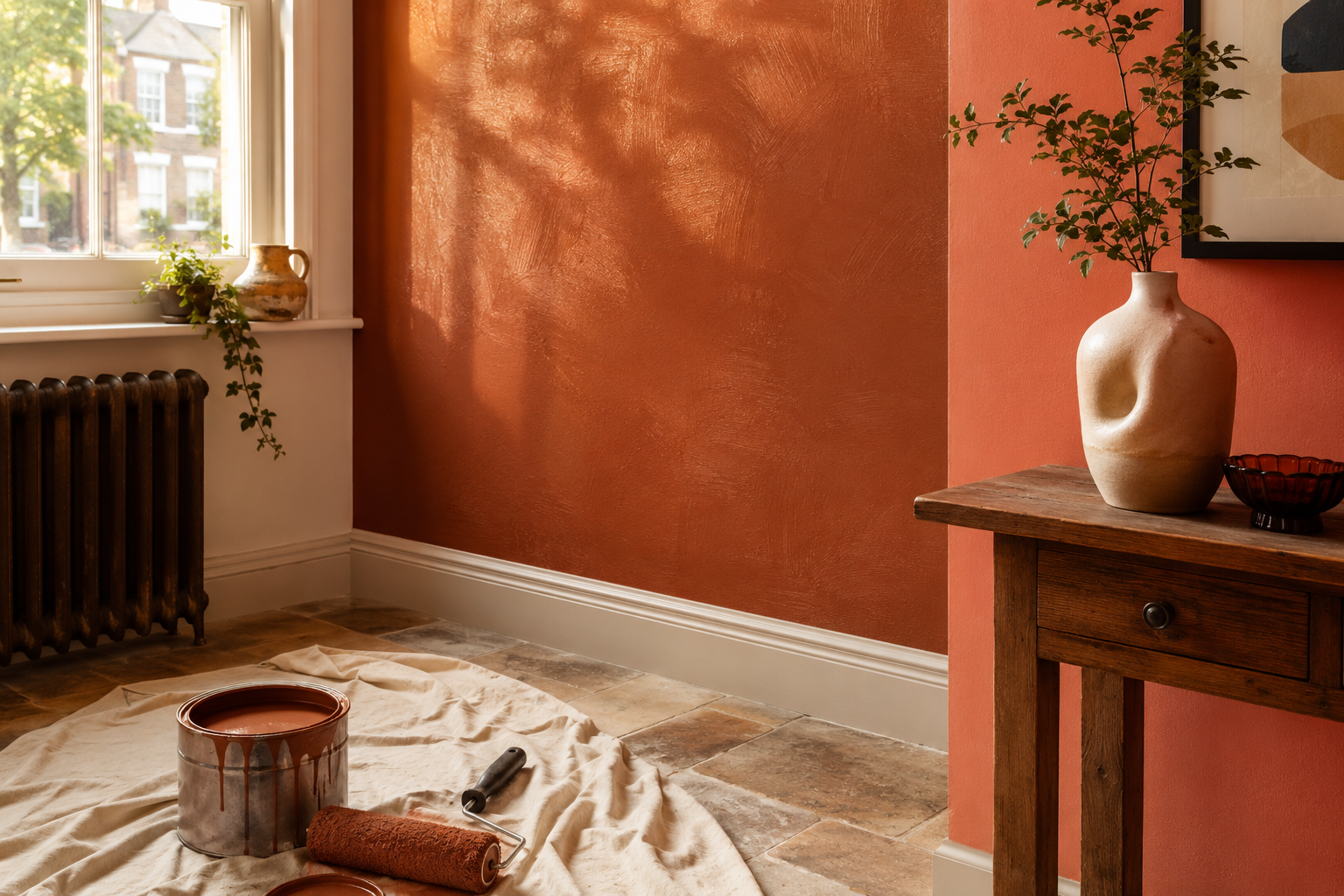
With the legal groundwork understood, the creative work begins. Applying terracotta and coral to a party wall is one of the most effective ways to transform a room, but success depends on preparation, product selection, and an understanding of how these colours behave in different light conditions.
Surface Preparation
Party walls in older London properties — particularly Victorian and Edwardian terraces — are often lime-plastered, uneven, or showing hairline cracks. Before any colour is applied:
- Fill and sand all cracks and imperfections with an appropriate filler.
- Apply a primer suited to the wall's existing surface (bare plaster, previously painted, or exposed brick each require different primers).
- Test undertones by applying sample patches and observing them at different times of day. Terracotta can shift from warm amber in morning light to a deeper, almost brown-red in the evening.
Choosing the Right Shade
Not all terracottas are equal. The spectrum runs from pale, dusty clay tones to deep, saturated burnt sienna. Similarly, coral ranges from soft blush-orange to vivid, almost neon warmth. The right choice depends on the room's orientation and natural light levels.
| Room Orientation | Recommended Shade |
|---|---|
| North-facing (cool, limited light) | Deeper terracotta or warm coral to compensate |
| South-facing (bright, warm light) | Lighter, dustier terracotta or soft coral |
| East-facing (morning light) | Mid-tone terracotta with pink undertones |
| West-facing (evening light) | Rich coral or burnt orange terracotta |
Finish Options
- Matte finish: Absorbs light, creates a soft, chalky effect reminiscent of traditional limewash. Ideal for period properties.
- Eggshell finish: Slight sheen, easier to clean, works well in kitchens and dining rooms.
- Limewash paint: Increasingly popular in 2026, limewash creates a layered, textured effect that mimics aged plaster — a perfect match for the earthy vibrancy trend [1].
The Ember Locke Approach
The Ember Locke project — a widely referenced 2026 interior design case study — demonstrates how terracotta and coral can be layered on a party wall to create depth and movement. The approach involves applying a base coat of deep terracotta, then dry-brushing a lighter coral tone over the surface once dry. The result is a wall that reads as a single warm hue from a distance but reveals rich tonal variation up close. This technique works particularly well in living rooms and open-plan kitchen-diners where the party wall serves as the room's primary focal point.
Colour Pairings and Material Combinations
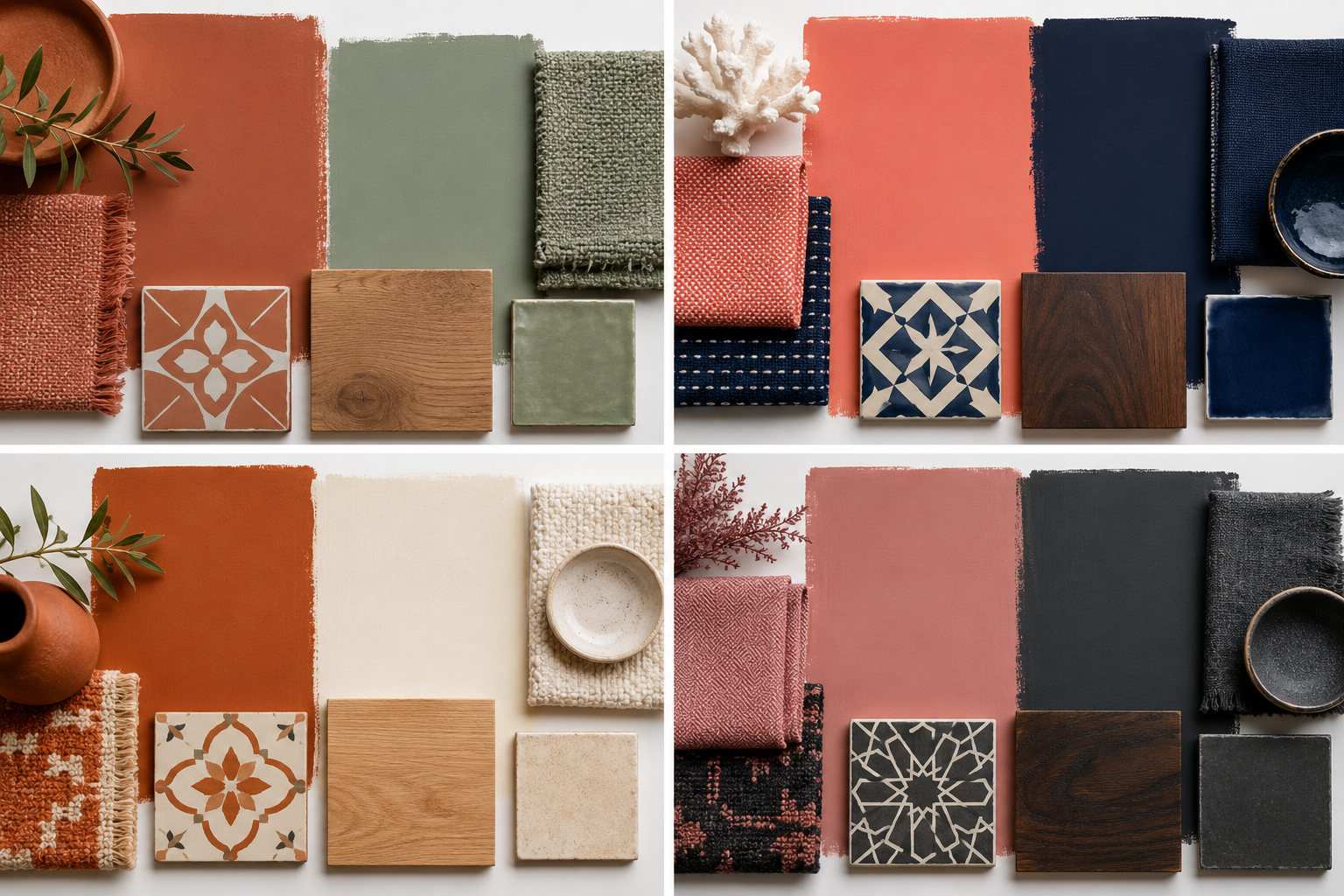
The success of terracotta and coral on party walls depends heavily on what surrounds them. These hues are generous partners — they elevate almost everything they sit beside — but some combinations are exceptional.
Best Colour Pairings for 2026
Designers are consistently recommending the following combinations [3][2]:
- Terracotta + Muted Sage Green: The complementary contrast between warm orange-red and cool green creates a balanced, nature-inspired palette that feels both earthy and fresh.
- Coral + Deep Navy Blue: A bold, high-contrast pairing that brings energy and sophistication. Navy acts as a grounding anchor for coral's vibrancy.
- Terracotta + Warm Cream: The safest and most versatile pairing. Cream walls, ceilings, or trim allow terracotta to take centre stage without competition.
- Coral + Charcoal: A modern, dramatic combination that works well in dining rooms and home offices where a sense of gravitas is desired.
- Terracotta + Dusty Blush: A softer, more romantic palette for bedrooms and reading nooks.
Natural Materials That Amplify the Effect
The broader 2026 design trend pairs earthy wall colours with organic, tactile materials [4]. On and around a terracotta or coral party wall, consider:
- Oak and walnut wood: Warm-toned timbers in flooring, shelving, and furniture echo the wall's warmth without competing.
- Rattan and wicker: Light, textural, and inherently warm — perfect for pendant lights and accent furniture.
- Linen and cotton textiles: Undyed or oatmeal-toned cushions, curtains, and throws soften the palette.
- Ceramic and clay accessories: Handmade pottery in complementary earth tones reinforces the artisanal, grounded aesthetic.
- Natural stone: Limestone, travertine, or slate flooring grounds the space and adds visual weight.
Lighting Considerations
Warm-toned walls respond dramatically to lighting choices. Avoid cool LED bulbs (above 4000K), which will flatten terracotta and make coral appear garish. Instead:
- Use warm white bulbs (2700K-3000K) for ambient lighting.
- Layer with directional spotlights or wall sconces to create depth and shadow on textured surfaces.
- Allow natural light to work with the wall by keeping window treatments light and sheer.
Room-by-Room Applications: Where Terracotta and Coral Party Walls Shine
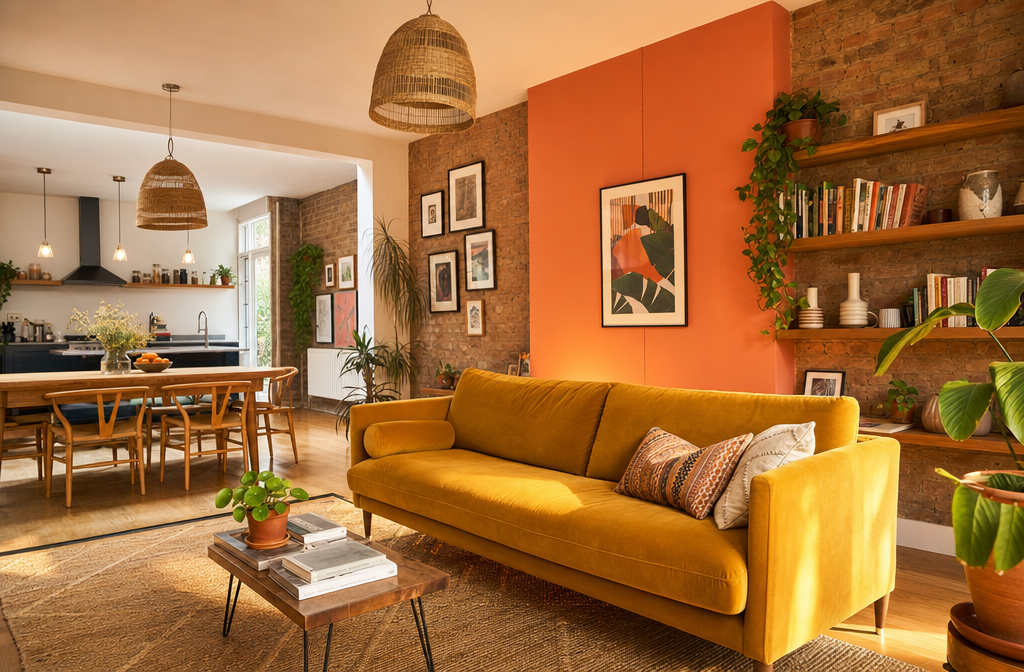
Terracotta and Coral Party Walls: Earthy 2026 Hues for Warm, Welcoming Spaces are not confined to a single room type. Their versatility is one of their greatest strengths [4].
Living Rooms
The party wall in a terraced house living room is often the longest, most prominent surface in the space. A full terracotta treatment — particularly in limewash or matte finish — creates an instant sense of enclosure and warmth. Pair with a neutral sofa, oak flooring, and rattan pendant lighting for a cohesive result.
Kitchens and Dining Areas
Coral works particularly well in kitchen and dining spaces, where its energy encourages conversation and appetite. Applied to the party wall behind a dining table, it creates a natural focal point. Complement with open shelving in dark-stained oak and ceramic tableware in complementary earth tones.
Hallways
Hallways in Victorian terraces are often narrow and dark. A deep terracotta on the party wall — combined with warm lighting and a runner rug in complementary tones — transforms what is typically a transitional space into a welcoming arrival experience.
Bedrooms
Softer coral tones work beautifully in bedrooms, particularly on the wall behind the bed (which is often the party wall in a terraced property). The warmth is conducive to rest, and the hue pairs naturally with linen bedding and warm timber furniture.
Legal and Practical Considerations for Party Wall Decoration Projects
Even a purely decorative project can uncover unexpected structural issues. When working on a party wall, homeowners should:
- Document the wall's condition before starting work. A schedule of condition provides a formal record that protects both parties in the event of a dispute.
- Check whether any previous party wall agreements are in place that might affect what work can be carried out. A party wall agreement template can help clarify the scope of any existing arrangements.
- Consult a party wall surveyor if the project expands beyond decoration. Surveyors operating across South London, North London, and other areas can provide guidance specific to local property types and conditions.
- Understand costs early. Even if a party wall surveyor is not ultimately required, understanding the costs of the party wall process helps avoid surprises if structural work becomes necessary.
Being proactive about legal compliance is not just about avoiding disputes — it is about protecting the value and integrity of the property.
Conclusion
Terracotta and Coral Party Walls: Earthy 2026 Hues for Warm, Welcoming Spaces represent one of the most rewarding design decisions available to homeowners this year. These colours carry genuine warmth, cultural depth, and psychological comfort — qualities that no shade of grey or white can replicate. When applied thoughtfully to a party wall, they transform a structural boundary into a design asset that anchors the entire room.
The path to a successful outcome involves three parallel tracks: creative confidence in colour selection and material pairing, technical rigour in surface preparation and finish choice, and legal awareness of the obligations that govern party wall structures.
Actionable next steps for homeowners:
- Order sample pots of at least three terracotta and coral shades and test them on the party wall at different times of day before committing.
- Consult a professional if any structural work — however minor — is planned alongside the redecoration.
- Review the Party Wall etc. Act 1996 obligations that apply to the specific works planned.
- Explore complementary material choices — wood, linen, ceramic — before purchasing paint to ensure the full palette coheres.
- If in doubt about whether a party wall notice is required, seek advice early rather than after work has begun.
The warmth of terracotta and coral is not just visual. It is experiential. A well-executed party wall in these hues makes every person who enters the room feel, immediately and instinctively, at home.
References
[1] Earthy Vibrancy Color Trend 2026 – https://www.goodhousekeeping.com/home/decorating-ideas/a69870267/earthy-vibrancy-color-trend-2026/?utm_source=openai
[2] Chromatic Neutrals Trend – https://www.homesandgardens.com/interior-design/chromatic-neutrals-trend?utm_source=openai
[3] Interior Colour Trends – https://www.nordicnest.com/inspiration-tips/trends-and-styles/interior-colour-trends/?utm_source=openai
[4] Design Trends 2026 – https://www.homemakers.com/blog/design-trends-2026.html?utm_source=openai
[5] Color Trends 2026 Interior Design – https://www.vogue.com/article/color-trends-2026-interior-design?utm_source=openai
[6] 2026 Interior Design Trends 1stdibs Survey Identifies Maximalism Chocolate Brown And – https://www.nasdaq.com/press-release/2026-interior-design-trends-1stdibs-survey-identifies-maximalism-chocolate-brown-and?utm_source=openai
