


Planning building work that affects shared walls or boundaries with your neighbours? Understanding when you need a party wall surveyor can save you from costly disputes, legal complications, and damaged relationships. In 2026, homeowners across England and Wales continue to navigate the requirements of the Party Wall etc. Act 1996, which governs construction work affecting shared structures.
The 7 Key Scenarios Requiring Party Wall Surveyors: From New Walls to Foundation Excavations represent the most common situations where professional surveyor involvement becomes mandatory. Whether you're building an extension, digging foundations, or making structural changes, knowing these scenarios helps you plan projects correctly from the start. This comprehensive guide explores each scenario in detail, providing practical checklists to help assess your project requirements early in the planning process.
Key Takeaways
- Building new walls on property boundaries and excavating within specific distances of shared structures always require party wall surveyor involvement and formal notices
- Structural alterations to existing party walls—including removing chimney breasts, installing beams, or underpinning—mandate professional surveyor assessment to prevent damage
- Minor cosmetic work like plastering or attaching shelves does not require party wall agreements, but all structural interventions do
- Early assessment using scenario-specific checklists helps homeowners identify requirements before starting work, avoiding legal complications and neighbour disputes
- Professional surveyor costs typically range from £150-£200 per hour, with complete party wall awards costing around £1,000 in 2026
Understanding the Party Wall etc. Act 1996
The Party Wall etc. Act 1996 provides the legal framework for building work that affects shared walls and boundaries between properties in England and Wales. This legislation exists specifically to prevent construction work that compromises the structural integrity of shared walls while protecting the rights of both building owners and their neighbours.[2]
Important note: The Act applies only to England and Wales—Scotland and Northern Ireland have different regulations governing shared boundaries.
What Qualifies as a Party Wall?
A party wall is any wall or structure shared between two properties. This includes:
- Walls separating buildings owned by different people
- Walls standing on the boundary between two properties
- Walls within a building that separate different parts in different ownership
- Garden walls built along property boundaries
Understanding whether your wall qualifies as a party structure is the first step in determining if you need to follow the Act's requirements. For more detailed information about different types of party structures, visit our guide on party fence walls.
When Surveyor Involvement Becomes Mandatory
Party wall surveyors become necessary when neighbours cannot agree on proposed building work or when one party wants professional assessment of potential impacts. The surveyor acts as an impartial expert who inspects the work, prepares schedules of condition, and creates a legally binding party wall award that protects both parties.[1]
The 7 Key Scenarios Requiring Party Wall Surveyors
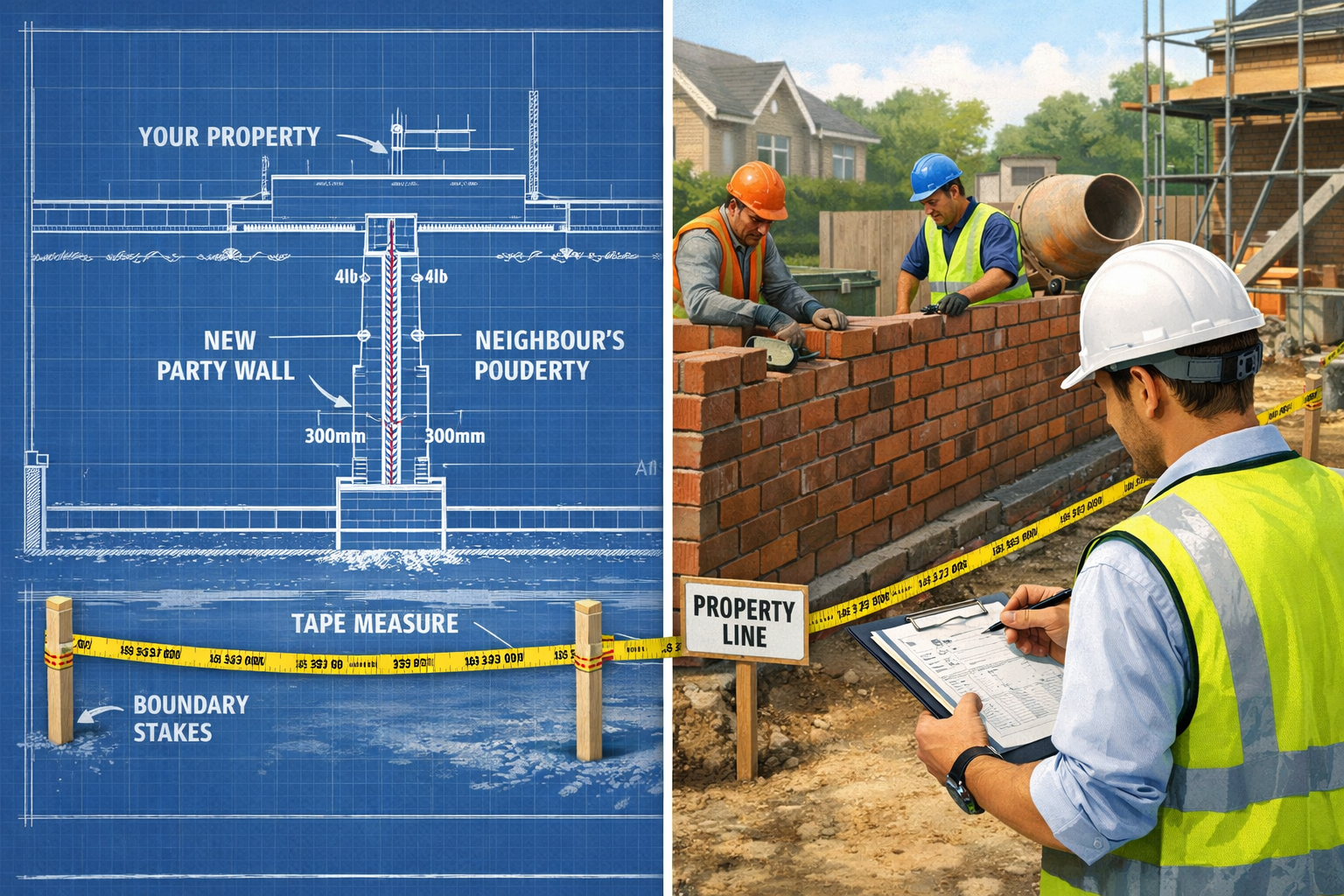
Scenario 1: Building a New Party Wall on the Boundary
Constructing a new wall directly on the boundary line between two properties represents one of the most straightforward scenarios requiring party wall surveyor involvement. This situation commonly arises when building extensions, garages, or garden walls that sit precisely on the property line.[1]
Why a surveyor is needed: Building on the boundary affects both properties equally, and the new structure will become a shared party wall. Professional assessment ensures the construction meets structural standards and doesn't adversely affect the neighbouring property.
Checklist for New Party Wall Construction ✅
- Confirm exact boundary line location with title deeds
- Prepare detailed plans showing wall dimensions and materials
- Serve formal Party Wall Notice at least two months before starting
- Include proposed start date and work duration in notice
- Appoint surveyor if neighbour dissents or doesn't respond within 14 days
- Obtain party wall award before commencing construction
- Arrange pre-construction condition survey of neighbour's property
Timeline consideration: You must serve notice at least two months before starting work on a new party wall, so factor this into your project schedule.
Scenario 2: Excavating Foundations Near a Party Wall
Foundation excavation triggers party wall requirements when digging occurs within specific distances of a neighbouring structure. This represents one of the most common scenarios requiring party wall agreements in residential settings, particularly for extensions and new builds.[1][2]
Distance thresholds that trigger requirements:
| Excavation Depth | Distance from Neighbour's Foundation | Party Wall Notice Required? |
|---|---|---|
| Within 3 metres | Any depth below neighbour's foundation | ✅ Yes |
| Within 6 metres | Depth goes below 45-degree line from neighbour's foundation | ✅ Yes |
| Beyond 6 metres | Any depth | ❌ No |
Checklist for Foundation Excavations 🏗️
- Measure exact distance from neighbour's building
- Determine depth of neighbour's existing foundations
- Calculate if your excavation falls within 3m or 6m threshold
- Prepare detailed excavation plans with depth specifications
- Serve notice at least one month before excavation begins
- Arrange surveyor to assess potential impact on party wall
- Implement protective measures recommended by surveyor
- Document existing condition of neighbour's property
Common protective measures include temporary shoring, underpinning of adjacent foundations, or modified excavation techniques to minimize ground movement.
Scenario 3: Carrying Out Structural Alterations to Party Walls
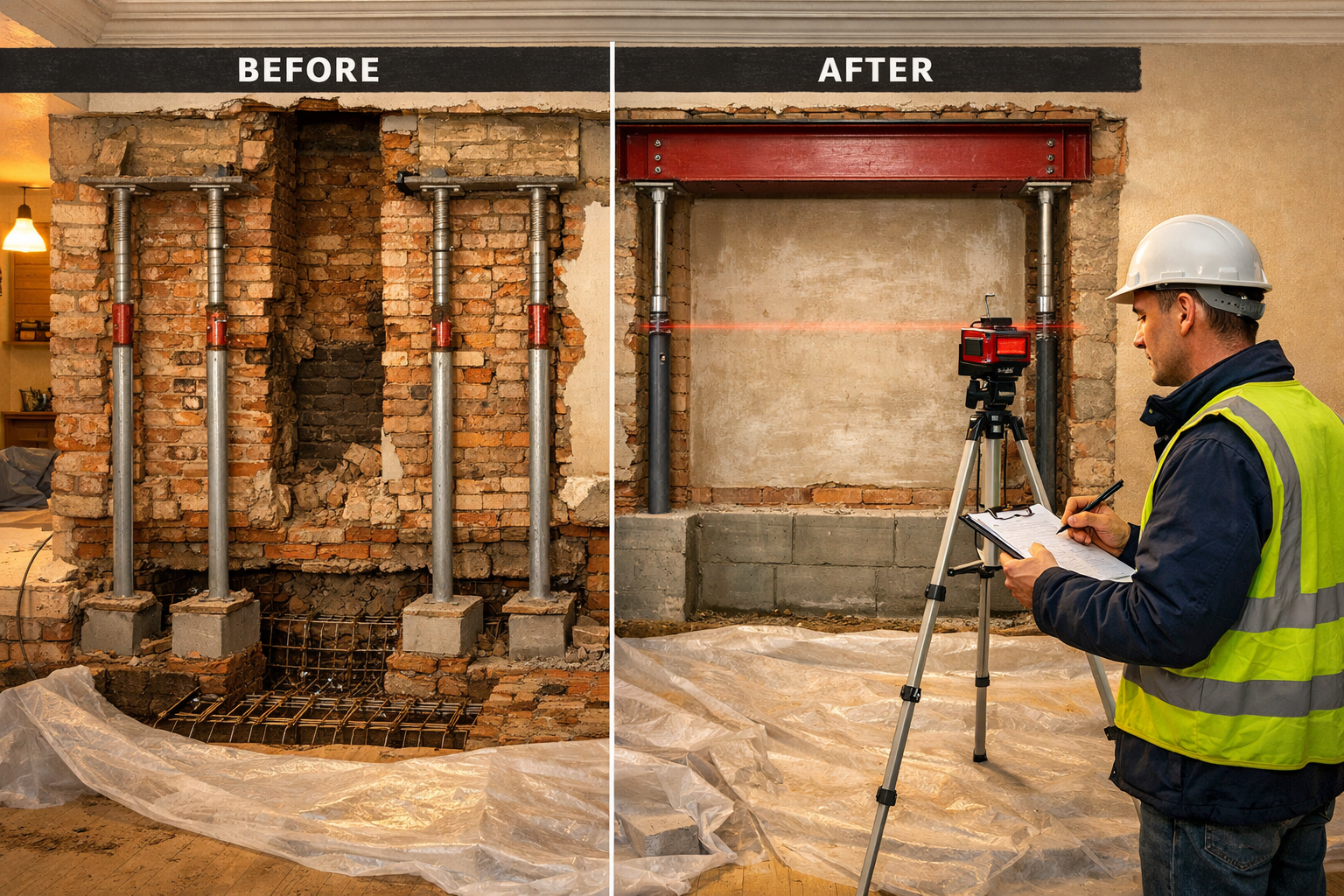
Structural changes to existing party walls—such as removing chimney breasts, cutting into walls for steel beam installation, or creating new openings—require surveyor assessment due to their potential impact on the wall's load-bearing capacity and stability.[1]
Examples of structural alterations requiring surveyors:
- 🔨 Removing chimney breasts or chimney stacks
- 🔩 Installing steel beams or RSJs through party walls
- 🚪 Creating new doorways or openings
- 🧱 Increasing height of party walls
- ⚡ Inserting damp proof courses
- 🏠 Adding or removing load-bearing elements
These works differ significantly from minor cosmetic changes. Plastering, painting, or attaching kitchen units to party walls do not require party wall agreements.[2]
Checklist for Structural Alterations ⚙️
- Obtain structural engineer's assessment of proposed changes
- Identify all party walls affected by alterations
- Prepare detailed drawings showing existing and proposed structure
- Serve Party Structure Notice at least two months in advance
- Specify exact nature of structural work in notice
- Appoint surveyor to assess impact on wall integrity
- Ensure temporary support measures are specified
- Schedule condition survey before work commences
Cost consideration: According to 2026 data, party wall surveyor rates typically range from £150 to £200 per hour, with a complete party wall award costing approximately £1,000, though this varies by location and project complexity.[2] Learn more about keeping party wall costs down.
Scenario 4: Underpinning a Party Wall
Underpinning involves strengthening and stabilizing a building's foundations, typically to address subsidence issues or to allow for basement excavations. When underpinning affects a party wall, surveyor involvement becomes essential due to the significant structural implications.[1]
Why underpinning requires special attention: This work directly affects the foundation supporting the shared wall, with potential consequences for both properties. Any miscalculation or improper execution can cause serious structural damage.
Checklist for Underpinning Projects 🏛️
- Commission structural engineer's report on underpinning necessity
- Determine extent of underpinning required along party wall
- Identify if underpinning extends under neighbour's property
- Serve appropriate notice (typically Party Structure Notice)
- Appoint experienced party wall surveyor with underpinning expertise
- Arrange detailed pre-work condition survey with photographs
- Ensure contractor has relevant insurance and qualifications
- Implement monitoring regime during underpinning work
- Schedule post-completion inspection
Insurance note: Underpinning work should be covered by appropriate contractor insurance, and your surveyor will typically verify this before work begins.
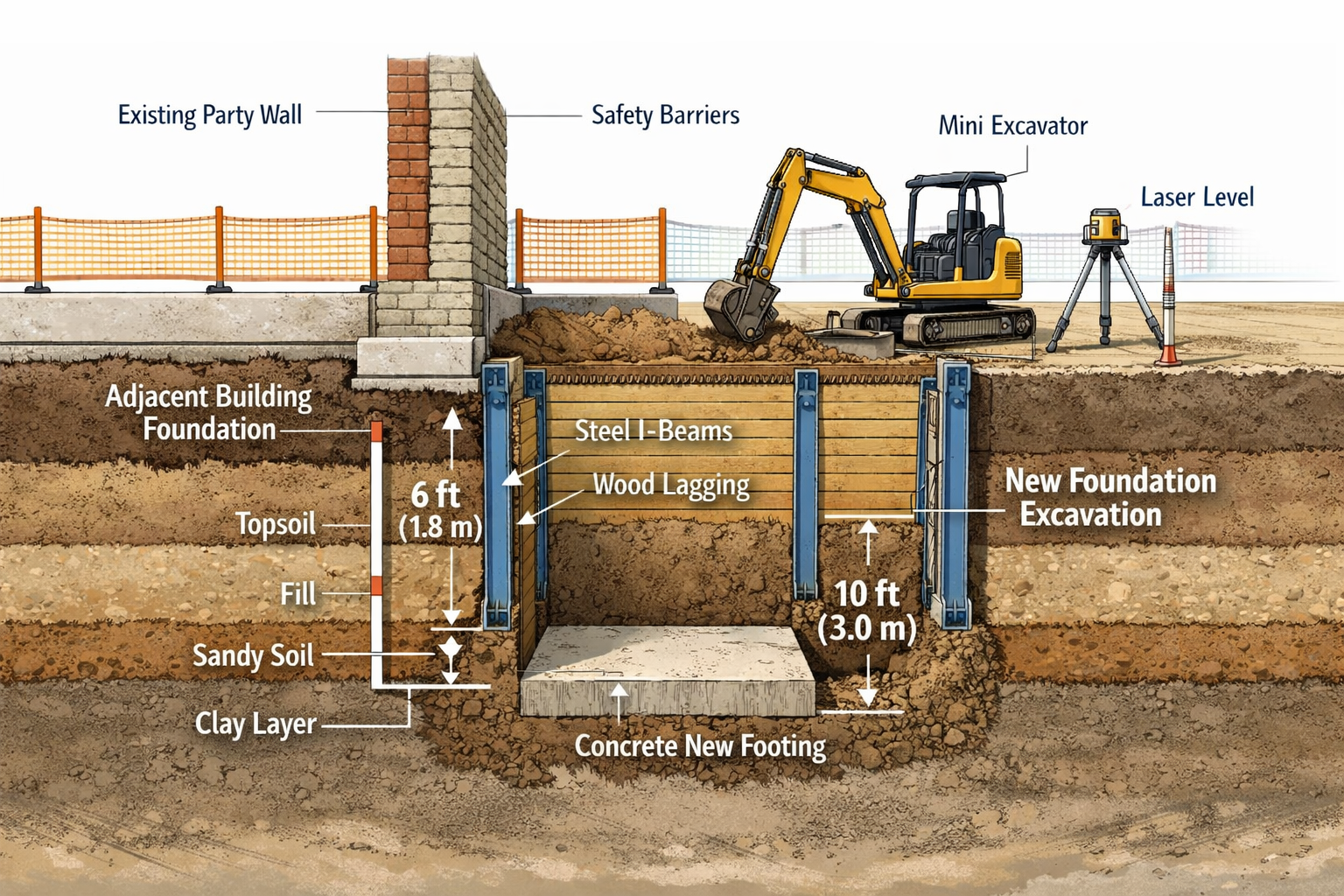
Scenario 5: Excavating for Extensions and Basements
Basement extensions and similar excavations represent increasingly popular home improvements in 2026, particularly in urban areas where space is at a premium. These projects almost always trigger party wall requirements due to the depth and proximity of excavation to neighbouring properties.[1]
Types of excavation requiring surveyor involvement:
- 🏠 Basement conversions – Creating habitable space below ground level
- 📦 Undercroft excavations – Digging out beneath existing structures
- 🚗 Underground garages – Subterranean parking facilities
- 🍷 Wine cellars – Deep excavations for storage spaces
- 🏊 Swimming pools – Below-ground pool installations near boundaries
These works can cause ground movement, affect drainage, and potentially destabilize party walls through changes in soil support.
Checklist for Extension Excavations 🏗️
- Obtain detailed soil investigation report
- Map all party walls and neighbouring foundations affected
- Calculate excavation depths and distances from boundaries
- Prepare comprehensive excavation and shoring plans
- Serve notices to all potentially affected neighbours
- Appoint surveyor to assess stability risks
- Install monitoring equipment on neighbouring properties
- Implement excavation sequence recommended by surveyor
- Maintain regular communication with neighbours during work
Timeline tip: Basement excavations often take longer than anticipated. Build contingency time into your schedule for unexpected ground conditions or required modifications.
Scenario 6: Carrying Out Repairs to Party Walls
Even repair work to existing party walls can require surveyor appointment, particularly when repairs are extensive or involve structural elements. The surveyor inspects the extent of repairs needed and ensures necessary protective measures are implemented.[1]
Repairs that typically require surveyors:
- Rebuilding sections of deteriorated party walls
- Repairing significant structural cracks
- Replacing damaged lintels or beams
- Addressing water damage affecting wall integrity
- Repointing that requires substantial scaffolding access
Repairs that generally don't require surveyors:
- Minor repointing of brickwork
- Cosmetic plaster repairs
- Painting or decorating
- Replacing small sections of render
The key distinction lies in whether the repair work is structural or cosmetic in nature. For guidance on types of party wall works, consult our detailed resource.
Checklist for Party Wall Repairs 🔧
- Document current condition with photographs
- Obtain building surveyor's assessment of repair necessity
- Determine if repairs affect structural integrity
- Identify if access to neighbour's property is required
- Serve appropriate notice based on repair type
- Appoint surveyor if repairs are extensive or structural
- Agree on repair methodology with surveyor
- Ensure repairs match existing materials where possible
- Document completed repairs for records
Scenario 7: Building New Walls Adjacent to Party Walls
Constructing new walls close to existing party walls—even if not directly on the boundary—requires surveyor assessment to prevent damage to the shared structure. This scenario often arises during internal remodeling or when building structures parallel to party walls.[1]
Examples include:
- Building internal stud walls that connect to party walls
- Constructing garden walls near party boundary walls
- Installing partition walls in loft conversions
- Creating new structural walls during property subdivisions
Why proximity matters: Even walls built entirely on your property can affect party walls through vibration during construction, changes in load distribution, or alterations to drainage patterns.
Checklist for Adjacent Wall Construction 🧱
- Measure distance from new wall to party wall
- Determine if new wall will connect to party wall
- Assess if construction will cause vibration affecting party wall
- Prepare plans showing relationship between new and existing walls
- Serve notice if work falls within Act's scope
- Appoint surveyor to assess potential impact
- Implement vibration monitoring if recommended
- Use construction methods that minimize impact
- Document party wall condition before and after work
Understanding the 7 Key Scenarios Requiring Party Wall Surveyors: Notice Requirements
Different scenarios require different types of notices under the Party Wall etc. Act 1996. Understanding which notice to serve is crucial for compliance.[4]
Three Types of Party Wall Notices
1. Party Structure Notice
- Required for: Building new party walls, structural alterations, underpinning
- Notice period: Two months before work starts
- Must include: Detailed plans, work description, proposed start date
2. Line of Junction Notice
- Required for: Building new walls on the boundary
- Notice period: One month before work starts
- Must include: Wall specifications, foundation details, timing
3. Adjacent Excavation Notice (3-Meter or 6-Meter Notice)
- Required for: Foundation excavations near neighbouring buildings
- Notice period: One month before work starts
- Must include: Excavation depth, distance from boundary, protective measures
For comprehensive information about serving notices, see our guide on party wall notices.
What Happens After Serving Notice?
Once you serve a party wall notice, your neighbour has 14 days to respond in one of three ways:
✅ Consent – If your neighbour agrees in writing, you may proceed without appointing surveyors (though you remain liable for any damage)[2]
⚖️ Dissent – If your neighbour objects or doesn't respond, the dispute resolution process begins, requiring surveyor appointment
📋 Counter-notice – Your neighbour may request modifications to your proposals
The Surveyor Appointment Process
When disputes arise or neighbours don't consent, the surveyor appointment process follows these steps:
- Building owner appoints their surveyor – You select a qualified professional to represent your interests
- Adjoining owner appoints their surveyor – Your neighbour chooses their representative
- Agreed surveyor option – Both parties may agree to use a single surveyor (often more cost-effective)
- Surveyors prepare party wall award – The appointed surveyor(s) create a legally binding document
Learn more about the role of the building owner's surveyor and adjoining owner's surveyor in this process.
Regional Considerations Across London
The application of the 7 Key Scenarios Requiring Party Wall Surveyors varies slightly by location, particularly in different London boroughs where property types and construction densities differ.
London-Specific Considerations
North London – Terraced Victorian properties in areas like Islington and Hampstead frequently require party wall agreements for loft conversions and basement excavations. Find specialists in North London.
East London – Rapid development in areas like Hackney and Tower Hamlets means increased party wall work for new builds and conversions. Locate experts in East London.
Central London – High-value properties in Westminster and Camden often involve complex basement excavations requiring specialist surveyor expertise. Access professionals in Central London.
West London – Period properties in Kensington and Chelsea frequently need party wall agreements for structural alterations. Connect with surveyors in West London.
South London – Semi-detached properties in Wandsworth and Lambeth commonly trigger party wall requirements for extensions. Find professionals in South London.
Common Misconceptions About Party Wall Requirements
❌ Myth: "I don't need permission if I'm only working on my side"
Reality: The Party Wall Act applies regardless of which side you're working on. If your work affects a party wall or involves excavation near a boundary, you must follow the Act's requirements.
❌ Myth: "Minor work doesn't require notices"
Reality: While truly cosmetic work (plastering, painting) doesn't require notices, many homeowners underestimate what counts as "structural." When in doubt, consult a surveyor.
❌ Myth: "My neighbour can stop my project"
Reality: Neighbours cannot prevent work that complies with planning permission and building regulations. The Party Wall Act provides a dispute resolution mechanism—it doesn't give neighbours veto power.[2]
❌ Myth: "Party wall agreements are only for shared walls"
Reality: The Act also covers excavations near boundaries and new construction on boundary lines, even where no existing party wall exists.
Cost Implications and Who Pays
Understanding the financial aspects of the 7 Key Scenarios Requiring Party Wall Surveyors helps with project budgeting.
Typical Cost Breakdown (2026)
| Service | Typical Cost Range |
|---|---|
| Surveyor hourly rate | £150 – £200 per hour |
| Complete party wall award | £1,000 average |
| Schedule of condition | £300 – £600 |
| Complex basement project | £1,500 – £3,000 |
| Simple extension notice | £700 – £1,200 |
Who pays? Generally, the building owner (the person doing the work) pays for both surveyors' fees. However, if the adjoining owner requests additional work beyond what's necessary, they may bear those costs.[2]
For detailed information about costs, visit our costs of party wall process page.
Avoiding Common Pitfalls
Starting Work Without Proper Notices ⚠️
The problem: Beginning construction before serving notices or obtaining awards violates the Act and can result in injunctions forcing work stoppage.
The solution: Always serve notices well in advance—remember the two-month requirement for structural work.
Inadequate Documentation 📋
The problem: Poor documentation of existing conditions leads to disputes about damage responsibility.
The solution: Ensure comprehensive schedules of condition with detailed photographs before work begins.
Poor Communication with Neighbours 🗣️
The problem: Lack of communication breeds suspicion and increases likelihood of disputes.
The solution: Discuss plans informally before serving formal notices. Transparency builds trust.
Choosing Unqualified Surveyors 🎓
The problem: Not all surveyors have party wall expertise, leading to inadequate awards or missed issues.
The solution: Select surveyors with specific party wall qualifications and experience in your type of project.
The Party Wall Award: What to Expect
A party wall award is the legally binding document produced by the appointed surveyor(s) that sets out the rights and responsibilities of both parties. Understanding what it contains helps you prepare for the process.
Key Components of a Party Wall Award
1. Description of Works
- Detailed specifications of proposed construction
- Methods and materials to be used
- Timeline for completion
2. Schedule of Condition
- Photographic record of neighbour's property
- Documentation of existing defects
- Baseline for assessing future damage claims
3. Rights of Access
- Specified times and dates for access
- Areas of neighbour's property that may be accessed
- Notice requirements for access
4. Special Foundations Provisions
- If building on the boundary line
- Compensation arrangements if applicable
- Future rights regarding the foundation
5. Dispute Resolution Procedures
- Process for handling disagreements
- Third surveyor appointment mechanism
- Appeal procedures
For more details about party wall awards, see our party wall contract template guide.
Alternative: Having a Party Wall Agreement Without a Surveyor
While the 7 Key Scenarios Requiring Party Wall Surveyors typically necessitate professional involvement, there are circumstances where neighbours can proceed without surveyors.
When Surveyors May Not Be Needed
If your neighbour provides written consent to your party wall notice within the 14-day response period, you may proceed without appointing surveyors. However, important considerations include:
- ✅ You remain fully liable for any damage caused during works
- ✅ Written consent must be explicit and documented
- ✅ A schedule of condition is still highly recommended
- ✅ Consent doesn't waive your neighbour's rights to claim for damage
For detailed guidance on this approach, read our article about having a party wall agreement without a surveyor.
Risks of Proceeding Without Surveyors
Damage disputes: Without professional documentation, proving the extent of pre-existing damage becomes difficult.
Inadequate protection: Surveyors identify risks and recommend protective measures you might overlook.
Future complications: Lack of formal award can complicate future property sales or insurance claims.
Practical Tips for Homeowners in 2026
Start Planning Early ⏰
Begin the party wall process at least three months before your intended start date. This allows time for:
- Serving the required notice periods
- Appointing surveyors if needed
- Preparing schedules of condition
- Addressing any disputes that arise
Maintain Good Records 📸
Document everything:
- Take dated photographs of all relevant areas
- Keep copies of all correspondence
- Save receipts for surveyor fees
- Record any verbal agreements in writing
Choose the Right Professionals 👷
Select contractors experienced with party wall requirements who:
- Understand notice requirements
- Work cooperatively with surveyors
- Implement protective measures properly
- Maintain appropriate insurance coverage
Communicate Proactively 💬
Keep neighbours informed throughout:
- Discuss plans before serving formal notices
- Provide regular updates on work progress
- Address concerns promptly and professionally
- Be considerate about noise and access times
Conclusion
Understanding the 7 Key Scenarios Requiring Party Wall Surveyors: From New Walls to Foundation Excavations is essential for any homeowner planning building work that affects shared boundaries or structures. From constructing new party walls and excavating foundations to carrying out structural alterations and underpinning, each scenario carries specific requirements under the Party Wall etc. Act 1996.
The key to successful party wall compliance in 2026 lies in early identification of requirements, timely service of appropriate notices, and selection of qualified surveyors when needed. While the process may seem complex initially, following the checklists provided for each scenario helps ensure you meet all legal obligations while maintaining positive neighbour relations.
Your Next Steps
- Assess your project against the seven scenarios outlined in this guide
- Determine which notices you need to serve based on your specific work
- Calculate timelines to serve notices at least 1-2 months before starting
- Research qualified surveyors in your area with relevant experience
- Prepare documentation including detailed plans and specifications
- Communicate with neighbours informally before serving formal notices
- Budget appropriately for surveyor fees (£1,000-£3,000 for most projects)
Remember that party wall legislation exists to protect both building owners and their neighbours. By following the proper procedures and engaging qualified professionals when required, you can complete your building project successfully while preserving good relationships with those living next door.
For personalized guidance on your specific situation, consider consulting with experienced party wall surveyors who can assess your project and recommend the appropriate course of action. Whether you're in North London, South London, or anywhere else in England and Wales, professional advice ensures compliance and peace of mind throughout your construction project.
References
[1] Scenarios That Require A Party Wall Surveyor – https://iconsurveyors.co.uk/blog/scenarios-that-require-a-party-wall-surveyor/
[2] Party Wall Agreement – https://hoa.org.uk/advice/guides-for-homeowners/i-am-improving/party-wall-agreement/
[3] Party Wall Surveys For Ev Infrastructure Retrofits Compliance Amid 2026 Net Zero Mandates And Neighbour Disputes – https://nottinghillsurveyors.com/blog/party-wall-surveys-for-ev-infrastructure-retrofits-compliance-amid-2026-net-zero-mandates-and-neighbour-disputes
[4] Different Types Of Party Wall Notice Every Homeowner Should Know – https://westvilleassociates.com/blog/different-types-of-party-wall-notice-every-homeowner-should-know