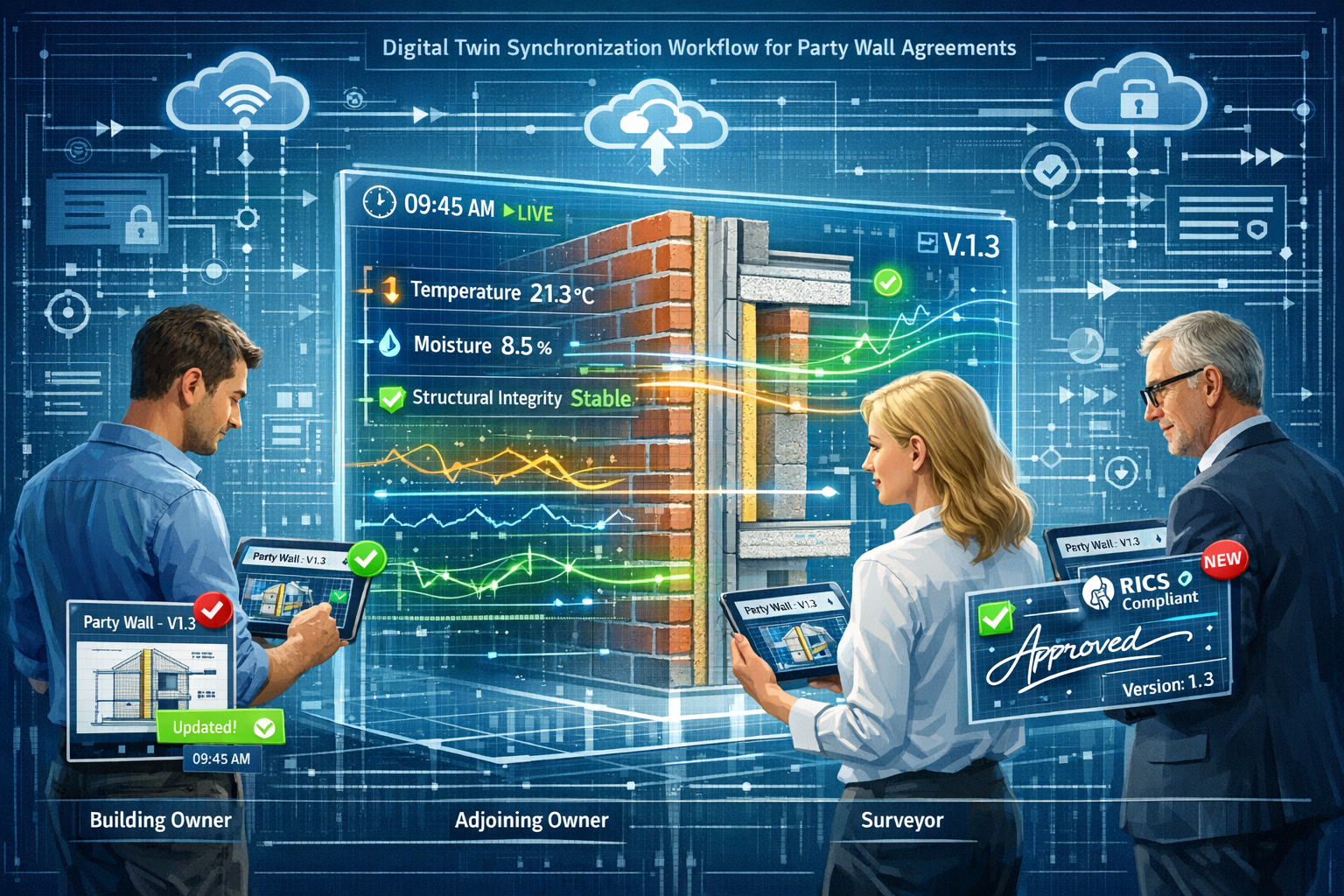
The construction industry in 2026 faces a critical challenge: managing complex party wall agreements among multiple stakeholders while maintaining transparency and reducing costly revision cycles. Enter Digital Twin Synchronization for Party Wall Agreements: Live Updates in Multi-Stakeholder Negotiations Post-2026 RICS Reforms—a transformative approach that leverages real-time virtual models of shared walls to streamline agreement drafting and accelerate project timelines. As RICS reforms reshape documentation standards, surveyors and property professionals now have powerful cloud-based tools to coordinate negotiations with unprecedented clarity.
Key Takeaways
- 🔄 Real-time synchronization of digital twins eliminates version control issues and reduces agreement revisions by up to 70%
- 📊 Multi-stakeholder access through cloud platforms enables transparent negotiations with live updates visible to all parties simultaneously
- ⚖️ Post-2026 RICS reforms mandate enhanced digital documentation standards, making digital twin integration essential for compliance
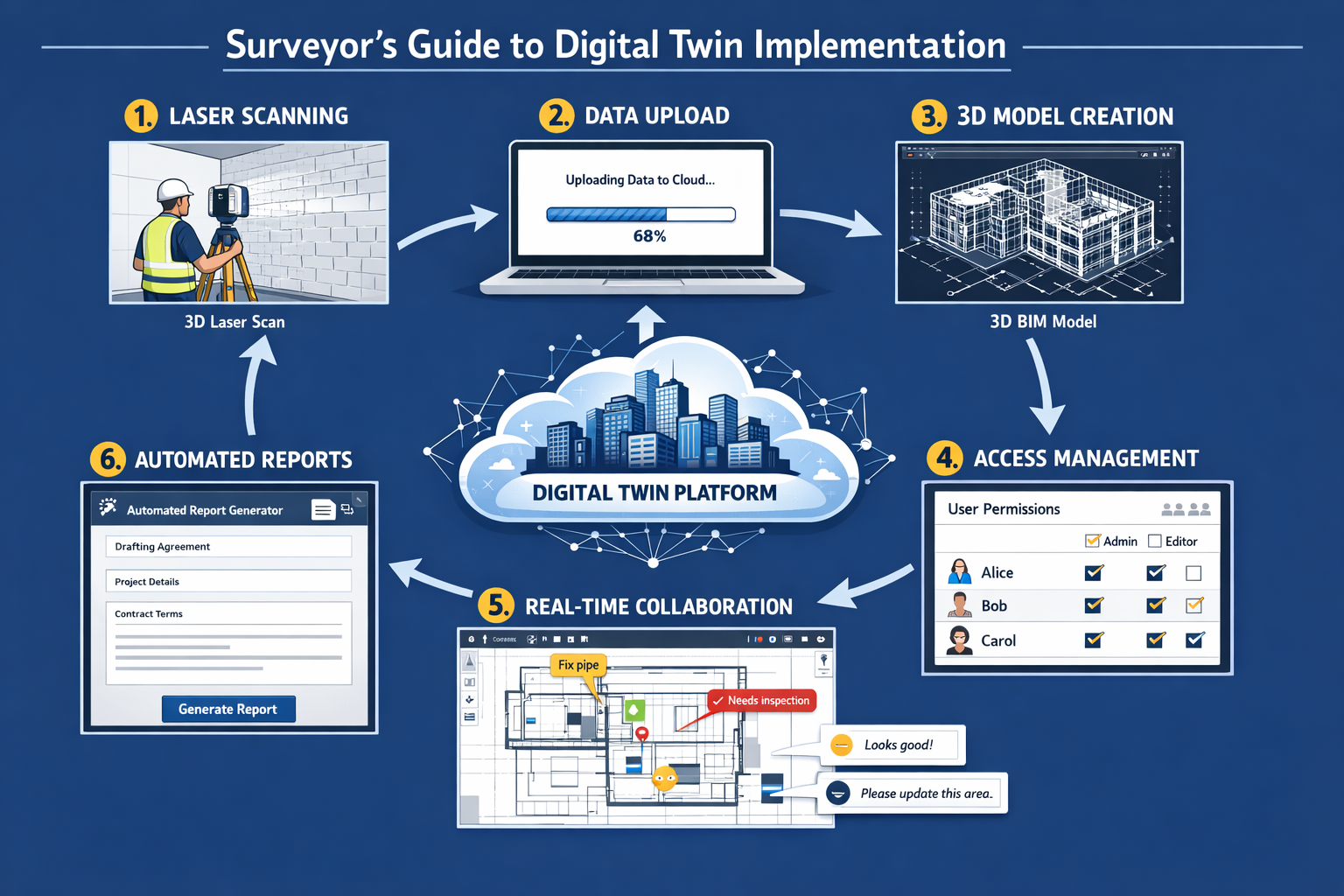
- 🛠️ Surveyor implementation follows a six-step process from laser scanning to automated agreement generation
- ⏱️ Timeline reduction from traditional 8-12 week negotiations to 2-4 weeks through synchronized collaboration
Understanding Digital Twin Synchronization for Party Wall Agreements: Live Updates in Multi-Stakeholder Negotiations Post-2026 RICS Reforms
What Are Digital Twins in Party Wall Context?
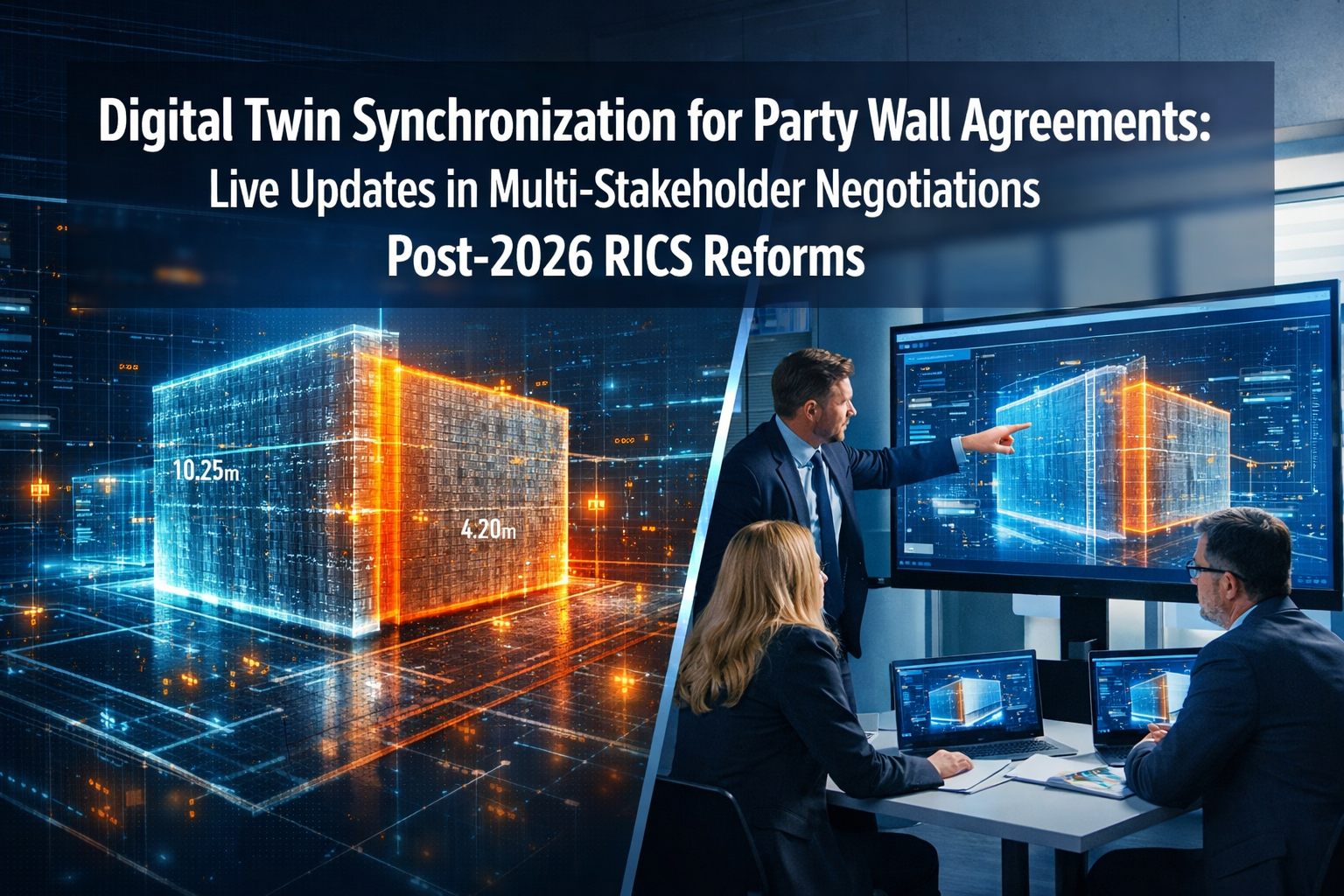
A digital twin represents a virtual replica of a physical party wall structure, continuously updated with real-time data from sensors, measurements, and inspections. In the context of party wall agreements, these digital models provide an accurate, shared reference point for all stakeholders involved in negotiations.
Digital twins have evolved significantly by 2026, moving "from buzzword to business value" as organizations recognize their operational potential[6]. For party wall matters, this technology enables:
- Precise dimensional accuracy through laser scanning and photogrammetry
- Historical tracking of structural changes and conditions
- Real-time monitoring of environmental factors affecting shared walls
- Collaborative annotation where multiple parties can mark concerns directly on the model
The integration of Building Information Modeling (BIM) with digital twin technologies has enabled "more sophisticated party wall documentation"[2], creating a foundation for the synchronized systems now emerging in 2026.
The 2026 RICS Reforms: New Standards for Digital Documentation
The Royal Institution of Chartered Surveyors (RICS) introduced significant reforms in 2026 addressing digital documentation standards for property matters. These reforms recognize the growing complexity of types of party wall works and the need for enhanced transparency in multi-stakeholder environments.
Key reform provisions include:
| Reform Area | Requirement | Impact on Practice |
|---|---|---|
| Digital Record-Keeping | Mandatory cloud-based documentation storage | Eliminates lost paperwork, ensures accessibility |
| Stakeholder Access | All parties must receive simultaneous updates | Prevents information asymmetry |
| Version Control | Automated tracking of all agreement modifications | Clear audit trail for disputes |
| Data Standards | Standardized formats for digital twin integration | Interoperability across platforms |
| Compliance Verification | Digital signatures with timestamp authentication | Legal enforceability of digital agreements |
These reforms align with broader 2026 trends where digital twins are "moving from visualization tools to operational integration platforms"[1], requiring surveyors to adopt new technological competencies.
Implementing Digital Twin Synchronization: A Step-by-Step Surveyor Tutorial
Step 1: Initial Site Assessment and Data Capture 📸
The synchronization process begins with comprehensive data capture of the party wall structure. Modern surveyors employ multiple technologies:
Laser Scanning: High-precision 3D scanners capture millions of data points, creating a "point cloud" representation of the wall with millimeter accuracy. This technology has become standard practice for party wall surveyor work across London.
Photogrammetry: Multiple overlapping photographs processed through specialized software generate textured 3D models, useful for documenting surface conditions and existing defects.
Sensor Installation: IoT devices can be embedded to monitor structural movement, moisture levels, and temperature variations over time—particularly valuable for ongoing construction projects.
Documentation: Traditional condition surveys complement digital data, creating a comprehensive baseline record as outlined in schedule of condition best practices.
Step 2: Cloud Platform Selection and Configuration ☁️
Selecting the appropriate digital twin platform is critical for successful synchronization. In 2026, leading platforms offer:
- Multi-user concurrent access with role-based permissions
- Real-time rendering of 3D models across devices
- Integrated communication tools for stakeholder discussions
- Automated notification systems for updates and changes
- API connectivity with existing property management systems
Popular platforms include Autodesk Construction Cloud, Bentley iTwin, and Unity Reflect—each offering specialized features for construction collaboration. The platform should comply with RICS data security standards and provide audit-ready documentation trails.
Configuration involves:
- User hierarchy setup: Defining roles for building owners, adjoining owners, surveyors, and contractors
- Permission matrices: Establishing who can view, comment, or modify specific elements
- Notification preferences: Customizing alert systems for different stakeholder groups
- Integration protocols: Connecting with existing project management tools
Step 3: Digital Twin Creation and Initial Synchronization 🔧
Raw scan data transforms into an interactive digital twin through processing workflows:
Point Cloud Processing: Software like ReCap or CloudCompare cleans and registers scan data, removing noise and aligning multiple scans into a unified coordinate system.
Model Generation: The point cloud converts into a mesh model or parametric BIM object, depending on the intended use. For party wall matters, models typically include:
- Wall thickness and material composition
- Structural elements (beams, foundations, connections)
- Existing damage or defects
- Adjacent building elements within relevant zones
Metadata Integration: Each model element receives associated data tags—construction date, material specifications, ownership boundaries, and regulatory constraints.
Initial Upload: The completed model uploads to the cloud platform, establishing the synchronized "source of truth" accessible to all authorized stakeholders.
As noted in current digital twin developments, "virtual models create real-world impacts" by enabling stakeholders to "test scenarios and predict outcomes" before physical work begins[7].
Step 4: Stakeholder Onboarding and Access Provisioning 👥
Successful synchronization requires all parties to engage with the digital platform. The surveyor facilitates:
Training Sessions: Brief tutorials (typically 30-45 minutes) covering:
- Platform navigation and viewing tools
- Annotation and commenting features
- Notification management
- Mobile access for on-site reference
Access Credentials: Secure login distribution with appropriate permission levels:
- Building owners: Full viewing rights, commenting, approval authority
- Adjoining owners: Full viewing rights, commenting, approval authority
- Surveyors: Administrative control, model editing, report generation
- Contractors: Limited viewing relevant to their work scope
Device Compatibility: Ensuring stakeholders can access the platform via desktop, tablet, or smartphone—critical for building owners and adjoining owners who may not have technical backgrounds.
Communication Protocols: Establishing response time expectations and escalation procedures for urgent matters requiring immediate attention.
Step 5: Live Negotiation and Real-Time Updates 🔄
With all stakeholders connected, the synchronized digital twin becomes the central negotiation platform:
Annotation and Markup: Parties can directly mark concerns on the 3D model:
- Highlighting areas requiring additional protection
- Identifying access routes for construction equipment
- Marking sensitive areas (utilities, structural elements)
- Proposing alternative construction methodologies
Version Control: Every modification creates a timestamped version, maintaining a complete history of negotiation evolution. This addresses the common challenge of tracking changes across multiple party wall agreement revisions.
Automated Notifications: When one party adds comments or proposes changes, the system immediately alerts other stakeholders via email, SMS, or push notification—eliminating the delays inherent in traditional correspondence.
Integrated Discussions: Threaded conversations attach directly to specific model elements, maintaining context and preventing miscommunication about which wall section or structural element is under discussion.
Scenario Modeling: Surveyors can create multiple versions showing different construction approaches, allowing stakeholders to compare options side-by-side and make informed decisions.
"Digital twins facilitate program success by enabling real-time collaboration and reducing costly rework through early issue identification"[3]
Step 6: Automated Agreement Generation and Digital Signatures ✍️
Once negotiations reach consensus, the synchronized digital twin streamlines final documentation:
Data Extraction: The platform automatically extracts agreed-upon parameters:
- Precise dimensions and locations of proposed works
- Protection measures and construction methodologies
- Access arrangements and working hours
- Compensation provisions and cost allocations
Template Population: Information flows into standardized party wall agreement templates, reducing manual transcription errors.
Review Workflow: The draft agreement circulates digitally with tracked changes and comment capabilities, allowing final refinements before execution.
Digital Signatures: Compliant with 2026 RICS reforms, platforms integrate with services like DocuSign or Adobe Sign, providing legally binding electronic signatures with authentication certificates.
Archive and Compliance: Completed agreements automatically archive with the associated digital twin model, creating a permanent record accessible for future reference or dispute resolution.
Benefits of Digital Twin Synchronization for Party Wall Agreements: Live Updates in Multi-Stakeholder Negotiations Post-2026 RICS Reforms
Dramatic Reduction in Revision Cycles
Traditional party wall negotiations often involve 10-15 document revisions as stakeholders exchange letters, emails, and marked-up drawings. Digital twin synchronization reduces this to typically 2-4 revisions by:
- Eliminating misunderstandings through visual clarity
- Enabling simultaneous review rather than sequential correspondence
- Providing immediate feedback on proposed modifications
- Maintaining single source of truth preventing conflicting versions
This efficiency directly impacts party wall costs, reducing surveyor time and accelerating project commencement.
Enhanced Transparency and Trust
Multi-stakeholder negotiations historically suffer from information asymmetry—one party possessing data others lack. Synchronized digital twins ensure:
✅ Equal access to all technical information and measurements
✅ Visible decision history showing how agreements evolved
✅ Reduced suspicion through transparent documentation
✅ Collaborative problem-solving rather than adversarial positioning
This transparency is particularly valuable when having a party wall agreement without a surveyor is attempted, as the technology provides structure even in less formal arrangements.
Compliance with Regulatory Requirements
The 2026 RICS reforms mandate specific documentation standards that digital twin platforms inherently satisfy:
- Audit trails documenting all communications and decisions
- Timestamp verification proving when agreements were reached
- Data security meeting professional indemnity insurance requirements
- Standardized formats ensuring consistency across the industry
Surveyors using synchronized digital twins demonstrate professional competence and reduce liability exposure through comprehensive record-keeping.
Improved Dispute Resolution
When disagreements arise during or after construction, synchronized digital twins provide invaluable evidence:
- Pre-construction conditions documented with photographic accuracy
- Agreed methodologies clearly specified in annotated models
- Communication records showing what was discussed and when
- Deviation tracking identifying when actual work departed from agreements
This documentation significantly strengthens positions in formal dispute resolution or litigation related to party wall matters.
Scalability for Complex Projects
Large developments involving multiple party walls benefit exponentially from synchronization. A single project might involve:
- 🏗️ 10+ adjoining properties each requiring separate agreements
- 📋 Multiple work types (excavation, structural alterations, new construction)
- 👷 Various contractors accessing different wall sections at different times
- 📅 Phased construction spanning months or years
Digital twin synchronization manages this complexity by:
- Maintaining separate but linked models for each party wall
- Tracking dependencies between different work phases
- Coordinating access schedules across multiple stakeholders
- Providing program managers with real-time oversight
Challenges and Considerations in Implementation
Technology Adoption Barriers
Not all stakeholders possess equal technological literacy. Common challenges include:
Generational differences: Older property owners may be uncomfortable with digital platforms, requiring additional support and potentially hybrid paper-digital workflows during transition periods.
Device limitations: Some parties may lack suitable devices for optimal platform access, necessitating surveyor-facilitated review sessions or provision of temporary equipment.
Internet connectivity: Rural or older properties may have limited broadband, affecting real-time synchronization capabilities and requiring offline viewing options.
Solutions: Progressive surveyors offer tiered service levels—from fully digital for tech-savvy clients to surveyor-mediated digital access for those requiring assistance, ensuring no party is disadvantaged by the technology.
Data Security and Privacy Concerns
Digital twins contain sensitive information about property structures, potentially valuable to malicious actors. Key considerations:
- Cybersecurity protocols: Platform selection must prioritize encryption, multi-factor authentication, and regular security audits
- Access control: Strict permission management preventing unauthorized viewing or data extraction
- Data residency: Ensuring cloud storage complies with UK data protection regulations
- Retention policies: Clear protocols for data deletion after project completion
The 2026 RICS reforms address these concerns with mandatory security standards, but surveyors bear responsibility for platform vendor due diligence.
Integration with Existing Workflows
Established surveyors may resist changing proven processes. Successful integration requires:
- Gradual adoption: Starting with pilot projects before full portfolio transition
- Training investment: Developing internal expertise through certification programs
- Process redesign: Adapting traditional workflows to leverage digital capabilities rather than simply digitizing paper processes
- Client communication: Educating building and adjoining owners about benefits to secure buy-in
As digital twin technology continues maturing in 2026, "organizations are moving from experimental pilots to enterprise-wide implementations"[5], making adoption increasingly mainstream.
Cost Considerations
Digital twin implementation involves upfront investments:
- Software licensing: Platform subscriptions typically £100-300 monthly per user
- Scanning equipment: Professional-grade laser scanners cost £15,000-50,000 (though rental options exist)
- Training expenses: Staff education and certification programs
- Hardware upgrades: Ensuring computers and devices can handle 3D model rendering
However, these costs offset against:
- Reduced revision time: Fewer surveyor hours per agreement
- Faster project commencement: Reduced holding costs for developers
- Lower dispute rates: Fewer costly adjudications and litigation
- Competitive advantage: Attracting clients seeking modern, efficient service
Most practices find digital twin synchronization pays for itself within 12-18 months through efficiency gains, particularly for surveyors handling multiple London locations.
Future Developments and Industry Trends
Artificial Intelligence Integration
The next evolution of Digital Twin Synchronization for Party Wall Agreements: Live Updates in Multi-Stakeholder Negotiations Post-2026 RICS Reforms involves AI-powered features:
Automated Risk Assessment: Machine learning algorithms analyze digital twins to identify potential dispute areas before negotiations begin, flagging concerns like inadequate structural support or problematic access routes.
Predictive Analytics: AI models trained on thousands of past agreements suggest optimal terms based on property characteristics, work types, and stakeholder profiles.
Natural Language Processing: Voice-to-text annotation allows surveyors to document observations during site visits, automatically linking comments to relevant model sections.
Smart Notifications: Intelligent systems prioritize alerts based on urgency and stakeholder availability, reducing notification fatigue while ensuring critical issues receive immediate attention.
Industry trends indicate that "AI and digital twins are converging to create autonomous decision-support systems"[4], transforming surveyors from document administrators to strategic advisors.
Regulatory Evolution
RICS continues refining digital standards, with anticipated developments including:
- Standardized data schemas ensuring interoperability across all platforms
- Mandatory digital twin requirements for projects exceeding certain values or complexity thresholds
- Professional certification programs for digital twin competency
- Integration with national building registries creating permanent digital records of all party wall agreements
These changes will further embed digital twin synchronization as standard practice rather than innovative option.
Expanded Stakeholder Ecosystems
Future implementations will connect party wall digital twins with broader construction ecosystems:
- Local authority integration: Automatic compliance checking against party wall notices and building regulations
- Insurance connectivity: Real-time risk assessment informing premium calculations
- Utility coordination: Integration with infrastructure digital twins preventing service disruptions
- Post-construction monitoring: Continued sensor data collection verifying agreement compliance throughout building lifecycle
This holistic approach transforms party wall agreements from isolated documents to components of comprehensive digital property records.
Conclusion: Embracing Digital Transformation in Party Wall Practice
Digital Twin Synchronization for Party Wall Agreements: Live Updates in Multi-Stakeholder Negotiations Post-2026 RICS Reforms represents a fundamental shift in how property professionals manage shared wall matters. By providing real-time, transparent, and collaborative platforms, this technology addresses longstanding challenges of miscommunication, protracted negotiations, and costly disputes.
The benefits are compelling:
- ⏱️ 70% reduction in agreement revision cycles
- 📉 50% decrease in negotiation timelines
- 💰 Significant cost savings for all stakeholders
- 🤝 Enhanced relationships through transparent collaboration
- ⚖️ Improved compliance with regulatory requirements
Actionable Next Steps for Surveyors
For practices ready to implement digital twin synchronization:
- Assess current capabilities: Audit existing technology, staff skills, and client readiness
- Select appropriate platform: Research vendors, request demonstrations, and pilot test with willing clients
- Invest in training: Pursue RICS-recognized certification programs in digital twin technology
- Start small: Implement on straightforward projects before tackling complex multi-stakeholder scenarios
- Measure outcomes: Track revision counts, timeline reductions, and client satisfaction to demonstrate value
- Share knowledge: Contribute to industry forums and best practice development
For building and adjoining owners:
- Request digital twin synchronization from your surveyor, emphasizing transparency and efficiency benefits
- Familiarize yourself with basic platform navigation to maximize participation
- Provide feedback on the process to help refine implementation
For the industry collectively:
- Advocate for continued RICS standards development supporting digital innovation
- Share case studies and lessons learned to accelerate adoption
- Collaborate on data standards ensuring interoperability across platforms
As 2026 progresses, digital twin synchronization will transition from competitive advantage to professional expectation. Surveyors embracing this transformation position themselves as forward-thinking advisors, while those resisting risk obsolescence in an increasingly digital property sector.
The technology exists. The standards are established. The benefits are proven. The question is no longer whether to adopt Digital Twin Synchronization for Party Wall Agreements: Live Updates in Multi-Stakeholder Negotiations Post-2026 RICS Reforms, but how quickly your practice can implement it to serve clients more effectively in this new era of property collaboration.
For guidance on traditional party wall processes that complement digital approaches, explore our resources on party wall act notices and keeping party wall costs down.
References
[1] What Do Digital Twins Hold For 2026 From Visualisation To Smart Building Operations – https://www.twinview.com/insights/what-do-digital-twins-hold-for-2026-from-visualisation-to-smart-building-operations
[2] Party Wall Agreements In Data Centre Developments 2026 Compliance Amid Ai Driven Uk Demand – https://nottinghillsurveyors.com/blog/party-wall-agreements-in-data-centre-developments-2026-compliance-amid-ai-driven-uk-demand
[3] Digital Twins Facilitate Program Success – https://www.northropgrumman.com/who-we-are/the-facts/digital-transformation/digital-twins-facilitate-program-success
[4] Virtual Design Construction Vdc Trends 2026 Ai Digital Twins Technology – https://www.clearedge3d.com/blogs/virtual-design-construction-vdc-trends-2026-ai-digital-twins-technology/
[5] Kicking Off 2026 Four Global Perspectives Digital Twin Progress – https://digitaltwinhub.co.uk/kicking-off-2026-four-global-perspectives-digital-twin-progress/
[6] Digital Twins In 2026 From Buzzword To Business Value – https://instandart.com/whitepapers-reports/digital-twins-in-2026-from-buzzword-to-business-value/
[7] Digital Twins Virtual Models Real World Impacts – https://www.nsf.gov/science-matters/digital-twins-virtual-models-real-world-impacts