


More than 60% of basement and foundation projects in London trigger Party Wall Act requirements, yet most property owners remain unaware of the precise distance calculations that determine when excavation notices become mandatory. Understanding Excavation Notices Under Party Wall Act: 3-6 Metre Rules, Notifier Calculations, and Protective Measures is essential for anyone planning to dig near a neighbor's property in 2026, as urban density continues to push buildings closer together and enforcement becomes increasingly stringent.
The Party Wall etc. Act 1996 establishes specific geometric rules that govern when excavation work requires formal notification to adjoining owners. These rules aren't arbitrary—they're designed to protect neighboring structures from subsidence, settlement, and foundation damage caused by nearby digging. Whether you're planning a basement conversion, foundation repair, or new construction, knowing how to calculate these critical distances can save thousands in legal disputes and project delays.
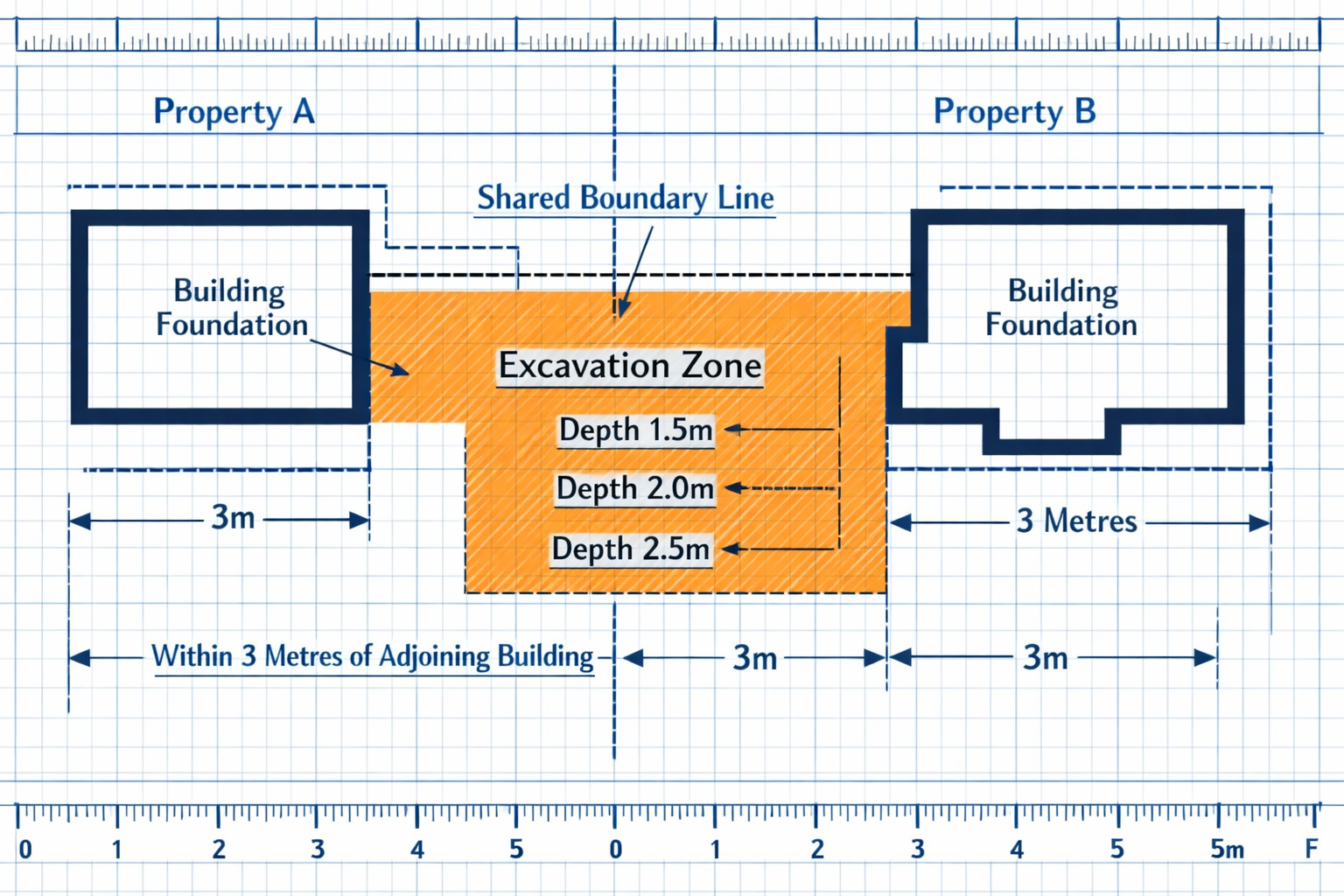
Key Takeaways
- The 3-metre rule applies when excavating within 3 metres of a neighbor's building and going deeper than their foundations, requiring a Section 6 notice at least one month before work begins[1][3]
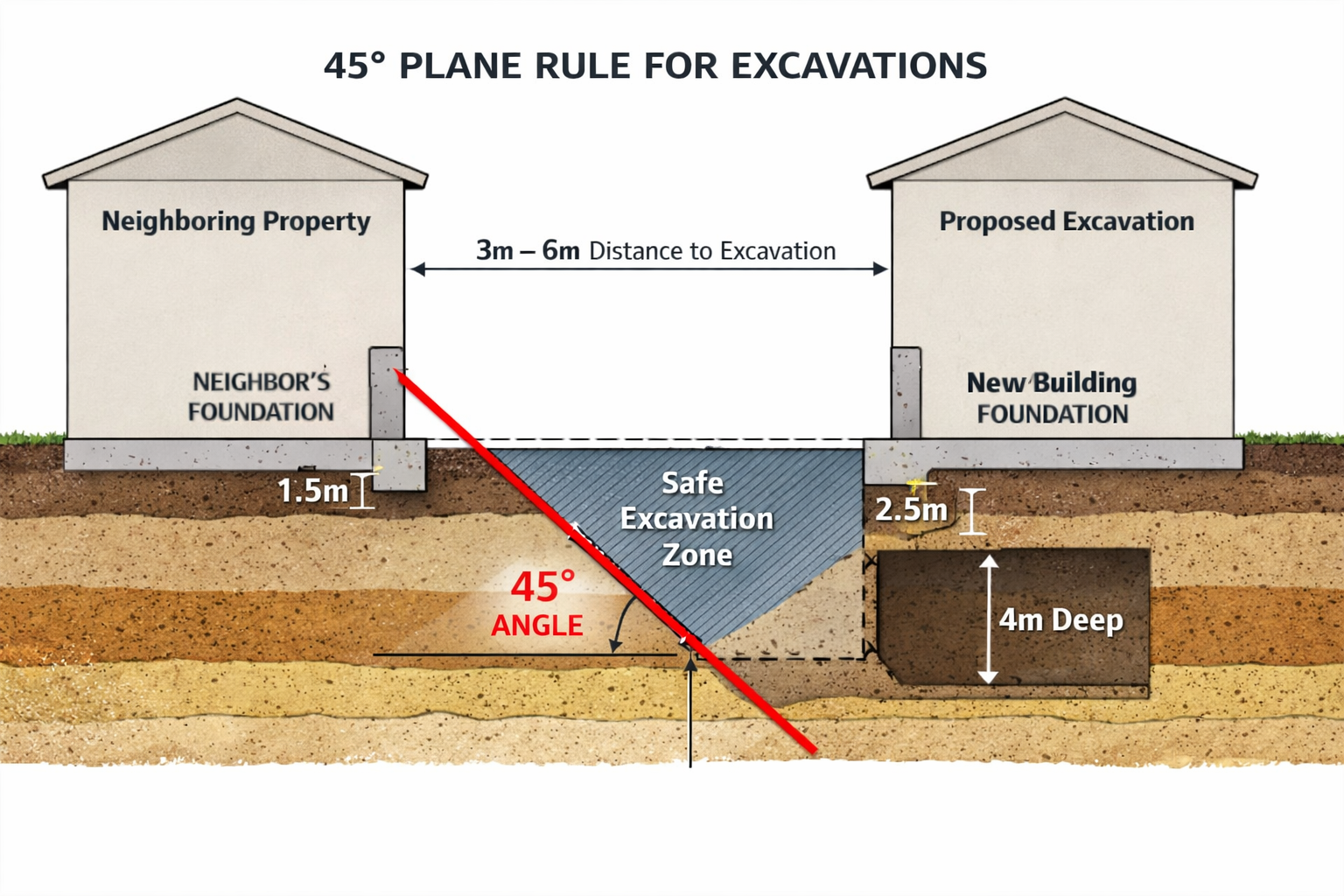
- The 6-metre rule uses a 45-degree plane calculation for excavations between 3-6 metres away, creating a diagonal zone of influence under neighboring property[1][2]
- Proper notice documentation must include detailed plans, sections, and depth measurements to comply with legal requirements under the Party Wall etc. Act 1996[3][4]
- Protective measures become mandatory when notices are served, including underpinning, shoring, and structural monitoring to safeguard adjacent properties[6]
- Failure to serve notice can result in injunctions, project delays, and liability for any damage caused to neighboring structures[1][3]
Understanding Section 6 of the Party Wall Act
Section 6 of the Party Wall etc. Act 1996 specifically addresses excavation work near neighboring properties. Unlike party wall notices for work directly on shared structures, Section 6 notices deal with ground excavation that could potentially undermine or destabilize adjacent buildings.
The legislation divides excavation scenarios into two distinct categories based on horizontal distance from the neighbor's structure[5]:
Section 6(1): The 3-Metre Rule
This provision applies when you plan to excavate within 3 metres of any part of a neighboring building or structure[1][3]. The critical trigger is depth—your excavation must extend below the bottom of their foundations for Section 6(1) to apply[3].
This is the most commonly triggered rule for domestic projects such as:
- 🏗️ Basement conversions and extensions
- 🔧 Foundation repairs or deepening
- 💧 Underground drainage installations
- 🏠 New build construction on narrow plots
Section 6(2): The 6-Metre Rule
When excavating between 3 and 6 metres from a neighbor's property, Section 6(2) introduces a more complex geometric calculation[1][2]. The rule applies when any part of your excavation meets or crosses a plane drawn downward at a 45-degree angle from the bottom of the neighbor's foundations[2][5].
This creates a diagonal "zone of influence" extending beneath the neighboring property. The further away you are horizontally, the deeper you can dig before triggering the notice requirement[1].
Legal Foundation and Enforcement
These provisions are enshrined in UK legislation under Section 6 of the Party Wall etc. Act 1996[5]. The Act applies throughout England and Wales, with particularly high relevance in densely populated urban areas where properties sit close together. In 2026, local authorities increasingly enforce compliance, and courts readily grant injunctions to halt work that proceeds without proper notice[3].
Calculating Distance and Depth: The Notifier's Formula
Accurate measurement is crucial when determining whether Excavation Notices Under Party Wall Act: 3-6 Metre Rules, Notifier Calculations, and Protective Measures apply to your project. Incorrect calculations can lead to legal disputes, project delays, and potential liability for structural damage.
Measuring Horizontal Distance
The horizontal distance is measured from the external face of the neighbor's building wall to the nearest point of your proposed excavation[1][4]. This measurement should be:
- Taken at ground level or foundation depth
- Measured perpendicular to the building face
- Recorded in multiple locations if the excavation has an irregular shape
- Documented with scaled drawings and site photographs
Important: Distance is measured to ANY part of the neighbor's building or structure, including conservatories, extensions, boundary walls, and outbuildings[3][7].
Determining Foundation Depth
Establishing the depth of your neighbor's foundations is essential but often challenging. Options include:
- Trial pits or bore holes near the boundary (with permission)
- Building records from local authority archives
- Professional surveyor assessment based on building age and construction type
- Conservative estimates assuming deeper foundations if exact depth is unknown[4]
For Victorian terraced houses in London, foundations typically sit 600-900mm below ground level. Modern buildings may have foundations 1-1.5 metres deep or more[7].
The 45-Degree Plane Calculation
For excavations between 3-6 metres away, you must calculate whether your dig intersects the 45-degree plane[1][2]. Here's the formula:
Maximum excavation depth = (Horizontal distance – 3m) + Neighbor's foundation depth
Example Calculation
- Neighbor's foundation depth: 1.0 metre below ground
- Your excavation: 5 metres away horizontally
- Calculation: (5m – 3m) + 1m = 3 metres maximum depth
If you plan to excavate deeper than 3 metres at this distance, Section 6(2) applies and you must serve notice[2].
Creating a Measurement Table
| Distance from Neighbor | Neighbor's Foundation Depth | Maximum Depth Without Notice | Notice Required? |
|---|---|---|---|
| 2.5 metres | 1.0 metre | N/A (within 3m zone) | ✅ Yes (Section 6(1)) |
| 3.5 metres | 1.0 metre | 1.5 metres | Only if deeper than 1.5m |
| 5.0 metres | 1.0 metre | 3.0 metres | Only if deeper than 3.0m |
| 6.5 metres | 1.0 metre | No restriction | ❌ No (beyond 6m) |
This table illustrates how the permitted excavation depth increases as you move further from the neighboring property[1][2].
Serving the Section 6 Notice: Requirements and Timing
Once you've determined that your excavation triggers Section 6, you must serve formal notice to all affected adjoining owners. Understanding what party wall notices are and how to respond helps both building owners and neighbors navigate this process.
Minimum Notice Period
You must serve the Section 6 notice at least one month before excavation work begins[1][3]. This is shorter than the two-month notice required for party structure notices, but still provides neighbors adequate time to review plans and respond.
Required Documentation
A valid Section 6 notice must include[1][3][4]:
- Detailed plans showing the excavation location in relation to the neighbor's property
- Cross-sections illustrating excavation depth and foundation levels
- Measurements confirming distances and depths
- Description of proposed work including methodology
- Proposed start date for excavation activities
- Building owner's details and contact information
The government's explanatory booklet provides templates and guidance for preparing these notices[6].
Who Must Receive Notice?
Serve notice to all adjoining owners whose properties fall within the 3-6 metre zones[3]. This includes:
- Direct neighbors sharing a boundary
- Properties diagonally adjacent if within the measurement zones
- Leaseholders and freeholders (both may need separate notices)
- Multiple occupancy buildings (serve to the freeholder or managing agent)
Response Timeline and Deemed Dissent
Neighbors have 14 days to respond to the notice[1]. They can:
- Consent in writing (work can proceed as planned)
- Dissent and raise concerns (triggers dispute resolution)
- Not respond (silence is treated as dissent after 14 days)[1]
If dissent occurs or no response is received, the matter becomes a party wall dispute requiring party wall surveyors to resolve through a formal award[1].
Notice Validity Period
Section 6 notices remain valid for 12 months from the date of service[1]. If excavation work doesn't commence within this period, the notice expires and must be served again. This prevents indefinite uncertainty for adjoining owners.
Protective Measures Required Under Excavation Notices
When Excavation Notices Under Party Wall Act: 3-6 Metre Rules, Notifier Calculations, and Protective Measures are served, the building owner has legal obligations to protect neighboring structures. Section 6 specifically addresses the protective works that may be required[5][6].
Mandatory Safeguards
The Act requires building owners to take necessary precautions to prevent damage, including[5][6]:
1. Underpinning Adjacent Foundations
When excavating deeper than a neighbor's foundations within the 3-metre zone, underpinning is often necessary. This involves:
- Extending the neighbor's foundations to a deeper level
- Working in controlled stages to maintain structural stability
- Using mass concrete, reinforced concrete, or engineered piling systems
- Ensuring the neighbor's building remains fully supported throughout[6]
2. Shoring and Temporary Support
Temporary structural support systems may include:
- Sheet piling to retain soil and prevent collapse
- Trench support systems for excavations
- Propping of existing walls during work
- Soil stabilization techniques in unstable ground conditions
3. Structural Monitoring
Professional monitoring throughout the excavation period typically involves:
- Baseline condition surveys documenting pre-existing conditions (learn more about schedule of condition reports)
- Crack monitoring with tell-tales and precise measuring equipment
- Level monitoring to detect settlement or movement
- Regular inspections by qualified surveyors
- Photographic documentation at key stages[4]
Design and Engineering Requirements
Protective measures must be designed by qualified professionals:
- Structural engineers calculate loads and design support systems
- Party wall surveyors specify appropriate safeguards in the award
- Contractors implement measures according to approved specifications
- Building control inspects work for compliance with building regulations
Cost Responsibility
The building owner (person carrying out the work) bears the cost of all protective measures required under Section 6[6]. This includes:
- Design and engineering fees
- Materials and labor for underpinning or shoring
- Monitoring and inspection costs
- Making good any damage caused by the works
Understanding party wall costs helps building owners budget appropriately for these requirements.

Common Scenarios and Case Applications
Real-world applications of Excavation Notices Under Party Wall Act: 3-6 Metre Rules, Notifier Calculations, and Protective Measures vary significantly based on property type and location.
Basement Conversions in Terraced Houses
This is the most frequent trigger for Section 6 notices in urban areas. A typical scenario:
- Victorian terraced house with 800mm deep foundations
- Proposed basement excavation to 2.5 metres depth
- Excavation within 1 metre of party wall on both sides
- Result: Section 6(1) notices required to both neighbors, likely requiring underpinning of both party walls[3][7]
Rear Extensions with Foundation Work
When extending a property rearward:
- Extension requires foundations 1.2 metres deep
- Neighbor's conservatory sits 2.5 metres away with 600mm foundations
- Result: Section 6(1) applies; notice required with potential underpinning of conservatory foundations[4]
New Build on Narrow Urban Plot
Development on a tight urban site:
- New house foundations at 1.5 metres depth
- Existing neighbor 4 metres away with 1.0 metre foundations
- Using 45-degree calculation: (4m – 3m) + 1m = 2 metres maximum
- Result: Section 6(2) applies as excavation exceeds 2 metres; notice required but underpinning may not be necessary[1][2]
Drainage Excavations
Installing deep drainage systems:
- Drainage trench 2.8 metres from neighbor's boundary wall
- Trench depth 1.5 metres, neighbor's wall foundations at 900mm
- Result: Section 6(1) applies; notice required even for temporary excavations[3]
2026 Updates: Urban Density and Enhanced Enforcement
As property values in London and other UK cities continue to rise in 2026, basement conversions and vertical extensions have become increasingly common. This trend has led to several practical developments:
Increased Scrutiny from Local Authorities
Planning departments now routinely check that party wall procedures have been followed before granting building control approval. Failure to serve proper Section 6 notices can delay or halt projects[3].
Digital Notice Services
Technology has streamlined the notice process in 2026:
- Online platforms for serving and tracking notices
- Digital signature acceptance for consent
- Electronic document management for plans and surveys
- Mobile apps for site monitoring and reporting
Professional Liability Considerations
Contractors and developers face increased liability exposure:
- Insurance policies specifically exclude work without proper party wall compliance
- Courts readily award damages for unauthorized excavation
- Professional indemnity requirements for designers and surveyors have increased
- Neighbors have 12 years to claim for damage caused by non-compliant work[3]
Regional Variations
While the Act applies across England and Wales, enforcement varies:
- Central London and East London see highest compliance rates
- North London and West London areas have experienced increased dispute volumes
- South London developments face particular scrutiny due to varied soil conditions
Dispute Resolution and Award Process
When neighbors dissent to a Section 6 notice, the dispute resolution process begins. Understanding party wall awards is essential for both parties.
Appointing Surveyors
Three options exist for surveyor appointments[1]:
- Agreed Surveyor: Both parties appoint the same surveyor (most cost-effective)
- Two Surveyors: Each party appoints their own surveyor, who then appoint a third surveyor
- Building Owner's Surveyor: If the adjoining owner doesn't respond, the building owner's surveyor can act alone after proper procedure
The Award Document
The party wall award is a legally binding document that specifies[1][6]:
- Detailed description of permitted works
- Required protective measures and safeguards
- Schedule of condition baseline
- Access arrangements for monitoring
- Dispute resolution procedures
- Cost allocation between parties
Timeframes for Resolution
Typical dispute resolution timelines in 2026:
- Surveyor appointment: 10-14 days after dissent
- Site inspections and assessments: 2-4 weeks
- Award preparation: 2-4 weeks
- Total process: 6-10 weeks from dissent to award[1]
Costs and Fee Allocation
Generally, the building owner pays all reasonable costs[6]:
- Both surveyors' fees (even the adjoining owner's surveyor)
- Third surveyor fees if appointed
- Award preparation and administration
- Monitoring and inspection costs
Learn more about keeping party wall costs down while maintaining compliance.
Practical Tips for Building Owners
Successfully navigating Excavation Notices Under Party Wall Act: 3-6 Metre Rules, Notifier Calculations, and Protective Measures requires careful planning and professional guidance.
Early Planning Strategies
✅ Start the process early: Serve notices at least 2-3 months before your planned start date to allow for potential disputes
✅ Engage professionals early: Appoint a party wall surveyor during the design phase, not after planning approval
✅ Budget appropriately: Set aside 2-5% of construction costs for party wall matters, including potential underpinning[4]
✅ Communicate proactively: Discuss your plans informally with neighbors before serving formal notices
Documentation Best Practices
📋 Maintain comprehensive records:
- All correspondence with neighbors
- Proof of notice service (recorded delivery receipts)
- Professional survey reports and calculations
- Photographic evidence of existing conditions
- Contractor qualifications and insurance certificates
Avoiding Common Mistakes
❌ Don't assume distance exempts you: Always calculate both horizontal distance AND depth requirements
❌ Don't start work before notice expires: The one-month minimum is non-negotiable[1]
❌ Don't ignore expired notices: If 12 months pass, serve fresh notices before commencing work
❌ Don't proceed without consent or award: Silence equals dissent; follow the dispute resolution process[1]
When to Seek Professional Help
Consider professional party wall surveyor assistance when:
- Excavations are complex or multi-phased
- Multiple neighbors are affected
- Foundation depths are uncertain
- Neighbors raise objections or concerns
- Boundary wall rules complicate the situation
- Project value exceeds £50,000
Guidance for Adjoining Owners
If you've received a Section 6 excavation notice from a neighbor, understanding your rights and options is crucial.
Your Rights Under the Act
As an adjoining owner, you're entitled to[6]:
- Full information about proposed excavation work
- Professional assessment of potential impacts at the building owner's expense
- Protective measures to safeguard your property
- Compensation for any damage caused by the works
- Access for monitoring and inspection during construction
Responding to a Notice
Within 14 days of receiving notice, you should[1]:
- Review the documentation carefully with professional help if needed
- Inspect your property for existing conditions and vulnerabilities
- Consider the proposals and whether they adequately protect your interests
- Respond formally in writing with consent or dissent
When to Dissent
Consider dissenting if:
- Inadequate protective measures are proposed
- Excavation methodology seems risky
- Your property has pre-existing structural issues
- You want independent surveyor oversight
- Documentation is incomplete or unclear
Note: Dissenting doesn't stop the work—it triggers professional surveyor involvement to ensure proper safeguards[1].
Costs for Adjoining Owners
Generally, adjoining owners pay nothing for the party wall process[6]:
- Building owner pays your surveyor's fees
- You're not liable for protective works costs
- Damage repairs are the building owner's responsibility
- Only if you request additional work beyond protective measures might you incur costs
For more information, visit our guide for adjoining owners.
Conclusion
Excavation Notices Under Party Wall Act: 3-6 Metre Rules, Notifier Calculations, and Protective Measures represent a critical legal framework designed to balance property development rights with neighbor protection in 2026's increasingly dense urban environment. The geometric precision of the 3-metre and 6-metre rules, combined with the 45-degree plane calculation, creates clear boundaries for when formal notification becomes mandatory.
Building owners must measure distances accurately, determine foundation depths reliably, and serve proper notices with comprehensive documentation at least one month before excavation begins. The protective measures required—from underpinning to structural monitoring—ensure that neighboring properties remain safe and stable throughout construction.
For adjoining owners, the Act provides robust protections and professional oversight at no personal cost, ensuring that nearby excavation work doesn't compromise structural integrity or property value.
Next Steps
If you're planning excavation work:
- Measure distances and depths carefully using the formulas outlined in this guide
- Engage a qualified party wall surveyor early in your planning process
- Prepare comprehensive notice documentation with detailed plans and sections
- Serve notices at least one month (preferably 2-3 months) before your planned start date
- Budget for protective measures and professional fees
If you've received an excavation notice:
- Review the documentation thoroughly within 14 days
- Consider appointing your own surveyor if you have concerns
- Document your property's current condition with photographs
- Respond formally in writing with consent or dissent
- Ensure monitoring arrangements are in place before work begins
The Party Wall etc. Act 1996 provides a proven framework for managing excavation risks in close-proximity situations. By following the rules, engaging professionals, and maintaining open communication, both building owners and neighbors can navigate excavation projects successfully while protecting property interests and maintaining good neighborly relations.
For expert guidance on your specific situation, contact a qualified party wall surveyor who can assess your project requirements and ensure full compliance with the Act.
References
[1] Party Wall Section 6 Explained The 3m 6m Excavation Rules – https://www.ansteyhorne.co.uk/news/party-wall-section-6-explained-the-3m-6m-excavation-rules
[2] Section 6 – https://www.partywall.expert/section-6/
[3] Party Wall Act 3 Metre Rule – https://iconsurveyors.co.uk/blog/party-wall-act-3-metre-rule/
[4] Party Wall Act 3 Metre Rule – https://hardingsurveyors.co.uk/party-wall-matters/party-wall-act-3-metre-rule
[5] Section – https://www.legislation.gov.uk/ukpga/1996/40/section/6
[6] The Party Wall Etc Act 1996 Explanatory Booklet – https://www.gov.uk/government/publications/preventing-and-resolving-disputes-in-relation-to-party-walls/the-party-wall-etc-act-1996-explanatory-booklet
[7] The Party Wall Act 3 Metre Rule Explained – https://westvilleassociates.com/blog/the-party-wall-act-3-metre-rule-explained
[8] Party Wall Act 3 Metre Rule Complete Guide – https://acdesignsolution.com/party-wall-act-3-metre-rule-complete-guide/