


.

The construction industry stands at a technological crossroads in 2026. Traditional party wall procedures—once reliant on manual measurements, paper documentation, and subjective assessments—are rapidly transforming through artificial intelligence and millimeter-accurate surveying technologies. For property owners, surveyors, and contractors navigating complex urban developments, Integrating AI and Precision Surveying into Party Wall Notices for 2026 Construction Projects represents not just an efficiency upgrade, but a fundamental reimagining of how neighboring property rights are documented, protected, and managed.
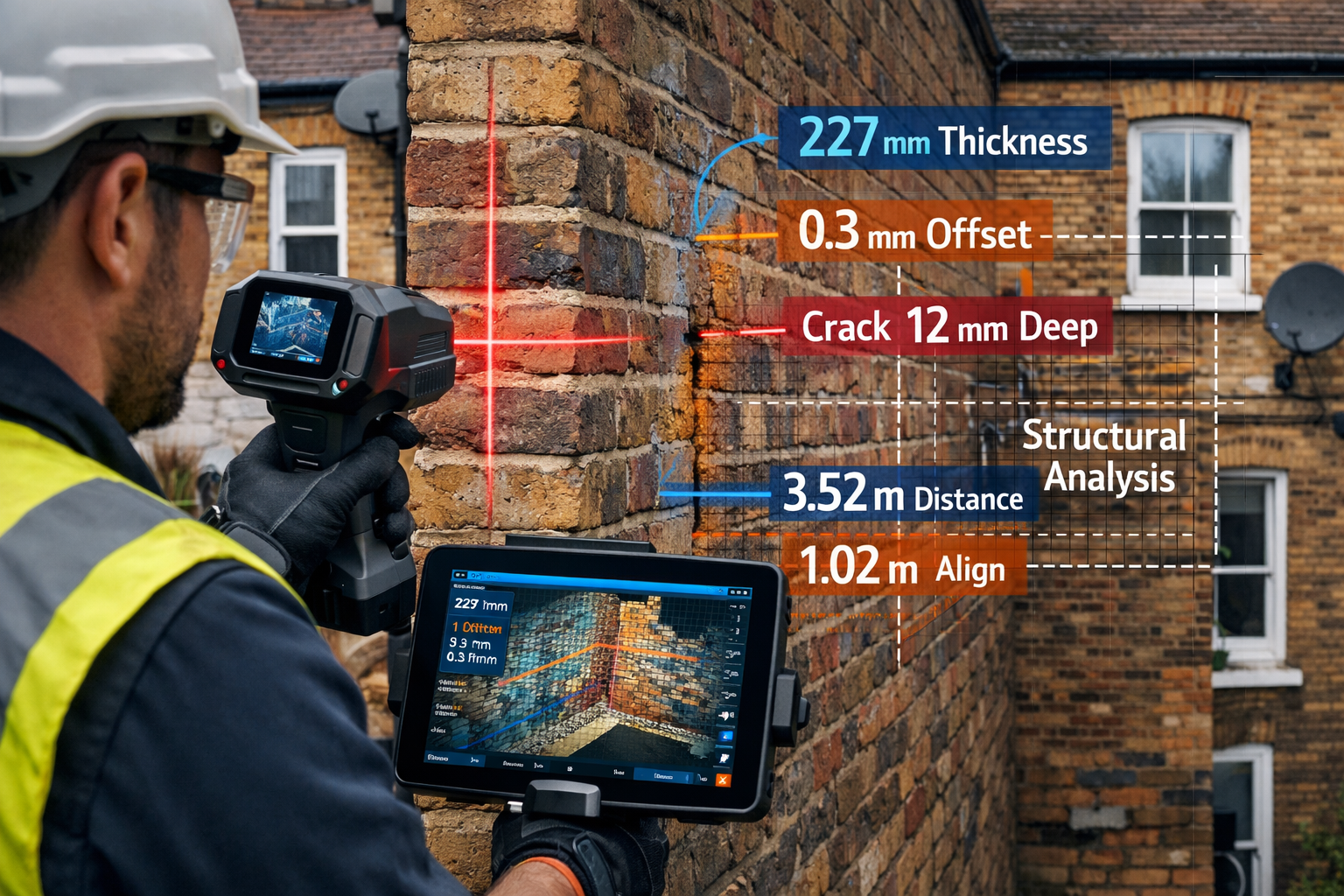
Recent contractor surveys reveal that scanning, surveying, and positioning technology ranks as the top investment priority for 2026, with firms demanding advanced reality capture tools that deliver millimeter-level accuracy onsite.[2] Meanwhile, data integration challenges—the notorious "data siloing" that causes errors and project delays—have emerged as the most critical technology hurdle to overcome.[2] This convergence of precision hardware and intelligent software creates unprecedented opportunities for party wall surveyors to streamline notice preparation, reduce disputes, and provide irrefutable documentation of pre-construction conditions.
Key Takeaways
- Precision surveying technology delivers millimeter-accurate measurements for party wall documentation, eliminating measurement disputes and providing legally defensible baseline data
- AI-driven workflows automate complex party wall notice preparation tasks, from document generation to risk assessment, reducing preparation time by up to 60%
- Data integration platforms break down information silos, connecting survey data with legal requirements, BIM models, and party wall awards for seamless project coordination
- Reality capture democratization makes advanced 3D scanning accessible to smaller surveying practices, enabling comprehensive condition surveys without prohibitive equipment costs
- Agentic AI networks coordinate multiple specialized AI tools across the party wall process, from initial notice drafting through dispute resolution and final award documentation
Understanding the Technology Foundation for Modern Party Wall Surveys
The Precision Surveying Revolution
Traditional party wall surveys relied heavily on tape measures, spirit levels, and visual inspections—methods prone to human error and subjective interpretation. The 2026 construction landscape demands something far more sophisticated. Precision surveying technology now encompasses laser scanning, photogrammetry, LiDAR systems, and GPS-enabled positioning tools that capture spatial data with accuracy measured in millimeters rather than centimeters.
According to a comprehensive survey of 1,800 contractors conducted in November 2025, scanning and positioning technology emerged as the number one investment priority for construction firms entering 2026.[2] This prioritization reflects a fundamental shift: contractors recognize that accurate baseline data prevents costly disputes and provides defensible documentation when party wall notices lead to disagreements.
Key precision surveying technologies transforming party wall work include:
- 🎯 Terrestrial laser scanners that capture millions of measurement points per second, creating detailed 3D point clouds of existing structures
- 📸 Photogrammetry systems using high-resolution cameras to generate accurate 3D models from multiple photographs
- 📡 GNSS positioning providing centimeter-level accuracy for boundary determinations and structural monitoring
- 🔍 Handheld scanning devices offering portable, user-friendly options for detailed condition surveys
- 📊 Ground-penetrating radar revealing hidden structural elements within party walls without invasive testing
The democratization of reality capture technology represents a particularly significant development for 2026. New user-friendly tools enable comprehensive data collection without requiring specialized training, making precision surveying accessible to smaller surveying practices that previously couldn't justify the investment in expensive equipment.[2]
AI Integration Across the Party Wall Workflow
While precision surveying provides the raw data foundation, artificial intelligence transforms that data into actionable insights and automated workflows. AI adoption for complex workflows has become a leading investment priority for construction firms in 2026, with focus on leveraging artificial intelligence to augment human capabilities and apply predictive analytics to large datasets.[2]
For party wall surveyors, AI integration manifests across multiple critical functions:
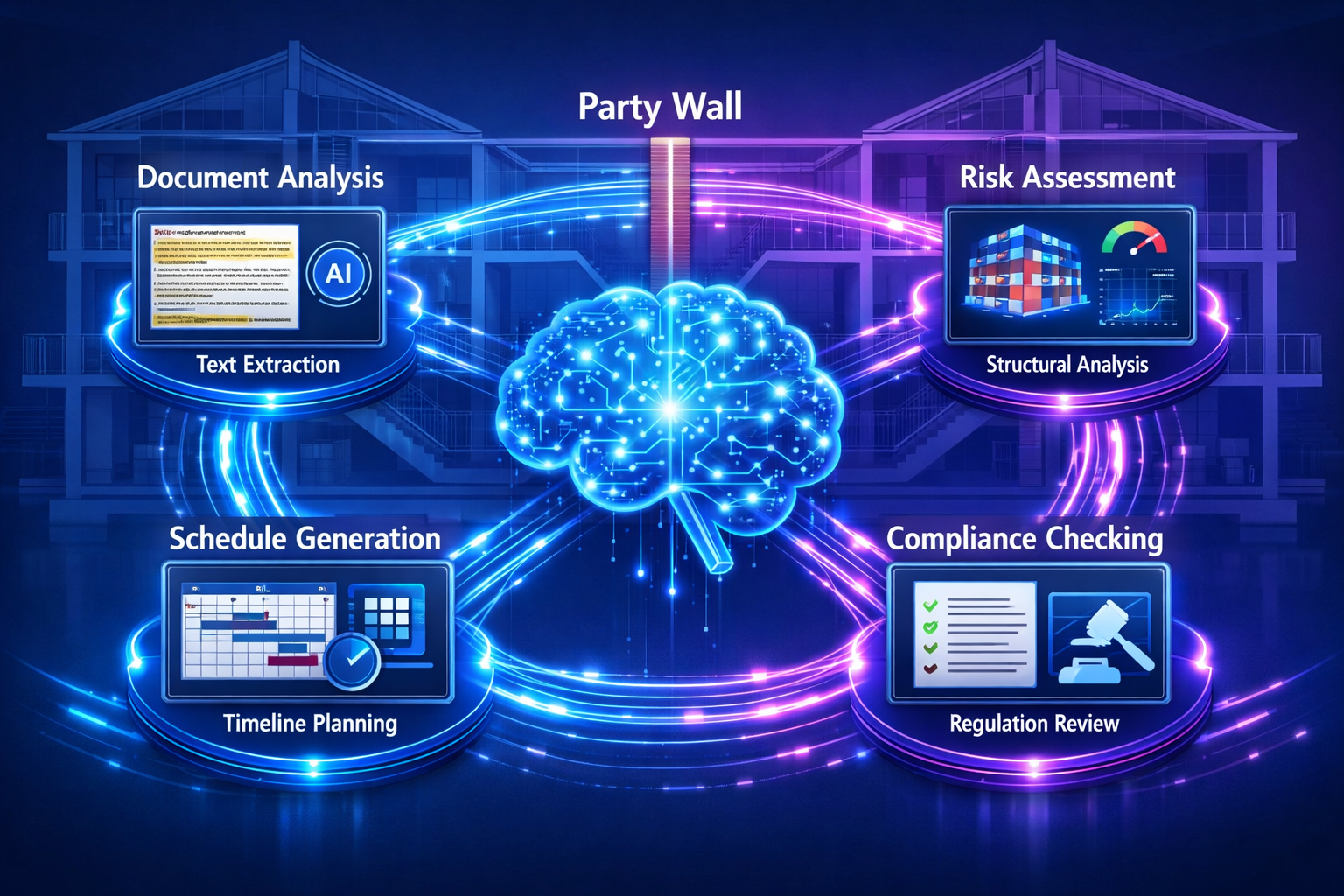
Document Analysis and Generation: AI-powered natural language processing analyzes existing party wall agreements, extracts relevant precedents, and generates customized notice templates that comply with the Party Wall etc. Act 1996 requirements.
Risk Assessment: Machine learning algorithms analyze survey data alongside historical dispute records to identify high-risk elements requiring additional documentation or protective measures in schedules of condition.
Compliance Checking: AI systems cross-reference proposed works against regulatory requirements, automatically flagging potential compliance issues before party structure notices are served.
Predictive Analytics: Advanced algorithms predict potential settlement patterns, structural stress points, and damage probabilities based on proposed construction methods and existing building conditions.
The emergence of AI agent networks represents the next evolutionary step beyond single-purpose AI tools. These networks consist of multiple specialized AI agents operating across design, engineering, and construction in connected ecosystems to streamline processes and resolve conflicts.[2] For party wall work, this means coordinating document preparation agents with survey analysis agents, compliance checking agents, and communication management agents—all working in concert to accelerate the notice preparation process while maintaining accuracy and legal compliance.
Integrating AI and Precision Surveying into Party Wall Notices: Practical Implementation
Step 1: Comprehensive Digital Condition Surveys
The foundation of effective Integrating AI and Precision Surveying into Party Wall Notices for 2026 Construction Projects begins with capturing baseline conditions using advanced surveying technology. This digital condition survey replaces or supplements traditional photographic schedules with three-dimensional, measurable, and time-stamped documentation.
Implementation process:
- Pre-survey planning: AI systems analyze proposed works descriptions to identify critical measurement zones and potential vulnerability points requiring detailed documentation
- Reality capture execution: Surveyors deploy laser scanners, photogrammetry equipment, or handheld scanning devices to capture comprehensive 3D data of party walls and adjacent structures
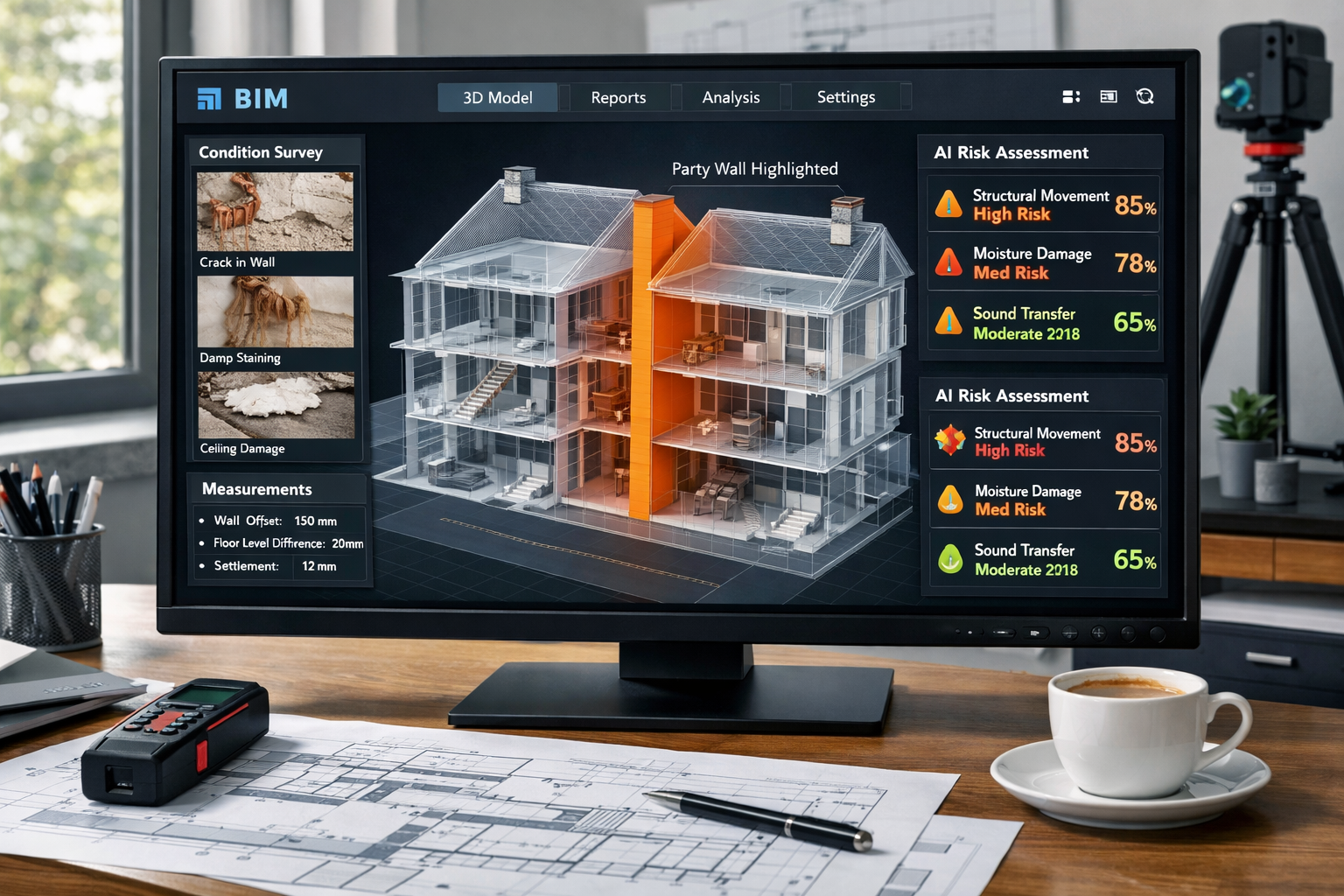
- Data processing: Automated software converts raw scan data into navigable 3D models, extracting measurements, identifying defects, and generating annotated condition reports
- AI-enhanced analysis: Machine learning algorithms compare captured conditions against typical deterioration patterns, flagging anomalies that require surveyor attention or additional investigation
This approach proves particularly valuable for mixed-use developments where party wall surveys must document complex structural arrangements across residential and commercial spaces.[1] The precision and comprehensiveness of digital surveys significantly reduce post-construction disputes about pre-existing conditions.
Step 2: Automated Notice Preparation and Document Generation
Once baseline conditions are documented, AI systems streamline the preparation of legally compliant party wall notices. This automation addresses one of the most time-consuming aspects of party wall work while reducing the risk of omissions or errors that could invalidate notices.
AI-powered notice preparation includes:
| Function | Traditional Method | AI-Enhanced Method | Time Savings |
|---|---|---|---|
| Document drafting | Manual template completion | Automated generation from project parameters | 70% |
| Compliance checking | Manual review against Act requirements | Automated regulatory cross-reference | 85% |
| Neighbor identification | Manual land registry searches | Automated property database integration | 60% |
| Schedule of condition creation | Manual photograph annotation | AI-generated annotated 3D models | 65% |
| Risk assessment | Surveyor judgment based on experience | AI analysis of historical dispute data | 50% |
The data integration and interoperability focus that emerged as the most impactful technology initiative for 2026 proves critical here.[2] AI systems must seamlessly connect with land registry databases, Building Information Modeling (BIM) platforms, legal document repositories, and communication management systems to deliver truly automated workflows.
Step 3: Predictive Analytics for Dispute Prevention
Beyond documentation and compliance, AI-driven predictive analytics transform how surveyors anticipate and prevent party wall disputes. By analyzing patterns across thousands of historical cases, machine learning models identify risk factors that correlate with neighbor objections, extended negotiations, or post-construction damage claims.
Predictive analytics applications include:
- 📊 Dispute probability scoring: AI assigns risk scores to proposed works based on factors like excavation depth, structural modifications, and historical neighborhood dispute rates
- 🏗️ Construction method optimization: Algorithms recommend alternative construction approaches that achieve project goals while minimizing party wall impact and dispute risk
- 💰 Cost prediction: Machine learning models forecast likely party wall costs based on project complexity, property characteristics, and regional variations
- ⏱️ Timeline forecasting: AI predicts realistic timelines for notice periods, surveyor appointments, and award finalization based on project parameters and neighbor response patterns
These predictive capabilities enable proactive communication strategies. When AI identifies high-risk elements, surveyors can schedule pre-notice consultations with adjoining owners, prepare additional documentation, or recommend design modifications that address concerns before formal notices are served.
Step 4: Continuous Monitoring and Real-Time Reporting
The integration of precision surveying extends beyond initial condition documentation into ongoing construction monitoring. Modern surveying equipment enables continuous or periodic re-scanning to detect structural movement, settlement, or damage in real-time—providing early warning systems that prevent minor issues from escalating into major disputes.
Continuous monitoring implementation:
- Baseline establishment: Initial precision survey creates reference model with millimeter-accurate measurements of party wall geometry, verticality, and structural alignment
- Periodic re-scanning: Automated scanning at predetermined construction milestones (excavation completion, foundation pour, structural frame erection) captures updated conditions
- Automated comparison: AI algorithms compare successive scans, automatically identifying deviations exceeding predefined thresholds
- Alert generation: System sends immediate notifications to surveyors and contractors when concerning movement or damage is detected
- Documentation compilation: All monitoring data feeds automatically into final party wall award documentation, providing comprehensive construction impact records
This approach aligns with the Building Information Modeling (BIM) and digital twin concepts that have become the backbone of modern design and project management.[3] By creating a living digital representation of party wall conditions throughout construction, surveyors provide unprecedented transparency and accountability.
Overcoming Implementation Challenges: Data Integration and Employee Adoption
Breaking Down Data Silos
The most significant barrier to successful Integrating AI and Precision Surveying into Party Wall Notices for 2026 Construction Projects isn't technology capability—it's data integration. The Trimble contractor survey identified data siloing as a critical challenge, with disconnected systems causing errors, delays, and missed opportunities.[2]
For party wall surveyors, data silos manifest in several problematic ways:
- Survey data captured in proprietary formats incompatible with document management systems
- Legal templates disconnected from project-specific survey findings
- Communication records scattered across email, phone logs, and paper correspondence
- Historical precedents and case knowledge locked in individual surveyors' experience rather than accessible databases
- BIM models and construction schedules isolated from party wall documentation workflows
Solutions for data integration include:
✅ Adopting open data standards: Prioritize surveying equipment and software that support industry-standard formats (IFC for BIM, LAS for point clouds, PDF/A for archival documents)
✅ Implementing centralized platforms: Deploy integrated project management systems that connect surveying, legal documentation, communication, and reporting functions in unified workflows
✅ Creating API connections: Establish automated data flows between specialized tools using application programming interfaces rather than manual data transfer
✅ Standardizing naming conventions: Develop consistent file naming, folder structures, and metadata tagging to enable cross-system searchability
✅ Building knowledge databases: Capture institutional knowledge in searchable repositories that AI systems can access for precedent analysis and decision support
UK construction firms have positioned themselves at the forefront of digital construction adoption, with many having nearly a decade of BIM experience and advancing toward BIM Level 3 and full lifecycle digital twins.[3] Party wall surveyors can leverage this broader industry momentum, integrating their specialized workflows into the connected data ecosystems that contractors and architects increasingly expect.
Securing Employee Buy-In and Skill Development
Technology implementation succeeds or fails based on human adoption. The contractor survey revealed that securing employee buy-in ranks alongside technical integration as a critical priority for 2026 technology initiatives.[2] For surveying practices, this means addressing both the technical learning curve and the cultural resistance that often accompanies workflow changes.
Strategies for successful adoption:
- Start with pain points: Introduce AI and precision surveying tools that address surveyors' most frustrating manual tasks first—typically document generation, measurement recording, or report formatting
- Provide hands-on training: Invest in practical training sessions where surveyors use equipment and software on actual projects with expert guidance
- Create internal champions: Identify early adopters who embrace new technology and empower them to mentor colleagues
- Demonstrate value quickly: Prioritize implementations that deliver visible time savings or quality improvements within weeks rather than months
- Maintain hybrid approaches: Allow gradual transition periods where traditional and technology-enhanced methods coexist until confidence builds
The democratization of reality capture technology specifically addresses adoption barriers.[2] Modern handheld scanners and smartphone-based photogrammetry apps reduce the intimidation factor of complex surveying equipment, enabling surveyors to experiment with precision technology without massive capital investment or extensive technical training.
Regional Considerations and Practical Applications Across London
The practical implementation of AI and precision surveying varies significantly based on property types, neighborhood characteristics, and regional construction patterns across London. Surveyors working in different areas must adapt technology deployment to local conditions.
Regional implementation variations:
- Central London: High-value properties and complex structural arrangements justify comprehensive laser scanning and advanced AI analytics for every project
- North London: Victorian terraced housing stock benefits particularly from precision surveys documenting historical settlement and structural modifications
- East London: Rapid development and mixed-use conversions require AI-powered risk assessment to manage complex neighbor relationships
- South London: Suburban extensions and loft conversions suit portable scanning equipment and streamlined AI documentation workflows
- West London: High-end residential projects demand comprehensive digital twins and continuous monitoring throughout construction
Understanding types of party wall works helps determine appropriate technology deployment. Simple boundary wall modifications may require only handheld scanning and basic AI documentation, while complex basement excavations adjacent to party walls justify full laser scanning, continuous monitoring, and advanced predictive analytics.
Cost-Benefit Analysis: Investment vs. Returns
For surveying practices considering technology adoption, understanding the financial implications proves essential. While precision surveying equipment and AI software platforms require significant upfront investment, the returns manifest across multiple dimensions.
Initial investment components:
- Hardware: £15,000-£50,000 for professional laser scanning equipment (or £2,000-£8,000 for handheld alternatives)
- Software: £3,000-£12,000 annually for AI-powered document management and analysis platforms
- Training: £2,000-£5,000 per surveyor for comprehensive equipment and software training
- Integration: £5,000-£15,000 for connecting new systems with existing practice management software
Return on investment sources:
💰 Time efficiency: 40-60% reduction in survey and documentation time enables handling more projects with existing staff
💰 Quality premium: Technology-enhanced services command 15-25% fee premiums for clients valuing precision and dispute prevention
💰 Dispute reduction: Comprehensive digital documentation reduces post-construction claims and associated time costs by approximately 70%
💰 Marketing differentiation: Technology leadership attracts high-value clients and generates referrals from architects and contractors
💰 Staff retention: Modern tools improve job satisfaction and help attract younger surveyors entering the profession
Most practices implementing comprehensive AI and precision surveying report recovering initial investments within 18-24 months through a combination of increased project capacity, premium pricing, and reduced dispute-related costs. For guidance on keeping party wall costs down, technology investment paradoxically helps by preventing expensive disputes and delays.
Future Developments: What's Next Beyond 2026
The technology landscape continues evolving rapidly beyond 2026's current capabilities. Understanding emerging trends helps surveyors make strategic technology investments that remain relevant as capabilities advance.
Anticipated developments include:
🔮 Autonomous surveying: Drone-based and robotic scanning systems that conduct party wall surveys with minimal human intervention, particularly valuable for difficult-access locations
🔮 Augmented reality integration: AR headsets overlaying historical condition data, structural analysis, and AI recommendations directly onto surveyors' field of view during site inspections
🔮 Blockchain documentation: Immutable, timestamped records of party wall notices, surveys, and awards using distributed ledger technology for enhanced legal defensibility
🔮 Generative AI design: AI systems that not only document existing conditions but propose construction method modifications optimizing party wall impact reduction
🔮 Quantum computing analytics: Exponentially more powerful predictive models analyzing millions of variables to forecast construction impacts with unprecedented accuracy
The key to navigating this evolving landscape involves building flexible technology stacks that accommodate new capabilities without requiring complete system replacement. Practices that prioritize open standards, modular platforms, and continuous learning position themselves to adopt emerging innovations as they mature from experimental to practical applications.
Conclusion: Embracing the Technology-Enhanced Party Wall Future
Integrating AI and Precision Surveying into Party Wall Notices for 2026 Construction Projects represents far more than a technological upgrade—it fundamentally transforms how surveyors protect property rights, prevent disputes, and document construction impacts. The convergence of millimeter-accurate reality capture, intelligent workflow automation, and predictive analytics creates unprecedented opportunities for surveyors who embrace these capabilities.
The evidence from contractor surveys and industry developments demonstrates that precision surveying and AI adoption have moved beyond experimental status to become essential competitive requirements for 2026.[2] Practices that delay technology integration risk losing clients to competitors offering faster turnaround times, more comprehensive documentation, and data-driven dispute prevention.
Actionable Next Steps
For surveying practices ready to implement AI and precision surveying:
- Assess current workflows: Identify the most time-consuming or error-prone aspects of your party wall notice preparation process
- Start with accessible technology: Begin with handheld scanning devices or smartphone photogrammetry before investing in expensive laser scanning equipment
- Pilot AI documentation tools: Test AI-powered document generation platforms on 3-5 projects to evaluate time savings and quality improvements
- Invest in training: Prioritize comprehensive training for at least one "technology champion" who can mentor colleagues
- Connect with technology providers: Schedule demonstrations with surveying equipment manufacturers and AI software developers to understand current capabilities
- Join industry networks: Participate in professional organizations and online communities where surveyors share technology implementation experiences
- Review integration requirements: Audit your existing software systems to identify integration opportunities and compatibility requirements
For property owners and developers planning construction projects, understanding these technological capabilities helps you select surveyors equipped to deliver comprehensive, dispute-preventing party wall services. When evaluating party wall surveyors, inquire about their precision surveying capabilities, AI-powered documentation workflows, and digital monitoring systems.
The party wall surveying profession stands at a transformative moment. Those who embrace AI and precision surveying position themselves not just to survive but to thrive in an increasingly technology-driven construction industry. The question isn't whether to adopt these capabilities—it's how quickly you can implement them to serve clients better, prevent disputes more effectively, and build a more efficient, profitable practice.
Whether you're carrying out works or responding as an adjoining owner, the integration of AI and precision surveying ensures more accurate documentation, faster resolution, and better protection for all parties involved in 2026 construction projects.
References
[1] Party Wall Surveys For Mixed Use Developments Tackling Zoning And Neighbour Disputes In 2026 Urban Revivals – https://nottinghillsurveyors.com/blog/party-wall-surveys-for-mixed-use-developments-tackling-zoning-and-neighbour-disputes-in-2026-urban-revivals
[2] Future Construction Technology Trends Contractor Survey – https://www.trimble.com/blog/trimble/en-US/article/future-construction-technology-trends-contractor-survey
[3] Pr Strategy Ai Search Driven Era – https://highways.today/2025/08/04/pr-strategy-ai-search-driven-era/