

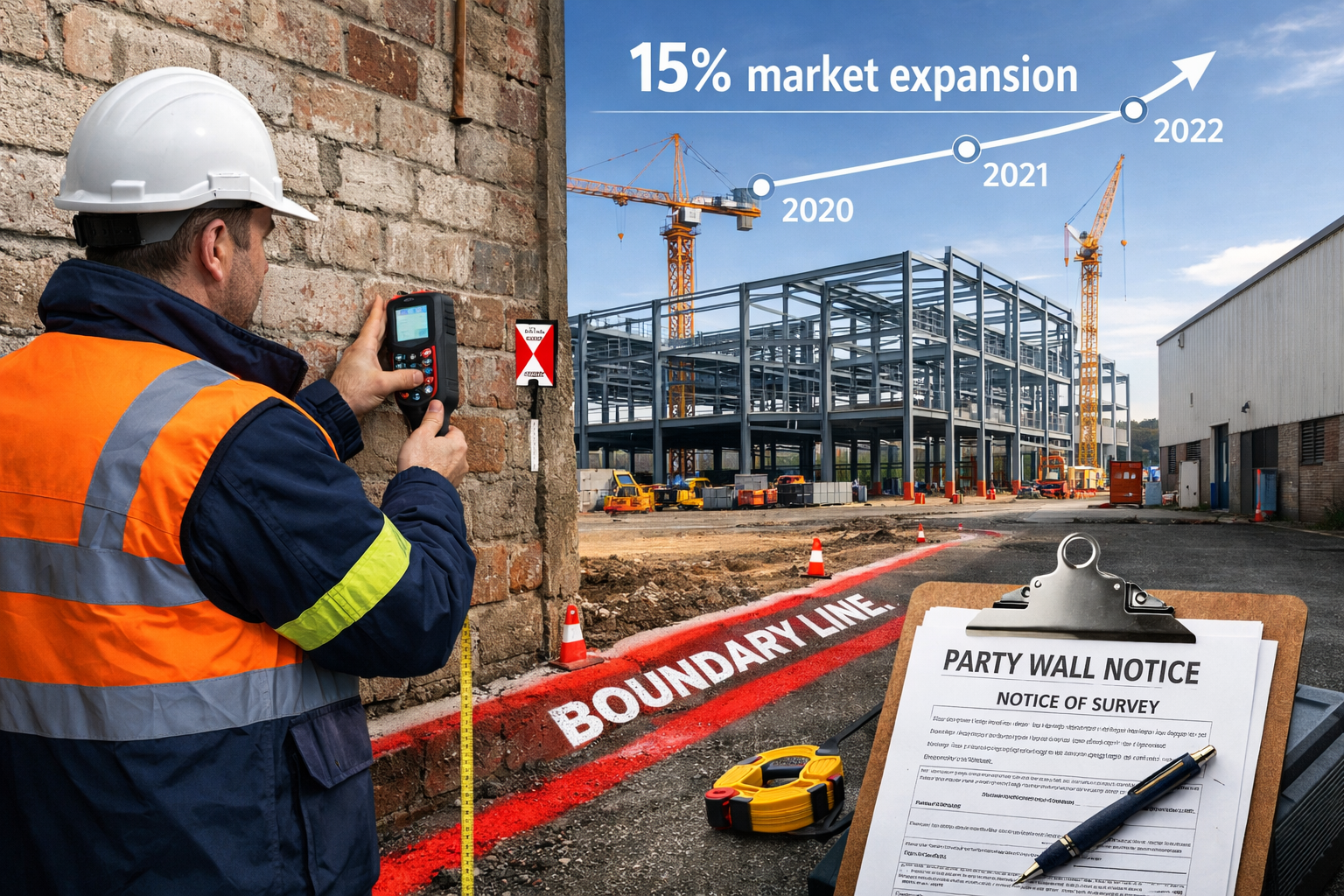
The manufacturing sector is experiencing a remarkable resurgence in 2026, with industry forecasts showing a 15% positive net expansion across industrial facilities and production sites. This growth surge brings exciting opportunities for manufacturers expanding operations, but it also introduces complex legal requirements—particularly when construction involves shared boundaries and party walls. As companies race to capitalize on this expansion, understanding party wall notices and surveys has become essential for avoiding costly delays, disputes, and legal complications that can derail even the most promising manufacturing facility builds.
Manufacturing Facility Builds: Party Wall Notices and Surveys for 2026's 15% Market Expansion represents a critical intersection of industrial growth and property law compliance. Whether developing greenfield sites, expanding existing facilities, or repurposing brownfield locations, manufacturers must navigate party wall legislation to protect both their investments and neighboring property owners' rights.
Key Takeaways
- Manufacturing expansion in 2026 is projected at 15% net growth, with party wall compliance critical for brownfield redevelopment and facility expansions adjacent to existing properties
- Three primary notice types govern manufacturing builds: Notice of Adjacent Excavation, Party Structure Notice, and Line of Junction Notice, each with specific timelines and requirements
- ALTA/NSPS 2026 survey standards (effective February 23, 2026) introduce enhanced requirements for boundary identification and easement documentation crucial for manufacturing sites[1][4]
- Proactive party wall strategies can reduce dispute costs by 40-60%, with proper notice service and professional surveyor engagement preventing expensive delays
- EPA's 2026 Multi-Sector General Permit adds environmental compliance layers to manufacturing builds, requiring coordination with party wall procedures for stormwater management[3]
Understanding Party Wall Requirements for Manufacturing Facility Builds in 2026
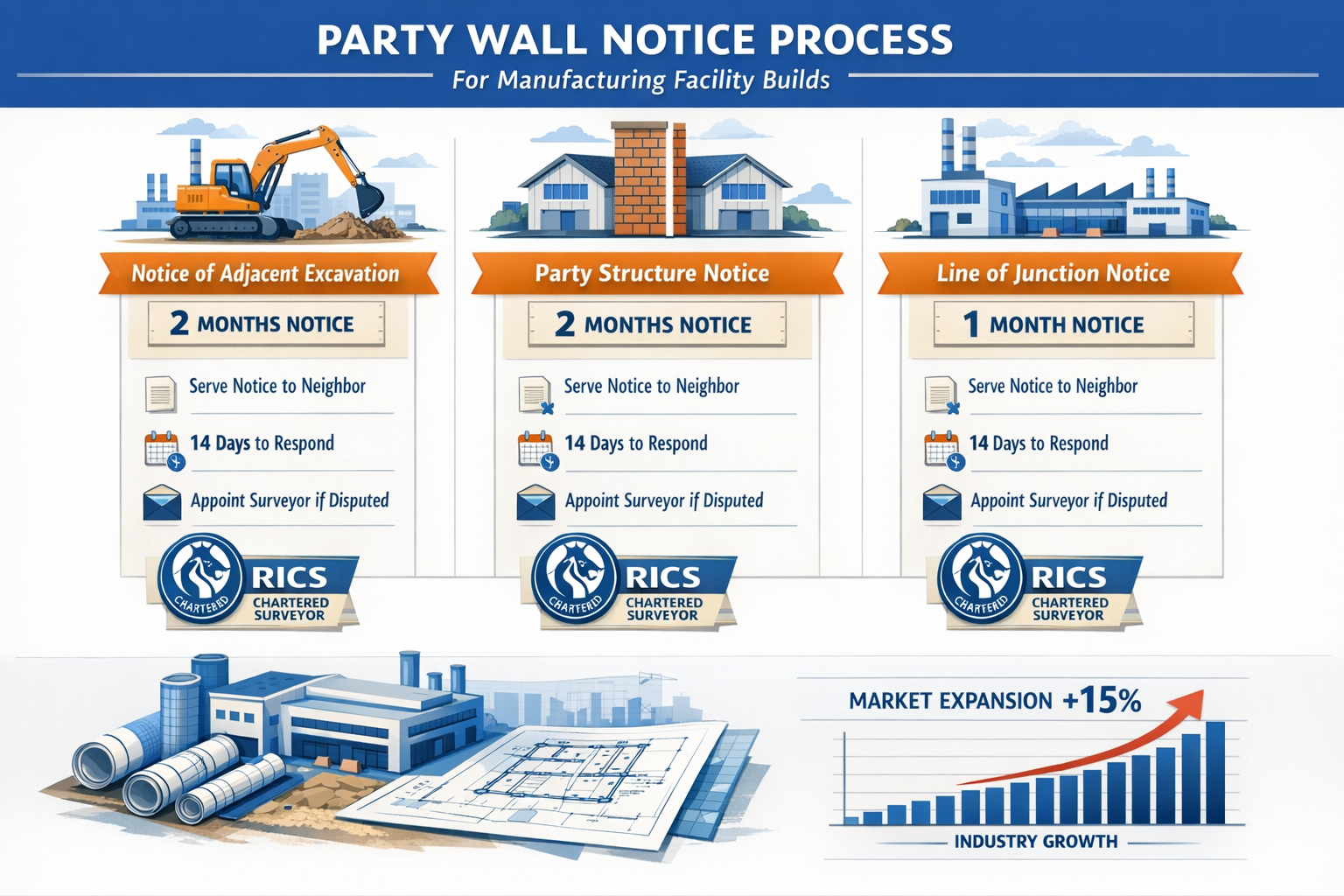
What Constitutes a Party Wall in Industrial Settings
Party walls in manufacturing contexts differ significantly from residential applications. These structures include shared boundary walls between industrial units, party fence walls separating adjacent manufacturing properties, and structural elements that support multiple facilities.
For manufacturing facility builds, party walls commonly involve:
- Shared load-bearing walls between warehouses or production facilities
- Fire-rated separation walls in multi-tenant industrial parks
- Boundary walls along property lines where excavation or foundation work occurs
- Structural supports that serve adjacent manufacturing operations
The Party Wall etc. Act 1996 provides the legal framework governing these structures, establishing rights and responsibilities for building owners undertaking construction work.
Why Manufacturing Expansion Triggers Party Wall Requirements
The anticipated 15% market expansion in 2026 means more manufacturers are:
🏭 Expanding existing facilities by building additions that affect shared boundaries
🔨 Excavating for new foundations within three or six meters of neighboring structures
📐 Constructing new party walls along property lines in industrial parks
♻️ Redeveloping brownfield sites where previous industrial uses created complex boundary situations
Each scenario requires careful assessment of party wall obligations. Manufacturing builds typically involve heavier structural loads, deeper excavations for specialized equipment, and vibration-generating machinery—all factors that heighten the importance of proper party wall procedures.
The Three Critical Notice Types for Manufacturing Projects
Manufacturing facility builds must comply with specific notice requirements under party wall legislation:
| Notice Type | When Required | Notice Period | Common Manufacturing Applications |
|---|---|---|---|
| Party Structure Notice | Work directly to existing party wall or structure | 2 months minimum | Raising shared warehouse walls, inserting steel beams, cutting into party walls for access |
| Line of Junction Notice | Building new wall on/astride boundary line | 1 month minimum | New manufacturing facility on property line, expansion buildings, perimeter walls |
| Notice of Adjacent Excavation | Excavation within 3m (deeper than neighbor's foundation) or 6m (below 45° plane) | 1 month minimum | Deep foundations for heavy machinery, basement installations, ground stabilization |
Understanding which notices apply to specific manufacturing projects requires professional assessment. Many large-scale industrial builds trigger multiple notice types simultaneously, necessitating coordinated service and response management.
For detailed guidance on serving these notices correctly, consult our comprehensive resource on party wall notices.
Manufacturing Facility Builds: Party Wall Notices and Surveys for 2026's 15% Market Expansion—The Survey Process
ALTA/NSPS 2026 Survey Standards and Manufacturing Sites
The ALTA/NSPS 2026 Land Title Survey Standards, effective February 23, 2026, introduce significant changes affecting manufacturing facility builds[1][4][5]. These updated standards provide enhanced clarity for:
- Boundary line identification with improved accuracy requirements
- Easement documentation critical for utility access in industrial settings
- Encroachment detection essential for preventing party wall disputes
- Zoning compliance verification for manufacturing use classifications
The 2026 standards include 17 optional Table A items that clients can request, with several particularly relevant to manufacturing projects[4]:
✅ Item 1: Monuments placed or witnessed (critical for establishing manufacturing site boundaries)
✅ Item 6(a): Exterior building and improvement dimensions (essential for party wall assessments)
✅ Item 8: Parking areas and striping (important for industrial site compliance)
✅ Item 11(a): Flood zone classification (crucial for manufacturing facility insurance and permitting)
For manufacturing facility builds involving party walls, commissioning an ALTA/NSPS survey provides comprehensive boundary documentation that supports both party wall procedures and title insurance requirements[5].
Pre-Construction Party Wall Surveys: Essential Steps
Before commencing manufacturing facility construction, thorough party wall surveys establish baseline conditions and identify potential issues:
Step 1: Boundary Verification
Professional surveyors confirm exact property lines, identifying where manufacturing builds will interact with neighboring properties. The 2026 ALTA/NSPS standards require surveyors to "identify evidence of possession, use, and/or occupation not identified by the record documents"[1]—particularly important for brownfield manufacturing sites with complex historical use patterns.
Step 2: Structural Assessment
Existing party walls undergo detailed examination to determine their current condition, load-bearing capacity, and suitability for proposed manufacturing works. This assessment includes:
- Foundation depth measurements
- Structural integrity evaluation
- Material composition analysis
- Existing damage documentation
Step 3: Schedule of Condition Preparation
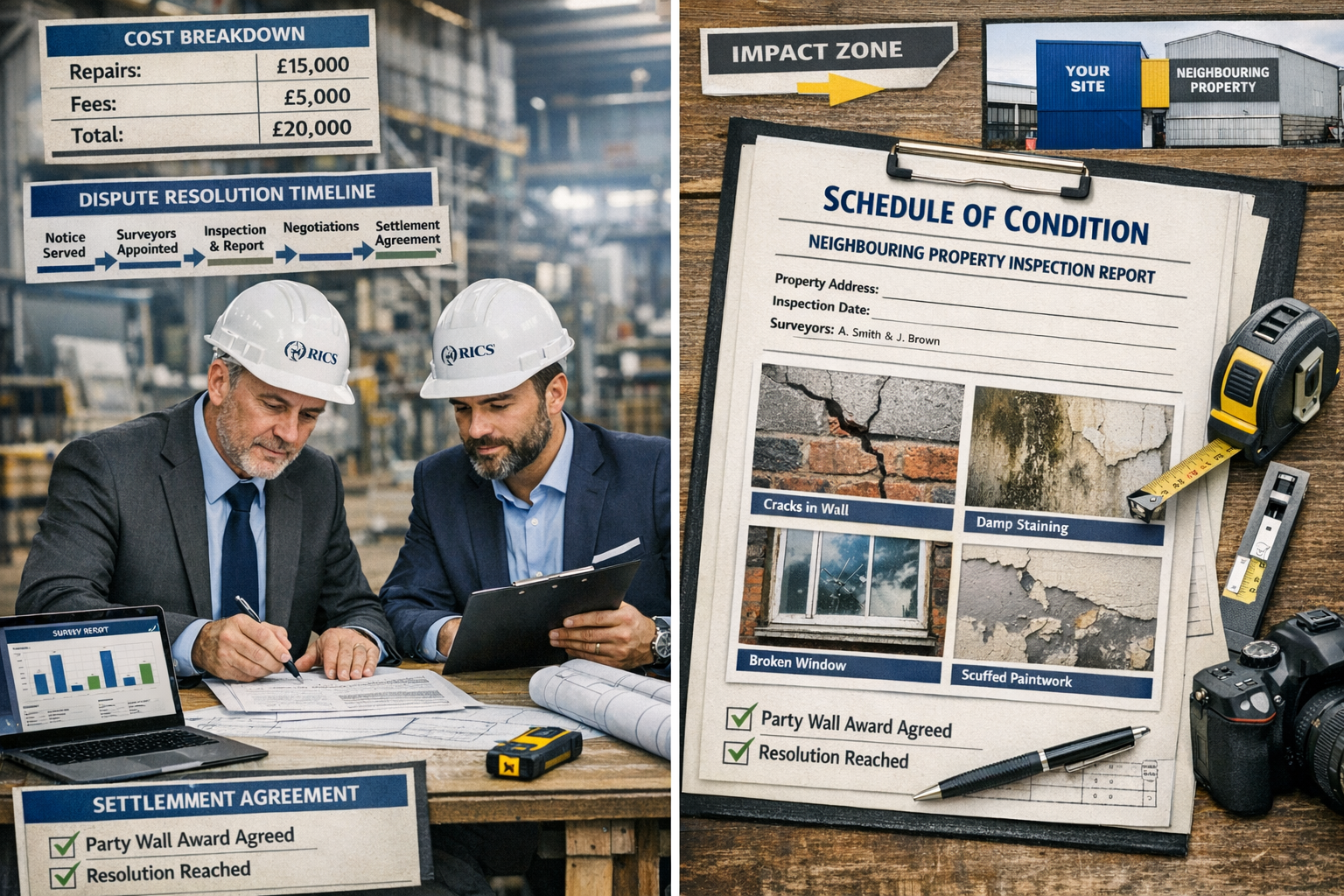
A schedule of condition provides photographic and written evidence of neighboring properties' pre-construction state. For manufacturing builds, this documentation proves invaluable if disputes arise regarding construction-related damage.
Step 4: Environmental and Compliance Integration
The EPA's 2026 Multi-Sector General Permit requires manufacturing facilities to implement stormwater pollution prevention plans[3]. Party wall surveys should coordinate with environmental assessments to ensure drainage, runoff management, and pollution controls don't adversely affect neighboring properties.
Selecting Qualified Surveyors for Manufacturing Projects
Manufacturing facility builds require surveyors with specific expertise:
🎓 RICS Accreditation: Royal Institution of Chartered Surveyors membership ensures professional standards
🏗️ Industrial Experience: Familiarity with manufacturing construction methods, heavy equipment installations, and industrial building systems
📋 Party Wall Specialization: Specific training in party wall legislation and dispute resolution
🌍 Local Knowledge: Understanding regional building codes and manufacturing zoning requirements
When selecting surveyors for different London locations, consider specialists familiar with local industrial areas. Options include party wall surveyors in Central London, North London, East London, and South London.
Navigating the Party Wall Notice Process for Manufacturing Expansion
Timeline Planning for 2026 Manufacturing Projects
The 15% market expansion anticipated in 2026 means manufacturing facility builds face competitive timelines. Proper party wall notice planning prevents costly delays:
Months 1-2: Pre-Notice Preparation
- Commission ALTA/NSPS 2026 survey
- Identify affected neighboring properties
- Engage party wall surveyor
- Prepare detailed construction plans
- Document existing conditions
Month 3: Notice Service
- Serve appropriate party wall notices (2-month notice for Party Structure Notices, 1-month for others)
- Provide comprehensive construction details
- Include surveyor contact information
- Deliver via recorded methods with proof of service
Months 4-5: Response Period and Award Preparation
- Await neighboring owner responses (14-day response period)
- Appoint surveyors if consent not given
- Conduct joint inspections
- Negotiate party wall award terms
- Finalize protective measures and working hours
Month 6+: Construction Commencement
- Begin manufacturing facility build under party wall award terms
- Implement agreed protective measures
- Maintain communication with neighbors
- Document compliance with award conditions
This timeline assumes straightforward scenarios. Complex manufacturing projects involving multiple neighbors or disputed boundaries may require additional time.
Serving Party Wall Notices: Best Practices for Manufacturing Builds
Effective notice service minimizes disputes and accelerates approvals:
Comprehensive Documentation
Manufacturing facility notices should include:
- Detailed architectural and structural drawings
- Specifications for excavation depth and proximity
- Equipment installation plans (especially heavy machinery requiring deep foundations)
- Proposed working hours and construction duration
- Contact information for project managers and surveyors
Clear Communication
Industrial construction can be intimidating to neighboring property owners. Notices should:
- Explain proposed works in accessible language
- Highlight protective measures being implemented
- Provide realistic timelines
- Offer opportunities for questions and clarification
Professional Presentation
Well-prepared notices demonstrate professionalism and reduce anxiety. Consider:
- Using professional surveyor letterhead
- Including visual aids and diagrams
- Providing translated versions if neighboring owners have language barriers
- Delivering in person when possible to establish rapport
For detailed templates and guidance, review our resource on party wall act notices and how to respond.
Common Challenges in Manufacturing Facility Party Wall Procedures
Manufacturing builds present unique party wall challenges:
Challenge 1: Deep Excavations for Heavy Equipment
Manufacturing facilities often require foundations extending 3-6 meters deep to support heavy machinery. These excavations trigger Notice of Adjacent Excavation requirements and raise neighbor concerns about foundation undermining.
Solution: Commission geotechnical surveys demonstrating soil stability, propose underpinning if necessary, and provide structural engineer certifications for neighboring property safety.
Challenge 2: Vibration from Construction and Operations
Manufacturing equipment generates vibration during both construction and ongoing operations, potentially affecting neighboring structures.
Solution: Include vibration monitoring provisions in party wall awards, establish baseline measurements, and commit to remediation if damage occurs. Consider vibration isolation systems in facility design.
Challenge 3: Extended Construction Timelines
Large manufacturing facilities may require 12-24 months of construction, creating prolonged impacts on neighbors.
Solution: Provide detailed phasing plans in party wall notices, commit to specific working hours, and establish regular communication protocols with affected neighbors.
Challenge 4: Multiple Adjacent Properties
Industrial parks often feature multiple neighboring facilities, each requiring separate party wall notices and potentially different surveyors.
Solution: Appoint a single agreed surveyor where possible to streamline the process, or coordinate carefully between multiple surveyors to ensure consistent approaches.
Manufacturing Facility Builds: Party Wall Notices and Surveys for 2026's 15% Market Expansion—Cost Management Strategies
Understanding Party Wall Costs for Industrial Projects
Party wall expenses for manufacturing facility builds typically include:
💰 Surveyor Fees
- Building owner's surveyor: £1,500-£5,000+ depending on project complexity
- Agreed surveyor (if appointed): £2,000-£7,000+
- Adjoining owner's surveyor: £1,500-£4,000+ (building owner pays)
💰 Survey and Documentation Costs
- ALTA/NSPS 2026 land title survey: £3,000-£15,000+ for manufacturing sites
- Schedule of condition preparation: £500-£2,500 per neighboring property
- Structural assessments: £1,000-£5,000+
💰 Protective Works and Monitoring
- Temporary supports and shoring: £5,000-£50,000+
- Vibration monitoring systems: £2,000-£10,000
- Structural monitoring during construction: £1,500-£8,000
💰 Dispute Resolution Costs
- Third surveyor appointment: £3,000-£10,000+
- Legal fees if disputes escalate: £5,000-£50,000+
For manufacturing projects, total party wall costs typically range from £10,000 to £100,000+, depending on site complexity, number of affected neighbors, and dispute likelihood.
Detailed cost breakdowns are available in our guide on party wall costs and the process.
Strategies to Minimize Party Wall Expenses
Manufacturing companies can significantly reduce party wall costs through proactive approaches:
Strategy 1: Early Engagement
Initiating party wall procedures early in project planning allows time for negotiation and consensus-building, reducing dispute likelihood. Early engagement also enables design modifications that minimize party wall impacts.
Strategy 2: Transparent Communication
Providing comprehensive information to neighboring owners builds trust and reduces concerns. Consider:
- Pre-notice informal discussions explaining project benefits
- Open houses or presentations for affected neighbors
- Regular construction updates throughout the project
Strategy 3: Agreed Surveyor Appointments
When both parties agree to a single surveyor, costs decrease substantially compared to appointing separate surveyors. This approach works best when:
- Neighboring owners have confidence in the proposed surveyor's impartiality
- Projects are relatively straightforward
- Good relationships exist between parties
Strategy 4: Efficient Documentation
Well-prepared notices and supporting documentation reduce surveyor time spent clarifying details and answering questions. Invest in:
- Professional architectural drawings
- Clear construction specifications
- Comprehensive project timelines
- Detailed protective measure proposals
For additional cost-saving approaches, see our article on how to keep party wall costs down.
Budgeting for Party Wall Requirements in 2026 Manufacturing Projects
Manufacturing facility developers should allocate party wall budgets as follows:
| Project Scale | Estimated Party Wall Budget | Percentage of Total Construction Cost |
|---|---|---|
| Small Expansion (£500,000-£2M) | £10,000-£30,000 | 1-2% |
| Medium Facility (£2M-£10M) | £30,000-£80,000 | 0.5-1.5% |
| Large Manufacturing Complex (£10M+) | £80,000-£200,000+ | 0.5-1% |
These estimates assume moderate complexity with 2-5 affected neighboring properties. Brownfield sites with multiple adjacent owners or disputed boundaries may require higher allocations.
Contingency Planning: Add 20-30% contingency to party wall budgets for manufacturing projects, accounting for:
- Unexpected structural issues discovered during surveys
- Neighbor disputes requiring third surveyor appointments
- Additional protective works identified during construction
- Extended monitoring requirements
RICS Dispute Resolution Strategies for Manufacturing Party Wall Conflicts
Common Dispute Triggers in Manufacturing Facility Builds
Despite careful planning, party wall disputes arise in manufacturing contexts due to:
⚠️ Noise and Vibration Concerns
Neighboring owners fear both construction disturbances and ongoing manufacturing operations will damage their properties or disrupt their businesses.
⚠️ Access Requirements
Manufacturing builds often require temporary access to neighboring properties for scaffolding, equipment positioning, or protective work installation.
⚠️ Working Hours Disagreements
Manufacturing construction may benefit from extended working hours or weekend work, conflicting with neighbors' preferences.
⚠️ Structural Safety Fears
Deep excavations and heavy equipment installations raise concerns about foundation undermining and structural stability.
⚠️ Compensation Expectations
Neighboring owners may seek compensation for inconvenience, business disruption, or perceived property value impacts.
RICS Dispute Resolution Framework
The Royal Institution of Chartered Surveyors provides structured dispute resolution approaches:
Level 1: Direct Negotiation
Building owners and adjoining owners attempt to resolve disagreements through direct discussion, potentially with surveyor facilitation. This approach resolves approximately 60-70% of manufacturing party wall disputes.
Best Practices for Direct Negotiation:
- Schedule face-to-face meetings rather than relying solely on correspondence
- Bring technical experts (structural engineers, construction managers) to address specific concerns
- Propose concrete solutions with cost estimates
- Document all agreements in writing
Level 2: Third Surveyor Appointment
When building owner and adjoining owner surveyors cannot agree on party wall award terms, either party may request third surveyor appointment. The third surveyor reviews the dispute and issues a binding determination.
Third Surveyor Selection Criteria:
- RICS membership with party wall specialization
- No prior relationship with either party
- Experience with similar manufacturing or industrial projects
- Availability to resolve dispute within reasonable timeframes
Level 3: Appeals and Legal Action
Party wall awards may be appealed to county courts within 14 days of service. Legal action represents the most expensive dispute resolution path and should be avoided when possible.
Preventing Legal Escalation:
- Ensure party wall awards include clear, unambiguous terms
- Provide detailed justifications for all award provisions
- Offer reasonable compromises on contentious issues
- Maintain professional, respectful communication throughout
For additional guidance on party wall awards and dispute resolution, review our resource on party wall awards.
Mediation and Alternative Dispute Resolution for Manufacturing Projects
Manufacturing facility builds benefit from alternative dispute resolution (ADR) approaches:
Structured Mediation
Professional mediators facilitate discussions between parties, helping identify mutually acceptable solutions. Mediation costs (£2,000-£8,000) are substantially lower than legal proceedings and typically resolve disputes within 1-3 sessions.
Expert Determination
Parties agree to abide by an independent expert's decision on technical matters (e.g., appropriate foundation depth, necessary protective measures). This approach works well for disputes centered on engineering or construction methodology questions.
Dispute Review Boards
For large manufacturing complexes with extended construction timelines, establishing a dispute review board provides ongoing oversight and early intervention when conflicts arise. Board members (typically 3 professionals) review disputes as they occur and provide recommendations.
Integrating Environmental Compliance with Party Wall Procedures
EPA's 2026 Multi-Sector General Permit and Party Wall Coordination
The EPA's proposed 2026 Multi-Sector General Permit (MSGP) introduces enhanced stormwater management requirements for manufacturing facilities[3]. These environmental obligations intersect with party wall procedures in several ways:
Stormwater Drainage and Neighboring Properties
Manufacturing facilities must prevent stormwater runoff from adversely affecting adjacent properties. Party wall awards should address:
- Drainage system design and maintenance
- Runoff direction and volume management
- Erosion control measures during construction
- Long-term stormwater infrastructure responsibilities
Pollution Prevention and Shared Boundaries
The 2026 MSGP requires manufacturing facilities to implement pollution prevention measures. When facilities share party walls, awards should specify:
- Containment systems for hazardous materials
- Spill response protocols affecting shared structures
- Notification requirements for neighboring owners
- Responsibility allocation for contamination incidents
Construction Phase Environmental Controls
During manufacturing facility builds, environmental compliance measures must coordinate with party wall protective works:
- Sediment barriers and erosion controls
- Dust suppression systems
- Noise mitigation measures
- Waste management and disposal
Sustainable Manufacturing and Party Wall Considerations
The 2026 manufacturing expansion includes significant growth in sustainable and green manufacturing facilities. These projects introduce unique party wall considerations:
Solar Panel and Renewable Energy Installations
Rooftop solar arrays on manufacturing facilities may require party wall notices if:
- Installation involves raising party walls to accommodate panels
- Structural modifications affect shared walls
- Panels overhang neighboring properties
Green Roof and Stormwater Management Systems
Sustainable manufacturing facilities increasingly incorporate green roofs and advanced stormwater systems. Party wall implications include:
- Increased structural loads on party walls
- Water infiltration risks affecting neighboring properties
- Maintenance access requirements
Energy-Efficient Building Envelopes
High-performance insulation and air sealing in manufacturing facilities may require:
- Party wall modifications for continuous insulation
- Vapor barrier installations affecting shared structures
- Thermal bridge elimination at party wall junctions
Templates and Resources for Manufacturing Facility Party Wall Compliance
Essential Documentation for 2026 Manufacturing Builds
Manufacturing facility developers should prepare comprehensive party wall documentation packages:
1. Party Wall Notice Templates
Standardized notice forms ensure all required information is included. Key components:
- Property addresses and legal descriptions
- Detailed work descriptions with technical specifications
- Proposed start dates and construction duration
- Surveyor contact information
- Response instructions and deadlines
Access sample templates through our party wall agreement template guide.
2. Construction Methodology Statements
Manufacturing builds require detailed methodology statements explaining:
- Excavation techniques and depths
- Foundation systems and load calculations
- Temporary works and protective measures
- Equipment to be used and vibration profiles
- Phasing and sequencing
3. Protective Measures Specifications
Clear specifications for protective works demonstrate commitment to neighboring property protection:
- Underpinning details and structural calculations
- Shoring and temporary support systems
- Vibration monitoring protocols and action thresholds
- Dust and noise control measures
- Access arrangements and site security
4. Schedule of Condition Templates
Comprehensive condition documentation should include:
- Exterior and interior photographic surveys
- Detailed written descriptions of existing conditions
- Crack and defect mapping
- Structural observations
- Date and time stamps for all documentation
Party Wall Award Components for Manufacturing Projects
Party wall awards for manufacturing facility builds should comprehensively address:
Section 1: Scope of Works
Detailed description of permitted construction activities, including:
- Excavation locations, depths, and methodologies
- Party wall modifications and structural alterations
- Equipment installations affecting shared structures
- Temporary works and access requirements
Section 2: Protective Measures
Specific protective works to be implemented:
- Underpinning or foundation strengthening
- Structural monitoring systems and reporting frequency
- Vibration limits and monitoring protocols
- Weather protection and temporary weatherproofing
- Security measures for neighboring properties
Section 3: Working Conditions
Operational parameters for construction activities:
- Permitted working hours (e.g., Monday-Friday 8am-6pm, Saturday 9am-1pm)
- Noise level limits
- Access routes and restrictions
- Notification requirements for specific activities
- Emergency contact procedures
Section 4: Compensation and Remediation
Financial and remediation provisions:
- Surveyor fee allocations
- Compensation for loss of amenity (if applicable)
- Damage repair procedures and timelines
- Dispute resolution mechanisms
- Final inspection and sign-off requirements
For detailed award guidance, see our resource on party wall contract templates and awards.
Digital Tools and Technology for Party Wall Management
Manufacturing facility developers increasingly leverage technology for party wall compliance:
Digital Survey Platforms
Modern surveying tools enable:
- 3D laser scanning for precise boundary and condition documentation
- Drone photography for large manufacturing site surveys
- Digital measurement systems with enhanced accuracy
- Cloud-based data storage and sharing
Party Wall Management Software
Specialized platforms streamline:
- Notice tracking and deadline management
- Document storage and version control
- Communication logs with neighbors and surveyors
- Award compliance monitoring
- Cost tracking and budget management
Vibration and Structural Monitoring Systems
Advanced monitoring technology provides:
- Real-time vibration measurements with automated alerts
- Continuous structural movement tracking
- Data logging for dispute prevention
- Remote access for all parties
- Automated reporting to neighbors and surveyors
Regional Considerations for Manufacturing Party Wall Compliance
London Manufacturing Zones and Party Wall Requirements
London's manufacturing sector concentrates in specific industrial zones, each with unique party wall considerations:
East London Industrial Corridor
Areas like Newham, Barking & Dagenham, and Tower Hamlets feature dense industrial development with frequent shared boundaries. Manufacturing facility builds in East London often involve:
- Multi-tenant industrial estates with complex party wall arrangements
- Brownfield redevelopment requiring extensive boundary surveys
- Mixed-use developments where manufacturing abuts residential properties
For specialized support in this region, consider party wall surveyors in East London.
West London Manufacturing Hubs
Park Royal and similar West London industrial areas present:
- Established manufacturing facilities with long-standing party wall arrangements
- Expansion projects requiring careful coordination with existing operations
- Transport and logistics facilities with unique structural requirements
Expert guidance is available through party wall surveyors in West London.
South London Industrial Parks
Croydon, Wandsworth, and Sutton manufacturing zones feature:
- Modern industrial parks with clearly defined boundaries
- Green manufacturing facilities with sustainability considerations
- Mixed industrial and commercial developments
Specialized services are provided by party wall surveyors in South London.
Brownfield Redevelopment and Historical Party Wall Issues
The 2026 manufacturing expansion includes significant brownfield site redevelopment, introducing complex party wall challenges:
Historical Boundary Disputes
Former industrial sites often have:
- Unclear or disputed boundary lines from decades of successive ownership
- Undocumented party wall arrangements
- Adverse possession claims
- Easements and rights of way affecting development
Resolution Strategies:
- Commission comprehensive ALTA/NSPS 2026 surveys to establish definitive boundaries[1][4]
- Research historical title documents and previous surveys
- Engage in boundary agreement negotiations before commencing construction
- Consider boundary determination applications if disputes cannot be resolved
Contamination and Environmental Legacy Issues
Brownfield manufacturing sites may have:
- Soil contamination affecting excavation procedures
- Underground storage tanks or utilities near party walls
- Hazardous materials in existing structures
- Groundwater contamination concerns
Party Wall Implications:
- Enhanced protective measures during excavation
- Environmental monitoring requirements in party wall awards
- Liability allocation for contamination discovery
- Remediation cost sharing agreements
Structural Deterioration
Abandoned or underutilized manufacturing buildings often feature:
- Deteriorated party walls requiring repair or rebuilding
- Foundation settlement and structural movement
- Weather damage and water infiltration
- Outdated construction methods and materials
Addressing Deterioration:
- Comprehensive structural surveys before serving party wall notices
- Proposals for party wall rebuilding or strengthening
- Cost allocation negotiations for necessary repairs
- Enhanced protective measures during construction
Future Trends: Manufacturing Facility Builds Beyond 2026
Anticipated Regulatory Changes
Manufacturing facility party wall compliance will evolve beyond 2026:
Enhanced Survey Standards
Building on the ALTA/NSPS 2026 updates, future survey standards may incorporate:
- Mandatory 3D modeling for complex industrial sites
- Enhanced environmental assessment integration
- Digital-first documentation requirements
- Automated compliance verification systems
Environmental Integration
Increasing environmental regulation will require:
- Comprehensive climate risk assessments for party wall works
- Enhanced stormwater and pollution prevention coordination
- Carbon footprint considerations in party wall awards
- Sustainable construction methodology requirements
Technology Adoption
Digital transformation in construction will influence party wall procedures:
- Blockchain-based documentation and verification systems
- AI-assisted dispute prediction and prevention
- Virtual reality site inspections and condition surveys
- Automated monitoring and reporting systems
Preparing for Long-Term Manufacturing Growth
The 15% expansion anticipated for 2026 represents the beginning of sustained manufacturing sector growth. Facility developers should:
Build Scalable Party Wall Frameworks
Design initial manufacturing facilities with future expansion in mind:
- Position buildings to minimize future party wall complications
- Establish positive relationships with neighboring property owners
- Document all party wall arrangements comprehensively
- Plan expansion phases considering party wall timelines
Invest in Professional Relationships
Develop ongoing relationships with:
- Experienced party wall surveyors familiar with manufacturing projects
- Structural engineers specializing in industrial construction
- Environmental consultants understanding manufacturing compliance
- Legal advisors knowledgeable in property and construction law
Maintain Comprehensive Records
Establish robust record-keeping systems for:
- All party wall notices, responses, and awards
- Survey documentation and condition reports
- Construction compliance evidence
- Neighbor communications and agreements
- Monitoring data and inspection reports
Conclusion: Capitalizing on 2026's Manufacturing Expansion Through Effective Party Wall Management
Manufacturing Facility Builds: Party Wall Notices and Surveys for 2026's 15% Market Expansion represents both tremendous opportunity and significant compliance responsibility. The manufacturing sector's growth trajectory creates demand for new facilities, expansions, and brownfield redevelopments—virtually all requiring careful party wall consideration.
Success in this expanding market depends on:
✅ Proactive Planning: Initiating party wall procedures early in project timelines prevents costly delays and enables design optimization
✅ Professional Expertise: Engaging qualified RICS surveyors with manufacturing experience ensures compliance and dispute prevention
✅ Comprehensive Documentation: Leveraging ALTA/NSPS 2026 survey standards and thorough condition documentation protects all parties
✅ Transparent Communication: Building positive relationships with neighboring property owners reduces conflict and facilitates cooperation
✅ Integrated Compliance: Coordinating party wall procedures with environmental regulations, building codes, and safety requirements
✅ Strategic Cost Management: Implementing proven cost-control strategies while maintaining quality and compliance
The 2026 manufacturing expansion offers unprecedented opportunities for facility developers who approach party wall compliance strategically rather than viewing it as mere regulatory burden. By understanding the notice requirements, survey processes, dispute resolution mechanisms, and cost management strategies outlined in this guide, manufacturing companies can navigate party wall procedures efficiently while protecting their investments and maintaining positive neighbor relations.
Actionable Next Steps
For manufacturing facility developers planning 2026 projects:
1. Assess Your Party Wall Obligations
Review proposed construction plans to identify party wall triggers and affected neighboring properties. Consider engaging a party wall surveyor for preliminary consultation.
2. Commission ALTA/NSPS 2026 Surveys
Obtain comprehensive boundary surveys meeting the updated 2026 standards, ensuring accurate property line identification and easement documentation.
3. Develop Comprehensive Project Timelines
Integrate party wall notice periods, response timelines, and award preparation into overall project schedules, adding appropriate contingencies.
4. Engage Professional Surveyors Early
Select qualified RICS surveyors with manufacturing project experience, establishing relationships before formal notice service.
5. Prepare Detailed Documentation
Develop comprehensive construction methodology statements, protective measure specifications, and neighbor communication materials.
6. Budget Appropriately
Allocate 0.5-2% of total construction costs for party wall compliance, with 20-30% contingency for unexpected issues.
7. Establish Monitoring Systems
Implement vibration and structural monitoring protocols, ensuring compliance with party wall award terms and early detection of potential issues.
The manufacturing sector's 2026 expansion represents a pivotal moment for industrial development. Those who master party wall compliance will position themselves for success in this growing market, avoiding delays, minimizing disputes, and building the foundation for long-term manufacturing growth.
For expert guidance on your specific manufacturing facility build, explore our comprehensive resources on types of party wall works and connect with experienced professionals who understand the unique demands of industrial construction in 2026's expanding market.
References
[1] The 2026 Minimum Standard Detail Requirements For Alta Nsps Land Title Surveys – https://amerisurv.com/2026/02/01/the-2026-minimum-standard-detail-requirements-for-alta-nsps-land-title-surveys/
[2] 2026faqs20260105 B 710 – https://www.missourisurveyor.org/images/1185/document/2026faqs20260105-b_710.pdf
[3] Proposed 2026 Msgp Fact Sheet – https://www.epa.gov/system/files/documents/2024-12/proposed-2026-msgp-fact-sheet.pdf
[4] Alta Nsps 2026 Survey Standards Whats Changed And What It Means For The Industry – https://atwell.com/news-and-insights/alta-nsps-2026-survey-standards-whats-changed-and-what-it-means-for-the-industry/
[5] 2026 Alta Nsps Land Title Survey Updates What Surveyors And Clients Must Know Before The February Deadline – https://nottinghillsurveyors.com/blog/2026-alta-nsps-land-title-survey-updates-what-surveyors-and-clients-must-know-before-the-february-deadline
[6] Altanspsstandards – https://nsps.us.com/page/ALTANSPSStandards
[7] 2026 Alta Nsps Land Title Survey Standards – https://www.partneresi.com/resources/references/standards-regulations/2026-alta-nsps-land-title-survey-standards/