


The UK's ambitious net-zero targets have sparked an unprecedented green retrofit revolution across residential properties in 2026. Homeowners are racing to install heat pumps and solar panels, driven by updated Energy Performance Certificate (EPC) requirements and rising energy costs. Yet amid this renewable energy boom, many property owners overlook a critical legal requirement: Party Wall Act compliance. When heat pumps mount on shared walls or solar panels extend across roof boundaries, Party Wall Act Compliance for Heat Pump and Solar Installations: Navigating 2026's Green Retrofit Wave becomes essential to avoid costly disputes, installation delays, and potential legal action.
This comprehensive guide explores the intersection of renewable energy installations and party wall legislation, providing property owners, landlords, and contractors with the knowledge needed to navigate these complex scenarios successfully.
Key Takeaways
- 🏠 Heat pump and solar installations often trigger Party Wall Act requirements when mounted on shared walls, boundaries, or roof structures between properties
- 📋 Proper notice procedures must be followed at least two months before commencing work, with specific notice types depending on installation location
- ⚖️ Non-compliance can result in injunctions, removal orders, and liability for all costs including neighbour's legal fees and surveyor appointments
- 💰 Understanding the process early reduces costs and prevents project delays that could jeopardize government grants or installation deadlines
- 🔧 Technical considerations like vibration, noise, and structural loading require professional assessment to protect both properties
Understanding the Party Wall Act Framework for Renewable Installations
The Party Wall etc. Act 1996 governs building work on or near shared boundaries between properties in England and Wales. Originally designed for traditional construction projects, this legislation now applies increasingly to renewable energy installations as homeowners retrofit properties for improved energy efficiency.
What Qualifies as Party Wall Work?
Party Wall Act Compliance for Heat Pump and Solar Installations requires understanding which types of party wall works apply to green technology installations:
Section 1: Building on the Line of Junction
- Installing ground-source heat pump pipework along boundary lines
- Constructing support structures for solar arrays that straddle property boundaries
- Building new walls to house equipment that sits on the boundary
Section 2: Work to Existing Party Walls
- Mounting air-source heat pumps on shared external walls
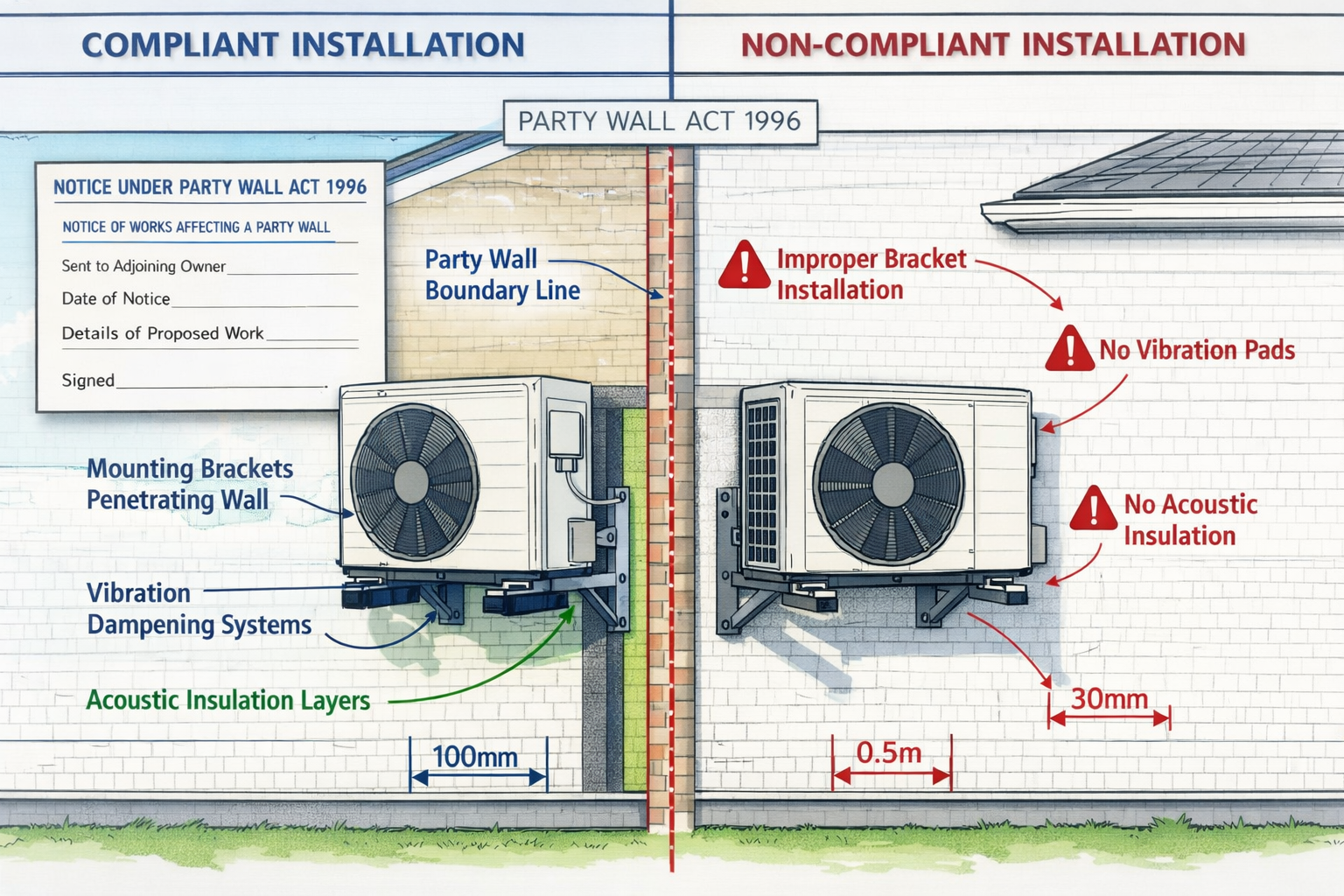
- Installing fixings, brackets, or support systems that penetrate party walls
- Cutting into party walls to run pipework or electrical conduits
- Adding insulation that affects the party wall structure
Section 6: Excavation Near Neighbouring Buildings
- Digging trenches for ground-source heat pump loops within 3-6 meters of adjoining properties
- Foundation work for ground-mounted solar panel arrays near boundary lines
Why Renewable Installations Trigger Party Wall Requirements
Unlike traditional building projects, renewable energy installations present unique party wall challenges:
- Vibration and Noise Transmission: Heat pumps generate operational vibration that transmits through shared structures, potentially affecting neighbouring properties
- Structural Loading: Solar panels add significant weight to roof structures that may be partially supported by party walls
- Penetrations and Fixings: Mounting brackets often require drilling into or through party wall structures
- Thermal Bridging: Insulation work associated with heat pump installations can affect the thermal properties of party walls
The UK government's push for improved energy efficiency in rental properties has accelerated these installations[2][3]. Landlords facing EPC rating requirements now constitute a significant portion of party wall cases involving renewable technology.
The Party Wall Notice Process for Heat Pump and Solar Installations
Navigating Party Wall Act Compliance for Heat Pump and Solar Installations: Navigating 2026's Green Retrofit Wave requires following a structured legal process. Failure to serve proper party wall notices can halt projects and create expensive legal complications.
Step-by-Step Compliance Process
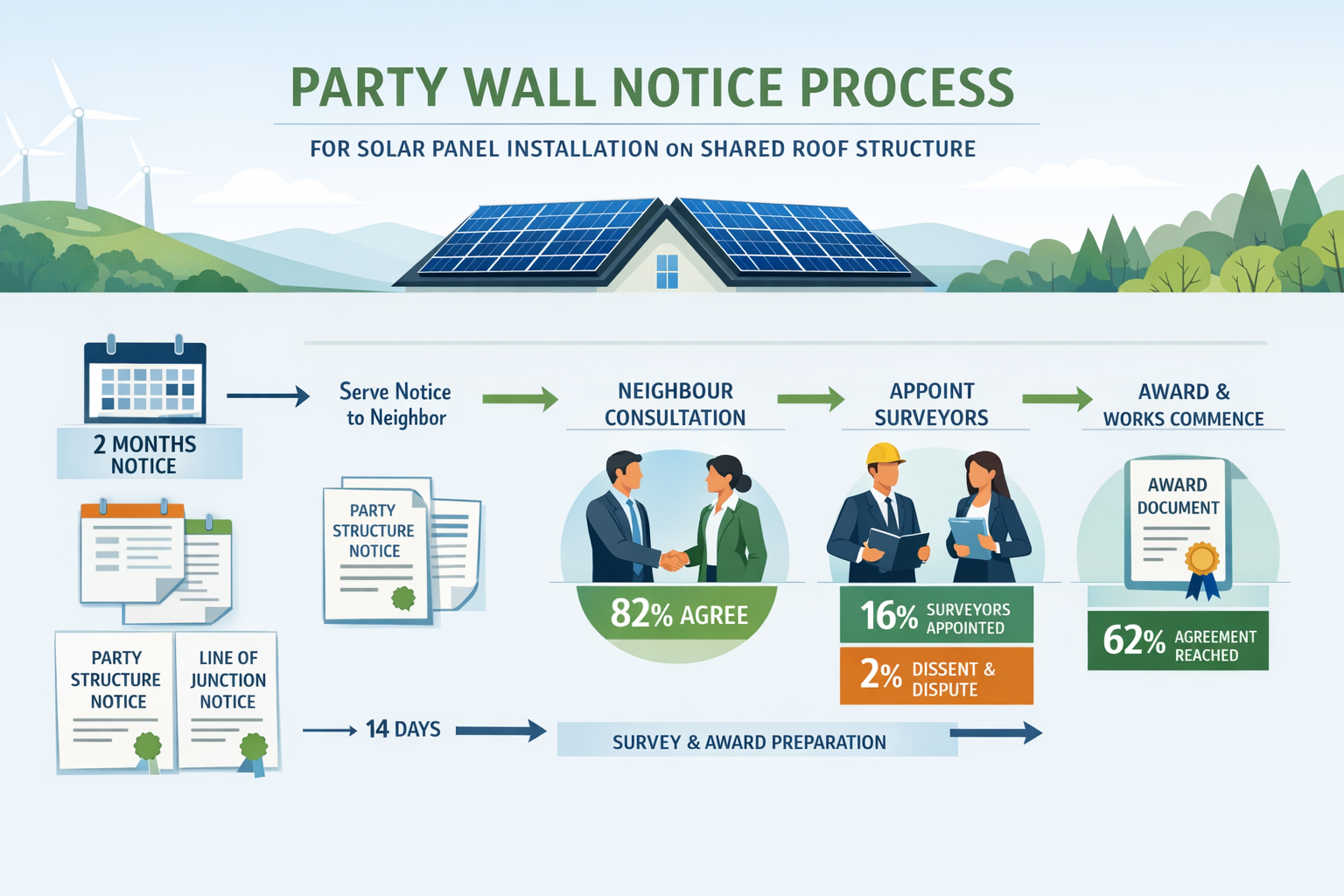
Step 1: Determine Notice Requirements (3-4 Weeks Before Intended Start)
Consult with a qualified party wall surveyor to assess whether your installation requires:
- Party Structure Notice (Section 2): For work directly affecting a party wall
- Line of Junction Notice (Section 1): For new structures on boundaries
- Notice of Adjacent Excavation (Section 6): For ground-source systems near neighbours
Understanding what party wall notices are and how to respond helps both building owners and adjoining owners navigate this stage effectively.
Step 2: Serve Formal Notice (Minimum 2 Months Before Work)
The building owner must serve written notice to all affected adjoining owners containing:
- Detailed description of the proposed renewable installation
- Technical specifications including equipment weight, mounting methods, and operational characteristics
- Proposed start date (at least 2 months from notice date)
- Plans and drawings showing installation location relative to party walls
- Structural calculations if adding significant load to shared structures
| Notice Type | Minimum Notice Period | Typical Renewable Application |
|---|---|---|
| Party Structure Notice | 2 months | Heat pump on shared wall |
| Line of Junction Notice | 1 month | Solar array foundation on boundary |
| Adjacent Excavation Notice | 1 month | Ground-source heat pump trenches |
Step 3: Neighbour Response Period (14 Days)
Adjoining owners have 14 days to respond in one of three ways:
✅ Consent: Work can proceed under agreed conditions
❌ Dissent: Triggers the party wall award process
⏰ No Response: Treated as dissent after 14 days
Step 4: Appointing Surveyors (If Dissent Occurs)
When neighbours dissent or fail to respond, the Party Wall Award process begins:
- Building owner appoints their surveyor
- Adjoining owner appoints their surveyor (or agrees to use the same "Agreed Surveyor")
- Surveyors prepare a formal Party Wall Award document
Professional guidance on costs of the party wall process helps property owners budget appropriately. The building owner typically pays all reasonable surveyor fees for both parties.
Step 5: Party Wall Award Preparation (3-6 Weeks)
Surveyors will:
- Conduct pre-installation Schedule of Condition surveys of neighbouring properties
- Assess technical specifications of the renewable installation
- Determine appropriate working methods and protective measures
- Set conditions for noise, vibration, and working hours
- Establish dispute resolution procedures
The resulting party wall contract template provides legal protection for all parties.
Step 6: Installation and Post-Work Inspection
Once the award is in place:
- Installation proceeds according to agreed specifications
- Surveyors may conduct interim inspections
- Post-installation condition survey confirms no damage occurred
- Any damage is remedied at building owner's expense
Common Pitfalls in Party Wall Act Compliance for Heat Pump and Solar Installations
🚫 Starting work before notice period expires: This constitutes trespass and can result in injunctions
🚫 Inadequate technical specifications: Vague descriptions of equipment lead to disputes during installation
🚫 Ignoring operational characteristics: Failing to address noise and vibration in the award creates post-installation conflicts
🚫 Assuming consent means no surveyor needed: Even with consent, a Schedule of Condition protects against false damage claims
🚫 DIY notice serving: Improperly drafted notices lack legal validity and waste time
"The surge in heat pump installations has caught many homeowners off-guard regarding party wall requirements. We're seeing a 300% increase in renewable energy-related party wall cases compared to 2023, with most issues arising from inadequate initial notices." — Senior Party Wall Surveyor, London
Technical Considerations for Compliant Renewable Installations
Party Wall Act Compliance for Heat Pump and Solar Installations: Navigating 2026's Green Retrofit Wave extends beyond paperwork to encompass technical installation standards that protect neighbouring properties.
Heat Pump Installations on Party Walls
Air-Source Heat Pumps (ASHP) present specific challenges when mounted on or near party walls:
Vibration Management
Modern heat pumps operate with compressors that generate low-frequency vibration. When mounted on party walls, this vibration transmits through the structure, potentially causing:
- Structural fatigue in older masonry
- Noise disturbance in adjoining properties
- Damage to plaster and finishes
Mitigation strategies include:
- Anti-vibration mounting brackets with rubber dampening
- Structural isolation pads between unit and wall
- Acoustic barriers within the party wall cavity
- Regular maintenance schedules specified in the Party Wall Award
Structural Loading Assessment
External heat pump units typically weigh 40-100kg. When mounted on party walls, surveyors must verify:
- Wall construction and load-bearing capacity
- Condition of existing masonry or structure
- Adequate fixing depth and distribution
- Impact on neighbouring property's structural integrity
Acoustic Performance
Heat pumps generate operational noise (typically 40-60 decibels). Party Wall Awards should specify:
- Maximum operational noise levels at the boundary
- Permitted operating hours (especially night-time restrictions)
- Acoustic testing requirements post-installation
- Remediation procedures if noise exceeds agreed limits
Solar Panel Installations Affecting Party Structures
Roof-mounted solar arrays trigger party wall considerations when:
Shared Roof Structures
Many terraced and semi-detached properties share roof structures supported by party walls. Installing solar panels requires assessment of:
- Additional dead load: Panels add 10-15kg per square meter
- Wind loading: Increased surface area affects structural calculations
- Roof truss capacity: Older structures may require reinforcement
- Party wall loading: Increased stress on shared structural elements
Roof Penetrations and Waterproofing
Installing solar panels often requires:
- Removing and replacing roof covering near party wall junctions
- Installing mounting rails that may penetrate or load party walls
- Ensuring waterproofing at party wall flashings
- Maintaining fire separation in party wall roof spaces
Party Fence Walls and Ground-Mounted Arrays
For ground-mounted solar installations near boundary walls, consider:
- Foundation excavation proximity to existing walls
- Shading effects on neighbouring gardens
- Visual impact and height restrictions
- Maintenance access requirements
Ground-Source Heat Pumps and Excavation Notices
Ground-source heat pump (GSHP) installations involve significant excavation that may trigger Section 6 notices when:
- Digging within 3 meters of a neighbouring building's foundation, if excavation goes deeper than the foundation
- Digging within 6 meters of a neighbouring building's foundation, if excavation goes deeper than a 45-degree line from the foundation base
GSHP installations requiring horizontal ground loops or vertical boreholes must include:
- Detailed excavation plans showing depth and proximity
- Structural engineer assessments of neighbouring foundations
- Temporary support measures during excavation
- Monitoring procedures for neighbouring structures
Compliance with Building Regulations and EPC Requirements
While separate from Party Wall Act requirements, renewable installations must also satisfy:
Building Control Approval: Required for structural alterations and electrical work
Planning Permission: Some installations require planning consent, particularly in conservation areas
MCS Certification: Microgeneration Certification Scheme approval ensures installations meet technical standards and qualify for government incentives
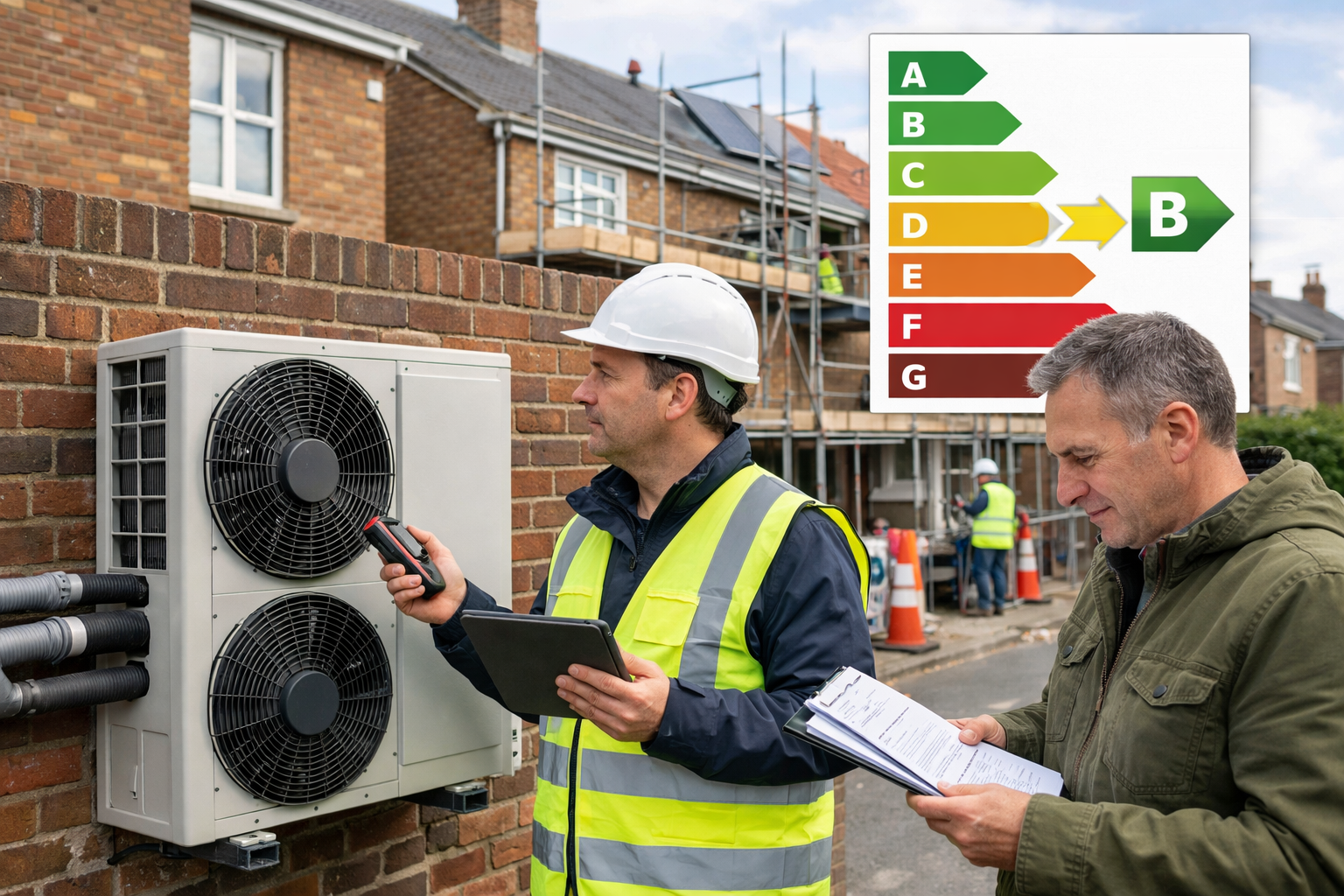
EPC Impact: Installations should improve Energy Performance Certificate ratings, increasingly important for landlords facing minimum EPC requirements[2][3]
The convergence of these regulatory frameworks means property owners must coordinate multiple approval processes. Starting with party wall compliance ensures the legal foundation is secure before proceeding with technical approvals.
Regional Considerations and Finding Qualified Surveyors
Party Wall Act Compliance for Heat Pump and Solar Installations varies by location due to property types, local building practices, and surveyor availability.
London and Urban Areas
High-density housing in London creates unique challenges:
- Terraced properties: Multiple adjoining owners may require notice
- Converted flats: Complex ownership structures complicate notice serving
- Conservation areas: Additional planning restrictions affect installation methods
- Property values: Higher stakes increase the importance of proper documentation
Qualified surveyors specializing in renewable installations operate throughout London:
- Party Wall Surveyor North London
- Party Wall Surveyor South London
- Party Wall Surveyor East London
- Party Wall Surveyor West London
- Party Wall Surveyor Central London
Cost Management Strategies
Professional party wall services represent an investment in legal protection. Property owners can keep party wall costs down by:
- Early engagement: Consulting surveyors during planning stages prevents costly redesigns
- Agreed Surveyor appointments: Using one surveyor for both parties reduces fees
- Clear specifications: Detailed installation plans minimize surveyor queries and site visits
- Neighbour communication: Informal discussions before formal notices can facilitate consent
- Bundled services: Some surveyors offer package rates for multiple party wall matters
When to Consider Having a Party Wall Agreement Without a Surveyor
In limited circumstances, neighbours may proceed with party wall agreements without surveyors. However, for renewable installations involving technical complexity, professional surveyor involvement provides:
- Expert assessment of structural implications
- Protection through comprehensive Schedules of Condition
- Neutral third-party oversight
- Enforceable dispute resolution mechanisms
- Insurance-compliant documentation
2026's Green Retrofit Wave: Policy Drivers and Compliance Urgency
The acceleration of Party Wall Act Compliance for Heat Pump and Solar Installations: Navigating 2026's Green Retrofit Wave stems from converging policy pressures:
EPC Requirements for Rental Properties
Updated regulations require rental properties to meet minimum energy efficiency standards[2][3]. While recent government announcements have adjusted timelines, landlords still face pressure to improve EPC ratings, driving heat pump and solar installations.
Key policy developments:
- Minimum EPC rating requirements for new tenancies
- Exemptions for properties where improvements aren't cost-effective
- Grant programs incentivizing renewable technology adoption
- Potential future requirements for owner-occupied properties
Government Incentive Programs
Financial incentives accelerate renewable installations:
- Boiler Upgrade Scheme: Grants of £5,000-£6,000 for heat pump installations
- Smart Export Guarantee: Payments for excess solar electricity exported to the grid
- VAT reductions: Zero-rated VAT on energy-saving materials
These programs create urgency that can lead property owners to overlook party wall requirements in their rush to meet deadlines or secure funding.
Net-Zero Targets and Social Pressure
The UK's commitment to net-zero emissions by 2050 creates social and regulatory momentum for green retrofits. Property owners increasingly view renewable installations as:
- Ethical environmental responsibility
- Financial investment against rising energy costs
- Property value enhancement
- Compliance with emerging regulations
This enthusiasm must be balanced with proper legal compliance to avoid disputes that undermine the green transition's progress.
Learning from Other Jurisdictions
While UK-specific legislation governs party wall matters here, international examples provide context. North Carolina's renewable energy legislation[1] demonstrates how policy frameworks can accelerate adoption while requiring proper permitting and neighbour notification procedures.
Protecting Your Rights as an Adjoining Owner
If your neighbour is carrying out works involving renewable installations, understanding your rights as an adjoining owner is crucial.
Your Rights Upon Receiving Notice
When served with a party wall notice for a neighbouring heat pump or solar installation:
✅ Request additional information: You can ask for detailed specifications, structural calculations, and installation methods
✅ Appoint your own surveyor: You have the right to independent professional representation at the building owner's expense
✅ Require a Schedule of Condition: Insist on comprehensive photographic and written records of your property's pre-work condition
✅ Set reasonable conditions: Through the Party Wall Award, establish working hours, access arrangements, and protective measures
✅ Seek compensation: If the work will cause inconvenience beyond what's reasonable, you may negotiate compensation
Red Flags Requiring Immediate Action
Contact an adjoining owner's surveyor immediately if:
🚩 Work begins without proper notice being served
🚩 The notice lacks sufficient technical detail about the installation
🚩 You experience vibration, noise, or damage after installation
🚩 The building owner refuses to discuss concerns
🚩 Installation methods differ from what was described in the notice
Common Concerns About Renewable Installations
Noise disturbance: Heat pumps can generate persistent low-frequency noise. The Party Wall Award should specify acceptable noise levels and operating restrictions.
Vibration damage: Improperly mounted equipment can cause structural vibration. Ensure the award requires anti-vibration mounting and post-installation testing.
Visual impact: While not strictly a party wall matter, solar panels and external equipment affect property aesthetics. Raise concerns during the consultation period.
Property value: Document any concerns about how installations might affect your property's marketability. Surveyors can assess and address these issues.
Future maintenance: Ensure the award addresses access requirements for ongoing maintenance and eventual equipment replacement.
Practical Guidance for Building Owners Planning Installations
Property owners initiating renewable installations can ensure smooth Party Wall Act Compliance for Heat Pump and Solar Installations by following these best practices:
Pre-Installation Planning Checklist
6-8 Weeks Before Intended Start:
- Engage a qualified party wall surveyor for initial assessment
- Obtain detailed technical specifications from renewable energy installer
- Identify all adjoining owners requiring notice
- Review property deeds to confirm boundary locations
- Budget for party wall surveyor fees (typically £700-£1,500 per property)
4-6 Weeks Before Intended Start:
- Draft and serve formal party wall notices
- Include comprehensive installation details and drawings
- Provide contact information for your surveyor
- Offer to meet with neighbours to discuss the project
2-4 Weeks Before Intended Start:
- Follow up on neighbour responses
- Appoint surveyors if dissent occurs
- Coordinate Schedule of Condition surveys
- Review and agree Party Wall Award terms
1-2 Weeks Before Intended Start:
- Ensure Party Wall Award is signed and in place
- Brief renewable energy installer on Award conditions
- Confirm insurance coverage includes party wall matters
- Establish communication channels with neighbours
Working with Renewable Energy Installers
Many heat pump and solar installation companies lack party wall expertise. As the building owner, you must:
Verify installer awareness: Confirm they understand party wall requirements and will work within Award conditions
Provide Award documentation: Give installers copies of the Party Wall Award specifying working methods and restrictions
Coordinate timing: Ensure installation schedules align with notice periods and Award conditions
Maintain oversight: Monitor installation to ensure compliance with agreed methods
Document compliance: Photograph installation stages to demonstrate adherence to Award terms
Communication Strategies with Neighbours
Successful projects often result from good neighbour relations:
💬 Informal discussion first: Talk to neighbours before serving formal notices to explain benefits and address concerns
💬 Provide context: Explain how the installation improves energy efficiency and property value
💬 Offer reassurance: Share technical specifications showing noise levels, vibration control, and structural safety
💬 Be flexible: Where possible, accommodate reasonable neighbour preferences about timing or methods
💬 Maintain contact: Keep neighbours informed of progress and promptly address any issues
Insurance and Liability Considerations
Ensure adequate insurance coverage:
- Buildings insurance: Confirm coverage includes party wall matters and renewable installations
- Liability insurance: Verify installer carries adequate public liability coverage
- Professional indemnity: Check that surveyors maintain appropriate professional insurance
- Documentation: Keep all party wall records for future property sales
Frequently Asked Questions
Do I need a party wall notice for a heat pump on my own external wall?
If the wall is shared with a neighbour (party wall), yes. Even if the wall appears to be entirely on your property, it may still be a party wall requiring notice.
How long does the party wall process take for solar installations?
Minimum 2 months from serving notice to starting work. If disputes arise requiring surveyor appointments and awards, add 4-8 weeks.
Who pays for party wall surveyors?
The building owner (person doing the work) pays all reasonable surveyor fees, including the adjoining owner's surveyor.
Can my neighbour stop my heat pump installation?
Neighbours cannot unreasonably prevent work, but they can require proper procedures, protective measures, and fair compensation for genuine impacts.
What happens if I start work without serving notice?
Neighbours can obtain court injunctions stopping work, seek removal of installations, and claim damages. You'll pay all legal costs.
Are party wall notices required for internal heat pump work?
Only if work affects the party wall structure (e.g., cutting chases for pipework, drilling for fixings, or adding significant load).
How much do party wall surveyors cost for renewable installations?
Typically £700-£1,500 per adjoining property, depending on complexity. Agreed Surveyor appointments reduce costs.
Can I use a template for party wall notices?
While free sample templates exist, renewable installations require technical specifications best prepared by qualified surveyors.
Conclusion: Embracing Green Retrofits While Respecting Legal Frameworks
Party Wall Act Compliance for Heat Pump and Solar Installations: Navigating 2026's Green Retrofit Wave represents a critical intersection of environmental progress and property law. As the UK accelerates toward net-zero targets, renewable energy installations will continue proliferating across residential properties. Success requires balancing environmental ambitions with respect for legal frameworks that protect property rights and neighbour relations.
The party wall process, while sometimes perceived as bureaucratic, serves essential functions:
- Protecting property interests for both building and adjoining owners
- Preventing disputes through clear documentation and agreed procedures
- Ensuring technical standards that safeguard structural integrity
- Providing dispute resolution mechanisms when conflicts arise
- Creating legal certainty that facilitates property transactions
Key Action Steps
For Building Owners Planning Installations:
- Engage professional surveyors early in your planning process
- Budget for party wall costs alongside installation expenses
- Allow adequate time for notice periods and potential award processes
- Communicate proactively with neighbours before formal notices
- Ensure installer compliance with Party Wall Award conditions
For Adjoining Owners Receiving Notices:
- Respond within 14 days to preserve your rights
- Appoint your own surveyor for independent professional advice
- Insist on comprehensive Schedules of Condition to protect against false damage claims
- Raise concerns early about noise, vibration, and operational impacts
- Understand your rights to reasonable conditions and compensation
For All Property Owners:
- Stay informed about evolving EPC requirements and renewable incentives
- Plan ahead for future green retrofits on your own property
- Maintain documentation of all party wall matters for future reference
- Build positive neighbour relations that facilitate cooperation
- Seek professional guidance rather than attempting DIY compliance
Looking Forward
The green retrofit wave of 2026 represents just the beginning of a multi-decade transformation of the UK's housing stock. As technology evolves and policy pressures increase, party wall considerations for renewable installations will become increasingly common. Property owners who master Party Wall Act Compliance for Heat Pump and Solar Installations position themselves for success in this new era of sustainable property ownership.
By approaching renewable installations with proper legal diligence, property owners protect their investments, maintain positive neighbour relations, and contribute to the UK's environmental goals. The party wall process, far from being an obstacle to green retrofits, provides the legal framework that enables these transformative improvements to proceed smoothly and fairly.
For expert guidance on party wall matters related to renewable installations, consult qualified party wall surveyors who understand both the legal requirements and technical complexities of heat pump and solar installations. Professional support ensures your green retrofit project succeeds legally, technically, and neighbourly.
References
[1] Ncenergylegislation – https://cleanenergy.org/news/ncenergylegislation/
[2] Changes To Energy Efficiency Plans For Let Property Announced – https://rural.struttandparker.com/article/changes-to-energy-efficiency-plans-for-let-property-announced/
[3] Epc Answers – https://theindependentlandlord.com/epc-answers/