


{"cover":"Professional landscape format (1536×1024) hero image featuring bold text overlay 'Party Wall Agreements in Data Centre Expansions: Managing Shared Structures During 2026's AI Infrastructure Boom' in extra large 70pt white sans-serif font with dark shadow and semi-transparent overlay box, positioned in upper third. Background shows split-screen composition: left side displays modern data centre facility with server racks and cooling systems in blue ambient lighting, right side shows architectural blueprint and party wall survey documentation with measuring tools. Color scheme: deep blue, white, orange accents representing tech infrastructure. High contrast, magazine cover quality, editorial style with professional construction and technology aesthetic","content":["Detailed landscape format (1536×1024) image showing close-up architectural cross-section illustration of shared party wall structure between two data centre buildings, with technical annotations highlighting foundation depths, excavation zones, and structural support systems. Left side shows existing operational data centre with visible server infrastructure through cutaway view, right side displays new expansion construction with steel reinforcement and concrete foundation work. Include measuring tape, structural engineer's notes, and Party Wall Act compliance checkmarks overlaid on blueprint background. Color palette: industrial grey, construction orange, technical blue with white annotation text. Professional engineering diagram aesthetic","Detailed landscape format (1536×1024) image depicting overhead view of modern data centre construction site at boundary line between two properties, showing surveyor with laser measuring equipment standing at shared wall location. Visible elements include construction barriers, foundation excavation work, adjacent operational facility, and multiple stakeholders (building owner, adjoining owner, party wall surveyor) reviewing documents on-site. Include safety helmets, survey equipment, rolled architectural plans, and clear boundary demarcation line. Bright daylight, active construction environment, professional site management aesthetic with emphasis on collaborative planning and legal compliance","Detailed landscape format (1536×1024) image showing professional meeting room scene with party wall surveyor presenting detailed schedule of condition report to data centre stakeholders. Large display screen shows before-and-after structural analysis photographs, vibration monitoring data graphs, and thermal imaging of shared walls. Conference table with multiple participants reviewing party wall awards documentation, architectural drawings spread out, laptops displaying 3D building models. Modern corporate environment, natural lighting through windows, professional consultation aesthetic with emphasis on risk management and dispute prevention strategies"]
The artificial intelligence revolution is reshaping the global landscape in 2026, and nowhere is this more visible than in the explosive growth of data centre infrastructure. As tech giants and cloud providers race to build capacity for AI workloads, party wall agreements have emerged as a critical—yet often overlooked—component of successful project delivery. With nearly 100 GW of new data centre capacity expected globally by 2030 [3], developers are increasingly encountering situations where their ambitious expansion plans intersect with neighbouring properties, triggering complex legal obligations under frameworks like the Party Wall Act 1996.
The convergence of unprecedented construction demand and shared property boundaries creates a perfect storm of regulatory, technical, and relationship challenges. Party Wall Agreements in Data Centre Expansions: Managing Shared Structures During 2026's AI Infrastructure Boom represents a specialized field where traditional surveying expertise meets cutting-edge technology infrastructure requirements.
Key Takeaways
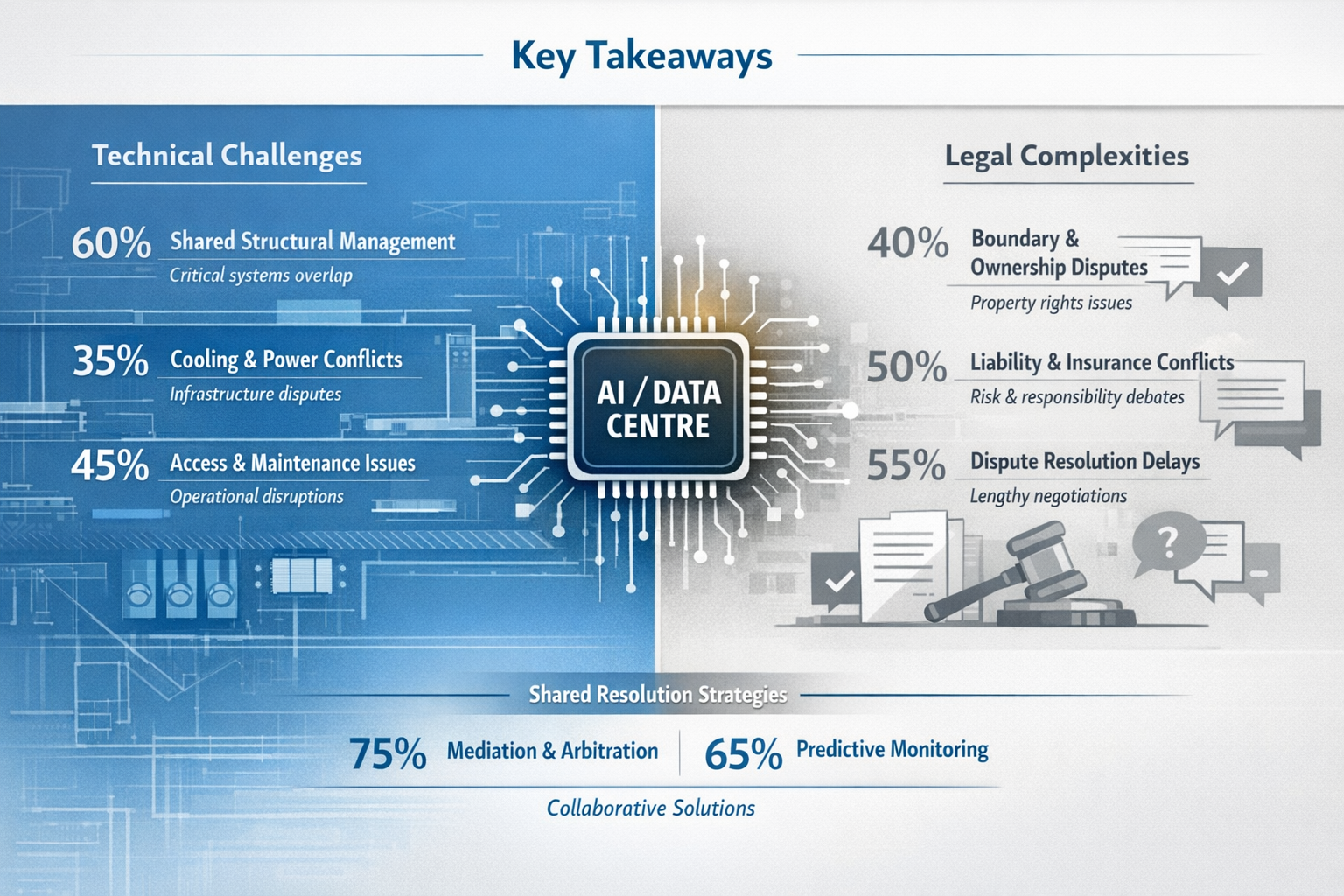
- AI-driven demand is creating unprecedented pressure on data centre construction, with $3 trillion in sector investment needed by 2030 and capacity doubling globally [3]
- Party Wall Act 1996 compliance is frequently triggered by data centre developments due to deep excavations, foundation work, and boundary wall considerations [4]
- Geographic redistribution means approximately two-thirds of new capacity is being built outside traditional hubs, increasing the likelihood of shared boundary scenarios [2]
- Construction capacity constraints are slowing delivery rates, making efficient party wall management essential for project timelines [7]
- Specialized surveying strategies are required to balance high-stakes tech infrastructure needs with neighbouring property rights and legal obligations
Understanding the 2026 Data Centre Construction Boom
The Scale of AI Infrastructure Growth
The numbers behind 2026's data centre expansion are staggering. Global capacity is set to double between now and 2030, requiring an estimated $3 trillion in sector investment [3]. This isn't gradual growth—it's an infrastructure revolution driven by generative AI, machine learning, and cloud computing demands that show no signs of slowing.
In the United States alone, emerging markets are experiencing explosive development. Michigan's DTE Energy reports 1.4 gigawatts under contract and approximately 3 gigawatts in late-stage negotiations [1], transforming previously quiet industrial zones into technology hubs. This pattern repeats across the UK, Europe, and Asia-Pacific regions, where land scarcity and urban density make shared boundary situations increasingly common.
Geographic Shifts Creating New Challenges
Perhaps most significantly for party wall considerations, roughly two-thirds of new data centre capacity is being developed outside established hubs like Northern Virginia and Silicon Valley [2]. This geographic redistribution means developers are building in areas with:
- 🏢 Existing commercial and industrial neighbours
- 📏 Tighter property boundaries
- 🔨 Less experience with large-scale tech infrastructure
- ⚖️ Varying local regulatory frameworks
These factors combine to create scenarios where party wall notices become essential project components rather than afterthoughts.
Construction Capacity Constraints
Despite surging demand, data centre construction rates remain too slow for current needs [7]. This capacity constraint places enormous pressure on project timelines, making any delays—including those caused by party wall disputes—potentially catastrophic for developers racing to secure lucrative hosting contracts.
Party Wall Act 1996 Triggers in Data Centre Developments
Common Scenarios Requiring Party Wall Agreements
Data centre projects frequently trigger obligations under the Party Wall etc. Act 1996 due to their unique construction characteristics. Understanding these triggers is essential for project planning and risk management.
Excavation and Foundation Work 🏗️
Modern data centres require substantial foundations to support:
- Heavy server equipment loads (often exceeding standard commercial buildings)
- Cooling system infrastructure
- Backup power generation equipment
- Raised floor systems
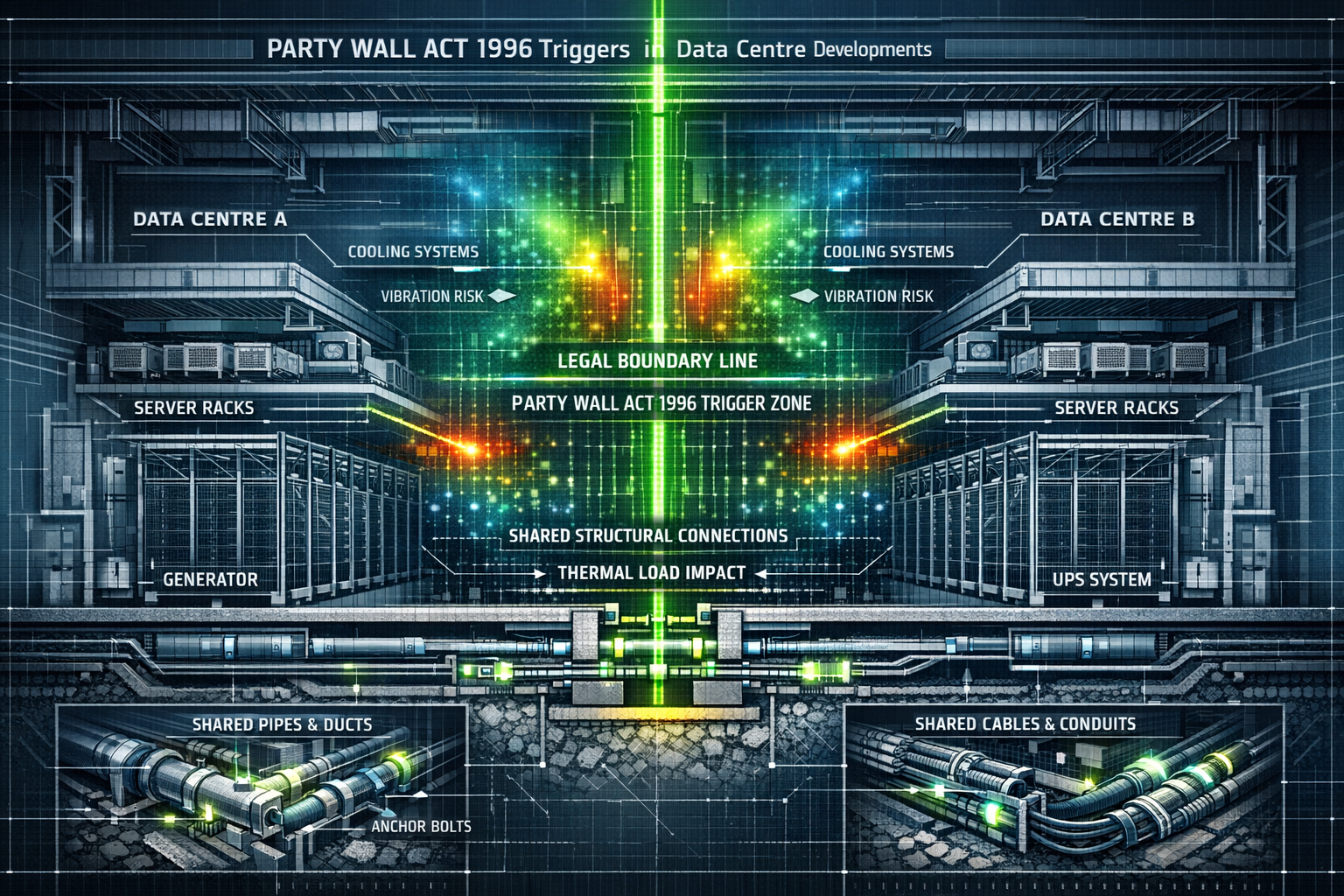
When excavation extends within three or six metres of a neighbouring building's foundation (depending on depth), party structure notices become mandatory [4]. Given that data centres often require deeper foundations than traditional commercial structures, this trigger is particularly common.
Boundary Wall Construction and Modification
Many data centre expansions involve:
- Building new walls along property boundaries for security perimeters
- Modifying existing party fence walls
- Raising wall heights for enhanced security and noise mitigation
- Installing specialized security features on boundary structures
Each of these scenarios may require proper notice and agreement procedures to ensure legal compliance.
Structural Work on Shared Walls
In urban environments where data centres occupy former industrial or commercial buildings, shared walls with adjacent properties are common. Any structural modifications—including:
- Reinforcement for increased load capacity
- Penetrations for cooling systems or electrical infrastructure
- Vibration isolation measures
- Soundproofing installations
—trigger party wall obligations that must be properly managed.
UK-Specific Compliance Considerations
The UK market presents unique challenges for Party Wall Agreements in Data Centre Expansions: Managing Shared Structures During 2026's AI Infrastructure Boom. Regulatory compliance analysis indicates that data centre developments frequently encounter Party Wall Act 1996 obligations due to the combination of excavation depths, foundation requirements, and boundary considerations [4].
Legal experts emphasize that construction disputes represent a key risk area for 2026 data centre projects in the UK [6]. These disputes often arise from:
- Inadequate initial party wall assessments
- Rushed notice procedures due to tight project timelines
- Insufficient communication with adjoining owners
- Underestimation of vibration and noise impacts during construction
Proactive engagement with qualified party wall surveyors at the earliest project stages can mitigate these risks significantly.
Specialized Strategies for Managing Party Wall Agreements in Data Centre Projects
Early Engagement and Timeline Planning
Given construction capacity constraints [7], data centre developers cannot afford party wall delays. Best practices include:
Pre-Acquisition Due Diligence 📋
Before purchasing or leasing development sites, conduct thorough assessments of:
- Neighbouring property ownership and use
- Existing boundary structures and their condition
- Potential party wall triggers based on preliminary designs
- Historical relationships between current site owners and neighbours
This intelligence allows for realistic timeline planning and budget allocation for party wall procedures.
Integrated Project Scheduling
Party wall procedures should be integrated into critical path planning from day one. Typical timelines include:
| Stage | Typical Duration | Key Activities |
|---|---|---|
| Initial Assessment | 1-2 weeks | Site survey, neighbour identification |
| Notice Preparation & Service | 1-2 weeks | Document preparation, formal service |
| Response Period | 14 days minimum | Awaiting adjoining owner response |
| Surveyor Appointment | 1-2 weeks | If dissent, appointing agreed surveyor |
| Award Preparation | 4-8 weeks | Surveys, negotiations, documentation |
| Total Minimum | 8-14 weeks | Before construction can commence |
For complex data centre projects, allowing 16-20 weeks for party wall procedures provides safer buffer against delays.
Technical Considerations Unique to Data Centre Construction
Data centres present technical challenges that standard party wall procedures may not fully address. Specialized strategies include:
Vibration Monitoring and Management 📊
Server equipment is highly sensitive to vibration. When construction work occurs adjacent to operational data centres, party wall awards should specify:
- Baseline vibration measurements before work commences
- Continuous monitoring during construction phases
- Alert thresholds that trigger work stoppages
- Remediation procedures if damage occurs
This protects both the building owner's interests and the adjoining owner's operational continuity.
Thermal and Environmental Controls
Data centres maintain precise environmental conditions. Party wall agreements should address:
- Thermal bridging through shared structures
- Moisture migration risks
- Air quality and particulate control during construction
- Emergency access provisions for cooling system failures
Security and Access Protocols
Data centre security requirements often exceed standard commercial properties. When surveyors need access for schedule of condition surveys or monitoring, agreements should establish:
- Pre-approved surveyor credentials and security clearances
- Escort requirements and restricted access zones
- Photography and documentation limitations
- Confidentiality obligations regarding facility layouts
Cost Management and Budget Allocation
Understanding the financial implications of party wall procedures helps developers plan accurately. For guidance on managing expenses, review strategies for keeping party wall costs down.
Typical Cost Components 💰
Data centre party wall agreements typically involve:
- Building owner's surveyor fees: £2,000-£8,000+ depending on complexity
- Adjoining owner's surveyor fees: £1,500-£6,000+ (paid by building owner)
- Award preparation and administration: £1,000-£3,000
- Monitoring and inspection visits: £500-£2,000 per visit
- Schedule of condition documentation: £1,500-£4,000
- Potential remediation reserves: Variable, often 5-10% of construction value
For large data centre projects, total party wall costs commonly range from £15,000 to £50,000+, representing a small fraction of overall project costs but requiring proper budgeting.
Dispute Prevention and Resolution
Given the high stakes of data centre projects, dispute prevention is paramount. Effective strategies include:
Proactive Neighbour Relations 🤝
Before formal notices are served:
- Conduct informal meetings to explain project benefits
- Address concerns about noise, traffic, and construction impacts
- Offer goodwill measures (temporary noise barriers, construction hour limitations)
- Establish direct communication channels for ongoing concerns
Clear, Comprehensive Awards
Well-drafted party wall contract templates and awards should include:
- Detailed descriptions of permitted works
- Specific methodologies and construction techniques
- Clear timelines and working hour restrictions
- Comprehensive condition schedules with photographic evidence
- Defined dispute resolution procedures
- Insurance and indemnity provisions
Alternative Approaches
In some cases, developers may explore having a party wall agreement without a surveyor, though this approach carries risks for complex data centre projects. Professional surveyor involvement typically provides better protection for all parties.
Regional Considerations and Emerging Markets
London and Major UK Cities
In established markets like London, data centre developers face unique challenges:
- High property density means multiple adjoining owners
- Mixed-use neighbourhoods create diverse stakeholder concerns
- Historic structures may require specialized assessment and protection
- Experienced adjoining owners often have sophisticated legal representation
Working with local specialists—such as party wall surveyors in Central London, East London, West London, North London, or South London—provides invaluable local knowledge and established relationships.
Emerging Data Centre Markets
The geographic redistribution of data centre development [2] means party wall challenges are appearing in markets with less experience managing these complex projects. In regions like Michigan [1] and other emerging US markets, developers must:
- Educate local stakeholders about party wall principles and benefits
- Adapt UK frameworks to local legal contexts where applicable
- Build relationships with local surveying and legal professionals
- Anticipate longer learning curves for all parties involved
International Considerations
While the Party Wall Act 1996 is UK-specific, similar principles apply internationally:
- United States: State-specific boundary and easement laws govern similar situations
- European Union: Various national frameworks address shared structures
- Asia-Pacific: Rapidly developing markets often have evolving regulatory frameworks
Understanding Party Wall Agreements in Data Centre Expansions: Managing Shared Structures During 2026's AI Infrastructure Boom requires adapting core principles to local legal contexts while maintaining best practices for stakeholder management and technical documentation.
Risk Management and Future-Proofing
Anticipating Regulatory Evolution
As data centre development continues its explosive growth, regulatory frameworks are evolving. Several US states have introduced or are considering data centre moratorium bills [5][8], reflecting community concerns about:
- Energy consumption and grid impacts
- Water usage for cooling systems
- Traffic and infrastructure strain
- Property value impacts
These regulatory pressures make proactive, transparent neighbour relations increasingly important. Party wall agreements that exceed minimum legal requirements—addressing environmental impacts, community benefits, and ongoing communication—position projects for smoother approvals and better community acceptance.
Long-Term Operational Considerations
Party wall agreements shouldn't focus solely on construction phases. For data centres with 20-30 year operational lifespans, agreements should address:
Ongoing Maintenance Access 🔧
- Provisions for periodic structural inspections
- Access rights for emergency repairs
- Notification procedures for routine maintenance
- Shared responsibility for boundary structure upkeep
Future Expansion Rights
Given rapid technology evolution, data centres often require expansion or modification. Forward-thinking agreements should:
- Establish frameworks for future party wall procedures
- Pre-negotiate certain terms to streamline future projects
- Create precedents for cooperative problem-solving
Decommissioning and Repurposing
Eventually, data centres reach end-of-life. Agreements can address:
- Structural restoration obligations
- Shared wall maintenance after facility closure
- Rights and responsibilities during repurposing or demolition
Conclusion: Navigating Party Wall Agreements in Data Centre Expansions During 2026's AI Infrastructure Boom
The explosive growth of data centre infrastructure in 2026, driven by insatiable AI demand and representing a $3 trillion global investment opportunity [3], has elevated party wall management from administrative formality to strategic project component. As two-thirds of new capacity develops outside traditional hubs [2], developers increasingly encounter shared boundary scenarios requiring sophisticated legal, technical, and interpersonal management.
Success in Party Wall Agreements in Data Centre Expansions: Managing Shared Structures During 2026's AI Infrastructure Boom requires:
✅ Early integration of party wall procedures into project planning and critical path schedules
✅ Specialized technical approaches addressing vibration sensitivity, environmental controls, and security requirements unique to data centres
✅ Proactive stakeholder engagement that builds positive neighbour relations and prevents costly disputes
✅ Comprehensive documentation through detailed awards, condition schedules, and monitoring protocols
✅ Expert professional support from surveyors experienced in both party wall law and technology infrastructure projects
Actionable Next Steps
For developers, building owners, and project managers embarking on data centre expansions in 2026:
- Conduct early site assessments identifying potential party wall triggers before finalizing site selection or design
- Engage qualified party wall surveyors with data centre experience at project conception, not when construction is imminent
- Download and review sample party wall agreement templates to understand documentation requirements
- Budget appropriately for party wall procedures, typically £15,000-£50,000+ for complex projects
- Establish neighbour communication early, explaining project benefits and addressing concerns proactively
- Build 16-20 weeks into project schedules for comprehensive party wall procedures
- Understand your obligations under the Party Wall Act 1996 notices framework
For adjoining owners receiving party wall notices from data centre developers, understand your rights and consider engaging your own surveyor to ensure proper protection of your property interests.
The AI infrastructure boom of 2026 presents unprecedented opportunities—and challenges—for property development. By treating party wall agreements as strategic enablers rather than regulatory burdens, developers can accelerate project delivery, minimize dispute risks, and build the foundation for positive long-term neighbour relations in an increasingly interconnected built environment.
The future of AI depends on the infrastructure being built today. Managing that infrastructure's relationship with neighbouring properties through thoughtful, comprehensive party wall agreements ensures that technological progress proceeds hand-in-hand with respect for property rights and community interests.
References
[1] Dte Advances New Data Center Agreements As Michigan Communities Set Ground Rules – https://www.wkar.org/wkar-news/2026-02-20/dte-advances-new-data-center-agreements-as-michigan-communities-set-ground-rules
[2] New Data Center Developments March 2026 – https://www.datacenterknowledge.com/data-center-construction/new-data-center-developments-march-2026
[3] Data Center Outlook – https://www.jll.com/en-us/insights/market-outlook/data-center-outlook
[4] Party Wall Agreements In Data Centre Developments 2026 Compliance Amid Ai Driven Uk Demand – https://nottinghillsurveyors.com/blog/party-wall-agreements-in-data-centre-developments-2026-compliance-amid-ai-driven-uk-demand
[5] State Data Center Moratoriums – https://builtin.com/articles/state-data-center-moratoriums
[6] Data Centres – https://www.brownejacobson.com/insights/2026-horizon-scanning-in-construction/data-centres
[7] Dc Delivery Constraints Data Centre Construction Implications For Enterprise Cloud Strategy In 2026 – https://www.cloudcomputing-news.net/news/dc-delivery-constraints-data-centre-construction-implications-for-enterprise-cloud-strategy-in-2026/
[8] Data Center Moratorium Bills Are Spreading In 2026 – https://mronline.org/2026/03/12/data-center-moratorium-bills-are-spreading-in-2026/