

The construction boom sweeping across the data center and power facility sectors in 2026 is creating unprecedented opportunities—and equally unprecedented legal complexities. With data centers achieving a remarkable 57% net reading in construction market projections, developers and property owners must navigate intricate party wall requirements that go far beyond standard commercial construction. Party Wall Notices for Data Center and Power Facility Construction: 2026 Sector-Specific Guidance has become essential reading for anyone involved in these high-value, technically complex projects that demand specialized legal and structural considerations.
As regulatory frameworks evolve at both state and federal levels, understanding the intersection between traditional party wall legislation and modern infrastructure requirements has never been more critical. This comprehensive guide provides the specialized knowledge needed to successfully manage party wall notices for data center and power facility construction in 2026.
Key Takeaways
- 🏗️ Data center construction requires specialized party wall considerations due to heavy power loads, cooling systems, and 24/7 operational requirements that differ significantly from standard commercial projects
- 📋 Federal and state regulations are rapidly evolving in 2026, with new permitting frameworks in states like Florida and New York that impact party wall notice timelines and requirements
- ⚡ Power facility infrastructure creates unique party wall challenges including vibration management, electrical safety zones, and thermal impact assessments that must be addressed in notices
- 🤝 Early engagement with adjoining owners and qualified surveyors is crucial for data center projects, with notice periods often extending beyond standard requirements due to technical complexity
- 💰 Cost management strategies specific to high-value infrastructure projects can prevent disputes and streamline the party wall agreement process while maintaining regulatory compliance
Understanding Party Wall Legislation in the Context of Data Center Development
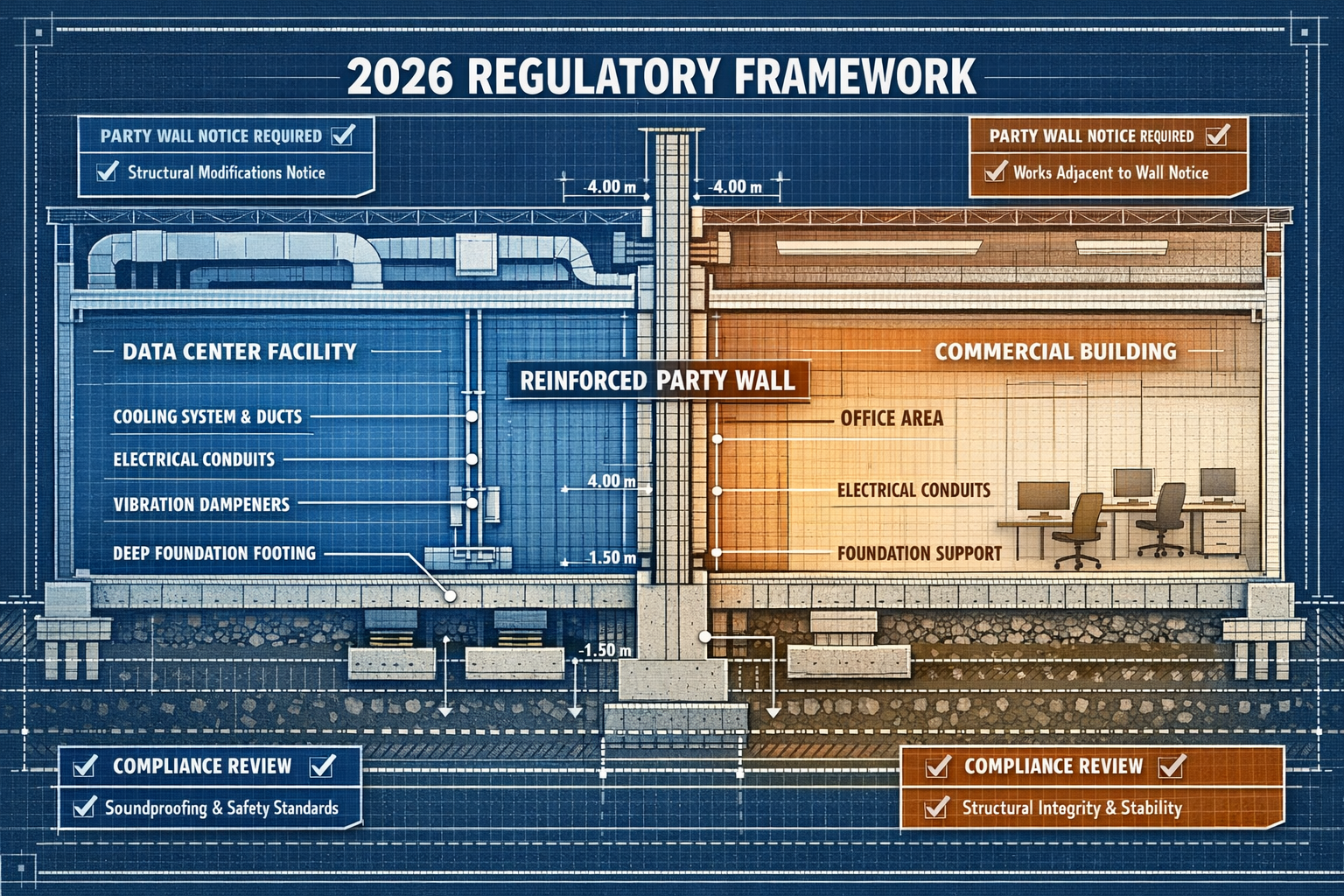
The Party Wall etc. Act 1996 forms the foundation of party wall law in England and Wales, but its application to modern data center and power facility construction requires specialized interpretation. Unlike traditional commercial developments, these facilities present unique structural and operational challenges that demand careful consideration during the notice process.
What Makes Data Centers Different?
Data centers and power facilities differ from conventional construction projects in several critical ways:
- Massive power infrastructure: Data centers can require 50-100 megawatts of power or more, necessitating substantial electrical installations that may impact adjoining properties
- Cooling system requirements: Advanced HVAC and cooling systems generate vibration, noise, and thermal effects that extend beyond typical construction impacts
- Structural loads: Heavy equipment including generators, transformers, and battery backup systems create foundation requirements that may affect party walls
- 24/7 operations: Unlike standard commercial buildings, data centers operate continuously, creating ongoing operational considerations for adjoining owners
The 2026 Regulatory Landscape
The regulatory environment for data center construction has shifted dramatically in 2026. A White House executive order is now streamlining federal permitting for qualifying data center projects, potentially accelerating timelines but also raising the stakes for proper party wall compliance[2]. Meanwhile, state-level developments create a patchwork of requirements that developers must navigate carefully.
New York's proposed three-year moratorium on data center permits (Senate Bill S.9144) reflects growing concerns about infrastructure capacity and environmental impact[1]. Florida has introduced comprehensive new regulatory frameworks through SB 484 that establish specific requirements for data center development[5]. These evolving regulations underscore the importance of understanding both traditional party wall law and emerging sector-specific requirements.
Party Wall Notices for Data Center and Power Facility Construction: Essential Requirements
Serving proper party wall notices for data center and power facility projects requires meticulous attention to detail and comprehensive documentation. The standard notice requirements take on added complexity when dealing with infrastructure projects of this scale.
Types of Notices Required
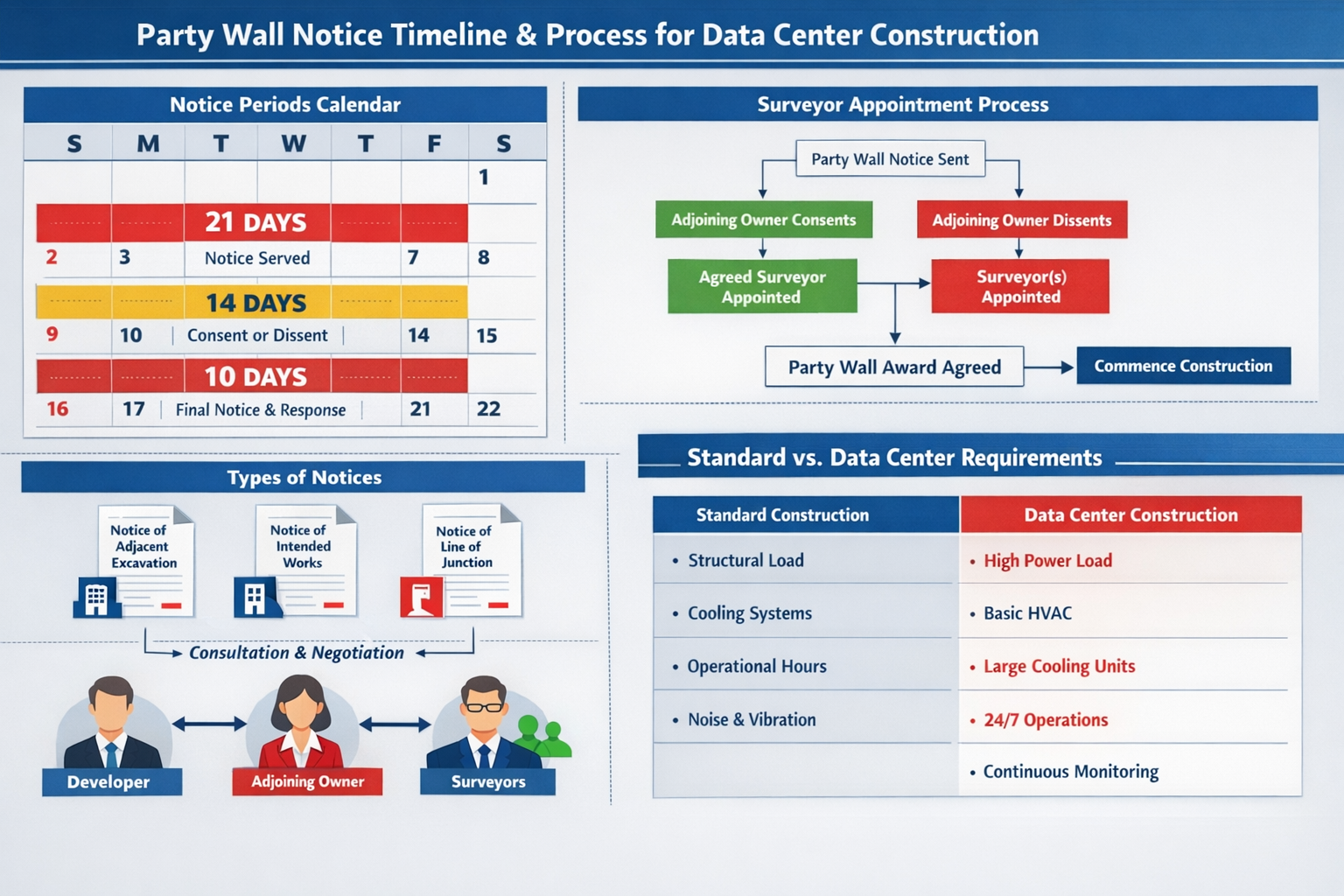
Data center and power facility construction typically triggers multiple notice requirements under the Party Wall Act:
Line of Junction Notice (Section 1)
- Required when building a new wall on the boundary line
- Common for power facility perimeter structures
- Minimum two months' notice required
- Must specify exact location and construction specifications
Party Structure Notice (Section 2)
- Necessary for work on existing party walls or structures
- Includes cutting into walls for electrical conduits or cooling systems
- Covers underpinning or foundation work affecting shared structures
- Requires detailed technical specifications of proposed work
Adjacent Excavation Notice (Section 6)
- Critical for deep foundation work required by heavy equipment
- Applies when excavating within 3-6 meters of adjoining structures
- Must include depth specifications and structural protection measures
- Essential for transformer vaults and underground cable routing
Sector-Specific Documentation Requirements
Standard party wall notices must be enhanced for data center and power facility projects to address unique technical considerations:
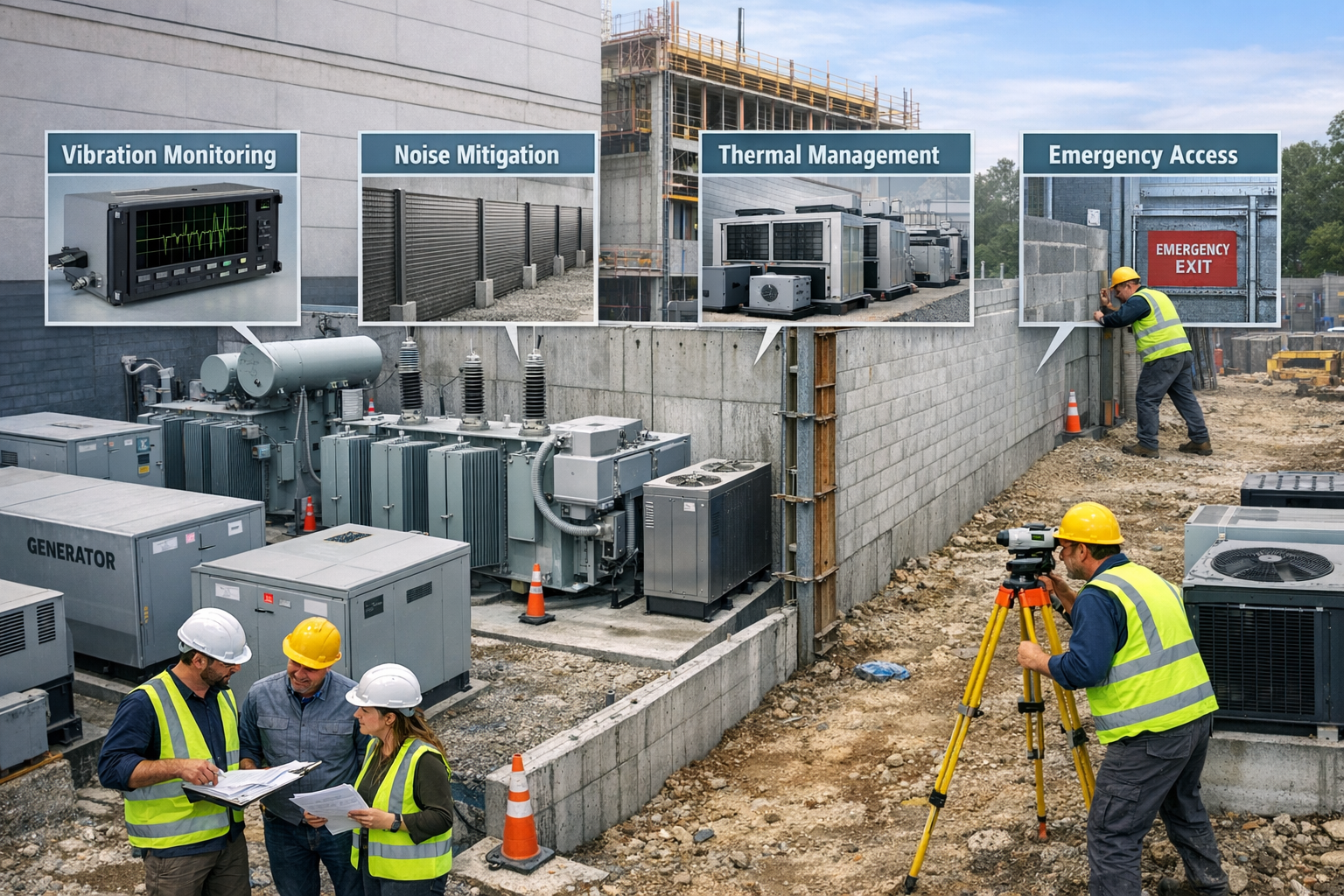
- Power load specifications: Detailed electrical engineering plans showing transformer locations, cable routes, and backup power systems
- Vibration impact assessments: Engineering studies demonstrating expected vibration levels from generators, cooling systems, and UPS equipment
- Thermal management plans: Documentation of heat rejection systems and their potential impact on adjoining properties
- Noise mitigation strategies: Acoustic engineering reports addressing 24/7 operational noise
- Emergency access provisions: Plans for emergency equipment access that may affect party walls or adjoining land
Understanding what types of party wall works apply to your specific project is crucial for serving comprehensive notices that prevent disputes.
Timeline Considerations for 2026 Projects
The construction outlook for 2026 and 2027 predicts solid growth in data center development[3], creating potential bottlenecks in the party wall process. Building owners should account for extended timelines:
| Project Phase | Standard Timeline | Data Center Timeline |
|---|---|---|
| Initial notice service | 2 months before work | 3-4 months recommended |
| Surveyor appointment | 10-14 days | 14-21 days |
| Schedule of condition | 2-4 weeks | 4-8 weeks |
| Award preparation | 4-6 weeks | 6-10 weeks |
| Total pre-construction | 3-4 months | 5-7 months |
Navigating the Party Wall Agreement Process for High-Value Infrastructure
The party wall agreement process for data center and power facility construction demands a higher level of technical expertise and stakeholder coordination than standard commercial projects. Engaging experienced professionals early prevents costly delays and disputes.
Selecting Qualified Surveyors
Choosing the right surveyor is critical for infrastructure projects. Look for professionals with:
- Technical infrastructure experience: Understanding of electrical systems, cooling infrastructure, and heavy equipment installations
- Commercial project background: Experience with high-value developments and complex stakeholder negotiations
- Regulatory knowledge: Familiarity with emerging 2026 data center regulations and compliance requirements
- Local expertise: Understanding of regional building codes and permitting processes
Whether you need a building owner's surveyor or are an adjoining owner seeking representation, sector-specific expertise is essential.
The Schedule of Condition: Enhanced Requirements
A comprehensive schedule of condition is particularly important for data center projects due to the potential for significant vibration and structural impacts. Enhanced schedules should include:
- Vibration baseline measurements: Pre-construction vibration monitoring to establish existing conditions
- Thermal imaging: Infrared surveys to document existing thermal patterns before heat-generating equipment installation
- Structural integrity assessments: Detailed engineering surveys of party walls and foundations
- Photographic and video documentation: Comprehensive visual records of all potentially affected areas
- Utility mapping: Complete documentation of existing electrical, water, and telecommunications infrastructure
Addressing Operational Concerns in Party Wall Awards
Party wall awards for data center and power facilities must address ongoing operational impacts, not just construction-phase concerns:
Continuous Operations Provisions
- 24/7 noise monitoring requirements
- Vibration limits during operational phase
- Emergency access rights and restrictions
- Maintenance access provisions for shared structures
Safety and Security Considerations
- Electrical safety zones around high-voltage equipment
- Fire safety measures and emergency egress
- Security requirements that may affect adjoining property access
- Electromagnetic interference mitigation
Environmental Controls
- Heat rejection management
- Cooling tower placement and operation
- Backup generator testing schedules and noise limits
- Air quality monitoring requirements
Cost Management Strategies
Understanding the costs of the party wall process is crucial for budgeting high-value infrastructure projects. Data center developments can expect higher-than-average party wall costs due to technical complexity, but strategic approaches can help keep party wall costs down:
💡 Cost-Saving Strategies:
- Early engagement: Begin the party wall process during site selection to avoid rushed timelines
- Comprehensive initial notices: Reduce back-and-forth by providing detailed technical documentation upfront
- Agreed surveyor approach: Consider appointing a single agreed surveyor when relationships with adjoining owners are cooperative
- Proactive communication: Regular updates to adjoining owners prevent misunderstandings and disputes
- Bundled assessments: Coordinate party wall surveys with other required technical assessments
Party Wall Notices for Data Center and Power Facility Construction: Regional Considerations
Geographic location significantly impacts party wall requirements for data center and power facility construction in 2026. Regional variations in building codes, permitting processes, and infrastructure availability create distinct challenges across different markets.
Urban vs. Suburban Development Considerations
Urban Data Centers
Major metropolitan areas present unique party wall challenges:
- Limited site selection: Urban locations often require working with existing party walls and adjacent occupied buildings
- Complex ownership structures: Multiple adjoining owners and commercial tenants increase stakeholder coordination requirements
- Stricter noise and vibration limits: Dense urban environments typically impose tighter operational restrictions
- Higher land values: Financial stakes increase pressure for efficient party wall processes
Whether developing in Central London, North London, South London, East London, or West London, local surveyor expertise is invaluable.
Suburban and Edge Locations
Edge-of-city and suburban developments offer different advantages and challenges:
- Greenfield opportunities: Purpose-built facilities with fewer existing party wall complications
- Power and fiber availability: Infrastructure requirements remain critical site selection factors[4]
- Expansion potential: Room for future growth may still require party wall notices for boundary work
- Mixed-use adjacencies: Industrial facilities near residential properties require careful noise and operational planning
State-Specific Regulatory Frameworks
The 2026 regulatory landscape varies significantly by state, affecting party wall notice requirements and timelines:
New York Considerations
The proposed moratorium on data center permits (S.9144) creates uncertainty for developers[1]. Projects in the pipeline should:
- Expedite party wall processes to secure grandfathered status
- Consider alternative locations in neighboring states
- Engage with local authorities early to understand exemption possibilities
- Document all party wall compliance meticulously for regulatory review
Florida's New Framework
Florida's comprehensive regulatory framework (SB 484) establishes specific requirements for data center development[5], including:
- Enhanced environmental impact assessments
- Specific power infrastructure standards
- Water usage and cooling system regulations
- Streamlined permitting for qualifying projects
These requirements may affect party wall notice content and surveyor scope of work.
Infrastructure Availability and Party Wall Implications
Key infrastructure considerations for data center site selection directly impact party wall requirements[4]:
Power Infrastructure
- Proximity to substations affects electrical installation scope
- Transformer placement may require party structure work
- Backup power systems (generators, battery storage) create foundation and vibration considerations
Fiber Connectivity
- Cable routing through party walls requires specific notices
- Conduit installations may trigger multiple notice types
- Telecommunications infrastructure coordination with utilities
Cooling and Water
- Water supply lines crossing property boundaries
- Cooling tower placement near party walls
- Drainage and heat rejection infrastructure
Best Practices for Serving Party Wall Notices on Data Center Projects
Successfully navigating party wall requirements for data center and power facility construction in 2026 requires a strategic, proactive approach that goes beyond minimum legal compliance.
Pre-Notice Planning and Stakeholder Engagement
Conduct Preliminary Assessments
Before serving formal notices:
- Site boundary survey: Confirm exact property lines and identify all adjoining owners
- Title research: Verify ownership and identify any easements or restrictions
- Infrastructure mapping: Document existing utilities and party structures
- Preliminary discussions: Informal conversations with adjoining owners about project scope
- Technical feasibility studies: Ensure proposed work is structurally and legally viable
Develop Comprehensive Communication Strategy
Data center projects benefit from enhanced stakeholder communication:
- Project overview presentations: Help adjoining owners understand the development and its benefits
- Technical briefings: Explain specialized equipment and operational requirements in accessible terms
- Regular updates: Maintain communication throughout the notice and construction process
- Dedicated contact person: Assign a project representative to address adjoining owner concerns
- Visual materials: Use renderings, diagrams, and models to illustrate proposed work
Drafting Effective Notices for Complex Projects
Party structure notices for data center construction should include enhanced detail:
Technical Specifications
- Detailed engineering drawings showing all work affecting party walls
- Equipment specifications including weights, dimensions, and power requirements
- Foundation design and load calculations
- Vibration and noise projections with supporting engineering analysis
Construction Methodology
- Phasing plans showing sequence of work
- Temporary works affecting party structures
- Access requirements and logistics
- Duration estimates for each phase
Protective Measures
- Structural monitoring systems to be installed
- Vibration dampening techniques
- Dust and noise control measures
- Emergency response procedures
Handling Disputes and Non-Consent
When adjoining owners raise concerns or withhold consent:
Understanding Common Objections
Data center projects often face specific concerns:
- Operational noise: 24/7 cooling and power systems
- Property value impacts: Perception of industrial facility proximity
- Privacy and security: Concerns about surveillance or restricted access
- Environmental impacts: Energy consumption and heat generation
- Construction disruption: Extended timelines and heavy equipment
Resolution Strategies
🔧 Effective Dispute Resolution Approaches:
- Enhanced mitigation commitments: Offer additional protective measures beyond minimum requirements
- Independent expert review: Commission third-party assessments to address technical concerns
- Financial accommodations: Consider compensation for temporary inconvenience where appropriate
- Operational agreements: Formalize ongoing monitoring and maintenance commitments
- Formal surveyor process: Proceed with appointed surveyors to reach binding awards when informal resolution fails
Reference sample party wall agreement templates and party wall contract guides for documentation frameworks, but ensure sector-specific customization.
Compliance Monitoring and Documentation
Maintaining comprehensive records throughout the party wall process protects all parties:
Essential Documentation
- All served notices with proof of delivery
- Correspondence with adjoining owners and surveyors
- Technical reports and engineering assessments
- Photographic and video evidence
- Monitoring data (vibration, noise, structural movement)
- Award documents and agreed modifications
Ongoing Compliance
Data center compliance requirements extend beyond construction[6]. Establish systems for:
- Regular structural inspections of party walls
- Continuous vibration and noise monitoring
- Scheduled reporting to adjoining owners
- Maintenance records for equipment affecting party structures
- Emergency response protocols
Future-Proofing Party Wall Agreements for Data Center Evolution
The rapid evolution of data center technology and regulatory requirements means that party wall agreements drafted in 2026 must anticipate future changes and expansion needs.
Planning for Technological Upgrades
Data centers require continuous technological refresh cycles. Party wall agreements should address:
Equipment Replacement Provisions
- Rights to replace cooling systems with similar or improved technology
- Electrical infrastructure upgrade pathways
- Generator and backup power system modernization
- Structural modifications for evolving equipment specifications
Capacity Expansion
- Pre-approved expansion zones where additional work may occur
- Simplified notice procedures for anticipated future phases
- Load increase limits before new party wall processes required
- Vertical expansion considerations for multi-story facilities
Regulatory Adaptation Clauses
Given the evolving regulatory landscape[1][5], include provisions for:
- Compliance with future environmental regulations
- Adaptation to changing energy efficiency requirements
- Integration of renewable energy systems
- Modified operational parameters based on regulatory changes
Sustainability and ESG Considerations
Modern data center development increasingly focuses on environmental, social, and governance (ESG) factors:
Environmental Provisions
- Heat recovery and reuse systems that may affect party walls
- Renewable energy installations (solar, wind) on shared structures
- Water conservation and recycling infrastructure
- Carbon capture or offset technology integration
Social Responsibility
- Community benefit provisions
- Local employment commitments
- Noise and environmental impact minimization
- Transparency and ongoing stakeholder engagement
Conclusion
Party Wall Notices for Data Center and Power Facility Construction: 2026 Sector-Specific Guidance represents a critical intersection of traditional property law and cutting-edge infrastructure development. As data centers continue their remarkable growth trajectory with a 57% net construction reading, developers and property owners must master the specialized party wall requirements that govern these complex projects.
The evolving regulatory landscape—from federal permitting acceleration[2] to state-specific frameworks in New York[1] and Florida[5]—demands proactive, comprehensive approaches to party wall compliance. Success requires early stakeholder engagement, enhanced technical documentation, and experienced professional support throughout the notice and agreement process.
Actionable Next Steps
✅ For Building Owners Planning Data Center or Power Facility Projects:
- Engage qualified surveyors early with infrastructure project experience
- Conduct comprehensive site assessments including boundary surveys and infrastructure mapping
- Begin informal discussions with adjoining owners before formal notice service
- Prepare enhanced technical documentation addressing power, cooling, vibration, and noise considerations
- Build extended timelines into project schedules accounting for complex party wall processes
- Establish ongoing monitoring systems for construction and operational compliance
✅ For Adjoining Owners Receiving Notices:
- Seek professional representation from surveyors experienced with infrastructure projects
- Request comprehensive technical information about proposed work and operational impacts
- Insist on detailed schedules of condition including vibration baselines and thermal imaging
- Negotiate ongoing monitoring and reporting requirements
- Understand your rights under the Party Wall Act and sector-specific regulations
✅ For All Stakeholders:
- Stay informed about evolving federal and state regulations affecting data center development
- Prioritize communication and transparency throughout the party wall process
- Document everything to protect interests and ensure compliance
- Consider future-proofing provisions in party wall agreements
- Seek expert guidance when navigating these complex, high-value projects
The specialized nature of data center and power facility construction demands equally specialized approaches to party wall compliance. By understanding the unique requirements, engaging qualified professionals, and maintaining proactive communication with all stakeholders, developers can successfully navigate the party wall process while protecting the interests of all parties involved.
For expert guidance on your specific project, contact experienced party wall surveyors who understand the technical complexities of infrastructure development in 2026.
References
[1] New York Proposes Moratorium On Data Center Permits – https://www.dlapiper.com/en-us/insights/publications/2026/02/new-york-proposes-moratorium-on-data-center-permits
[2] Accelerating Federal Permitting Of Data Center Infrastructure – https://www.whitehouse.gov/presidential-actions/2025/07/accelerating-federal-permitting-of-data-center-infrastructure/
[3] Watch – https://www.youtube.com/watch?v=UftHLE_A3dQ
[4] Key Considerations For Land Developers Entering The Data Center Market In 2026 – https://www.ramboll.com/en-us/insights/decarbonise-for-net-zero/key-considerations-for-land-developers-entering-the-data-center-market-in-2026
[5] Proposed Florida Legislation Creates New Regulatory Framework – https://www.hklaw.com/en/insights/publications/2026/02/proposed-florida-legislation-creates-new-regulatory-framework
[6] Data Center Compliance In 2026 What Changed What S Next And How To Prepare – https://www.datacenterknowledge.com/compliance/data-center-compliance-in-2026-what-changed-what-s-next-and-how-to-prepare