


As 2026's construction landscape shifts dramatically toward multifamily housing, educational facilities, and civic buildings, developers face unprecedented challenges in managing party wall notices across multiple neighboring properties. With schools, apartment complexes, and mixed-use developments driving the highest construction volumes this year, the complexity of coordinating party wall notices has multiplied exponentially. Unlike single-family residential projects with one or two neighbors, these large-scale developments often involve dozens of adjoining owners, staggered construction phases, and intricate regulatory requirements that demand strategic planning and expert coordination.
Party Wall Notices for Multifamily and Mixed-Use Developments: Managing Complex Neighbor Coordination in 2026's Housing Demand Sectors requires developers to navigate new legislative frameworks, compressed approval timelines, and enhanced sustainability requirements while maintaining positive relationships with multiple stakeholders. This comprehensive guide addresses the sector-specific challenges that distinguish these complex projects from traditional residential construction.
Key Takeaways
- 🏗️ Multifamily and civic projects in 2026 involve coordinating party wall notices with multiple adjoining owners simultaneously, requiring systematic documentation and phased communication strategies
- ⚡ New California legislation (SB 79 and AB 253) has compressed approval timelines and increased transit-oriented development density, creating more complex neighbor coordination scenarios
- 📋 Plan review requirements now mandate clear differentiation between fire walls, party walls, and fire barriers as part of standard multifamily approval processes
- 🌱 Eco-compliance clauses have been integrated into party wall notices for 2026, adding environmental standards to traditional structural considerations
- ⏱️ Staggered construction phases in large developments require strategic timing of notices to avoid delays and maintain compliance across multiple project stages
Understanding Party Wall Requirements in 2026's High-Density Development Context
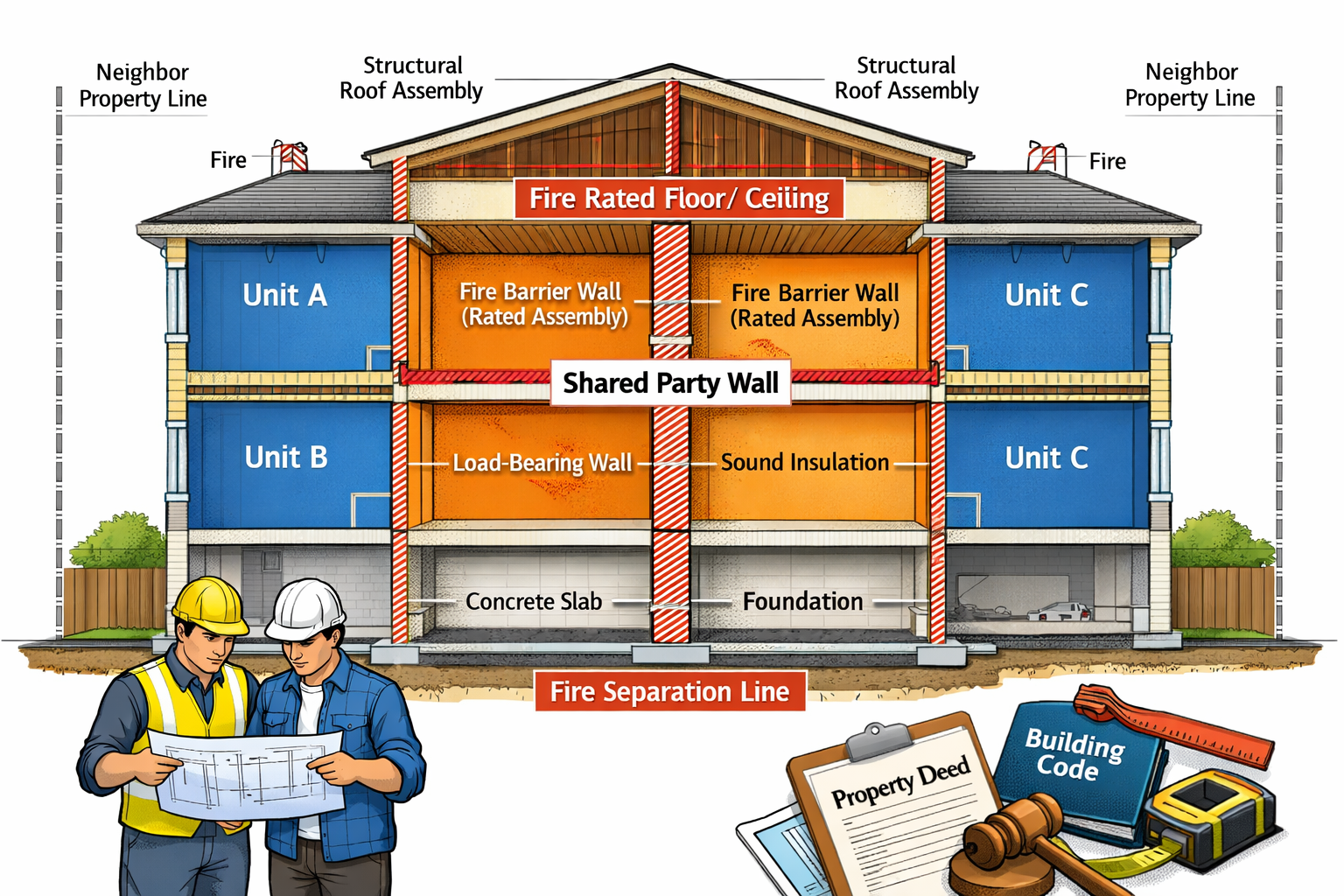
The regulatory landscape for party wall notices has evolved significantly to accommodate the surge in multifamily construction. LA County's 2026 Multifamily Plan Review List now requires developers to clearly differentiate between fire walls, fire barriers, fire partitions, party walls, and fire areas as part of standard residential interior walls documentation, indicating that party wall classification remains a critical component of the development approval process.[1]
This enhanced scrutiny reflects the increased complexity of modern multifamily buildings, where shared structural elements serve multiple functions beyond simple property division. Developers must now demonstrate comprehensive understanding of how party walls integrate with fire safety systems, load-bearing structures, and acoustic separation requirements.
Regulatory Changes Impacting Party Wall Notices for Multifamily and Mixed-Use Developments
California's housing legislation has introduced several changes that directly affect party wall coordination:
SB 79: Transit-Oriented Development Upzoning 🚇
Effective July 2026, SB 79 upzones land near high-frequency transit stops for multifamily housing, potentially increasing complex neighbor coordination scenarios in densely developed areas where party wall issues are more prevalent.[3][4] This legislation creates situations where previously low-density neighborhoods now accommodate larger multifamily structures, often requiring party wall agreements with existing single-family homeowners who may be unfamiliar with the process.
AB 253: Streamlined Permitting Timelines ⏰
AB 253 requires jurisdictions to establish 10-day approval timelines for residential projects with 10 or fewer units, which could compress the timeline for party wall notice coordination compared to standard procedures.[2] This accelerated schedule demands that developers have party wall documentation prepared well in advance of permit submission to avoid delays.
Sustainability and Environmental Compliance
Party wall notices for home extensions and new construction now include eco-compliance clauses as of 2026, reflecting new environmental standards that builders and property owners must address during neighbor coordination processes.[7] These clauses typically address:
- Thermal bridging prevention at party wall junctions
- Acoustic performance standards for shared walls
- Sustainable materials specifications
- Water management at shared boundaries
- Energy efficiency requirements for party wall construction
Developers must integrate these environmental considerations into their types of party wall works documentation, ensuring that sustainability commitments don't conflict with structural or safety requirements.
Managing Multiple Adjoining Owners in Large-Scale Developments
The most significant challenge in Party Wall Notices for Multifamily and Mixed-Use Developments: Managing Complex Neighbor Coordination in 2026's Housing Demand Sectors involves systematically managing relationships with numerous adjoining property owners. A typical multifamily project may interface with:
- 10-30 residential property owners on adjacent parcels
- Commercial tenants in neighboring mixed-use buildings
- Institutional owners (schools, churches, civic buildings)
- Condominium associations representing dozens of unit owners
- Public entities (municipalities, transit authorities)
Creating a Neighbor Coordination Matrix
Successful developers implement a structured coordination matrix that tracks:
| Neighbor Type | Notice Timeline | Communication Method | Special Considerations |
|---|---|---|---|
| Single-family residential | 2 months before work | Registered mail + in-person | May need education on process |
| Commercial tenants | 3 months before work | Business contact + legal counsel | Operating hours coordination |
| Condo associations | 4 months before work | Board meetings + unit notices | Multiple decision-makers |
| Institutional owners | 5 months before work | Formal legal channels | Extended approval processes |
| Public entities | 6 months before work | Official government procedures | Regulatory compliance layers |
This systematic approach ensures that no adjoining owner is overlooked and that appropriate lead times accommodate different organizational structures and decision-making processes.
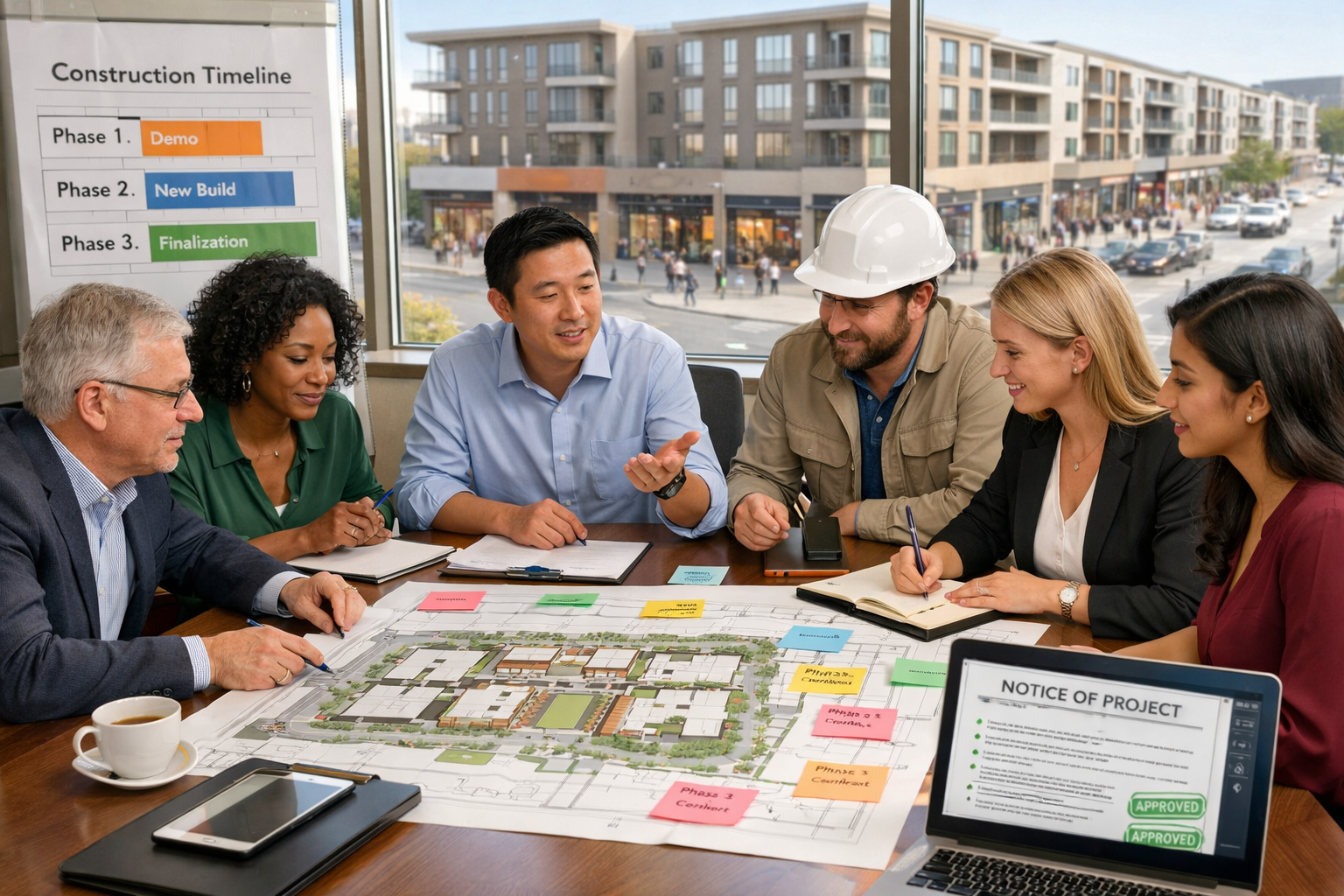
Phased Notice Strategies for Staggered Construction
Large multifamily projects rarely proceed as single-phase construction. Instead, they typically involve:
- Foundation and below-grade work affecting immediate neighbors
- Core structure construction impacting a wider radius
- Facade and envelope installation affecting visual and acoustic boundaries
- Interior fit-out with minimal party wall implications
Smart developers issue party wall structure notices tailored to each construction phase, avoiding overwhelming neighbors with information about work that won't affect them for months or years. This phased approach also allows for:
- Updated condition surveys before each major phase
- Revised timelines reflecting actual construction progress
- Focused communication about immediate impacts
- Relationship maintenance through regular updates
Digital Documentation Systems
Modern multifamily developers increasingly rely on digital party wall management platforms that provide:
✅ Centralized database of all adjoining owners and contact information
✅ Automated notice tracking with deadline reminders
✅ Digital signature collection for consent documents
✅ Photographic condition survey repositories
✅ Communication logs documenting all neighbor interactions
✅ Compliance reporting for regulatory authorities
These systems prove invaluable when managing party wall awards involving multiple properties, ensuring that no procedural requirements are missed and providing comprehensive audit trails if disputes arise.
Sector-Specific Challenges: Schools, Civic Buildings, and Mixed-Use Projects
Different development types present unique party wall coordination challenges that require specialized approaches.
Educational Facilities
School construction and expansion projects face distinctive hurdles:
Academic Calendar Constraints 📅
Construction timing must align with academic schedules, compressing party wall coordination into summer months when school officials are available for consultations but construction activity peaks.
Multiple Stakeholder Approval 🏛️
Educational institutions typically require approval from school boards, district administrators, facilities managers, and sometimes community oversight committees before consenting to party wall agreements.
Enhanced Safety Requirements 🛡️
Party wall work adjacent to schools faces heightened safety scrutiny, requiring additional protective measures, restricted working hours, and comprehensive risk assessments that exceed standard residential requirements.
Community Sensitivity 👨👩👧👦
Schools serve as community anchors, making neighbor relations particularly important. Developers must engage not just with institutional owners but with parent associations, neighborhood groups, and local officials who view school projects through a public interest lens.
Civic and Institutional Buildings
Government buildings, libraries, community centers, and similar civic structures present their own complications:
- Extended approval timelines due to public procurement and review processes
- Accessibility requirements that affect party wall design and construction methods
- Historic preservation considerations when civic buildings occupy older structures
- Public transparency obligations that may require open meetings or public comment periods
Developers working on civic projects should budget 6-9 months for party wall coordination, significantly longer than typical residential timelines. Understanding the costs of party wall processes helps developers budget appropriately for these extended timelines.
Mixed-Use Developments
Projects combining residential, commercial, and sometimes civic uses face the most complex coordination scenarios:
Vertical Neighbor Coordination 🏢
Mixed-use buildings create party wall situations between different use types on different floors, requiring specialized agreements that address:
- Differential operating hours (24-hour residential vs. business hours retail)
- Varying acoustic requirements (quiet residential vs. active commercial)
- Different structural loading (heavy commercial equipment vs. residential finishes)
- Separate ownership structures (condo residential vs. commercial lease)
Horizontal and Vertical Integration 🔄
Party walls in mixed-use developments may simultaneously serve as:
- Fire barriers between uses
- Acoustic separations between tenants
- Structural load-bearing elements
- Property boundaries between owners
- Utility chases serving multiple uses
This multifunctional nature requires party wall agreements that comprehensively address all aspects, often necessitating involvement from fire safety engineers, acoustic consultants, and structural engineers in addition to party wall surveyors.
Managing Commercial Tenant Concerns
When party wall work affects commercial tenants, additional considerations include:
💼 Business Interruption Mitigation
Commercial tenants may demand compensation for lost revenue during construction. Party wall agreements should clearly delineate responsibility for business interruption and establish reasonable construction methodologies that minimize disruption.
🔊 Noise and Vibration Limits
Retail, office, and hospitality uses have strict noise tolerance thresholds. Developers must commit to specific decibel limits, restricted working hours, and vibration monitoring protocols.
🚚 Access and Logistics
Commercial operations require continuous customer and delivery access. Party wall work must be scheduled and staged to maintain these critical access points.
Best Practices for Managing Complex Neighbor Coordination in 2026's Housing Demand Sectors
Based on current industry standards and 2026's regulatory environment, developers should implement these proven strategies:
1. Early Engagement Strategy
Begin neighbor outreach 6-12 months before construction for complex multifamily projects. This extended timeline allows for:
- Multiple rounds of consultation and feedback
- Resolution of concerns before formal notice periods
- Relationship building that facilitates cooperation
- Identification of potential disputes early enough to address them
Early engagement also provides opportunities to educate neighbors about the Party Wall Act and their rights and responsibilities, reducing anxiety and misunderstandings.
2. Professional Surveyor Selection
For multifamily and mixed-use projects, engage surveyors with specific experience in:
- Large-scale development coordination
- Multiple-party negotiations
- Commercial and institutional property
- Local regulatory requirements
Consider engaging regional specialists who understand the specific dynamics of your development area, whether it's Central London, South London, or other high-density development zones.
3. Comprehensive Condition Surveys
Document existing conditions with exceptional thoroughness:
📸 Photographic Documentation
- Time-stamped, high-resolution photography
- Video walkthroughs of all affected areas
- Drone footage for exterior elevations
- Thermal imaging for hidden conditions
📏 Structural Assessment
- Detailed measurements and elevations
- Crack mapping and monitoring
- Subsidence and settlement analysis
- Structural load assessments
📝 Written Records
- Narrative descriptions of all conditions
- Material specifications and age estimates
- Existing defects and maintenance issues
- Historical modification documentation
This comprehensive approach protects both developers and neighbors by establishing clear baselines for post-construction comparison. Understanding schedule of condition requirements ensures proper documentation.
4. Transparent Communication Protocols
Establish regular communication channels:
- Monthly newsletters updating neighbors on construction progress
- Dedicated hotline for concerns and questions
- Community liaison officer as single point of contact
- Digital portal providing 24/7 access to project information
- Quarterly in-person meetings for major project milestones
"Transparency builds trust. In complex multifamily developments, trust is the foundation of successful neighbor coordination. When adjoining owners feel informed and respected, they're far more likely to cooperate with necessary party wall procedures."
5. Dispute Resolution Mechanisms
Despite best efforts, disputes may arise. Establish clear escalation paths:
- Direct negotiation between building owner and adjoining owner
- Surveyor mediation through agreed-upon party wall surveyors
- Third-party surveyor appointment for unresolved technical disputes
- Alternative dispute resolution (mediation or arbitration)
- Legal proceedings as last resort
Understanding how to keep party wall costs down includes avoiding expensive disputes through proactive communication and fair dealing.
6. Regulatory Compliance Tracking
Maintain comprehensive compliance documentation:
✓ Proof of notice service to all adjoining owners
✓ Consent or dissent responses from each neighbor
✓ Party wall award documents with all signatures
✓ Condition survey reports and photographic evidence
✓ Construction methodology statements
✓ Monitoring reports throughout construction
✓ Post-construction condition assessments
✓ Resolution documentation for any damage claims
This documentation proves invaluable for regulatory inspections, financing requirements, and potential future disputes.
Cost Management for Large-Scale Party Wall Coordination
The financial implications of party wall coordination in multifamily developments can be substantial. Typical cost components include:
| Cost Category | Small Project (10-20 units) | Medium Project (21-50 units) | Large Project (50+ units) |
|---|---|---|---|
| Surveyor fees | £5,000-£10,000 | £10,000-£25,000 | £25,000-£75,000+ |
| Condition surveys | £3,000-£6,000 | £6,000-£15,000 | £15,000-£40,000+ |
| Legal fees | £2,000-£5,000 | £5,000-£12,000 | £12,000-£30,000+ |
| Dispute resolution | £0-£10,000 | £0-£25,000 | £0-£75,000+ |
| Administrative costs | £1,000-£3,000 | £3,000-£8,000 | £8,000-£20,000+ |
| Total Estimated Range | £11,000-£34,000 | £24,000-£85,000 | £60,000-£240,000+ |
These figures represent typical 2026 costs but can vary significantly based on:
- Number of adjoining owners
- Complexity of construction methods
- Presence of disputes or objections
- Regional cost variations
- Project timeline and urgency
Developers should budget 2-4% of total construction costs for comprehensive party wall coordination in complex multifamily projects, recognizing that thorough upfront investment prevents far more expensive delays and disputes later.
Technology Solutions for Streamlining Coordination
2026's party wall management increasingly leverages technology:
Digital Notice Platforms 💻
Cloud-based systems that automate notice generation, tracking, and compliance verification, ensuring no deadlines are missed across dozens of neighbors.
Virtual Condition Surveys 📱
360-degree photography and photogrammetry create detailed digital records of existing conditions, accessible to all parties and providing irrefutable documentation.
Real-Time Monitoring Systems 📊
Vibration sensors, noise monitors, and structural movement tracking provide objective data about construction impacts, helping prevent disputes before they escalate.
Collaborative Document Management 📄
Shared platforms where all parties can access party wall awards, condition surveys, and construction schedules, promoting transparency and reducing information asymmetries.
Automated Compliance Reporting ✅
Systems that generate regulatory compliance reports automatically, demonstrating adherence to notice requirements and construction methodologies.
These technological solutions prove particularly valuable in managing the complexity inherent in Party Wall Notices for Multifamily and Mixed-Use Developments: Managing Complex Neighbor Coordination in 2026's Housing Demand Sectors.
Conclusion
As multifamily housing, educational facilities, and civic buildings continue driving 2026's construction landscape, developers must master the complexities of party wall coordination across multiple neighbors and project phases. The regulatory environment has evolved to reflect these challenges, with enhanced plan review requirements, compressed approval timelines, and new sustainability standards adding layers of complexity to traditional party wall procedures.
Success in this environment requires strategic planning, professional expertise, transparent communication, and systematic documentation. Developers who invest in comprehensive party wall coordination upfront—engaging neighbors early, employing experienced surveyors, documenting conditions thoroughly, and establishing clear communication protocols—position their projects for smooth execution and positive community relationships.
The costs of proper party wall management represent a small fraction of total project budgets but can prevent delays, disputes, and damage claims that far exceed these investments. As housing demand continues driving high-density development in 2026 and beyond, excellence in neighbor coordination will increasingly distinguish successful developers from those who struggle with costly conflicts and regulatory complications.
Actionable Next Steps
For developers planning multifamily or mixed-use projects:
- Assess your neighbor landscape 6-12 months before construction, identifying all adjoining owners and their property types
- Engage qualified party wall surveyors with multifamily experience to develop a comprehensive coordination strategy
- Implement digital documentation systems to track notices, responses, and compliance across multiple neighbors
- Establish communication protocols that keep neighbors informed and engaged throughout the project
- Budget appropriately for party wall coordination, recognizing it as essential project infrastructure rather than optional expense
- Review regulatory requirements specific to your jurisdiction and development type, ensuring compliance with 2026 standards
For additional guidance on specific aspects of party wall coordination, explore resources on party wall contract templates, working with adjoining owners, and managing party wall agreements.
The complexity of modern multifamily development demands sophisticated party wall coordination. With proper planning, professional support, and commitment to transparent neighbor relations, developers can navigate these challenges successfully, delivering projects that enhance communities while respecting the rights and concerns of all affected parties.
References
[1] 2026 Multi-Family Plan Review List – https://dpw.lacounty.gov/bsd/lib/fp/Building/Residential/2026%20Code%20Version/2026%20Multi-Family%20Plan%20Review%20List.pdf
[2] California's 2026 Housing Laws What You Need To Know – https://www.hklaw.com/en/insights/publications/2025/12/californias-2026-housing-laws-what-you-need-to-know
[3] Multifamily Dive – California Housing Policy – https://www.multifamilydive.com/news/california-housing-policy-bills-lawsuits-2026/811018/
[4] 2025 California Housing Legislative Update – https://www.loeb.com/en/insights/publications/2026/01/2025-california-housing-legislative-update-updated-jan-8-2026
[7] Party Wall Notices For Sustainable Home Extensions In 2026 – https://nottinghillsurveyors.com/blog/party-wall-notices-for-sustainable-home-extensions-in-2026-eco-compliance-clauses
