

Finding the Right Party Wall Surveyor Near Me: Your Complete 2026 Guide

When your neighbour announces building work that affects your shared wall, or when you’re planning renovations yourself, the search for a “party wall surveyor near me” suddenly becomes urgent. With building owners typically responsible for paying both their own and their neighbour’s surveyor fees—often totaling over £1,000—choosing the right professional isn’t just about convenience; it’s about protecting your property and your wallet[1][3]. In 2026, understanding how to find, evaluate, and work with a qualified party wall surveyor can mean the difference between a smooth construction process and months of costly disputes.
Key Takeaways
- 🏠 Local expertise matters: Finding a party wall surveyor near your property ensures they understand regional building practices and can respond quickly to site visits
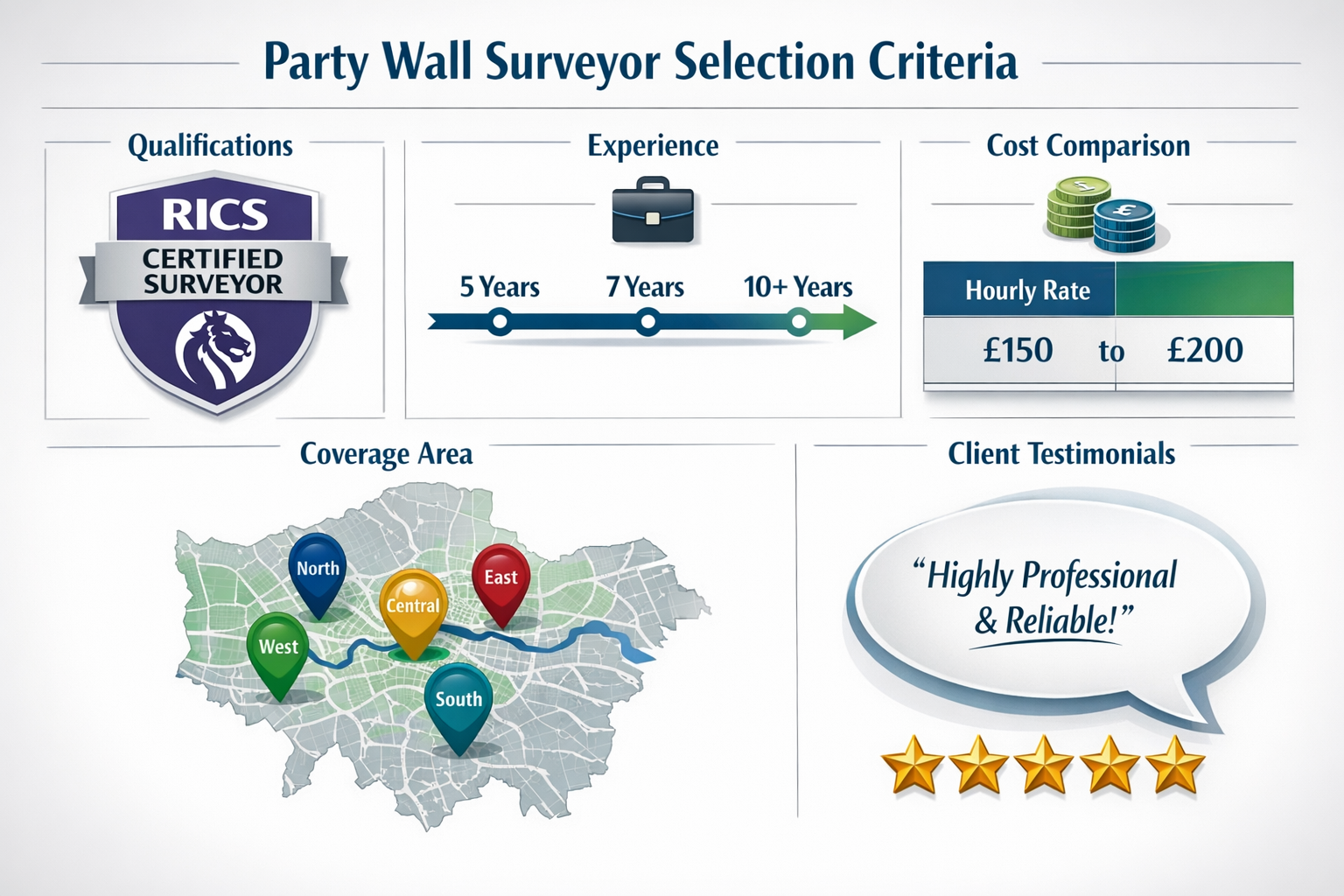
- 💷 Expect to pay £1,000+ on average for party wall agreements, with surveyor hourly rates ranging from £150-£200 per hour[1][3]
- 📋 Building owners pay all fees: You’re responsible for both your surveyor’s costs and your neighbour’s surveyor fees under the Party Wall Act[3]
- ⚖️ Agreed surveyors save money: Appointing a single surveyor accepted by both parties significantly reduces overall costs compared to hiring separate professionals[3]
- 📅 Early engagement protects everyone: Seeking party wall advice before starting work prevents disputes, legal complications, and project delays[6]
What Is a Party Wall Surveyor and Why Do You Need One?

A party wall surveyor is a qualified professional who specializes in managing the legal and practical aspects of construction work affecting shared walls, boundaries, and structures between neighbouring properties. These experts ensure compliance with the Party Wall etc. Act 1996, which governs building work on or near party walls in England and Wales.
The Role of Party Wall Surveyors
Party wall surveyors perform several critical functions:
Assessment and Documentation 📋
- Inspect existing party wall conditions before work begins
- Create detailed schedules of condition documenting the current state
- Identify potential risks to neighbouring properties
Legal Compliance ⚖️
- Ensure proper party wall notices are served in writing (verbal notice is never acceptable)[1]
- Prepare legally binding party wall awards outlining work scope and protections
- Mediate disputes between building owners and adjoining owners
Cost Management 💰
- Provide transparent fee structures (hourly or fixed-fee arrangements)
- Help control expenses through efficient processes
- Advise on how to keep party wall costs down
When Party Wall Surveyors Are Required
You’ll need a party wall surveyor when planning:
| Type of Work | Examples | Party Wall Notice Required? |
|---|---|---|
| Building on boundary lines | New walls exactly on property line | ✅ Yes |
| Excavating near neighbours | Foundations within 3-6 meters of adjoining property | ✅ Yes |
| Altering party walls | Removing chimney breasts, cutting into shared walls | ✅ Yes |
| Minor internal work | Plastering, electrical work, attaching shelves | ❌ No[1] |
Understanding these requirements early helps you determine whether searching for a “party wall surveyor near me” is necessary for your specific project. For guidance on types of party wall works, consult a qualified professional.
How to Find a Qualified Party Wall Surveyor Near Me
Locating the right party wall surveyor in your area requires strategic research and careful evaluation. In 2026, several effective methods can connect you with qualified professionals who understand local building practices and regulations.
Search Strategies for Local Party Wall Surveyors
Online Directories and Professional Bodies 🔍
- RICS (Royal Institution of Chartered Surveyors): Search their “Find a Surveyor” database for RICS-accredited professionals in your postcode
- Pyramus & Thisbe Club: A specialist organization for party wall surveyors with a searchable member directory
- Local search engines: Use specific location terms like “party wall surveyor North London” or “party wall surveyor South London”
Location-Specific Resources
Depending on your London location, specialized surveyors serve different areas:
- Party Wall Surveyor North London
- Party Wall Surveyor Central London
- Party Wall Surveyor East London
- Party Wall Surveyor West London
- Party Wall Surveyor South London
Referrals and Recommendations 👥
- Ask your architect, builder, or structural engineer for trusted contacts
- Consult neighbours who’ve recently completed similar work
- Check local property forums and community groups
Essential Qualifications to Verify
When evaluating potential surveyors, confirm they possess:
✅ RICS Accreditation: Ensures adherence to professional standards and ethical practices
✅ Party Wall Specialization: General surveyors may lack specific expertise in party wall legislation
✅ Professional Indemnity Insurance: Protects you if errors occur during the process
✅ Local Experience: Familiarity with your area’s typical construction methods and property types
✅ Clear Communication Skills: Ability to explain complex legal matters in accessible language
“Early advice protects you, your property, and your neighbours. Understanding party wall matters before work begins prevents costly disputes and project delays.”[6]
Questions to Ask Potential Surveyors
Before committing to a party wall surveyor, ask these critical questions:
- What is your fee structure? (hourly rate vs. fixed fee)
- How many party wall cases have you handled in the past year?
- Can you provide references from recent clients?
- What is your typical timeline for completing a party wall award?
- Do you offer agreed surveyor services? (representing both parties to reduce costs)
- What are your availability and response times for site visits?
- How do you handle disputes or disagreements during the process?
Understanding these details upfront helps you make an informed decision and avoid unexpected costs or delays.
Understanding Party Wall Surveyor Costs in 2026
The financial aspect of hiring a party wall surveyor represents a significant consideration for any building project. With no official fee caps under the Party Wall Act, surveyors set their own rates, creating substantial variation in costs[3]. Understanding these expenses helps you budget appropriately and identify fair pricing.
Typical Cost Ranges and Fee Structures
Average Costs 💷
The average party wall agreement costs approximately £1,000 in 2026[1], though this figure varies considerably based on several factors:
| Fee Type | Typical Range | When Applied |
|---|---|---|
| Hourly rates | £150-£200 per hour[1] | Complex cases, ongoing disputes |
| Fixed fees | £800-£2,500 | Straightforward residential projects |
| Agreed surveyor | £600-£1,500 | Single surveyor representing both parties[3] |
| Separate surveyors | £1,500-£4,000+ | Each party appoints their own surveyor |
Who Pays What?
A critical fact often surprises building owners: you’re responsible for paying both your own surveyor’s fees AND your neighbour’s surveyor fees[3]. This means if you’re planning the construction work, you’ll cover:
- Your building owner’s surveyor fees
- Your neighbour’s adjoining owner’s surveyor fees
- Any third surveyor fees (if appointed to resolve disputes)
Factors Affecting Party Wall Surveyor Costs
Experience Level 🎓
Experience significantly impacts fees. Highly experienced surveyors charge premium rates (£180-£200+ per hour) but often complete work more efficiently than less experienced professionals charging £150 per hour[3]. The higher hourly rate may actually result in lower total costs due to faster completion.
Property Complexity 🏗️
Several property-specific factors increase assessment time and costs[3]:
- Structural elements: Multiple shared walls, load-bearing alterations, or foundation work
- Shared utilities: Gas, water, or electrical services running through party walls
- Unique architectural features: Listed buildings, unusual construction methods, or heritage properties
- Property age and condition: Older properties require more detailed condition surveys
Project Scope and Timeline ⏱️
The time required to reach agreement represents a major cost driver[3]:
- Straightforward cases (neighbour consents immediately): 2-4 weeks, lower costs
- Standard cases (minor negotiations): 6-8 weeks, moderate costs
- Complex cases (objections, disputes, multiple revisions): 3-6+ months, significantly higher costs
Billing Structure Differences
The choice between hourly and fixed-fee arrangements creates notable cost disparities[3]:
Hourly Billing Advantages:
- Pay only for actual time spent
- Suitable for uncertain project scopes
- Transparent time tracking
Fixed Fee Advantages:
- Predictable total costs
- No surprises from extended negotiations
- Incentivizes efficient surveyor work
Cost-Saving Strategies
Appoint an Agreed Surveyor 💡
The single most effective way to reduce costs is appointing one surveyor acceptable to both you and your neighbour[3]. This approach:
- Eliminates duplicate work
- Reduces communication delays
- Cuts total fees by 30-50% compared to separate surveyors
- Streamlines the entire process
Engage Early 📅
Starting the party wall process well before construction begins (ideally 2-3 months) prevents rushed fees and allows time for proper negotiations. Learn more about the costs of the party wall process.
Maintain Good Neighbour Relations 🤝
Positive communication with neighbours reduces the likelihood of disputes, objections, and extended negotiations—all of which increase surveyor hours and costs.
The Party Wall Process: What to Expect When Working with a Surveyor Near You
Understanding the step-by-step party wall process helps you prepare for what lies ahead and ensures smooth collaboration with your chosen surveyor. In 2026, the fundamental process remains governed by the Party Wall etc. Act 1996, though professional practices continue to evolve[6].
Step 1: Initial Consultation and Assessment
When you first contact a party wall surveyor near your property, they’ll:
Review Your Project Plans 📐
- Examine architectural drawings and building specifications
- Identify which aspects trigger party wall requirements
- Assess whether you’re a building owner carrying out works or an adjoining owner affected by works
Explain Your Obligations
- Clarify notice requirements and timelines
- Outline potential costs and fee structures
- Discuss the option of an agreed surveyor vs. separate surveyors
Provide Timeline Estimates
- Typical party wall processes take 6-12 weeks for straightforward cases
- Complex situations may extend to 3-6 months
- Factor in mandatory notice periods (usually 2 months for major works)
Step 2: Serving Party Wall Notices
Your surveyor will prepare and serve formal written notices to affected neighbours. Remember: party wall notices must be served in writing—verbal notice is never legally acceptable[1].
Types of Notices 📄
Different works require different notice types:
- Party Structure Notice: For work directly on the party wall (alterations, repairs, rebuilding)
- Line of Junction Notice: For new walls built on boundary lines
- 3-Meter/6-Meter Notice: For excavations near neighbouring foundations
Your surveyor ensures notices include all legally required information and are served within appropriate timeframes. For detailed guidance, see our article on party wall Act notices and how to respond.
Step 3: Neighbour Response and Surveyor Appointment
After receiving notice, your neighbour has 14 days to respond in one of three ways:
Scenario A: Consent ✅
- Neighbour agrees to the work in writing
- No party wall award required for basic consent
- Work can proceed after notice period expires
- However, a schedule of condition is still recommended
Scenario B: Dissent or No Response ⚖️
- Triggers formal party wall dispute resolution
- Each party appoints a surveyor (or agrees on one surveyor)
- Surveyors prepare a party wall award
Scenario C: Agreed Surveyor 🤝
- Both parties agree to use the same surveyor
- Most cost-effective approach
- Single professional represents both interests fairly
Step 4: Property Inspection and Schedule of Condition
Before work begins, surveyors conduct thorough inspections:
Documentation Process 📸
- Detailed photographs of existing conditions
- Written descriptions of walls, ceilings, floors, and finishes
- Notes on existing cracks, damage, or defects
- Video recordings for comprehensive records
Purpose and Protection
This baseline documentation protects both parties:
- Building owners: Proves pre-existing damage wasn’t caused by their work
- Adjoining owners: Establishes evidence for any construction-related damage claims
The schedule of condition becomes a crucial reference document if disputes arise about construction damage.
Step 5: Preparing the Party Wall Award
The surveyor(s) draft a comprehensive party wall award—a legally binding document outlining:
Work Specifications 🔨
- Detailed description of permitted works
- Construction methods and techniques
- Working hours and access arrangements
- Dust, noise, and disruption mitigation measures
Rights and Obligations
- Building owner’s rights to carry out specified work
- Adjoining owner’s protections and safeguards
- Access provisions for inspections
- Insurance and liability provisions
Dispute Resolution Mechanisms
- Process for addressing concerns during construction
- Third surveyor appointment procedures if needed
- Damage claim procedures
For template guidance, review our party wall contract template guide on party wall awards.
Step 6: Construction and Ongoing Monitoring
Once the award is finalized and served:
During Construction 🏗️
- Surveyors may conduct periodic site visits
- Monitor compliance with award conditions
- Address concerns raised by either party
- Document any variations or unexpected issues
Post-Construction Inspection
- Final inspection comparing current condition to original schedule
- Identify any construction-related damage
- Facilitate repair agreements if damage occurred
- Issue completion documentation
Step 7: Resolving Disputes (If Necessary)
Despite best efforts, disagreements sometimes arise. Your party wall surveyor helps resolve:
- Fee disputes: Disagreements about surveyor costs or payment responsibility
- Work scope disputes: Questions about whether specific activities fall within the award
- Damage claims: Allegations that construction caused property damage
- Access disputes: Conflicts about site access for inspections
If surveyors cannot resolve disputes, a third surveyor may be appointed to make binding decisions.
Choosing Between Building Owner’s Surveyor, Adjoining Owner’s Surveyor, or Agreed Surveyor
One of the most important decisions in the party wall process is determining the surveyor appointment structure. This choice significantly impacts costs, timelines, and the overall experience for both parties.
The Three Surveyor Appointment Options
Option 1: Agreed Surveyor (Single Surveyor) 🤝
An agreed surveyor is a single professional appointed by mutual consent of both the building owner and adjoining owner.
Advantages:
- ✅ Significantly lower costs: Eliminates duplicate fees and reduces total expenses by 30-50%[3]
- ✅ Faster process: Single point of contact streamlines communication and decision-making
- ✅ Reduced complexity: One professional manages the entire process
- ✅ Impartial perspective: Must act fairly toward both parties under professional obligations
Disadvantages:
- ❌ Neither party has “their own” dedicated advocate
- ❌ Requires trust and cooperation between neighbours
- ❌ May not suit situations with existing conflicts or distrust
Best for:
- Amicable neighbour relationships
- Straightforward, low-risk projects
- Budget-conscious building owners
- Situations where both parties prioritize efficiency
Option 2: Separate Surveyors (Building Owner’s + Adjoining Owner’s) ⚖️
Each party appoints their own surveyor who works together to prepare the party wall award.
Advantages:
- ✅ Dedicated representation: Each party has an advocate protecting their interests
- ✅ Specialized focus: Building owner’s surveyor focuses on facilitating work; adjoining owner’s surveyor ensures adequate protections
- ✅ Balanced outcomes: Two professionals negotiate fair terms
- ✅ Appropriate for complex cases: Better suited to high-value properties or complicated works
Disadvantages:
- ❌ Higher costs: Building owner pays both surveyors’ fees (£1,500-£4,000+ total)[3]
- ❌ Longer timelines: Coordination between two professionals takes more time
- ❌ Potential for disagreement: Surveyors may need third surveyor to resolve differences
Best for:
- Complex structural projects
- High-value properties where protection justifies costs
- Situations with existing neighbour tensions
- Cases where adjoining owner insists on independent representation
Option 3: Third Surveyor 🎯
When the two appointed surveyors cannot agree on specific matters, they may select a third surveyor to make binding decisions.
Key Points:
- Appointed by the two surveyors (not the property owners)
- Makes final decisions on disputed matters only
- Adds additional costs to the process
- Relatively rare in straightforward cases
Making the Right Choice for Your Situation
Consider these factors when deciding on surveyor appointments:
| Factor | Agreed Surveyor | Separate Surveyors |
|---|---|---|
| Budget priority | ✅ Best choice | ❌ More expensive |
| Neighbour relationship | Good/neutral required | Works with any relationship |
| Project complexity | Simple to moderate | Simple to very complex |
| Timeline urgency | ✅ Faster | Slower |
| Risk level | Low to moderate | Any risk level |
Can You Have a Party Wall Agreement Without a Surveyor?
Technically, yes—if your neighbour consents to your proposed work in writing, you can proceed without appointing surveyors. However, this approach carries significant risks.
When It Might Work:
- Very minor works with minimal risk
- Excellent neighbour relationships with complete trust
- Clear, simple project scope with no ambiguity
Why It’s Usually Inadvisable:
Even with neighbour consent, proceeding without a surveyor means:
- ❌ No professional schedule of condition documenting pre-existing property state
- ❌ No formal protection if damage occurs during construction
- ❌ No clear dispute resolution mechanism
- ❌ Potential liability for damage claims without baseline documentation
For a detailed analysis, read our guide on having a party wall agreement without a surveyor.
“The building owner is responsible for the reasonable costs of both their own surveyor and the adjoining owner’s surveyor. This often surprises people planning construction work.”[3]
Common Party Wall Scenarios and How Local Surveyors Help
Understanding typical situations requiring party wall surveyors helps you recognize when to seek professional assistance. In 2026, certain scenarios consistently require expert guidance to navigate successfully.
Scenario 1: Loft Conversions and Extensions
The Situation 🏠
You’re planning a loft conversion or rear extension that involves work on or near the party wall with your neighbour’s property.
Party Wall Implications:
- Raising party walls to accommodate increased height
- Inserting steel beams into party walls for structural support
- Excavating foundations within 3-6 meters of neighbouring property
- Removing chimney breasts from party walls
How a Local Surveyor Helps:
- Assesses structural impact on neighbouring property
- Prepares appropriate notices (often Party Structure Notice + 3/6-Meter Notice)
- Documents existing condition before work begins
- Ensures construction methods minimize disruption and risk
- Monitors work to verify compliance with award terms
Scenario 2: Basement Excavations and Underpinning
The Situation ⛏️
You’re excavating a basement or underpinning existing foundations, potentially affecting your neighbour’s structural stability.
Party Wall Implications:
- Excavating below neighbouring foundations (triggers 6-Meter Notice)
- Underpinning party walls
- Potential subsidence risks requiring careful monitoring
- Temporary support requirements during construction
How a Local Surveyor Helps:
- Conducts detailed structural assessment of neighbouring properties
- Specifies appropriate underpinning methods and safeguards
- Arranges monitoring of neighbouring properties during excavation
- Ensures adequate insurance and protection measures
- Manages any settlement or movement issues promptly
Understanding boundary wall rules and the difference between party fence walls and boundary walls is crucial for excavation projects.
Scenario 3: Building New Walls on Boundary Lines
The Situation 🧱
You’re constructing a new wall exactly on the boundary line between your property and your neighbour’s.
Party Wall Implications:
- Requires Line of Junction Notice
- Determines wall ownership and maintenance responsibilities
- Establishes height, materials, and construction specifications
- Addresses foundation depth and structural requirements
How a Local Surveyor Helps:
- Confirms precise boundary location (may involve boundary surveyors)
- Advises on optimal wall positioning and construction
- Negotiates shared wall arrangements if appropriate
- Prepares award specifying future maintenance obligations
- Ensures compliance with local planning and building regulations
For guidance on height restrictions, see our article on how high can you build a wall between neighbours.
Scenario 4: Removing Chimney Breasts
The Situation 🔥
You want to remove a chimney breast from your side of a party wall to create more living space.
Party Wall Implications:
- Cutting into party wall structure
- Potential impact on neighbour’s chimney breast (if they’ve retained theirs)
- Structural support requirements for remaining portions
- Risk of damage to neighbouring property
How a Local Surveyor Helps:
- Assesses structural implications for both properties
- Determines whether neighbour’s chimney breast requires additional support
- Specifies safe removal methods and support installations
- Documents pre-existing condition of neighbouring property
- Monitors for movement, cracking, or other damage during work
Scenario 5: Responding to Your Neighbour’s Party Wall Notice
The Situation 📬
You’ve received a party wall notice from your neighbour who’s planning construction work.
Party Wall Implications:
- You have 14 days to respond
- Consent, dissent, or non-response each trigger different processes
- You may appoint your own surveyor (at your neighbour’s expense)
- Your property rights and protections must be safeguarded
How a Local Surveyor Helps:
- Reviews your neighbour’s proposed works for potential impacts
- Advises whether to consent or dissent
- Represents your interests in negotiations
- Ensures adequate protections in the party wall award
- Monitors work to verify compliance and protect your property
As an adjoining owner, understanding your rights is essential.
Red Flags: When to Avoid a Party Wall Surveyor
While most party wall surveyors operate professionally and ethically, certain warning signs suggest you should continue your search for a “party wall surveyor near me” elsewhere.
Warning Signs of Unprofessional Surveyors
Lack of Proper Credentials 🚫
- No RICS accreditation or professional membership
- Unwilling to provide proof of qualifications
- No professional indemnity insurance
- Limited or no party wall-specific experience
Unclear or Excessive Fee Structures 💰
- Refuses to provide written fee estimates
- Charges significantly above market rates (£200+ per hour) without justification
- Hidden fees or unexpected charges
- Pressure to pay large upfront fees before work begins
Poor Communication 📞
- Unresponsive to calls, emails, or messages
- Fails to explain processes clearly
- Uses overly technical jargon without clarification
- Doesn’t return calls within reasonable timeframes (24-48 hours)
Conflict of Interest ⚠️
- Has existing relationship with one party that compromises impartiality
- Represents both parties as “agreed surveyor” without proper consent
- Works for builders or developers involved in the project
- Recommends specific contractors in exchange for referral fees
Unrealistic Promises 🎭
- Guarantees specific outcomes (“I’ll make sure your neighbour agrees”)
- Promises to complete process in unrealistically short timeframes
- Suggests ways to avoid proper party wall procedures
- Downplays legitimate neighbour concerns
Pressure Tactics 😤
- Rushes you into decisions without adequate time to consider
- Discourages you from getting second opinions
- Creates artificial urgency to secure appointment
- Dismisses your questions or concerns
Questions That Should Raise Concerns
If a surveyor responds poorly to these reasonable questions, consider it a red flag:
- “Can you provide references from recent clients?”
- “What is your complaints procedure?”
- “Are you registered with RICS and can I verify this?”
- “Can you provide a detailed written fee estimate?”
- “How do you handle situations where you disagree with the other surveyor?”
Frequently Asked Questions About Finding a Party Wall Surveyor Near Me
How far in advance should I contact a party wall surveyor?
Ideally, contact a party wall surveyor 2-3 months before your planned construction start date. This allows time for:
- Initial consultations and surveyor appointment
- Serving proper notices (2 months for most major works)
- Neighbour response period (14 days)
- Property inspections and schedule of condition
- Party wall award preparation and agreement
- Buffer time for unexpected delays or negotiations
Can I use a party wall surveyor from outside my local area?
Yes, you can appoint a surveyor from anywhere in England and Wales. However, local surveyors offer advantages:
- Familiarity with regional construction methods common in your area
- Easier site visit scheduling due to proximity
- Lower travel costs (some surveyors charge travel time and expenses)
- Knowledge of local property types and typical issues
- Established relationships with other local professionals
What happens if my neighbour refuses to appoint a surveyor?
If your neighbour doesn’t appoint a surveyor within 14 days of receiving your notice, you can appoint a surveyor on their behalf. This surveyor must:
- Act impartially despite being appointed by you
- Represent the adjoining owner’s interests fairly
- Follow the same professional standards as any surveyor
- Be paid by you (the building owner) like all party wall costs
Do I need a party wall surveyor for internal renovations?
It depends on the specific work. Minor internal work typically doesn’t require party wall procedures:
No surveyor needed:
- Plastering walls
- Electrical work and wiring
- Attaching shelves, cabinets, or fixtures
- Decorating and painting[1]
Surveyor required:
- Removing chimney breasts
- Cutting into party walls for new openings
- Structural alterations affecting party walls
- Installing steel beams through party walls
How long does the party wall process typically take?
Timeline varies based on complexity and cooperation:
- Minimum timeframe: 6-8 weeks (straightforward case with immediate consent)
- Typical timeframe: 10-14 weeks (standard process with minor negotiations)
- Extended timeframe: 4-6 months (complex cases, disputes, or objections)
The mandatory notice period alone is usually 2 months for major works, so plan accordingly.
Can I negotiate surveyor fees?
Yes, surveyor fees are negotiable, especially for:
- Fixed-fee arrangements: More room for negotiation than hourly rates
- Multiple properties: If several neighbours are affected, bulk pricing may apply
- Straightforward cases: Simple projects may warrant reduced fees
- Agreed surveyor appointments: Single surveyor serving both parties often offers better rates
However, choosing a surveyor based solely on lowest price can be counterproductive if they lack experience or efficiency.
Conclusion: Taking the Next Steps to Find Your Party Wall Surveyor
Finding the right party wall surveyor near me is a crucial step in ensuring your construction project proceeds smoothly, legally, and with minimal conflict. In 2026, the party wall process remains governed by established legislation, but working with an experienced local professional makes navigating these requirements significantly easier.
Your Action Plan
Step 1: Assess Your Needs 📋
- Determine whether your planned work requires party wall procedures
- Identify which neighbours will be affected
- Gather your project plans and specifications
Step 2: Research Local Surveyors 🔍
- Search RICS and Pyramus & Thisbe directories
- Request recommendations from architects, builders, and neighbours
- Review location-specific resources for your area
- Compile a shortlist of 3-5 qualified candidates
Step 3: Evaluate and Compare ⚖️
- Request written fee estimates from each surveyor
- Verify qualifications, insurance, and experience
- Check references and professional standing
- Assess communication style and responsiveness
Step 4: Make Your Decision ✅
- Choose a surveyor based on qualifications, experience, fees, and rapport
- Discuss the possibility of an agreed surveyor with your neighbour
- Confirm appointment in writing with clear fee agreement
Step 5: Begin the Process 🚀
- Provide your surveyor with complete project information
- Allow them to prepare and serve appropriate notices
- Maintain open communication with both surveyor and neighbours
- Follow professional advice throughout the process
Final Thoughts
Remember these key principles:
💡 Early engagement prevents problems: Contact a surveyor well before construction begins
💡 Local expertise adds value: Proximity and regional knowledge benefit the process
💡 Agreed surveyors save money: Single surveyor appointments reduce costs by 30-50%
💡 Professional guidance protects everyone: Proper party wall procedures safeguard both building owners and adjoining owners
💡 Good communication matters: Maintaining positive neighbour relationships throughout the process yields better outcomes
The investment in a qualified party wall surveyor—typically around £1,000 for straightforward cases[1]—protects you from far more costly disputes, legal challenges, and construction delays. By choosing the right professional and following proper procedures, you ensure your building project proceeds with legal compliance, neighbour cooperation, and peace of mind.
Whether you’re planning a loft conversion, basement excavation, extension, or any other work affecting party walls, the right surveyor makes all the difference. Start your search today, ask the right questions, and select a professional who combines technical expertise with clear communication and fair pricing.
For more information about party wall procedures, costs, and your rights as either a building owner or adjoining owner, explore our comprehensive resources or contact us for personalized guidance.
References
[1] Party Wall Agreement – https://hoa.org.uk/advice/guides-for-homeowners/i-am-improving/party-wall-agreement/
[2] Simple Surveys Party Wall Predictions For 2026 – https://www.simplesurvey.co.uk/article/simple-surveys-party-wall-predictions-for-2026/
[3] Why Is My Neighbours Party Wall Surveyors Fee More Expensive Than Mine – https://www.adamjoseph.co.uk/why-is-my-neighbours-party-wall-surveyors-fee-more-expensive-than-mine
[4] Leasehold Reform Update January 2026 What The New Ground Rent Cap Means For Leaseholders – https://www.peterbarry.co.uk/blog/leasehold-reform-update-january-2026-what-the-new-ground-rent-cap-means-for-leaseholders/
[5] Adjoining Owners – https://jlewissurveyors.co.uk/adjoining-owners/
[6] Understanding Party Wall Matters Why Early Advice Protects You Your Property And Your Neighbours – https://thebusinessgroup.co.uk/understanding-party-wall-matters-why-early-advice-protects-you-your-property-and-your-neighbours/