

The remote work revolution has transformed spare bedrooms and dusty lofts into valuable home office space. As more homeowners in 2026 seek to maximize their property's potential, loft conversions have surged by over 40% compared to pre-pandemic levels. However, this construction boom has also triggered a sharp rise in neighbour disputes and unexpected structural costs—many of which could have been prevented with proper Party Wall Surveys for Loft Conversions in 2026: Avoiding Costly Structural Surprises.
Understanding party wall obligations before breaking ground isn't just about legal compliance; it's about protecting your investment and maintaining good neighbour relations. A single overlooked structural detail on a shared wall can derail your project timeline by months and add thousands of pounds to your budget. 🏗️
This comprehensive guide explores everything homeowners need to know about navigating party wall surveys for loft conversions in 2026, from mandatory notice periods to cost management strategies that prevent budget overruns.
Key Takeaways
- Party wall agreements are legally mandatory for loft conversions affecting shared walls in semi-detached and terraced properties across England and Wales[1][2][3]
- Serve notice at least 2 months before work begins to comply with the Party Wall etc. Act 1996, with neighbours having 14 days to respond[1]
- Building owners must cover all surveyor costs, including those appointed by neighbours, with typical expenses ranging from £1,000-£5,000 depending on complexity[1]
- Neighbours cannot permanently block your conversion through party wall disputes—the Act provides formal resolution mechanisms ensuring work proceeds with appropriate protections[1]
- Proper surveys identify structural risks early, preventing costly surprises like inadequate load-bearing capacity or hidden damage that could halt construction
Understanding Party Wall Surveys for Loft Conversions in 2026
What Is a Party Wall Survey?
A party wall survey is a professional assessment conducted under the Party Wall etc. Act 1996 that documents the condition of shared structures before construction work begins. For loft conversions, this survey becomes essential when your project involves:
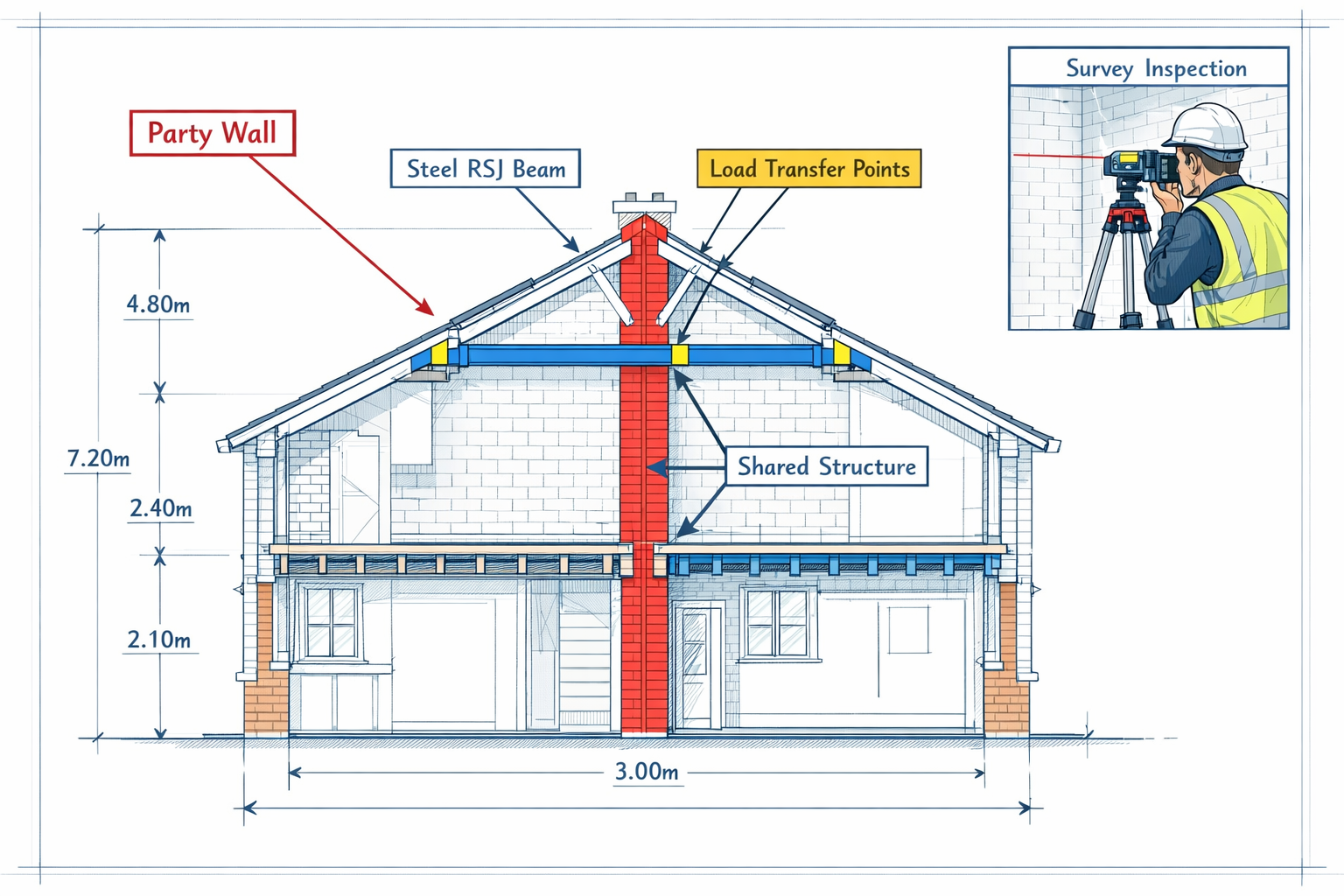
- Cutting into or loading party walls with new steel beams (RSJs)
- Inserting joists or structural supports into shared walls
- Removing chimney breasts that form part of the party structure
- Increasing loads on existing party walls through floor extensions
The survey creates a detailed record—often called a Schedule of Condition—that protects both you and your neighbours by establishing the pre-construction state of the property[1][2].
Why Loft Conversions Trigger Party Wall Requirements
Unlike simple internal renovations, loft conversions typically require structural alterations that affect shared walls. Most conversions involve:
✅ Installing steel beams that bear on party walls
✅ Cutting pockets into party walls to support new floor joists
✅ Transferring additional weight loads through shared structures
✅ Potentially weakening party walls through beam insertion
These interventions fall squarely under Section 2 of the Party Wall Act, which governs work on existing party structures[4]. Even if your conversion seems minor, any structural connection to a shared wall typically triggers the notice requirements.
When Party Wall Surveys Are NOT Required
Not every loft conversion needs a party wall agreement. You can proceed without serving notice if[1]:
- Your property is fully detached with no shared walls
- The conversion uses purpose-built columns instead of party wall support
- Work involves only internal changes like installing Velux windows without structural alterations
- Structural beams rest entirely on your own walls without touching party structures
However, most terraced and semi-detached properties will require compliance. If you're uncertain, consulting a party wall surveyor in your area can clarify your obligations before you invest in detailed architectural plans.
The Legal Framework: Navigating Party Wall Notices and Timelines
Mandatory Notice Periods and Response Times
The Party Wall etc. Act 1996 establishes strict timelines that homeowners must follow[1]:
| Stage | Timeline | Action Required |
|---|---|---|
| Notice Service | At least 2 months before work | Building owner serves formal notice to all adjoining owners |
| Neighbour Response | 14 days from receipt | Adjoining owner consents or appoints surveyor |
| Notice Validity | 12 months | Work must commence within one year of service |
| Award Preparation | 6-10 weeks (if disputed) | Surveyors prepare Party Wall Award document |
Serving party wall notices correctly is crucial. The notice must include:
- Detailed description of proposed works
- Start date for construction
- Your contact information
- Drawings showing structural alterations
Failure to serve proper notice can result in injunctions stopping your work, even after construction has begun[2].
What Happens When Neighbours Disagree?
Many homeowners worry that neighbour objections will permanently derail their loft conversion plans. The good news: neighbours cannot indefinitely block your project through the party wall process[1].
If your neighbour doesn't consent within 14 days, a "dispute" is deemed to have arisen. This doesn't mean confrontation—it simply triggers the formal surveyor process:
- Surveyor Appointment: You and your neighbour each appoint a surveyor (or agree to share one "Agreed Surveyor")
- Site Inspection: Surveyors assess the existing condition and proposed works
- Award Preparation: Surveyors draft a Party Wall Award outlining how work will proceed
- Protective Measures: The Award specifies working hours, access arrangements, and protection methods
The Award is legally binding on both parties and allows work to proceed with appropriate safeguards in place[4].
Cost Implications of the Party Wall Process
As the building owner initiating the work, you're responsible for all reasonable surveyor costs, including those of your neighbour's appointed surveyor[1]. Typical cost ranges in 2026 include:
- Consent cases (neighbour agrees): £1,000-£2,500
- Disputed cases (surveyors required): £1,500-£5,000
- Complex projects (multiple neighbours, extensive work): £3,000-£8,000+
These costs cover surveyor fees, Schedule of Condition preparation, Award drafting, and periodic inspections during construction. For strategies to minimize these expenses, review our guide on how to keep party wall costs down.
Identifying Structural Risks: What Party Wall Surveys Reveal
Common Structural Issues Discovered During Surveys
Professional party wall surveys frequently uncover problems that would otherwise become expensive mid-construction surprises:
Load-Bearing Capacity Concerns 🏋️
Many Victorian and Edwardian party walls weren't designed to support modern loft conversion loads. Surveys assess whether the existing wall can handle additional weight from new floors and steel beams, or if reinforcement is needed.
Hidden Deterioration
Surveys often reveal concealed issues like:
- Mortar degradation in older brickwork
- Previous structural alterations that weakened the wall
- Damp damage affecting load-bearing capacity
- Inadequate foundations that may settle under new loads
Inadequate Wall Thickness
Some party walls—particularly in properties built before 1900—may be thinner than modern standards require. This affects where and how you can insert beams or joists.
Existing Damage
The Schedule of Condition documents all pre-existing cracks, movement, and defects. This protects you from being held responsible for damage that predates your work[2][3].
The Schedule of Condition: Your Protection Against False Claims
A comprehensive Schedule of Condition includes:
- Detailed photographs of all rooms adjoining the party wall
- Written descriptions of existing defects and conditions
- Measurements of any cracks or movement
- Date-stamped evidence proving pre-construction state
This documentation becomes invaluable if neighbours later claim your work caused damage. Without it, you may face expensive remediation costs for problems you didn't create[4].
Structural Solutions Identified Through Surveys
When surveys reveal issues, qualified surveyors can recommend solutions before work begins:
- Wall reinforcement using steel channels or concrete encasement
- Alternative beam positions that avoid weak areas
- Underpinning if foundation capacity is insufficient
- Temporary supports during construction to prevent movement
Addressing these issues proactively costs significantly less than emergency repairs during construction or post-completion disputes[5][6].
Best Practices for Party Wall Surveys for Loft Conversions in 2026
Selecting the Right Party Wall Surveyor
Not all surveyors specialize in party wall work. Look for professionals who:
✅ Hold RICS accreditation (Royal Institution of Chartered Surveyors)
✅ Have specific party wall expertise under the 1996 Act
✅ Demonstrate local knowledge of construction practices in your area
✅ Provide clear fee structures upfront
✅ Maintain professional indemnity insurance
Regional specialists understand local building characteristics and typical issues. Whether you need a party wall surveyor in North London, South London, East London, or West London, choosing someone familiar with your property type prevents costly oversights.
Timing Your Survey for Maximum Efficiency
Strategic timing prevents project delays:
- Engage surveyors early (3-4 months before planned work)
- Serve notices promptly (at least 2 months before start date)
- Allow surveyor time for inspections and Award preparation
- Schedule work only after receiving the Award
Many homeowners make the mistake of booking builders before completing party wall procedures. This can result in expensive cancellation fees or idle contractor time while waiting for Awards[1][7].
Coordinating with Your Building Team
Your party wall surveyor needs to work alongside:
- Structural engineers designing the loft conversion
- Architects preparing building regulation drawings
- Builders who will execute the work
- Building control inspectors ensuring compliance
Share the Party Wall Award with your entire team. It may specify:
- Permitted working hours
- Access requirements for inspections
- Specific construction methods to protect party walls
- Notification requirements before certain work stages
Failure to follow Award conditions can result in legal action from neighbours and potential work stoppages[4].
Managing Neighbour Relations Throughout the Process
The party wall process works best when neighbours feel respected and informed:
Before Serving Notice:
- Discuss your plans informally with neighbours
- Show them preliminary drawings
- Explain the timeline and expected disruption
- Address their concerns proactively
During the Process:
- Respond promptly to surveyor requests
- Allow reasonable access for inspections
- Keep neighbours updated on progress
- Address any issues immediately
After Completion:
- Arrange final inspections as specified in the Award
- Remedy any damage caused by your work
- Maintain documentation for future reference
Good communication often prevents disputes from arising in the first place, saving both time and money[2][7].
Cost Management Strategies for Party Wall Surveys for Loft Conversions in 2026
Breaking Down Party Wall Survey Costs
Understanding the cost components helps you budget accurately:
| Cost Element | Typical Range | What It Covers |
|---|---|---|
| Initial consultation | £0-£250 | Assessment of whether notice is required |
| Notice preparation | £150-£400 | Drafting and serving formal notices |
| Schedule of Condition | £500-£1,500 | Photographic and written documentation |
| Award preparation | £800-£2,500 | Surveyor negotiations and Award drafting |
| Periodic inspections | £200-£500 each | Monitoring during construction |
| Neighbour's surveyor | £1,000-£3,000 | Fees for adjoining owner's surveyor |
Total costs depend on project complexity, property size, and whether disputes arise. For detailed breakdowns, see our guide on costs of party wall processes.
Reducing Costs Without Compromising Protection
Several strategies can minimize expenses while maintaining legal compliance:
1. Use an Agreed Surveyor
If your neighbour is cooperative, appointing a single "Agreed Surveyor" to represent both parties typically costs 30-40% less than having separate surveyors[1].
2. Prepare Thoroughly Before Engagement
Provide your surveyor with:
- Complete architectural drawings
- Structural engineer calculations
- Clear project timeline
- Detailed scope of work
This reduces billable hours spent gathering information.
3. Respond Promptly to Requests
Delays caused by slow responses increase surveyor time and costs. Quick turnaround on questions and documentation keeps the process efficient.
4. Address Neighbour Concerns Early
Resolving issues through informal discussion prevents them from becoming formal disputes requiring extensive surveyor involvement.
5. Bundle Multiple Projects
If you're planning additional work (like a rear extension), serving notices for all projects simultaneously reduces overall surveyor fees.
Hidden Costs of Skipping Party Wall Surveys
Some homeowners consider avoiding the party wall process to save money. This is extremely risky and often backfires:
⚠️ Injunctions: Neighbours can obtain court orders stopping your work
⚠️ Retrospective Awards: Courts may require party wall procedures after work completes, at higher cost
⚠️ Damage Claims: Without Schedules of Condition, you're vulnerable to inflated damage claims
⚠️ Sale Complications: Missing party wall documentation can derail property sales
⚠️ Insurance Issues: Insurers may deny claims for damage arising from non-compliant work
The £2,000-£5,000 cost of proper party wall procedures is far less than the £10,000-£50,000+ potential costs of legal disputes, emergency repairs, or sale complications[1][4].
Avoiding Common Pitfalls in Loft Conversion Party Wall Surveys
Mistake #1: Assuming Detached Properties Don't Need Surveys
While truly detached properties don't share walls, many homeowners mistakenly believe their semi-detached property is fully detached. Always verify your property type through:
- Title deeds examination
- Physical inspection of wall construction
- Professional surveyor assessment
Even properties with small gaps between buildings may have shared foundations or boundary walls requiring notice[3].
Mistake #2: Starting Work Before Receiving the Award
The temptation to begin construction while waiting for party wall procedures is strong, especially when builders are available. However:
- Work started before the Award is issued may need to be undone
- Neighbours can obtain immediate injunctions
- You lose the Award's legal protections
- Insurance coverage may be invalidated
Always wait for the signed Award before breaking ground, even if the notice period has expired[1][7].
Mistake #3: Inadequate Documentation
Poor documentation creates problems:
- Insufficient photographs in Schedules of Condition
- Missing pre-existing damage records
- Incomplete descriptions of proposed work
- Lost or misfiled notices and Awards
Maintain comprehensive digital and physical records of all party wall documents. These protect you during construction and if you sell the property later.
Mistake #4: Ignoring Award Conditions
Party Wall Awards often include specific requirements:
- Working hours restrictions (typically 8am-6pm weekdays)
- Notification before certain work stages
- Access for surveyor inspections
- Specific construction methods
Violating Award conditions can result in legal action and work stoppages. Brief your builders thoroughly on all requirements and monitor compliance[4].
Mistake #5: Failing to Notify All Affected Neighbours
Loft conversions may affect multiple adjoining owners:
- Neighbours on both sides (for mid-terrace properties)
- Neighbours behind (if party walls extend along boundaries)
- Tenants (who must receive notice even if landlords are informed)
Missing even one affected party can invalidate the entire process, requiring you to start over[2][3].
Building Regulation Compliance Alongside Party Wall Requirements
Understanding the Difference: Party Walls vs. Building Control
Many homeowners confuse party wall procedures with building regulations. They're separate legal requirements:
Party Wall Procedures:
- Governed by Party Wall etc. Act 1996
- Protect neighbour interests in shared structures
- Require notices, surveys, and Awards
- Focus on preventing damage to adjoining properties
Building Regulations:
- Governed by Building Act 1984
- Ensure structural safety and habitability
- Require plans approval and inspections
- Focus on safety, energy efficiency, and construction standards
You need both for most loft conversions[5][6]. Party wall compliance doesn't replace building control approval, and vice versa.
Coordinating Both Approval Processes
Efficient project management requires coordinating timelines:
Optimal Sequence:
- Develop preliminary designs with architect
- Engage structural engineer for calculations
- Submit building regulation application
- Simultaneously serve party wall notices
- Obtain building regulation approval
- Receive Party Wall Award
- Commence construction with both approvals in place
This parallel processing prevents delays while ensuring all legal requirements are met before work begins[6].
When Structural Changes Affect Both Processes
Certain structural elements require attention in both processes:
- Steel beams (RSJs): Building control checks sizing and fire protection; party wall procedures address insertion into shared walls
- Floor joists: Building regulations verify structural adequacy; party wall process governs insertion into party walls
- Staircase openings: Building control ensures safe design; party wall procedures apply if cutting through party structures
- Fire resistance: Building regulations specify requirements; party wall Awards may require specific fire-stopping methods
Your structural engineer and party wall surveyor should communicate to ensure designs satisfy both sets of requirements[5][6].
Future-Proofing Your Loft Conversion Investment
Documentation for Future Property Sales
Proper party wall documentation adds value when selling:
Essential Records to Maintain:
- Original party wall notices
- Neighbour consent letters or Party Wall Awards
- Schedules of Condition
- Completion inspection reports
- Any correspondence with surveyors
Buyers' solicitors routinely request party wall documentation during conveyancing. Missing records can:
- Delay sales by weeks or months
- Reduce offers due to perceived risk
- Require retrospective surveys at your expense
- Occasionally derail sales entirely
Store documents digitally and physically, and include them in your property information pack when selling[4].
Protecting Against Future Disputes
Even with proper procedures, disputes can arise years later. Protect yourself by:
Maintaining Evidence:
- Keep photographs of completed work
- Retain structural engineer certificates
- Store building control completion certificates
- Document any post-construction inspections
Addressing Issues Promptly:
- Investigate any cracks or movement immediately
- Engage surveyors if neighbours raise concerns
- Document all communications about potential issues
Insurance Considerations:
- Ensure home insurance covers party wall disputes
- Consider legal expenses insurance
- Maintain professional indemnity coverage if you acted as your own surveyor
Planning for Future Work
If you anticipate additional projects, consider:
- Bundling notices for multiple planned works
- Maintaining surveyor relationships for future projects
- Documenting current conditions even for areas not immediately affected
- Understanding precedents set by current Awards that may affect future work
Party wall procedures become easier when you have established relationships and documentation from previous projects[7].
Conclusion: Protecting Your Investment Through Proper Party Wall Surveys
Party Wall Surveys for Loft Conversions in 2026: Avoiding Costly Structural Surprises isn't just about legal compliance—it's about protecting your investment, maintaining neighbour relations, and ensuring your project proceeds smoothly from conception to completion. As remote work continues driving demand for additional home space, understanding and properly navigating party wall requirements has never been more critical.
The key principles to remember:
🔑 Start early: Engage surveyors 3-4 months before planned work
🔑 Serve proper notice: At least 2 months before construction begins
🔑 Document everything: Comprehensive Schedules of Condition protect against false claims
🔑 Budget appropriately: Factor £1,500-£5,000 for party wall procedures
🔑 Follow Award conditions: Compliance prevents legal complications
🔑 Maintain records: Documentation adds value when selling
Your Next Steps
Ready to move forward with your loft conversion? Take these actions today:
- Assess your property type to determine if party wall procedures apply
- Engage a qualified surveyor familiar with your area—explore options for party wall surveyors in Central London or other regions
- Discuss plans informally with neighbours before serving formal notices
- Review our resources on party wall notices and types of party wall works
- Coordinate with your design team to ensure structural plans comply with party wall requirements
- Serve notices promptly to avoid project delays
The £2,000-£5,000 investment in proper party wall procedures is minimal compared to the £50,000-£150,000 total cost of most loft conversions—and it's far less than the potential costs of disputes, injunctions, or structural failures. By following the guidance in this article and working with qualified professionals, you can navigate party wall requirements confidently and avoid the costly structural surprises that derail unprepared projects.
Your loft conversion can add significant value and functionality to your home. Proper party wall surveys ensure that investment is protected from day one. 🏠✨
References
[1] Party Wall Agreement Loft Conversion – https://www.houseup.co.uk/news/party-wall-agreement-loft-conversion
[2] Loft Conversions And Party Walls Understanding The Rules – https://www.simonlevy.net/loft-conversions-and-party-walls-understanding-the-rules
[3] Rules Regulations – https://www.greenmatch.co.uk/loft-conversion/rules-regulations
[4] Party Wall Agreement – https://hoa.org.uk/advice/guides-for-homeowners/i-am-improving/party-wall-agreement/
[5] Loft Conversion Building Regulations And Planning Permission Ayaeu0i5dw7o – https://www.which.co.uk/reviews/loft-conversions/article/loft-conversion-building-regulations-and-planning-permission-aYaeU0I5DW7O
[6] Loft Conversion Building Regs – https://claphamconstructionservice.com/blog/loft-conversion-building-regs/
[7] Party Wall Surveys And Neighbour Disputes During 2026s Construction Uptick Rics Compliance Framework – https://nottinghillsurveyors.com/blog/party-wall-surveys-and-neighbour-disputes-during-2026s-construction-uptick-rics-compliance-framework