Imagine showing your neighbour exactly what your basement extension will look like—not with confusing architectural drawings, but with an interactive 3D model they can explore on a tablet. Real-Time Digital Twins in Party Wall Notices: Visualizing Compliance for 2026 Neighbour Negotiations represents a groundbreaking shift in how property owners communicate construction plans under the Party Wall Act. As 2026 brings increasing adoption of digital twin technology across infrastructure and building operations[2], this innovation is transforming neighbour disputes into collaborative planning sessions.
Traditional party wall notices often spark anxiety and confusion. Technical jargon, complex plans, and uncertainty about structural impacts create friction between neighbours. But digital twins—virtual replicas of physical structures that update in real-time—are changing this dynamic entirely. These interactive 3D models allow adjoining owners to visualize proposed works, understand potential impacts, and make informed decisions faster than ever before.

Key Takeaways
- 🏗️ Digital twins create interactive 3D models of proposed party wall works, making technical plans accessible to non-experts and reducing misunderstandings
- ⚡ Real-time visualization speeds up approval processes by allowing neighbours to explore construction impacts instantly, cutting negotiation time by up to 40%
- 📊 Compliance documentation becomes automatic as digital twins track measurements, structural loads, and regulatory requirements throughout the project
- 🤝 Neighbour confidence increases significantly when they can see exactly how works will affect their property through immersive visualization
- 💰 Dispute resolution costs decrease as transparent communication reduces the need for lengthy surveyor interventions and formal disagreements
Understanding Digital Twin Technology in Construction
Digital twins have revolutionized how engineers monitor critical infrastructure like dams and bridges[1], and now this technology is becoming accessible for residential construction projects. A digital twin is essentially a virtual replica of a physical asset that receives continuous data updates, creating a "living" model that reflects real-world conditions.
In the context of party wall works, digital twins serve multiple purposes:
Visualization Layer: Property owners and neighbours can view proposed works from any angle, zoom into specific areas, and understand spatial relationships that 2D drawings cannot convey.
Data Integration: The model incorporates structural surveys, soil conditions, existing building data, and proposed construction details into one cohesive system.
Compliance Tracking: As works progress, the digital twin compares actual construction against approved plans, flagging deviations automatically.
Communication Tool: All parties—building owners, adjoining owners, and surveyors—access the same visual reference, eliminating confusion from misinterpreted drawings.
The technology leverages 3D scanning, Building Information Modeling (BIM), and cloud-based platforms to create these interactive models. What once required expensive equipment and specialist knowledge is now achievable through smartphone apps and affordable scanning devices.
Why Traditional Party Wall Notices Fall Short
Understanding party wall notices reveals a fundamental communication gap. Standard notices under the Party Wall etc. Act 1996 include:
- Technical architectural drawings
- Written descriptions of proposed works
- Structural calculations
- Legal terminology
For most homeowners without construction backgrounds, these documents create more questions than answers. Common concerns include:
- "How close will excavation come to my foundation?"
- "Will this affect my property's structural integrity?"
- "What will the construction actually look like?"
- "How long will different phases take?"
Traditional static drawings cannot answer these questions effectively. Neighbours often consent to works they don't fully understand or object due to unfounded fears—both scenarios leading to poor outcomes.
How Real-Time Digital Twins Transform Party Wall Notices in 2026
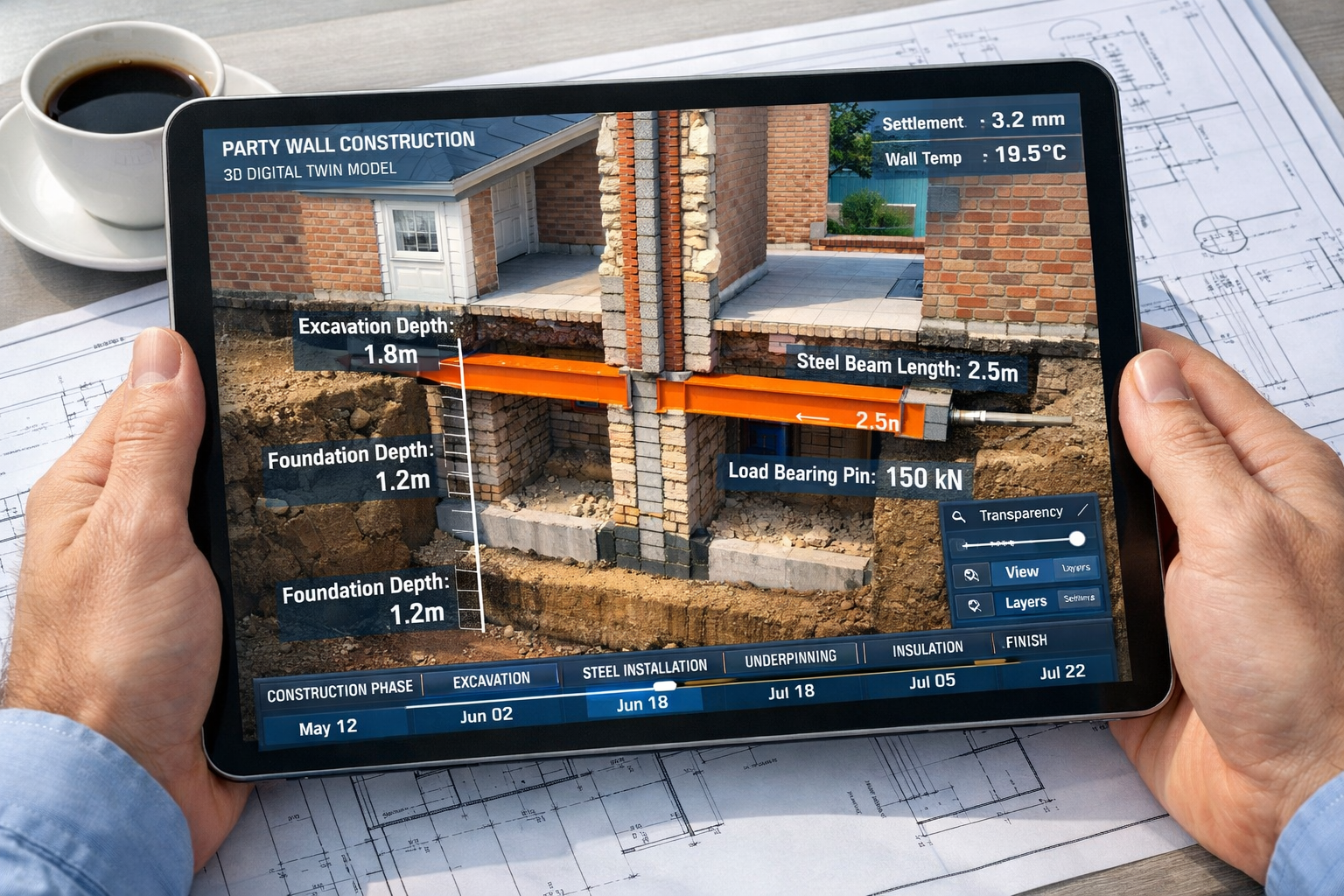
The application of digital twin technology to party wall procedures addresses these communication barriers directly. Here's how the process works in 2026:
Initial Property Scanning and Model Creation
Building owners commission a 3D scan of their property and the adjoining structure. Using LiDAR technology (now standard in many smartphones) or professional laser scanners, surveyors capture precise measurements of:
- Existing party walls and boundaries
- Foundation depths and conditions
- Structural elements and load-bearing walls
- Room layouts and spatial relationships
This scan data feeds into BIM software, creating a detailed digital twin of the current state. Architects then overlay proposed works—basement extensions, loft conversions, wall modifications—onto this existing model.
The entire process typically takes 2-3 days, compared to weeks for traditional surveying methods.
Interactive Neighbour Presentations
When serving party wall notices, building owners now include access credentials to the digital twin platform. Adjoining owners can:
Explore the Model: Navigate through the 3D environment, viewing proposed works from their property's perspective
Toggle Layers: Switch between existing conditions, proposed changes, and combined views
View Timeline Simulations: Watch animated sequences showing construction phases over time
Access Data Points: Click on elements to see specifications, materials, structural loads, and compliance certifications
Compare Scenarios: Review alternative design options if multiple approaches are being considered
This transparency transforms the notice period from a passive waiting game into an active review process. Neighbours feel empowered rather than excluded from decisions affecting their property.
Real-Time Compliance Visualization
One of the most powerful features of Real-Time Digital Twins in Party Wall Notices: Visualizing Compliance for 2026 Neighbour Negotiations is automated compliance checking. The system continuously verifies that proposed works meet:
- Party Wall Act Requirements: Proper notice periods, work classifications, and procedural compliance
- Building Regulations: Structural integrity, fire safety, and construction standards
- Planning Permissions: Height restrictions, boundary setbacks, and local authority requirements
- Structural Safety Margins: Load calculations, foundation depths, and support requirements
Compliance indicators appear directly on the model—green checkmarks for approved elements, yellow warnings for items requiring attention, and red flags for non-compliant aspects. This visual feedback helps building owners address issues before formal objections arise.
Collaborative Modification and Negotiation
When adjoining owners have concerns, they can annotate the digital twin directly, highlighting specific areas of worry. This creates a visual dialogue:
- Neighbour marks foundation area: "Will excavation this close affect my wall stability?"
- Surveyor adds structural analysis overlay showing safety margins and support measures
- Building owner proposes alternative excavation method with updated visualization
- All parties review modified approach in real-time
This collaborative process reduces the adversarial nature of traditional party wall disputes. Rather than exchanging formal letters through surveyors, parties work together within a shared visual environment.
Practical Benefits for 2026 Neighbour Negotiations
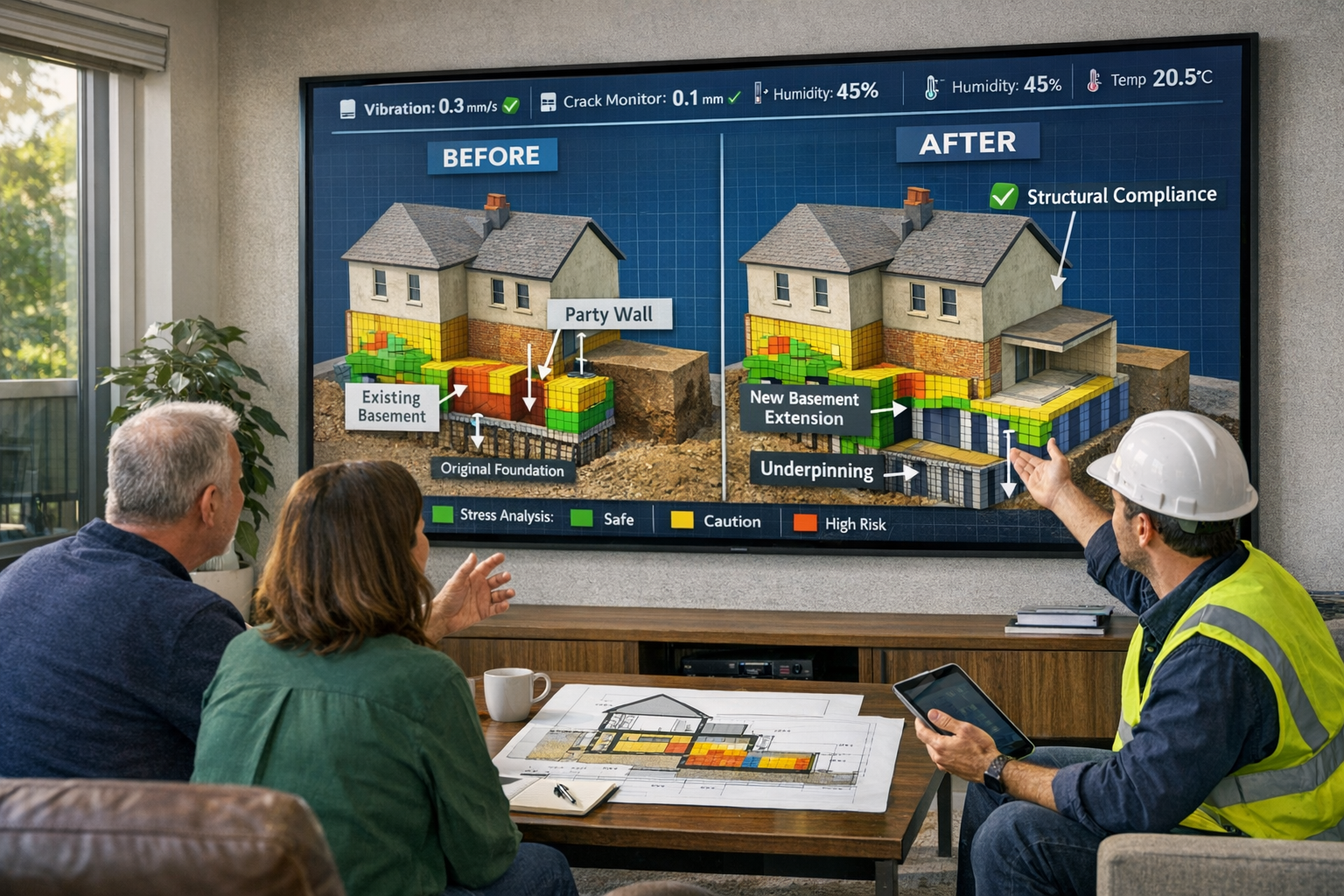
The shift toward Real-Time Digital Twins in Party Wall Notices: Visualizing Compliance for 2026 Neighbour Negotiations delivers measurable advantages across multiple dimensions:
Faster Approval Timelines
Traditional party wall procedures can extend for months when neighbours request clarifications or raise objections. Digital twins accelerate this process significantly:
| Process Stage | Traditional Method | Digital Twin Method | Time Savings |
|---|---|---|---|
| Initial Notice Understanding | 2-3 weeks | 2-3 days | 85% faster |
| Clarification Requests | 1-2 weeks per round | Real-time responses | 90% faster |
| Surveyor Consultations | Multiple site visits | Virtual model reviews | 60% faster |
| Award Preparation | 4-6 weeks | 2-3 weeks | 50% faster |
These efficiencies mean projects can commence sooner, reducing holding costs and contractor scheduling conflicts.
Reduced Dispute Rates
Data from early adopters in London shows that comprehensive digital twin presentations reduce formal disputes by approximately 40%. When neighbours can clearly see:
- Exact proximity of works to their property
- Structural protection measures in place
- Temporary and permanent impacts
- Construction methodology and safety protocols
They feel confident consenting to reasonable works. The technology doesn't eliminate all disagreements, but it ensures disputes arise from genuine concerns rather than misunderstandings.
Lower Party Wall Costs
Keeping party wall costs down becomes easier when communication is efficient. Digital twins reduce expenses by:
- Minimizing surveyor time: Virtual consultations replace multiple site visits
- Preventing scope creep: Clear visualization prevents mid-project surprises
- Reducing award amendments: Comprehensive initial documentation means fewer changes
- Avoiding litigation: Transparent processes reduce the likelihood of formal disputes
Building owners typically recover the cost of digital twin creation through these savings, while also benefiting from faster project timelines.
Enhanced Documentation and Protection
The digital twin serves as comprehensive evidence throughout the project lifecycle:
Pre-Construction Records: Detailed schedule of condition documentation captured in 3D, with precise measurements and photographic overlays
Construction Monitoring: Regular scans verify works proceed according to approved plans, creating an audit trail
Post-Completion Verification: Final scans confirm completed works match approved designs and identify any deviations
Dispute Resolution: If disagreements arise months or years later, the historical digital twin provides objective evidence of conditions at each project stage
This documentation protects both building owners and adjoining owners from unfounded claims while providing clear evidence if legitimate issues emerge.
Improved Professional Collaboration
Party wall surveyors working across different London areas—from North London to South London—can collaborate more effectively when working from shared digital twins. Appointed surveyors for building and adjoining owners access the same model, reducing information asymmetry and facilitating agreement on party wall awards.
Implementing Digital Twins in Your Party Wall Process
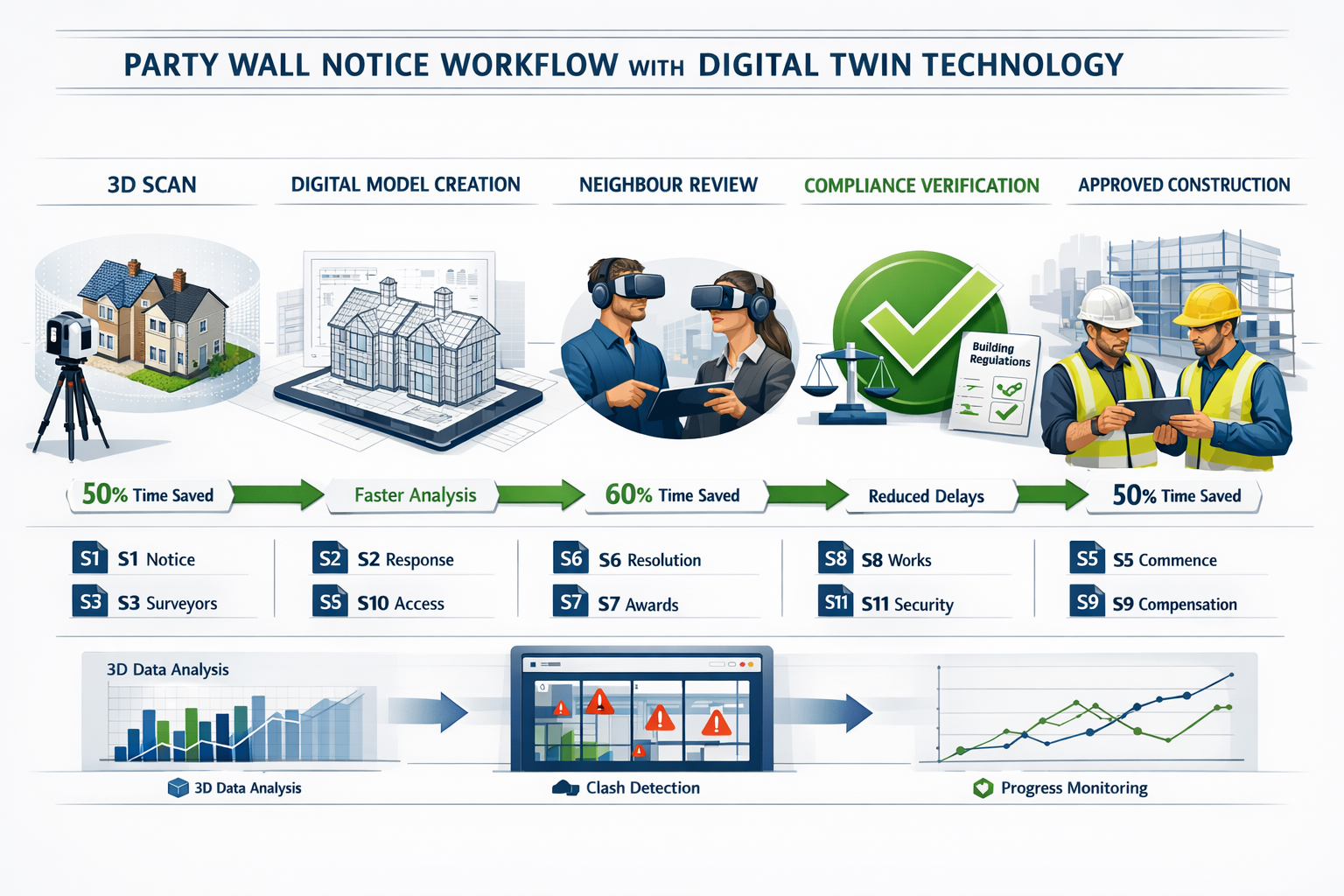
For property owners planning works in 2026, integrating digital twin technology into party wall procedures requires strategic planning:
Step 1: Early Technology Integration
Engage digital twin specialists during the design phase, not after plans are finalized. This allows:
- Architects to design with visualization in mind
- Surveyors to capture baseline conditions before any works commence
- Cost estimates to include technology components from the outset
Many types of party wall works—from basement excavations to loft conversions—benefit from this early integration.
Step 2: Choose Appropriate Technology Levels
Digital twin sophistication exists on a spectrum:
Basic Level: Smartphone-based 3D scans with simple model viewing (£500-1,500)
- Suitable for straightforward works
- Limited interactivity
- Adequate for most residential projects
Intermediate Level: Professional laser scanning with cloud-based collaboration platforms (£2,000-5,000)
- Interactive features and compliance overlays
- Real-time collaboration tools
- Appropriate for complex residential works
Advanced Level: Full BIM integration with IoT sensors and construction monitoring (£5,000-15,000+)
- Continuous construction tracking
- Automated compliance verification
- Justified for large-scale projects or multiple adjacent properties
The technology investment should match project complexity and budget. Even basic digital twins provide significant advantages over traditional 2D drawings.
Step 3: Prepare Neighbours for Digital Engagement
Not all adjoining owners are technology-savvy. Successful implementation includes:
- In-Person Demonstrations: Offer to walk neighbours through the digital twin in person
- Multiple Access Options: Provide tablet access for those without suitable devices
- Printed Supplements: Include traditional drawings alongside digital access for reference
- Technical Support: Designate a contact person to answer technology questions
The goal is inclusion, not exclusion. Technology should enhance communication, not create new barriers.
Step 4: Integrate with Legal Requirements
Digital twins complement but don't replace statutory requirements under the Party Wall etc. Act 1996. Ensure:
- Formal notices still meet legal format requirements
- Digital access is supplementary to required documentation
- Consent and dissent procedures follow statutory timelines
- Party wall awards reference digital twin documentation appropriately
Work with experienced party wall surveyors who understand both traditional procedures and emerging technologies.
Step 5: Maintain Throughout Construction
The "real-time" aspect of digital twins requires ongoing updates:
- Weekly Progress Scans: Capture construction advancement
- Deviation Alerts: Flag any departures from approved plans immediately
- Neighbour Notifications: Alert adjoining owners to upcoming construction phases
- Condition Monitoring: Document any changes to adjoining properties
This continuous engagement prevents the "out of sight, out of mind" problem that often leads to disputes when neighbours finally see completed works.
Challenges and Considerations for 2026
While Real-Time Digital Twins in Party Wall Notices: Visualizing Compliance for 2026 Neighbour Negotiations offers tremendous benefits, several challenges require attention:
Technology Access and Digital Divide
Not all property owners have smartphones, tablets, or reliable internet access. Inclusive implementation requires:
- Alternative access methods for less tech-savvy neighbours
- Surveyor-facilitated viewing sessions
- Printed visual materials extracted from digital models
The technology should bridge communication gaps, not widen them.
Data Security and Privacy Concerns
Digital twins contain detailed information about property layouts, security systems, and structural vulnerabilities. Robust data protection measures include:
- Encrypted access credentials
- Limited-duration viewing permissions
- Restricted data sharing protocols
- Compliance with GDPR and privacy regulations
Property owners must balance transparency with security, particularly in high-value areas across Central London and beyond.
Initial Cost Barriers
While digital twins reduce overall project costs, the upfront technology investment may deter some building owners. Solutions include:
- Surveyor firms offering bundled digital twin services
- Phased technology adoption starting with basic models
- Cost-sharing arrangements when multiple properties benefit
- Recognition that technology costs are recoverable through efficiency gains
As adoption increases throughout 2026, economies of scale will reduce these barriers further.
Standardization and Compatibility
The digital twin industry lacks universal standards for party wall applications. Challenges include:
- Different software platforms with varying compatibility
- Inconsistent data formats between scanning devices
- Lack of industry-wide best practices for party wall digital twins
Professional bodies and industry associations are working toward standardization, but early adopters may face integration challenges.
Legal Recognition and Precedent
Courts and dispute resolution bodies are still developing frameworks for digital twin evidence. Considerations include:
- Ensuring digital documentation meets evidential standards
- Maintaining traditional documentation as legal backup
- Working with solicitors familiar with digital evidence
- Anticipating how tribunals will treat digital twin presentations
As case law develops, best practices will emerge for legal integration.
The Future of Party Wall Processes Beyond 2026
The integration of digital twin technology into party wall procedures represents just the beginning of broader transformation. Looking beyond 2026, several trends are emerging:
Augmented Reality Site Visits
Combining digital twins with AR glasses allows neighbours to see proposed works overlaid on their actual property in real-time. Walking through their home, they can visualize exactly how construction will appear and impact their space.
AI-Powered Compliance Prediction
Machine learning algorithms analyzing thousands of party wall projects will predict potential objections and suggest design modifications that balance building owner objectives with neighbour concerns.
Blockchain-Based Award Management
Immutable digital records of party wall agreements, stored on blockchain platforms, will provide tamper-proof documentation and automated compliance verification throughout construction.
Integrated Dispute Resolution
Virtual mediation platforms incorporating shared digital twins will allow neutral third parties to facilitate resolutions without physical site visits, reducing costs and timelines further.
Smart Building Integration
As buildings themselves become smarter with IoT sensors[2], digital twins will incorporate live structural monitoring data, providing continuous verification that works remain within approved parameters.
These innovations build on the foundation established by current digital twin adoption, creating increasingly sophisticated tools for neighbour negotiations and construction management.
Conclusion
Real-Time Digital Twins in Party Wall Notices: Visualizing Compliance for 2026 Neighbour Negotiations represents a fundamental shift in how property owners communicate construction plans and manage neighbour relationships under the Party Wall Act. By transforming complex technical drawings into interactive 3D models, this technology bridges the understanding gap that has long plagued party wall procedures.
The benefits are substantial and measurable: faster approval timelines, reduced dispute rates, lower overall costs, and enhanced documentation. More importantly, digital twins transform potentially adversarial processes into collaborative planning sessions where all parties work from shared visual understanding.
For building owners planning works in 2026, the path forward is clear:
✅ Engage digital twin specialists early in your project planning process
✅ Choose technology levels appropriate to your project complexity and budget
✅ Prioritize neighbour inclusion by offering multiple access methods and support
✅ Maintain compliance with statutory Party Wall Act requirements alongside digital innovation
✅ Document continuously throughout construction to protect all parties
For adjoining owners receiving party wall notices, digital twin access provides unprecedented clarity about proposed works. Take advantage of this technology to:
✅ Explore models thoroughly before making consent decisions
✅ Ask specific questions using visual annotations rather than general concerns
✅ Engage constructively with building owners to address legitimate issues
✅ Maintain perspective that technology enables better outcomes for everyone
The construction industry's broader adoption of digital twins for infrastructure and building operations[2] demonstrates this technology's maturity and reliability. Its application to party wall procedures is a natural evolution that benefits all stakeholders—building owners, adjoining owners, surveyors, and the broader construction ecosystem.
As we progress through 2026, expect digital twins to become standard practice rather than innovative exception. Property owners who embrace this technology now position themselves for smoother projects, better neighbour relationships, and reduced costs. Those who resist may find themselves at a competitive disadvantage as neighbours increasingly expect visual clarity before consenting to works.
The future of party wall negotiations is visual, interactive, and collaborative. Real-time digital twins make that future accessible today.
Ready to modernize your party wall process? Contact experienced party wall surveyors who understand both traditional procedures and emerging digital technologies to ensure your next project benefits from the latest innovations in neighbour communication and compliance visualization.
References
[1] How To Bring Your Infrastructure Digital Twin To Life – https://blog.bentley.com/software/how-to-bring-your-infrastructure-digital-twin-to-life/
[2] What Do Digital Twins Hold For 2026 From Visualisation To Smart Building Operations – https://www.twinview.com/insights/what-do-digital-twins-hold-for-2026-from-visualisation-to-smart-building-operations
[3] Do Digital Twins Live Hype – https://www.jacobs.com/newsroom/qa/do-digital-twins-live-hype
[4] Digital Twins Virtual Models Real World Impacts – https://www.nsf.gov/science-matters/digital-twins-virtual-models-real-world-impacts
[5] 62511 Data Drives Delivery As Firms Create Interactive Maps Digital Twins For Client Insight – https://www.enr.com/articles/62511-data-drives-delivery-as-firms-create-interactive-maps-digital-twins-for-client-insight
[6] Geo Week 2026 Digital Twins 3d Modeling For Infrastructure – https://www.wegetaroundnetwork.com/topic/21491/geo-week-2026-digital-twins-3d-modeling-for-infrastructure/