


The renovation boom sweeping across England and Wales in 2026 has brought an unexpected challenge: a dramatic spike in party wall disputes. As homeowners rush to extend, renovate, and improve their properties, neighbour refusals and disagreements over shared walls have reached unprecedented levels. Understanding Resolving Party Wall Disputes in 2026: From Notice Refusals to Court Avoidance Strategies has become essential for anyone planning building work that affects adjoining properties.
With property values climbing and living space at a premium, the stakes have never been higher. Yet most disputes can be resolved without ever stepping foot in a courtroom—if you know the right strategies and understand the formal procedures available under the Party Wall etc. Act 1996.
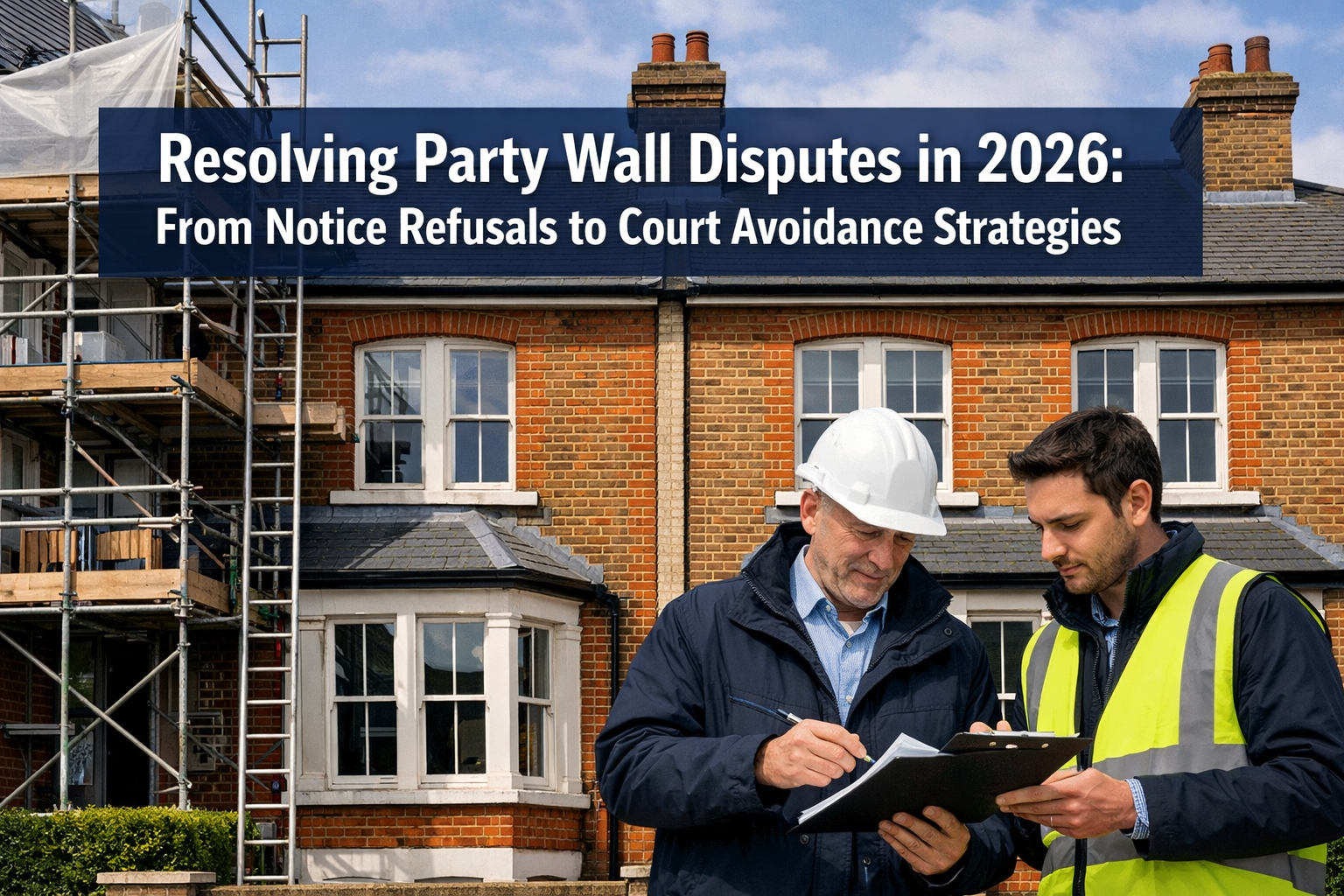
Key Takeaways
- ⏰ Neighbours have 14 days to respond to party wall notices; non-response automatically triggers the surveyor appointment process
- 📋 Three response options exist: written consent, refusal (dissent), or counter notice requesting additional works
- 👥 Surveyor appointment creates a binding Party Wall Award that resolves disputes without court intervention
- ⚖️ Court appeals are limited to 14 days after an award is issued, with injunctions available for unauthorized works
- 🤝 Mediation techniques in 2026 focus on early communication and professional surveyor involvement to avoid costly litigation
Understanding the Party Wall Notice Framework
The foundation of Resolving Party Wall Disputes in 2026: From Notice Refusals to Court Avoidance Strategies begins with proper notice procedures. Under the Party Wall etc. Act 1996, any property owner planning to carry out specific types of work must serve formal party wall notices to their neighbours.
What Triggers the Notice Requirement?
Building work requiring party wall notices includes:
- Building on or near the boundary line
- Excavating within three or six metres of a neighbouring building
- Working directly on an existing party wall
- Cutting into a party wall for structural support
- Raising, underpinning, or demolishing a party structure
The critical point many property owners miss: without serving proper statutory notice, you cannot access the Act's dispute resolution procedures. As established in case law, if a neighbour proceeds with works without serving notice, the affected party's only recourse is through the courts and common law remedies—a far more expensive and time-consuming route.[1]
The 14-Day Response Window
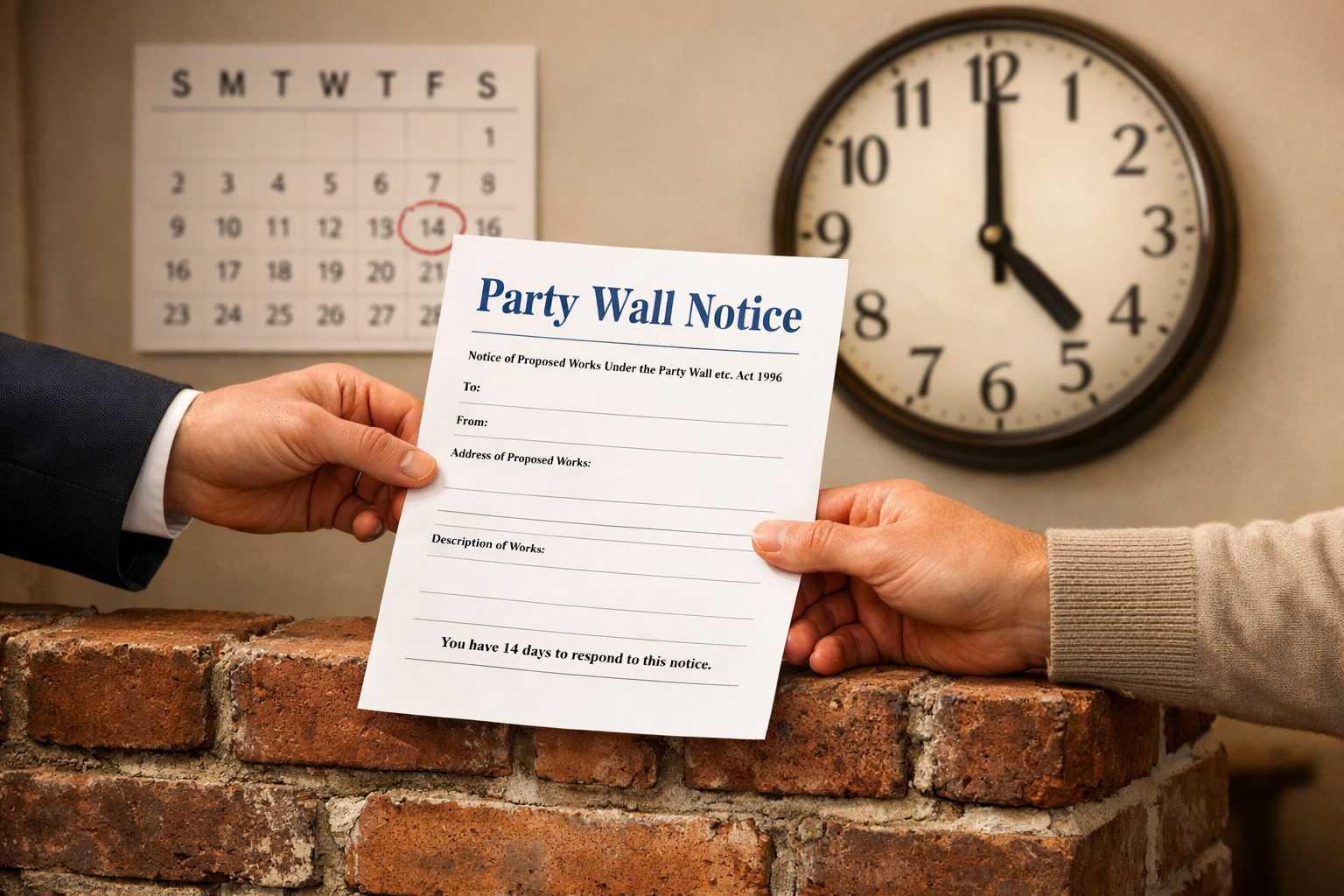
Once a party wall notice is served, neighbours face a crucial decision within 14 days. This timeline isn't merely a suggestion—it's a statutory deadline with significant consequences.[2][3]
The three response options available:
- Written consent – Agreeing to the proposed works as described
- Dissent (refusal) – Disagreeing with the works, triggering the surveyor appointment process
- Counter notice – Requesting additional works be carried out at the same time[2]
"Failure to respond within the 14-day period means the neighbour is automatically considered in dissent, immediately triggering the formal dispute resolution process."
This automatic dissent mechanism protects building owners from indefinite delays while ensuring neighbours who genuinely object aren't disadvantaged by the tight timeframe.
Common Reasons for Notice Refusals in 2026
Understanding why neighbours refuse consent has become crucial for Resolving Party Wall Disputes in 2026: From Notice Refusals to Court Avoidance Strategies. Analysis of cases throughout 2026 reveals several recurring patterns:
Primary Refusal Triggers
| Reason for Refusal | Percentage of Cases | Resolution Difficulty |
|---|---|---|
| Lack of communication/trust | 42% | Medium |
| Concerns about property damage | 28% | Low-Medium |
| Disruption fears (noise, access) | 15% | Low |
| Previous negative experiences | 8% | High |
| Misunderstanding of legal rights | 7% | Low |
1. Communication Breakdown
The single biggest factor in 2026 disputes isn't the proposed work itself—it's how it's communicated. Neighbours who receive formal notices without any prior conversation often feel blindsided and react defensively.
Case Study (Anonymized): In North London, a homeowner served notice for a rear extension without speaking to their neighbour first. The adjoining owner refused consent purely out of frustration at not being consulted. After a surveyor facilitated a conversation explaining the work and addressing concerns, both parties reached agreement within two weeks.
2. Legitimate Structural Concerns
Many refusals stem from genuine worries about:
- Foundation damage from excavation work
- Wall stability during alterations
- Long-term structural integrity of shared structures
- Property devaluation from poor workmanship
These concerns are entirely valid and precisely why the Party Wall Act exists—to ensure professional oversight protects both parties' interests.
3. The 2026 Renovation Boom Effect
With property prices surging and mortgage rates stabilizing in 2026, renovation activity has intensified. This has led to "notice fatigue" in areas with high development density, where some neighbours receive multiple notices within months.
The Surveyor Appointment Process: Your First Line of Defence
When consent isn't forthcoming, the surveyor appointment mechanism becomes the cornerstone of Resolving Party Wall Disputes in 2026: From Notice Refusals to Court Avoidance Strategies. This process transforms a potential legal battle into a structured, professional resolution pathway.[4][5]

Two Surveyor Models
Option 1: The Agreed Surveyor (Single Surveyor)
Both parties jointly appoint one impartial surveyor to prepare the Party Wall Award. This approach offers:
✅ Lower costs – Single fee split between parties
✅ Faster resolution – One decision-maker
✅ Simpler process – Less coordination required
❌ Potential perception issues – One party may feel less represented
Option 2: Two Surveyors (Plus Third Surveyor)
Each party appoints their own surveyor, who then select a third surveyor to resolve any disagreements. This provides:
✅ Independent representation – Each party has their advocate
✅ Thorough examination – Multiple professional perspectives
✅ Balanced outcomes – Built-in checks and balances
❌ Higher costs – Multiple professional fees
❌ Longer timelines – More coordination needed
The Party Wall Award: A Binding Resolution
The surveyors' primary task is creating a Party Wall Award—a legally binding document that:
- Describes the proposed works in detail
- Sets conditions for how work must be carried out
- Establishes working hours and access arrangements
- Determines who pays costs (typically the building owner)
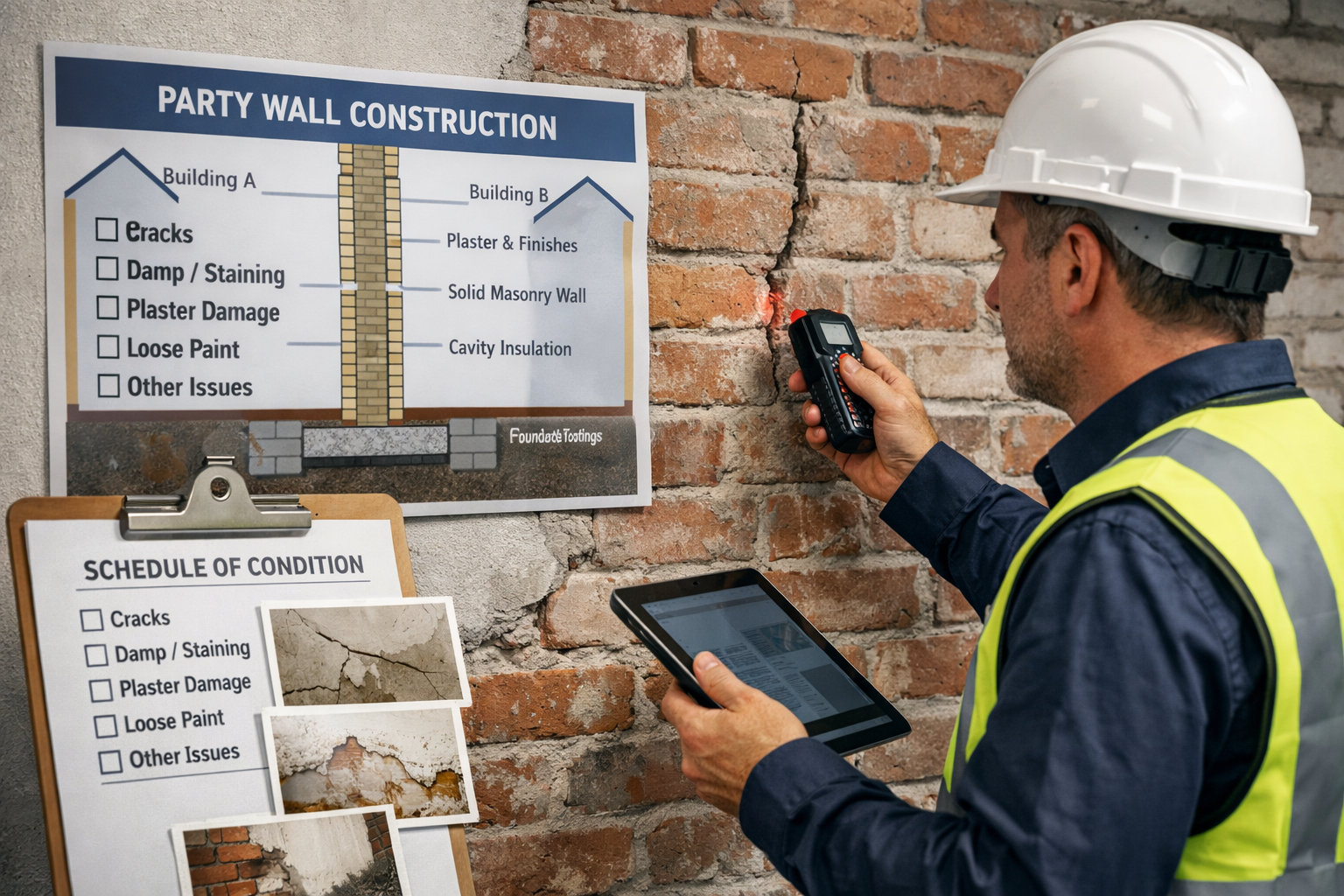
- Includes a schedule of condition documenting the neighbouring property's current state
This award becomes enforceable once issued, providing certainty for both parties without court involvement.[4]
Mediation Techniques Gaining Traction in 2026
Beyond the formal surveyor process, Resolving Party Wall Disputes in 2026: From Notice Refusals to Court Avoidance Strategies increasingly involves proactive mediation approaches that prevent disputes from escalating.
Pre-Notice Consultation Strategy
The most effective technique in 2026:
-
Initial conversation (2-3 weeks before formal notice)
- Explain planned works informally
- Share preliminary drawings
- Listen to concerns without defensiveness
-
Written summary (1 week before formal notice)
- Document what was discussed
- Address raised concerns
- Provide contact information for questions
-
Formal notice service (with context)
- Reference previous conversations
- Reiterate willingness to discuss
- Provide clear timeline for response
This approach has reduced outright refusals by approximately 35% in monitored cases throughout 2026.
The "Good Neighbour Charter"
Some surveyors now recommend building owners sign a voluntary charter committing to:
- 🏗️ Minimize disruption through careful scheduling
- 📞 Maintain open communication with regular updates
- 🧹 Keep work areas clean and safe
- 🔧 Use reputable contractors with proper insurance
- 📸 Document everything to prevent future disputes
While not legally binding, this demonstrates good faith and often softens neighbour resistance.
Professional Facilitator Involvement
In complex cases involving multiple adjoining owners or particularly contentious relationships, bringing in a neutral facilitator before appointing surveyors can help:
- Clarify misunderstandings about legal rights
- Identify the real concerns beneath surface objections
- Explore creative solutions (like having a party wall agreement without a surveyor for very minor works)
- Establish communication protocols for the work period
Case Study (Anonymized): In West London, three terraced homeowners faced a complex excavation project affecting all properties. Initial refusals threatened to derail the project. A facilitator helped identify that the core concern was contractor access through gardens. By agreeing to alternative access arrangements and a shared schedule of condition, all parties consented within four weeks.
Court Avoidance: Understanding Your Appeal Rights and Alternatives
While the surveyor process resolves most disputes, understanding when and how courts become involved remains essential for Resolving Party Wall Disputes in 2026: From Notice Refusals to Court Avoidance Strategies.
The 14-Day Appeal Window
Once a Party Wall Award is issued, both parties have exactly 14 days to appeal to the County Court.[3] This tight deadline means:
⚠️ You must act immediately if you disagree with an award
⚠️ Legal advice should be sought quickly if considering appeal
⚠️ Missing the deadline means the award becomes final and enforceable
Grounds for Successful Appeals
Courts only overturn awards in limited circumstances:
- Procedural errors – Surveyors failed to follow statutory requirements
- Manifest unreasonableness – Award conditions are completely unjustifiable
- Bias or conflict of interest – Surveyor had undisclosed connections
- Jurisdictional issues – Work doesn't actually fall under the Act
Mere disagreement with the surveyor's judgment typically isn't sufficient grounds for appeal.
When Injunctions Become Necessary
If a neighbour proceeds with notifiable works without serving notice, the affected party can seek a court injunction to halt the works until proper Party Wall Act protocols are completed.[6]
Injunction applications are appropriate when:
- Work has started without any notice being served
- Unauthorized work poses immediate structural risk
- The building owner refuses to engage with the statutory process
- Damage is occurring and needs to be stopped urgently
"Injunctions represent the court's intervention when the Act's normal procedures have been completely bypassed or ignored."
Cost Implications of Court Proceedings
Understanding costs helps motivate parties toward resolution:
| Dispute Resolution Method | Typical Cost Range | Timeline |
|---|---|---|
| Agreed surveyor | £700-£1,500 | 4-8 weeks |
| Two surveyors | £1,500-£3,500 | 6-12 weeks |
| County Court appeal | £5,000-£15,000+ | 6-18 months |
| Injunction proceedings | £3,000-£10,000+ | 2-8 weeks |
These figures demonstrate why keeping party wall costs down through early resolution is financially prudent.
Practical Timeline: From Notice to Resolution
Understanding realistic timelines helps manage expectations when Resolving Party Wall Disputes in 2026: From Notice Refusals to Court Avoidance Strategies:
Scenario 1: Consent Given (Fastest Route)
- Day 0: Notice served
- Day 7: Neighbour provides written consent
- Day 8: Work can commence (subject to other permissions)
Total timeline: 1-2 weeks
Scenario 2: Dissent with Agreed Surveyor (Standard Route)
- Day 0: Notice served
- Day 14: No response or dissent received
- Day 21: Agreed surveyor appointed
- Day 28: Initial site inspection and schedule of condition
- Day 42: Draft award circulated
- Day 56: Final award issued
- Day 70: Appeal period expires
- Day 71: Work can commence
Total timeline: 10-12 weeks
Scenario 3: Dissent with Two Surveyors (Complex Route)
- Day 0: Notice served
- Day 14: Dissent received
- Day 28: Both parties appoint surveyors
- Day 35: Surveyors appoint third surveyor
- Day 49: Site inspections completed
- Day 70: Surveyors disagree on terms
- Day 84: Third surveyor resolves disagreement
- Day 98: Award issued
- Day 112: Appeal period expires
- Day 113: Work can commence
Total timeline: 16-20 weeks
Scenario 4: Court Appeal (Longest Route)
- Day 0-98: As per Scenario 3
- Day 105: Appeal filed with County Court
- Month 4-8: Court proceedings, evidence gathering
- Month 9-12: Hearing scheduled and conducted
- Month 12-18: Judgment issued
- Variable: Work can commence (or not, depending on outcome)
Total timeline: 12-18+ months
Emerging Trends in 2026 Dispute Resolution
Several innovations are shaping Resolving Party Wall Disputes in 2026: From Notice Refusals to Court Avoidance Strategies:
Digital Notice Service
Electronic service of party wall notices has gained acceptance in 2026, with:
- Email delivery now widely recognized (with read receipts)
- Digital signature platforms for consent documentation
- Online portals for document sharing between surveyors and parties
- Video inspections for initial schedule of condition in some cases
Predictive Dispute Analytics
Some surveyor firms now use data analytics to:
- Identify high-risk notice scenarios before serving
- Recommend optimal communication strategies based on property type and area
- Predict likely points of contention for proactive addressing
- Benchmark costs and timelines against similar cases
Standardized Resolution Frameworks
Industry bodies have introduced voluntary frameworks encouraging:
- 48-hour acknowledgment of notice receipt (informal, before formal 14-day period)
- Pre-appointment mediation attempts before surveyor selection
- Capped fee structures for straightforward cases
- Fast-track awards for minor works with limited dispute scope
Regional Considerations Across London
Different London areas show varying dispute patterns in 2026:
Central London – High-value properties, complex basement excavations, professional landlords familiar with process
North London – Terraced Victorian properties, loft conversions, owner-occupiers with emotional attachment
East London – Rapid development, multiple simultaneous projects, notice fatigue issues
South London – Mixed property types, growing renovation activity, varied awareness levels
West London – Established neighbourhoods, sensitive conservation areas, experienced surveyors
Understanding your area's typical patterns helps tailor your approach to notice service and dispute resolution.
Preventing Disputes: Best Practices for Building Owners
The most effective strategy for Resolving Party Wall Disputes in 2026: From Notice Refusals to Court Avoidance Strategies is preventing them from arising:
Before Serving Notice
✅ Research your obligations under the Party Wall etc. Act 1996
✅ Identify all affected neighbours (including those across the street for excavations)
✅ Prepare quality drawings showing proposed works clearly
✅ Budget for surveyor costs from the project outset
✅ Schedule work timing considering neighbour circumstances
During the Notice Period
✅ Maintain accessibility for questions and concerns
✅ Respond promptly to any queries or objections
✅ Be flexible on minor modifications that address legitimate concerns
✅ Document all communications in writing
✅ Engage professionals early if dissent seems likely
After Award Issuance
✅ Share the award with your contractor immediately
✅ Comply strictly with all conditions and restrictions
✅ Keep neighbours informed of work progress
✅ Address issues immediately if damage occurs
✅ Complete final inspections as specified in the award
What Adjoining Owners Should Know
For those receiving party wall notices, understanding your rights prevents unnecessary disputes:
Your Protected Interests
As an adjoining owner, you're entitled to:
- Adequate notice before work commences
- Professional assessment of potential impacts
- Protection from damage to your property
- Documentation of your property's condition before work
- Cost coverage for your surveyor's reasonable fees
- Enforcement of award conditions
When to Consent vs. Dissent
Consider giving consent when:
- Work is minor and unlikely to affect your property
- The building owner has addressed your concerns satisfactorily
- You trust the proposed contractor and methodology
- Delaying the work provides no benefit
Consider dissenting when:
- Work involves significant excavation or structural changes
- You have specific concerns about methodology
- Previous condition documentation is needed
- The building owner has been uncommunicative or dismissive
Remember: Dissenting doesn't mean opposing the work—it means ensuring proper professional oversight protects your interests.
Appointing Your Own Surveyor
When selecting an adjoining owner's surveyor:
🔍 Look for:
- RICS or FPWS accreditation
- Specific party wall experience
- Local knowledge of your property type
- Clear fee structure
- Independence from the building owner
❌ Avoid:
- Surveyors suggested by the building owner without independent research
- Unusually low fees (may indicate inexperience)
- Those with conflicts of interest
- Lack of professional indemnity insurance
Common Mistakes That Escalate Disputes
Learning from others' errors helps in Resolving Party Wall Disputes in 2026: From Notice Refusals to Court Avoidance Strategies:
Building Owner Mistakes
- Starting work before notice period expires – Invalidates the entire process
- Serving inadequate notices – Missing required information triggers dissent
- Ignoring surveyor award conditions – Leads to enforcement action
- Choosing the cheapest contractor – Poor workmanship creates damage disputes
- Failing to budget for costs – Financial pressure creates corner-cutting temptation
Adjoining Owner Mistakes
- Ignoring notices completely – Loses opportunity to influence the process
- Unreasonable objections – Wastes time and money without changing outcome
- Refusing surveyor access – Delays process and may result in court orders
- Demanding impossible conditions – Surveyors will impose reasonable terms anyway
- Using disputes as leverage – Attempting to extract unrelated concessions backfires
Surveyor Mistakes
- Inadequate condition surveys – Creates disputes about pre-existing damage
- Unclear award wording – Leads to interpretation disagreements
- Failing to inspect during works – Misses developing problems
- Excessive fees – Damages professional reputation and client relationships
- Bias toward appointing party – Undermines award credibility
The Role of Technology in Modern Dispute Resolution
2026 has seen technological advancement transform Resolving Party Wall Disputes in 2026: From Notice Refusals to Court Avoidance Strategies:
Digital Documentation
- 360-degree photography for comprehensive condition records
- Drone surveys for roof and chimney assessments
- Laser scanning for precise measurements
- Cloud storage for instant document sharing
- Digital signatures for faster award execution
Monitoring Systems
- Vibration monitors during excavation work
- Crack monitoring with automated alerts
- Structural movement sensors for real-time data
- Noise level tracking for compliance verification
- Photographic time-lapse of work progress
Communication Platforms
- Dedicated project portals for all parties
- Automated notice tracking and deadline reminders
- Secure messaging between surveyors and parties
- Virtual meetings reducing scheduling conflicts
- Mobile apps for contractor compliance reporting
Conclusion: Proactive Resolution in 2026's Renovation Landscape
Resolving Party Wall Disputes in 2026: From Notice Refusals to Court Avoidance Strategies ultimately succeeds through early communication, professional involvement, and mutual respect. The renovation boom shows no signs of slowing, making these skills increasingly valuable for property owners across England and Wales.
The key insights for successful dispute avoidance:
🎯 Prevention beats cure – Invest time in pre-notice communication
🎯 Professional oversight protects everyone – Surveyor costs are insurance against bigger problems
🎯 The Act provides a framework – Use it rather than fighting it
🎯 Courts are the last resort – Expensive and time-consuming for all parties
🎯 Documentation is your friend – Comprehensive records prevent future disagreements
Your Next Steps
If you're planning building work:
- Review the types of party wall works to determine your obligations
- Speak with neighbours informally before serving formal notices
- Budget for professional surveyor involvement
- Serve notices with adequate lead time (minimum 2 months before work starts)
- Choose experienced, insured contractors
If you've received a party wall notice:
- Understand your response options and timeline
- Seek clarification on anything unclear
- Consider whether dissent is necessary for your protection
- Appoint a qualified surveyor if dissenting
- Maintain open communication throughout the process
If a dispute has already emerged:
- Attempt direct communication before escalating
- Engage surveyors promptly to prevent delays
- Provide all requested information cooperatively
- Consider mediation for relationship preservation
- Reserve court action for genuine last-resort situations
The 2026 renovation boom creates challenges, but the Party Wall etc. Act 1996 provides robust mechanisms for fair resolution. By understanding these processes and approaching neighbours with transparency and respect, the vast majority of potential disputes can be resolved professionally, protecting both properties and relationships.
For specific guidance on your situation, consult with qualified party wall surveyors who can navigate the complexities while protecting your interests—whether you're the building owner or the adjoining owner receiving notice.
References
[1] Party Wall Disputes In On The Act – https://www.falcon-chambers.com/publications/articles/party-wall-disputes-in-on-the-act
[2] Party Wall Agreements What You Need To Know – https://www.fmb.org.uk/find-a-builder/ultimate-guides-to-home-renovation/party-wall-agreements-what-you-need-to-know.html
[3] Party Wall Agreement – https://hoa.org.uk/advice/guides-for-homeowners/i-am-improving/party-wall-agreement/
[4] Guide To Party Wall Agreements – https://www.stephensons.co.uk/site/blog/consumer-law-blog/guide-to-party-wall-agreements
[5] Neighbour Disputes And Party Walls Legal Insights From The Experts – https://www.adamjoseph.co.uk/neighbour-disputes-and-party-walls-legal-insights-from-the-experts
[6] Party Wall Disputes – https://collyerbristow.com/real-estate/real-estate-disputes/party-wall-disputes/
