

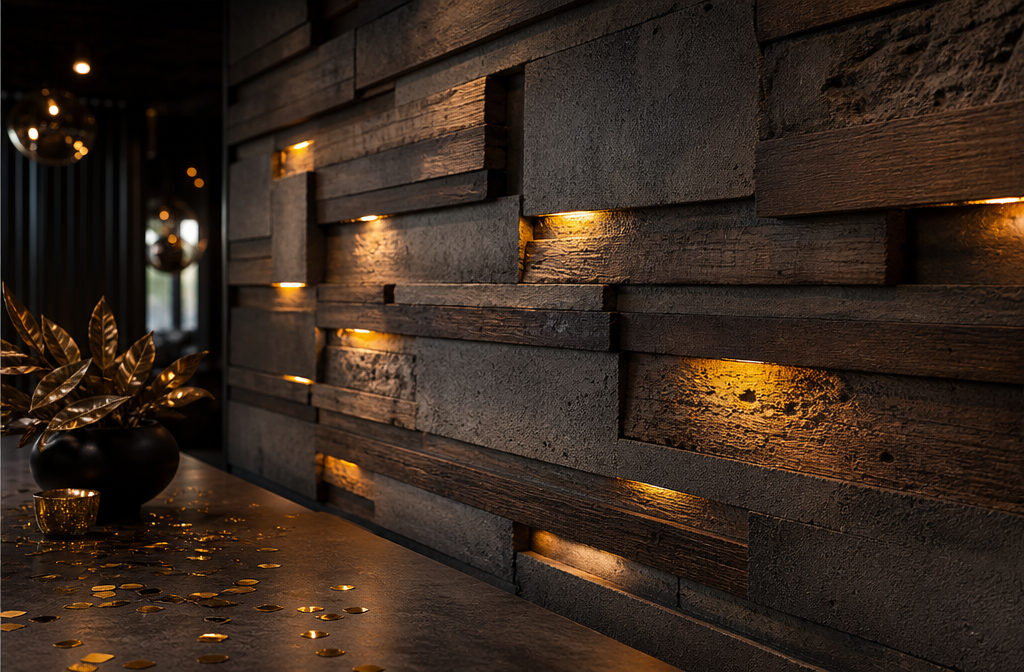
Lighting accounts for up to 85% of a guest's first emotional impression of an event space — yet most party planners still treat it as an afterthought, hanging generic string lights or renting floor lamps that crowd the room. The boldest trend reshaping event design in 2026 is the direct opposite of that approach: sculptural wall-integrated lighting, where canopy-less fixtures are embedded organically into textured wall panels to produce asymmetrical, statement-making glows that transform any space into a cinematic experience. Sculptural Wall-Integrated Lighting for Dramatic 2026 Party Ambiance is not just an aesthetic upgrade — it is a structural philosophy that merges architecture, art, and atmosphere into one seamless design move.
Key Takeaways 🌟
- Wall-integrated lighting eliminates clutter by embedding fixtures directly into textured panels, freeing floor and ceiling space.
- Asymmetrical placement of canopy-less light sources creates depth, drama, and a custom, gallery-like feel.
- Material choice matters enormously — concrete, raw timber, plaster, and brushed metal each interact with embedded light in unique, dramatic ways.
- Smart LED technology makes wall-integrated systems energy-efficient, color-tunable, and remotely controllable for real-time ambiance shifts during events.
- Structural considerations — including wall composition and load-bearing factors — must be assessed before installation, especially in shared or rented properties.
Why Canopy-Free, Wall-Integrated Fixtures Are Dominating 2026 Event Design
Traditional party lighting relies on a predictable formula: pendant lights hang from ceilings, floor lamps stand in corners, and canopy-covered sconces dot the walls. The result is a space that feels assembled rather than designed. Sculptural wall-integrated lighting breaks this formula entirely.
By removing the canopy — the decorative housing that traditionally shields a bulb — designers expose the light source itself as a design element. When these bare, intentional fixtures are set directly into a wall's surface material, something remarkable happens: the wall becomes the lamp. 🔆
The Psychology of Asymmetrical Glow
Symmetry signals formality. Asymmetry signals energy, creativity, and movement — exactly the emotional register a great party demands. When light sources are placed at irregular intervals across a textured wall panel, they create:
- Varied shadow depths that shift as guests move through the space
- Focal tension that draws the eye across the entire wall surface
- Perceived spatial expansion, making rooms feel larger and more dynamic
"The best party lighting doesn't announce itself — it simply makes everything and everyone look extraordinary."
This is the core promise of sculptural wall-integrated design: the fixture disappears into the architecture, and the effect becomes the star.
Choosing the Right Wall Textures and Materials
The material into which a light fixture is embedded determines the quality, color, and character of the glow it produces. This is where Sculptural Wall-Integrated Lighting for Dramatic 2026 Party Ambiance becomes a true craft, requiring careful material selection.
Top Materials for Embedded Sculptural Lighting in 2026
| Material | Light Interaction | Best For | Mood Created |
|---|---|---|---|
| Raw Concrete | Absorbs and scatters warm tones | Industrial loft parties | Moody, editorial, dramatic |
| Reclaimed Timber | Warm grain amplification | Rustic or bohemian events | Intimate, organic, cozy |
| Textured Plaster | Soft diffusion, halo effects | Elegant dinner parties | Romantic, gallery-like |
| Brushed Brass Panels | Reflective warmth, metallic shimmer | Glamour or NYE events | Luxurious, high-energy |
| Perforated Metal | Dappled, starfield-like patterns | Club-style or rave events | Futuristic, kinetic |
| Stone Veneer | Deep shadow pockets, cave-like drama | Cocktail parties | Sophisticated, mysterious |
How to Layer Textures for Maximum Impact
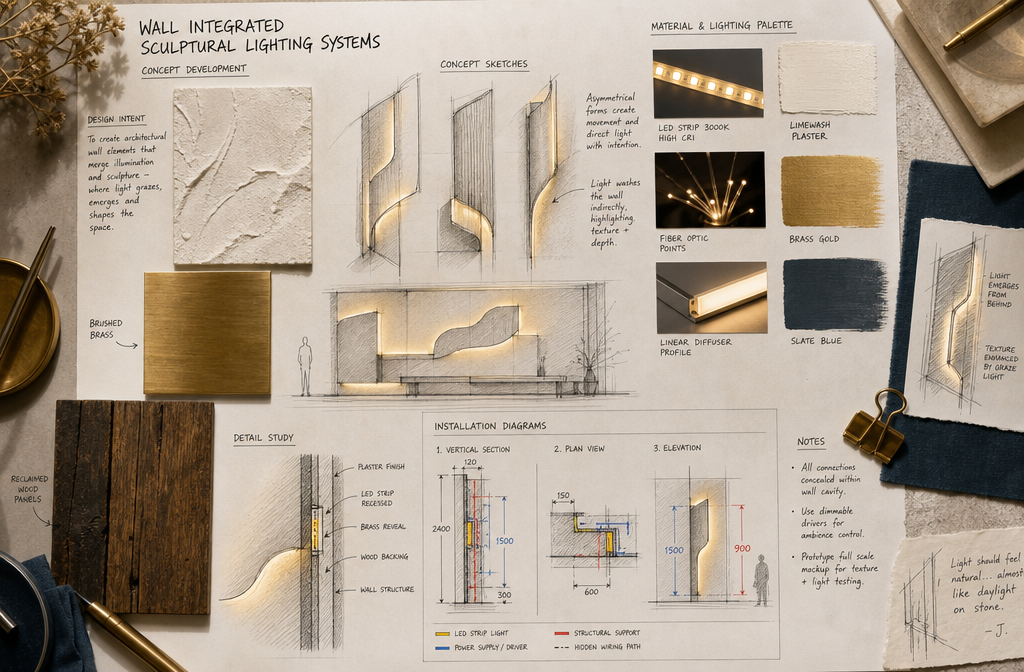
The most visually compelling installations in 2026 use two or three material layers on a single wall panel. A common approach:
- Base layer: Rough concrete or plaster for depth and shadow
- Mid layer: Reclaimed wood slats or metal strips at varying angles
- Light layer: Canopy-free LED point sources or fiber optic nodes embedded at the intersections of materials
This layering means light does not simply illuminate — it interacts, bouncing between surfaces and creating a living, breathing glow that changes with viewing angle.
Structural and Legal Considerations Before You Begin 🔨
Before embedding any fixture into a wall — particularly in a rented venue, semi-detached property, or shared building — it is essential to understand the structural and legal context of that wall. Not all walls are purely decorative. Some are load-bearing; others may be party walls governed by specific legislation.
If the installation involves drilling, channeling cables, or attaching mounting hardware to a wall shared with a neighboring property, the Party Wall Act may apply. Understanding the difference between a party fence wall and a boundary wall is a practical first step before any physical work begins.
For homeowners planning more permanent wall-integrated lighting installations in London, consulting a professional — such as a party wall surveyor in South London or Central London — can prevent costly disputes and ensure compliance with building regulations.
Installation Techniques for Sculptural Wall-Integrated Lighting for Dramatic 2026 Party Ambiance
Getting the installation right is what separates a professional result from a DIY disappointment. The following techniques represent the current best practices for achieving that signature asymmetrical, canopy-free glow.
1. Recessed Channel Routing
This method involves cutting shallow channels directly into the wall panel material and routing LED strip or flex cable within them. The channel depth controls how much of the light source is visible:
- Shallow channel (3–5mm): Light source partially visible, creates a raw, exposed aesthetic
- Deep channel (10–15mm): Light source hidden, only the glow escapes — perfect for halo effects on plaster or stone
2. Point-Source Node Embedding
Individual LED nodes or small halogen capsules are set directly into drilled pockets in the wall material. This technique works exceptionally well with:
- Concrete panels: Nodes appear as glowing "inclusions," like bioluminescent organisms
- Timber planks: Nodes between wood grain lines create a lantern-like warmth
- Perforated metal: Nodes behind the sheet produce a dappled starfield effect
3. Fiber Optic Thread Integration
Fiber optic strands are woven through porous materials like textured plaster, woven rattan panels, or even fabric-backed wall coverings. A single light source (the illuminator) powers hundreds of individual points, making this one of the most energy-efficient options for large-scale installations.
Key advantages:
- ✅ No heat at the point of emission (safe for flammable materials)
- ✅ Virtually invisible when unlit — panels look like pure art during the day
- ✅ Color-changing illuminators allow real-time ambiance shifts
- ✅ Minimal electrical infrastructure at the wall surface
4. Smart Control Integration
In 2026, no high-end wall-integrated lighting system is complete without smart control. Options include:
- DMX controllers: Industry-standard for event lighting, allowing precise programming of color, intensity, and timing
- Zigbee/Z-Wave mesh systems: Wireless control via smartphone app, ideal for temporary or rental installations
- Scene presets: Pre-programmed lighting "moods" (cocktail hour warm amber → dance floor cool blue → midnight deep violet) triggered automatically or manually
"Smart-controlled wall-integrated lighting turns a static installation into a dynamic event tool — the wall itself becomes a performer."
Planning Around Shared Walls
For permanent home installations intended for regular entertaining, any work that affects a wall shared with a neighbor requires careful planning. Homeowners should review what types of party wall works require formal notice, and understand the process of serving party wall notices before beginning structural modifications.
If a neighbor raises concerns about vibration from drilling or cable routing near a shared structure, a party wall award can formalize the agreed terms and protect both parties. Understanding how to keep party wall costs down is also valuable for homeowners managing a renovation budget alongside a lighting design project.
Design Principles: Achieving Maximum Drama Without Chaos
Sculptural wall-integrated lighting is powerful — which means it can easily tip from dramatic to overwhelming. These principles keep the design intentional and impactful.
The Rule of Deliberate Irregularity
Randomness and chaos are not the same thing. Deliberate irregularity means placing fixtures according to a hidden logic — perhaps following the natural grain of wood, the crack lines in plaster, or a geometric pattern that is only revealed when standing at a specific angle. This creates the sensation of discovery for guests, which is one of the most powerful emotional tools in event design.
Color Temperature Strategy 🎨
| Event Type | Recommended Color Temperature | Effect |
|---|---|---|
| Cocktail reception | 2700K–3000K (warm white) | Flattering, intimate, convivial |
| Dance party | Tunable 2700K–6500K + color | Dynamic, energetic, transformative |
| Formal dinner | 2200K–2700K (candlelight) | Elegant, romantic, timeless |
| Art or gallery party | 3500K–4000K (neutral white) | Clean, sophisticated, focused |
| Themed event (sci-fi, etc.) | Full RGB color | Immersive, theatrical, bold |
Negative Space as a Design Tool
Not every part of the wall needs light. Dark zones between lit areas are as important as the glowing points themselves. These shadows:
- Create visual rhythm and breathing room
- Prevent sensory overload
- Make the lit areas feel more precious and intentional
A useful rule: no more than 40% of the wall surface should be actively lit at any given moment for maximum dramatic effect.
Scale and Proportion
The size of individual light nodes or channels should be proportional to the scale of the event space:
- Intimate rooms (under 50 guests): Small nodes, subtle fiber optic threads, low-intensity glow
- Mid-size venues (50–200 guests): Mix of channel routing and point-source nodes, moderate intensity
- Large event spaces (200+ guests): Bold, large-format panels with multiple light layers, high-intensity smart-controlled systems
Practical Implementation Guide: From Concept to Party Night
Step-by-Step Planning Checklist ✅
- Assess the wall — Identify material, load-bearing status, and whether it is a shared or party wall
- Define the event mood — Choose color temperature strategy and control system
- Select panel materials — Based on desired light interaction and venue aesthetic
- Design the fixture layout — Apply deliberate irregularity principles; sketch before drilling
- Route electrical infrastructure — Plan cable paths to avoid structural elements
- Install and test — Always test at full brightness and in darkness before the event
- Program smart controls — Set scene presets for each phase of the event
- Final walk-through — View the installation from multiple angles and distances
Budget Considerations 💰
| Installation Type | Approximate Cost Range (2026) | Best For |
|---|---|---|
| DIY fiber optic panel | £150–£400 | Home parties, small venues |
| Professional LED channel routing | £800–£2,500 | Mid-size events, semi-permanent |
| Full smart-controlled sculptural system | £3,000–£12,000+ | High-end events, permanent installs |
| Rental modular wall panels with integrated lighting | £500–£1,500/event | One-time events, flexibility needed |
Temporary vs. Permanent Installations
For temporary party setups, modular panel systems — pre-fabricated textured panels with embedded lighting that clip or hang onto existing walls — offer the full visual impact without structural modification. These are ideal for:
- Rented venues where wall modification is prohibited
- Seasonal or one-time events
- Clients who want flexibility to change the design between events
For permanent home installations, the investment pays dividends across dozens of future events, and the design can evolve over time as fixtures are upgraded or panel materials are refreshed.
Homeowners considering permanent structural work should also be aware of boundary rules and how close a neighbor can build to a fence, particularly when outdoor wall-integrated lighting extends to garden or exterior walls near property boundaries.
Conclusion: Transform Your Walls Into the Event's Most Powerful Design Element
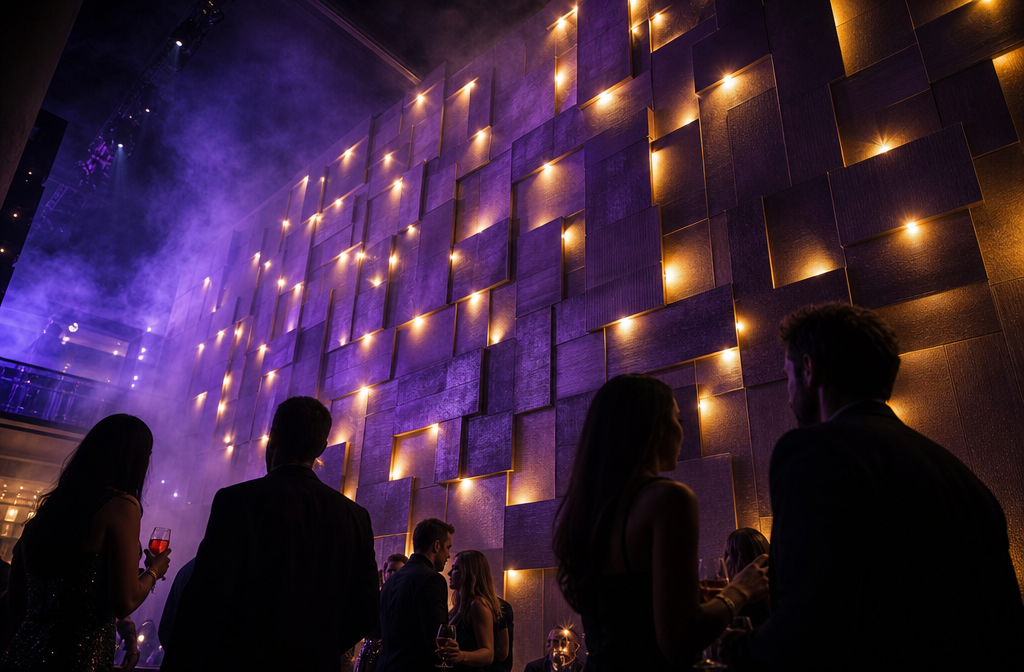
Sculptural Wall-Integrated Lighting for Dramatic 2026 Party Ambiance represents a fundamental shift in how event spaces are conceived and experienced. By embedding canopy-free fixtures directly into layered, textured wall panels and placing them with deliberate asymmetry, designers and homeowners alike can achieve a level of atmospheric drama that no floor lamp or pendant light can match.
The wall stops being a background and becomes the performance itself. 🎉
Actionable Next Steps
- Audit your event space — Identify which walls have the most visual impact and assess their structural status before planning any embedded installation.
- Start with a modular panel — Test the concept with a pre-fabricated textured panel and embedded LED nodes before committing to permanent installation.
- Invest in smart control — Even a basic app-controlled dimmer system will dramatically increase the versatility of any wall-integrated lighting setup.
- Consult professionals for structural work — If permanent installation involves drilling into or near shared walls, seek expert guidance to stay compliant and protect your property investment.
- Iterate across events — Photograph the lighting at each event, note what worked, and refine the design over time. The best sculptural lighting systems evolve with experience.
The most memorable parties of 2026 will not be remembered for their catering or their playlist alone — they will be remembered for how the room felt. And that feeling begins with the walls.