


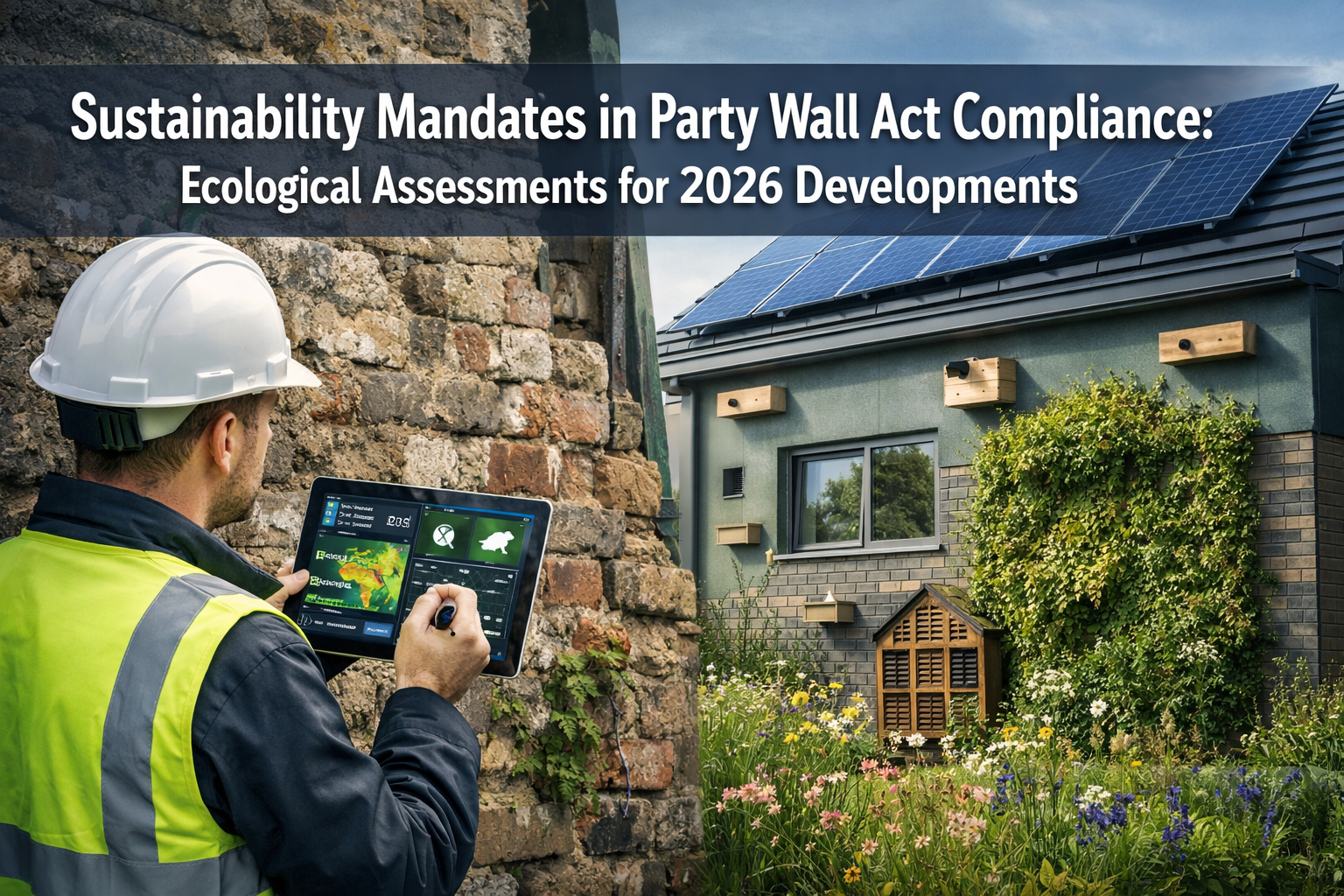
As environmental regulations tighten across the UK construction sector, property developers and surveyors face a new reality: Sustainability Mandates in Party Wall Act Compliance: Ecological Assessments for 2026 Developments are no longer optional considerations but essential requirements. The intersection of traditional party wall procedures with emerging ecological standards represents one of the most significant shifts in surveying practice this decade. With 2026 marking the introduction of the Future Homes Standard and stricter planning reforms, surveyors must now integrate comprehensive eco-data into party wall notices and awards, forecasting environmental impacts on shared walls while maintaining compliance with both the Party Wall etc. Act 1996 and new sustainability frameworks.
Key Takeaways
- 🌱 2026 sustainability mandates require ecological assessments to be integrated into party wall procedures, including biodiversity measures and habitat considerations
- 📊 Future Homes Standard demands 75-80% carbon emissions reduction in new builds, directly affecting party wall works involving shared structures
- 🏗️ Net-zero retrofit projects (heat pumps, solar panels, external wall insulation) trigger both party wall requirements and ecological compliance obligations
- 📋 Party wall awards must now include sustainability clauses addressing environmental impact, material selection, and biodiversity net gain
- ⚖️ Surveyors face dual compliance challenges: balancing traditional party wall protections with emerging environmental regulations
Understanding the 2026 Sustainability Landscape for Party Wall Works
The construction industry in 2026 operates under fundamentally different rules than just a few years ago. The government's commitment to achieving net-zero by 2050 has accelerated the introduction of sustainability mandates that directly impact how party wall works are planned, executed, and documented.
The Future Homes Standard and Party Wall Implications
The Future Homes Standard, fully implemented in 2026, requires newly built homes to produce 75-80% lower carbon emissions compared to current standards [1]. This dramatic reduction affects party wall compliance in several critical ways:
Direct impacts on shared structures:
- Installation of low-carbon heating systems (heat pumps) often requires modifications to party walls
- Enhanced insulation standards necessitate external wall insulation (EWI) on shared boundaries
- Solar panel installations on shared roof structures require careful party wall consideration
- Improved ventilation systems may impact party wall integrity
When undertaking types of party wall works in 2026, building owners must demonstrate not only compliance with traditional structural protections but also adherence to carbon reduction targets. This dual obligation transforms how party wall awards are drafted and executed.
Planning Reforms and Ecological Requirements
The 2026 planning reforms introduce specific sustainability guidance for building practices, including mandatory habitat restoration, biodiversity measures, and architectural features such as swift bricks for nesting birds [1]. While these requirements primarily target planning permissions, they increasingly influence party wall compliance through:
- Biodiversity net gain obligations that affect boundary treatments
- Habitat protection measures during construction on shared walls
- Material sustainability criteria for party wall repairs and modifications
- Green infrastructure requirements that may impact shared structures
"The integration of ecological assessments into party wall procedures represents a fundamental evolution in surveying practice, requiring professionals to balance property rights with environmental responsibilities."
Construction Products Sustainability Criteria
Under the government's broader reforms targeting net-zero by 2050, construction products must now adhere to strict sustainability standards [2]. For party wall works, this means:
| Product Category | Sustainability Requirement | Party Wall Impact |
|---|---|---|
| Insulation materials | Recycled content minimum 30% | EWI on shared walls |
| Structural timber | FSC/PEFC certification mandatory | Party wall repairs |
| Concrete products | Carbon-reduced formulations | Foundation works |
| Roofing materials | Recyclability rating required | Shared roof structures |
| Sealants & DPCs | VOC limits strictly enforced | Damp-proofing party walls |
These requirements directly influence material selection in party wall contract templates and specifications.
Integrating Ecological Assessments into Party Wall Procedures
The practical challenge facing surveyors in 2026 centers on seamlessly integrating ecological considerations into established party wall procedures without compromising the protections afforded to adjoining owners under the Act.
Pre-Notice Ecological Surveys
Before serving party wall notices, building owners must now conduct preliminary ecological assessments when sustainability-related works are planned. This represents a significant departure from traditional practice.
Essential ecological survey components:
✅ Habitat assessment of the party wall and immediate surroundings
✅ Protected species surveys (bats, nesting birds, vegetation)
✅ Biodiversity baseline documentation for net gain calculations
✅ Material sustainability audit of proposed construction products
✅ Carbon impact forecast for party wall modifications
✅ Green infrastructure opportunities identification
These surveys inform the content of party wall notices and help prevent disputes related to environmental compliance. When working with a party wall surveyor in Central London or other urban areas, ecological considerations become particularly complex due to higher concentrations of protected species and stricter planning requirements.
Modified Party Wall Notices for Sustainability Works
Traditional party wall act notices require enhancement to address sustainability mandates. The 2026 approach includes:
Additional information requirements:
- Description of sustainability objectives (carbon reduction, biodiversity net gain)
- Ecological assessment summary and findings
- Proposed mitigation measures for environmental impacts
- Sustainable material specifications
- Timeline considerations for seasonal ecological constraints (breeding seasons, hibernation periods)
- Green infrastructure proposals affecting shared structures
For example, when planning heat pump installation requiring party wall works, the notice must detail not only structural implications but also acoustic performance, carbon savings projections, and any ecological considerations related to external unit placement [4].
Enhanced Party Wall Awards with Sustainability Clauses
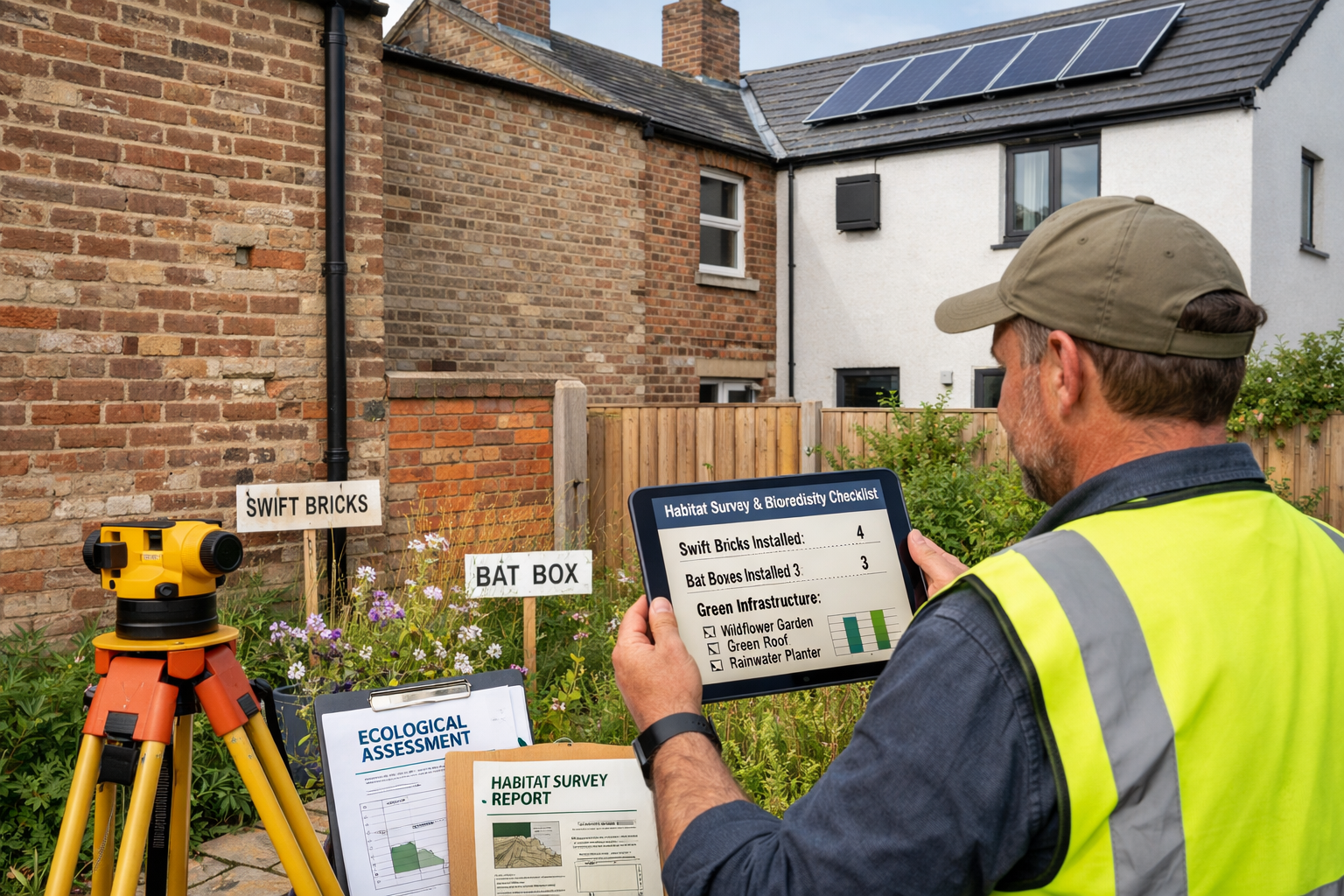
Sustainability Mandates in Party Wall Act Compliance: Ecological Assessments for 2026 Developments fundamentally reshape how party wall awards are structured. Modern awards must incorporate:
Environmental protection clauses:
- Material sustainability requirements specifying certified, low-carbon products
- Biodiversity protection measures during construction phases
- Habitat restoration obligations post-completion
- Carbon monitoring provisions for major retrofit works
- Green infrastructure maintenance responsibilities for shared elements
Practical example: A party wall award for external wall insulation installation now includes clauses requiring:
- Use of insulation materials with Environmental Product Declarations (EPDs)
- Protection protocols for any nesting birds discovered during works
- Installation of swift bricks at specified intervals
- Post-completion thermal performance verification
- Five-year maintenance schedule for green wall systems if incorporated
Understanding how to keep party wall costs down becomes more complex when sustainability requirements add layers of compliance and documentation.
Schedule of Condition with Ecological Baseline
The traditional schedule of condition expands in 2026 to include ecological baseline documentation. This serves dual purposes:
Protection for adjoining owners:
- Documents pre-existing green infrastructure (green walls, wildlife features)
- Records habitat presence (bird nests, bat roosts, established vegetation)
- Establishes baseline for biodiversity net gain calculations
- Provides evidence for environmental compliance verification
Protection for building owners:
- Demonstrates pre-work ecological status
- Supports defense against unfounded environmental damage claims
- Validates compliance with sustainability mandates
- Documents sustainable features requiring protection during works
Net-Zero Retrofit Projects and Party Wall Considerations
The push toward net-zero has created a surge in retrofit projects that trigger party wall requirements while simultaneously demanding ecological compliance. These works represent the primary intersection of Sustainability Mandates in Party Wall Act Compliance: Ecological Assessments for 2026 Developments.
Heat Pump Installations on Shared Boundaries
Heat pump installations frequently require party wall consideration when external units are positioned near shared boundaries or when internal pipework penetrates party walls [4]. The sustainability assessment must address:
Technical considerations:
- Acoustic impact on adjoining properties (heat pumps generate operational noise)
- Structural modifications to party walls for pipework penetration
- Visual impact and planning compliance for external units
- Carbon savings projections and Future Homes Standard compliance
Ecological considerations:
- Positioning to avoid disruption to bat flight paths or bird nesting sites
- Seasonal timing restrictions to protect breeding wildlife
- Material sustainability for mounting brackets and insulation
- Biodiversity enhancement opportunities (green screening, habitat boxes)
Working with a qualified party wall surveyor in North London or other areas experienced in net-zero retrofits ensures both Act compliance and sustainability mandate adherence.
External Wall Insulation (EWI) Projects
External wall insulation represents one of the most common triggers for party wall considerations in 2026 net-zero compliance projects [5]. The sustainability dimension adds complexity:
Party wall implications:
- EWI typically extends beyond the building line, potentially encroaching on adjoining property
- Scaffolding and access requirements affect neighbors
- Attachment methods may impact party wall structural integrity
- Thermal bridging at party wall junctions requires careful detailing
Sustainability requirements:
- Insulation materials must meet carbon reduction targets
- Installation must not damage existing green infrastructure
- Opportunity to integrate biodiversity features (swift bricks, bat boxes)
- Whole-building thermal performance must achieve Future Homes Standard
The party wall agreement process for EWI projects now routinely includes ecological survey findings and sustainability compliance documentation.
Solar Panel and Renewable Energy Installations
Solar panel installations on shared roof structures create unique challenges at the intersection of party wall requirements and sustainability mandates:
Structural party wall considerations:
- Weight loading on shared roof structures
- Penetrations through party walls for electrical conduits
- Potential damage during installation requiring party wall awards
- Access arrangements across adjoining properties
Ecological and sustainability factors:
- Bird deterrent measures to prevent nesting under panels (protecting both wildlife and installation)
- Reflectivity impacts on neighboring properties and local wildlife
- Integration with biodiversity net gain requirements
- Carbon reduction contribution toward net-zero targets
"Solar retrofit projects exemplify the modern surveyor's challenge: navigating traditional property law while advancing environmental objectives, all within the framework of party wall compliance."
Green Walls and Living Infrastructure
Green walls and living infrastructure on party walls or shared boundaries represent emerging sustainability features with unique compliance requirements:
Benefits and considerations:
- Significant biodiversity net gain contribution
- Carbon sequestration and air quality improvement
- Thermal performance enhancement of party walls
- Acoustic insulation benefits for adjoining owners
Party wall challenges:
- Irrigation system installation may require party wall consent
- Root barriers and waterproofing to protect party wall integrity
- Maintenance access arrangements
- Long-term responsibility allocation in party wall awards
Surveyor Responsibilities and Best Practices for 2026
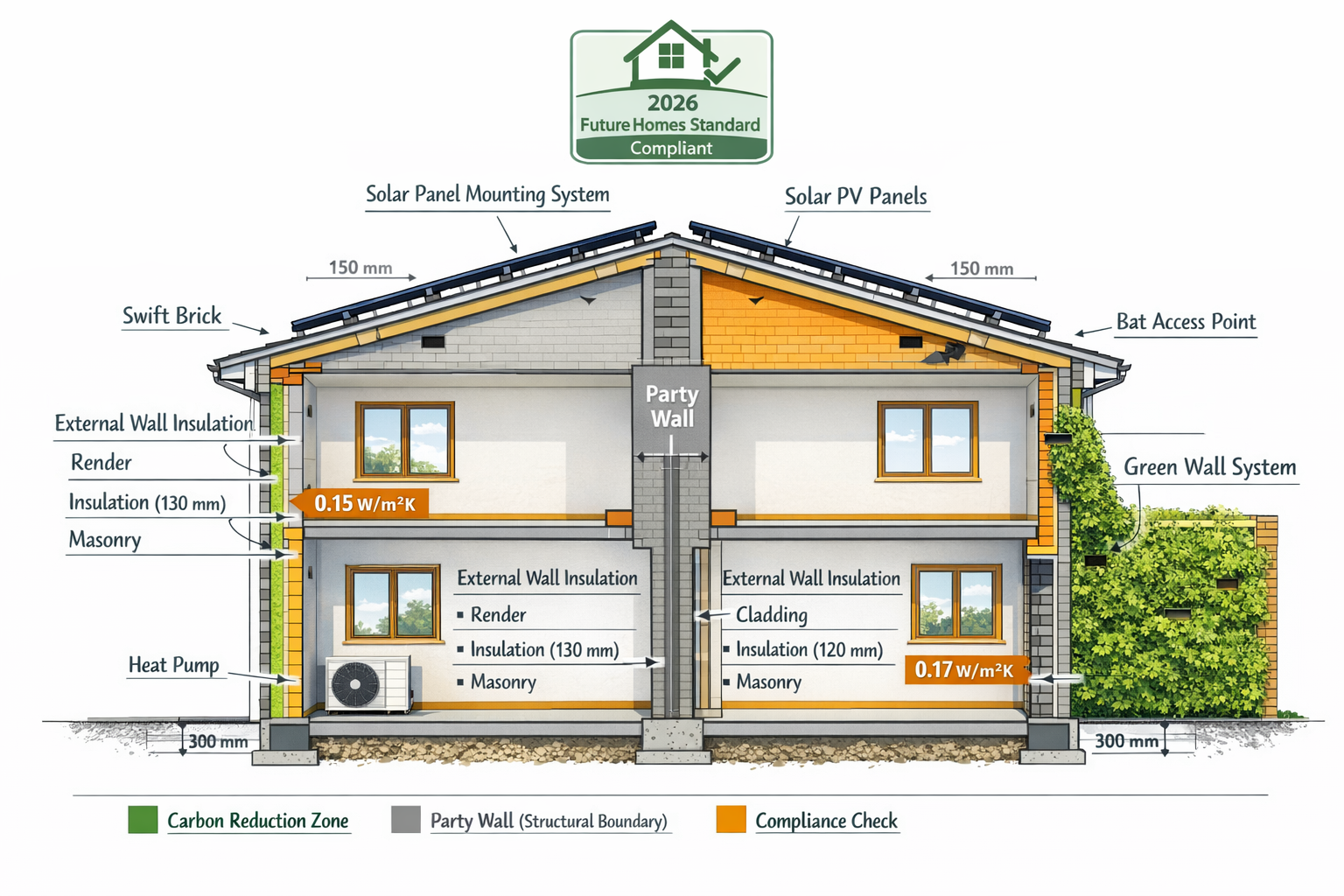
Professional surveyors in 2026 must expand their competencies to effectively manage Sustainability Mandates in Party Wall Act Compliance: Ecological Assessments for 2026 Developments. This evolution requires both technical knowledge and procedural adaptation.
Enhanced Competency Requirements
Modern party wall surveyors require understanding across multiple domains:
Traditional party wall expertise:
- Thorough knowledge of the Party Wall etc. Act 1996
- Structural assessment capabilities
- Dispute resolution skills
- Award drafting proficiency
New sustainability competencies:
- Familiarity with Future Homes Standard requirements
- Basic ecological survey interpretation skills
- Carbon calculation methodologies
- Sustainable material specification knowledge
- Biodiversity net gain principles
- Green infrastructure design awareness
Surveyors need not become ecological specialists but must understand when to recommend specialist input and how to integrate ecological findings into party wall documentation.
Collaboration with Ecological Consultants
Complex projects require collaboration between party wall surveyors and ecological consultants. Best practice involves:
Integrated assessment approach:
- Initial screening by party wall surveyor identifies potential ecological issues
- Specialist ecological survey conducted where risks are identified
- Joint review of findings to determine party wall implications
- Coordinated documentation ensuring both Act compliance and environmental protection
- Unified recommendations in party wall awards addressing all considerations
This collaborative model protects all parties while ensuring comprehensive compliance. When engaging a party wall surveyor in South London or elsewhere, property owners should inquire about the surveyor's network of ecological specialists.
Documentation and Record-Keeping Standards
Enhanced documentation standards in 2026 reflect dual compliance obligations:
Essential records for sustainability-compliant party wall works:
📄 Pre-work documentation:
- Ecological survey reports and findings
- Photographic evidence of baseline conditions
- Material sustainability certifications
- Carbon impact assessments
- Biodiversity net gain calculations
📄 During-work documentation:
- Compliance monitoring records
- Material delivery certifications
- Ecological watching brief reports (if required)
- Incident logs for any environmental issues
📄 Post-work documentation:
- Completion certificates with sustainability compliance confirmation
- As-built drawings showing green infrastructure installations
- Thermal performance verification results
- Biodiversity enhancement evidence (photos of installed features)
This comprehensive documentation protects building owners, adjoining owners, and surveyors from future disputes while demonstrating regulatory compliance.
Dispute Resolution with Sustainability Dimensions
Disputes in 2026 increasingly involve sustainability-related disagreements. Common scenarios include:
Typical sustainability-related party wall disputes:
- Disagreement over necessity of ecological surveys
- Material selection conflicts (cost vs. sustainability)
- Biodiversity feature placement disputes
- Carbon reduction methodology disagreements
- Green infrastructure maintenance responsibility conflicts
Resolution requires surveyors to balance:
- Legal obligations under the Party Wall etc. Act 1996
- Regulatory requirements under planning and building regulations
- Environmental mandates from sustainability frameworks
- Practical considerations including cost and feasibility
- Neighbor relations and long-term property value
Understanding the full scope of costs of party wall processes helps parties anticipate the financial implications of sustainability-enhanced procedures.
Checklist for Surveyors: Sustainability-Compliant Party Wall Awards
Essential elements for 2026-compliant party wall awards:
✅ Identification section:
- Standard party details (building owner, adjoining owner, properties)
- Sustainability objectives statement
- Applicable environmental regulations reference
✅ Works description:
- Traditional structural works detail
- Sustainability features and objectives
- Ecological mitigation measures
- Green infrastructure installations
✅ Materials specification:
- Structural materials with sustainability certifications
- Carbon footprint data for major materials
- Recycled content percentages where applicable
- Environmental Product Declarations (EPDs) references
✅ Execution provisions:
- Standard construction methodology
- Ecological protection protocols
- Seasonal timing restrictions (if applicable)
- Monitoring and verification procedures
✅ Completion requirements:
- Traditional damage rectification provisions
- Sustainability performance verification
- Biodiversity enhancement evidence
- Maintenance schedule for green infrastructure
✅ Costs and expenses:
- Standard party wall costs allocation
- Sustainability assessment costs
- Ecological survey expenses
- Enhanced material costs justification
This comprehensive approach ensures awards address both traditional party wall protections and modern sustainability mandates.
Regional Variations and Local Authority Requirements
Sustainability mandates vary significantly across UK regions and local authorities, creating additional complexity for party wall compliance. Understanding local requirements is essential for effective practice.
London-Specific Considerations
London boroughs often impose stricter sustainability requirements than national standards:
Enhanced London requirements:
- Greater London Authority's zero-carbon targets exceed national standards
- Many boroughs require biodiversity net gain above minimum thresholds
- Urban greening factors apply to developments affecting party walls
- Air quality considerations influence material selection and construction methods
Whether working with a party wall surveyor in East London or West London, understanding borough-specific requirements prevents compliance issues.
Conservation Areas and Listed Buildings
Party walls in conservation areas or listed buildings face additional constraints:
Balancing heritage and sustainability:
- Traditional materials may conflict with modern sustainability standards
- Ecological features must respect architectural character
- Planning consent often required alongside party wall procedures
- Specialist heritage consultants may be necessary
The challenge lies in achieving sustainability objectives while preserving historic fabric and character—a balance requiring experienced professional judgment.
Rural vs. Urban Ecological Considerations
Ecological assessments differ significantly between urban and rural settings:
Urban party wall ecology:
- Focus on protected urban species (bats, swifts, house sparrows)
- Green infrastructure opportunities for biodiversity enhancement
- Air quality and urban heat island mitigation
- Limited space requires creative sustainability solutions
Rural party wall ecology:
- Broader range of protected species potential
- Habitat connectivity considerations
- Agricultural building conversions with unique sustainability challenges
- Greater flexibility for extensive green infrastructure
Understanding these contextual differences ensures appropriate ecological assessment scope and party wall compliance strategies.
Financial Implications and Cost Management
Sustainability Mandates in Party Wall Act Compliance: Ecological Assessments for 2026 Developments inevitably impact project costs. Understanding these financial implications helps parties plan effectively.
Additional Cost Components
New cost elements in sustainability-compliant party wall works include:
Ecological assessment costs:
- Preliminary ecological survey: £500-£1,500
- Detailed protected species surveys: £1,000-£5,000+
- Ecological watching brief during works: £500-£2,000
- Post-completion biodiversity verification: £500-£1,000
Enhanced materials costs:
- Sustainable materials premium: typically 10-25% above standard products
- Certified timber, recycled insulation, low-carbon concrete
- Environmental Product Declarations and certifications
- Green infrastructure components (swift bricks, bat boxes, green wall systems)
Additional professional fees:
- Surveyor time for sustainability integration: 15-30% additional
- Ecological consultant coordination
- Enhanced documentation and reporting
- Sustainability compliance verification
Total impact: Sustainability-enhanced party wall procedures typically add 20-40% to traditional party wall costs, though this varies significantly by project scope.
Long-Term Value and Return on Investment
Despite higher upfront costs, sustainability-compliant party wall works offer significant long-term value:
Financial benefits:
- Energy cost savings: 40-60% reduction in heating costs from proper insulation and heat pumps
- Property value increase: Sustainable features increasingly valued by buyers
- Future-proofing: Compliance with emerging regulations avoids costly future retrofits
- Reduced maintenance: Quality sustainable materials often have longer service life
Environmental benefits:
- Carbon emissions reduction contributing to net-zero targets
- Biodiversity enhancement improving local ecosystem health
- Improved air quality and urban environment
- Climate change adaptation and resilience
Funding and Incentives
Various funding mechanisms support sustainability-compliant party wall works:
Available support:
- Government grants: Boiler Upgrade Scheme for heat pump installations
- Local authority schemes: Borough-specific sustainability grants
- Energy company obligations: Funding for insulation and efficiency measures
- Green mortgages: Favorable rates for sustainable property improvements
Property owners should investigate available funding before commencing works, as this can significantly offset the additional costs of sustainability compliance.
Future Outlook: Beyond 2026
The integration of sustainability mandates into party wall compliance represents an ongoing evolution rather than a fixed endpoint. Looking beyond 2026, several trends will shape future practice:
Emerging Technologies and Methodologies
Anticipated developments:
- Digital twins for party wall assessment incorporating real-time environmental monitoring
- AI-powered ecological surveys using drone technology and automated species identification
- Blockchain verification of sustainable material supply chains
- Building Information Modeling (BIM) integration with ecological data layers
- Smart monitoring systems for ongoing sustainability performance verification
Regulatory Evolution
Sustainability mandates will continue tightening:
Expected regulatory changes:
- Stricter carbon reduction targets beyond the current 75-80%
- Mandatory biodiversity net gain increases (currently 10%, likely to increase)
- Embodied carbon regulations for construction materials
- Circular economy requirements for construction waste
- Enhanced green infrastructure mandates for urban developments
Professional Practice Development
The surveying profession must continue adapting:
Professional development priorities:
- Continuing professional development (CPD) in sustainability assessment
- Cross-disciplinary training programs
- Updated professional standards and guidance
- Enhanced insurance coverage for sustainability-related risks
- Industry collaboration on best practice development
Party wall surveyors who embrace these changes and develop relevant competencies will be best positioned to serve clients effectively in the evolving regulatory landscape.
Conclusion
Sustainability Mandates in Party Wall Act Compliance: Ecological Assessments for 2026 Developments represent a fundamental transformation in surveying practice, requiring professionals to navigate the complex intersection of traditional property law and modern environmental regulation. The 2026 implementation of the Future Homes Standard, combined with stricter planning reforms and construction product sustainability criteria, creates a new paradigm where ecological considerations are integral to party wall procedures rather than peripheral concerns.
Successful navigation of this landscape requires:
🎯 Comprehensive understanding of both Party Wall etc. Act 1996 requirements and emerging sustainability mandates
🎯 Proactive ecological assessment integrated into pre-notice planning stages
🎯 Enhanced documentation capturing both structural and environmental baseline conditions
🎯 Collaborative approach leveraging ecological specialists where appropriate
🎯 Forward-thinking party wall awards incorporating sustainability clauses and green infrastructure provisions
🎯 Ongoing professional development to maintain competency in evolving regulatory frameworks
Actionable Next Steps
For building owners planning party wall works:
- Engage experienced surveyors familiar with sustainability mandates early in project planning
- Commission preliminary ecological surveys before serving party wall notices
- Budget for enhanced materials and assessment costs (typically 20-40% premium)
- Investigate available funding and incentives for sustainable improvements
- Consider long-term value and future-proofing benefits when evaluating costs
For adjoining owners receiving party wall notices:
- Verify that sustainability considerations are adequately addressed in notices and awards
- Ensure ecological protection measures are specified where relevant
- Understand your rights regarding sustainable material selection and green infrastructure
- Appoint surveyors with sustainability competency to represent your interests
- Request comprehensive schedules of condition including ecological baselines
For surveyors:
- Develop competency in sustainability assessment through CPD and training
- Build relationships with ecological consultants for specialist input
- Update standard documentation templates to incorporate sustainability clauses
- Stay informed about evolving regulations and best practices
- Advise clients proactively about sustainability implications of proposed works
The integration of ecological assessments into party wall compliance may initially appear burdensome, but it ultimately serves the broader public interest while protecting individual property rights. As environmental regulations continue tightening toward the UK's net-zero 2050 target, early adoption of sustainability-conscious party wall practices positions professionals, property owners, and communities for success in an increasingly environmentally regulated construction landscape.
By embracing Sustainability Mandates in Party Wall Act Compliance: Ecological Assessments for 2026 Developments as an opportunity rather than an obstacle, the surveying profession can lead the way in demonstrating how traditional property protections and modern environmental stewardship can coexist effectively, creating built environments that respect both neighboring rights and ecological responsibilities.
References
[1] Planning Reforms – https://www.homebuilding.co.uk/news/planning-reforms
[2] Construction Products Reform White Paper – https://www.gov.uk/government/consultations/construction-products-reform-white-paper/construction-products-reform-white-paper
[3] Party Wall Agreement – https://hoa.org.uk/advice/guides-for-homeowners/i-am-improving/party-wall-agreement/
[4] Party Wall Surveys For Heat Pump And Solar Retrofit Projects Navigating 2026 Net Zero Mandates On Shared Boundaries – https://nottinghillsurveyors.com/blog/party-wall-surveys-for-heat-pump-and-solar-retrofit-projects-navigating-2026-net-zero-mandates-on-shared-boundaries
[5] Party Wall Essentials For 2026 Net Zero Compliance Projects Surveyor Checklists For Epc Retrofit Disputes – https://nottinghillsurveyors.com/blog/party-wall-essentials-for-2026-net-zero-compliance-projects-surveyor-checklists-for-epc-retrofit-disputes