


The construction landscape has shifted dramatically in 2026, with new tariff policies sending shockwaves through the industry. For property owners and surveyors managing party wall construction projects, these tariff-driven cost increases present unprecedented challenges. Understanding the Tariff Impacts on 2026 Party Wall Construction: How Surveyors Can Mitigate Cost Escalations in Awards has become essential for professionals navigating shared wall works across London and the wider UK market.
As material costs surge and supply chains adjust to new trade barriers, party wall surveyors must adapt their approach to party wall awards to protect both building owners and adjoining owners from unexpected financial burdens. The traditional fixed-price model for construction works is proving inadequate in this volatile environment, demanding innovative strategies and flexible award structures.
Key Takeaways
- 📈 Material costs for party wall construction have risen 15-25% in 2026 due to tariff implementations on imported steel, timber, and construction materials
- 💰 Surveyor fees have increased 8-12% since 2024, now ranging from £750-£1,800 per surveyor per affected neighbour in London[1]
- 🔧 Adjustable pricing clauses and fluctuation provisions in party wall awards provide essential protection against tariff-driven cost escalations
- 📋 Proactive material sourcing and supplier negotiations can offset tariff impacts by 10-18% through strategic planning
- ⚖️ Transparent communication between all parties about tariff risks reduces disputes and facilitates smoother project completion
Understanding the 2026 Tariff Landscape and Construction Material Costs
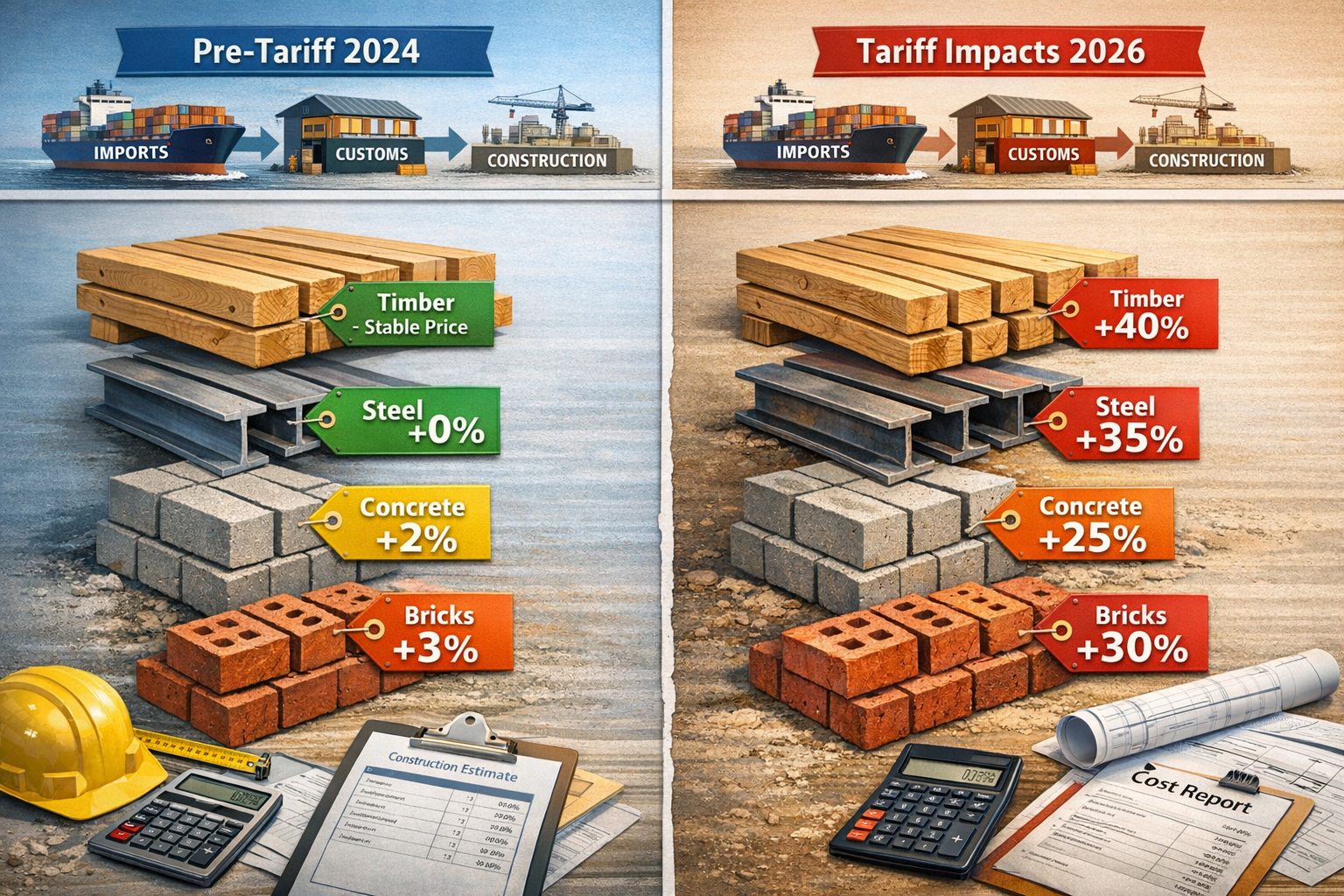
The UK construction industry is experiencing a significant turnaround in 2026 after several challenging years[3], but this recovery is complicated by new tariff structures affecting imported construction materials. Steel imports from certain regions now carry additional duties ranging from 12-25%, while timber products face variable tariffs depending on country of origin and processing level.
Primary Materials Affected by Tariff Policies
The construction materials most impacted by 2026 tariff implementations include:
- Structural steel beams and reinforcement bars – 15-25% price increases
- Engineered timber and treated lumber – 12-18% cost escalations
- Specialized construction adhesives and sealants – 8-14% higher pricing
- Concrete reinforcement materials – 10-16% additional costs
- Imported brickwork and masonry supplies – 7-12% tariff-related increases
For party wall construction specifically, these increases translate directly to higher costs for underpinning works, structural alterations, and new party wall construction. Projects involving basement excavations or significant structural interventions face the most substantial financial impacts.
Regional Variations in Material Availability
London markets, particularly in areas served by party wall surveyors in East London and West London, are experiencing varied material availability. Proximity to major ports and distribution centers creates pricing disparities across different boroughs, with some areas seeing 5-8% higher costs than others for identical materials.
How Tariff Impacts on 2026 Party Wall Construction Affect Award Structures
Traditional party wall awards typically specify fixed costs for anticipated works, but the volatile pricing environment of 2026 makes this approach increasingly problematic. Cost overruns of 20-30% are becoming common when awards are prepared without tariff considerations, creating disputes and project delays.
The Challenge of Fixed-Price Awards in Volatile Markets
When surveyors prepare awards with fixed construction cost estimates, they face several tariff-related challenges:
- Material price fluctuations between award preparation and actual construction commencement
- Supply chain disruptions forcing substitution of specified materials with more expensive alternatives
- Contractor pricing uncertainty leading to inflated quotes or project abandonment
- Dispute escalation when actual costs significantly exceed awarded amounts
The costs of party wall processes have become more unpredictable, with surveyor fees representing a growing proportion of total project expenses. In 2026, surveyor fees range from £750 to £1,800 per surveyor per affected neighbour, reflecting an 8-12% increase since 2024 due to demand and inflation[1]. For complex projects, particularly basement excavations, total costs per neighbour can exceed £12,000[1].
Impact on Different Types of Party Wall Works
The Tariff Impacts on 2026 Party Wall Construction vary significantly depending on the types of party wall works being undertaken:
| Work Type | Tariff Impact Severity | Primary Cost Drivers |
|---|---|---|
| Basement excavation | Very High (25-35%) | Steel reinforcement, underpinning materials, concrete |
| Loft conversion affecting party walls | Moderate (12-18%) | Timber joists, steel beams, insulation materials |
| Party wall rebuilding | High (18-25%) | Brickwork, mortar, structural ties, damp-proofing |
| Minor repairs and maintenance | Low (5-10%) | Pointing materials, minor fixings, sealants |
| New party fence wall construction | Moderate-High (15-22%) | Brickwork, foundations, coping materials |
Surveyor Strategies to Mitigate Tariff-Related Cost Escalations
Experienced party wall surveyors are developing innovative approaches to address the Tariff Impacts on 2026 Party Wall Construction: How Surveyors Can Mitigate Cost Escalations in Awards. These strategies protect all parties while maintaining compliance with the Party Wall etc. Act 1996.
Implementing Adjustable Pricing Clauses
Fluctuation provisions allow awards to accommodate material cost changes between award preparation and construction execution. These clauses typically reference:
- 📊 Published construction price indices (e.g., BCIS indices for specific material categories)
- 🔍 Documented supplier quotations with validity periods clearly stated
- 📅 Time-limited pricing with defined review periods (typically 90-120 days)
- 💵 Percentage-based adjustment mechanisms capped at reasonable limits (usually 15-20%)
When preparing party wall contract templates and awards, surveyors should explicitly state the baseline date for material pricing and the methodology for calculating adjustments. This transparency reduces disputes and provides certainty for both building owners and adjoining owners.
Early Material Procurement and Price Locking
Surveyors can advise building owners to secure material pricing early in the party wall process:
- Obtain firm quotations from suppliers before serving party wall notices
- Negotiate price-lock agreements with suppliers for 120-180 day periods
- Pre-purchase critical materials when storage is feasible and cost-effective
- Establish framework agreements with multiple suppliers to ensure competitive pricing
This proactive approach can reduce tariff exposure by 10-18%, particularly for projects with longer lead times between notice service and construction commencement.
Alternative Material Specifications
Surveyors should develop awards that permit material substitutions when tariff-affected products become prohibitively expensive. The award should specify:
- ✅ Performance criteria rather than specific product brands or origins
- ✅ Approval processes for material substitutions (typically requiring both surveyors' agreement)
- ✅ Quality standards that must be maintained regardless of material source
- ✅ Cost-saving sharing mechanisms when substitutions reduce expenses
For example, specifying "structural steel beams meeting BS EN 10025 standards" rather than "imported European I-beams" provides flexibility to source domestically-produced alternatives if tariffs make imports uneconomical.
Phased Award Structures for Complex Projects
For substantial works, particularly those involving basement excavations or major structural alterations, surveyors can prepare phased awards that:
- 🏗️ Separate preliminary works from main construction phases
- 🏗️ Allow material pricing updates between phases based on actual market conditions
- 🏗️ Reduce initial financial commitments while maintaining project progression
- 🏗️ Provide natural review points for cost reassessment and adjustment
This approach aligns particularly well with the construction boom London is experiencing in 2026, where project timelines may extend due to high demand for contractors and materials[3].
Practical Implementation: Tariff Considerations in Party Wall Awards
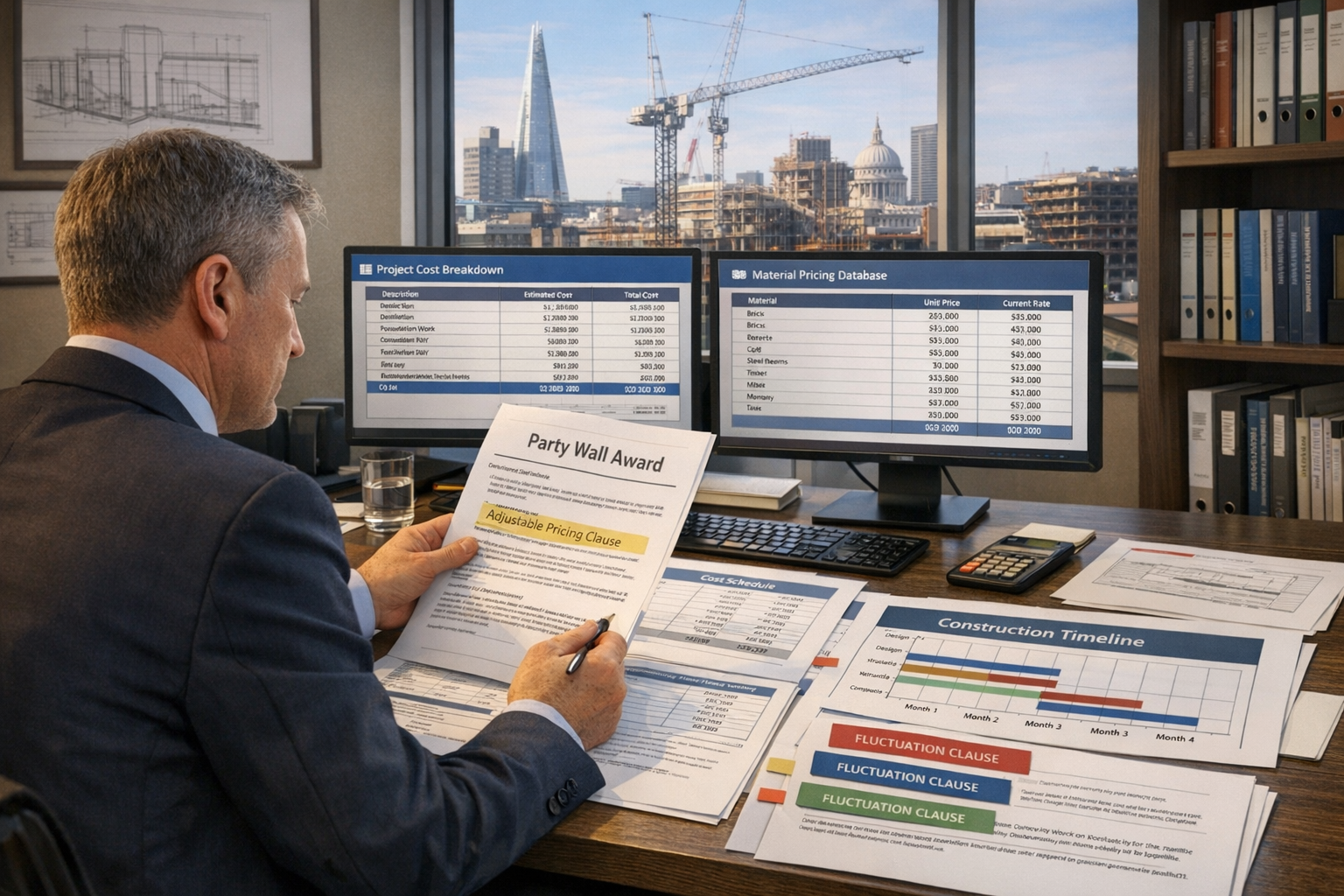
Implementing strategies to address Tariff Impacts on 2026 Party Wall Construction: How Surveyors Can Mitigate Cost Escalations in Awards requires careful documentation and clear communication with all parties.
Enhanced Schedule of Condition and Cost Documentation
The schedule of condition should be supplemented with detailed cost documentation including:
- Baseline material pricing with dated supplier quotations attached as appendices
- Tariff exposure analysis identifying which materials face significant import duties
- Alternative sourcing options with comparative pricing from multiple suppliers
- Contingency provisions specifically allocated for tariff-related escalations (typically 12-18%)
This comprehensive documentation provides a clear audit trail if disputes arise regarding cost increases during construction.
Communication Protocols for Cost Changes
Surveyors should establish clear protocols for communicating tariff-related cost changes:
- Immediate notification when material costs increase beyond threshold levels (typically 8-10%)
- Written justification with supporting documentation from suppliers
- Consultation period allowing adjoining owners to review and respond (minimum 14 days)
- Dispute resolution procedures if parties cannot agree on cost adjustments
For those keeping party wall costs down, transparency about tariff impacts helps maintain trust and reduces the likelihood of formal disputes requiring third surveyor involvement.
Contractor Selection and Pricing Mechanisms
When building owners select contractors for party wall works, surveyors should advise on tariff-aware procurement:
- 🔨 Request detailed material breakdowns in contractor quotations
- 🔨 Verify supplier relationships and material sourcing strategies
- 🔨 Include tariff adjustment clauses in construction contracts
- 🔨 Establish payment schedules tied to material delivery rather than fixed dates
Contractors with established relationships with domestic suppliers or those who maintain material inventories can often provide more stable pricing in the tariff-affected market of 2026.
Case Study: Basement Excavation in North London
A recent basement excavation project managed by party wall surveyors in North London illustrates effective tariff mitigation:
Project Details:
- Victorian terrace conversion with 3-meter basement excavation
- Three affected neighbours requiring separate awards
- Initial material cost estimate: £85,000
- Tariff exposure: Primarily steel reinforcement and structural beams
Mitigation Strategies Employed:
- Award included 15% fluctuation provision tied to BCIS steel price index
- Building owner pre-purchased 60% of steel requirements at locked prices
- Alternative domestic steel supplier identified as backup option
- Phased construction allowed material procurement across 6-month period
Outcome:
- Final material costs: £92,400 (8.7% increase vs. 22% without mitigation)
- No disputes regarding cost escalations
- Project completed within adjusted budget
- All parties satisfied with transparent cost management
Regional Considerations Across London Markets
The Tariff Impacts on 2026 Party Wall Construction manifest differently across London's diverse property markets, requiring surveyors to adapt strategies based on location-specific factors.
Central London Premium Markets
Party wall surveyors in Central London work with clients who typically have greater financial flexibility, but also face:
- Higher baseline costs making percentage-based tariff impacts more significant in absolute terms
- Premium material specifications often requiring imported products with higher tariff exposure
- Complex projects involving multiple party walls and extensive structural works
- Sophisticated clients expecting detailed cost justification and mitigation strategies
In these markets, comprehensive tariff analysis and proactive material sourcing become essential components of professional service delivery.
South London Residential Developments
The South London market presents different challenges:
- Price-sensitive clients requiring maximum cost efficiency
- Simpler construction projects with lower tariff exposure
- Greater emphasis on domestic materials reducing import dependency
- Competitive contractor markets providing more pricing options
Surveyors in these areas focus on cost-effective material alternatives and simplified award structures that address tariff risks without excessive complexity.
Legal and Regulatory Compliance in Tariff-Adjusted Awards
While adapting awards to address tariff impacts, surveyors must maintain compliance with the Party Wall etc. Act 1996 and established case law.
Maintaining Award Validity
Fluctuation provisions and adjustable pricing mechanisms must be structured to preserve the legal enforceability of awards:
- ⚖️ Clear and unambiguous language defining adjustment mechanisms
- ⚖️ Reasonable limits on cost variations (typically capped at 20-25%)
- ⚖️ Objective reference points (published indices, documented quotations)
- ⚖️ Fair treatment of both building owners and adjoining owners
Awards that include vague or unlimited cost adjustment provisions may be challenged as unreasonable, potentially requiring third surveyor determination.
Adjoining Owner Protections
When implementing tariff mitigation strategies, surveyors acting for adjoining owners must ensure:
- Security for expenses remains adequate despite potential cost increases
- Notification rights allow review of significant cost escalations
- Damage assessment procedures account for higher repair costs
- Make-good provisions specify quality standards independent of material costs
The adjoining owner's surveyor plays a crucial role in balancing cost efficiency with adequate protection against construction-related damage and expense.
Building Owner Obligations
Building owners and their appointed surveyors must demonstrate:
- 📋 Good faith efforts to minimize tariff-related cost increases
- 📋 Transparent documentation of material pricing and sourcing decisions
- 📋 Reasonable contractor selection with competitive procurement processes
- 📋 Timely communication of cost changes to affected parties
Failure to demonstrate reasonable cost management may result in disputes where building owners bear additional expenses rather than passing them to adjoining owners.
Future-Proofing Party Wall Awards in Uncertain Trade Environments
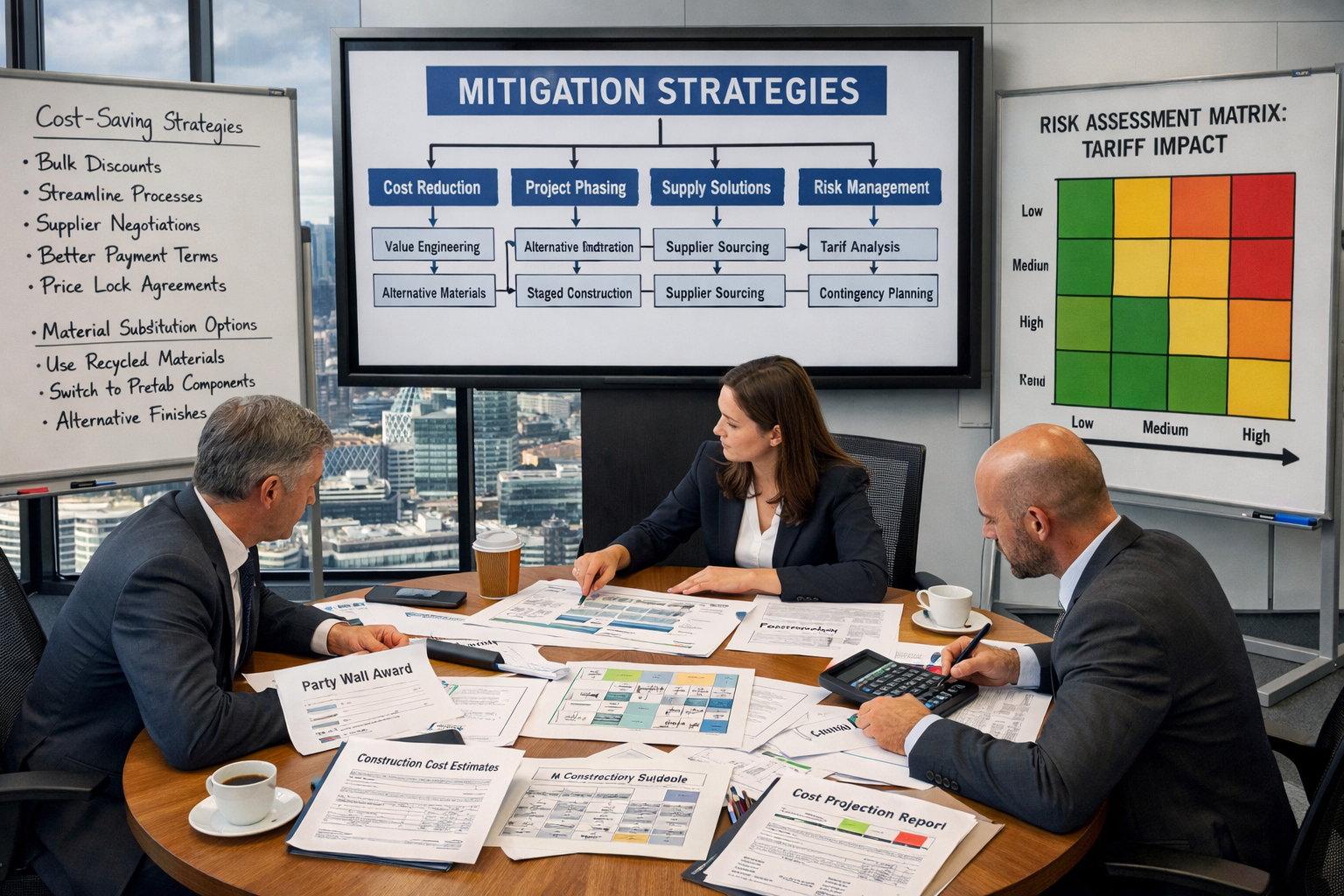
As tariff policies continue evolving throughout 2026 and beyond, surveyors must develop resilient award structures that accommodate ongoing uncertainty.
Long-Term Fluctuation Provisions
For projects with extended timelines, awards should include:
- Annual review mechanisms allowing cost baseline adjustments
- Material substitution frameworks permitting adaptation to changing supply chains
- Contingency reserves specifically allocated for trade policy changes
- Renegotiation triggers defining circumstances requiring award amendments
These provisions provide stability while maintaining flexibility to respond to market changes.
Technology-Enabled Cost Monitoring
Surveyors are increasingly utilizing digital tools to track material pricing:
- 💻 Real-time pricing databases providing current market rates for construction materials
- 💻 Automated alerts when material costs exceed threshold variations
- 💻 Digital documentation platforms maintaining comprehensive cost audit trails
- 💻 Collaborative portals allowing all parties to access current project cost information
These technologies enhance transparency and reduce administrative burden in managing tariff-affected projects.
Professional Development and Market Intelligence
Staying informed about tariff developments requires ongoing professional engagement:
- 📚 Industry publications tracking trade policy changes and material market trends
- 📚 Supplier relationships providing early warning of pricing changes
- 📚 Professional networks sharing practical mitigation strategies
- 📚 Continuing education on construction economics and procurement strategies
Surveyors who maintain current knowledge of tariff impacts provide superior service to clients navigating the complex 2026 construction environment.
Conclusion: Navigating Tariff Challenges in Party Wall Construction
The Tariff Impacts on 2026 Party Wall Construction: How Surveyors Can Mitigate Cost Escalations in Awards represent a significant challenge for property owners and construction professionals across London and the UK. Material cost increases of 15-25% for tariff-affected products, combined with surveyor fee increases of 8-12%[1], create substantial financial pressures on party wall projects.
However, through strategic award structuring, proactive material procurement, and transparent communication, surveyors can effectively mitigate these impacts. Adjustable pricing clauses, alternative material specifications, and phased award structures provide the flexibility needed to navigate volatile construction markets while maintaining fairness to all parties.
Actionable Next Steps for Surveyors
- Review existing award templates to incorporate fluctuation provisions and tariff adjustment mechanisms
- Develop supplier networks offering diverse material sourcing options to reduce tariff exposure
- Enhance client communication about tariff risks early in the party wall process
- Implement cost monitoring systems to track material pricing trends and identify escalation risks
- Collaborate with contractors to develop tariff-aware procurement strategies
Actionable Next Steps for Building Owners
- Engage surveyors early to assess tariff exposure for planned construction works
- Obtain multiple quotations from contractors with different material sourcing strategies
- Consider material pre-purchasing when storage is feasible and pricing is favorable
- Budget contingencies of 15-20% specifically for tariff-related cost variations
- Maintain open dialogue with adjoining owners about cost management approaches
Actionable Next Steps for Adjoining Owners
- Understand tariff impacts on construction costs to evaluate reasonableness of building owner expenses
- Review fluctuation provisions in proposed awards to ensure fair and limited cost adjustment mechanisms
- Verify security for expenses remains adequate despite potential cost escalations
- Engage qualified surveyors experienced in tariff-affected construction cost management
- Maintain communication with building owners and surveyors throughout the construction process
The construction boom of 2026[3] presents significant opportunities for property enhancement, but tariff-driven cost pressures require careful management. By implementing the strategies outlined in this article, surveyors can protect their clients' interests while ensuring party wall works proceed efficiently and fairly despite challenging market conditions.
For professional assistance navigating tariff impacts on your party wall project, consult experienced surveyors who understand both the legal requirements and the economic realities of 2026 construction markets. Whether you're carrying out works or responding to a neighbour's construction, expert guidance ensures optimal outcomes in this complex environment.
References
[1] Party Wall Agreement London 2026 – https://www.mayfairstudio.co.uk/blog/party-wall-agreement-london-2026
[2] Party Wall Surveyor Cost – https://hoa.org.uk/advice/guides-for-homeowners/i-am-improving/party-wall-surveyor-cost/
[3] Party Wall Surveys Amid 2026 Construction Boom Handling Disputes In High Demand Uk Housing Markets – https://nottinghillsurveyors.com/blog/party-wall-surveys-amid-2026-construction-boom-handling-disputes-in-high-demand-uk-housing-markets
[4] Party Wall Agreements For Office Retrofit Expansions 2026 Navigating Underpriced London Market Recovery – https://nottinghillsurveyors.com/blog/party-wall-agreements-for-office-retrofit-expansions-2026-navigating-underpriced-london-market-recovery