


The Party Wall Act: Your Complete Guide to Understanding Property Rights and Responsibilities in 2025
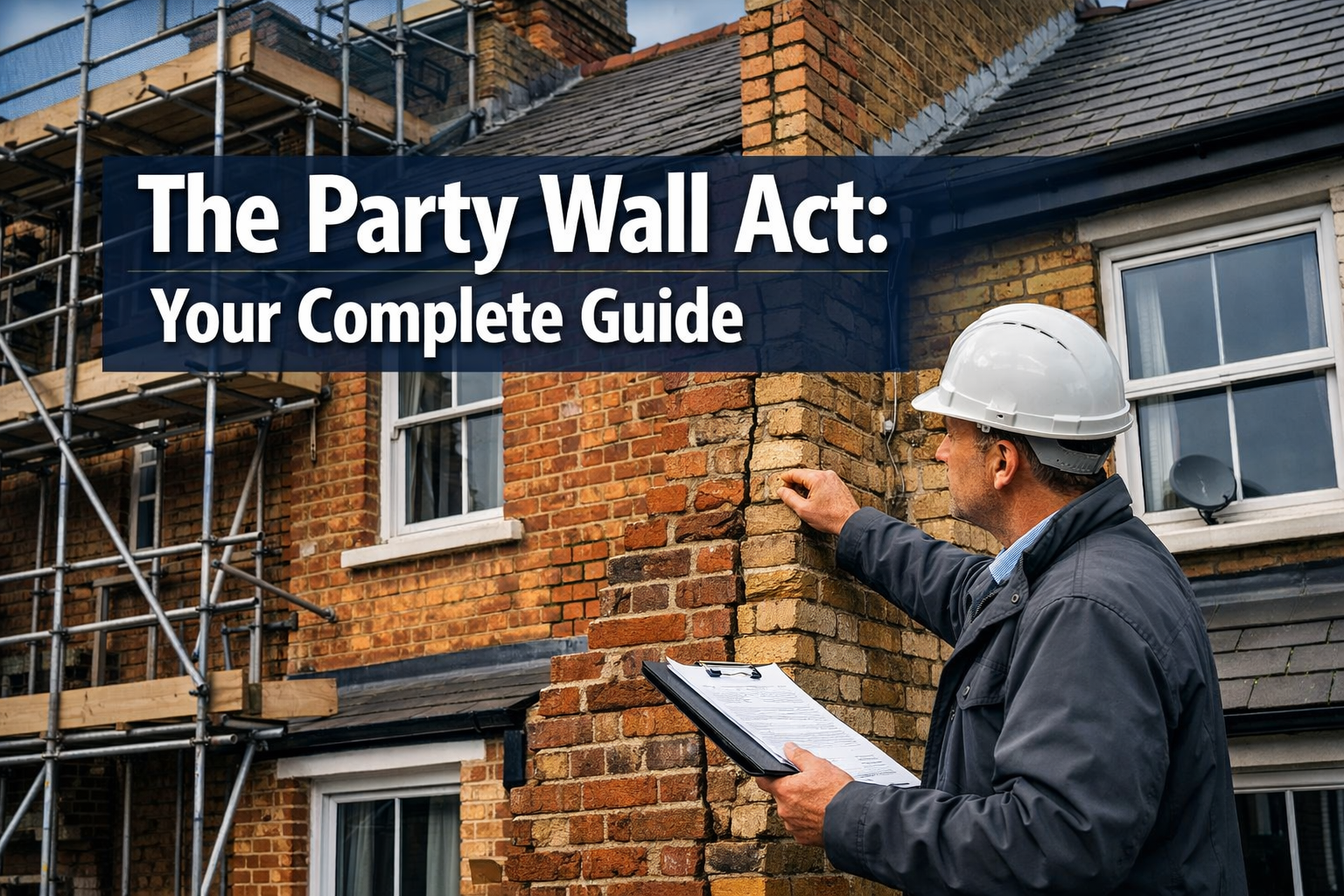
Imagine planning your dream home extension, only to discover that a simple shared wall with your neighbour could derail your entire project. Every year, thousands of property owners in England and Wales face confusion, disputes, and unexpected costs because they don’t understand the party wall act. Whether you’re building a loft conversion, digging a basement, or simply repairing a shared boundary, this legislation affects you more than you might think.
The Party Wall etc. Act 1996 is one of the most misunderstood pieces of property legislation in the UK. It governs the rights and responsibilities of property owners who share walls, boundaries, or structures with their neighbours. Understanding this Act isn’t just about legal compliance—it’s about protecting your investment, maintaining good relationships with neighbours, and avoiding costly disputes that can halt construction projects for months.
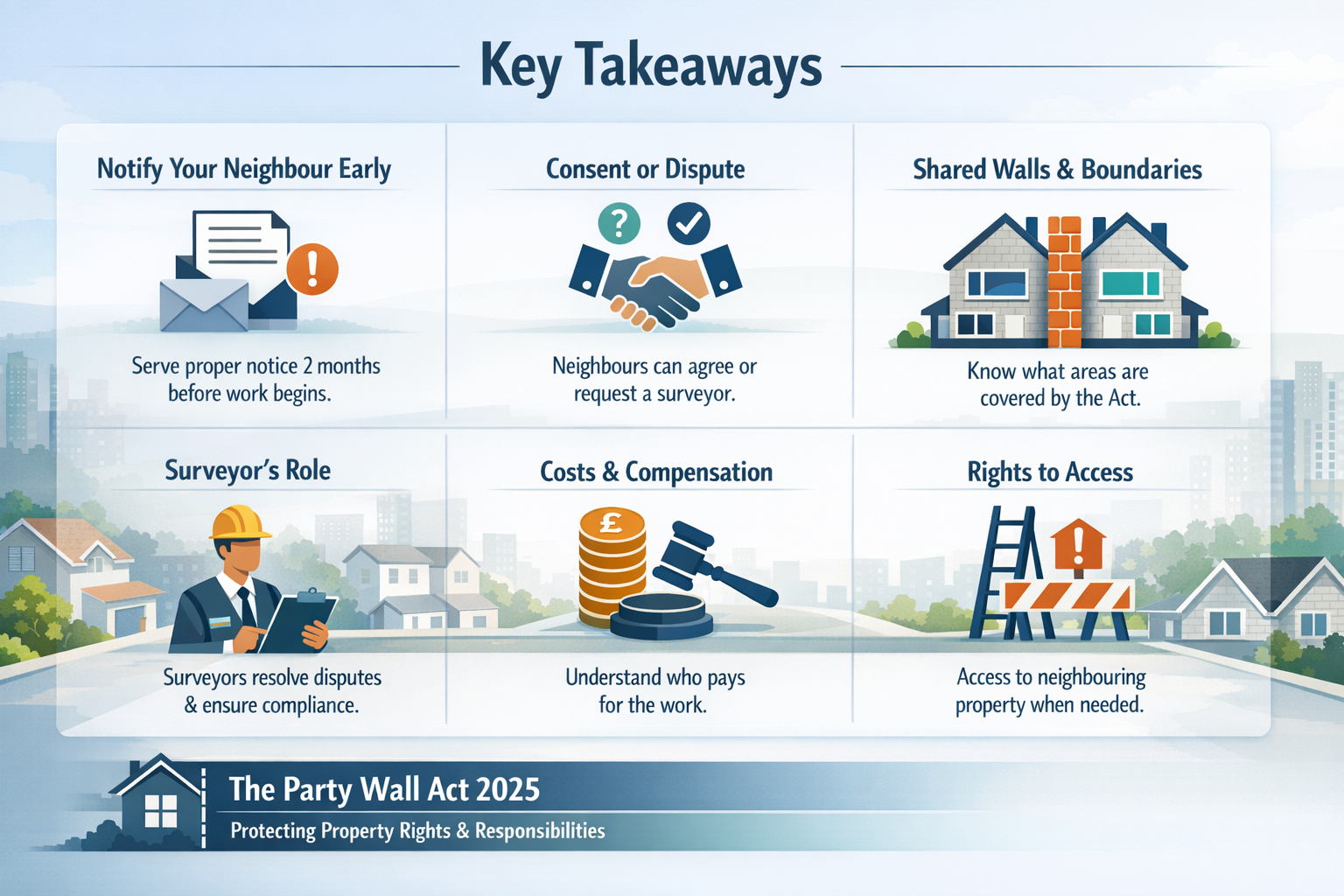
Key Takeaways
- 🏠 The Party Wall Act applies to all building work affecting shared walls, boundaries, or excavations near neighbouring properties in England and Wales
- 📋 Serving proper notice is mandatory and must be done at least two months before starting work (one month for certain repairs)
- 👥 Party wall surveyors act as impartial professionals who create legally binding awards to protect both property owners
- 💰 The building owner typically pays all costs, including their surveyor, the neighbour’s surveyor, and the award preparation
- ⚖️ Non-compliance can result in legal action, injunctions to stop work, and significant financial penalties
What Is the Party Wall Act?
The Party Wall etc. Act 1996 is a piece of legislation that came into force on July 1, 1997, across England and Wales. This Act provides a framework for preventing and resolving disputes in relation to party walls, boundary walls, and excavations near neighbouring buildings.
The primary purpose of the legislation is to balance the rights of property owners who wish to carry out building work with the rights of their neighbours whose properties might be affected. It recognizes that while owners should be able to develop their properties, they must do so without causing unnecessary damage or distress to adjoining owners.
The Three Main Sections of the Party Wall Act
The Act covers three distinct types of work:
- Work directly to an existing party wall or party structure (Section 2)
- Building a new wall at or astride the boundary between two properties (Section 1)
- Excavating within three or six metres of a neighbouring building (Section 6)
Each section has specific requirements for notice periods, procedures, and protections. Understanding which section applies to your planned work is crucial for proper compliance with party wall procedures.
Who Does the Party Wall Act Affect?
The legislation affects two key parties:
- Building Owner: The person or entity planning to carry out the work
- Adjoining Owner: The neighbour whose property shares the party wall or is near the proposed excavation
Both residential and commercial property owners are subject to the Act. Whether you’re a homeowner planning a kitchen extension or a developer constructing a multi-storey building, the same legal framework applies.
Understanding Party Walls and Party Structures
Before diving deeper into the Act’s requirements, it’s essential to understand what qualifies as a “party wall” or “party structure.” These terms have specific legal definitions that determine whether the Act applies to your situation.
What Qualifies as a Party Wall?
A party wall is a wall that:
- Stands on the land of two or more owners and forms part of a building
- Separates buildings belonging to different owners
- Stands wholly on one owner’s land but is used by two or more owners to separate their buildings
Common examples include:
✅ The wall between two semi-detached houses
✅ The wall separating two terraced properties
✅ A garden wall built along a boundary that separates two properties
✅ The floor and ceiling structure between flats in converted buildings
Party Structures vs. Party Fence Walls
The Act also covers party structures, which include:
- Floors and other structures separating buildings or parts of buildings with different owners
- Walls that are party walls and are also external walls of a building
A party fence wall is slightly different—it’s a wall (not part of a building) that stands on the boundary between lands of different owners and is used to separate those lands. This includes garden walls on boundaries. For a detailed explanation, read more about the difference between party fence walls and boundary walls.
| Type | Definition | Common Example |
|---|---|---|
| Party Wall | Wall forming part of a building on boundary | Wall between terraced houses |
| Party Structure | Floor/ceiling between different owners | Floor between flats |
| Party Fence Wall | Non-building wall on boundary | Garden wall on property line |
| Boundary Wall | Wall entirely on one side of boundary | Fence just inside your property |
When Does the Party Wall Act Apply?
Understanding when the Act applies is crucial for avoiding legal complications. Not all building work requires party wall procedures, but many common home improvements do.
Types of Work Requiring Party Wall Notice
You must serve notice under the Party Wall Act if you plan to:
Section 1 Works (New Walls on Boundaries):
- Build a new wall on the boundary line
- Build a wall astride the boundary line (half on each property)
Section 2 Works (Existing Party Walls):
- Cut into a party wall to insert beams (e.g., for a loft conversion)
- Underpin a party wall
- Raise a party wall
- Demolish and rebuild a party wall
- Cut away projecting chimney breasts or corbels
- Protect party walls during demolition work
- Weatherproof party walls after demolition
Section 6 Works (Excavations):
- Excavate within 3 metres of a neighbouring building if you’ll dig deeper than its foundations
- Excavate within 6 metres of a neighbouring building if you’ll dig deeper than a line drawn at 45 degrees from the bottom of its foundations
Common Projects That Trigger the Act
Many everyday home improvement projects require party wall procedures:
🔨 Loft conversions that require cutting into party walls for steel beams
🏗️ Basement extensions involving excavation near neighbouring properties
🏠 House extensions that require work to party walls
🧱 Removing chimney breasts on party walls
🔧 Inserting damp-proof courses in party walls
⚡ Cutting chases for electrical or plumbing work in party walls
For specific guidance on what works require notices, visit the types of party wall works resource.
The Party Wall Notice Process: Step-by-Step
Navigating the party wall notice process can seem daunting, but following the correct procedure protects both you and your neighbour. Here’s a comprehensive breakdown of each step.
Step 1: Determine Which Notice You Need
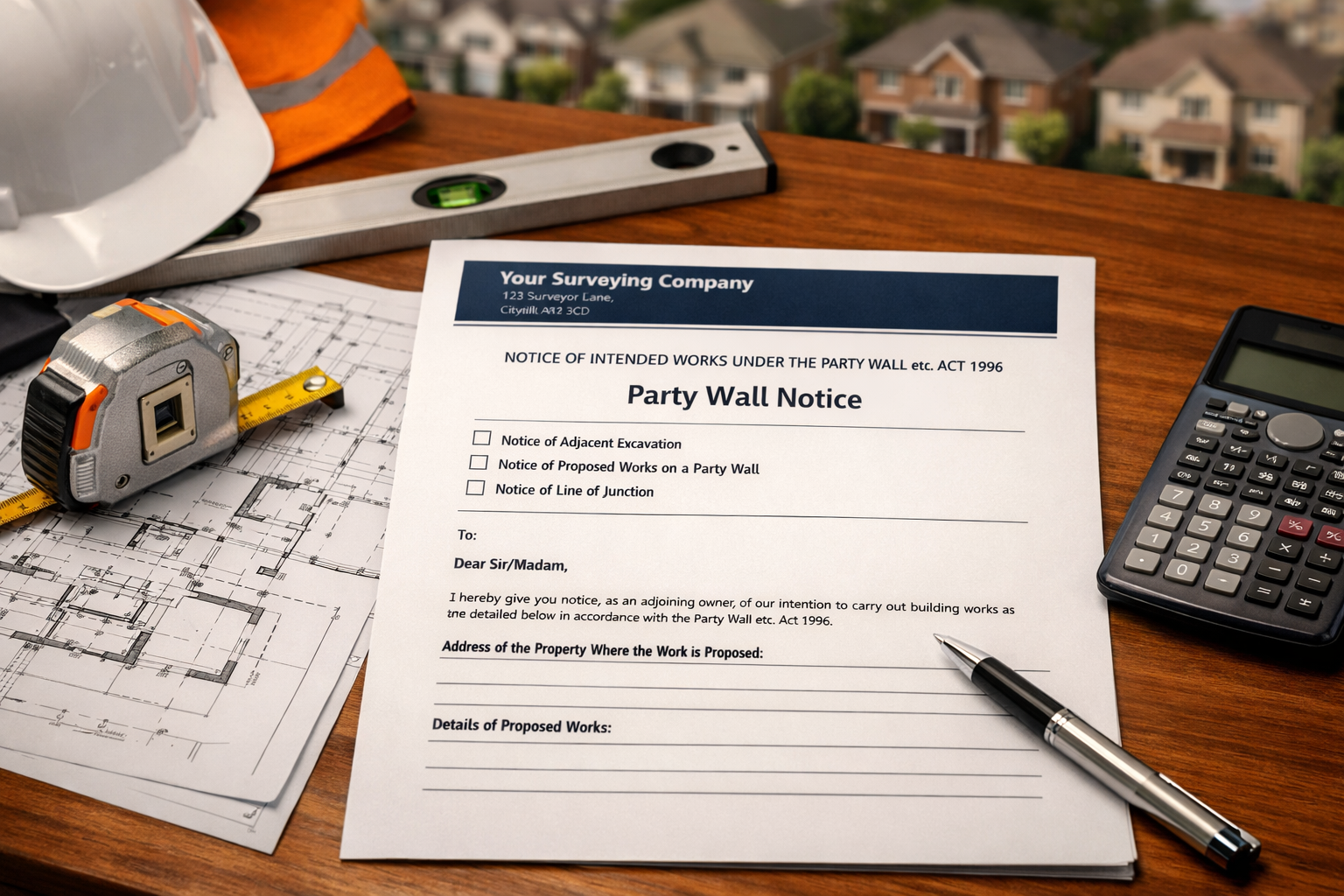
Three types of notices exist under the Act:
- Party Structure Notice (Section 2): For work directly to party walls
- Line of Junction Notice (Section 1): For new walls on or at the boundary
- Notice of Adjacent Excavation (Section 6): For excavation work
Each notice has specific content requirements and must include details about the proposed work, when it will start, and relevant drawings or plans.
Step 2: Serve the Notice
Timing is critical:
- Party Structure Notices and Line of Junction Notices must be served at least two months before work starts
- Notices of Adjacent Excavation must be served at least one month before work begins
The notice must be served on all adjoining owners. This includes:
- Direct neighbours sharing the party wall
- Neighbours whose properties are within the excavation zone
- Landlords if the adjoining property is leased
Service can be accomplished by:
- Hand delivery
- Registered or recorded delivery post
- Leaving the notice at the property
For detailed guidance on notices, consult this resource on party wall act notices and how to respond.
Step 3: Await the Adjoining Owner’s Response
Once served, the adjoining owner has 14 days to respond. They have three options:
Option 1: Consent ✅
The adjoining owner agrees to the work in writing. If this happens, you can proceed without appointing surveyors, though it’s still wise to document the property’s condition beforehand.
Option 2: Dissent ❌
The adjoining owner disagrees or raises concerns. This triggers the “dispute resolution” process, requiring surveyors.
Option 3: No Response 🤐
If the adjoining owner doesn’t respond within 14 days, this is deemed a dissent, and the dispute resolution process begins automatically.
Step 4: Appoint Party Wall Surveyors
When there’s a dissent (or deemed dissent), surveyors must be appointed. There are two approaches:
Agreed Surveyor Approach:
Both parties agree to appoint a single surveyor who acts impartially for both sides. This is often more cost-effective.
Two Surveyor Approach:
Each party appoints their own surveyor. These two surveyors then work together and may appoint a third surveyor to resolve any disagreements between them.
The building owner is responsible for paying all surveyor fees, including the adjoining owner’s surveyor costs.
Step 5: The Party Wall Award
The surveyor(s) will inspect both properties, assess the proposed work, and prepare a Party Wall Award—a legally binding document that:
- Describes the work to be carried out
- Sets out the time and manner of executing the work
- Records the condition of the adjoining owner’s property (Schedule of Condition)
- Specifies how any damage will be resolved
- Determines who pays costs
The award protects both parties. For the building owner, it provides the legal right to proceed. For the adjoining owner, it ensures their property is protected and any damage will be remedied.
Learn more about party wall awards and their importance.
Rights and Responsibilities Under the Party Wall Act
Understanding your rights and responsibilities under the Act helps ensure smooth project execution and maintains neighbourly relations.
Building Owner’s Rights
As the building owner, the Act gives you the right to:
🔑 Carry out necessary work to your property, even if it affects a party wall
🔑 Enter the adjoining property (with notice) to execute work, though this must be at reasonable times
🔑 Cut into party walls for beams, flashings, or other necessary construction elements
🔑 Underpin or strengthen party walls if required for your work
🔑 Receive protection through the award process from unreasonable objections
Building Owner’s Responsibilities
With these rights come important obligations:
📌 Serve proper notice within the required timeframes
📌 Pay all costs associated with the party wall process, including neighbour’s surveyor fees
📌 Minimize inconvenience to adjoining owners
📌 Make good any damage caused by the work
📌 Work in accordance with the party wall award
📌 Provide access to surveyors for inspections
If you’re planning works, understanding your role as a building owner is essential.
Adjoining Owner’s Rights
As an adjoining owner, you have the right to:
✔️ Receive proper notice of planned works
✔️ Appoint your own surveyor at the building owner’s expense
✔️ Have your property protected through a Schedule of Condition
✔️ Receive compensation for any damage caused
✔️ Refuse entry if proper notice hasn’t been given
✔️ Appeal the party wall award to the County Court within 14 days
Adjoining Owner’s Responsibilities
Adjoining owners also have obligations:
📌 Respond to notices within the 14-day period
📌 Allow reasonable access for surveys and work (with proper notice)
📌 Act reasonably and not obstruct legitimate work
📌 Cooperate with surveyors during the process
For adjoining owners seeking guidance, resources for adjoining owners provide valuable information.
The Role of Party Wall Surveyors
Party wall surveyors are specialized professionals who play a crucial role in the party wall process. Their expertise ensures that work proceeds legally while protecting all parties’ interests.
What Does a Party Wall Surveyor Do?
A qualified party wall surveyor:
🔍 Inspects properties to assess existing conditions
📋 Prepares Schedules of Condition documenting the adjoining property before work begins
⚖️ Drafts party wall awards setting out terms and conditions
🛡️ Protects both parties’ interests impartially
📊 Monitors work to ensure compliance with the award
🔧 Resolves disputes between building and adjoining owners
💼 Provides expert advice on party wall matters
Choosing the Right Surveyor
When selecting a party wall surveyor, consider:
- Qualifications: Look for members of the Faculty of Party Wall Surveyors (FPWS) or Royal Institution of Chartered Surveyors (RICS)
- Experience: Choose surveyors with proven track records in party wall matters
- Local knowledge: Surveyors familiar with your area understand local building practices
- Communication: Select professionals who explain processes clearly
- Availability: Ensure they can work within your project timeline
For expert assistance in London, consider consulting a professional party wall surveyor with local expertise.
Can You Proceed Without a Surveyor?
If your neighbour consents to the work in writing, you technically don’t need surveyors. However, this approach carries risks:
⚠️ No formal protection if disputes arise later
⚠️ No Schedule of Condition to prove pre-existing damage
⚠️ Potential for costly litigation if problems occur
⚠️ No expert guidance on complex technical matters
While it’s possible to have a party wall agreement without a surveyor, most property professionals recommend using qualified surveyors for any significant work.
Costs Associated with the Party Wall Act
Understanding the financial implications of the party wall process helps you budget accurately for your building project.
Who Pays for What?
The fundamental principle is simple: the building owner pays all costs associated with the party wall process. This includes:
💷 Your own surveyor’s fees
💷 The adjoining owner’s surveyor’s fees
💷 Third surveyor’s fees (if appointed)
💷 Award preparation costs
💷 Schedule of Condition costs
💷 Any necessary monitoring during work
💷 Remedial work for any damage caused
Typical Cost Ranges
Party wall costs vary significantly based on project complexity, location, and whether disputes arise:
| Service | Typical Cost Range |
|---|---|
| Agreed Surveyor (simple project) | £700 – £1,500 |
| Two Surveyors (standard project) | £1,500 – £3,000 |
| Complex projects (multiple neighbours) | £3,000 – £10,000+ |
| Schedule of Condition (per property) | £300 – £800 |
| Award preparation | £400 – £1,200 |
These are approximate figures for 2025. Costs in central London and other high-value areas tend to be higher.
How to Keep Party Wall Costs Down
While you can’t avoid party wall costs entirely, you can minimize them:
💡 Communicate early with neighbours to build goodwill
💡 Provide clear information to reduce surveyor time
💡 Consider an agreed surveyor instead of two separate ones
💡 Serve notices promptly to avoid rushed fees
💡 Choose experienced surveyors who work efficiently
💡 Maintain good records to streamline the process
For more detailed strategies, read this guide on how to keep party wall costs down.
For a comprehensive overview of expenses, visit the costs of party wall process page.
Common Party Wall Disputes and How to Resolve Them
Despite the Act’s framework, disputes still arise. Understanding common issues and resolution methods can save time, money, and neighbourly relationships.
Frequent Sources of Conflict
1. Noise and Disruption 🔊
Construction work inevitably causes disturbance. Disputes often arise when work occurs at unreasonable hours or continues longer than expected.
Solution: The party wall award should specify working hours and duration. Stick to these terms and communicate any necessary changes in advance.
2. Damage to Adjoining Property 🏚️
Cracks, subsidence, or cosmetic damage can occur during building work.
Solution: A comprehensive Schedule of Condition protects both parties by documenting pre-existing conditions. Any new damage becomes the building owner’s responsibility to repair.
3. Access Issues 🚪
Building owners may need access to adjoining property for scaffolding or to execute work.
Solution: The Act provides for necessary access, but proper notice must be given. The award should specify access arrangements clearly.
4. Disagreement Over Work Scope 📐
Adjoining owners may believe proposed work exceeds what’s necessary or safe.
Solution: Surveyors assess whether proposed work is reasonable and necessary, providing impartial expert judgment.
5. Cost Disputes 💰
Disagreements about surveyor fees or who should pay for what can escalate quickly.
Solution: The Act clearly states the building owner pays party wall costs. However, surveyors’ fees should be reasonable and proportionate to the work involved.
The Appeals Process
If either party disagrees with a party wall award, they can appeal to the County Court within 14 days of receiving the award. The court will review the award and may:
- Uphold the award as issued
- Modify specific terms
- Set aside the award and require a new one
- Award costs to either party
Appeals should be a last resort, as they add significant time and expense to projects.
Preventing Disputes Through Communication
The best dispute resolution is prevention. Effective strategies include:
🤝 Early conversation with neighbours about your plans
📧 Regular updates on project progress
🎁 Small gestures of goodwill (offering to repair shared areas, etc.)
⏰ Respecting reasonable working hours
🧹 Keeping work areas clean and safe
📞 Providing contact information for concerns
Regional Considerations: The Party Wall Act Across England and Wales
While the Party Wall Act applies uniformly across England and Wales, practical considerations vary by region.
London-Specific Considerations
London presents unique party wall challenges:
- High density: More properties share walls, increasing complexity
- Property values: Higher stakes mean more detailed surveys and awards
- Conservation areas: Additional planning considerations may interact with party wall requirements
- Basement extensions: Extremely popular in London, triggering Section 6 excavation notices frequently
If you’re undertaking work in the capital, consider consulting specialists in different areas:
- Party wall surveyors in North London
- Party wall surveyors in South London
- Party wall surveyors in East London
- Party wall surveyors in West London
- Party wall surveyors in Central London
Rural vs. Urban Applications
Urban Areas:
- More party walls and shared structures
- Greater likelihood of excavation work affecting neighbours
- Higher property density means more adjoining owners to notify
- More experienced surveyors available
Rural Areas:
- Fewer party walls but still applicable to semi-detached and terraced properties
- Excavation notices may be needed for barn conversions or agricultural building work
- May need to travel further to find experienced party wall surveyors
- Lower property density can mean simpler processes
Scotland and Northern Ireland
Important note: The Party Wall etc. Act 1996 does not apply in Scotland or Northern Ireland. These regions have different legal frameworks:
Scotland: Common law principles govern party walls, with different procedures and protections.
Northern Ireland: The Access to Neighbouring Land (Northern Ireland) Order 1999 provides some similar protections, but party wall law differs significantly.
If you’re working in these regions, seek advice from local property lawyers or surveyors familiar with the applicable legislation.
Practical Tips for Building Owners
If you’re planning building work that triggers the Party Wall Act, these practical tips will help ensure a smooth process.
Before You Start
✅ Identify all affected neighbours early—don’t forget those across back gardens or on upper floors
✅ Speak to neighbours informally before serving formal notices
✅ Commission architectural drawings that clearly show party wall locations
✅ Budget for party wall costs from the project outset
✅ Research qualified surveyors in your area
✅ Check whether you need planning permission separately from party wall procedures
✅ Review your insurance to ensure adequate cover during construction
During the Notice Period
📋 Serve notices correctly with all required information
📋 Keep copies of all notices and proof of service
📋 Respond promptly to any questions from neighbours
📋 Appoint surveyors quickly if dissent occurs
📋 Provide surveyors with all necessary information and access
📋 Don’t start work until the award is in place
During Construction
🏗️ Follow the award terms precisely
🏗️ Allow surveyor inspections as required
🏗️ Document the work with photographs
🏗️ Address any concerns from neighbours immediately
🏗️ Keep neighbours informed of progress and any changes
🏗️ Minimize disruption wherever possible
After Completion
✔️ Arrange final inspections with surveyors
✔️ Address any damage identified during inspections
✔️ Obtain completion confirmation from surveyors
✔️ Maintain good records of the entire process
✔️ Keep award documents with your property deeds
Practical Tips for Adjoining Owners
If your neighbour has served you with a party wall notice, understanding your position helps protect your property rights.
When You Receive a Notice
🔔 Don’t panic—receiving a notice doesn’t mean you must agree to everything
🔔 Read the notice carefully and note the response deadline
🔔 Inspect the details of proposed work
🔔 Consider the impact on your property
🔔 Seek clarification if anything is unclear
🔔 Respond within 14 days to avoid deemed dissent
Your Response Options
If you’re comfortable with the work:
You can consent in writing, but consider requesting a Schedule of Condition even if you consent, to protect against future damage claims.
If you have concerns:
Dissent and appoint a surveyor. This doesn’t mean you’re being difficult—it’s a legitimate way to ensure your property is protected. Remember, the building owner pays your surveyor’s fees.
If you’re unsure:
Consult a party wall surveyor for advice before responding. Many offer initial consultations to help you understand your position.
Choosing Your Surveyor
When appointing a surveyor to represent your interests:
- Select someone independent of the building owner’s surveyor
- Choose a qualified professional (RICS or FPWS member)
- Ensure they have experience representing adjoining owners
- Confirm they understand your specific concerns
- Verify they can act within your timeline
What to Expect from the Process
As an adjoining owner, you can expect:
📅 Initial contact from your surveyor explaining the process
📅 Property inspection to prepare a Schedule of Condition
📅 Communication about the proposed award terms
📅 Opportunity to raise concerns through your surveyor
📅 Receipt of the party wall award setting out protections
📅 Monitoring during construction if required
📅 Final inspection after work completion
For more guidance on your position, visit resources for neighbours whose property is affected by works.
Frequently Asked Questions About the Party Wall Act
Do I need party wall consent for minor repairs?
Minor repairs that don’t affect the structural integrity of the party wall typically don’t require party wall procedures. Examples include:
- Plastering or painting party walls
- Replacing like-for-like fixtures
- Minor electrical work within existing chases
However, anything involving cutting into the wall, removing structural elements, or underpinning does require notice.
What happens if I start work without serving notice?
Starting work without proper notice is a breach of the Act. Consequences can include:
- Injunctions to stop work immediately
- Legal action from adjoining owners
- Liability for all damage without the protection of an award
- Significant legal costs
- Difficulty selling your property later
Always serve proper notice before commencing work.
Can my neighbour stop my building project?
No. The Party Wall Act gives you the right to carry out necessary work. Your neighbour cannot prevent legitimate work, but they can:
- Ensure proper procedures are followed
- Have their property protected through the award process
- Require you to work in a specific manner to minimize impact
- Receive compensation for any damage
The Act balances your right to develop with their right to protection.
How long does the party wall process take?
Timelines vary but typically:
- Notice period: 1-2 months (depending on work type)
- Surveyor appointment: 1-2 weeks
- Award preparation: 2-6 weeks
- Total: 3-4 months minimum
Complex projects or disputes can extend this significantly. Plan ahead and build party wall time into your project schedule.
What if my neighbour doesn’t respond to the notice?
If your neighbour doesn’t respond within 14 days, this is treated as a “deemed dissent.” You must then appoint surveyors and proceed with preparing a party wall award, just as if they had formally disagreed.
Do I need party wall procedures for a detached house?
Generally, no—unless you’re excavating near a neighbouring property. Detached houses don’t share party walls, but Section 6 excavation notices may still apply if you’re digging close to boundary structures or neighbouring buildings.
For more comprehensive answers, visit the general FAQs section.
The Future of Party Wall Legislation
As we move through 2025, several trends and potential changes are shaping party wall practice:
Digitalization of the Process
Technology is streamlining party wall procedures:
- Digital notices: Electronic service becoming more common
- Virtual surveys: Video inspections supplementing physical visits
- Digital awards: Electronic signatures and document management
- Online dispute resolution: Some simple disputes resolved remotely
Increased Awareness
More property owners understand their party wall obligations thanks to:
- Better information from local authorities
- Increased coverage in property media
- Lender requirements for party wall compliance
- Professional body education initiatives
Potential Legislative Updates
While no major reforms are currently proposed, discussions continue around:
- Clarifying certain ambiguities in the Act
- Updating procedures for modern construction methods
- Streamlining processes for minor works
- Enhancing enforcement mechanisms
Climate Change Adaptations
As properties are retrofitted for energy efficiency and climate resilience, new party wall considerations emerge:
- External wall insulation affecting party walls
- Basement waterproofing near boundaries
- Green roof installations on party structures
- Heat pump installations requiring party wall work
Resources and Further Reading
Official Resources
- UK Government Guidance: The Department for Levelling Up, Housing and Communities provides official explanatory booklets
- Legislation.gov.uk: Full text of the Party Wall etc. Act 1996
- Local Authority Resources: Many councils provide party wall guidance
Professional Bodies
- Faculty of Party Wall Surveyors (FPWS): Specialist organization for party wall professionals
- Royal Institution of Chartered Surveyors (RICS): Provides guidance and maintains surveyor standards
- Pyramus & Thisbe Club: Organization promoting party wall expertise
Helpful Templates and Guides
For practical resources, explore:
- Sample party wall agreement templates
- Party wall contract templates and award guides
- Understanding party structure notices
Additional Reading
For more detailed information on specific topics, visit the blogs section which covers numerous party wall scenarios and questions.
Conclusion: Navigating the Party Wall Act Successfully
The Party Wall etc. Act 1996 may seem complex, but it serves an essential purpose: protecting property owners while allowing necessary development. Understanding this legislation is crucial whether you’re planning building work or responding to a neighbour’s notice.
Key Points to Remember
🎯 The Act protects everyone: It balances building owners’ rights to develop with adjoining owners’ rights to protection
🎯 Proper procedure is essential: Serving correct notices within required timeframes prevents legal complications
🎯 Professional guidance pays off: Qualified party wall surveyors provide expertise that protects your interests and streamlines the process
🎯 Communication prevents disputes: Open dialogue with neighbours often resolves concerns before they become formal disputes
🎯 Budget appropriately: Party wall costs are a legitimate part of any building project affecting shared structures
Your Next Steps
If you’re planning building work:
- Determine whether your project triggers the Party Wall Act
- Identify all affected neighbours
- Speak informally with neighbours about your plans
- Engage a qualified party wall surveyor for guidance
- Serve proper notices within required timeframes
- Budget for party wall costs in your project plan
- Don’t start work until procedures are complete
If you’ve received a party wall notice:
- Read the notice carefully and note deadlines
- Seek clarification on any unclear points
- Consider appointing your own surveyor (at the building owner’s expense)
- Respond within 14 days
- Ensure a Schedule of Condition is prepared
- Monitor the work to ensure compliance with the award
For professional assistance:
Whether you’re a building owner or adjoining owner, expert guidance makes the party wall process smoother and protects your interests. For professional support throughout London and beyond, contact experienced party wall surveyors who can guide you through every step of the process.
The Party Wall Act doesn’t have to be a source of stress or conflict. With proper understanding, timely action, and professional support, you can navigate party wall requirements efficiently while maintaining positive relationships with your neighbours. Your property project deserves the protection and clarity that proper party wall procedures provide.