

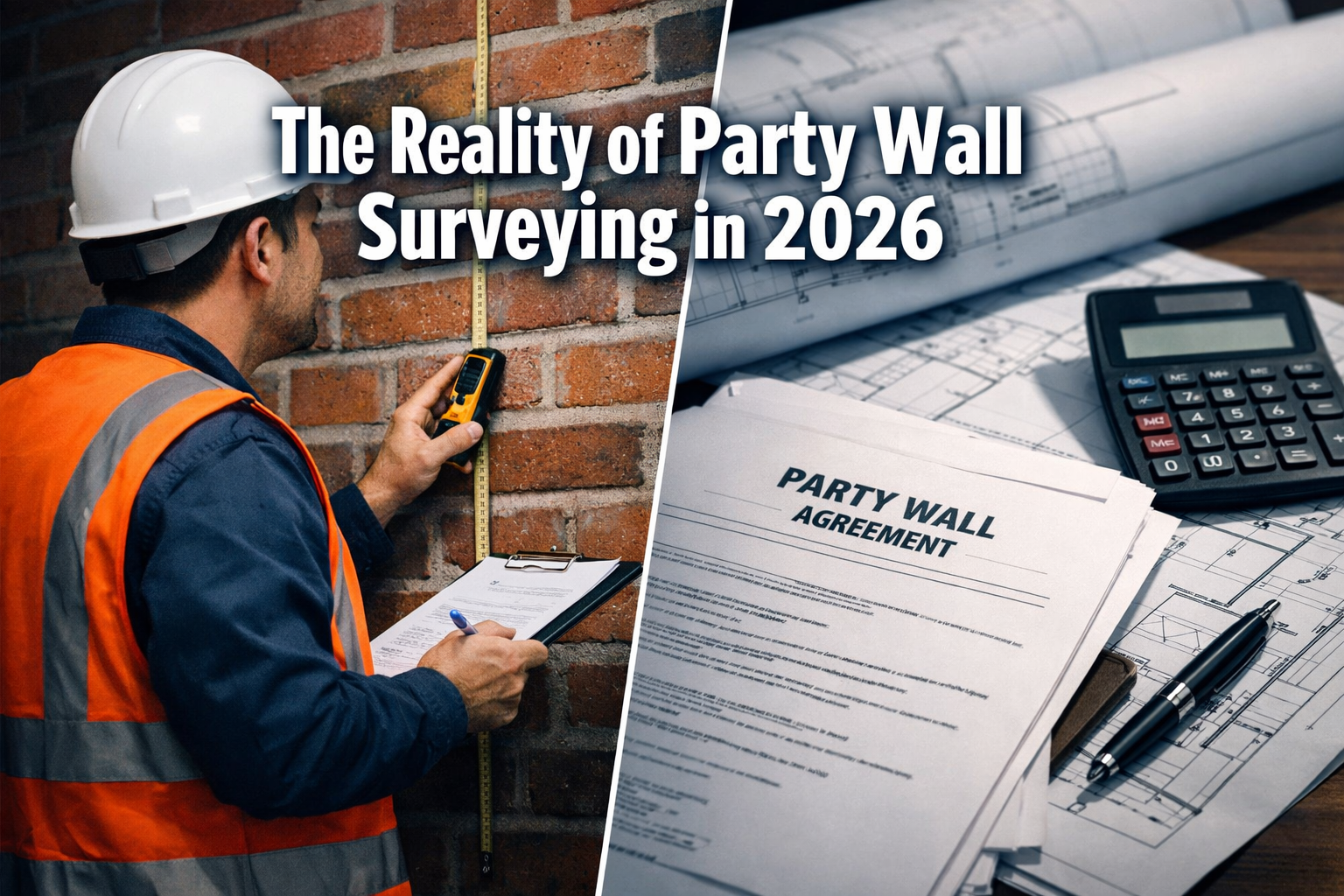
Party wall surveyors in 2026 are processing more cases than ever before, with fees ranging from £900 for straightforward loft conversions to £5,400 for complex dual-surveyor arrangements—yet most property owners remain unaware of these costs until they're facing them. The reality of party wall surveying in 2026 reveals an industry grappling with unprecedented demand, evolving fee structures, and daily challenges that extend far beyond simple paperwork.
Industry professionals working under the Party Wall etc. Act 1996 face a landscape transformed by the UK's construction boom, where neighbor disputes have become more complex and the stakes higher than ever. Understanding what happens behind the scenes can save property owners thousands of pounds and months of delays.
Key Takeaways
- Single-surveyor appointments cost £900-£2,700 depending on project complexity, while dual-surveyor arrangements effectively double these expenses to £1,800-£5,400[1]
- Building owners pay all surveyor fees in standard circumstances, though cost-sharing applies when addressing shared wall defects or mutual repairs[1]
- Legal disputes frequently cost more than the disputed amount, with courts typically deferring to surveyors' professional judgment rather than adjudicating technical matters[2]
- The 2026 construction boom has significantly increased demand for party wall surveys, extending processing timelines and creating capacity challenges across the industry[2]
- Proper notice timing (2 months to 1 year before work begins) and early surveyor engagement can prevent costly delays and relationship breakdowns with neighbors[1]
Understanding Party Wall Surveying Fees in 2026: What Industry Pros Really Charge
The financial reality of party wall surveying in 2026 often shocks property owners who assumed the process would be simple and inexpensive. Professional surveyors charge based on project complexity, property type, and the number of parties involved—not on a fixed-rate basis that many homeowners expect.
Single-Surveyor Fee Structures
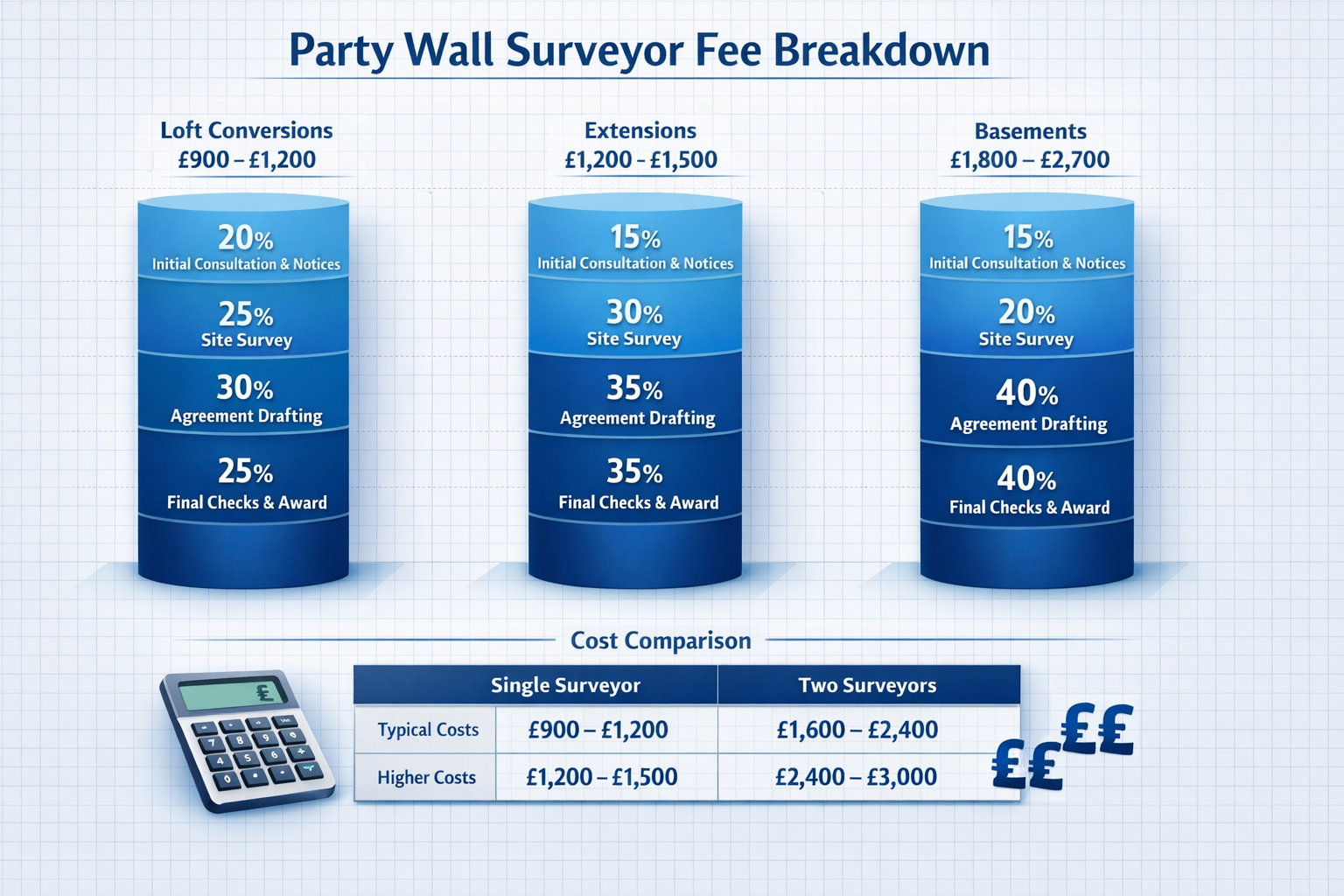
When both neighbors agree to appoint the same surveyor (an "agreed surveyor"), costs remain at the lower end of the spectrum. According to industry data, typical single-surveyor arrangements break down as follows[1]:
| Project Type | Fee Range | Typical Duration |
|---|---|---|
| Loft Conversions | £900 – £1,200 | 4-6 weeks |
| Extensions | £1,200 – £1,500 | 6-8 weeks |
| Basement Excavations | £1,800 – £2,700 | 8-12 weeks |
These fees cover essential services including site inspections, schedule of condition preparation, award drafting, and basic dispute resolution. However, Sarah Tanner, a London-based party wall surveyor with 15 years of experience, notes that "the advertised fee is rarely the final cost—complications arise in approximately 60% of cases, requiring additional site visits and extended negotiations."
The Dual-Surveyor Reality
When neighbors cannot agree on a single surveyor, each party appoints their own representative, creating a dual-surveyor arrangement. This scenario doubles costs, with total expenses ranging from £1,800 to £5,400[1]. The building owner—the party initiating the work—bears both surveyor fees under standard circumstances.
This cost structure catches many property owners off-guard. "Clients often ask why they're paying for their neighbor's surveyor," explains Tanner. "The Party Wall etc. Act 1996 places this responsibility on the building owner as the party benefiting from the work. It's designed to ensure adjoining owners can obtain independent professional advice without financial barriers."
Hidden Cost Drivers That Inflate Final Bills
Beyond the base surveyor appointment, several factors compound expenses:
- Multiple adjoining properties: Each additional neighbor requires separate notices and potentially separate surveyors, multiplying costs accordingly[1]
- Third surveyor appointments: When two surveyors cannot reach agreement, a third independent surveyor must be appointed, adding £1,500-£3,000 to total costs[1]
- Extended disputes: Protracted disagreements requiring multiple site visits, additional documentation, and extended negotiation periods can double initial fee estimates
- Complex structural issues: Discovering unexpected defects or structural concerns during inspections triggers additional assessment work and specialist consultations
Understanding how to keep party wall costs down requires proactive engagement with neighbors and early professional consultation. Property owners working with experienced party wall surveyors in Central London or other high-demand areas should budget 20-30% above quoted fees to accommodate potential complications.
The Reality of Party Wall Disputes in 2026: Behind-the-Scenes Insights from Industry Pros
Party wall disputes in 2026 have evolved beyond simple disagreements about construction noise or timing. The current construction boom has intensified pressure on both surveyors and property owners, creating a perfect storm of capacity constraints, heightened expectations, and increasingly complex technical challenges[2].
Common Dispute Triggers Surveyors Encounter Daily
Industry professionals report consistent patterns in what triggers neighbor conflicts:
Structural concerns top the list, with adjoining owners fearing foundation damage, subsidence, or structural instability from excavation work. These fears are often legitimate—basement excavations in particular require careful underpinning and monitoring to prevent damage to adjacent properties.
Noise and disruption concerns remain perennial issues, though surveyors have limited authority to regulate construction hours beyond what local planning authorities permit. "Property owners often believe the party wall award will protect them from construction noise," notes Tanner. "In reality, we can only address structural matters and access rights—noise complaints fall under different regulatory frameworks."
Access disputes create significant friction when building owners require entry to neighboring properties for inspection or construction purposes. The Act grants specific access rights, but exercising them diplomatically requires skilled negotiation.
Timeline disagreements arise when proposed work schedules conflict with adjoining owners' plans, health concerns, or major life events. While surveyors cannot typically delay legitimate work indefinitely, they can facilitate reasonable accommodations.
Why Legal Disputes Rarely Make Financial Sense
A sobering reality of party wall surveying in 2026 is that legal dispute costs frequently exceed the value in dispute[2]. Court proceedings involving party wall matters can easily cost £15,000-£50,000 per party, while the disputed issue might involve £2,000-£5,000 in actual damages or modifications.
Moreover, courts generally defer to qualified surveyors' professional judgment rather than adjudicating technical disagreements independently[2]. Judges typically ask: "Did the surveyors follow proper procedures? Are they appropriately qualified? Did they consider relevant factors?" If the answer is yes, courts rarely overturn surveyors' determinations.
This creates a powerful incentive for parties to work within the surveyor-led process rather than pursuing litigation. "I've seen neighbors spend £30,000 fighting over a £3,000 issue," Tanner observes. "The Act was designed to keep these matters out of court by providing a surveyor-led resolution mechanism—it works when parties let it work."
The Third Surveyor Safety Valve
When appointed surveyors cannot reach agreement, a third independent surveyor must be appointed to resolve the impasse[1]. This mechanism serves as a crucial safety valve, though it adds both cost and time to the process.
Third surveyor appointments typically occur when:
- Technical disagreements exist about appropriate construction methods
- Surveyors interpret the Act's requirements differently
- Personal conflicts between surveyors prevent productive negotiation
- One surveyor appears to be acting unreasonably or unprofessionally
The third surveyor's decision is binding on both parties, providing finality without court involvement. However, reaching this stage indicates that the process has become adversarial—often unnecessarily so.
Regional Variations in Dispute Patterns
Surveyors operating across different London areas report distinct regional patterns. Party wall surveyors in North London frequently encounter disputes in areas with older Victorian terraced housing, where structural interdependence is high and previous undocumented alterations complicate assessments.
In contrast, party wall surveyors in South London report more disputes related to new basement excavations in areas experiencing gentrification, where property values and renovation ambitions have risen sharply.
Understanding these regional patterns helps surveyors anticipate likely friction points and address them proactively through comprehensive schedules of condition and clear award terms.
Daily Challenges Facing Party Wall Surveyors: The Reality of Party Wall Surveying in 2026
The day-to-day reality of party wall surveying in 2026 extends far beyond technical assessments and legal documentation. Industry professionals navigate a complex landscape of client expectations, capacity constraints, regulatory compliance, and interpersonal dynamics that rarely appears in official guidance documents.
Capacity Constraints in a Booming Market
The UK's 2026 construction boom has created unprecedented demand for party wall surveys[2]. Experienced surveyors report being booked 6-8 weeks in advance, with some declining new instructions entirely due to workload constraints.
This capacity crunch creates several challenges:
- Compressed timelines: Property owners often approach surveyors late in their planning process, expecting rapid turnaround when proper surveys require 4-12 weeks
- Quality pressures: High demand tempts some practitioners to rush assessments or take on more work than they can properly manage
- Fee inflation: Market forces have driven fees upward, though not uniformly across all practitioners or regions
- New entrant quality concerns: The lucrative market has attracted less-experienced practitioners, raising concerns about professional standards
"The biggest challenge in 2026 is maintaining quality while meeting demand," Tanner explains. "Property owners need to understand that a rushed party wall award is worse than a delayed one—mistakes create disputes that cost far more than any timeline delay."
Managing Client Expectations and Misunderstandings
A significant portion of surveyors' time involves educating clients about what the Act does and doesn't cover. Common misconceptions include:
❌ "The party wall award will prevent all construction disruption" – Awards address structural matters and access rights, not noise, dust, or general inconvenience
❌ "My neighbor can block my legitimate work" – Adjoining owners cannot prevent work that complies with the Act, though they can ensure proper protections
❌ "The surveyor works for me since I'm paying" – Surveyors must act impartially, even when appointed and paid by one party
❌ "This process should be quick and simple" – Proper surveys require thorough documentation, multiple site visits, and careful consideration
Addressing these misconceptions requires patience and clear communication. Surveyors who invest time in client education upfront report fewer disputes and smoother processes overall.
Documentation and Professional Standards
The administrative reality of party wall surveying involves extensive documentation requirements:
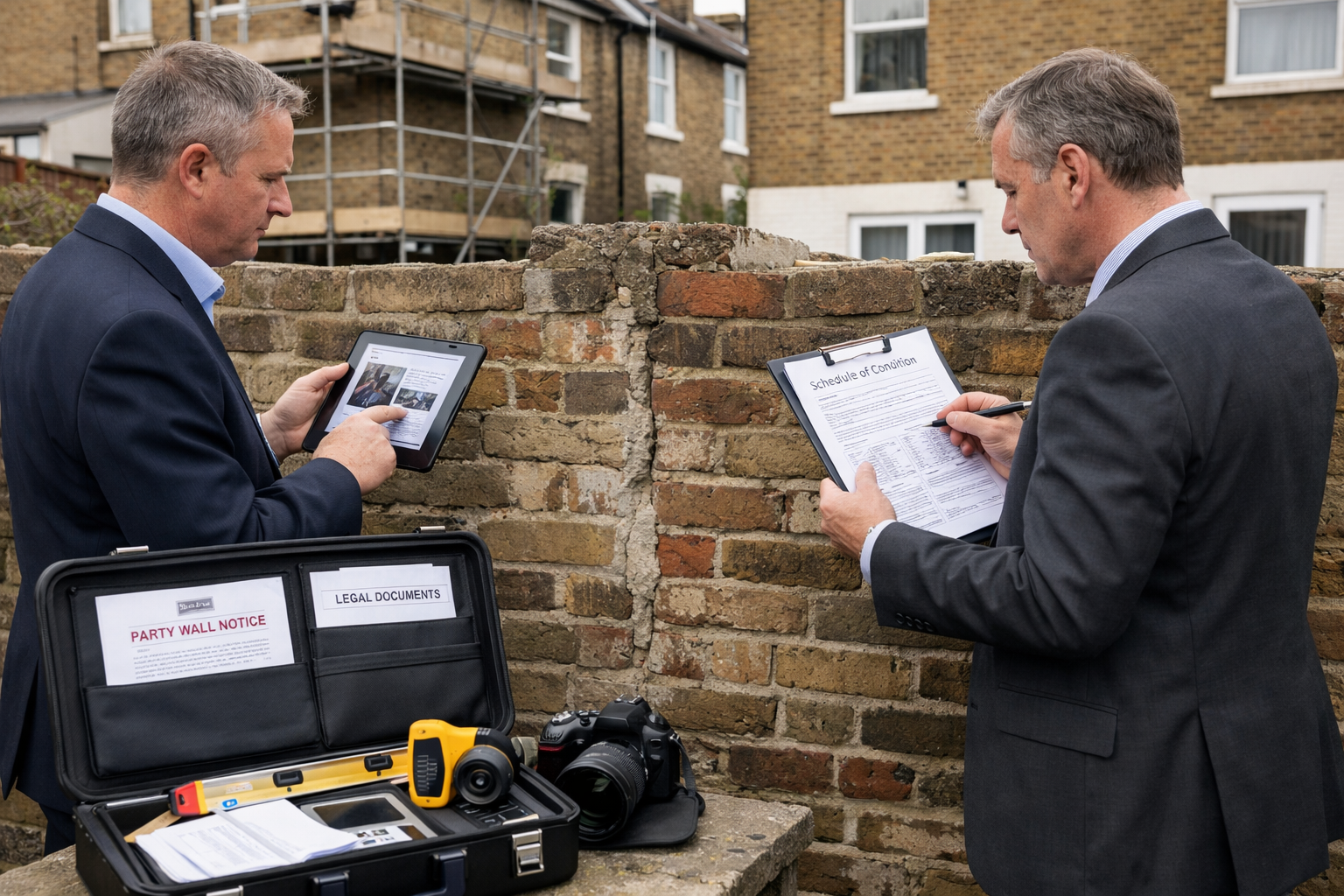
- Photographic schedules of condition: Comprehensive records of existing property conditions, often involving 50-200+ photographs per property
- Detailed awards: Legal documents specifying permitted work, protective measures, access arrangements, and dispute resolution mechanisms
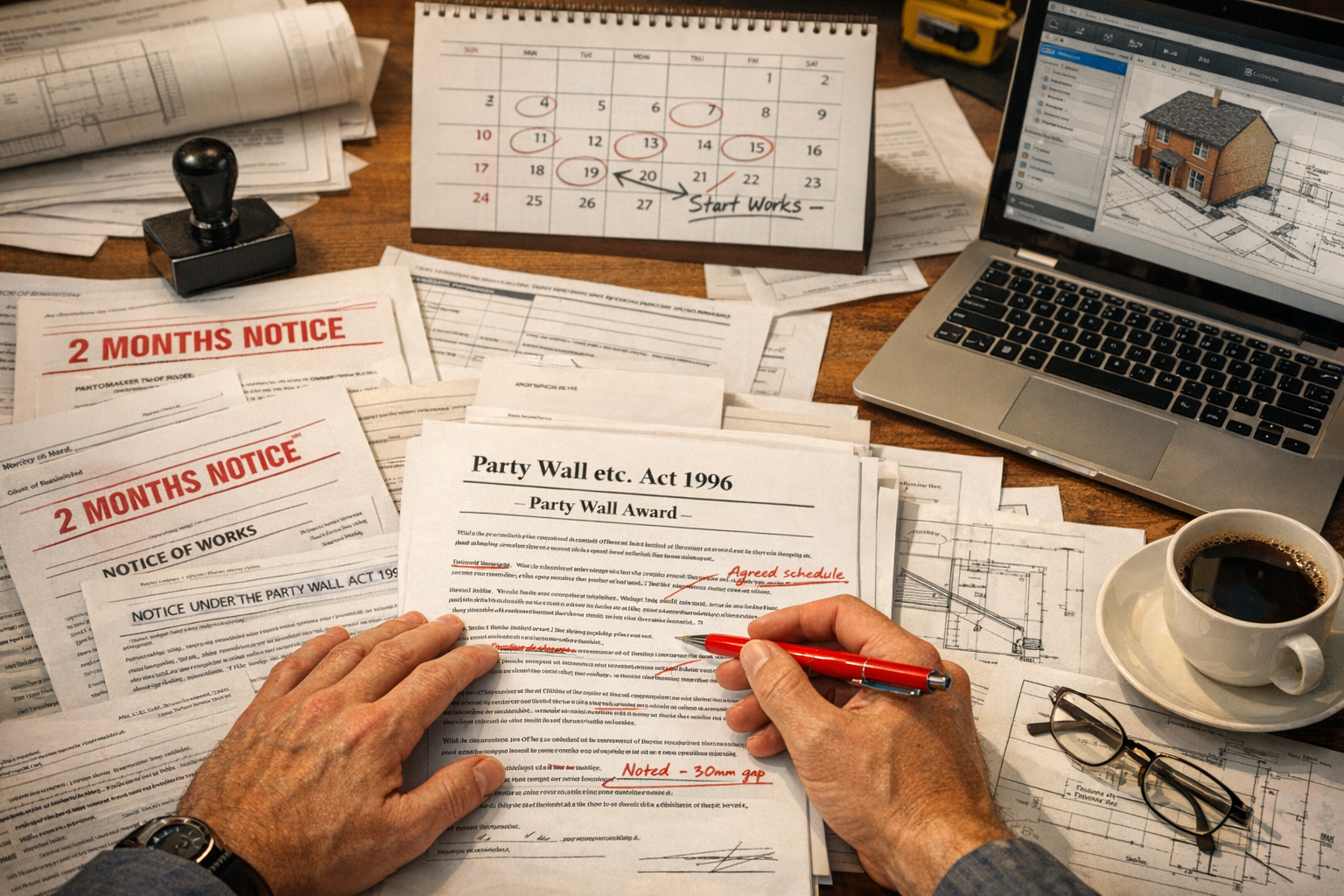
- Notice compliance: Ensuring proper service of party wall notices within required timeframes (2 months to 1 year before work begins)[1]
- Ongoing monitoring: Site visits during construction to verify compliance with award terms
- Final inspections: Post-construction assessments to identify any damage requiring remediation
This documentation serves crucial protective functions for all parties, but requires significant time investment that clients often underestimate.
Navigating Different Types of Party Wall Works
The reality of party wall surveying in 2026 encompasses diverse types of party wall works, each presenting unique challenges:
Loft conversions typically involve raising party walls or inserting steel beams, requiring careful assessment of load-bearing capacity and structural implications for adjoining properties.
Extensions often necessitate building up to or astride boundary lines, triggering both party structure notices and line of junction notices with different notice periods and requirements.
Basement excavations present the most complex challenges, involving underpinning, excavation within 3-6 meters of adjoining foundations, and potential groundwater implications.
Repairs to existing party walls raise questions about cost-sharing and responsibility apportionment, particularly when defects result from age, previous alterations, or shared use patterns[1].
Each work type requires specialized knowledge and experience. Property owners benefit from engaging surveyors with specific experience in their project type rather than assuming all party wall surveyors possess equivalent expertise.
The Emotional Labor of Dispute Resolution
An underappreciated aspect of party wall surveying involves managing interpersonal dynamics and emotional responses. Neighbor disputes often reflect deeper relationship issues, historical grievances, or anxieties about property values and quality of life.
"I spend as much time managing emotions as I do assessing structures," Tanner reflects. "A technically perfect award fails if it doesn't address the underlying concerns driving the dispute. The best surveyors combine technical expertise with emotional intelligence and diplomatic skills."
This emotional labor intensifies in high-value property markets where stakes are higher and expectations more demanding. Surveyors working in areas served by party wall surveyors in East London or West London report particularly intense client expectations and scrutiny.
Practical Advice from Industry Pros: Navigating the Party Wall Process Successfully
Industry professionals offer consistent advice for property owners facing party wall procedures in 2026. Early engagement, clear communication, and realistic expectations form the foundation of successful outcomes.
For Building Owners Planning Work
Start early: Engage a surveyor during the design phase, not after planning permission is granted. Early consultation identifies potential party wall implications that may influence design decisions.
Budget appropriately: Allocate 1-2% of total construction costs for party wall matters, including surveyor fees, potential third surveyor appointments, and contingency for complications.
Communicate proactively: Inform neighbors of plans before serving formal notices. Informal discussion often prevents disputes that formal notices can trigger.
Choose experienced professionals: Prioritize surveyors with specific experience in your project type and local area. The cheapest option rarely proves most economical when complications arise.
Understand your obligations: Familiarize yourself with party wall notice requirements and timeline requirements before committing to construction schedules.
For Adjoining Owners Receiving Notices
Respond promptly: Failure to respond within 14 days results in deemed dissent, triggering the dispute resolution process and potentially appointing a surveyor on your behalf.
Consider agreed surveyor arrangements: Appointing the same surveyor as your neighbor can reduce costs and streamline the process, provided you trust their impartiality.
Document existing conditions: Take your own photographs and notes about your property's current condition before work begins, supplementing the professional schedule of condition.
Understand your rights: You cannot prevent legitimate work, but you can ensure proper protections, reasonable access arrangements, and fair treatment of any damage.
Maintain perspective: Most party wall procedures conclude without significant disputes when both parties approach the process reasonably.
Advice for Aspiring Party Wall Surveyors
For professionals considering party wall surveying as a career or specialization, industry veterans offer realistic guidance:
Obtain proper qualifications: Membership in professional bodies like the Royal Institution of Chartered Surveyors (RICS) or Faculty of Party Wall Surveyors provides essential credibility and professional development.
Gain diverse experience: Work with experienced practitioners across different project types and property configurations before practicing independently.
Develop interpersonal skills: Technical knowledge alone proves insufficient—successful surveyors excel at communication, negotiation, and conflict de-escalation.
Maintain professional boundaries: Resist pressure from clients to act as advocates rather than impartial professionals, even when they're paying your fees.
Invest in continuing education: The Act's interpretation evolves through case law and professional guidance—ongoing learning is essential.
Build a sustainable practice: Avoid overcommitting during boom periods, as quality suffers and professional liability increases when workload exceeds capacity.
When to Consider Party Wall Agreements Without Surveyors
While most situations benefit from professional involvement, some straightforward scenarios may proceed with party wall agreements without surveyors. This approach suits:
- Minor works with minimal structural implications
- Neighbors with strong existing relationships and mutual trust
- Property owners with construction or legal expertise
- Situations where both parties clearly understand their rights and obligations
However, even in these cases, many professionals recommend at least consulting a surveyor to review any agreement before signing. The cost of brief professional advice (£200-£400) provides valuable protection against future disputes.
Property owners can access sample party wall agreement templates as starting points, though these should be adapted to specific circumstances rather than used without modification.
Cost Management Strategies: The Reality of Party Wall Surveying Expenses in 2026
Understanding costs of party wall processes enables better financial planning and decision-making. Industry professionals recommend several strategies for managing expenses:
Choosing Between Single and Dual Surveyors
The most significant cost decision involves surveyor appointment structure. Agreed surveyor arrangements cost roughly half of dual-surveyor approaches[1], making them financially attractive when feasible.
However, this approach requires mutual trust between neighbors. Building owners should consider offering to pay for their neighbor's independent legal review of the proposed agreed surveyor (typically £300-£500) as a good-faith gesture that may prevent more expensive dual-surveyor arrangements.
Understanding Cost-Sharing Scenarios
While building owners typically pay all surveyor fees, cost-sharing applies when addressing shared wall defects or repairs benefiting both properties[1]. Apportionment depends on:
- Each party's structural use and benefit from the shared element
- Responsibility for the defect requiring repair
- Historical maintenance contributions and obligations
- Proportional benefit from proposed remedial work
These determinations require careful analysis and often involve negotiation between surveyors. Property owners should understand that cost-sharing is the exception rather than the rule—most party wall work benefits primarily the building owner, who bears corresponding costs.
Reducing Unnecessary Expenses
Practical cost-reduction strategies include:
✅ Serving notices correctly the first time: Defective notices require re-service, delaying projects and increasing costs
✅ Providing comprehensive information upfront: Complete architectural drawings and structural details reduce surveyor time spent requesting additional information
✅ Maintaining realistic timelines: Rushed processes require premium fees and often produce inferior outcomes
✅ Addressing neighbor concerns proactively: Early communication prevents disputes that multiply surveyor involvement
✅ Choosing appropriate work scope: Sometimes modifying designs to avoid party wall implications proves more economical than proceeding with party wall procedures
The True Cost of Delays
While surveyor fees represent direct costs, project delays often prove more expensive. Construction contractors typically charge £500-£2,000+ per day, meaning a two-week party wall delay can cost £5,000-£20,000 in contractor standby time.
This reality emphasizes the importance of initiating party wall procedures early in the planning process. The Act requires notices 2 months to 1 year before work begins[1], but prudent property owners start even earlier to accommodate potential complications.
Conclusion: Embracing the Reality of Party Wall Surveying in 2026
The reality of party wall surveying in 2026 reveals a profession balancing unprecedented demand with the need for careful, thorough professional practice. Fees ranging from £900 to £5,400 reflect the genuine complexity of protecting multiple parties' interests while facilitating legitimate construction work[1]. Understanding what happens behind the scenes—the documentation requirements, emotional labor, capacity constraints, and technical challenges—helps property owners approach the process with appropriate expectations.
Industry professionals consistently emphasize that early engagement, realistic budgeting, and proactive communication form the foundation of successful outcomes. The construction boom affecting party wall survey demand in 2026[2] makes these principles even more critical, as capacity constraints and extended timelines challenge both surveyors and property owners.
Next Steps for Property Owners
If you're planning building work:
- Consult a qualified party wall surveyor during the design phase
- Budget 1-2% of construction costs for party wall matters
- Serve notices at least 3-4 months before planned construction start dates
- Communicate informally with neighbors before formal notice service
If you've received a party wall notice:
- Respond within 14 days to preserve your options
- Consider whether an agreed surveyor arrangement suits your situation
- Document your property's existing condition thoroughly
- Seek professional advice if you're uncertain about your rights
For all parties:
- Maintain perspective about what the Act does and doesn't cover
- Recognize that most procedures conclude successfully without significant disputes
- Understand that proper process takes time and cannot be rushed without risk
- View surveyor fees as insurance against far more expensive disputes and damage
The party wall surveying profession in 2026 faces genuine challenges, but the fundamental framework remains sound. Property owners who understand the reality behind the process—the fees, disputes, and daily challenges industry professionals navigate—position themselves for smoother, more cost-effective outcomes. In an era of construction boom and capacity constraints, this understanding proves more valuable than ever.
For additional guidance, explore resources on party wall awards, boundary wall rules, and party structure notices to build comprehensive knowledge of your rights and obligations under the Party Wall etc. Act 1996.
References
[1] Party Wall Surveyor Cost – https://hoa.org.uk/advice/guides-for-homeowners/i-am-improving/party-wall-surveyor-cost/
[2] Party Wall Surveys Amid 2026 Construction Boom Handling Disputes In High Demand Uk Housing Markets – https://nottinghillsurveyors.com/blog/party-wall-surveys-amid-2026-construction-boom-handling-disputes-in-high-demand-uk-housing-markets