
More than 60% of party wall disputes in London during 2026 stem from misunderstandings about surveyor appointments and the resulting cost escalation when both parties hire separate professionals. The Party Wall etc. Act 1996 offers a streamlined alternative that many property owners overlook: appointing a single agreed surveyor to represent both the building owner and the adjoining owner. Understanding The Role of the Agreed Surveyor in Party Wall Disputes: How Single Surveyor Appointments Save Time and Money can transform what might become a lengthy, expensive process into an efficient resolution that protects everyone’s interests.
When neighbors agree to work together rather than against each other, the benefits extend far beyond reduced fees. A single agreed surveyor eliminates the communication delays, conflicting opinions, and adversarial dynamics that often characterize party wall procedures. This approach represents the most cost-effective and time-efficient path through the statutory requirements, provided both parties understand their rights and the surveyor maintains complete independence.

Key Takeaways
✅ Appointing a single agreed surveyor typically reduces total surveyor fees by 40-60% compared to each party hiring separate professionals
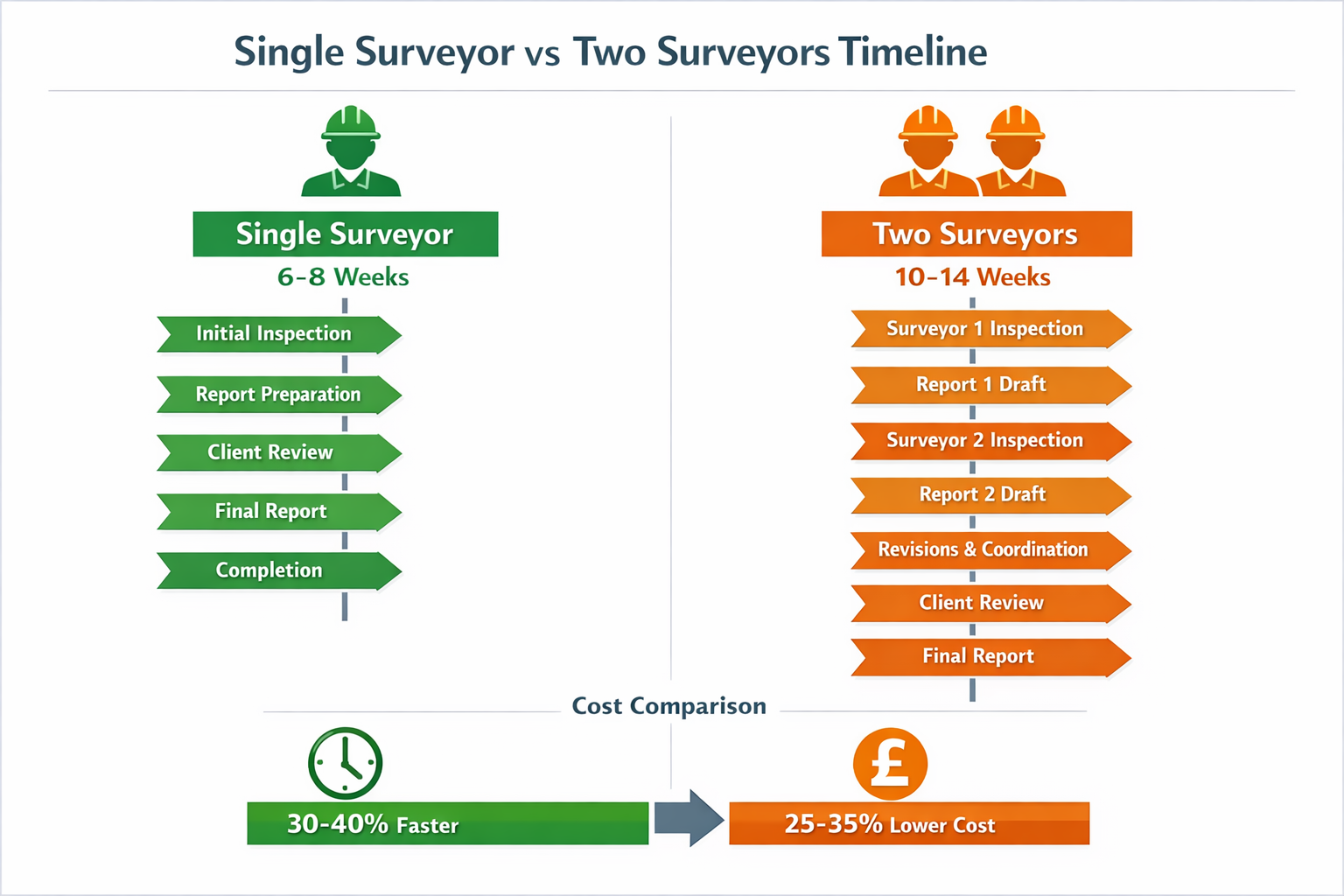
⏱️ Timeline acceleration: Single surveyor appointments can complete the Party Wall Award process in 6-8 weeks versus 10-14 weeks with two surveyors
🤝 Independence is mandatory: The agreed surveyor must be completely independent from both parties and cannot be the building owner’s project surveyor
📋 Legal authority remains identical: An agreed surveyor has the same statutory powers to create binding Party Wall Awards as two separate surveyors
⚖️ Best for cooperative relationships: This approach works optimally when both neighbors maintain reasonable communication and trust
Understanding the Agreed Surveyor’s Unique Position
The agreed surveyor occupies a distinctive role within the framework of the Party Wall etc. Act 1996. Unlike situations where the building owner appoints their own surveyor and the adjoining owner appoints a separate professional, the agreed surveyor serves both parties simultaneously with equal duty of care to each.[2]
Legal Framework and Authority
Under Section 10 of the Party Wall etc. Act 1996, when a dispute arises (or is deemed to arise) regarding party wall works, the parties have three options:
- Each party appoints their own surveyor (who then select a third surveyor if needed)
- Both parties jointly appoint a single agreed surveyor
- Allow the dispute to escalate (not recommended)
The agreed surveyor possesses the same legal authority as two separate surveyors working together. They can issue a legally binding Party Wall Award that details the proposed works, protective measures, access arrangements, and cost allocation.[2][3]
The Independence Requirement
Critical point: The agreed surveyor must be genuinely independent. They cannot be the same professional the building owner is already using for design, project management, or construction oversight.[3] This independence ensures the adjoining owner views the surveyor as neutral and impartial rather than biased toward the building owner’s interests.
Many disputes arise when building owners suggest their own project surveyor act as the agreed surveyor—a proposal that violates the spirit of the Act and undermines neighbor confidence. When seeking an agreed surveyor, both parties should participate in the selection process or at minimum, the adjoining owner must explicitly consent to the appointment.
The Role of the Agreed Surveyor in Party Wall Disputes: How Single Surveyor Appointments Streamline the Process
The efficiency gains from appointing a single agreed surveyor become apparent throughout every stage of the party wall procedure. From initial assessment to final award issuance, having one professional coordinate the entire process eliminates common bottlenecks.
Timeline Comparison: Single vs. Dual Surveyor Appointments
| Process Stage | Single Agreed Surveyor | Two Separate Surveyors |
|---|---|---|
| Initial appointment | 1-3 days | 5-10 days (both must appoint) |
| Site inspection | 1 visit (both parties present) | 2-3 visits (coordination required) |
| Schedule of condition | 3-5 days | 7-10 days (agreement between surveyors) |
| Award drafting | 2-3 weeks | 3-5 weeks (negotiation between surveyors) |
| Total timeline | 6-8 weeks | 10-14 weeks |
The Ten-Day Appointment Window
When an adjoining owner receives party wall notices and either dissents or fails to respond within the statutory period, a dispute is deemed to have arisen. At this point, the clock starts on surveyor appointments. The agreed surveyor should typically be appointed within ten days to begin the formal process and maintain project momentum.[3]
This rapid appointment prevents the construction delays that frustrate building owners and helps maintain positive neighbor relations. When working with party wall surveyors in North London, Central London, or other high-density areas where construction schedules are tight, this timeline advantage proves invaluable.
Simplified Communication Channels
With two separate surveyors, every decision requires:
- Building owner → Building owner’s surveyor
- Building owner’s surveyor → Adjoining owner’s surveyor
- Adjoining owner’s surveyor → Adjoining owner
- Response travels back through the same chain
This four-step communication process introduces delays at each stage. The agreed surveyor eliminates these intermediary steps, communicating directly with both parties and making decisions more efficiently while maintaining impartiality.
How Single Surveyor Appointments Reduce Costs Substantially
The financial benefits of appointing an agreed surveyor extend beyond simply halving the surveyor fees. The cost savings cascade through multiple aspects of the party wall process.
Direct Fee Savings
Typical fee structure comparison (based on standard residential extension in London, 2026):
Two Separate Surveyors:
- Building owner’s surveyor: £800-£1,200
- Adjoining owner’s surveyor: £800-£1,200
- Third surveyor (if required): £600-£1,000
- Total potential cost: £2,200-£3,400
Single Agreed Surveyor:
- Agreed surveyor fee: £1,000-£1,500
- No second surveyor needed
- No third surveyor needed
- Total cost: £1,000-£1,500
The building owner typically pays all surveyor fees under the Act, so these savings directly benefit their project budget.[3] For those wondering about how to keep party wall costs down, the agreed surveyor route represents the single most impactful decision.
Reduced Project Delays = Lower Construction Costs
Construction delays cost money. When contractors wait for party wall procedures to complete, building owners face:
- Extended preliminaries costs: Site security, welfare facilities, insurance
- Contractor standing time charges: Labor and equipment sitting idle
- Material price fluctuations: Longer timelines expose projects to price increases
- Financing costs: Extended loan interest or opportunity costs
A project delayed by 4-6 weeks due to protracted surveyor negotiations can easily incur £2,000-£5,000 in additional costs beyond the surveyor fees themselves. The streamlined timeline from a single agreed surveyor helps avoid these hidden expenses.
Fewer Disputes and Appeals
When two surveyors with potentially different interpretations work together, disagreements sometimes arise that require third surveyor involvement. This adds both cost and delay. A single agreed surveyor makes consistent decisions throughout, reducing the likelihood of internal conflicts that escalate costs.
Both parties retain the right to appeal to the County Court within 14 days if they believe the award is unfair,[3] but well-drafted awards from experienced agreed surveyors rarely face challenges.
Essential Responsibilities of the Agreed Surveyor
Understanding what the agreed surveyor actually does helps property owners appreciate the value this professional provides and why their independence matters so critically.
Conducting the Schedule of Condition
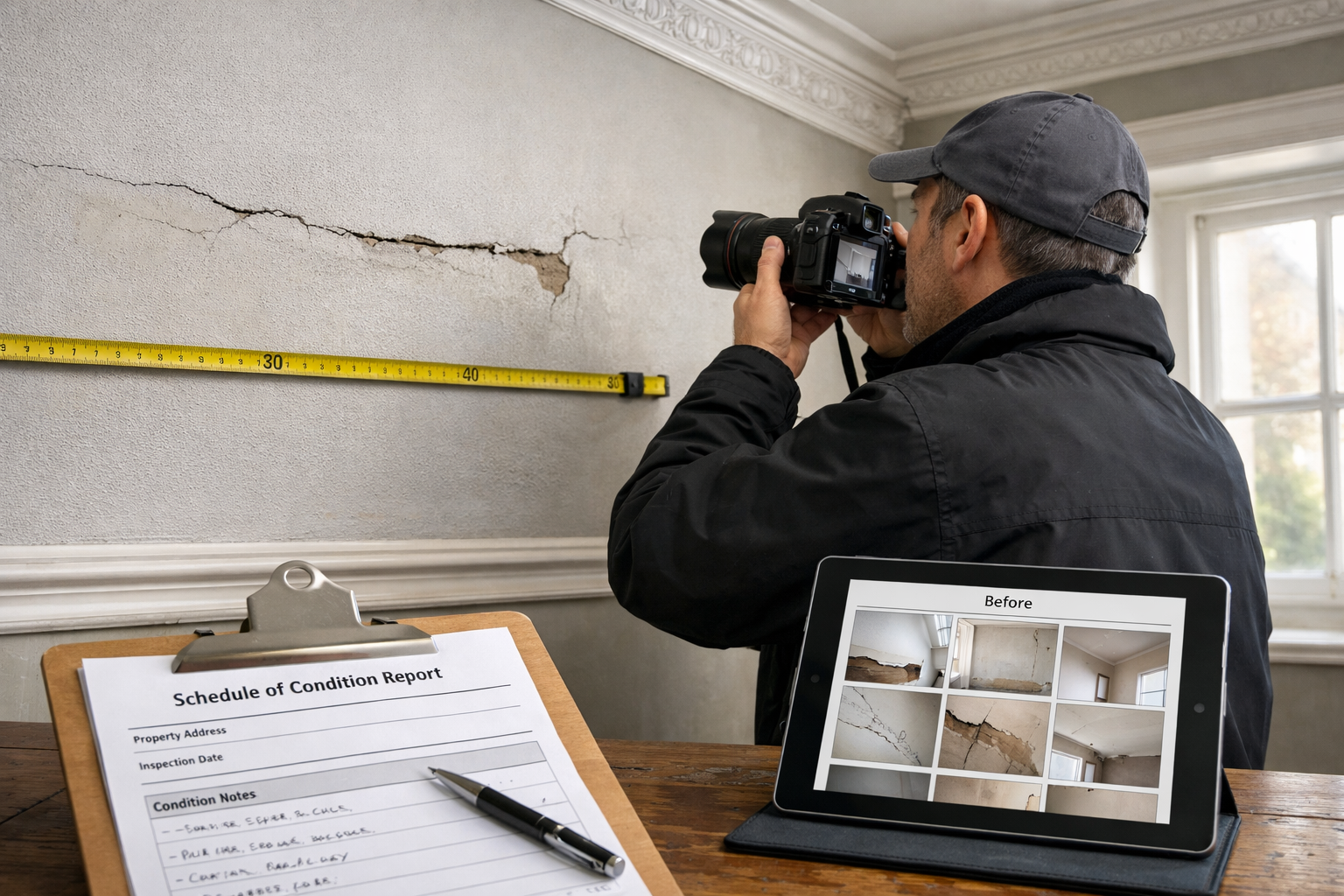
One of the agreed surveyor’s primary responsibilities involves preparing a comprehensive schedule of condition that documents the adjoining owner’s property before works commence.[3] This detailed record typically includes:
📸 Photographic evidence of all rooms, walls, ceilings, and external features
📏 Measurements and descriptions of existing cracks, settlement, or defects
🔍 Close-up documentation of areas most likely affected by the works
📝 Written narrative describing the property’s current condition
This schedule protects both parties. It gives the building owner a baseline to defend against spurious damage claims, while giving the adjoining owner evidence if legitimate damage occurs. The agreed surveyor’s impartiality ensures this document accurately reflects reality rather than favoring either party.
Drafting the Party Wall Award
The Party Wall Award represents the legally binding document that governs the works. The agreed surveyor must ensure this award includes:[2][3]
✅ Detailed description of the proposed works
✅ Timing and method of work execution
✅ Access arrangements for the building owner
✅ Protective measures to prevent damage
✅ Rights and responsibilities of both parties
✅ Cost allocation including surveyor fees
✅ Dispute resolution mechanisms if issues arise
The award must be fair, reasonable, and compliant with the Act. An experienced agreed surveyor balances the building owner’s need to complete their project with the adjoining owner’s right to protection from damage and unreasonable disturbance.
Ongoing Monitoring and Dispute Resolution
The agreed surveyor’s role doesn’t end when the award is issued. Throughout the construction process, they remain available to:
- Inspect works to ensure compliance with the award
- Resolve disagreements that arise during construction
- Assess any damage that may occur
- Determine appropriate remediation if damage is proven
- Update the award if circumstances change
This ongoing involvement provides both parties with professional oversight and a mechanism to address concerns before they escalate into formal disputes or litigation.[4]
When Single Surveyor Appointments Work Best (And When They Don’t)
While the agreed surveyor route offers significant advantages, it’s not universally appropriate. Understanding when this approach works optimally helps property owners make informed decisions.
Ideal Scenarios for Agreed Surveyors
✅ Cooperative neighbor relationships: When both parties communicate reasonably and want to minimize costs and delays
✅ Straightforward works: Standard residential extensions, loft conversions, or basement excavations without unusual complications
✅ Experienced professionals: When both parties understand their rights and trust the process
✅ Clear scope: Projects with well-defined plans and minimal likelihood of scope changes
✅ Mutual selection: When both parties participate in choosing the surveyor or the adjoining owner genuinely consents to the building owner’s suggestion
Situations Requiring Separate Surveyors
❌ Adversarial relationships: When neighbors have existing conflicts or deep mistrust
❌ Complex projects: Major structural works, commercial developments, or projects with significant risk
❌ Vulnerable parties: When the adjoining owner lacks construction knowledge and needs dedicated advocacy
❌ Disputed scope: When parties fundamentally disagree about what works are necessary or appropriate
❌ Previous damage: When the building owner has a history of causing damage or ignoring obligations
In these situations, having separate building owner’s surveyors and adjoining owner’s surveyors provides additional checks and balances that protect both parties’ interests more effectively.
Practical Steps to Appoint an Agreed Surveyor
For property owners interested in pursuing this cost-effective route, the appointment process follows a straightforward sequence.
Step 1: Serve Proper Notice
Before any surveyor appointment, the building owner must serve the appropriate party wall notice at least two months before works affecting a party wall begin.[4] Failure to provide proper notice is among the most common causes of party wall disputes and cannot be remedied by simply appointing a surveyor later.
Step 2: Discuss the Agreed Surveyor Option
When the adjoining owner responds (or fails to respond, creating a deemed dispute), the building owner should discuss the agreed surveyor option. This conversation should emphasize:
- 💰 Cost savings for the building owner (who pays the fees)
- ⏱️ Time savings benefiting both parties
- 🤝 The surveyor’s independence and equal duty to both parties
- 📋 Identical legal protections compared to separate surveyors
Step 3: Select a Qualified Professional
Both parties should agree on a surveyor who:
- Holds relevant qualifications (RICS member, FFPWS designation preferred)
- Has significant party wall experience in your area
- Demonstrates clear independence from both parties
- Provides transparent fee information upfront
- Maintains professional indemnity insurance
When searching for professionals across West London, East London, or South London, look for surveyors with local knowledge of construction practices and property types in your specific area.
Step 4: Formalize the Appointment
The appointment should be documented in writing, with both parties signing an agreement that confirms:
- The surveyor’s name and contact details
- The surveyor’s fee structure and payment terms
- Acknowledgment of the surveyor’s independence
- Agreement to be bound by the surveyor’s award
- Understanding of appeal rights
Step 5: Cooperate with the Process
Once appointed, both parties should:
- Provide prompt access for inspections
- Respond quickly to surveyor requests for information
- Maintain open communication throughout the process
- Trust the professional judgment of the agreed surveyor
- Raise concerns immediately rather than letting issues fester
Common Misconceptions About Agreed Surveyors
Several myths about agreed surveyors persist, often preventing property owners from choosing this efficient option.
Myth 1: “The Agreed Surveyor Will Favor the Building Owner”
Reality: The agreed surveyor owes equal duty of care to both parties and risks professional sanctions for bias. Their reputation depends on fairness, and the adjoining owner retains full appeal rights if the award seems unreasonable.[3]
Myth 2: “Adjoining Owners Get Less Protection”
Reality: The legal protections are identical whether one or two surveyors are appointed. The agreed surveyor must still prepare a schedule of condition, ensure proper protective measures, and hold the building owner accountable for any damage.[2][3]
Myth 3: “It’s Too Late Once We’ve Started with Separate Surveyors”
Reality: While less common, parties can agree to consolidate to a single agreed surveyor even after initially appointing separate professionals, though this requires both appointed surveyors to step aside.
Myth 4: “Agreed Surveyors Rush the Process”
Reality: Agreed surveyors work more efficiently by eliminating communication delays, not by cutting corners. They must still comply with all statutory requirements and produce thorough documentation.
Myth 5: “You Can’t Have an Agreed Surveyor Without Perfect Neighbor Relations”
Reality: While cooperation helps, the agreed surveyor route works for any situation where both parties are reasonable and want to avoid unnecessary costs. You don’t need to be friends with your neighbor—just willing to follow a fair process.
The Legal Framework Supporting Agreed Surveyor Appointments
The Party Wall etc. Act 1996 explicitly provides for agreed surveyor appointments as a primary dispute resolution mechanism, not as a secondary option.[2] Understanding this legal foundation helps property owners recognize that choosing this route is fully supported by statute.
Statutory Authority
Section 10(1)(b) of the Act states that when a dispute arises, the parties may “concur in the appointment of one surveyor” (the agreed surveyor). This language places the agreed surveyor option on equal footing with separate surveyor appointments, making it a legitimate first choice rather than a compromise.
Case Law Developments
Recent case law, including the practice-changing Evans v Paterson (2021) decision, has clarified surveyors’ roles and responsibilities under the Act.[5] These cases emphasize that surveyors—whether agreed or separate—are appointed specifically to resolve disputes with binding authority, not merely to provide advice.
This legal authority means the agreed surveyor’s decisions carry the same weight as court judgments (subject to appeal rights), providing both parties with certainty and finality once the award is issued.
Cost Recovery Rights
The Act provides that the building owner typically bears all reasonable surveyor costs, including fees for the agreed surveyor.[2][3] This statutory cost allocation makes the agreed surveyor route particularly attractive to building owners, as their savings directly benefit their project budget.
However, if the building owner acts unreasonably or causes unnecessary expense, the agreed surveyor can allocate costs differently in the award—another protection for adjoining owners.
Maximizing the Benefits: Best Practices for Property Owners
Whether you’re the building owner initiating works or the adjoining owner receiving notice, certain practices help maximize the benefits of the agreed surveyor route.
For Building Owners
🏗️ Serve notice early: Don’t wait until the last minute, as this pressures neighbors and reduces cooperation likelihood
💬 Communicate proactively: Explain your project to neighbors before formal notices arrive
💰 Emphasize cost benefits: Help neighbors understand that the agreed surveyor route protects their interests while reducing your costs (which might otherwise impact your project scope)
📋 Provide complete information: Give the agreed surveyor comprehensive plans and specifications to avoid later amendments
🤝 Remain flexible: Be willing to adjust timing or methods if the surveyor identifies concerns
For Adjoining Owners
📖 Understand your rights: Read the Party Wall etc. Act 1996 or consult resources explaining your protections
❓ Ask questions: Before agreeing to an agreed surveyor, ensure you understand their independence and duties
🔍 Verify qualifications: Check the proposed surveyor’s credentials and experience
📝 Document everything: Keep copies of all notices, correspondence, and the final award
⚖️ Know your appeal rights: You have 14 days to appeal to the County Court if the award seems unfair[3]
For Both Parties
🗣️ Maintain communication: Most party wall disputes escalate due to poor communication rather than genuine conflicts of interest
⏰ Respect timelines: The Act provides specific time periods for responses and appointments—honor them
🎯 Focus on outcomes: Keep sight of the goal (completing works safely with proper protection) rather than getting caught in adversarial dynamics
💼 Trust the process: The party wall framework has resolved hundreds of thousands of disputes successfully when parties engage in good faith
Alternative Scenarios: When Agreements Fail
Despite best intentions, sometimes the agreed surveyor route proves unworkable. Understanding the alternatives helps property owners navigate these situations.
Appointing Separate Surveyors
When parties cannot agree on a single surveyor, each appoints their own professional. The two surveyors then work together to produce the Party Wall Award, selecting a third surveyor who can resolve any disagreements between them.[2]
While more expensive and time-consuming, this route provides additional advocacy for parties who need it. Those interested in understanding the costs of the party wall process should factor in these higher fees when separate appointments become necessary.
Third Surveyor Involvement
When two appointed surveyors cannot agree on specific matters, they refer the dispute to the third surveyor (also called the “selected surveyor”). This professional’s decision on the disputed point is final and binding, subject only to appeal to the County Court.[2]
Third surveyor fees typically range from £600-£1,000 for straightforward disagreements, adding to the overall cost burden on the building owner.
Court Appeals
Either party can appeal a Party Wall Award to the County Court within 14 days of receiving it.[3] However, courts generally defer to surveyor expertise unless clear errors of law or procedure are demonstrated. Appeals are expensive, time-consuming, and rarely successful, making them a last resort.
Proceeding Without Agreement
Some building owners mistakenly believe they can proceed without following party wall procedures if neighbors are uncooperative. This is incorrect and potentially costly. Working without proper awards exposes building owners to:
- Injunctions stopping work immediately
- Damage liability without the protection of agreed procedures
- Legal costs defending against neighbor actions
- Project delays far exceeding the time saved by skipping procedures
For those wondering about having a party wall agreement without a surveyor, the answer is that while informal agreements are possible for minor works, any significant works affecting party walls require proper procedures under the Act.
The 2026 Construction Landscape and Party Wall Implications
The construction boom continuing through 2026 has increased party wall activity significantly, particularly in high-density urban areas where properties share walls and boundaries.[6] This heightened activity makes efficient party wall procedures more important than ever.
Increased Demand for Surveyor Services
With more homeowners undertaking extensions, loft conversions, and basement excavations, party wall surveyors face unprecedented demand. This increased workload can extend timelines when separate surveyors are appointed, as each professional juggles multiple projects simultaneously.
The agreed surveyor route helps mitigate these capacity constraints by requiring only one professional rather than two (or potentially three), making appointments easier to schedule and complete promptly.
Rising Construction Costs
Construction material and labor costs continue rising in 2026, making project delays increasingly expensive. The time savings from agreed surveyor appointments translate directly to cost savings by getting projects started sooner and avoiding extended preliminaries periods.
Neighbor Relations in Dense Urban Areas
In cities like London, where terraced houses and semi-detached properties dominate, nearly every significant home improvement triggers party wall procedures. Maintaining good neighbor relations becomes essential for long-term property enjoyment, making the cooperative approach of agreed surveyor appointments particularly valuable.
Conclusion: Making the Smart Choice for Your Party Wall Needs
The Role of the Agreed Surveyor in Party Wall Disputes: How Single Surveyor Appointments Save Time and Money represents more than just a cost-cutting measure—it embodies a collaborative approach to resolving the inevitable conflicts that arise when properties share walls and boundaries. By choosing this route when circumstances permit, property owners demonstrate commitment to fair processes while achieving significant practical benefits.
The evidence is compelling: agreed surveyor appointments typically reduce costs by 40-60% and accelerate timelines by 4-6 weeks compared to separate surveyor appointments. These savings benefit building owners directly while still providing adjoining owners with complete statutory protections and an independent professional overseeing the works.
Your Next Steps
If you’re planning building works:
- Serve proper notice at least two months before starting works affecting party walls
- Open dialogue with your neighbors about the agreed surveyor option
- Research qualified professionals with strong party wall experience in your area
- Document everything in writing to avoid later misunderstandings
- Budget appropriately for surveyor fees (£1,000-£1,500 for agreed surveyor route)
If you’ve received a party wall notice:
- Respond within 14 days to preserve your rights and avoid deemed consent
- Consider the agreed surveyor option if your neighbor suggests it and the surveyor is truly independent
- Ask questions about the surveyor’s qualifications, experience, and approach
- Understand your protections including schedule of condition, award provisions, and appeal rights
- Maintain open communication with both your neighbor and the appointed surveyor
The party wall framework exists to protect everyone’s interests while allowing necessary building works to proceed. When both parties engage constructively and consider the agreed surveyor route where appropriate, the system works efficiently and fairly—saving time, money, and neighbor relationships in the process.
Whether you’re undertaking works or responding to a neighbor’s notice, making informed decisions about surveyor appointments sets the foundation for a smooth party wall process that protects your interests while respecting statutory requirements and community relationships.
References
[1] Watch – youtube.com
[2] If You Cant Agree – gov.uk
[3] Party Wall Agreement – hoa.org.uk
[4] Common Party Wall Disputes And How To Resolve Them Effectively – partywallslimited.com
[5] Practice Changing Party Wall Case Law Evans V Paterson 2021 – peterbarry.co.uk
[6] Party Wall Surveys Amid 2026 Construction Boom Handling Disputes In High Demand Uk Housing Markets – https://nottinghillsurveyors.com/blog/party-wall-surveys-amid-2026-construction-boom-handling-disputes-in-high-demand-uk-housing-markets
Speak to a RICS chartered party wall surveyor
Free initial consultation. Notices, awards and schedules of condition across London and nationwide.