


Understanding Damp Survey Cost: Complete 2025 Pricing Guide
Imagine discovering mysterious dark patches spreading across your walls, only to realize that what started as a small moisture issue could potentially cost thousands in structural repairs. The damp survey cost you invest today could save you from catastrophic expenses tomorrow, making it one of the most crucial investments for property owners facing moisture-related concerns.
Key Takeaways
• Damp survey cost typically ranges from £200 to £800, depending on property size and complexity of moisture issues
• Early detection through professional surveys can prevent structural damage costing thousands in repairs
• Multiple factors influence pricing including property type, survey scope, equipment requirements, and regional variations
• Professional expertise ensures accurate diagnosis and comprehensive reporting for insurance and legal purposes
• Investment value of surveys far outweighs potential costs of undiagnosed damp damage
What Is a Damp Survey and Why Do You Need One? 💧
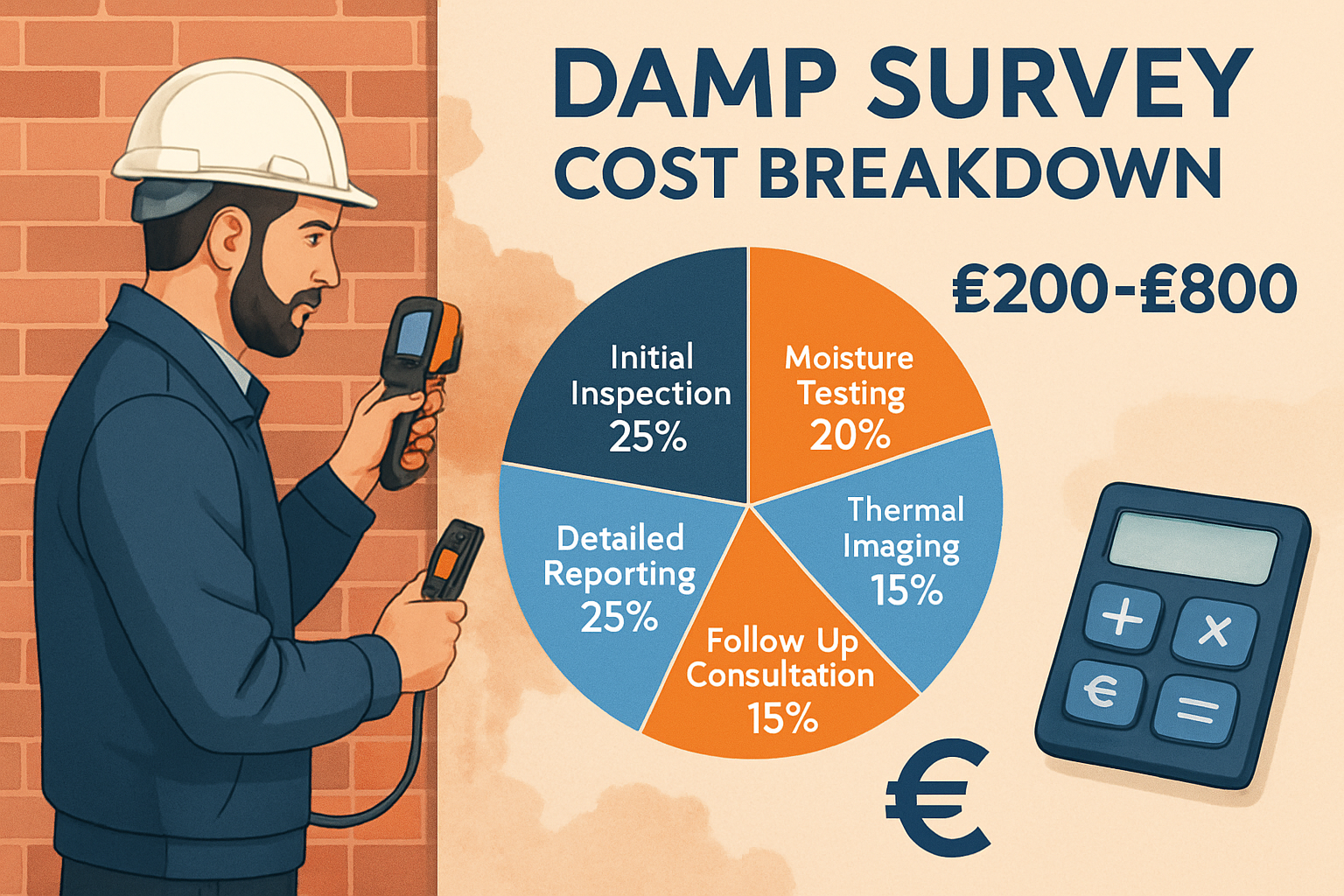
A damp survey represents a comprehensive professional assessment designed to identify, analyze, and document moisture-related issues within residential and commercial properties. These specialized inspections utilize advanced diagnostic equipment including thermal imaging cameras, moisture meters, and hygrometers to detect both visible and hidden damp problems.
Professional surveyors examine various moisture sources including:
- Rising damp from ground level
- Penetrating damp through walls and roofs
- Condensation issues from poor ventilation
- Plumbing leaks and structural defects
- Basement and cellar moisture problems
The importance of professional damp surveys cannot be overstated. Undetected moisture can lead to structural timber decay, mold growth, compromised insulation effectiveness, and significant health hazards for occupants. Early identification through comprehensive surveys enables targeted remediation strategies, preventing minor issues from escalating into major structural problems.
When dealing with property-related surveys and assessments, understanding professional surveying services becomes essential for making informed decisions about your property investment.
Breaking Down Damp Survey Cost: What to Expect in 2025 📊
Standard Pricing Ranges
The damp survey cost varies significantly based on multiple factors, but property owners can expect the following general pricing structure:
| Property Type | Basic Survey | Comprehensive Survey | Specialist Assessment |
|---|---|---|---|
| Small Flat/Apartment | £200-£350 | £400-£600 | £650-£800 |
| Terraced House | £300-£450 | £500-£700 | £750-£950 |
| Semi-Detached | £400-£550 | £600-£800 | £850-£1,100 |
| Detached House | £500-£700 | £750-£1,000 | £1,000-£1,300 |
| Commercial Property | £600-£1,200 | £1,000-£2,000 | £1,500-£3,000+ |
What’s Included in Professional Surveys
Basic damp surveys typically encompass:
- Visual inspection of all accessible areas
- Moisture meter readings throughout the property
- Identification of obvious damp sources
- Basic photographic documentation
- Summary report with recommendations
Comprehensive assessments expand to include:
- Thermal imaging analysis
- Detailed moisture mapping
- Air quality testing
- Structural timber assessment
- Extensive photographic evidence
- Detailed written report with remediation strategies
Specialist evaluations incorporate:
- Advanced diagnostic equipment
- Laboratory analysis of samples
- Structural engineering consultation
- Insurance-grade documentation
- Expert witness capabilities
- Follow-up monitoring recommendations
Understanding the scope of work helps property owners select appropriate survey levels matching their specific requirements and budget constraints.
Key Factors Influencing Damp Survey Cost 🏠
Property Characteristics
Building size represents the primary cost determinant, as larger properties require more time for comprehensive assessment. Surveyors typically charge based on the number of rooms, total floor area, and accessibility challenges throughout the property.
Property age significantly impacts survey complexity and duration. Victorian and Edwardian properties often present unique challenges including:
- Original building materials susceptible to moisture
- Historical construction methods lacking modern damp-proofing
- Complex architectural features requiring specialized assessment
- Potential heritage considerations affecting remediation options
Construction type influences both survey methodology and pricing:
- Solid wall construction requires different assessment techniques than cavity walls
- Basement properties demand specialized equipment and expertise
- Converted buildings may present unique moisture pathways
- New construction might involve warranty and building regulation considerations
Survey Scope and Complexity
The extent of moisture problems directly correlates with survey duration and complexity. Properties with widespread damp issues require more detailed investigation, extensive documentation, and comprehensive analysis of underlying causes.
Accessibility factors can significantly impact costs:
- Restricted access areas requiring specialized equipment
- Height-related challenges necessitating scaffolding or ladders
- Occupied properties requiring careful scheduling and minimal disruption
- Commercial properties with operational constraints
Equipment requirements vary based on specific moisture types and detection challenges:
- Thermal imaging for hidden moisture detection
- Deep-wall moisture meters for thick masonry construction
- Air quality monitors for mold and humidity assessment
- Endoscopic cameras for cavity wall inspection
Geographic and Market Factors
Regional variations significantly influence damp survey cost across different UK locations. London and Southeast England typically command premium pricing due to higher operational costs, increased demand, and specialized expertise requirements.
Market demand fluctuates seasonally, with autumn and winter months often experiencing increased survey requests as heating season reveals previously hidden condensation issues.
Surveyor qualifications and professional memberships impact pricing structures. Chartered surveyors and specialists with advanced certifications typically charge premium rates reflecting their expertise and professional insurance coverage.
When considering property-related issues that might require professional assessment, understanding boundary and structural regulations can help identify potential moisture ingress points around property perimeters.
Additional Costs and Considerations Beyond Basic Survey Fees 💰
Laboratory Testing and Analysis
Specialist testing often extends beyond basic moisture detection, requiring additional investment for comprehensive property assessment:
Mold identification typically costs £150-£300 per sample, essential for properties with visible fungal growth or unexplained health symptoms among occupants.
Salt analysis ranges from £100-£200 per test, crucial for diagnosing rising damp and determining appropriate treatment strategies.
Timber decay assessment costs £200-£400, particularly important for older properties with structural wooden elements showing signs of deterioration.
Follow-Up Services and Monitoring
Progress monitoring during remediation work typically costs £150-£250 per visit, ensuring treatment effectiveness and identifying any emerging issues.
Post-treatment verification surveys range from £200-£400, providing essential documentation for warranty purposes and insurance claims.
Annual maintenance inspections cost £100-£200, offering ongoing peace of mind and early detection of recurring moisture problems.
Insurance and Legal Documentation
Insurance-grade reports command premium pricing due to enhanced detail requirements and professional liability considerations. These comprehensive documents typically add £200-£500 to standard survey costs but provide essential coverage for insurance claims and legal proceedings.
Expert witness services for dispute resolution or court proceedings range from £150-£300 per hour, plus preparation time and travel expenses.
Warranty documentation for remediation work requires specific reporting standards, potentially adding £100-£300 to survey costs but providing valuable protection for property owners.
Understanding comprehensive surveying costs helps property owners budget effectively for complete moisture assessment and resolution. Professional guidance from experienced surveyors ensures appropriate service selection matching specific property requirements and financial constraints.
Choosing the Right Surveyor: Maximizing Value from Your Investment 🔍
Professional Qualifications and Credentials
Chartered status represents the gold standard for surveying professionals, indicating extensive training, ongoing education, and adherence to strict professional standards. Look for surveyors holding memberships with:
- Royal Institution of Chartered Surveyors (RICS)
- Chartered Institute of Building (CIOB)
- Institute of Specialist Surveyors and Engineers (ISSE)
Specialized certifications in damp and timber surveying demonstrate focused expertise essential for accurate diagnosis and effective remediation strategies.
Professional insurance coverage protects both surveyor and client against potential errors or omissions, with minimum coverage levels typically starting at £1 million for residential work.
Technology and Equipment Standards
Modern diagnostic equipment significantly enhances survey accuracy and reliability:
Thermal imaging cameras detect temperature variations indicating moisture presence behind walls and within structural elements.
Deep-wall moisture meters provide precise readings through various building materials, eliminating guesswork in moisture assessment.
Hygrometers and data loggers monitor environmental conditions over extended periods, identifying patterns contributing to moisture problems.
Endoscopic inspection equipment enables non-destructive investigation of cavity walls and concealed spaces.
Service Quality Indicators
Comprehensive reporting standards distinguish professional services from basic inspections. Quality reports should include:
- Detailed photographic documentation
- Clear moisture level readings and interpretations
- Specific remediation recommendations with priority rankings
- Cost estimates for recommended treatments
- Timeline expectations for resolution
Client testimonials and references provide valuable insights into surveyor reliability, communication quality, and problem-solving capabilities.
Response times and availability reflect professional commitment and operational efficiency, particularly important for urgent moisture issues requiring immediate attention.
When selecting professional services, consider how surveyors handle complex property situations, including party wall matters that might intersect with damp issues affecting shared structures.
Cost-Saving Strategies Without Compromising Quality 💡
Timing Your Survey Strategically
Seasonal considerations can impact both pricing and survey effectiveness:
Autumn surveys often reveal condensation issues as heating systems restart, providing optimal conditions for comprehensive moisture assessment.
Spring inspections following winter weather can identify penetrating damp from storm damage or seasonal ground water changes.
Off-peak scheduling during weekdays or less busy periods may result in reduced rates from some surveying practices.
Bundling Services Efficiently
Combined assessments can reduce overall costs when multiple property issues require professional attention:
Structural surveys incorporating damp assessment provide comprehensive property evaluation at reduced per-service costs.
Pre-purchase inspections including specialized damp evaluation offer significant savings compared to separate assessments.
Multi-property discounts benefit landlords or developers requiring surveys across multiple units or buildings.
Preparation and Cooperation
Property preparation can reduce survey duration and associated costs:
Clear access to all areas eliminates time spent moving furniture or navigating obstacles.
Utility information including heating, plumbing, and ventilation system details helps surveyors focus efficiently on potential problem areas.
Historical documentation of previous moisture issues or treatments provides valuable context, reducing investigation time.
Occupant cooperation in scheduling and access arrangements prevents delays and additional visit charges.
Understanding how to keep professional costs manageable while maintaining service quality applies across various property-related assessments and professional services.
When to Invest in Professional Damp Surveys 🚨
Warning Signs Requiring Immediate Assessment
Visible indicators demanding professional evaluation include:
Discoloration and staining on walls, particularly at ground level or around windows and doors, often indicates active moisture infiltration requiring immediate investigation.
Musty odors throughout the property suggest hidden mold growth or persistent moisture issues that may not be immediately visible but pose significant health and structural risks.
Peeling paint and wallpaper especially in specific areas or patterns, indicates underlying moisture problems affecting decorative finishes and potentially structural elements.
White salt deposits on masonry surfaces signal rising damp or ground water infiltration requiring specialized treatment approaches.
Property Transaction Considerations
Pre-purchase surveys protect buyers from unexpected moisture-related expenses and provide negotiating leverage for purchase price adjustments.
Pre-sale assessments help sellers identify and address moisture issues before marketing, preventing transaction delays and price reductions.
Insurance requirements may mandate professional damp surveys following flood damage or other moisture-related claims.
Mortgage lender requirements sometimes include specialized surveys for properties with known or suspected moisture issues.
Legal and Regulatory Triggers
Tenant complaints in rental properties require landlord response including professional assessment to ensure habitability standards and avoid legal liability.
Building regulation compliance for renovation or conversion projects may require moisture assessment and remediation documentation.
Heritage property considerations often demand specialized expertise for moisture management in historic buildings with unique construction methods and materials.
Professional guidance helps navigate complex property situations, including understanding structural regulations that might impact moisture management strategies.
Understanding Survey Reports and Next Steps 📋
Interpreting Professional Findings
Moisture level classifications help property owners understand severity and urgency:
Acceptable levels (typically below 20% wood moisture equivalent) indicate normal conditions requiring only routine monitoring.
Elevated readings (20-30% WME) suggest developing issues requiring investigation and potential preventive measures.
High moisture content (above 30% WME) indicates active problems demanding immediate attention and remediation.
Critical levels (above 40% WME) represent urgent situations requiring emergency intervention to prevent structural damage.
Prioritizing Remediation Actions
Immediate safety concerns take precedence over cosmetic issues, including structural stability threats and health hazards from mold exposure.
Source elimination addresses root causes rather than symptoms, providing long-term solutions and preventing recurring problems.
Progressive treatment allows budget management through phased remediation approaches, tackling most critical issues first while planning comprehensive solutions.
Preventive measures protect against future moisture ingress, including improved ventilation, drainage, and building maintenance protocols.
Monitoring and Maintenance
Follow-up schedules ensure treatment effectiveness and identify any emerging issues before they become significant problems.
Environmental controls including heating, ventilation, and humidity management help maintain optimal conditions preventing moisture accumulation.
Regular inspections by property owners can identify early warning signs requiring professional attention, minimizing long-term costs and damage.
Professional surveyors often provide guidance on comprehensive property management, including understanding structural assessment requirements that complement moisture management strategies.
Regional Variations in Damp Survey Cost Across the UK 🗺️
London and Southeast England Premium
Metropolitan pricing reflects higher operational costs, increased demand, and specialized expertise requirements in the capital and surrounding areas.
Central London surveys typically command 20-30% premiums over national averages due to:
- Complex property access and parking challenges
- Higher professional insurance and operational costs
- Increased demand from high-value property transactions
- Specialized expertise in period and heritage buildings
Outer London areas generally fall between central London premiums and national averages, offering balanced pricing with good access to qualified professionals.
Understanding regional service availability helps property owners access appropriate expertise while managing costs effectively.
Northern England and Scotland Considerations
Regional variations often provide cost advantages while maintaining professional standards:
Industrial areas may offer competitive pricing due to lower operational overheads and established surveying practices serving commercial and residential markets.
Rural locations sometimes incur additional travel charges but benefit from lower base rates and personalized service from local practitioners.
Scottish regulations may require specific expertise in building standards and environmental conditions affecting moisture management approaches.
Coastal and High-Risk Areas
Environmental factors influence both survey complexity and pricing in specific geographic regions:
Coastal properties face unique challenges from salt air, storm exposure, and ground water variations requiring specialized assessment techniques.
Flood-prone areas demand enhanced expertise in water damage assessment and flood-resilient construction methods.
Clay soil regions present specific challenges with ground movement and seasonal moisture variations affecting building foundations and structures.
Future-Proofing Your Property Investment 🔮
Technology Advances Affecting Survey Costs
Emerging technologies continue to enhance survey accuracy while potentially reducing long-term costs:
Drone surveys enable safe inspection of roofs and high-level areas, reducing access costs and safety risks while providing comprehensive documentation.
IoT monitoring systems offer continuous moisture tracking, enabling predictive maintenance and early intervention strategies.
Advanced imaging including 3D mapping and enhanced thermal analysis provides unprecedented detail in moisture detection and analysis.
Climate Change Considerations
Environmental trends increasingly impact property moisture management requirements:
Increased precipitation patterns may require enhanced drainage and waterproofing strategies, making professional assessment more critical for long-term property protection.
Temperature fluctuations affect condensation patterns and building material performance, requiring updated assessment approaches and remediation strategies.
Extreme weather events increase the importance of comprehensive moisture management and regular professional monitoring.
Investment Protection Strategies
Proactive maintenance based on professional survey recommendations provides the best return on investment through:
- Prevention of major structural damage
- Maintenance of property values
- Reduced insurance claims and premiums
- Enhanced occupant health and comfort
- Compliance with evolving building standards
Documentation maintenance including survey reports and remediation records supports property values and facilitates future transactions.
Professional guidance ensures property owners make informed decisions about moisture management investments, including understanding comprehensive surveying costs for various property-related assessments.
Conclusion: Making Smart Decisions About Damp Survey Cost
Understanding damp survey cost empowers property owners to make informed decisions protecting their most valuable investments. The £200-£800 investment in professional moisture assessment pales in comparison to potential structural damage costs reaching thousands of pounds when moisture issues remain undetected and untreated.
Professional surveys provide essential insights into property condition, enabling targeted remediation strategies that address root causes rather than superficial symptoms. The expertise, advanced equipment, and comprehensive reporting offered by qualified surveyors ensure accurate diagnosis and effective treatment planning.
Strategic timing and careful surveyor selection maximize value from survey investments while maintaining the highest professional standards. Property owners who prioritize early detection and professional assessment consistently achieve better outcomes at lower overall costs compared to reactive approaches following significant damage.
Next Steps for Property Owners
Schedule a consultation with qualified surveyors to discuss specific property concerns and determine appropriate assessment levels matching your requirements and budget.
Gather relevant documentation including previous surveys, treatment records, and insurance information to provide context for professional evaluation.
Prepare your property for efficient survey completion by ensuring clear access and compiling any historical information about moisture issues or building modifications.
Plan for follow-up including potential remediation work and ongoing monitoring to protect your property investment long-term.
The investment in professional damp survey cost represents one of the most effective strategies for protecting property values, ensuring occupant health, and preventing catastrophic structural damage. Take action today to secure your property’s future through professional moisture assessment and management.