


Courts across England and Wales have seen a measurable rise in party wall awards being overturned — not because the construction work was harmful, but because the legal foundations underpinning those awards were fatally flawed from the start. Party Wall Notice Validity Challenges in 2026: Surveyor Jurisdiction Issues and Court-Challenged Awards has become one of the most pressing concerns for property owners, developers, and surveyors operating under the Party Wall etc. Act 1996.
Whether a notice was served incorrectly, a surveyor lacked proper authority to act, or an award was made without a genuine dispute in place, the consequences can be severe: injunctions, project delays, and costly litigation. Understanding where these challenges arise — and how to prevent them — is essential for anyone undertaking notifiable works in 2026. [1][2]
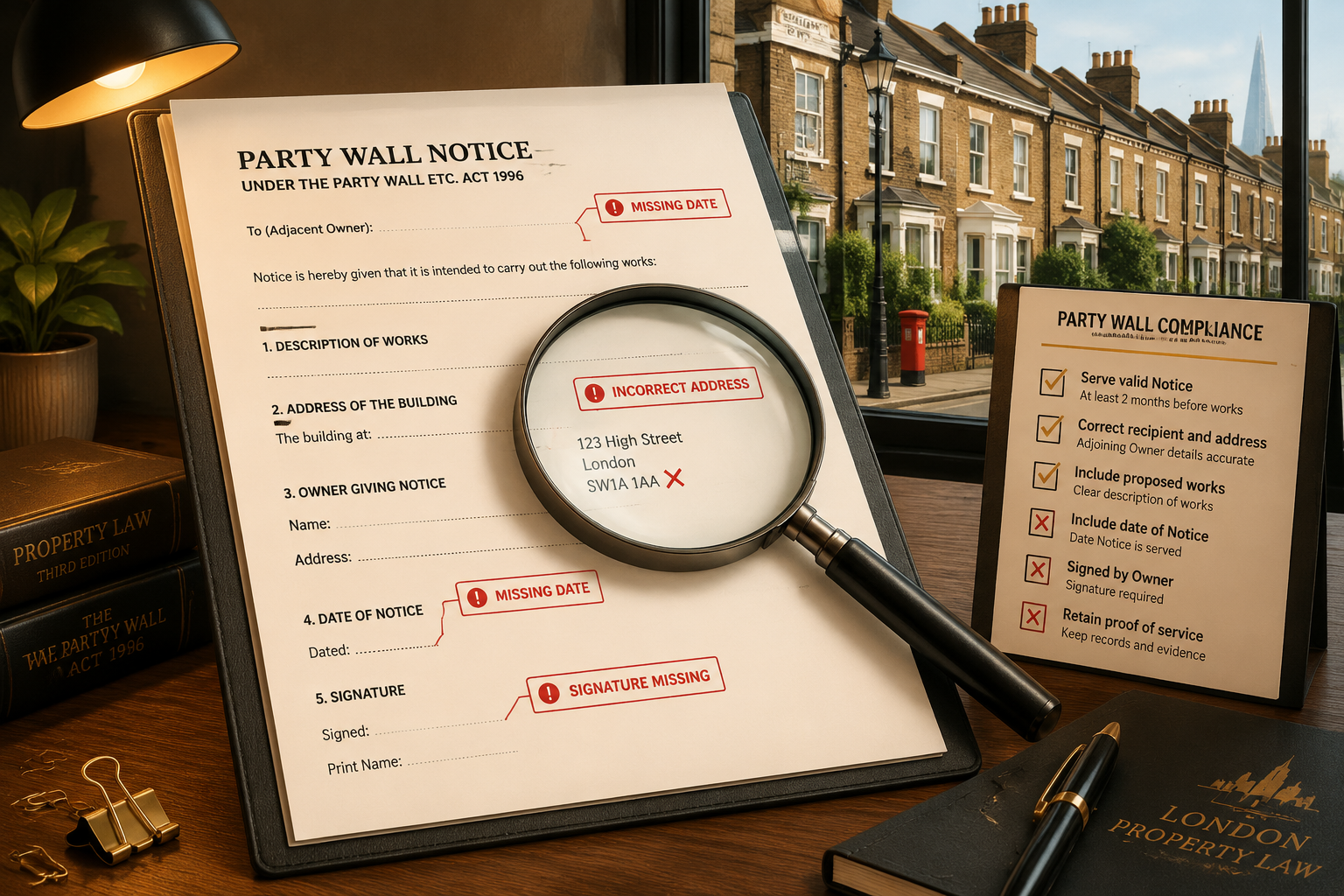
Key Takeaways
- ✅ A party wall notice must meet strict statutory requirements to be legally valid — errors in content, service method, or timing can invalidate the entire process.
- ⚖️ Surveyors only have jurisdiction to act once a genuine dispute has arisen; awards made without this trigger can be challenged in court.
- 🏛️ Courts are increasingly scrutinising the procedural foundations of party wall awards, not just their content.
- 📋 Proper surveyor appointment — including written consent and correct identification of the appointing owner — is critical to award defensibility.
- 🔍 Prevention is far cheaper than litigation: getting the notice right the first time is the single most effective risk-management step available.
What Makes a Party Wall Notice Legally Valid in 2026?
Before any surveyor can be appointed, before any award can be made, the party wall notice itself must be legally sound. A defective notice does not merely create inconvenience — it can void the entire statutory process that follows. [1]
The Core Statutory Requirements
Under the Party Wall etc. Act 1996, a valid notice must include:
| Requirement | Detail |
|---|---|
| Full name and address of the building owner | Must match the registered property owner |
| Nature of the proposed works | Described with sufficient clarity |
| Commencement date | At least 2 months' notice for party structure works; 1 month for line of junction works |
| Correct service method | Personal delivery, recorded post, or affixed to the property if the owner is absent |
| Address of the adjoining property | Clearly identified |
💡 Pull Quote: "A notice served to the wrong person, in the wrong format, or without adequate description of works is not merely irregular — it is a nullity."
Missing even one of these elements can render the notice invalid. Courts have consistently held that the Act's procedural requirements are not merely administrative formalities — they are jurisdictional prerequisites. [2]
Common Validity Failures Seen in 2026
The construction uptick of 2026 has brought a surge in party wall activity, and with it, a corresponding rise in procedural errors. [7] The most frequent notice defects include:
- Vague work descriptions — phrases like "general building works" or "renovation" are insufficient
- Incorrect notice type — serving a Line of Junction Notice when a Party Structure Notice is required (and vice versa)
- Wrong notice period — particularly where owners miscalculate the statutory minimum
- Service to a tenant rather than the freeholder — the notice must reach the correct legal owner
- No written record of service — leaving the building owner unable to prove the notice was received
For a detailed breakdown of notice types and how to serve them correctly, see this guide on Party Wall Act notices and how to respond.
Understanding what a Party Structure Notice is and how to serve it in London is equally important for building owners planning structural works. [3]
Surveyor Jurisdiction Issues: When Authority to Act Is Challenged

This is where Party Wall Notice Validity Challenges in 2026: Surveyor Jurisdiction Issues and Court-Challenged Awards becomes particularly complex. Even when a notice is served correctly and an adjoining owner dissents, the surveyors appointed to resolve the matter must have proper legal authority to make a binding award. If that authority is absent or improperly established, any award produced is vulnerable to challenge. [4][5]
The Jurisdiction Trigger: A Genuine Dispute Must Exist
Surveyors derive their power from the Act — but only once a dispute has genuinely arisen. The Act provides that a dispute is deemed to have arisen when:
- An adjoining owner dissents in writing within 14 days of receiving the notice, or
- The adjoining owner fails to respond within the 14-day period (triggering a deemed dispute)
⚠️ Critical Point: If a building owner proceeds to appoint a surveyor before the 14-day response window has expired, or without evidence that the notice was properly served, the surveyor has no jurisdiction to act. Any award produced in these circumstances is a nullity.
This has been a recurring theme in court-challenged awards. In several recent cases, awards have been set aside because the dispute mechanism was triggered prematurely or because the notice underpinning the process was found to be defective. [5][7]
Improper Surveyor Appointment: A Hidden Risk
Beyond the dispute trigger, the appointment of surveyors must itself follow the Act's requirements:
- Each party appoints their own surveyor — or they may agree on a single "agreed surveyor"
- Appointments must be in writing
- A building owner cannot appoint a surveyor on behalf of an adjoining owner who has failed to respond — instead, the building owner's surveyor serves a notice requiring the adjoining owner to appoint within 10 days, after which the building owner may appoint a second surveyor
Errors in this sequence are surprisingly common. Building owners who skip steps or appoint surveyors informally risk having the entire award challenged. [4]
For building owners navigating this process, working with a qualified building owner's surveyor ensures appointments are made correctly and defensibly.
Adjoining owners also benefit from independent representation — an adjoining owner's surveyor can scrutinise both the notice and the appointment process before any award is made.
The "No Dispute" Problem
One of the most legally interesting challenges emerging in 2026 involves awards made where no genuine dispute existed. This occurs when:
- Both parties informally agree to the works, but a surveyor still produces a formal award
- The award is made on a "without prejudice" basis but is later treated as binding
- A surveyor acts without a valid dissent or deemed dissent having been triggered
Courts have held that surveyors acting outside the scope of a genuine dispute exceed their statutory jurisdiction. The resulting award carries no legal weight and cannot be enforced. [5]
Court-Challenged Awards: What the Case Law Tells Us
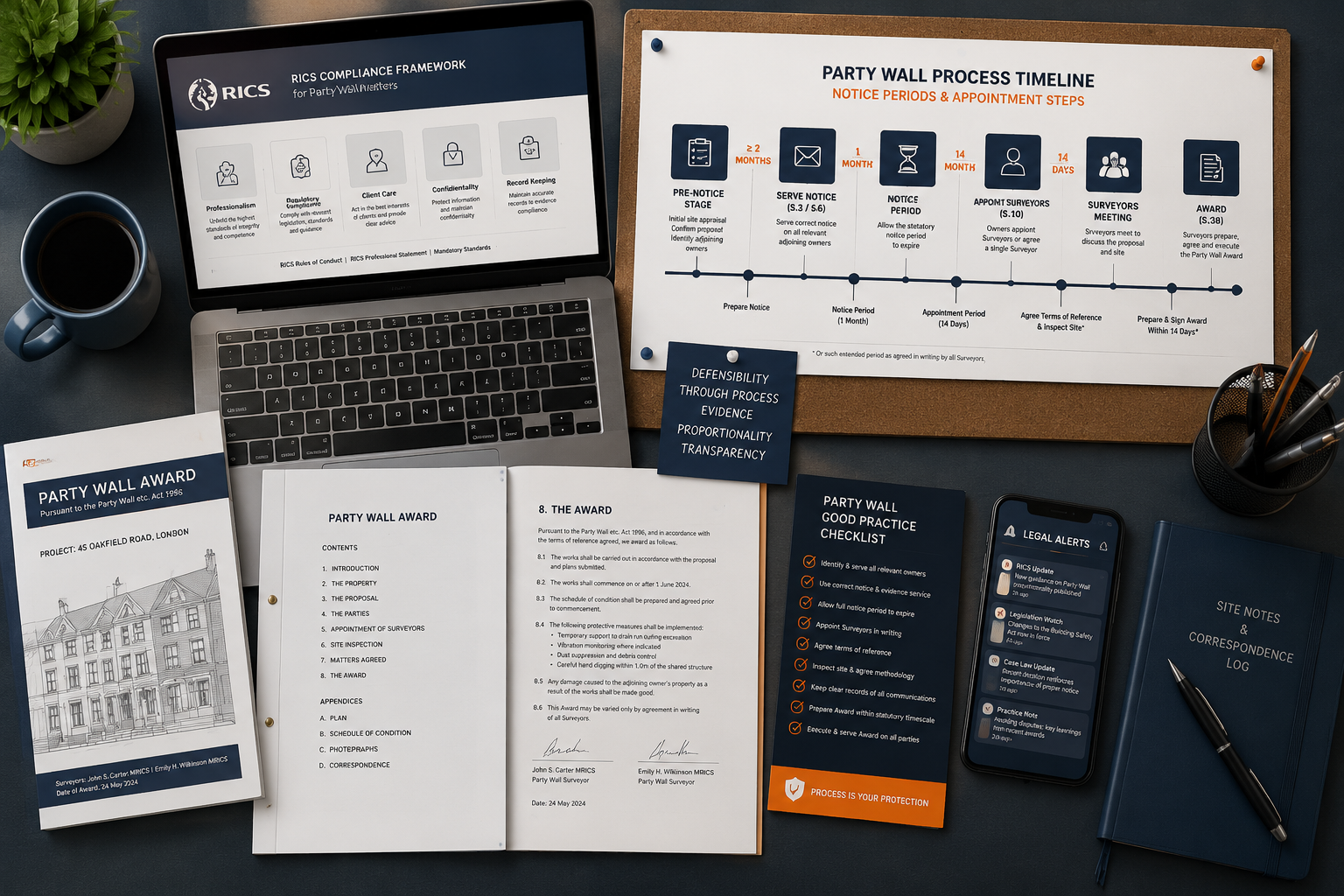
Party Wall Notice Validity Challenges in 2026: Surveyor Jurisdiction Issues and Court-Challenged Awards reflects a legal landscape where the courts are increasingly willing to intervene. The County Court and, in significant cases, the High Court have jurisdiction to hear appeals against party wall awards under Section 10(17) of the Act.
Grounds on Which Awards Are Challenged
Awards can be challenged on multiple grounds:
| Ground | Description |
|---|---|
| Invalid notice | The underlying notice was defective, voiding the surveyor's jurisdiction |
| No genuine dispute | The dispute trigger was never properly activated |
| Improper appointment | Surveyors were not appointed in accordance with the Act |
| Award exceeds jurisdiction | The award deals with matters outside the surveyors' statutory remit |
| Procedural unfairness | One party was not given adequate opportunity to make representations |
| Conflict of interest | A surveyor had an undisclosed interest affecting impartiality |
💡 Pull Quote: "An award that looks professionally prepared on its face can still be a legal nullity if the procedural foundations beneath it are unsound."
The Appeal Timeline and Practical Consequences
Under Section 10(17), an appeal must be lodged within 14 days of the award being served. This is a strict time limit — courts have shown limited sympathy for late appeals, even where the grounds are strong. [3]
The practical consequences of a successful challenge include:
- 🚫 Injunctions halting construction mid-project
- 💰 Wasted costs for surveyors' fees, legal fees, and abortive works
- ⏱️ Project delays that can cascade into contractual penalties
- 🔄 Requirement to restart the entire notice process from scratch
For anyone already mid-project and concerned about their position, reviewing the Party Wall etc. Act 1996 framework provides essential grounding on statutory rights and obligations.
What Makes an Award Defensible?
A robust, court-proof party wall award rests on three pillars:
- A valid notice — correctly served, properly described, within the right timeframe
- Proper jurisdiction — a genuine dispute triggered through the correct statutory mechanism
- Correct appointment — surveyors appointed in writing, following the Act's sequence precisely
Awards that satisfy all three pillars are extremely difficult to challenge successfully. Awards that fail on any one of them are vulnerable. [8]
For those wanting to understand what a properly constructed award looks like, this guide on party wall awards explains the content, structure, and legal effect of a valid award. There is also a useful party wall contract template guide covering what well-drafted awards should include.
Practical Steps to Protect Your Position in 2026
Given the rising frequency of challenges, both building owners and adjoining owners need a clear, proactive strategy. Here is a step-by-step framework:
For Building Owners 🏗️
Step 1: Identify all notifiable works before starting
Not every project triggers the Act. Review the types of party wall works to confirm whether notification is required.
Step 2: Serve the correct notice in the correct form
Use the statutory form, include all required information, and serve it by a method that creates a paper trail. Recorded delivery is strongly recommended.
Step 3: Respect the response window
Do not appoint a surveyor or begin works until the 14-day response period has elapsed. Document the date of service carefully.
Step 4: Follow the appointment sequence precisely
If the adjoining owner dissents, appoint your surveyor in writing. If they fail to respond, serve the 10-day notice before making a second appointment.
Step 5: Ensure the award addresses only matters within jurisdiction
Surveyors should not include provisions that go beyond the scope of the Act — this is a common ground for challenge.
For Adjoining Owners 🏠
- Respond in writing within 14 days — silence triggers a deemed dispute, which may not be in your interest
- Appoint your own surveyor rather than relying on an "agreed surveyor" in contentious cases
- Review the notice carefully for defects — a defective notice can be challenged before any award is made
- If concerned about a neighbour's works, see the dedicated guidance on what to do when a neighbour is carrying out works
Regional Considerations
Party wall disputes in London often involve complex multi-storey properties, basement excavations, and tight urban sites. Specialist local surveyors understand the specific challenges of these environments. Consider engaging a party wall surveyor in South London or North London depending on your location, as local expertise can be invaluable in avoiding procedural errors.
The Cost of Getting It Wrong
The financial stakes of a challenged award are significant. Consider the cumulative exposure:
| Cost Category | Typical Range |
|---|---|
| Surveyor fees (abortive) | £1,500 – £5,000+ |
| Legal fees for court challenge | £5,000 – £25,000+ |
| Project delay costs | Variable — potentially tens of thousands |
| Re-serving notice and restarting process | £2,000 – £8,000 |
| Injunction compliance costs | Variable |
Prevention is dramatically cheaper. Investing in a properly qualified surveyor from the outset, and ensuring the notice process is followed precisely, is the most cost-effective risk management available. [6][8]
Conclusion: Building a Defensible Foundation in 2026
Party Wall Notice Validity Challenges in 2026: Surveyor Jurisdiction Issues and Court-Challenged Awards is not an abstract legal concern — it is a live risk for every property owner undertaking notifiable works this year. The courts have made clear that procedural compliance is not optional, and that awards built on defective foundations will not survive challenge.
Actionable Next Steps
- Audit your notice before serving it — check every statutory requirement against a compliance checklist [1][2]
- Document everything — service dates, response windows, appointment letters, and all correspondence
- Appoint qualified surveyors early — not after problems arise, but before the notice is even served
- Understand the jurisdiction trigger — never assume a dispute exists; confirm it through the correct statutory mechanism
- Appeal promptly if needed — the 14-day appeal window is strict; do not delay if an award appears defective
- Seek specialist advice — particularly for complex London projects where the margin for error is smallest
The Party Wall etc. Act 1996 exists to protect both building owners and their neighbours. When followed correctly, it provides a clear, efficient framework for resolving disputes without litigation. When ignored or misapplied, it creates exactly the disputes it was designed to prevent.
References
[1] What makes a party wall notice valid – https://www.adamjoseph.co.uk/what%20makes%20a%20party%20wall%20notice%20valid
[2] What Makes A Party Wall Notice Valid – https://www.houricanassociates.com/party-wall-news/what-makes-a-party-wall-notice-valid/
[3] Party Wall Agreement – https://hoa.org.uk/advice/guides-for-homeowners/i-am-improving/party-wall-agreement/
[4] Seven Commonly Asked Questions About Party Wall Issues – https://www.squarepointsurveyors.co.uk/blog/seven-commonly-asked-questions-about-party-wall-issues/
[5] Party Wall Dispute – https://onlinearchitecturalservices.com/party-wall-dispute/
[6] Party Wall Agreements What You Need To Know – https://www.fmb.org.uk/find-a-builder/ultimate-guides-to-home-renovation/party-wall-agreements-what-you-need-to-know.html
[7] Party Wall Surveys And Neighbour Disputes During 2026s Construction Uptick Rics Compliance Framework – https://nottinghillsurveyors.com/blog/party-wall-surveys-and-neighbour-disputes-during-2026s-construction-uptick-rics-compliance-framework
[8] Understanding Party Wall Act What Homeowners Need Know Before Renovating – https://www.partywallslimited.com/blog/understanding-party-wall-act-what-homeowners-need-know-before-renovating