
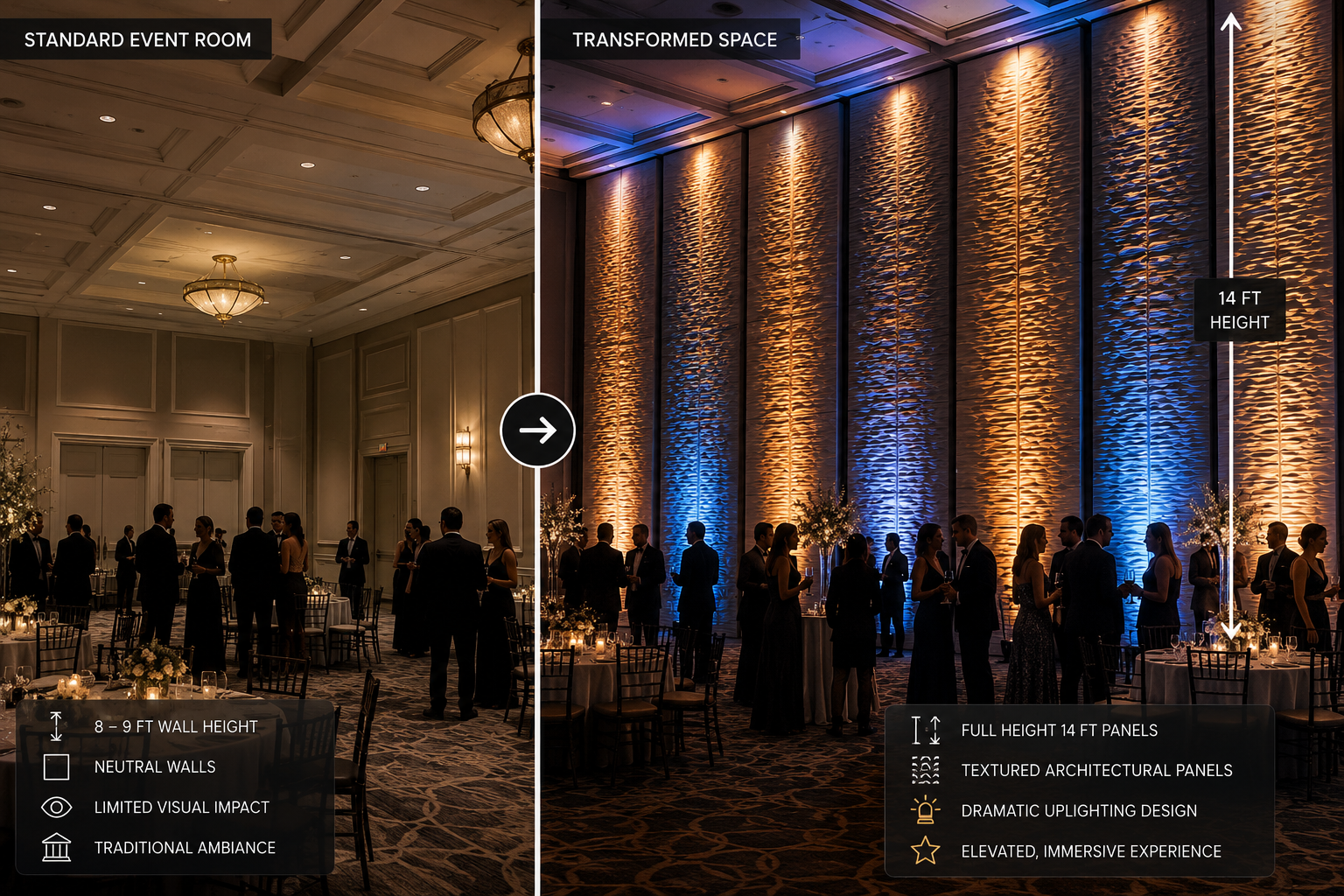
Floor-to-ceiling walls transform the perceived size of any room by up to 40 percent — a figure that interior designers and event stylists have used to justify the premium cost of full-height paneling for decades. In 2026, that principle has moved firmly from high-end hotel lobbies into private entertaining spaces and event venues of all sizes. Maximum Dimension Party Walls: Full-Height Panels for Dramatic Event Impact are no longer a luxury reserved for corporate galas; they are a practical, scalable design tool that any host can deploy to create a genuinely memorable atmosphere.
This article covers everything needed to understand, select, and install full-height panel systems — from material choices and lighting pairings to structural considerations and the legal framework that applies when permanent party wall structures are involved.
Key Takeaways
- Full-height panels that run from floor to ceiling create a dramatic sense of scale that standard decor elements cannot replicate.
- Modular systems allow rapid assembly — some 20ft x 40ft setups can be completed in under 60 minutes — making them viable for temporary event use.
- Material choice (sequin, tension fabric, hard panel, PVC, or drape) determines the lighting response, portability, and overall visual mood.
- Lighting is the force multiplier: the same panel wall can shift from intimate to theatrical simply by changing the color and angle of uplighting.
- When full-height panels are permanently fixed to a shared wall, the Party Wall etc. Act 1996 may apply, and professional guidance is essential before work begins.
What Are Maximum Dimension Party Walls and Full-Height Panels
The phrase "party wall" carries two distinct meanings depending on context. In everyday event design language, a party wall is a decorative backdrop or room divider that defines a space for entertaining. In property law, a party wall is a shared structural wall between two adjoining properties. Both definitions are relevant here, and understanding the difference matters enormously before committing to any installation.
The Event Design Definition
In event and interior design, a full-height panel wall is any vertical surface treatment that runs from the floor to the ceiling — or as close to the ceiling as the structure allows. According to research on wall panelling types, full-height paneling creates a continuous, immersive wall treatment that is particularly effective for feature walls and formal spaces [10]. The effect is architectural: the eye reads the room as taller, grander, and more intentional.
For temporary events, modular systems are the dominant solution. These systems use lightweight frames — typically aluminum — fitted with interchangeable surface panels. The panels themselves range from rigid hard-board to soft tension fabric, sequin cloth, and expanded PVC geometric shapes.
The Legal Definition
When a wall is shared between two properties — a terrace house, a semi-detached home, or a flat — it is classified as a party wall under the Party Wall etc. Act 1996. Any structural work on such a wall, including fixing heavy permanent panels, drilling, or raising the height of the wall, requires formal notice to the adjoining owner. Understanding what types of party wall works fall under the Act is the first step before any permanent installation begins.
For purely decorative, freestanding panel systems that do not touch the structural wall, no legal notice is required. The distinction matters: a freestanding sequin backdrop is a decor item; a bolted, floor-to-ceiling timber panel system fixed to a shared wall is a structural intervention.
Choosing the Right Panel System for Maximum Dimension Party Walls: Full-Height Panels for Dramatic Event Impact
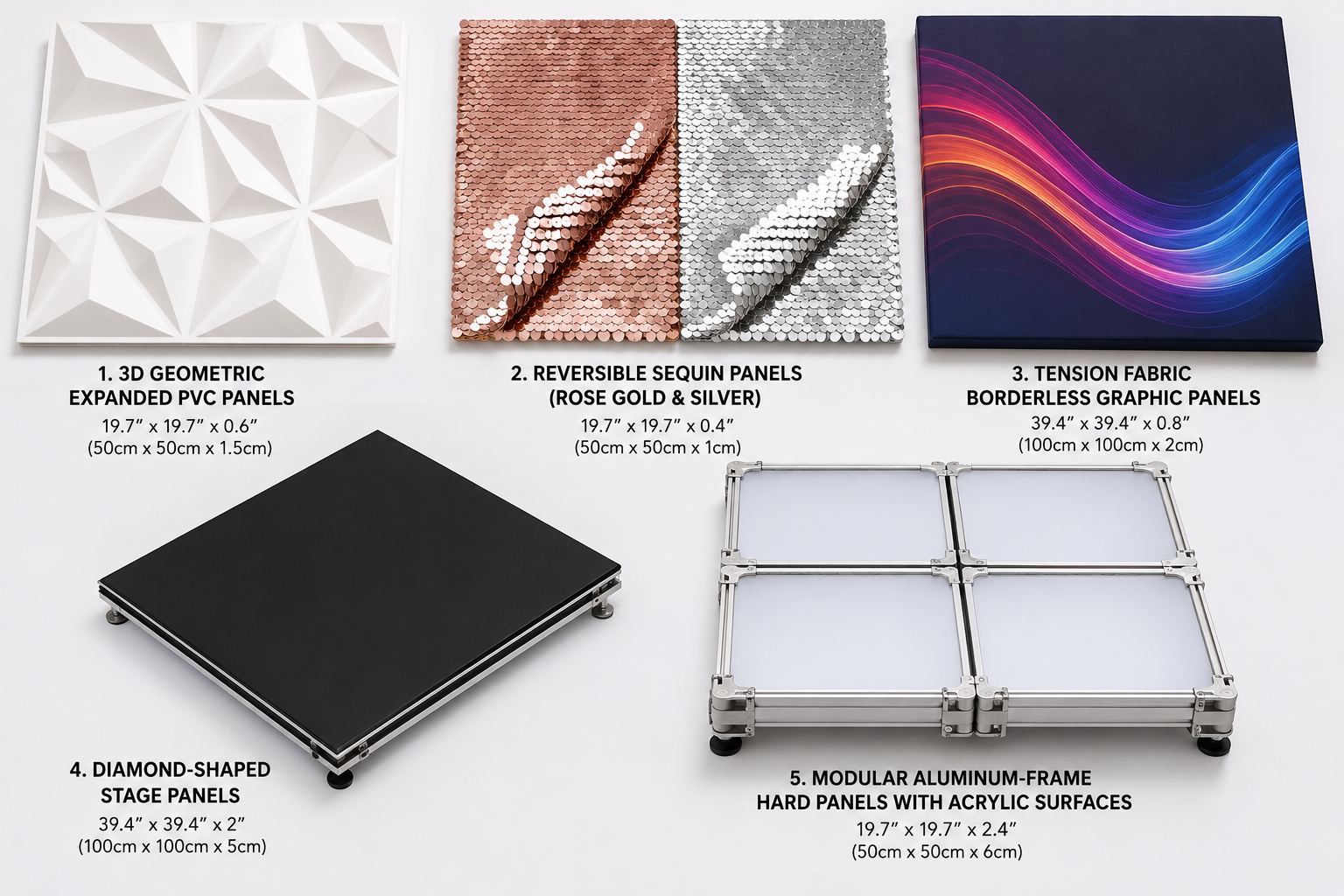
The market in 2026 offers a wide spectrum of panel systems, each with distinct advantages depending on the event type, venue height, and desired visual effect. The table below summarizes the key options.
| Panel Type | Typical Height | Weight per Panel | Best For |
|---|---|---|---|
| Modular 3D panels (24" x 24") | Stackable to any height | 1.8 lbs | Quick setups, branded events [1] |
| Diamond stage panels | 10 ft | 45 lbs | Up-lit stage backdrops [2] |
| Tension fabric backwall | Variable (two standard heights) | Lightweight | Portable, branded displays [3] |
| Hard panel scenery (aluminum frame) | Configurable | Lightweight aluminum | Screen surrounds, towers [4] |
| Geometric PVC panels (3 ft x 3 ft) | Up to 9 ft | Light | Freestanding walls, towers [5] |
| Borderless graphic panels | Custom | Medium | Immersive branding, backdrops [6] |
| Sequin reversible panels | Variable | Light | Weddings, photography, parties [9] |
| 14 ft curtain drapes | 14 ft | Light | Grand venues, tall ceilings [7] |
Modular 3D and Hard Panel Systems
Modular Backdrops USA offers 3D wall panels measuring 24 inches by 24 inches each, weighing just 1.8 lbs per panel. A 20ft x 40ft configuration can be assembled in approximately 60 minutes, making these panels a strong choice for event planners working against tight venue turnaround times [1]. The panels are compatible with AV rigging, which opens up projection mapping as a lighting layer.
Expressive Structures takes a more architectural approach with their Hard Panel Scenery system. Lightweight aluminum frames bolt together in multiple combinations, with acrylic or fabric-covered panels attaching via Velcro. A three-person crew can install a setup comprising two screen surrounds and a full backdrop wall in four to six hours [4]. This system suits corporate events and product launches where the wall needs to carry both visual and structural weight.
Tension Fabric and Borderless Graphic Panels
For events where branding is the primary goal, tension fabric systems offer the cleanest solution. The Eyekon Group's GrandFab Modular Tension Fabric Display uses free-standing frames in various widths and two standard heights, allowing configurations to adapt to different venue sizes [3]. Moss Inc.'s Borderless Graphic Panels stretch wrinkle-free fabric over durable aluminum frames, creating an edge-to-edge visual with no visible borders — a detail that reads particularly well in photography and video [6].
Sequin and Drape Panels
Sequin panels from providers such as Sequin Swag are available in reversible colorways including rose gold, silver, gold, and champagne. Complete setups include stands and carrying bags, making them genuinely portable [9]. CV Linens offers 14-foot height curtain drapes in sheer voile, velvet, spandex, and fire-retardant fabrics — the 14-foot drop is significant because it accommodates grand ballrooms and converted warehouse venues that standard 8-foot panels cannot fill [7].
Geometric PVC Panels
Quest Events' GeoSeries features seven geometric forms fabricated from expanded PVC, each measuring 3 feet by 3 feet. These panels assemble into freestanding or hanging GeoWalls and GeoTowers with a maximum height of 9 feet [5]. The geometric texture creates strong shadow play under directional lighting, making them a natural pairing with LED wash lights.
Lighting, Texture, and Accent Pairings for Full-Height Panel Walls
A full-height panel wall without considered lighting is an unfinished design. Lighting is the variable that determines whether the wall reads as a subtle backdrop or a showstopping focal point.
"The wall provides the canvas; the light paints the picture. Change the color temperature and you change the entire emotional register of the room."
Uplighting Techniques
Pacific Stage's diamond panels, standing 10 feet tall and 40 inches wide, are specifically designed to be up-lit [2]. Placing LED par cans at the base of any textured panel — particularly geometric or 3D surface types — creates dramatic shadow relief that amplifies the three-dimensional quality of the surface. Warm amber uplighting suits intimate gatherings and weddings; cool blue or teal suits corporate events and product launches.
Key uplighting principles:
- Place fixtures 6 to 12 inches from the base of the panel for maximum shadow depth.
- Use RGBW LED fixtures to allow color changes throughout the event without repositioning equipment.
- For sequin panels, front-lighting at a 45-degree angle produces the most intense shimmer effect.
- For tension fabric panels carrying printed graphics, even front-lighting eliminates hot spots.
Texture Pairings
The surface texture of the panel determines how light behaves. A smooth tension fabric panel diffuses light evenly; a geometric PVC panel creates hard-edged shadows; a sequin panel scatters light into hundreds of individual points. Matching the texture to the event mood is as important as the color choice.
Recommended pairings for 2026 event trends:
- Geometric PVC panels + cool white LED wash = contemporary minimalist aesthetic
- Sequin panels + warm amber spotlights = glamorous, celebratory atmosphere
- Borderless graphic panels + even front-lighting = immersive branded environment
- Hard panel scenery with acrylic surfaces + colored gels = theatrical stage look
- 14 ft velvet drapes + warm tungsten uplighting = formal, luxurious setting
Accent Elements
Full-height panels gain additional dimension when paired with accent elements placed in front of or alongside the wall. Floral installations, neon signs, suspended geometric shapes, and furniture vignettes all create layered depth. The wall becomes a stage set rather than a flat surface.
Installation, Safety, and Structural Considerations
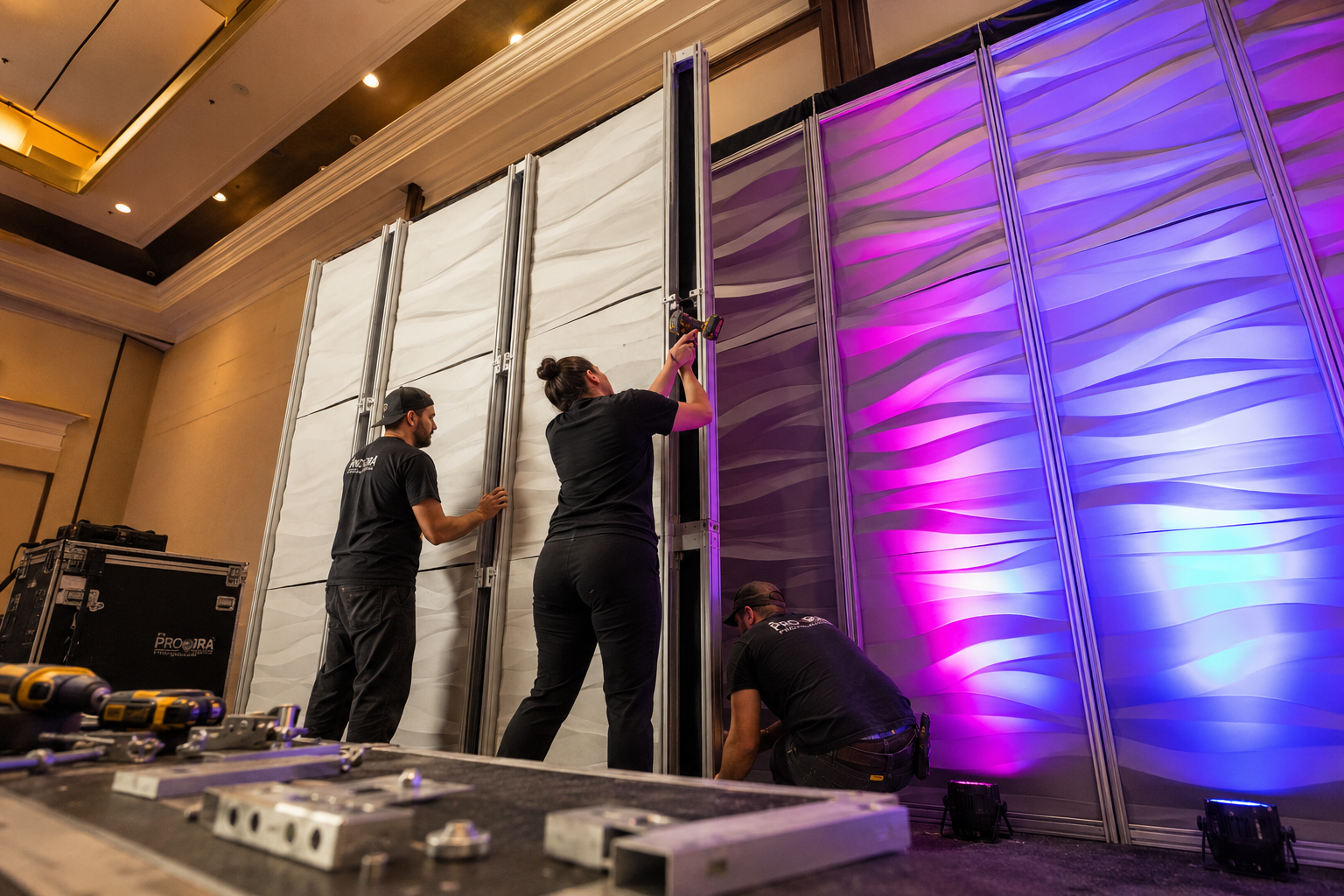
Even freestanding panel systems require careful attention to stability and safety. A 10-foot panel weighing 45 lbs that tips forward in a crowded venue is a serious hazard. Every system described in this article relies on either weighted bases, cross-bracing, or rigging connections to remain stable.
Freestanding Systems
For freestanding systems, the manufacturer's base weight recommendations must be followed precisely. Modular systems like the GeoSeries from Quest Events are designed with stability in mind for their 9-foot maximum height [5], but adding extra panels beyond the rated maximum height without additional bracing is unsafe. Always check the manufacturer's load ratings before exceeding standard configurations.
Rigged and Wall-Fixed Systems
When panels are rigged from a ceiling truss or fixed directly to a wall, the load-bearing capacity of the fixing point must be verified. For temporary event rigging, a qualified rigger should inspect all connection points before the venue opens to guests.
When panels are permanently fixed to a shared wall in a residential or mixed-use property, the legal dimension of party walls becomes directly relevant. Understanding party wall act notices and how to respond is essential before drilling into or loading any shared structure. A party wall agreement may be required, and in many cases, a professional surveyor should be consulted to assess the structural implications.
For homeowners in London considering permanent full-height panel installations on shared walls, guidance on how high you can build a wall between neighbours is a useful starting point. Gyprock's Party Wall Design and Installation Guide specifies that the maximum overall height for a central fire barrier is 14 meters, with party wall clips at 2.7-meter maximum centers — a technical benchmark that underscores the engineering complexity of full-height permanent wall systems.
Fire Safety
All panels used in occupied event spaces must comply with fire safety regulations. CV Linens specifically offers fire-retardant panel options [7], and many professional event suppliers provide certification documentation on request. Always verify fire ratings before using any fabric or foam-based panel in a venue that requires compliance certification.
Planning Your Maximum Dimension Party Walls: Full-Height Panels for Dramatic Event Impact Installation
A structured planning process prevents the most common installation mistakes: under-ordering panels, mismatching heights to ceiling dimensions, and failing to account for lighting power requirements.
Step-by-Step Planning Checklist
1. Measure the wall and ceiling height accurately.
Standard residential ceilings run 8 to 9 feet; converted venues and ballrooms can reach 14 to 20 feet. Choose a panel system rated for the actual ceiling height, not an approximate figure.
2. Decide between temporary and permanent installation.
Temporary freestanding systems require no legal notices. Permanent wall-fixed systems on shared walls may require a party wall notice served to the adjoining owner at least two months before work begins.
3. Select the panel material based on the event type.
Use the table in the previous section as a reference. Consider the lighting plan at this stage — not as an afterthought.
4. Calculate the number of panels required.
Divide the total wall width by the individual panel width, rounding up. Add 10 percent for breakage or fitting adjustments.
5. Plan the lighting layout.
Identify power outlet locations in the venue. Determine whether uplighting, front-lighting, or backlighting suits the chosen panel material.
6. Arrange crew and installation time.
A hard panel scenery system for a large event requires a three-person crew and four to six hours [4]. A modular 3D panel backdrop can be assembled by two people in under an hour [1]. Build the installation window into the event timeline.
7. Inspect and test before guests arrive.
Check all structural connections, test all lighting fixtures, and walk the perimeter of the installation to identify any stability concerns.
Budget Considerations
Panel costs vary widely. Pacific Stage's diamond panels are priced at $175 each including installation [2], while lightweight modular 3D panels and sequin panels are available at significantly lower price points per unit. The total budget should account for panels, bases or rigging hardware, lighting fixtures, crew labor, and transport. For permanent residential installations, understanding the costs of party wall processes adds a further budget dimension that event-only installations do not face.
When Party Wall Law Applies to Permanent Panel Installations
The crossover between event design and property law is narrower than most homeowners expect. The majority of decorative panel walls — freestanding backdrops, tension fabric systems, sequin walls — have no legal implications beyond standard event safety requirements.
The legal dimension arises when:
- Panels are permanently fixed to a wall shared with a neighbor.
- The installation involves cutting into, loading, or raising the height of a shared wall.
- The work is carried out in a property where the wall forms the boundary between two separate legal titles.
In these cases, the Party Wall etc. Act 1996 applies. The building owner must serve formal notice, and the adjoining owner has the right to appoint a surveyor to protect their interests. A party wall award documents the agreed terms of the work. Failing to follow this process can result in injunctions, forced removal of the installation, and liability for any damage caused.
For homeowners in London planning permanent full-height panel features on shared walls, consulting a qualified party wall surveyor before work begins is the most cost-effective approach. Early professional input prevents disputes that are far more expensive to resolve after the fact.
Conclusion
Maximum Dimension Party Walls: Full-Height Panels for Dramatic Event Impact represent one of the most effective tools available to event designers and homeowners in 2026 for transforming a space from ordinary to extraordinary. The scale, texture, and visual weight of a floor-to-ceiling panel wall cannot be replicated by table centerpieces or standard backdrop curtains.
Actionable next steps:
- Measure the ceiling height of the target space before selecting any panel system.
- Match the panel material to the lighting plan — treat them as a single design decision, not two separate ones.
- For temporary events, prioritize modular systems with documented assembly times and stability ratings.
- For permanent residential installations on shared walls, serve the correct party wall notice and seek professional surveyor advice before any work begins.
- Test the full installation, including all lighting, at least one hour before guests arrive.
The investment in full-height panels pays dividends in atmosphere, photography, and the lasting impression left on every guest who walks through the door.
References
[1] modularbackdrops – https://www.modularbackdrops.com/?utm_source=openai
[2] Creative Elements – https://pacificstage.com/creative-elements/?utm_source=openai
[3] Grandfab Modular Tension Fabric Display – https://www.eyekongroup.com/products/grandfab-modular-tension-fabric-display/?utm_source=openai
[4] Hard Panel Scenery – https://www.expressivestructures.com/product/hard-panel-scenery/?utm_source=openai
[5] Geoseries – https://questevents.com/collections/geoseries?utm_source=openai
[6] Borderless Graphic Panels – https://www.mossinc.com/products/borderless-graphic-panels/?utm_source=openai
[7] 14 Ft Height Curtain Drapes – https://www.cvlinens.com/collections/14-ft-height-curtain-drapes?utm_source=openai
[8] Shell Modular Scenic Panel – https://www.atomicdesign.tv/modular-systems/catalog/shell-modular-scenic-panel/?utm_source=openai
[9] Sequin Walls – https://www.sequinswag.com/collections/sequin-walls?utm_source=openai
[10] Wall Panelling Types – https://www.wallsandfloors.co.uk/blog/wall-panelling-types/?utm_source=openai