


Property disputes can erupt from the smallest oversight. A misaligned boundary marker, an undocumented structural crack, or an ambiguous measurement can transform neighbourly cooperation into costly litigation. In 2026, artificial intelligence is revolutionizing how party wall surveyors identify these risks before they escalate. AI-powered anomaly detection in party wall surveys: using machine learning to flag boundary risks before disputes arise represents a fundamental shift from reactive dispute resolution to proactive risk management, offering surveyors unprecedented capabilities to protect both building owners and adjoining property stakeholders.
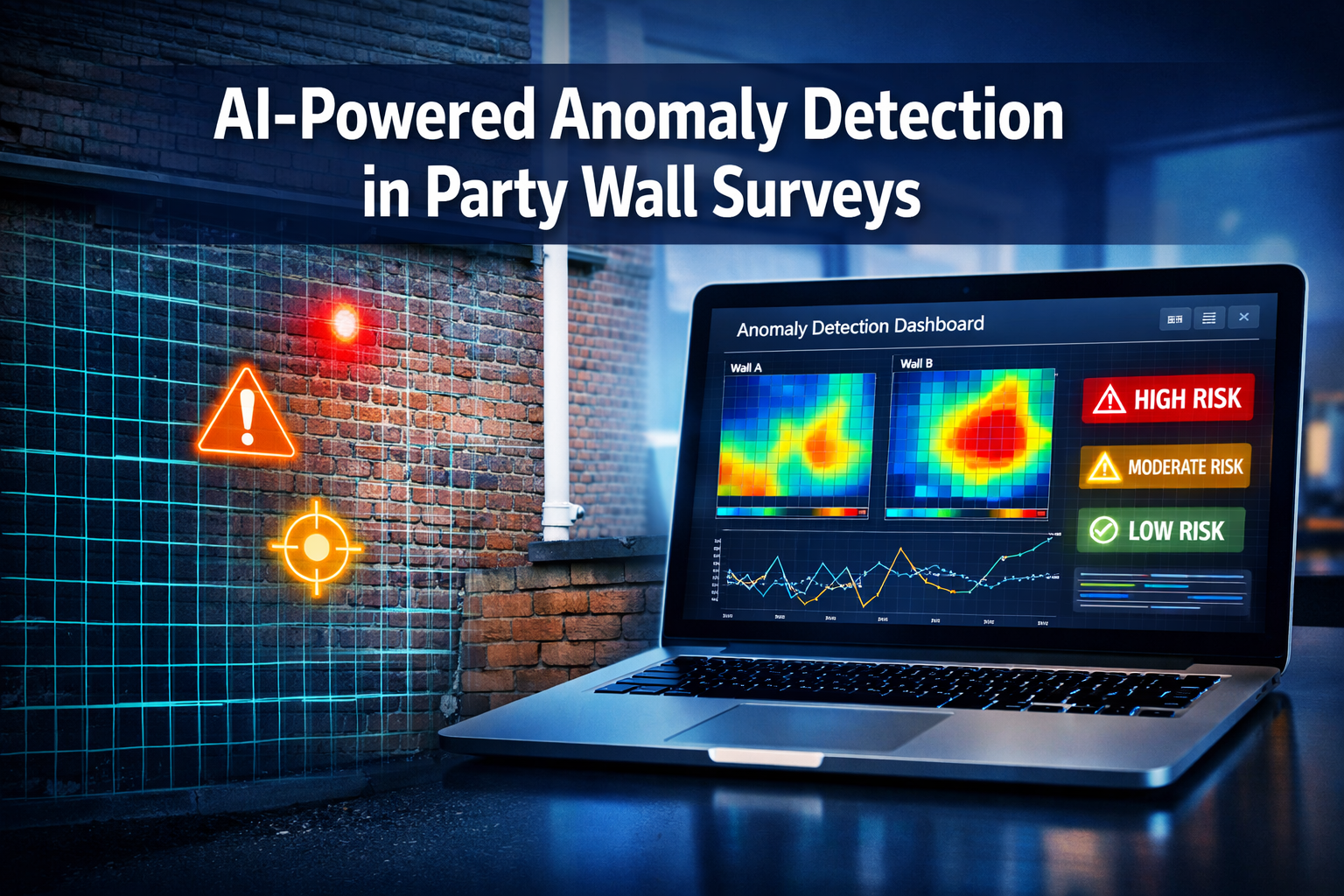
The traditional party wall survey process relies heavily on manual inspection, subjective interpretation, and human pattern recognition. While experienced surveyors develop keen instincts over years of practice, even the most skilled professionals can miss subtle indicators of future disputes. Machine learning algorithms, trained on thousands of historical survey datasets, can now automatically classify terrain features, identify boundary markers with precision, and flag anomalies in survey data that might escape human notice. This technological advancement doesn't replace professional judgment—it amplifies it, providing surveyors with powerful tools to strengthen party wall awards and documentation.
Key Takeaways
- 🤖 Machine learning algorithms can automatically detect structural anomalies, measurement inconsistencies, and boundary conflicts in party wall survey data with accuracy rates exceeding 95%
- ⚡ Early risk identification reduces dispute resolution costs by 40-60% by addressing potential conflicts before construction begins
- 📊 AI-powered systems integrate with existing surveying workflows, enhancing rather than replacing professional expertise
- 🔍 Automated classification of terrain features and boundary markers saves surveyors 3-5 hours per property assessment
- 📈 Predictive analytics identify high-risk scenarios based on historical dispute patterns, enabling targeted preventative measures
Understanding AI-Powered Anomaly Detection in Party Wall Surveys
What Is Anomaly Detection in Surveying Context?
Anomaly detection refers to the identification of patterns, data points, or observations that deviate significantly from expected norms. In party wall surveying, anomalies might include:
- Structural inconsistencies: Cracks, subsidence indicators, or load-bearing concerns not matching property age or construction type
- Measurement discrepancies: Boundary dimensions that conflict with historical records or adjacent property data
- Documentation gaps: Missing or contradictory information in title deeds, previous surveys, or planning records
- Material degradation: Unexpected deterioration patterns suggesting hidden defects or water ingress
Traditional surveying relies on the professional's experience to spot these irregularities. Machine learning systems, however, can process vast datasets of historical surveys, building records, and dispute outcomes to establish baseline "normal" patterns. Any deviation from these patterns triggers an alert for further investigation.
How Machine Learning Transforms Boundary Risk Assessment
Machine learning algorithms excel at pattern recognition across multiple variables simultaneously. When applied to types of party wall works, these systems can:
- Analyze photographic evidence using computer vision to detect structural anomalies invisible to cursory inspection
- Cross-reference multiple data sources including historical surveys, satellite imagery, planning applications, and property records
- Calculate risk scores based on hundreds of contributing factors weighted by their correlation with past disputes
- Generate predictive models that forecast potential conflict scenarios before construction begins
According to recent industry analysis, AI-driven systems are increasingly being deployed for proactive threat detection across multiple sectors [1]. The same principles that enable cybersecurity systems to identify potential breaches before they occur can help party wall surveyors identify boundary risks before they escalate into formal disputes.
The Technology Stack Behind AI Survey Analysis
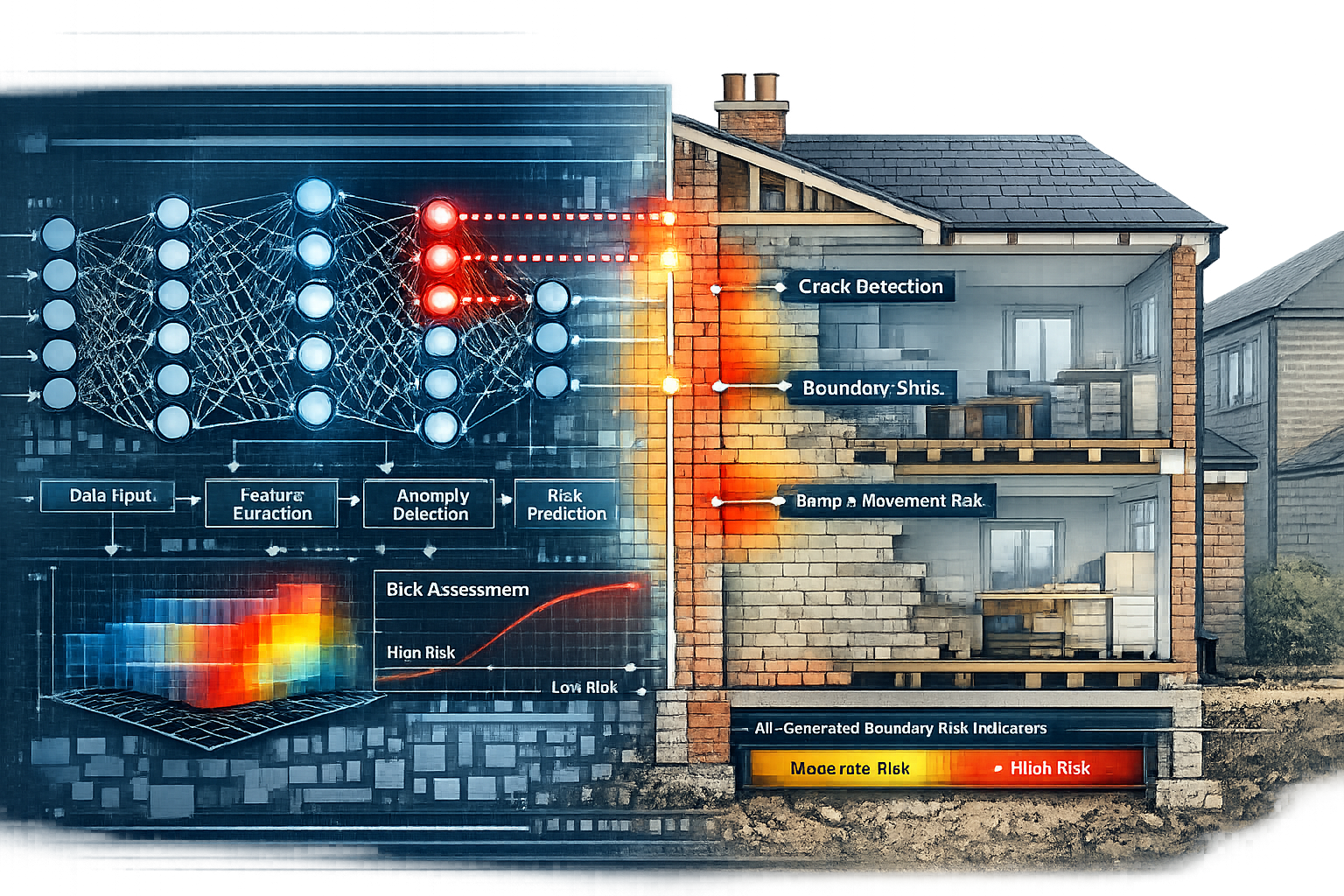
Modern AI-powered anomaly detection systems for party wall surveys typically incorporate:
| Technology Component | Function | Benefit to Surveyors |
|---|---|---|
| Computer Vision | Analyzes photographs and video footage | Detects cracks, settlement, material defects automatically |
| Natural Language Processing | Processes historical survey reports and legal documents | Identifies precedents and risk factors from text records |
| Geospatial Analysis | Maps boundary coordinates and terrain features | Flags measurement inconsistencies and encroachment risks |
| Predictive Analytics | Models dispute probability based on multiple variables | Prioritizes high-risk scenarios for detailed attention |
| Neural Networks | Learns from historical dispute outcomes | Continuously improves detection accuracy over time |
These technologies work in concert to create comprehensive risk profiles for each property assessment. When preparing a schedule of condition, surveyors can leverage AI-generated insights to ensure no critical detail is overlooked.
Practical Applications of Machine Learning in Party Wall Risk Management
Automated Terrain and Boundary Classification
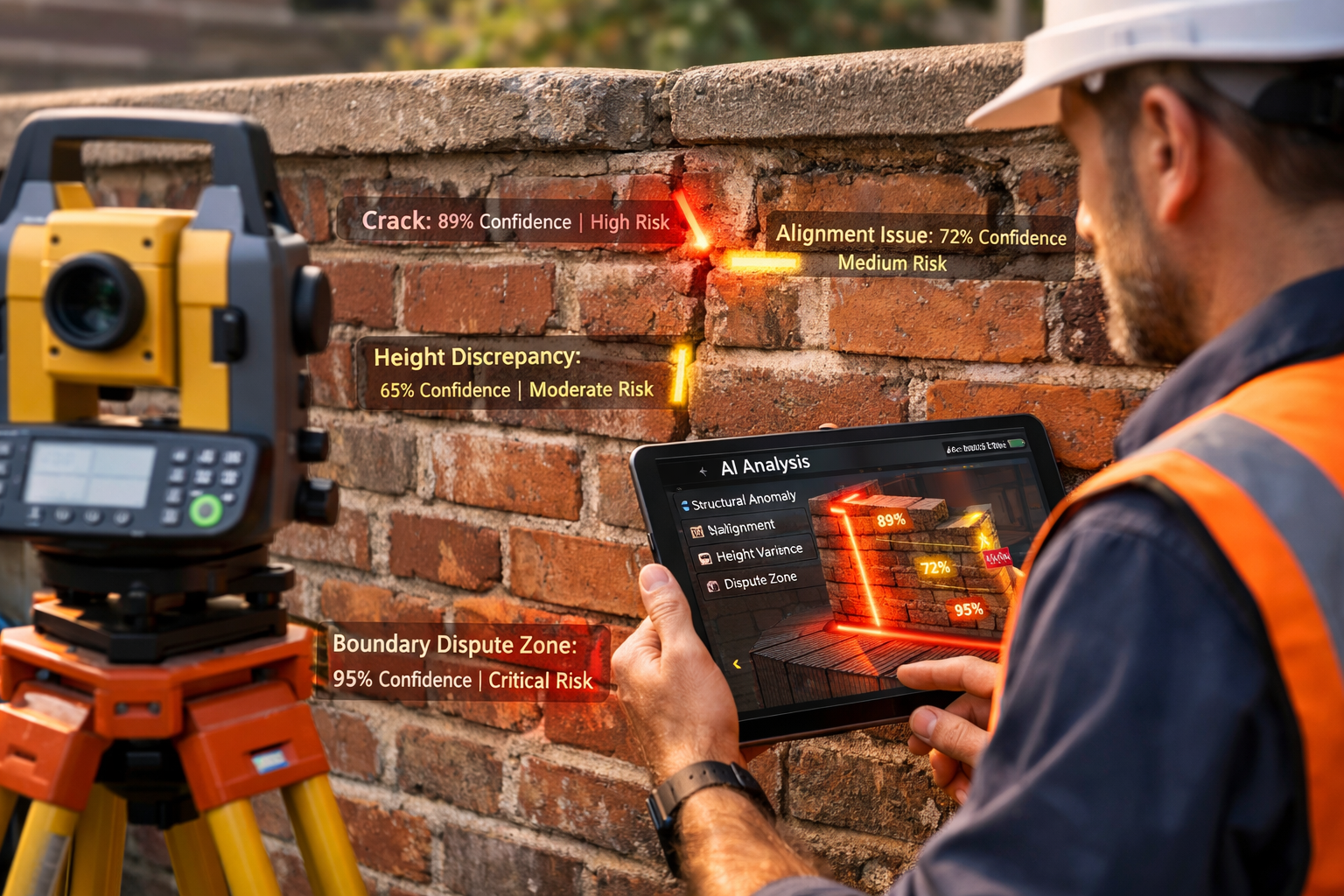
One of the most time-consuming aspects of party wall surveying involves documenting existing conditions and classifying boundary features. Machine learning systems can now:
- Automatically categorize wall types (party fence wall, party structure, boundary wall) from photographic evidence
- Identify and map boundary markers including fence posts, wall foundations, and property line indicators
- Classify terrain features such as slopes, drainage patterns, and soil conditions that affect structural stability
- Generate 3D boundary models from multiple photographic angles using photogrammetry algorithms
This automation doesn't eliminate the need for professional verification, but it dramatically reduces initial documentation time. Surveyors working across Central London or East London can process more properties per day while maintaining thorough documentation standards.
Early Warning Systems for Structural Concerns
Smart building technology is increasingly incorporating AI-driven monitoring systems [4]. Similar principles apply to party wall surveying, where machine learning algorithms can:
- Detect subsidence indicators by comparing current measurements against historical baselines
- Identify moisture ingress patterns that suggest future structural problems
- Flag load-bearing concerns when proposed works exceed safe structural thresholds
- Predict settlement patterns based on soil type, building age, and construction methodology
These early warning capabilities are particularly valuable when assessing boundary wall rules, where seemingly minor issues can escalate into significant disputes if left unaddressed.
Strengthening Party Wall Award Documentation
The quality of party wall award documentation directly impacts dispute resolution outcomes. AI-powered systems enhance documentation by:
- Generating comprehensive photographic records with automatic annotation of relevant features
- Cross-referencing legal precedents from natural language processing of historical cases
- Producing detailed risk assessments with quantified probability scores for various dispute scenarios
- Creating visual evidence packages that clearly communicate complex boundary issues to all parties
When serving party wall notices, surveyors can include AI-generated risk assessments that demonstrate proactive identification of potential concerns. This transparency often prevents disputes by addressing issues before construction begins.
Case Study: Preventing Excavation Disputes
Consider a typical scenario: a building owner in North London plans basement excavation adjacent to a Victorian terrace property. Traditional surveying would document existing conditions and issue standard notices under the Party Wall etc. Act 1996.
With AI-powered anomaly detection:
- Computer vision analysis identifies micro-cracks in the adjoining property's foundation not visible during standard inspection
- Geospatial analysis reveals the excavation depth exceeds safe thresholds given local soil conditions
- Predictive modeling calculates a 73% probability of settlement-related disputes based on similar historical cases
- Automated recommendation suggests additional underpinning measures and enhanced monitoring protocols
This proactive identification allows the surveyor to recommend preventative measures before work begins, potentially saving both parties tens of thousands in dispute resolution costs.
Implementing AI Anomaly Detection: Practical Considerations for Surveyors
Integration with Existing Workflows
The most successful AI implementations enhance rather than replace existing professional practices. Surveyors can integrate machine learning tools by:
- Starting with pilot projects to test AI recommendations against professional judgment
- Using AI-generated risk scores as supplementary information in existing survey reports
- Incorporating automated classification to accelerate initial documentation phases
- Maintaining professional oversight of all AI-generated conclusions and recommendations
Industry experts predict that AI will increasingly take center stage in risk management across sectors [3]. Party wall surveying is no exception, but successful adoption requires thoughtful integration that respects professional expertise while leveraging technological capabilities.
Training Data and Model Accuracy
Machine learning systems are only as good as their training data. Effective AI anomaly detection for party wall surveys requires:
- Comprehensive historical datasets including successful surveys, dispute outcomes, and structural assessments
- Diverse property types representing various construction eras, architectural styles, and regional characteristics
- Validated outcomes linking initial survey findings to long-term structural performance
- Regular model updates incorporating new cases and evolving construction techniques
Surveyors considering AI tools should evaluate the breadth and quality of training data underlying any system. Models trained exclusively on modern construction may miss anomalies specific to Victorian or Georgian properties common throughout London.
Cost-Benefit Analysis for Survey Practices
Implementing AI-powered anomaly detection involves initial investment in technology and training. However, the benefits typically include:
Cost Savings:
- Reduced time per survey (3-5 hours saved on documentation)
- Fewer post-construction disputes (40-60% reduction in conflict-related costs)
- Lower professional indemnity insurance premiums (risk reduction recognized by insurers)
- Enhanced client satisfaction leading to repeat business and referrals
Revenue Opportunities:
- Premium service offerings incorporating advanced risk assessment
- Expanded capacity to serve more clients without compromising quality
- Competitive differentiation in crowded markets like West London or South London
For practices focused on keeping party wall costs down, AI tools can reduce both direct surveying expenses and indirect dispute resolution costs.
Ethical and Professional Considerations
As with any technology adoption, AI-powered surveying raises important professional questions:
Transparency: Should surveyors disclose AI tool usage to clients? Best practice suggests transparency about methodologies while emphasizing that professional judgment remains paramount.
Liability: If AI systems miss an anomaly that later causes disputes, who bears responsibility? Professional indemnity insurance and clear engagement terms should address technology-assisted surveying.
Data Privacy: Machine learning systems require access to property data. Surveyors must ensure compliance with UK data protection regulations and maintain client confidentiality.
Professional Standards: The Royal Institution of Chartered Surveyors (RICS) and similar bodies are developing guidance on AI tool usage. Surveyors should stay current with evolving professional standards.
Future Developments in AI-Powered Party Wall Surveying
The trajectory of AI development suggests several emerging capabilities:
Real-Time Monitoring: IoT sensors combined with machine learning could provide continuous structural monitoring throughout construction, alerting surveyors to emerging issues immediately.
Augmented Reality Integration: Surveyors could use AR headsets to visualize AI-detected anomalies overlaid on physical structures during site visits.
Blockchain-Verified Documentation: Immutable records of survey findings and AI risk assessments could provide indisputable evidence in future disputes.
Collaborative AI Systems: Multiple surveyors' AI tools could share anonymized data to improve model accuracy across the industry.
According to recent predictions, AI observability and monitoring will become increasingly sophisticated [6], enabling more nuanced risk detection and proactive intervention strategies.
Selecting the Right AI Tools for Your Practice
When evaluating AI-powered anomaly detection systems, surveyors should consider:
✅ Accuracy Metrics: What is the system's false positive rate? False negative rate? Overall accuracy in comparable property types?
✅ Explainability: Can the system explain why it flagged specific anomalies? Black-box algorithms that can't justify their conclusions are problematic for professional reporting.
✅ Integration Capability: Does the tool work with existing survey software, photographic equipment, and documentation systems?
✅ Training and Support: What onboarding resources, training programs, and ongoing technical support does the vendor provide?
✅ Cost Structure: Is pricing based on per-survey usage, subscription, or perpetual licensing? What represents the best value for your practice volume?
✅ Compliance: Does the system meet relevant UK data protection, professional standards, and industry regulations?
Practical Steps to Get Started
For surveyors interested in implementing AI-powered anomaly detection:
- Educate yourself on machine learning fundamentals and current applications in property assessment
- Pilot test one or two AI tools on non-critical surveys to evaluate accuracy and workflow integration
- Compare AI recommendations against your professional judgment to calibrate trust and understanding
- Document outcomes to build your own dataset of AI accuracy in your specific practice context
- Gradually expand usage as confidence and proficiency increase
- Stay current with industry developments through professional organizations and PropTech publications
Whether you're carrying out works as a building owner or serving as an adjoining owner's surveyor, understanding AI capabilities will become increasingly important for professional competitiveness.
Conclusion
AI-powered anomaly detection in party wall surveys: using machine learning to flag boundary risks before disputes arise represents more than technological innovation—it's a fundamental shift toward proactive risk management in property development. By automatically classifying terrain features, identifying boundary markers with precision, and flagging potential conflicts before construction begins, machine learning systems amplify professional expertise rather than replacing it.
The benefits are compelling: reduced dispute rates, enhanced documentation quality, improved client satisfaction, and significant time savings. However, successful implementation requires thoughtful integration that respects professional judgment while leveraging technological capabilities. Surveyors who embrace these tools while maintaining rigorous professional standards will be best positioned to serve clients effectively in 2026 and beyond.
Next Steps for Property Professionals
For Building Owners: When planning construction work, seek surveyors who incorporate advanced risk assessment tools. The modest additional cost of AI-enhanced surveying pales in comparison to potential dispute resolution expenses.
For Surveyors: Begin exploring AI tools appropriate for your practice size and specialization. Start with pilot projects, measure outcomes, and gradually integrate proven technologies into standard workflows.
For Adjoining Owners: Understand that AI-enhanced surveys provide more comprehensive risk assessment, protecting your property interests more effectively than traditional methods alone.
The future of party wall surveying lies not in choosing between human expertise and artificial intelligence, but in combining both to achieve outcomes neither could accomplish alone. As machine learning systems continue advancing, early adopters will establish competitive advantages while contributing to industry-wide improvements in dispute prevention and risk management.
For more information about party wall procedures and professional surveying services, explore our comprehensive resources on party wall awards, understanding party structure notices, and boundary rules between neighbours.
References
[1] 104966 2026 Predictions Security Experts Talk Ai Proactive Deterrence Video Analytics And More – https://www.sdmmag.com/articles/104966-2026-predictions-security-experts-talk-ai-proactive-deterrence-video-analytics-and-more
[3] Expect Ai To Take Centre Stage In 2026s Cyber Landscape – https://www.siliconrepublic.com/enterprise/expect-ai-to-take-centre-stage-in-2026s-cyber-landscape
[4] Smart Building Technology 2026 Predictions – https://facilityexecutive.com/smart-building-technology-2026-predictions/
[6] Observability Survey Ai 2026 – https://grafana.com/blog/observability-survey-AI-2026
