


Understanding the Difference Between Level 2 and Level 3 Survey: A Complete Guide
When purchasing a property, one critical decision can save you thousands of pounds and prevent future headaches: choosing the right type of building survey. The difference between level 2 and level 3 survey options represents more than just a price variation—it’s about selecting the appropriate level of investigation for your specific property and circumstances.
Key Takeaways
• Level 2 surveys provide a standard visual inspection suitable for conventional properties in reasonable condition, focusing on major defects and urgent repairs
• Level 3 surveys offer comprehensive building analysis ideal for older, unusual, or extensively altered properties requiring detailed structural assessment
• Cost differences typically range from £400-800 for Level 2 surveys versus £600-1,500 for Level 3 surveys, depending on property size and location
• Report depth varies significantly, with Level 2 providing traffic light ratings and Level 3 delivering detailed technical analysis and repair cost estimates
• Property suitability depends on age, condition, construction type, and planned alterations rather than just personal preference
What Are Building Surveys? 📋
Building surveys represent professional assessments conducted by qualified surveyors to evaluate a property’s condition before purchase, hence why clients want to know the difference between Level 2 and Level 3 Survey. These investigations help buyers understand potential issues, repair costs, and maintenance requirements that could affect their investment decision, hence why they are interested to know the difference between Level 2 and Level 3 Survey.
The Royal Institution of Chartered Surveyors (RICS) standardized survey levels in 2020, replacing the previous naming system with clearer Level 1, Level 2, and Level 3 classifications. This standardization helps property buyers better understand what each survey type offers and select the most appropriate option for their needs.
Professional surveyors examine various building elements including structural components, roofing systems, electrical installations, plumbing, heating systems, and external features. The depth and detail of this examination varies significantly between survey levels, directly impacting the information available for purchase decisions.
Level 2 Survey: The Standard Homebuyer Assessment
What Is a Level 2 Survey?
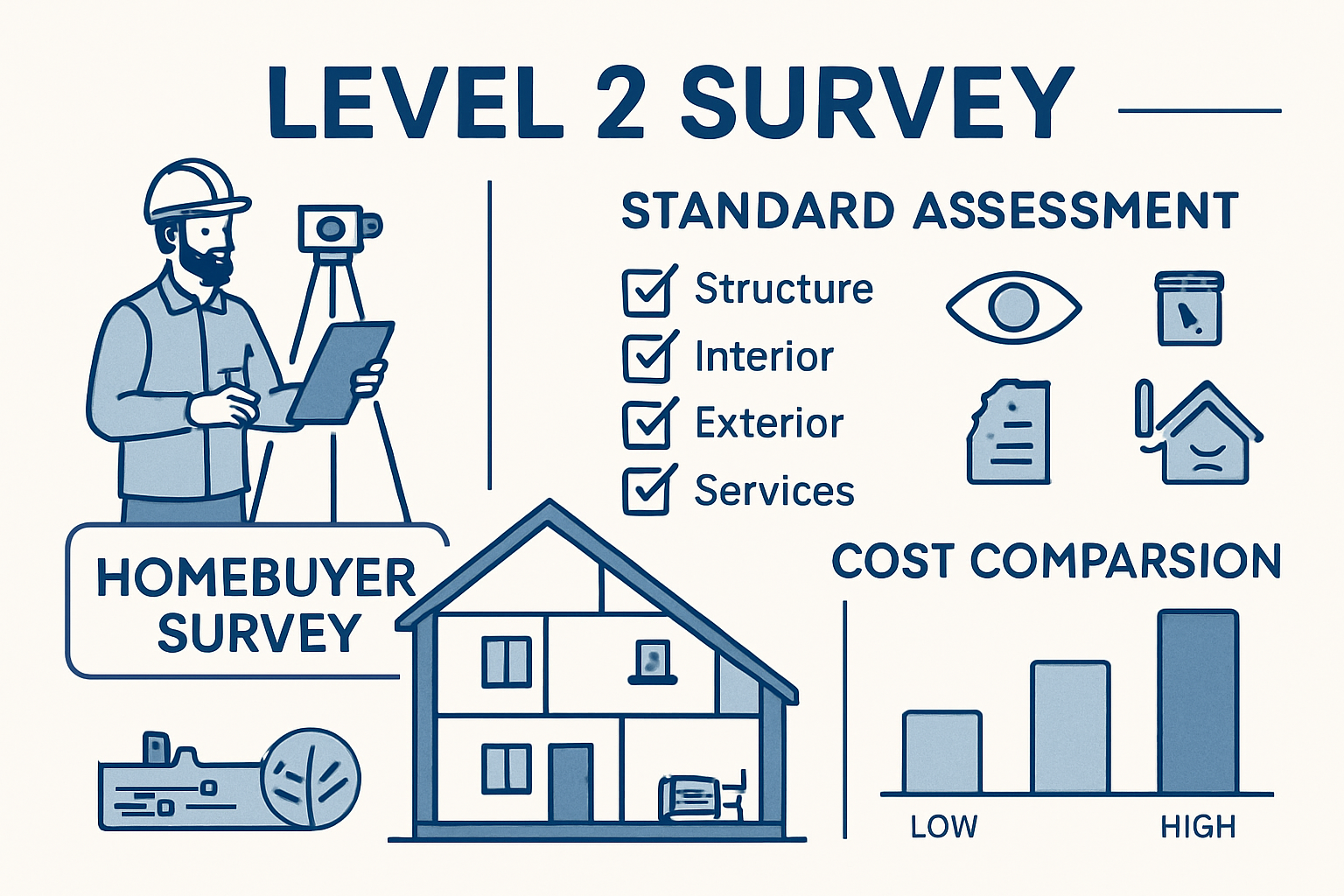
A Level 2 survey, officially known as the “HomeBuyer Report,” provides a visual inspection of accessible areas without moving furniture or lifting floorboards. This survey type suits most conventional properties built from common materials and in reasonable condition.
The assessment focuses on identifying major defects and problems requiring urgent attention, using a traffic light system to categorize findings:
- 🟢 Green: No repair currently needed
- 🟡 Yellow: Defects requiring future attention
- 🔴 Red: Urgent defects requiring immediate action
Key Features of Level 2 Surveys
Inspection Scope:
- Visual examination of accessible areas
- Assessment of main building elements
- Identification of major defects
- Basic services evaluation (heating, plumbing, electrics)
Report Content:
- Traffic light condition ratings
- Market valuation and insurance rebuild cost
- Summary of urgent repairs needed
- General maintenance advice
Typical Duration: 2-4 hours on-site, with reports delivered within 5-10 working days.
When to Choose Level 2 Surveys
Level 2 surveys work best for:
- Modern properties (built after 1960) using conventional construction methods
- Well-maintained homes without obvious structural issues
- Standard residential properties including terraced houses, semi-detached homes, and modern apartments
- Budget-conscious buyers seeking essential defect identification without extensive detail
Properties suitable for Level 2 assessment typically feature standard construction materials, regular maintenance history, and no significant alterations or extensions. Understanding party wall regulations becomes important when considering properties with shared structures.
Level 3 Survey: Comprehensive Building Analysis
What Is a Level 3 Survey?
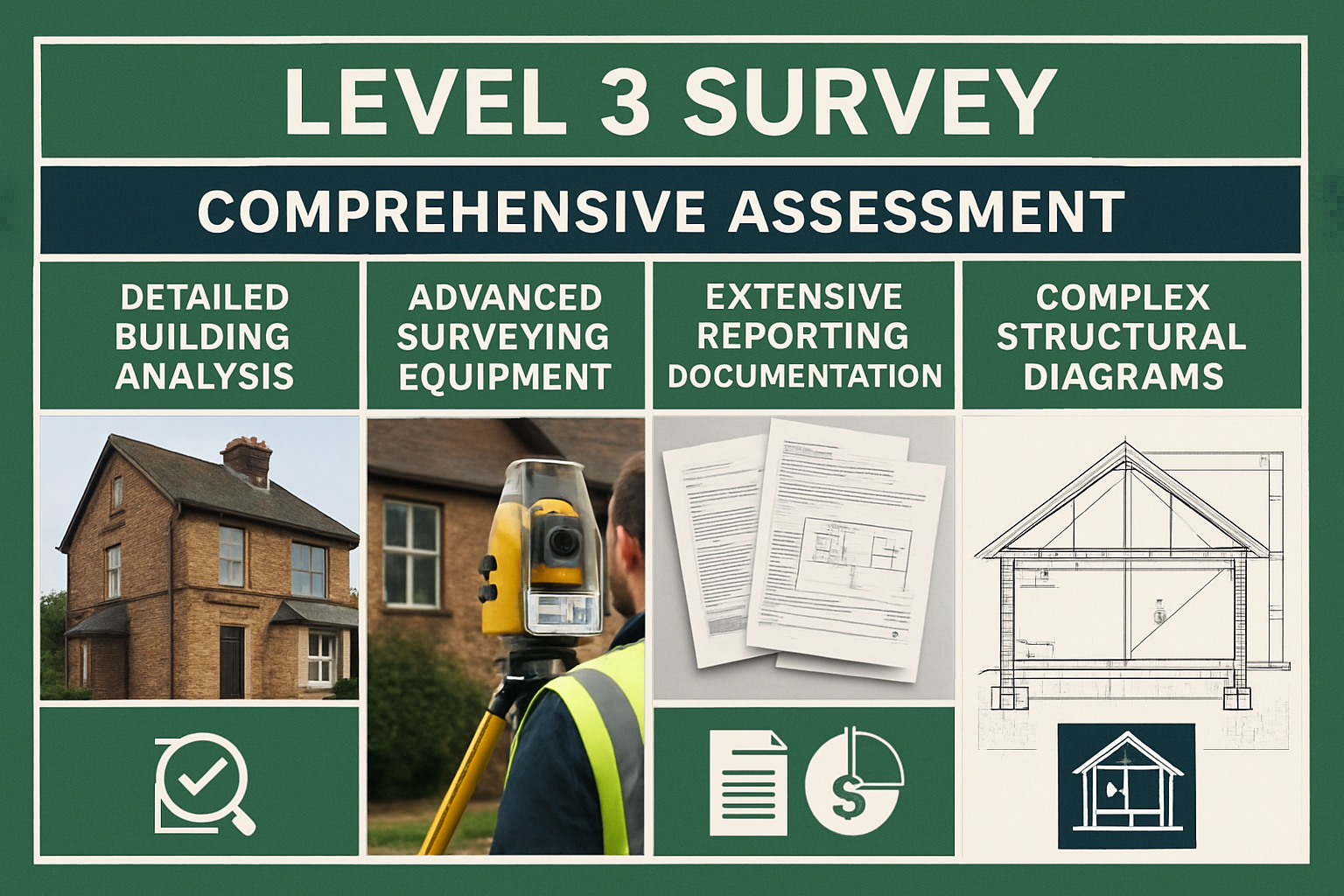
A Level 3 survey, officially termed a “Building Survey,” provides the most comprehensive property assessment available. This detailed investigation includes extensive examination of accessible and some inaccessible areas, often involving lifting floorboards, accessing roof spaces, and using specialized equipment.
Level 3 surveys suit older properties, unusual constructions, significantly altered buildings, or any property where buyers require detailed technical information for renovation planning or investment decisions.
Comprehensive Features of Level 3 Surveys
Extended Inspection Scope:
- Detailed examination of all accessible areas
- Investigation of roof spaces, cellars, and outbuildings
- Assessment of building fabric and structural elements
- Comprehensive services evaluation
- Identification of minor and major defects
Detailed Report Content:
- Comprehensive condition descriptions
- Technical explanations of construction methods
- Detailed repair recommendations with priority ratings
- Estimated repair costs and timescales
- Maintenance schedules and future planning advice
Professional Analysis:
- Structural integrity assessment
- Material degradation evaluation
- Building regulation compliance review
- Energy efficiency recommendations
When Level 3 Surveys Are Essential
Choose Level 3 surveys for:
- Historic properties (pre-1960) with traditional construction methods
- Listed buildings requiring specialist knowledge and conservation considerations
- Extensively altered properties with multiple extensions or conversions
- Unusual constructions using non-standard materials or methods
- Investment properties where detailed cost analysis affects profitability
- Renovation projects requiring comprehensive defect identification
Properties with complex party wall arrangements particularly benefit from Level 3 assessment, as detailed structural analysis helps identify potential issues affecting neighboring properties.
Key Differences Between Level 2 and Level 3 Survey Types
Inspection Methodology Comparison
| Aspect | Level 2 Survey | Level 3 Survey |
|---|---|---|
| Inspection Depth | Visual assessment only | Detailed investigation including invasive techniques |
| Accessible Areas | Standard accessible areas | All accessible areas plus some inaccessible zones |
| Equipment Used | Basic surveying tools | Specialized equipment including moisture meters, endoscopes |
| Time Required | 2-4 hours | 4-8 hours |
| Report Length | 15-20 pages | 30-50+ pages |
Report Quality and Detail
Level 2 Report Characteristics:
- Standardized format with traffic light ratings
- Focus on major defects requiring immediate attention
- General repair recommendations without detailed specifications
- Market valuation included as standard
- Suitable for mortgage and insurance purposes
Level 3 Report Characteristics:
- Bespoke format tailored to property specifics
- Comprehensive analysis of all building elements
- Detailed repair specifications with cost estimates
- Technical explanations suitable for contractors
- Strategic maintenance planning recommendations
The difference between level 2 and level 3 survey reports extends beyond length to include technical depth, repair prioritization, and future planning guidance essential for property investment decisions.
Cost Analysis and Value Proposition
Level 2 Survey Costs:
- Typical range: £400-800
- Factors affecting price: Property size, location, surveyor experience
- Additional costs: Usually includes basic valuation
Level 3 Survey Costs:
- Typical range: £600-1,500
- Factors affecting price: Property complexity, age, size, specialist requirements
- Additional services: Often includes detailed repair cost estimates
While Level 3 surveys cost more initially, they can prevent expensive surprises by identifying hidden defects early. For complex properties, the additional investment often pays for itself through better negotiation leverage and informed renovation planning.
Choosing the Right Survey Level for Your Property
Property Age and Construction Assessment
Modern Properties (1980-present):
- Level 2 surveys typically sufficient for standard constructions
- Consider Level 3 for high-end properties or those with premium materials
- Evaluate any significant alterations or extensions independently
Mid-Century Properties (1950-1980):
- Level 2 suitable for well-maintained examples
- Level 3 recommended for properties showing wear or with known issues
- Consider construction methods used during this period
Pre-War Properties (before 1950):
- Level 3 surveys generally recommended
- Traditional construction methods require specialist knowledge
- Higher likelihood of hidden defects and maintenance issues
Renovation and Investment Considerations
Purchase for Immediate Occupation:
- Level 2 adequate for move-in ready properties
- Level 3 essential if planning immediate improvements
- Consider future maintenance requirements
Investment Properties:
- Level 3 surveys provide detailed cost analysis for profitability calculations
- Essential for rental property compliance requirements
- Helps identify potential tenant safety issues
Renovation Projects:
- Level 3 surveys essential for comprehensive defect identification
- Detailed reports assist with planning permission applications
- Party wall considerations often require detailed structural knowledge
Budget and Risk Assessment
Risk Tolerance Evaluation:
- Conservative buyers benefit from Level 3 detail and reassurance
- Experienced property investors may find Level 2 sufficient for standard properties
- First-time buyers should consider comprehensive assessment benefits
Financial Planning:
- Level 3 surveys provide repair cost estimates for budget planning
- Detailed maintenance schedules help with long-term financial planning
- Comprehensive reports support mortgage and insurance applications
Professional Survey Selection and Implementation
Choosing Qualified Surveyors
Essential Qualifications:
- RICS membership (Royal Institution of Chartered Surveyors)
- Professional indemnity insurance covering survey value
- Local experience with similar property types
- Specialist knowledge for unusual constructions or historic properties
Surveyor Selection Criteria:
- Relevant experience with your property type
- Clear communication and report writing skills
- Availability within your purchase timeline
- Competitive pricing with comprehensive service
Survey Timing and Logistics
Optimal Timing:
- Book surveys immediately after offer acceptance
- Allow 1-2 weeks for surveyor availability
- Schedule before exchange of contracts
- Coordinate with mortgage valuation if separate
Preparation Requirements:
- Ensure property access arrangements
- Provide relevant property documentation
- Prepare specific questions or concerns
- Clear access to all areas where possible
Professional party wall surveyors often provide building survey services, offering integrated expertise for properties with shared structures or planned alterations.
Understanding Survey Results and Next Steps
Interpreting Survey Findings
Level 2 Report Analysis:
- Focus on red-rated items requiring immediate attention
- Evaluate yellow-rated items for future budget planning
- Use market valuation for negotiation purposes
- Consider overall condition assessment for decision-making
Level 3 Report Analysis:
- Review detailed repair recommendations and cost estimates
- Prioritize repairs based on safety and structural importance
- Use technical specifications for contractor quotes
- Plan maintenance schedules based on surveyor recommendations
Negotiation Strategies
Using Survey Results:
- Price reduction requests based on identified repair costs
- Completion date adjustments allowing time for essential repairs
- Vendor repair requirements for safety-critical issues
- Insurance considerations for known defects
Professional Guidance:
- Consult with qualified surveyors for clarification on technical issues
- Obtain contractor quotes for major repair items
- Consider specialist inspections for specific concerns
- Review legal implications with property solicitors
Post-Survey Action Planning
Immediate Actions:
- Address safety-critical issues before occupation
- Arrange specialist inspections for complex problems
- Update insurance providers about known defects
- Plan essential repairs and maintenance schedules
Long-term Planning:
- Budget for identified future maintenance requirements
- Consider energy efficiency improvements highlighted in reports
- Plan renovations based on structural recommendations
- Maintain survey reports for future reference and resale
Understanding boundary regulations becomes important when survey results identify potential issues affecting neighboring properties or planned extensions.
Cost-Benefit Analysis: Making the Right Investment
Financial Impact Assessment
Level 2 Survey Investment:
- Lower upfront cost suitable for straightforward purchases
- Adequate protection for standard property transactions
- Cost-effective for budget-conscious buyers
- Provides essential defect identification and valuation
Level 3 Survey Investment:
- Higher initial cost offset by comprehensive defect identification
- Detailed repair cost estimates aid accurate budget planning
- Stronger negotiation position through technical evidence
- Long-term savings through proactive maintenance planning
Risk Mitigation Comparison
Level 2 Risk Coverage:
- Identifies major structural and safety issues
- Provides basic services assessment
- Suitable for low-risk property purchases
- Limited detail may miss some defects
Level 3 Risk Coverage:
- Comprehensive defect identification including minor issues
- Detailed technical analysis prevents costly surprises
- Essential for high-risk or complex properties
- Maximum protection for significant investments
Return on Investment Analysis
Survey Cost vs. Potential Savings:
- Early defect identification prevents expensive emergency repairs
- Accurate repair cost estimates enable informed purchase decisions
- Professional maintenance recommendations extend property lifespan
- Comprehensive documentation supports future insurance claims
Long-term Value Creation:
- Detailed maintenance schedules preserve property value
- Technical knowledge supports effective renovation planning
- Professional documentation aids future sale transactions
- Comprehensive understanding enables optimal property utilization
The difference between level 2 and level 3 survey investment often determines the quality of information available for critical property decisions, making the choice between them a strategic consideration rather than simply a cost comparison.
Common Misconceptions and Expert Insights
Survey Level Selection Myths
Myth: “Newer properties don’t need detailed surveys”
- Reality: Modern construction can have defects requiring professional identification
- Consideration: Building standards and material quality vary significantly
- Recommendation: Assess individual property condition rather than age alone
Myth: “Level 2 surveys miss important problems”
- Reality: Level 2 surveys effectively identify major defects for suitable properties
- Consideration: Survey level should match property complexity and buyer requirements
- Recommendation: Choose survey level based on property characteristics and risk tolerance
Myth: “Level 3 surveys are only for old properties”
- Reality: Complex modern properties often benefit from detailed assessment
- Consideration: Construction method and alteration history matter more than age
- Recommendation: Evaluate property complexity rather than age alone
Professional Industry Insights
Surveyor Recommendations:
- Property condition matters more than age for survey level selection
- Buyer experience and risk tolerance should influence survey choice
- Specialist properties require specialist survey approaches
- Investment properties benefit from detailed cost analysis
Market Trends:
- Increasing buyer awareness of survey importance
- Growing demand for detailed technical information
- Rising property values justify comprehensive assessment investment
- Climate change considerations affecting building assessment requirements
Understanding party wall procedures helps buyers appreciate the complexity of property relationships and the value of professional assessment.
Conclusion
Understanding the difference between level 2 and level 3 survey options empowers property buyers to make informed decisions that protect their investment and prevent costly surprises. Level 2 surveys provide essential defect identification for conventional properties in good condition, while Level 3 surveys offer comprehensive analysis essential for complex, older, or significantly altered buildings.
The choice between survey levels should reflect property characteristics, buyer experience, renovation plans, and risk tolerance rather than cost alone. Professional guidance from qualified surveyors helps ensure the selected survey type matches specific property requirements and buyer objectives.
Next Steps for Property Buyers
- Assess your property type against the criteria outlined for each survey level
- Evaluate your risk tolerance and renovation plans for the property
- Research qualified surveyors with relevant experience in your area
- Budget appropriately for survey costs and potential repair requirements
- Plan survey timing within your purchase timeline and legal requirements
For complex properties or those with party wall implications, professional consultation ensures optimal survey selection and comprehensive property assessment. The investment in appropriate professional advice often pays dividends through better purchase decisions and long-term property management success.
Remember that the right survey choice provides not just peace of mind, but the technical knowledge necessary for informed property investment decisions that protect and enhance your financial future. This is why you should know the difference between Level 2 and Level 3 Survey.