


Party on the Wall: A Comprehensive Guide to Shared Property Boundaries in 2026
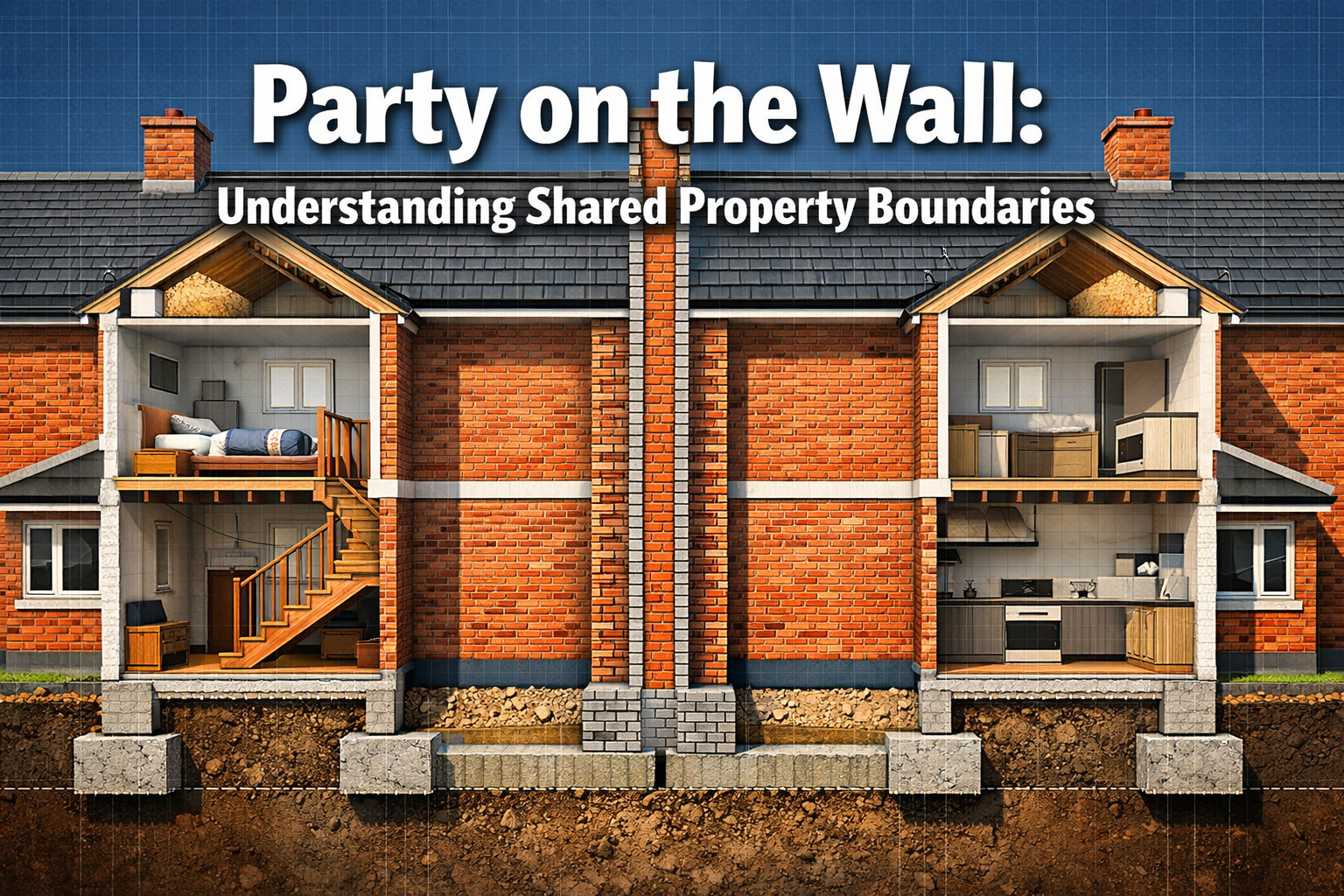
When two properties share a common wall, fence, or structure, the legal and practical implications can become surprisingly complex. The concept of a party on the wall refers to the shared ownership and responsibilities that arise when neighboring properties are physically connected through walls, floors, or other structural elements. Understanding these rights and obligations is essential for any property owner planning construction work, renovations, or even simple repairs that might affect their neighbors.
In England and Wales, party wall matters are governed by specific legislation designed to prevent disputes and protect the interests of all parties involved. Whether you’re planning a loft conversion, basement excavation, or boundary wall construction, knowing how party walls work can save you time, money, and potential legal headaches.
Key Takeaways
- Party walls are shared structures between adjoining properties that carry legal rights and responsibilities for both owners
- The Party Wall etc. Act 1996 provides the legal framework for managing works affecting party walls in England and Wales
- Property owners must serve formal party wall notices to neighbors before commencing certain types of building work
- Party wall surveyors play a crucial role in resolving disputes and creating legally binding awards
- Understanding party wall procedures can prevent costly delays and maintain good neighbor relations during construction projects
What Is a Party on the Wall?
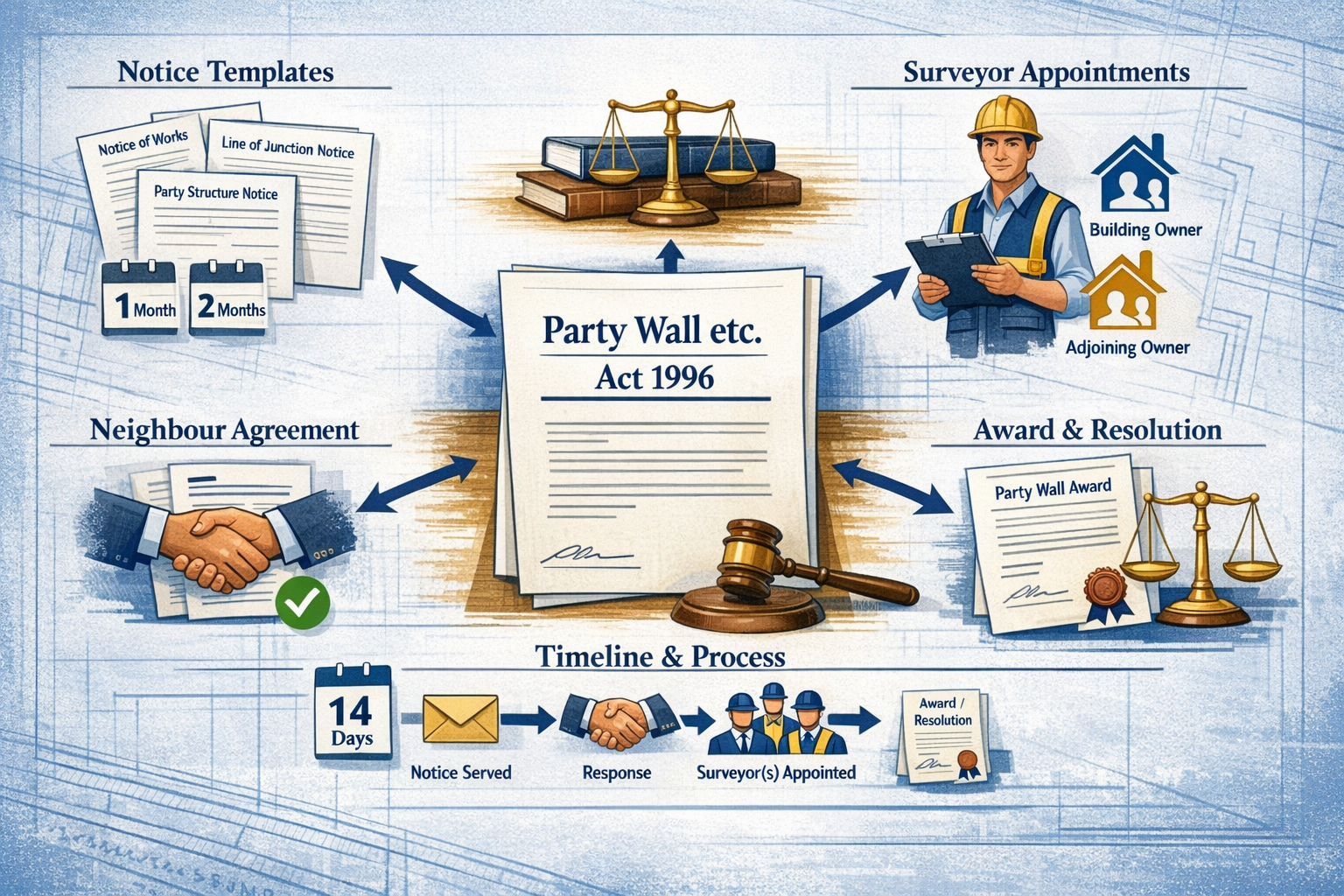
The term “party on the wall” is closely related to the legal concept of a party wall – a wall or structure that stands on the boundary between two properties and is shared by both owners. This shared ownership creates a unique legal relationship where both property owners have specific rights and responsibilities.
Defining Party Walls
A party wall typically falls into one of several categories:
- Party wall type A: A wall that stands astride the boundary of land belonging to two different owners
- Party wall type B: A wall that stands wholly on one owner’s land but is used by two owners to separate their buildings
- Party structure: A floor or other structure separating buildings or parts of buildings with different owners
- Party fence wall: A wall (not part of a building) standing on the boundary between two properties
The concept of a “party” in this context refers to the shared nature of the structure, where both parties (property owners) have an interest in its maintenance, stability, and any modifications.
Historical Context
The idea of shared walls dates back centuries to when properties were built closely together in urban areas to maximize land use. The Party Wall etc. Act 1996 consolidated earlier legislation and created a comprehensive framework for managing these shared structures in modern times.
Legal Framework: The Party Wall etc. Act 1996
The Party Wall etc. Act 1996 is the primary legislation governing party wall matters in England and Wales. This Act provides a framework for preventing and resolving disputes between neighbors when building work affects shared structures or boundaries.
Key Provisions of the Act
The legislation covers three main types of work:
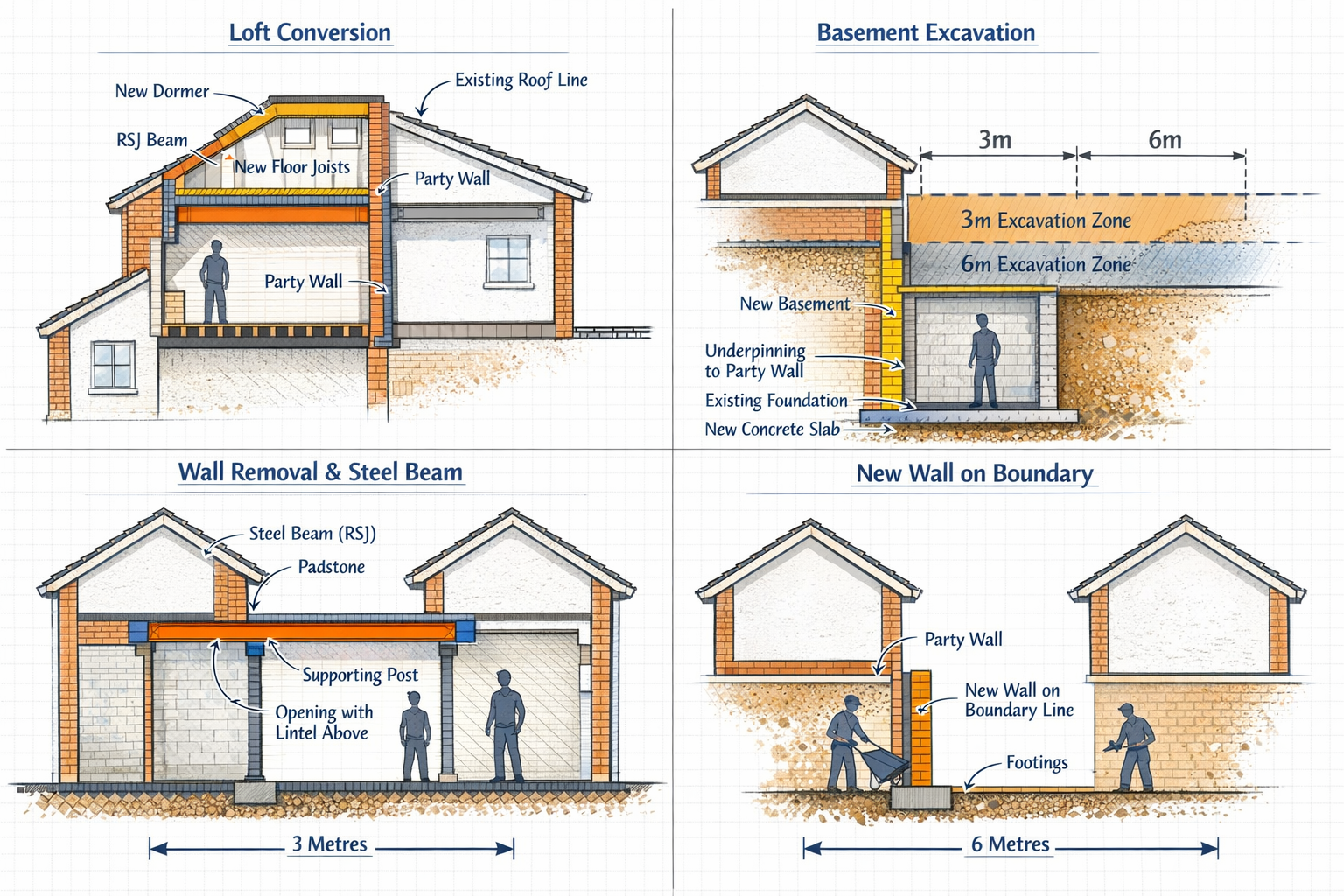
- Work directly to an existing party wall or party structure – This includes repairs, alterations, or rebuilding of the shared structure
- New building work at or astride the boundary – Construction of new walls on the property line
- Excavation within specified distances of a neighboring building – Digging foundations or basements within 3 or 6 meters of an adjoining structure
Understanding these categories is essential for determining whether you need to follow the party wall notice procedures before starting your project.
Rights and Responsibilities
Under the Act, building owners have the right to:
- ✅ Carry out necessary work to party walls
- ✅ Access neighboring property for essential works (with proper notice)
- ✅ Make the structure safe and weatherproof
- ✅ Raise or underpin party walls
However, these rights come with important responsibilities:
- ⚠️ Serve proper notice to adjoining owners
- ⚠️ Cover the costs of the party wall process
- ⚠️ Compensate neighbors for any damage caused
- ⚠️ Minimize disruption and inconvenience
Types of Party Wall Works That Require Notice
Not all work near a boundary requires formal party wall procedures. However, certain types of party wall works trigger the need for proper notices and potentially surveyor involvement.
Common Scenarios Requiring Party Wall Notice
| Type of Work | Notice Required | Typical Examples |
|---|---|---|
| Cutting into party wall | Yes | Installing steel beams, creating openings |
| Raising party wall height | Yes | Loft conversions, additional stories |
| Underpinning party wall | Yes | Basement excavations, foundation work |
| Demolishing and rebuilding | Yes | Major renovations, structural changes |
| Excavations within 3m | Yes (if deeper than neighbor’s foundations) | Basement construction, deep foundations |
| Excavations 3-6m away | Yes (if within 45° line) | Large-scale groundwork projects |
| Repairs to party wall face | Sometimes | Repointing, rendering (depends on extent) |
Loft Conversions and Party Walls 🏠
Loft conversions frequently involve party wall considerations, especially in semi-detached or terraced properties. Work might include:
- Raising the party wall to accommodate increased ceiling height
- Cutting into the party wall to install structural beams
- Exposing previously enclosed party walls
- Adding insulation or soundproofing to party structures
Basement Excavations and Underpinning
Basement projects are among the most complex party wall scenarios. When excavating near a party wall, building owners must consider:
- Foundation depths: Digging below the neighbor’s foundation level requires notice
- Structural support: Temporary and permanent support systems
- Settlement risks: Potential movement of adjoining structures
- Drainage implications: Changes to water flow and soil stability
The Party Wall Notice Process
Serving proper party wall notices is a legal requirement before commencing notifiable works. The notice process provides a formal mechanism for informing neighbors and obtaining their consent or resolving disagreements.
Types of Party Wall Notices
There are three main types of notices under the Act:
1. Party Structure Notice – Used for work directly to an existing party wall or structure. This notice must be served at least two months before work begins and should describe the proposed work in detail. Learn more about what a party structure notice is and how to serve it.
2. Line of Junction Notice – Required when building a new wall on or astride the boundary line. This notice also requires two months’ advance notice.
3. Notice of Adjacent Excavation – Necessary for excavation work within 3 or 6 meters of a neighboring building. This notice requires one month’s advance notice.
What Happens After Serving Notice?
Once a party wall notice is served, the adjoining owner has three options:
- Consent to the works – The simplest outcome, allowing work to proceed as planned
- Consent with conditions – Agreement subject to specific requirements or protections
- Dissent or non-response – Triggers the need for party wall surveyors and a formal award
“The party wall process exists to protect both building owners and their neighbors. Proper notice and professional surveyor involvement can prevent disputes before they escalate.” – Party Wall Surveyor
Party Wall Surveyors and Awards
When neighbors cannot agree on proposed works, or when an adjoining owner doesn’t respond to a notice within 14 days, the party wall surveyor process begins. This professional involvement ensures fair resolution and legal compliance.
The Role of Party Wall Surveyors
Party wall surveyors are specialist professionals who:
- 📋 Prepare schedules of condition documenting the property’s current state
- 🔍 Assess the proposed works and their potential impact
- ⚖️ Resolve disputes between building and adjoining owners
- 📝 Prepare party wall awards setting out rights and obligations
- 🛡️ Protect the interests of all parties involved
Surveyor Appointment Options
There are three surveyor appointment scenarios:
Agreed Surveyor – Both parties agree to appoint a single surveyor to act impartially. This is often the most cost-effective approach and can be arranged without extensive formalities.
Two Surveyors – Each party appoints their own surveyor (building owner’s surveyor and adjoining owner’s surveyor). The two surveyors work together to prepare the award.
Third Surveyor – Appointed by the two party-appointed surveyors to resolve any disagreements between them. This surveyor acts as an arbitrator.
Understanding Party Wall Awards
A party wall award is a legally binding document that sets out:
- Details of the proposed works
- When and how the work will be carried out
- Rights of access to neighboring property
- Protective measures to prevent damage
- Schedule of condition baseline
- Dispute resolution procedures
The award provides legal protection for both parties and creates a clear framework for the construction work. Understanding party wall contract templates and awards can help property owners navigate this process more effectively.
Costs of the Party Wall Process
One of the most common concerns about party wall procedures is the financial impact. Understanding the costs of the party wall process helps property owners budget appropriately for their projects.
Who Pays for Party Wall Procedures?
The general principle is that the building owner (the person carrying out the work) pays all reasonable costs associated with the party wall process. This includes:
- The building owner’s surveyor fees
- The adjoining owner’s surveyor fees
- The third surveyor’s fees (if appointed)
- Costs of preparing schedules of condition
- Award preparation and administration
Typical Cost Ranges in 2026
While costs vary depending on project complexity and location, typical ranges include:
| Service | Estimated Cost Range |
|---|---|
| Simple party wall award (agreed surveyor) | £700 – £1,200 |
| Standard residential project (two surveyors) | £1,500 – £3,000 |
| Complex project (basement, multiple neighbors) | £3,000 – £8,000+ |
| Schedule of condition (per property) | £300 – £600 |
| Third surveyor appointment | £1,000 – £2,500 |
Tips for Keeping Costs Down
Property owners can minimize party wall expenses by:
- 🤝 Maintaining good communication with neighbors
- 📅 Planning ahead and serving notices early
- 💬 Attempting to reach agreement before appointing surveyors
- 📊 Providing clear, detailed information about proposed works
- ⏱️ Avoiding rushed timelines that require expedited services
For more strategies, see our guide on how to keep party wall costs down.
Party Walls vs. Boundary Walls
Understanding the distinction between party walls and boundary walls is crucial for determining which legal procedures apply to your project.
Key Differences
Party Walls:
- Stand on or astride the property boundary
- Shared ownership between neighbors
- Subject to Party Wall etc. Act 1996
- Require formal notices for most work
- Both owners have rights and responsibilities
Boundary Walls:
- Stand entirely on one property
- Single ownership
- Not covered by Party Wall Act (unless party fence wall)
- May be subject to planning regulations
- Owner has primary control
Party Fence Walls
A party fence wall is a special category – a wall that stands on the boundary but is not part of a building. These walls are covered by the Party Wall Act and require proper procedures for modifications. Learn more about the difference between party fence walls and boundary walls.
Height Restrictions and Neighbor Relations
When building or raising walls between properties, owners should also consider how high you can build a wall between neighbors and how close your neighbor can build to your fence.
Regional Considerations in London
London presents unique challenges for party wall matters due to its dense housing stock, property values, and construction activity. Different areas of the city may have varying considerations.
Party Wall Surveyors Across London
Property owners in different London areas can access specialized local expertise:
- Central London – High-value properties, complex projects, heritage considerations
- North London – Victorian terraces, loft conversions, family homes
- South London – Diverse housing stock, regeneration areas
- East London – New developments, warehouse conversions
- West London – Premium properties, extensive renovations
Urban Density Challenges
London’s closely-packed properties create specific party wall considerations:
- Multiple adjoining owners requiring separate notices
- Historic buildings with unique structural concerns
- Basement excavations in areas with high water tables
- Conservation area restrictions affecting work methods
- High property values increasing dispute stakes
Common Party Wall Disputes and How to Avoid Them
Despite the legal framework, party wall disputes still arise. Understanding common issues helps property owners prevent problems before they start.
Frequent Sources of Conflict
1. Inadequate Notice ⚠️
Failing to serve proper notices or providing insufficient detail about proposed works creates immediate problems. Always ensure notices are comprehensive and timely.
2. Damage to Neighboring Property 🏚️
Construction work can cause cracks, structural movement, or cosmetic damage. A thorough schedule of condition protects both parties by documenting the pre-work state.
3. Access Disputes 🚪
Building owners may need access to neighboring property for certain works. Clear agreements about timing, duration, and compensation prevent friction.
4. Noise and Disruption 🔨
Even with proper notices, construction noise and inconvenience can strain neighbor relations. Setting reasonable working hours and maintaining communication helps.
5. Cost Disagreements 💰
Disputes about surveyor fees or who pays for what can escalate quickly. Clear agreements and transparent cost estimates are essential.
Best Practices for Smooth Party Wall Processes
- Communicate early and often with neighbors about your plans
- Hire experienced professionals including architects and party wall surveyors
- Document everything with photos, emails, and formal records
- Be reasonable about timing and minimize disruption
- Respect the process even if it seems bureaucratic
- Consider your neighbor’s concerns and address them proactively
Templates and Resources for Party Wall Agreements
Having access to proper documentation templates can streamline the party wall process and ensure legal compliance.
Available Templates and Guides
Property owners can access various resources to help navigate party wall procedures:
- Sample party wall agreement templates – Word documents that can be customized for specific situations
- Notice templates – Properly formatted party structure notices and excavation notices
- Schedule of condition formats – Documentation standards for recording property condition
When to Use Templates vs. Professional Help
While templates can be helpful for simple situations, professional surveyor involvement is recommended for:
- Complex structural work
- Basement excavations
- Projects affecting multiple neighbors
- High-value properties
- Situations where neighbors have already dissented
- Work in conservation areas or listed buildings
Responding to Party Wall Notices as an Adjoining Owner
Not everyone initiating party wall procedures is the building owner. Many property owners receive notices from neighbors and need to understand their rights and options.
Your Rights as an Adjoining Owner
When you receive a party wall notice, you have important protections:
- 📋 Right to appoint your own surveyor at the building owner’s expense
- 🔍 Right to have the property’s condition documented before work begins
- ⚖️ Right to compensation for any damage caused
- 🛡️ Right to ensure work is carried out safely and competently
- 📝 Right to have concerns addressed in the party wall award
How to Respond to a Notice
Follow these steps when you receive a party wall notice:
- Read the notice carefully and note the response deadline (typically 14 days)
- Assess the proposed works and their potential impact on your property
- Decide whether to consent or dissent based on your concerns
- Appoint a surveyor if you have any concerns or wish to dissent
- Communicate with your neighbor to understand the project better
- Ensure a schedule of condition is prepared before work starts
Common Mistakes Adjoining Owners Make
- ❌ Ignoring the notice (this counts as dissent and triggers surveyor appointment)
- ❌ Consenting without understanding the implications
- ❌ Failing to appoint their own surveyor when concerned
- ❌ Not documenting the property’s pre-work condition
- ❌ Assuming they have to pay surveyor fees (the building owner pays)
The Future of Party Wall Legislation
As construction methods evolve and urban density increases, party wall legislation continues to adapt to new challenges in 2026.
Emerging Trends and Considerations
Sustainable Construction 🌱
Modern building techniques focusing on energy efficiency and sustainability sometimes require more extensive work to party walls, including:
- Enhanced insulation installation
- Airtightness improvements
- Renewable energy system integration
Basement Boom 🏗️
The continued popularity of basement excavations in urban areas has increased party wall complexity, with surveyors developing more sophisticated monitoring and protection methods.
Technology Integration 💻
Digital tools now enable:
- Electronic service of notices
- Virtual property inspections
- Real-time structural monitoring during works
- Digital documentation and record-keeping
Climate Adaptation 🌍
Increasing awareness of climate-related risks (flooding, subsidence, extreme weather) influences party wall considerations and protective measures.
Potential Legislative Updates
While the Party Wall etc. Act 1996 remains the primary framework, discussions continue about potential modernization to address:
- Electronic communication standards
- Dispute resolution timeframes
- Surveyor qualification requirements
- Cost transparency and fee structures
Practical Checklist for Party Wall Compliance
To ensure smooth party wall procedures, follow this comprehensive checklist:
For Building Owners (Carrying Out Works)
- Determine if your work requires party wall notices
- Identify all adjoining owners who need notices
- Prepare detailed plans and specifications
- Serve appropriate notices with correct timing (1-2 months advance)
- Wait for responses from adjoining owners
- Appoint a party wall surveyor if needed
- Ensure schedule of condition is prepared
- Obtain party wall award before starting work
- Arrange appropriate insurance coverage
- Keep neighbors informed throughout the project
- Address any damage promptly
- Complete final inspections with surveyor
For Adjoining Owners (Receiving Notice)
- Read the notice carefully and note deadlines
- Assess the potential impact on your property
- Decide whether to consent or appoint a surveyor
- Respond within the required timeframe (14 days)
- Appoint a surveyor if you have concerns
- Ensure schedule of condition is prepared
- Review the party wall award carefully
- Monitor the works as they progress
- Document any concerns or damage immediately
- Maintain communication with the building owner
- Request final inspection upon completion
Conclusion: Navigating Party Walls Successfully
Understanding the concept of party on the wall – the shared ownership and legal framework surrounding party walls – is essential for any property owner in England and Wales. Whether you’re planning construction work or responding to a neighbor’s notice, following proper procedures protects your interests and maintains good neighbor relations.
The Party Wall etc. Act 1996 provides a comprehensive framework that balances the rights of building owners to improve their properties with the rights of adjoining owners to be protected from damage and disruption. While the process may seem complex, it exists to prevent disputes and ensure fair treatment for all parties.
Key Actions to Take Now
If you’re planning building work:
- Assess whether your project requires party wall notices early in the planning stage
- Budget for party wall costs as part of your overall project expenses
- Communicate with neighbors before serving formal notices
- Engage experienced professionals including architects and party wall surveyors
- Allow sufficient time for the party wall process before your planned start date
If you’ve received a party wall notice:
- Seek professional advice from a party wall surveyor
- Don’t ignore the notice – respond within the required timeframe
- Ensure your property’s condition is properly documented
- Understand that you don’t pay for the surveyor’s services
- Maintain open communication with your neighbor
For both parties:
- Approach the process with reasonableness and good faith
- Recognize that party wall procedures protect everyone’s interests
- Keep detailed records of all communications and agreements
- Address concerns promptly rather than letting them escalate
- Remember that today’s building owner may be tomorrow’s adjoining owner
The party wall process, while sometimes perceived as bureaucratic, ultimately serves an important purpose in densely populated areas. By understanding your rights and responsibilities, following proper procedures, and maintaining good communication with neighbors, you can navigate party wall matters successfully and complete your construction projects with minimal conflict.
For additional guidance on specific situations, consult the comprehensive resources available on party wall procedures or contact a qualified party wall surveyor in your area.
References
[1] Tommy Caldwell Dean Potter Dawn Wall – https://washingtonian.com/2015/05/27/tommy-caldwell-dean-potter-dawn-wall/
[5] Watch – https://www.youtube.com/watch?v=aUjlelZUCp8
[9] Colored Vinyl – https://vinylcrafts.eu/blogs/news/colored-vinyl
