


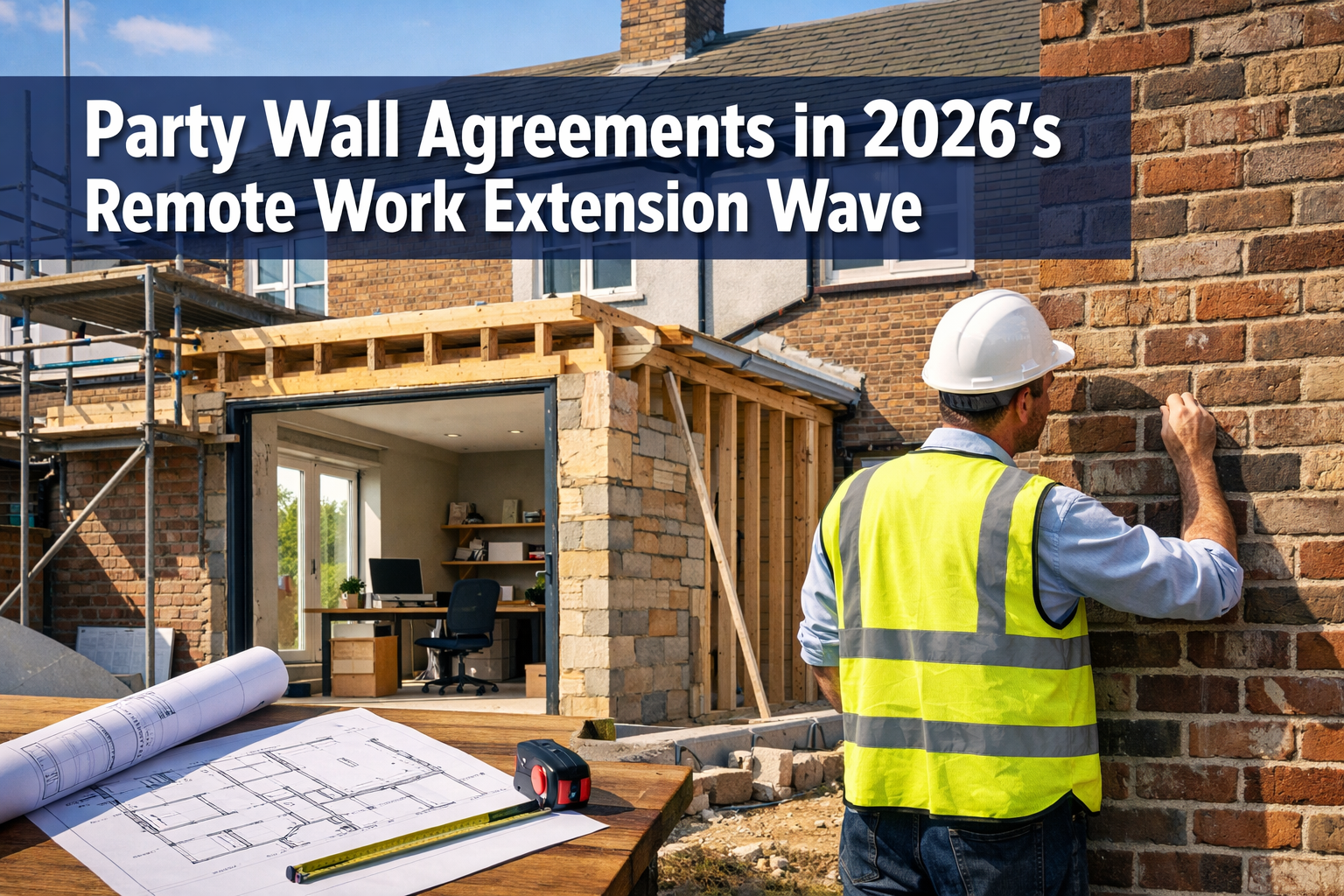
The post-pandemic shift to remote and hybrid work has fundamentally transformed how homeowners use their properties. In 2026, the wave of home office extensions continues to surge, with thousands of homeowners across the UK converting garages, adding rear extensions, and building garden rooms to create dedicated workspace. However, many of these projects involve party wall agreements in 2026's remote work extension wave, requiring careful navigation of legal requirements and neighbour relations. Understanding surveyor best practices for home office builds has become essential for anyone planning construction work that affects shared walls or boundaries.
Key Takeaways
- Party wall notices must be served 2 months to 1 year before construction begins, giving neighbours 14 days to respond—critical timing for home office projects[1]
- Appointing an agreed surveyor (typically £1,000 total) is more cost-effective than separate surveyors for each party and speeds up the process[1]
- Schedule of condition documentation with detailed photographs protects both parties and prevents disputes about pre-existing damage[3]
- Home office extensions frequently trigger Party Wall Act requirements when involving foundations near boundaries or structural work to shared walls
- Professional surveyor involvement ensures compliance, reduces neighbour friction, and provides legal protection for your investment
Understanding Party Wall Requirements for Home Office Extensions
What Triggers Party Wall Agreements in 2026's Remote Work Projects? 🏗️
The Party Wall etc. Act 1996 governs construction work affecting shared walls, boundaries, and excavations near neighbouring properties. As remote work drives home office construction in 2026, specific scenarios commonly trigger party wall requirements:
Common Home Office Build Scenarios:
- Rear or side extensions requiring excavation within 3 metres of a neighbour's structure
- Loft conversions involving work to a shared party wall in semi-detached or terraced houses
- Garage conversions with foundation work near boundary lines
- Garden room construction with foundations within 6 metres of a neighbouring building
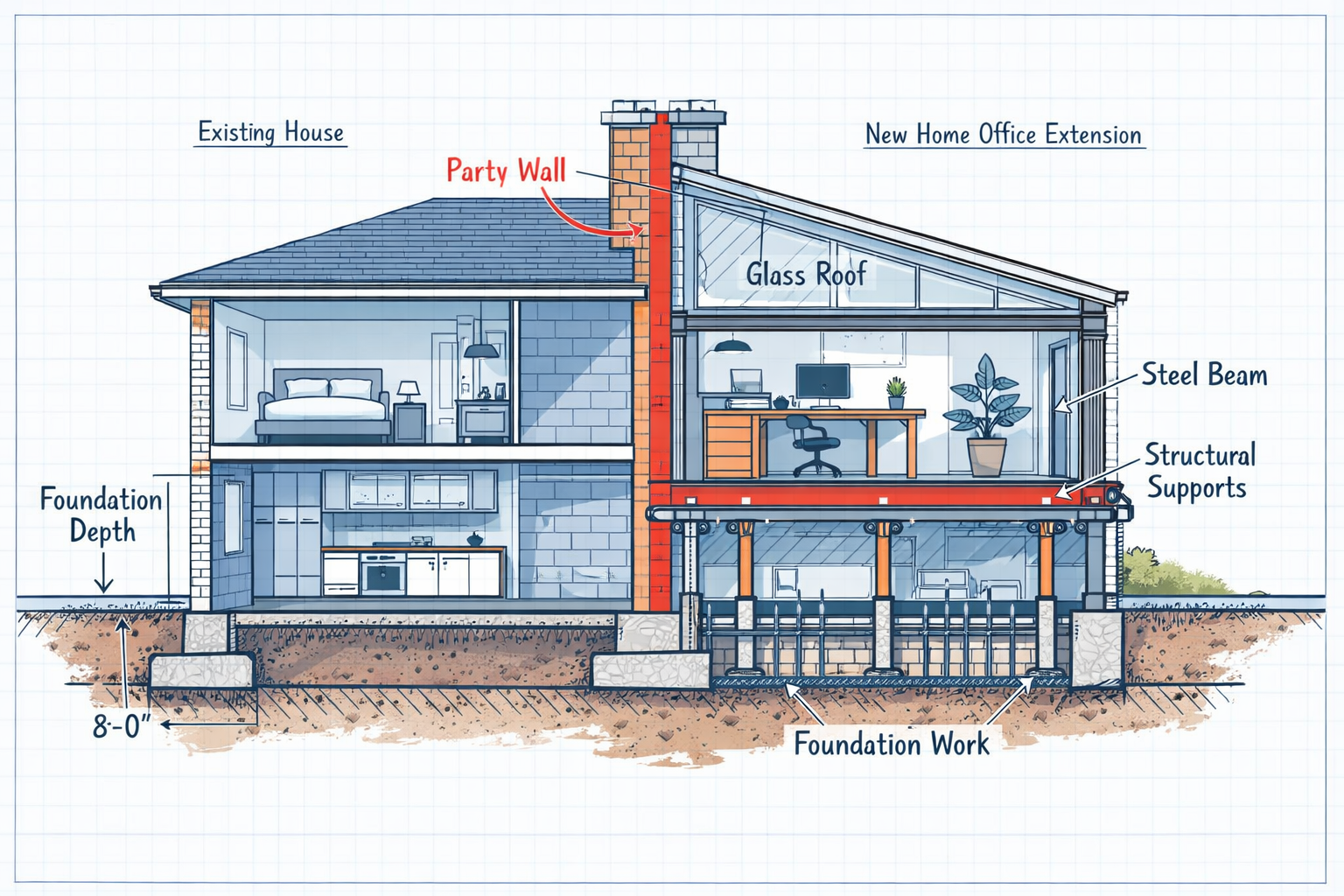
- Structural alterations to existing party walls, including installing steel beams for open-plan offices
When planning your home office build, understanding types of party wall works helps determine whether you need formal agreements. The Act protects both building owners pursuing improvements and adjoining owners whose properties might be affected.
The Legal Framework: Notice Requirements and Timelines
The Party Wall Act establishes strict notice timeline requirements that homeowners must follow. Party wall notices must be served between 2 months and 1 year before work begins, with neighbours given 14 days to respond with consent or dissent[1][2]. This timeline is particularly important for remote workers planning home office builds, as delays can disrupt work-from-home arrangements.
Critical Timeline Milestones:
| Stage | Timeframe | Action Required |
|---|---|---|
| Initial Notice | 2-12 months before work | Serve formal party wall notice to neighbours |
| Neighbour Response | 14 days | Neighbour consents or dissents |
| Surveyor Appointment | Within 10 days of dissent | Appoint agreed or separate surveyors |
| Award Preparation | 2-4 weeks | Surveyor creates party wall award |
| Construction Start | After award issued | Work can legally commence |
Understanding how to properly serve party wall notices prevents costly delays and legal complications. Many homeowners in 2026 are discovering that inadequate notice can halt construction mid-project, creating significant financial and professional disruption for those dependent on home office spaces.
Surveyor Best Practices for Home Office Builds in 2026
Selecting the Right Surveyor for Your Project
Party wall surveyors play a crucial role in facilitating agreements and protecting all parties' interests. In 2026, with home office builds proliferating, selecting experienced surveyors familiar with residential extensions has become paramount.
Surveyor Selection Criteria:
✅ Relevant Experience: Look for surveyors with extensive residential extension experience, particularly home office projects
✅ RICS Accreditation: Ensure membership in the Royal Institution of Chartered Surveyors
✅ Local Knowledge: Surveyors familiar with your area understand regional construction practices
✅ Clear Fee Structure: Transparent pricing prevents unexpected costs
✅ Communication Skills: Ability to explain technical matters to non-professionals
Party wall surveyors charge between £150-£200 per hour, with a complete party wall award costing approximately £1,000[1]. For homeowners concerned about expenses, exploring strategies for keeping party wall costs down can yield significant savings without compromising quality.
The Agreed Surveyor Advantage
Both homeowner and neighbour can appoint a single agreed surveyor (typically within ten days) who acts impartially, which is generally more cost-effective than each party hiring separate surveyors[1][3]. This approach offers multiple benefits for home office extension projects:
Benefits of an Agreed Surveyor:
- Cost Efficiency: Single fee split between parties, typically reducing total costs by 40-50%
- Faster Resolution: One surveyor streamlines communication and decision-making
- Reduced Conflict: Impartial third party prevents adversarial dynamics
- Simplified Process: Single point of contact for all parties
However, the agreed surveyor must be independent and NOT the same surveyor the homeowner is using for their own works to maintain perceived neutrality[1]. This independence requirement ensures fairness and prevents conflicts of interest that could invalidate the agreement.
For those wondering whether professional help is necessary, reviewing guidance on having a party wall agreement without a surveyor clarifies when DIY approaches might work versus when professional involvement is essential.
Schedule of Condition: Protecting All Parties
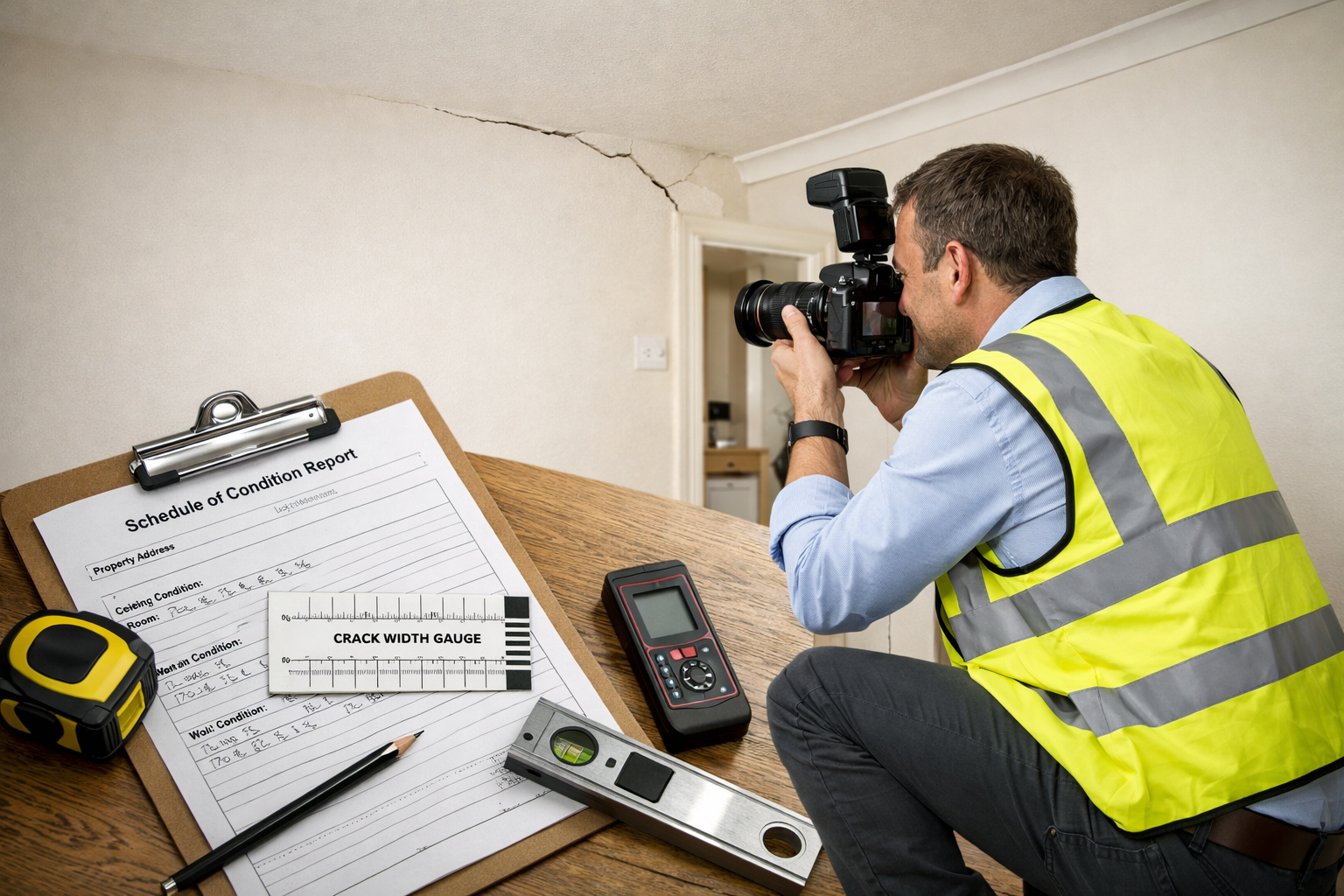
Surveyors must create detailed schedules of condition including photographs documenting the neighbour's property condition before works begin[3]. This documentation serves as critical evidence should disputes arise about construction damage.
Comprehensive Schedule Components:
📸 Photographic Evidence: High-resolution images of all walls, ceilings, floors, and external features
📝 Written Descriptions: Detailed notes about existing cracks, settlement, decoration condition
📏 Measurements: Precise documentation of existing crack widths and structural issues
🗺️ Room-by-Room Coverage: Systematic documentation of every affected space
📅 Date Stamping: Clear timestamps proving pre-construction condition
Professional surveyors in 2026 increasingly use digital tools including laser measuring devices, 3D scanning technology, and cloud-based documentation systems to create comprehensive schedules of condition that withstand legal scrutiny.
Negotiation Tactics and Best Practices for Smooth Agreements
Pre-Notice Communication Strategies
While formal notices are legally required, informal pre-notice communication with neighbours dramatically improves outcomes for party wall agreements in 2026's remote work extension wave. Surveyor best practices for home office builds emphasize relationship management alongside technical compliance.
Effective Pre-Notice Approaches:
💬 Early Conversations: Discuss plans informally 2-3 months before formal notice
📋 Share Preliminary Plans: Show architectural drawings to address concerns early
🤝 Acknowledge Disruption: Recognize the inconvenience construction will cause
⏰ Discuss Timing: Coordinate construction schedules around neighbour preferences
📞 Provide Contact Information: Ensure neighbours can reach you or your builder easily
Homeowners who invest time in relationship-building before serving formal notices report 60-70% faster agreement processes and fewer disputes during construction. Understanding what happens when neighbours are carrying out works from the adjoining owner's perspective helps building owners anticipate concerns and address them proactively.
Addressing Common Neighbour Concerns
Home office extensions in 2026 frequently raise specific neighbour concerns that experienced surveyors anticipate and address:
Top Neighbour Concerns and Solutions:
| Concern | Surveyor Solution |
|---|---|
| Structural damage to their property | Detailed schedule of condition + structural engineer certification |
| Construction noise disrupting their work-from-home | Agreed working hours (typically 8am-6pm weekdays) in party wall award |
| Loss of light or privacy | Architectural modifications or screening solutions |
| Property value impact | Independent valuation showing neutral or positive effect |
| Unclear liability for damage | Comprehensive insurance requirements in award |
When neighbours dissent to party wall notices, understanding how to respond to party wall act notices from both perspectives facilitates constructive dialogue. Professional surveyors act as mediators, translating technical requirements into understandable terms for all parties.
Regional Considerations Across London
Party wall practices vary slightly across London regions, with local surveyors offering specialized knowledge. Homeowners planning office extensions should consider engaging surveyors familiar with their specific area:
- North London party wall surveyors understand Victorian and Edwardian terraced housing common in areas like Islington and Highgate
- West London specialists navigate the unique challenges of high-value properties in Kensington and Chelsea
- East London experts handle the mix of new developments and heritage properties in Hackney and Tower Hamlets
- South London professionals address the specific requirements of properties in Wandsworth and Lambeth
- Central London surveyors manage complex multi-party agreements in dense urban environments
Regional expertise ensures compliance with local authority requirements and familiarity with area-specific construction practices that affect party wall agreements.
The Party Wall Award: Key Components for Home Office Projects
Essential Award Provisions
The party wall award is the legally binding document that governs construction work. For home office builds in 2026, awards must address specific provisions relevant to residential extensions:
Critical Award Components:
- Scope of Works: Detailed description of all construction activities affecting party walls or boundaries
- Working Hours: Specific times when noisy work can occur (crucial for neighbours also working from home)
- Access Rights: Provisions for surveyors and builders to access neighbouring property if necessary
- Insurance Requirements: Minimum coverage levels for construction liability
- Dispute Resolution: Procedures for addressing disagreements during construction
- Completion Timeline: Expected duration of works affecting the party wall
- Compensation Provisions: Arrangements for any temporary loss of amenity
Reviewing party wall contract templates and award guides helps homeowners understand what to expect in their specific agreement. Professional surveyors tailor awards to project specifics rather than using generic templates.
Special Considerations for Foundation Work
Home office extensions frequently require foundation excavations that trigger specific party wall provisions. When digging within 3 metres of a neighbouring building, or within 6 metres if going deeper than the neighbour's foundations, additional protections apply:
Foundation-Specific Requirements:
- Structural calculations certified by a chartered structural engineer
- Underpinning provisions if neighbour's foundations are at risk
- Monitoring regime for settlement or movement during excavation
- Contingency plans for unexpected ground conditions
- Temporary support specifications for existing structures
Understanding boundary rules and how close you can build to a fence prevents common mistakes in extension planning. Experienced surveyors ensure foundation designs comply with both party wall requirements and building regulations.
Cost Management and Financial Planning
Understanding Total Party Wall Costs
Budgeting for party wall agreements in 2026's remote work extension wave requires understanding all cost components. Surveyor best practices for home office builds include transparent financial planning:
Typical Cost Breakdown:
- Building Owner's Surveyor: £800-£1,200 (if separate surveyors appointed)
- Adjoining Owner's Surveyor: £800-£1,200 (paid by building owner)
- Agreed Surveyor: £1,000 total (split between parties)[1]
- Schedule of Condition: £300-£500 per neighbouring property
- Third Surveyor (if dispute): £1,500-£2,500 additional
- Award Preparation: Included in surveyor fees
- Monitoring Visits: £150-£200 per visit during construction
For comprehensive financial planning, reviewing the costs of party wall processes provides realistic expectations. The building owner typically bears all party wall costs, including the adjoining owner's surveyor fees—a fact that surprises many first-time extension builders.
When to Engage Surveyors in Your Project Timeline
Optimal surveyor engagement timing significantly impacts project success. For home office extensions in 2026, the ideal sequence is:
Project Timeline with Surveyor Engagement:
- Concept Stage (Month 1-2): Consult surveyor about party wall implications
- Design Development (Month 3-4): Refine plans based on surveyor feedback
- Formal Notice (Month 5): Serve party wall notices with surveyor assistance
- Award Preparation (Month 6-7): Surveyor creates and finalizes award
- Pre-Construction (Month 8): Schedule of condition completed
- Construction (Month 9-14): Periodic surveyor monitoring visits
- Completion (Month 15): Final inspection and sign-off
Engaging surveyors early prevents costly design changes and ensures party wall compliance is integrated into project planning rather than treated as an afterthought.
Common Pitfalls and How to Avoid Them
Mistakes That Delay Home Office Projects
Even with professional guidance, certain common mistakes plague party wall agreements in 2026's remote work extension wave. Surveyor best practices for home office builds emphasize avoiding these pitfalls:
❌ Late Notice Service: Serving notices too close to planned construction dates
❌ Incomplete Documentation: Vague descriptions of proposed works
❌ Poor Neighbour Communication: Relying solely on formal notices without dialogue
❌ Inadequate Insurance: Insufficient coverage for potential party wall damage
❌ Ignoring Responses: Failing to address neighbour concerns promptly
❌ DIY Awards: Attempting to create party wall awards without surveyor expertise
❌ Starting Work Early: Beginning construction before award is finalized
Accessing free party wall agreement templates provides starting points but should never replace professional surveyor involvement for complex projects.
Dispute Resolution Strategies
When disagreements arise despite best practices, effective dispute resolution prevents project paralysis. The Party Wall Act provides structured escalation procedures:
Dispute Resolution Hierarchy:
- Direct Negotiation: Building and adjoining owners discuss concerns directly
- Surveyor Mediation: Appointed surveyors facilitate compromise solutions
- Third Surveyor: Independent third surveyor resolves deadlocked disputes
- County Court: Final recourse for unresolved matters (rare, expensive)
Professional surveyors resolve 95% of disputes without requiring third surveyor involvement through skilled negotiation and technical expertise. Understanding the role of building owner's surveyors and adjoining owner's surveyors clarifies how the system protects all parties.
Technology and Innovation in 2026 Party Wall Practice
Digital Documentation and Remote Inspections
The 2026 landscape for party wall agreements has been transformed by technology adoption accelerated during the pandemic. Modern surveyor best practices for home office builds incorporate:
Technological Innovations:
📱 Digital Notice Service: Electronic delivery with read receipts and timestamps
🖥️ Virtual Consultations: Video meetings reducing scheduling friction
📷 360° Photography: Comprehensive visual documentation for schedules of condition
☁️ Cloud-Based Awards: Secure digital storage and instant access for all parties
📊 Construction Monitoring Apps: Real-time updates on project progress
🔔 Automated Alerts: Notifications for response deadlines and milestone dates
These innovations particularly benefit remote workers building home offices, as they minimize time away from professional responsibilities while ensuring comprehensive party wall compliance.
Sustainability Considerations in Modern Extensions
Home office builds in 2026 increasingly incorporate sustainable design elements that affect party wall considerations:
- Enhanced insulation in party walls improving thermal and acoustic performance
- Green roofs on extensions requiring structural calculations for load-bearing walls
- Solar panels necessitating party wall assessments for roof alterations
- Ground source heat pumps with excavation requirements near boundaries
- Rainwater harvesting systems affecting foundation depths and drainage
Surveyors with expertise in sustainable construction ensure party wall awards accommodate eco-friendly features while protecting neighbouring properties.
Conclusion: Achieving Smooth Party Wall Agreements for Your Home Office Build
Successfully navigating party wall agreements in 2026's remote work extension wave requires understanding legal requirements, engaging experienced surveyors, and prioritizing neighbour relations. The surveyor best practices for home office builds outlined in this guide provide a comprehensive framework for homeowners planning extensions in semi-detached or terraced properties.
Key Success Factors:
✅ Serve party wall notices 2-12 months before construction to allow adequate response time[1][2]
✅ Consider appointing an agreed surveyor to reduce costs and streamline the process[1][3]
✅ Invest in comprehensive schedules of condition with detailed photographic documentation[3]
✅ Communicate informally with neighbours before formal notices to build goodwill
✅ Engage professional surveyors early in your project timeline
✅ Budget appropriately for party wall costs as part of your overall extension expenses
Next Steps for Your Home Office Extension
If you're planning a home office build that may affect party walls or boundaries, take these actionable steps:
- Assess Your Project: Determine whether your planned works trigger Party Wall Act requirements by reviewing types of party wall works
- Consult a Surveyor: Engage a qualified party wall surveyor during your design phase for early guidance
- Initiate Neighbour Dialogue: Have informal conversations before serving formal notices
- Prepare Documentation: Gather architectural plans, structural calculations, and project specifications
- Serve Notices Promptly: Allow maximum time for the agreement process by serving notices early
- Stay Engaged: Maintain regular communication with surveyors and neighbours throughout construction
The remote work revolution has permanently changed how we use residential spaces, making home office extensions one of the most popular renovation projects in 2026. By following professional surveyor best practices and respecting party wall requirements, homeowners can create productive workspace while maintaining positive neighbour relationships and legal compliance.
For those currently carrying out works or facing situations where neighbours are undertaking construction, professional guidance ensures your rights are protected and obligations are met. The investment in proper party wall procedures prevents costly disputes, construction delays, and legal complications that could undermine your home office project.
As remote and hybrid work patterns continue evolving, the importance of well-planned, legally compliant home office extensions will only grow. By understanding and implementing the surveyor best practices outlined in this guide, homeowners can confidently navigate party wall agreements and create the productive workspace their professional lives demand in 2026 and beyond.
References
[1] Party Wall Agreement – https://hoa.org.uk/advice/guides-for-homeowners/i-am-improving/party-wall-agreement/
[2] Knowledge Article Party Wall Agreement – https://www.aylingassociates.com/knowledge-article-party-wall-agreement.html
[3] Mastering Party Wall Agreements A Comprehensive Breakdown For Homeowners – https://kandasurveyors.co.uk/about-surveys/mastering-party-wall-agreements-a-comprehensive-breakdown-for-homeowners/