

Party Wall Surveyors: Your Complete Guide to Protecting Your Property Rights in 2026
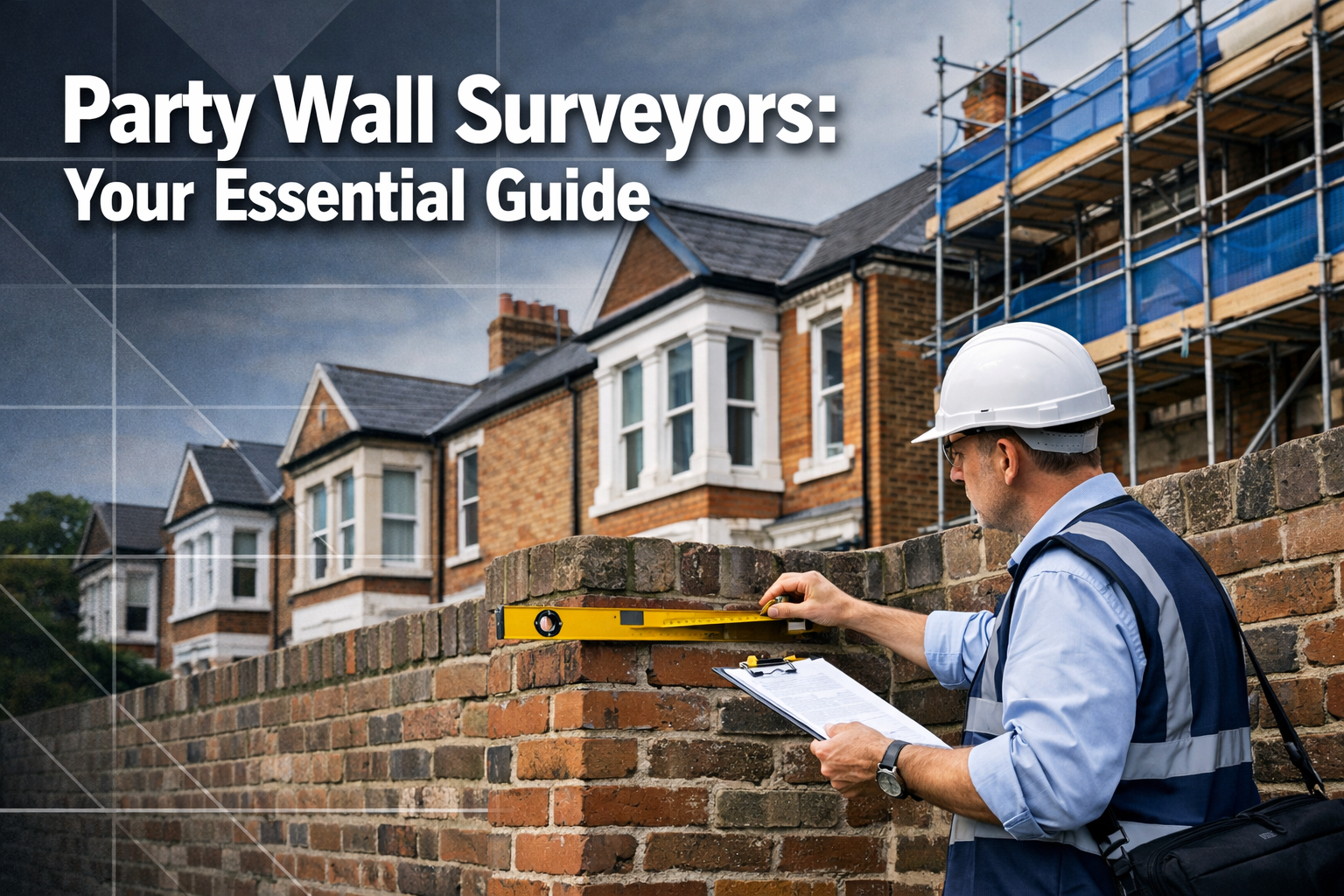
When a neighbor announces plans to extend their home or dig a basement, many property owners feel a wave of anxiety wash over them. Will the construction damage their property? Who pays if cracks appear? How can disputes be avoided? This is precisely where party wall surveyors step in to protect everyone’s interests. These specialized professionals serve as impartial experts who navigate the complex legal framework governing shared walls and boundaries, ensuring construction projects proceed smoothly while safeguarding neighboring properties from potential damage.
Key Takeaways
- Party wall surveyors are independent professionals who administer the Party Wall etc. Act 1996, protecting both building owners and their neighbors during construction work affecting shared structures
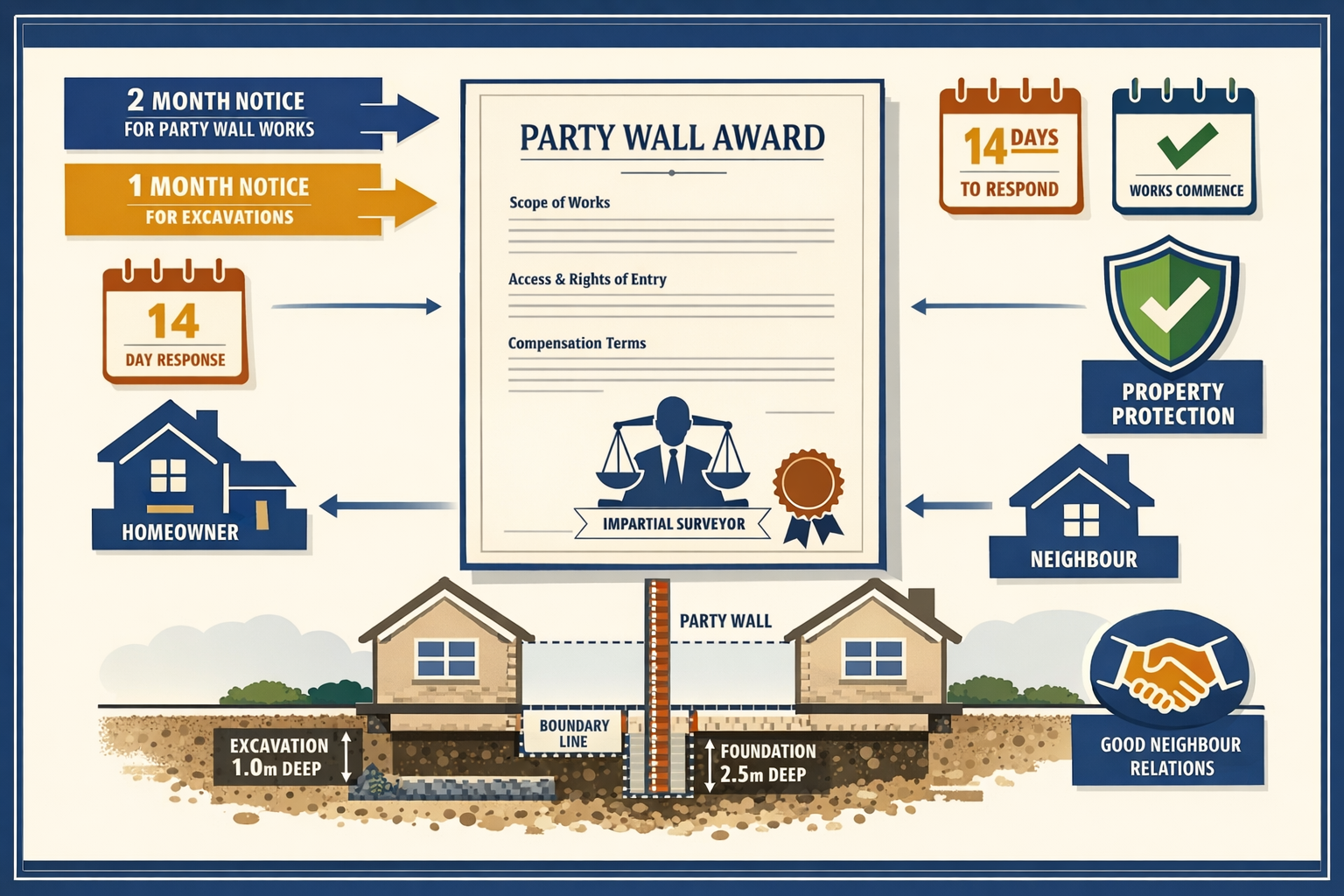
- Homeowners must serve formal notice at least two months before work begins on party walls and one month before excavation work starts, with surveyors stepping in when neighbors dispute or fail to respond within 14 days
- Surveyors prepare legally binding Party Wall Awards that document property conditions, define work scope, establish access rights, and set compensation terms for any damage
- Early consultation with qualified surveyors can prevent costly disputes, reduce delays, and ensure compliance with legal requirements throughout the construction process
- Professional surveyor fees are typically the responsibility of the building owner, but the investment protects all parties and provides essential legal documentation
What Are Party Wall Surveyors?
Party wall surveyors are qualified professionals who specialize in administering and enforcing the Party Wall etc. Act 1996. Unlike general building surveyors, these specialists possess deep expertise in the specific legislation governing shared walls, boundary structures, and excavations near neighboring properties.
These professionals act as impartial mediators between property owners when construction work affects shared structures. Their primary role involves ensuring that building work proceeds legally while protecting the rights and properties of all parties involved.
The Core Responsibilities
Party wall surveyors fulfill several critical functions:
- Determining applicability of the Party Wall etc. Act 1996 to proposed construction work
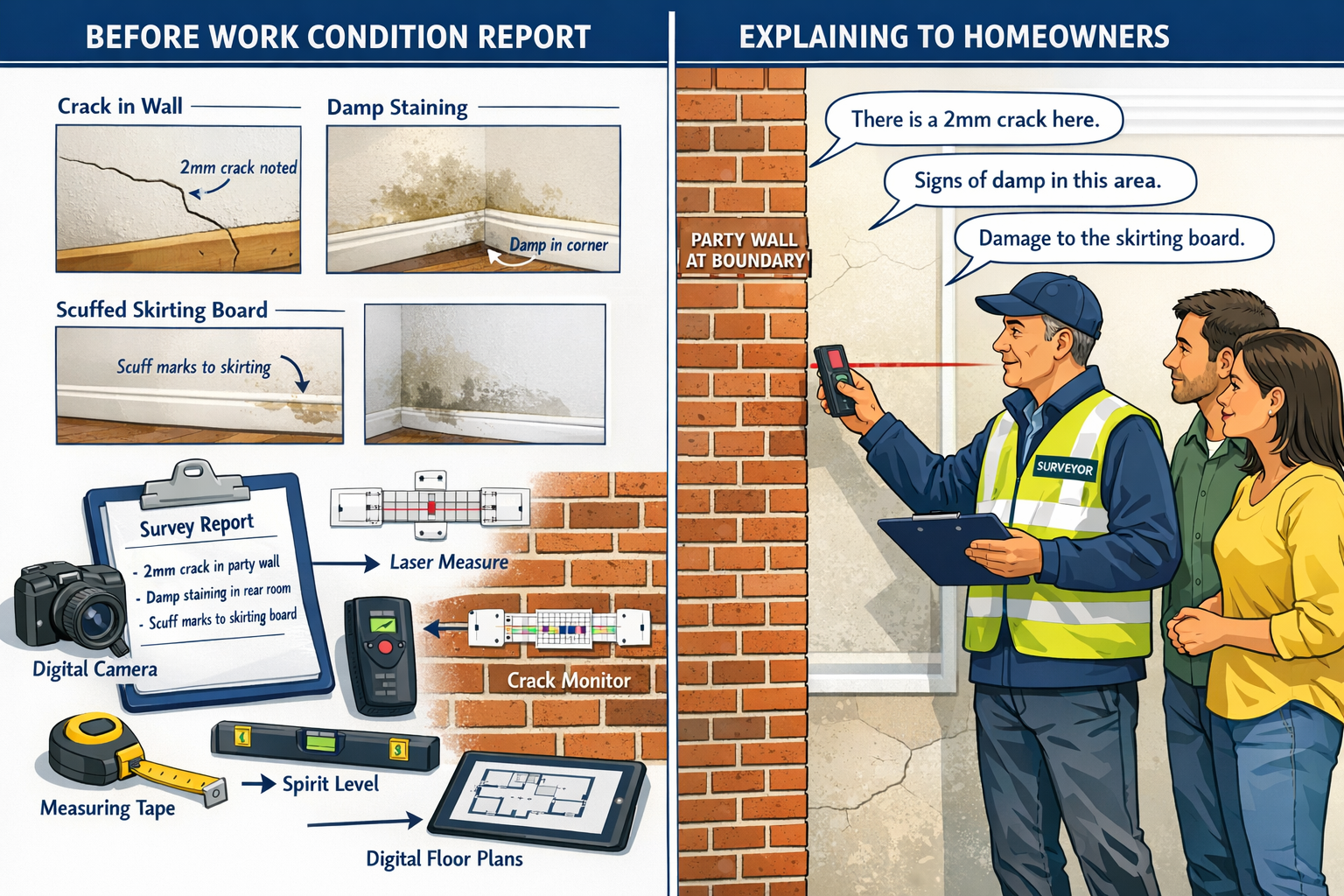
- Preparing detailed condition surveys documenting the state of neighboring properties before work commences
- Drafting Party Wall Awards that serve as legally binding agreements between parties
- Resolving disputes between building owners and their neighbors
- Monitoring compliance with agreed-upon work specifications and timelines
- Assessing compensation for any damage caused during construction
According to recent industry analysis, the role of party wall surveyors continues to evolve in 2026, with increasing emphasis on early intervention and preventative consultation[4].
When Do You Need Party Wall Surveyors?
Understanding when to engage party wall surveyors can save property owners significant time, money, and stress. The Party Wall etc. Act 1996 applies to specific types of party wall works that affect shared structures or boundaries.
Notifiable Works Requiring Surveyor Involvement
Property owners must serve party wall notices for the following situations:
Work on Existing Party Walls 🏗️
- Cutting into a party wall to install beams or damp-proof courses
- Raising, thickening, or underpinning party walls
- Demolishing and rebuilding party walls
- Cutting away projecting foundations or external walls
Building New Walls on Boundary Lines 🧱
- Constructing new walls directly on the property boundary
- Building up to the boundary line (with foundations on your own land)
Excavation Work Near Neighboring Properties ⛏️
- Digging within three meters of a neighbor’s structure if the excavation will be deeper than their foundations
- Digging within six meters of a neighbor’s structure if the excavation will cut a line drawn at 45 degrees from the bottom of their foundations
Surveyors can also determine that the Act does not apply to certain work. For example, drilling holes for shelving, replastering, or repointing without structural alterations typically fall outside the Act’s scope[2].
The 14-Day Response Rule
One critical aspect often misunderstood by property owners involves neighbor responses to party wall notices. If a neighbor fails to respond within 14 days of receiving notice, their silence is automatically treated as a dispute under the Act[2]. This triggers mandatory surveyor involvement, even if no actual disagreement exists.
This procedural requirement underscores the importance of early surveyor consultation, as highlighted in recent professional guidance emphasizing that “early advice protects you, your property and your neighbours”[4].
How Party Wall Surveyors Protect Your Interests
The value of qualified party wall surveyors extends far beyond simple paperwork. These professionals provide essential protections for both building owners undertaking construction and neighbors whose properties might be affected.
For Building Owners
When you’re planning construction work, a building owner’s surveyor helps you:
✅ Navigate legal compliance by ensuring all notices are served correctly and within required timeframes (at least two months before party wall work and one month before excavation work)[2]
✅ Minimize project delays by addressing potential disputes before they escalate into costly legal battles
✅ Document existing conditions to protect against unfounded damage claims from neighbors
✅ Maintain positive neighbor relations through professional, impartial mediation
✅ Obtain necessary access rights to neighboring properties when required for construction
For Adjoining Owners
If your neighbor is undertaking building work, an adjoining owner’s surveyor safeguards your property by:
🛡️ Creating comprehensive condition reports that document your property’s state before work begins
🛡️ Ensuring proper work specifications that minimize risk to your structure
🛡️ Securing compensation provisions for any damage that occurs during construction
🛡️ Monitoring ongoing work to verify compliance with the Party Wall Award
🛡️ Providing expert evidence if disputes escalate to legal proceedings
The Party Wall Award: Your Legal Protection
The cornerstone of the party wall process is the Party Wall Award—a legally binding document prepared by surveyors that governs how construction work proceeds. This comprehensive agreement includes:
| Award Component | Purpose |
|---|---|
| Work Description | Detailed specifications of all planned construction activities |
| Access Rights | Terms for when and how building owners can access neighboring properties |
| Condition Schedule | Photographic and written documentation of pre-work property conditions |
| Compensation Terms | Provisions for addressing any damage caused during construction |
| Work Timeline | Agreed-upon schedule for completing various construction phases |
| Dispute Resolution | Procedures for addressing disagreements during the work |
For more detailed information about these important documents, see our guide on party wall awards.
The Party Wall Surveyor Appointment Process
Understanding how surveyors are appointed helps property owners navigate the process more effectively. The Party Wall etc. Act 1996 provides three appointment options:
Option 1: Agreed Surveyor
Both parties can jointly appoint a single “Agreed Surveyor” who acts impartially for both the building owner and adjoining owner. This approach often proves most cost-effective and efficient, particularly when relationships between neighbors remain amicable.
Advantages:
- Lower overall costs (one surveyor fee instead of two)
- Faster resolution timeline
- Simplified communication process
- Reduced administrative complexity
Considerations:
- Both parties must trust the surveyor’s impartiality
- Less suitable for complex projects or strained neighbor relations
Option 2: Two Surveyors Plus Third Surveyor
Each party appoints their own surveyor, who then work together to prepare the Party Wall Award. If the two surveyors cannot agree on certain matters, they appoint a “Third Surveyor” to resolve the disagreement.
Advantages:
- Each party has dedicated representation
- Appropriate for complex or contentious situations
- Built-in dispute resolution mechanism
- Greater confidence in impartiality
Considerations:
- Higher costs (multiple surveyor fees)
- Potentially longer timeline
- More formal process
Option 3: Single Surveyor Acting for Both Parties
In some cases, one surveyor may act for both parties with their consent, though this differs slightly from the Agreed Surveyor arrangement in procedural terms.
Choosing the Right Party Wall Surveyors
Selecting qualified, experienced surveyors significantly impacts the success of your party wall process. Consider these essential factors when making your choice:
Professional Qualifications and Memberships
Look for surveyors who hold recognized professional credentials:
- RICS (Royal Institution of Chartered Surveyors) membership
- FPWS (Faculty of Party Wall Surveyors) membership
- Pyramus & Thisbe Club membership
- Relevant professional indemnity insurance
Local Expertise and Experience
Party wall matters often involve local building practices, architectural styles, and regional construction challenges. Surveyors with area-specific knowledge provide valuable advantages:
- Understanding of local property types (Victorian terraces, Georgian conversions, modern developments)
- Familiarity with local authority requirements
- Knowledge of common regional construction issues
- Established relationships with local contractors and professionals
Whether you need a party wall surveyor in West London, East London, South London, Central London, or North London, local expertise matters.
Track Record and References
Request evidence of the surveyor’s experience:
- Number of Party Wall Awards prepared annually
- Types of projects handled (residential, commercial, mixed-use)
- Client testimonials and references
- Success rate in dispute resolution
- Average timeline for completing awards
Communication and Responsiveness
Effective party wall surveyors maintain clear, regular communication with all parties. During initial consultations, assess:
- Clarity of explanations about the process and timeline
- Responsiveness to questions and concerns
- Willingness to provide detailed cost estimates
- Accessibility throughout the project duration
Understanding Party Wall Surveyor Costs in 2026
The financial aspect of engaging party wall surveyors concerns many property owners. While costs vary based on project complexity, location, and surveyor experience, understanding typical fee structures helps with budgeting.
Who Pays for Party Wall Surveyors?
Under the Party Wall etc. Act 1996, the building owner (the person undertaking construction work) typically bears responsibility for all reasonable surveyor fees, including:
- Their own surveyor’s fees
- The adjoining owner’s surveyor’s fees
- The Third Surveyor’s fees (if appointed)
This cost allocation reflects the principle that those initiating work should bear the associated administrative expenses.
Typical Cost Ranges
Party wall surveyor fees in 2026 generally fall within these ranges:
Simple Projects (single party wall, straightforward work)
- Agreed Surveyor: £700 – £1,200
- Two Surveyors: £1,400 – £2,400 total
Medium Complexity (multiple walls, standard extensions)
- Agreed Surveyor: £1,200 – £2,000
- Two Surveyors: £2,400 – £4,000 total
Complex Projects (basements, significant structural work, multiple neighbors)
- Agreed Surveyor: £2,000 – £4,000+
- Two Surveyors: £4,000 – £8,000+ total
For detailed guidance on managing expenses, review our article on how to keep party wall costs down and explore the full breakdown of costs of party wall processes.
Factors Affecting Surveyor Fees
Several variables influence final costs:
- Project complexity and scope of work
- Number of adjoining properties affected
- Geographic location (London typically commands higher fees)
- Surveyor experience and qualifications
- Timeline urgency (rushed projects may incur premium fees)
- Dispute complexity (contentious situations require more time)
Common Party Wall Scenarios and Surveyor Solutions
Real-world situations help illustrate how party wall surveyors navigate typical challenges property owners face.
Scenario 1: Loft Conversion Affecting Party Wall
Situation: A homeowner plans to convert their loft, requiring steel beams to be inserted into the shared party wall with their semi-detached neighbor.
Surveyor Solution:
- Building owner’s surveyor confirms the work falls under the Party Wall etc. Act 1996
- Proper party wall notices are served with required two-month notice period[2]
- Adjoining owner appoints their own surveyor
- Both surveyors conduct joint schedule of condition inspection
- Party Wall Award specifies beam insertion methodology, working hours, and damage compensation terms
- Work proceeds with periodic monitoring by surveyors
- Post-completion inspection confirms no damage occurred
Scenario 2: Basement Excavation Near Neighboring Foundation
Situation: A property owner wants to excavate a basement extension, with digging planned within three meters of the neighbor’s Victorian terrace foundation.
Surveyor Solution:
- Surveyor determines excavation depth relative to neighbor’s foundation depth
- One-month notice period for excavation work is observed[2]
- Detailed structural calculations are reviewed to ensure neighboring property stability
- Award includes provisions for underpinning if necessary
- Regular monitoring during excavation detects any ground movement
- Neighbor’s property is protected through specified construction methodology
Scenario 3: Non-Responding Neighbor
Situation: A homeowner serves proper party wall notice for a rear extension, but the neighbor doesn’t respond within the 14-day period.
Surveyor Solution:
- Automatic dispute is triggered by non-response[2]
- Building owner appoints their surveyor
- Surveyor writes to neighbor explaining their right to appoint their own surveyor
- If neighbor still doesn’t respond, building owner’s surveyor appoints a surveyor on the neighbor’s behalf
- Process continues with two surveyors protecting both parties’ interests
- Award is prepared ensuring neighbor’s property remains protected despite their non-engagement
For guidance on this situation, see our resource on having a party wall agreement without a surveyor.
Preventing Disputes: The Value of Early Surveyor Consultation
Industry experts increasingly emphasize the importance of engaging party wall surveyors early in the planning process. Recent professional guidance published in January 2026 highlights that “early advice protects you, your property and your neighbours”[4].
Benefits of Early Engagement
For Building Owners:
- Accurate project timeline planning incorporating notice periods
- Realistic budget forecasting including surveyor fees
- Identification of potential neighbor concerns before they escalate
- Opportunity to adjust plans to minimize impact on neighboring properties
- Smoother planning permission and building control processes
For Adjoining Owners:
- Time to understand proposed work and its potential impacts
- Opportunity to raise concerns constructively before work begins
- Assurance that property interests are protected from the outset
- Reduced stress through clear communication and professional mediation
The Cost of Delay
Failing to engage surveyors early or attempting to bypass the party wall process entirely can result in:
- Construction stop orders requiring immediate work cessation
- Legal injunctions filed by neighbors
- Retrospective Party Wall Awards with additional penalties
- Damaged neighbor relations that may never fully recover
- Increased overall costs far exceeding initial surveyor fees
- Project delays extending timelines by months
Industry predictions for 2026 suggest that dispute risks remain significant, making professional surveyor involvement more valuable than ever[1].
Party Wall Surveyors vs. DIY Approaches
Some property owners consider handling party wall matters without professional surveyors, particularly for seemingly simple projects. While the Act doesn’t legally require surveyor involvement if neighbors consent in writing, this approach carries substantial risks.
When DIY Might Work
Very limited circumstances may allow proceeding without surveyors:
- Minor, non-structural work clearly outside the Act’s scope
- Excellent existing relationship with neighbors
- Neighbors provide written consent after fully understanding the work
- Simple projects with minimal risk to adjoining properties
Even in these situations, obtaining initial surveyor consultation provides valuable peace of mind. For those considering this route, our free sample party wall agreement template offers a starting point, though professional review remains advisable.
Why Professional Surveyors Provide Superior Protection
Legal Expertise
Surveyors understand the nuanced interpretation of the Party Wall etc. Act 1996, including recent case law and precedents that affect how provisions are applied[2].
Technical Knowledge
Professional surveyors possess construction expertise to assess whether proposed methodologies adequately protect neighboring structures.
Impartiality
Independent surveyors provide objective assessment, reducing emotional conflict between neighbors.
Documentation Standards
Professionally prepared condition surveys and awards meet legal standards, providing robust protection if disputes later arise.
Insurance Protection
Qualified surveyors carry professional indemnity insurance, offering financial recourse if errors occur.
Navigating Neighbor Relations During Party Wall Processes
The human element of party wall matters often proves as important as the legal and technical aspects. Skilled party wall surveyors serve as valuable mediators, helping maintain or repair neighbor relationships during potentially stressful construction periods.
Communication Best Practices
For Building Owners:
- Inform neighbors of plans informally before serving formal notices
- Provide clear, honest information about project scope and timeline
- Demonstrate consideration for neighbor concerns
- Maintain open communication channels throughout construction
- Address issues promptly if they arise
For Adjoining Owners:
- Respond to notices within the 14-day period to maintain control over the process
- Raise concerns constructively through your surveyor
- Maintain reasonable expectations about construction impacts
- Recognize that most work is completed without significant issues
- Focus on protecting your property rather than blocking reasonable development
When Neighbors Disagree
Party wall surveyors excel at finding middle ground when neighbors have conflicting interests. Common resolution strategies include:
- Modified work specifications that address neighbor concerns while allowing projects to proceed
- Enhanced protective measures such as additional monitoring or structural support
- Adjusted working hours to minimize disruption
- Improved access arrangements that respect neighbor privacy
- Compensation agreements for temporary inconveniences
For guidance when facing neighbor construction, see our resource for when your neighbor is carrying out works.
Special Considerations: Boundary Walls and Fences
Party wall surveyors frequently address questions about boundary structures that don’t qualify as true party walls. Understanding these distinctions helps property owners determine when the Act applies.
Party Fence Walls vs. Boundary Walls
A party fence wall stands on the boundary line between properties and is subject to the Party Wall etc. Act 1996. A boundary wall sits entirely on one property, even if close to the boundary.
This distinction significantly affects legal requirements and neighbor rights. Our detailed guide on boundary wall rules and the difference between party fence walls and boundary walls explores this topic comprehensively.
Height Restrictions and Building Regulations
Property owners often ask “how high can I build a wall between neighbors?” The answer involves multiple considerations:
- Planning permission requirements (generally needed for walls over 2 meters, or 1 meter if adjacent to highways)
- Building regulations compliance for structural safety
- Party Wall Act requirements if building on the boundary
- Local authority specific rules that may impose additional restrictions
For complete guidance, review our tips and advice on how high you can build a wall between neighbours and information about how close your neighbor can build to your fence.
The Future of Party Wall Surveying in 2026 and Beyond
The party wall surveying profession continues evolving to meet changing property development patterns and legal interpretations. Several trends are shaping the field in 2026:
Technology Integration
Modern party wall surveyors increasingly utilize:
- Digital condition surveys with high-resolution photography and 360-degree imaging
- Drone technology for roof and chimney inspections
- Laser measuring equipment for precise dimensional recording
- Cloud-based document sharing for efficient communication
- Digital monitoring systems tracking vibration and movement during construction
Increased Professionalization
The industry continues raising standards through:
- Enhanced professional development requirements
- Stricter membership criteria for professional bodies
- Greater emphasis on specialist party wall qualifications
- Improved dispute resolution training
- Standardized best practice guidelines
Growing Awareness
Property owners in 2026 demonstrate greater awareness of party wall requirements, driven by:
- Increased online information availability
- More proactive mortgage lender requirements
- Greater solicitor involvement during property transactions
- Higher profile legal cases establishing precedents
- Professional guidance emphasizing early consultation[4]
Frequently Asked Questions About Party Wall Surveyors
Q: Can I choose my neighbor’s surveyor?
No. Each party has the right to appoint their own surveyor. However, if a neighbor doesn’t respond or appoint a surveyor, the building owner’s surveyor can make an appointment on their behalf.
Q: How long does the party wall process take?
Timeline varies by project complexity, but typically:
- Notice period: 2 months for party wall work, 1 month for excavations[2]
- Award preparation: 2-6 weeks after surveyors are appointed
- Total process: 3-4 months from initial notice to work commencement
Q: What happens if my neighbor refuses to agree?
Refusal (or non-response within 14 days) triggers a dispute, requiring surveyor appointment[2]. The surveyors then prepare a Party Wall Award that becomes legally binding on both parties, allowing work to proceed with proper protections in place.
Q: Do I need a party wall surveyor for internal work?
Most internal work doesn’t require party wall procedures unless it affects the structural integrity of a party wall. Simple renovations like replastering or drilling for shelving typically fall outside the Act’s scope[2].
Q: Can surveyors stop my building project?
Surveyors don’t have authority to stop reasonable development. However, they ensure work proceeds in accordance with the Party Wall etc. Act 1996, which may require modifications to protect neighboring properties.
For more detailed answers, visit our comprehensive general FAQs section.
Conclusion: Protecting Your Property Investment Through Professional Surveyor Engagement
Party wall surveyors provide essential protection for property owners navigating the complex intersection of construction, property rights, and neighbor relations. Whether you’re planning a loft conversion, basement excavation, or boundary wall construction, these specialized professionals ensure legal compliance while safeguarding all parties’ interests.
The investment in qualified party wall surveyors delivers substantial returns through:
- Legal protection via properly prepared Party Wall Awards
- Risk mitigation through comprehensive condition documentation
- Dispute prevention via professional mediation and clear communication
- Project efficiency by avoiding delays caused by legal challenges
- Neighbor relations maintained through impartial, professional processes
- Financial security protecting against unfounded damage claims
Your Next Steps
If you’re planning construction work that may affect party walls or boundaries:
- Consult a qualified party wall surveyor early in your planning process—ideally before submitting planning applications
- Determine whether the Party Wall etc. Act 1996 applies to your specific project
- Understand the required notice periods (two months for party walls, one month for excavations)[2]
- Budget appropriately for surveyor fees as part of your overall project costs
- Communicate proactively with neighbors before serving formal notices
- Appoint experienced, qualified surveyors with relevant local expertise and professional credentials
If you’re an adjoining owner whose neighbor is planning construction:
- Respond to party wall notices within 14 days to maintain control over surveyor selection[2]
- Appoint your own qualified surveyor to protect your property interests
- Cooperate with the condition survey process to ensure accurate documentation
- Raise concerns constructively through your surveyor rather than directly with your neighbor
- Understand your rights under the Party Wall etc. Act 1996
The party wall process, when properly administered by qualified surveyors, protects everyone involved while allowing reasonable property development to proceed. By engaging professional party wall surveyors and following established procedures, property owners can undertake construction projects confidently, knowing their legal obligations are met and their neighbors’ properties are protected.
For personalized guidance on your specific situation, contact experienced party wall surveyors who can assess your project and provide tailored advice for your circumstances.
References
[1] Simple Surveys Party Wall Predictions For 2026 – https://www.simplesurvey.co.uk/article/simple-surveys-party-wall-predictions-for-2026/
[2] How To Invoke The Party Wall Act And Can Surveyors Determine That It Doesnt Apply – https://www.adamjoseph.co.uk/how-to-invoke-the-party-wall-act-and-can-surveyors-determine-that-it-doesnt-apply
[4] Understanding Party Wall Matters Why Early Advice Protects You Your Property And Your Neighbours – https://thebusinessgroup.co.uk/understanding-party-wall-matters-why-early-advice-protects-you-your-property-and-your-neighbours/