

{"cover":"Professional landscape format (1536x1024) hero image featuring bold text overlay 'Party Wall Act Updates from RICS 2026 Conference' in extra large 70pt white sans-serif font with dark shadow effect, positioned in upper third with perfect alignment. Background shows modern conference hall with professional surveyors examining architectural plans and party wall diagrams, split-screen composition showing traditional terraced houses with shared walls on one side and contemporary conference setting on other. Color scheme: deep navy blue, professional grey, and gold accents representing RICS branding. High contrast overlay ensures text readability. Magazine cover quality with editorial style, incorporating subtle RICS conference branding elements, professional building surveying tools visible, and architectural blueprints. Photorealistic rendering with depth of field, sharp focus on text, sophisticated business aesthetic suitable for professional property and construction industry publication.","content":["Landscape format (1536x1024) detailed illustration showing expert speakers Irene Moore and Michael Cooper presenting at RICS 2026 conference podium with large presentation screen displaying party wall case study examples, audience of professional surveyors taking notes, modern conference venue with professional lighting, split-screen showing real-world terraced housing scenarios with highlighted party walls, boundary disputes visualization with property lines and measurement annotations, professional charts showing dispute resolution statistics, RICS branding visible on backdrop, warm professional lighting, photorealistic style with architectural precision, includes visual representations of Party Wall etc. Act 1996 documentation and legal frameworks, sophisticated color palette of navy, white and gold","Landscape format (1536x1024) comprehensive infographic-style image displaying practical guidance for surveyors and homeowners in 2026, featuring side-by-side comparison of building owner and adjoining owner perspectives, detailed flowchart showing party wall notice procedures with timeline annotations, visual representation of Schedule of Condition documentation with before-and-after property photographs, professional surveyor conducting wall inspection with measurement tools and digital tablet, architectural cross-section diagram of typical London terraced houses showing party wall structures, callout boxes highlighting key compliance requirements, modern clean design with icons representing different types of party wall works, color-coded sections for different notice types, professional typography with clear hierarchy, includes visual timeline of dispute resolution process","Landscape format (1536x1024) detailed visual representation of 2026 best practices and actionable next steps, featuring modern homeowner and professional surveyor collaborating over party wall agreement documents, digital interface showing online party wall notice submission platforms, checklist graphic with completed items marked, visual cost breakdown chart comparing different surveyor appointment scenarios, calendar showing critical notice period timelines, professional property documentation spread including awards and agreements, London cityscape background showing dense urban housing, modern professional aesthetic with clean lines, includes visual representation of successful dispute prevention strategies, professional color scheme with green checkmarks indicating compliance, architectural blueprints and measurement tools visible, photorealistic rendering with attention to legal documentation detail"]}
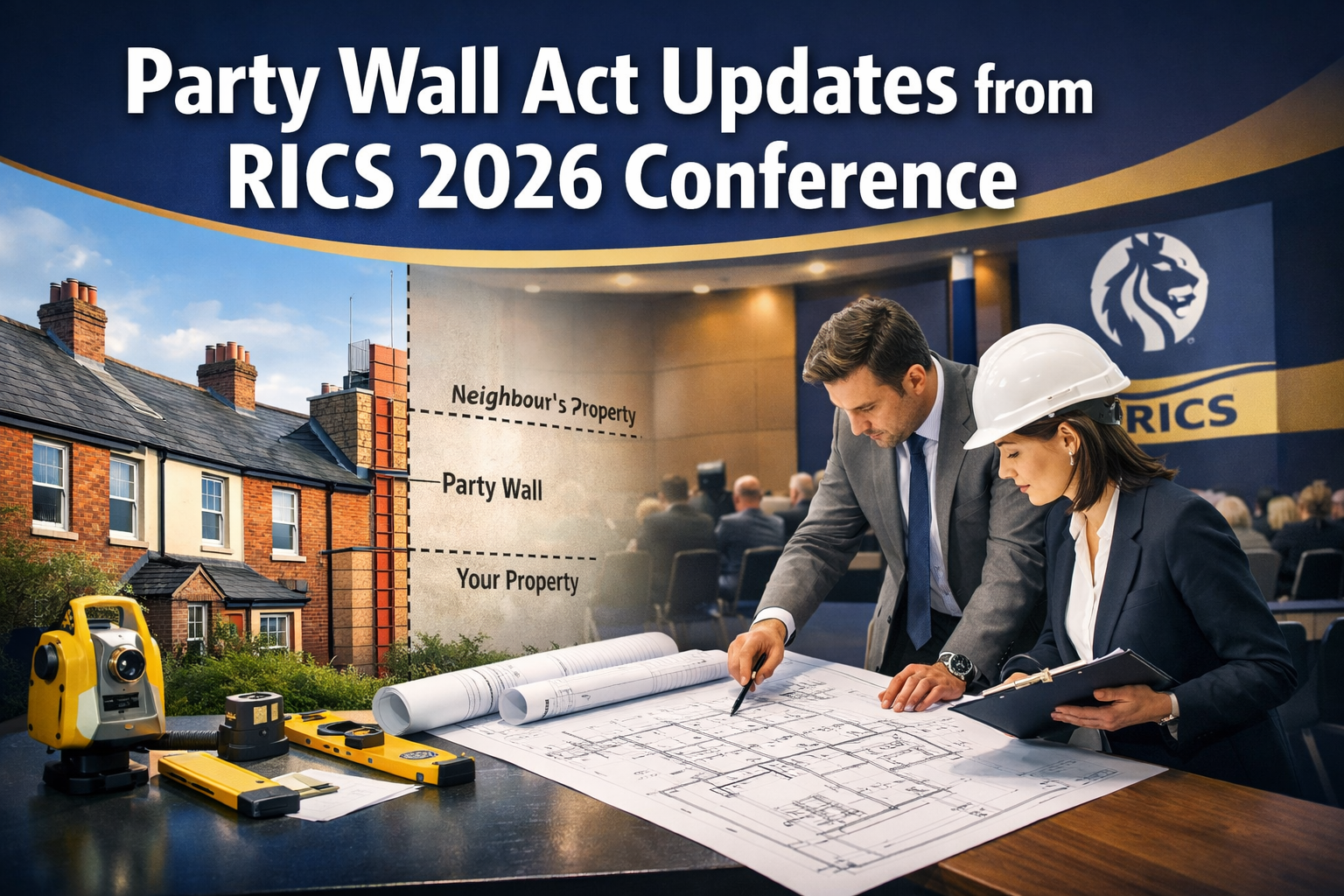
The 2026 RICS Building Surveying Conference delivered groundbreaking insights into party wall legislation, boundary disputes, and neighbourly conflicts that are reshaping professional practice across England and Wales. With expert presentations from leading specialists including Irene Moore and Michael Cooper, the conference provided critical updates on the Party Wall etc. Act 1996 and practical strategies for managing complex property disputes in today's dense built environment. Understanding these Party Wall Act Updates from RICS 2026 Conference: Key Takeaways for Surveyors and Homeowners is essential for anyone involved in property development, renovation, or neighbouring property matters in 2026.
The conference addressed the most pressing challenges facing building surveyors and property owners, from escalating boundary disputes to rights of light conflicts. Through detailed case studies and expert analysis, attendees gained actionable insights into preventing minor disagreements from becoming costly legal battles[1].
Key Takeaways
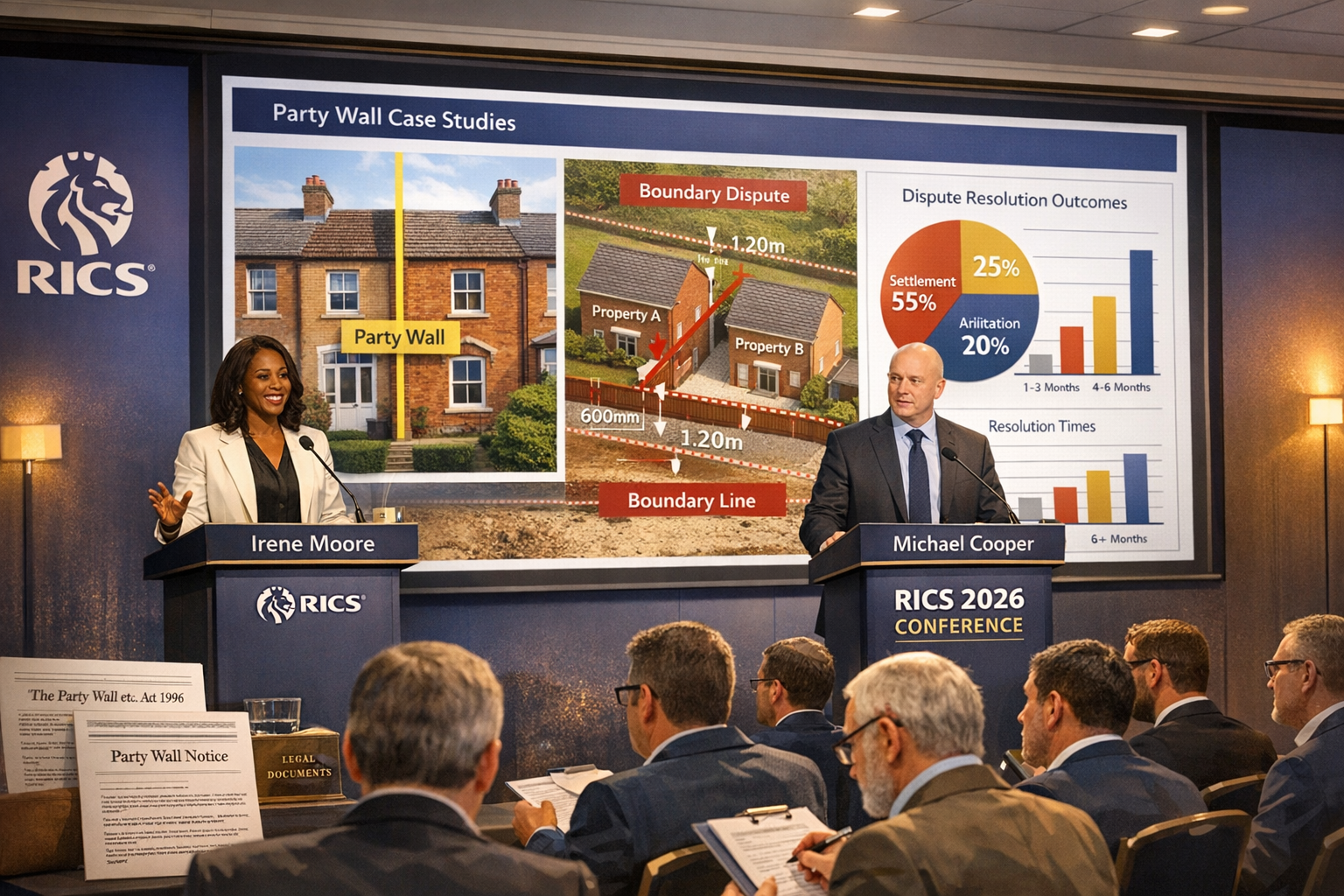
✅ Expert-Led Guidance: Leading specialists Irene Moore (18+ years Party Wall Act experience) and Michael Cooper (co-chair of RICS boundaries panel) shared critical insights from recent case studies[2]
✅ Dispute Prevention Focus: The conference emphasized practical strategies to stop minor conflicts from escalating into expensive legal proceedings[1]
✅ 2026 Compliance Framework: Updated best practices for party wall notices and awards align with current regulatory expectations
✅ Boundary & Access Challenges: New approaches to resolving common disputes over boundaries, access rights, and rights of light in dense urban environments[1]
✅ Case Study Learning: Real-world examples demonstrate successful resolution strategies applicable to both surveyors and homeowners
Understanding the RICS 2026 Conference Context 🏛️
The RICS Building Surveying Conference has established itself as the premier professional development event for building surveyors, property professionals, and construction specialists across the United Kingdom. The 2026 edition focused heavily on practical challenges affecting everyday practice, with party wall matters taking center stage[2].
Why Party Walls Matter More Than Ever
England and Wales's increasingly dense built environment creates ongoing challenges for property owners undertaking renovation, extension, or construction work. The conference highlighted how population density and property values continue to intensify neighbourly disputes, making professional party wall expertise more valuable than ever[1].
The session on party walls, boundaries, and neighbourly disputes represented a collaborative effort between legal and surveying perspectives, offering attendees a comprehensive understanding of both technical and legal dimensions[1].
Conference Expert Credentials
Irene Moore, Partner at Fetto Moore & Co, brought over 18 years of specialist experience in the Party Wall etc. Act 1996 to her presentation. Her close involvement with the recent Fourth Edition of "The Party Wall Act Explained" positioned her as an authoritative voice on legislative interpretation and practical application[2].
Michael Cooper, serving as co-chair of the RICS boundaries and party wall panel, contributed his extensive expertise in party wall legislation and dispute resolution. His leadership role within RICS ensures his insights reflect current professional standards and emerging best practices[2].
Party Wall Act Updates from RICS 2026 Conference: Critical Insights for Professional Practice
The conference delivered several important updates and clarifications that affect how surveyors approach party wall matters in 2026. These insights draw from recent case law, regulatory developments, and evolving professional standards.
Recent Case Studies: Lessons Learned
The joint presentation utilized recent case studies to illustrate key principles and demonstrate effective dispute resolution strategies[1]. While specific case details remain confidential, the conference highlighted several recurring themes:
Common Dispute Triggers:
- Boundary line disagreements between adjacent properties
- Access rights for construction and maintenance work
- Rights of light infringement claims
- Structural damage allegations during building works
- Inadequate or missing Schedule of Condition documentation
Successful Resolution Approaches:
- Early engagement with adjoining owners before formal notices
- Comprehensive photographic and written condition surveys
- Clear communication of proposed works and timelines
- Professional surveyor appointment by both parties
- Mediation before litigation wherever possible
Best Practice Frameworks for 2026
The conference emphasized updated best practices that reflect current regulatory expectations and professional standards. For building owners planning construction work, these frameworks provide essential guidance:
| Best Practice Area | 2026 Recommendations | Impact |
|---|---|---|
| Notice Timing | Serve notices well ahead of statutory minimums | Reduces disputes, allows proper planning |
| Documentation | Comprehensive condition surveys with photos/video | Protects all parties from false claims |
| Communication | Regular updates to adjoining owners during works | Maintains positive relationships |
| Surveyor Selection | Choose RICS-qualified specialists with proven experience | Ensures professional, compliant awards |
| Dispute Resolution | Engage mediation before legal proceedings | Saves time, money, and relationships |
Access Rights and Boundary Disputes
The conference dedicated significant attention to access disputes, which remain among the most contentious party wall issues. The Access to Neighbouring Land Act 1992 works alongside the Party Wall etc. Act 1996, but many property owners and even some surveyors misunderstand the interaction between these statutes[1].
Key Access Principles Highlighted:
🔑 Reasonable Access: Building owners may require access to neighbouring property to execute party wall works, but must provide adequate notice and minimize disruption
🔑 Compensation Considerations: Adjoining owners may be entitled to compensation for inconvenience, though this doesn't automatically apply in all circumstances
🔑 Documentation Requirements: Formal access agreements should specify timing, duration, and any protective measures required
Understanding boundary wall rules and the difference between party fence walls and boundary walls proves essential for resolving these disputes effectively.
Rights of Light: Emerging Challenges
Rights of light disputes continue to increase, particularly in urban areas where property development intensifies. The conference explored how surveyors can assess potential infringement and negotiate solutions before conflicts escalate[1].
Modern assessment tools, including digital modeling and light measurement technologies, provide more accurate evaluations than traditional methods. However, the legal framework remains complex, requiring collaboration between surveyors and legal specialists.
Party Wall Act Updates from RICS 2026 Conference: Practical Guidance for Homeowners
While the conference primarily targeted professional surveyors, the insights delivered have direct implications for homeowners undertaking building work or responding to neighbours' construction projects.
When to Engage a Party Wall Surveyor
Many homeowners wonder whether they truly need professional surveyor involvement or can have a party wall agreement without a surveyor. The conference reinforced that professional involvement significantly reduces dispute risk and ensures legal compliance.
Situations Requiring Surveyor Engagement:
✔️ Building new walls on or astride the boundary line
✔️ Cutting into party walls for beam insertion or structural alterations
✔️ Excavating within three or six meters of neighbouring foundations
✔️ Demolishing and rebuilding party walls
✔️ Any work covered under the types of party wall works
Understanding Your Rights and Responsibilities
The conference emphasized that both building owners and adjoining owners have clearly defined rights and responsibilities under the Party Wall etc. Act 1996. Understanding these prevents misunderstandings and facilitates smoother processes.
Building Owner Responsibilities:
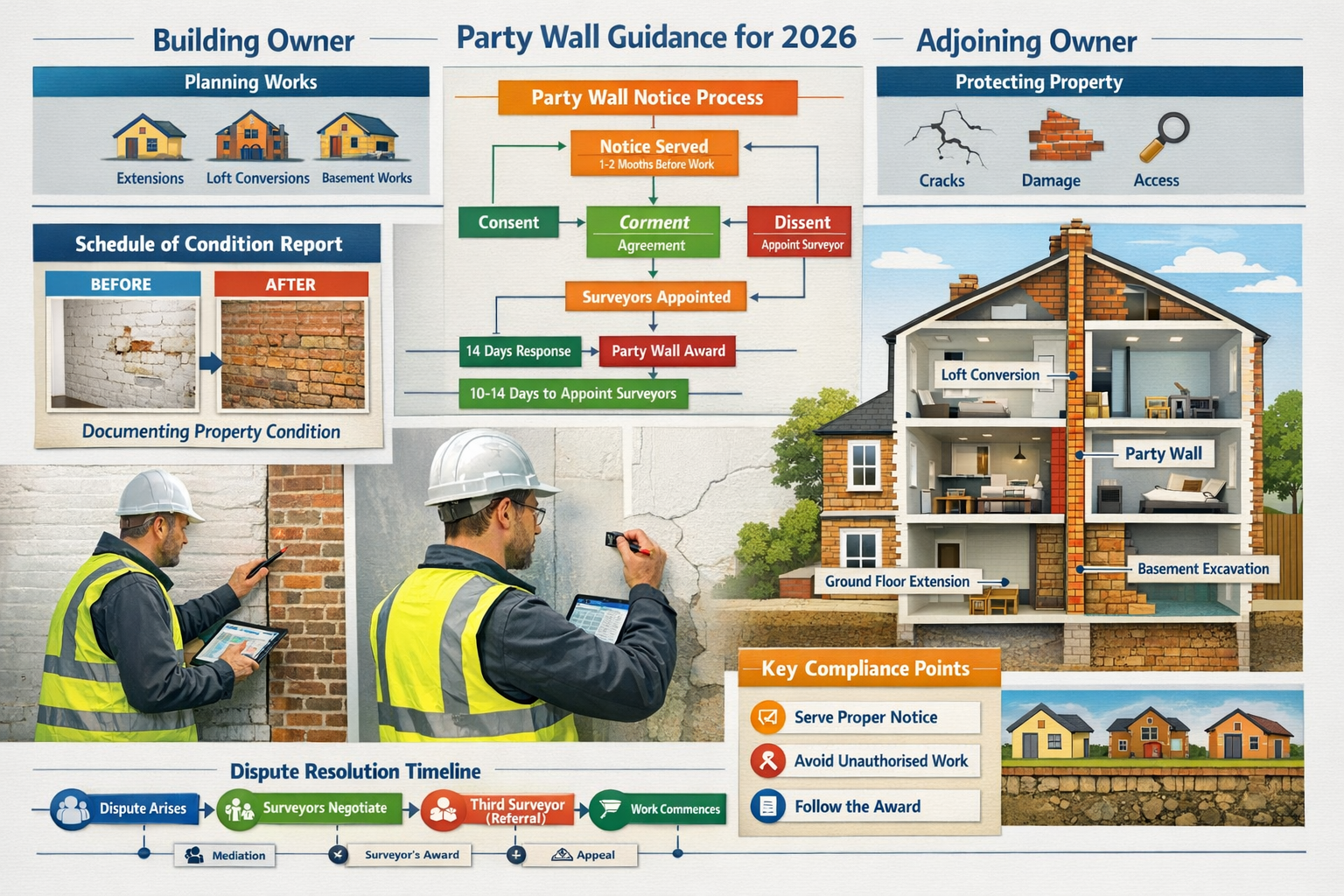
- Serve Proper Notices: Use correct notice forms with adequate detail about proposed works
- Allow Response Time: Provide statutory notice periods (typically one or two months depending on work type)
- Appoint Qualified Surveyors: Engage building owners' surveyors with appropriate qualifications
- Bear Costs: Pay for party wall procedures including both surveyors' fees in most cases
- Execute Works Properly: Follow the party wall award conditions precisely
Adjoining Owner Rights:
- Receive Proper Notice: Expect clear, timely notification of proposed works
- Appoint Own Surveyor: Choose an adjoining owners' surveyor or agree to use the same surveyor
- Request Condition Surveys: Insist on comprehensive pre-work documentation
- Raise Concerns: Communicate legitimate worries about proposed works
- Expect Compensation: Receive payment for any damage or loss caused by works
Cost Management Strategies
One of homeowners' primary concerns involves controlling party wall procedure costs. The conference addressed this through practical cost management strategies that don't compromise legal compliance.
Effective Cost Control Measures:
💰 Early Planning: Start the party wall process well before construction deadlines to avoid rushed, expensive solutions
💰 Clear Scope Definition: Provide detailed information about proposed works to minimize surveyor investigation time
💰 Agree Single Surveyor: When possible, agree with neighbours to appoint one surveyor acting for both parties (the "Agreed Surveyor" approach)
💰 Efficient Communication: Respond promptly to surveyor requests to prevent delays and additional fees
💰 Realistic Expectations: Understand that proper party wall procedures represent necessary investment, not optional expense
For additional guidance, homeowners can review strategies on how to keep party wall costs down while maintaining compliance.
Regional Considerations Across London
The conference acknowledged that party wall matters vary across different London regions, with property types, construction density, and local building practices creating unique challenges.
Regional Party Wall Characteristics:
- Central London: High-value properties, complex basement excavations, rights of light disputes
- West London: Victorian terraces, loft conversions, rear extensions
- South London: Mixed property types, boundary disputes, garden wall issues
- North London: Semi-detached properties, side extensions, garage conversions
- East London: Regeneration areas, new build developments, complex party wall scenarios
Party Wall Act Updates from RICS 2026 Conference: Implementation Strategies for 2026
Translating conference insights into practical action requires structured implementation strategies for both surveyors and homeowners.
For Professional Surveyors
The conference provided surveyors with actionable frameworks for enhancing their party wall practice in 2026:
Professional Development Priorities:
📚 Continuous Learning: Stay current with case law developments and regulatory changes through RICS resources and specialized training[3]
📚 Documentation Excellence: Develop comprehensive templates for notices, awards, and condition surveys that exceed minimum requirements
📚 Client Education: Invest time in explaining party wall procedures to clients, preventing misunderstandings and managing expectations
📚 Collaborative Approach: Build professional relationships with other surveyors to facilitate efficient dispute resolution
📚 Technology Integration: Adopt digital tools for condition surveys, communication, and documentation management
For Homeowners Planning Building Work
Homeowners can apply conference insights through systematic preparation and informed decision-making:
Pre-Construction Checklist:
✅ Identify Notifiable Works: Determine whether proposed construction requires party wall notices
✅ Review Boundaries: Confirm property boundaries before planning works near boundary lines
✅ Engage Early: Contact neighbours informally before serving formal notices
✅ Select Surveyor: Research and appoint qualified party wall surveyors with local experience
✅ Budget Appropriately: Include party wall costs in overall project budgets (typically £700-£2,000 for straightforward cases)
✅ Understand Timelines: Factor party wall procedures into construction schedules (minimum 2-3 months)
✅ Prepare Documentation: Gather property deeds, planning permissions, and construction drawings
Understanding what party wall notices are and how to respond helps homeowners navigate the process confidently.
Dispute Prevention Framework
The conference strongly emphasized preventing disputes rather than resolving them after escalation. This proactive approach saves time, money, and neighbourly relationships.
Five-Step Dispute Prevention Strategy:
- Communicate Early: Discuss plans with neighbours before formal processes begin
- Provide Clarity: Explain proposed works clearly, including timelines and potential impacts
- Document Everything: Create comprehensive written and photographic records
- Engage Professionals: Appoint qualified surveyors who prioritize collaborative solutions
- Maintain Dialogue: Keep communication channels open throughout the construction process
Template and Resource Utilization
The conference referenced various templates and resources that streamline party wall procedures. Homeowners and surveyors can access sample party wall agreement templates and party wall contract templates with guidance on awards to ensure proper documentation.
These resources help standardize approaches while allowing customization for specific circumstances.
Conclusion: Moving Forward with Confidence in 2026
The Party Wall Act Updates from RICS 2026 Conference: Key Takeaways for Surveyors and Homeowners provide essential guidance for navigating party wall matters in today's complex property environment. The expert insights from Irene Moore, Michael Cooper, and other leading specialists offer practical frameworks that benefit both professional surveyors and property owners undertaking building work[2].
The conference's emphasis on dispute prevention, comprehensive documentation, and professional collaboration reflects the evolving standards of party wall practice. By understanding recent case studies, best practice frameworks, and implementation strategies, surveyors and homeowners can approach party wall matters with greater confidence and achieve better outcomes[1].
Actionable Next Steps
For Surveyors:
- Review and update party wall procedures against 2026 best practices
- Invest in continuing professional development through RICS training resources[3]
- Strengthen documentation protocols and client communication strategies
- Build collaborative relationships with other party wall specialists
For Homeowners:
- Identify whether planned construction requires party wall procedures
- Engage qualified surveyors early in the planning process
- Communicate proactively with neighbours about proposed works
- Budget appropriately for party wall process costs
- Understand your rights and responsibilities under the Party Wall etc. Act 1996
The insights from the RICS 2026 Conference demonstrate that successful party wall management combines legal knowledge, technical expertise, and interpersonal skills. Whether you're a professional surveyor or a homeowner planning construction work, applying these principles will help you navigate party wall matters effectively while maintaining positive neighbourly relationships.
For those requiring professional assistance, consulting experienced party wall surveyors ensures compliance, protects property interests, and facilitates smooth construction projects. The investment in proper party wall procedures represents essential protection for all parties involved in building work affecting shared structures and boundaries.
References
[1] Rics Building Surveying Conferece 2026 Agenda – https://www.rics.org/content/dam/ricsglobal/documents/event-programmes/RICS-Building-Surveying-Conferece-2026_Agenda.pdf
[2] Rics Building Surveying Conference – https://www.rics.org/training-events/conferences/rics-building-surveying-conference
[3] Party Walls The Fundamentals – https://www.rics.org/training-events/online-training/on-demand/party-walls-the-fundamentals