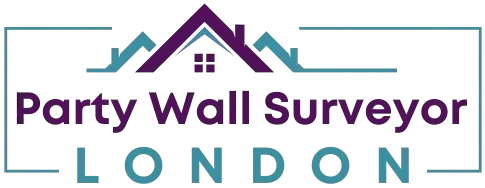


The traditional party wall process—serving notices, negotiating agreements, and resolving disputes—has long been a paper-intensive, time-consuming endeavor that frustrates building owners and surveyors alike. In 2026, artificial intelligence is transforming how professionals approach Using AI in Party Wall Agreements: 2026 Tools for Drafting Notices and Resolving Disputes Efficiently, offering unprecedented speed and accuracy while maintaining legal compliance under the Party Wall etc. Act 1996.
Property owners planning construction work that affects shared walls now have access to AI-powered platforms that can draft compliant notices in minutes, analyze complex agreements for potential issues, and even predict dispute outcomes before they escalate. These technological advances arrive at a critical time, as construction activity surges and regulatory scrutiny intensifies across the legal and built environment sectors.[5]
Key Takeaways
- 🤖 AI tools can reduce party wall notice drafting time by up to 75% while ensuring compliance with statutory requirements under the Party Wall etc. Act 1996
- ⚖️ Automated contract analysis identifies potential dispute triggers before agreements are finalized, preventing costly conflicts between building and adjoining owners
- 📊 Predictive analytics help surveyors forecast resolution timelines and costs with greater accuracy than traditional estimation methods
- 🛡️ Legal guardrails and human oversight remain essential to manage liability risks and maintain professional standards in AI-assisted party wall work
- 💡 Hybrid approaches combining AI efficiency with surveyor expertise deliver the best outcomes for all parties involved in party wall agreements
Understanding AI Applications in Party Wall Agreements
Artificial intelligence has moved beyond experimental status in the construction legal sector. In 2026, AI applications specifically designed for party wall work are becoming mainstream tools that complement traditional surveying practices rather than replacing them entirely.
What AI Can Do for Party Wall Processes
Modern AI platforms offer several capabilities that directly address common pain points in party wall agreements:
Document Generation and Automation 📝
AI systems can automatically populate party wall notice templates based on property data, construction plans, and statutory requirements. These tools extract relevant information from architectural drawings, property records, and previous agreements to generate compliant notices that would traditionally take hours to draft manually.
Contract Review and Redlining 🔍
Advanced natural language processing algorithms can analyze party wall agreements to identify inconsistencies, missing clauses, or provisions that deviate from standard practice. The technology highlights areas requiring attention and suggests alternative language that better protects client interests.
Risk Assessment and Prediction 📈
Machine learning models trained on thousands of historical party wall cases can predict the likelihood of disputes based on specific project characteristics, property types, and neighborhood patterns. This predictive capability helps surveyors advise clients more effectively about potential challenges.
Communication Streamlining 💬
AI-powered chatbots and automated response systems can handle routine inquiries from building owners and adjoining owners, freeing surveyors to focus on complex technical issues requiring professional judgment.
The Legal and Regulatory Context in 2026
The integration of AI into party wall work doesn't occur in a regulatory vacuum. Construction legal experts emphasize that AI deployment must align with evolving compliance frameworks.[5][6]
"The construction industry faces heightened scrutiny around AI implementation, particularly concerning liability when automated systems make recommendations that affect property rights and neighbor relationships." [6]
Key regulatory considerations include:
- Data privacy compliance when AI systems process property information and personal details
- Professional liability insurance coverage for AI-assisted advice and documentation
- Transparency requirements ensuring clients understand when AI tools influence decisions
- Quality assurance protocols maintaining professional standards despite automation
The regulatory landscape continues to evolve, with new AI-specific legislation expected to impact how construction professionals deploy these technologies.[2][3]
AI Tools for Drafting Party Wall Notices in 2026
The notice-serving process represents one of the most time-sensitive and compliance-critical aspects of party wall work. Using AI in Party Wall Agreements: 2026 Tools for Drafting Notices and Resolving Disputes Efficiently has become particularly valuable in this domain.
Automated Notice Generation Systems
Several specialized platforms now offer AI-powered notice drafting specifically calibrated to UK party wall requirements:
| Feature | Traditional Method | AI-Assisted Method |
|---|---|---|
| Initial draft completion | 2-4 hours | 15-30 minutes |
| Statutory compliance checking | Manual review | Automated validation |
| Property data integration | Manual entry | Automatic extraction |
| Template customization | Limited flexibility | Dynamic adaptation |
| Error detection | Post-draft review | Real-time flagging |
These systems integrate with property databases and planning records to auto-populate critical information including:
- Precise property boundaries and party fence wall descriptions
- Accurate addresses for all affected parties
- Specific work descriptions aligned with types of party wall works
- Appropriate notice periods based on work classification
- Statutory language required under the Party Wall etc. Act 1996
Contract Summary and Analysis Tools
Beyond initial drafting, AI excels at analyzing complex agreements and extracting key provisions. For surveyors reviewing party wall awards or existing agreements, AI tools can:
Generate Executive Summaries 📋
Transform lengthy technical documents into concise summaries highlighting critical obligations, timelines, and conditions. This capability proves especially valuable when multiple properties and complex construction sequences are involved.
Identify Non-Standard Clauses ⚠️
Flag provisions that deviate from typical party wall agreement language, drawing attention to potentially problematic terms that require closer scrutiny or renegotiation.
Cross-Reference Regulatory Requirements ✅
Automatically check agreement provisions against current statutory requirements, ensuring compliance with the Party Wall etc. Act 1996 and related regulations.
Track Version Changes 🔄
Maintain clear audit trails showing how agreements evolve through negotiation, making it easier to understand what changed and why.
Redline Comparison and Version Control
When negotiations involve multiple draft iterations, AI-powered redline comparison tools provide clarity that manual review often misses:
- Intelligent change detection that recognizes substantive modifications versus formatting adjustments
- Semantic analysis explaining the practical implications of proposed changes
- Conflict identification highlighting contradictions between different sections
- Suggestion generation offering alternative language that addresses concerns from both parties
These capabilities significantly reduce the time surveyors spend reconciling different versions and help prevent misunderstandings that could trigger disputes later.
Practical Implementation Considerations
While AI tools offer impressive capabilities, successful implementation requires thoughtful integration into existing workflows:
Training and Familiarization 🎓
Surveyors must invest time learning how AI platforms function, understanding their limitations, and developing protocols for quality assurance. The most effective approaches combine AI efficiency with professional expertise.
Client Communication 💼
Building owners and adjoining owners should understand how AI contributes to their party wall process. Transparency about AI usage builds trust and manages expectations appropriately.
Cost-Benefit Analysis 💰
AI platforms typically require subscription fees or per-use charges. Practices should evaluate whether efficiency gains justify these costs, particularly considering how AI might help keep party wall costs down for clients.
Using AI in Party Wall Agreements: 2026 Tools for Resolving Disputes Efficiently
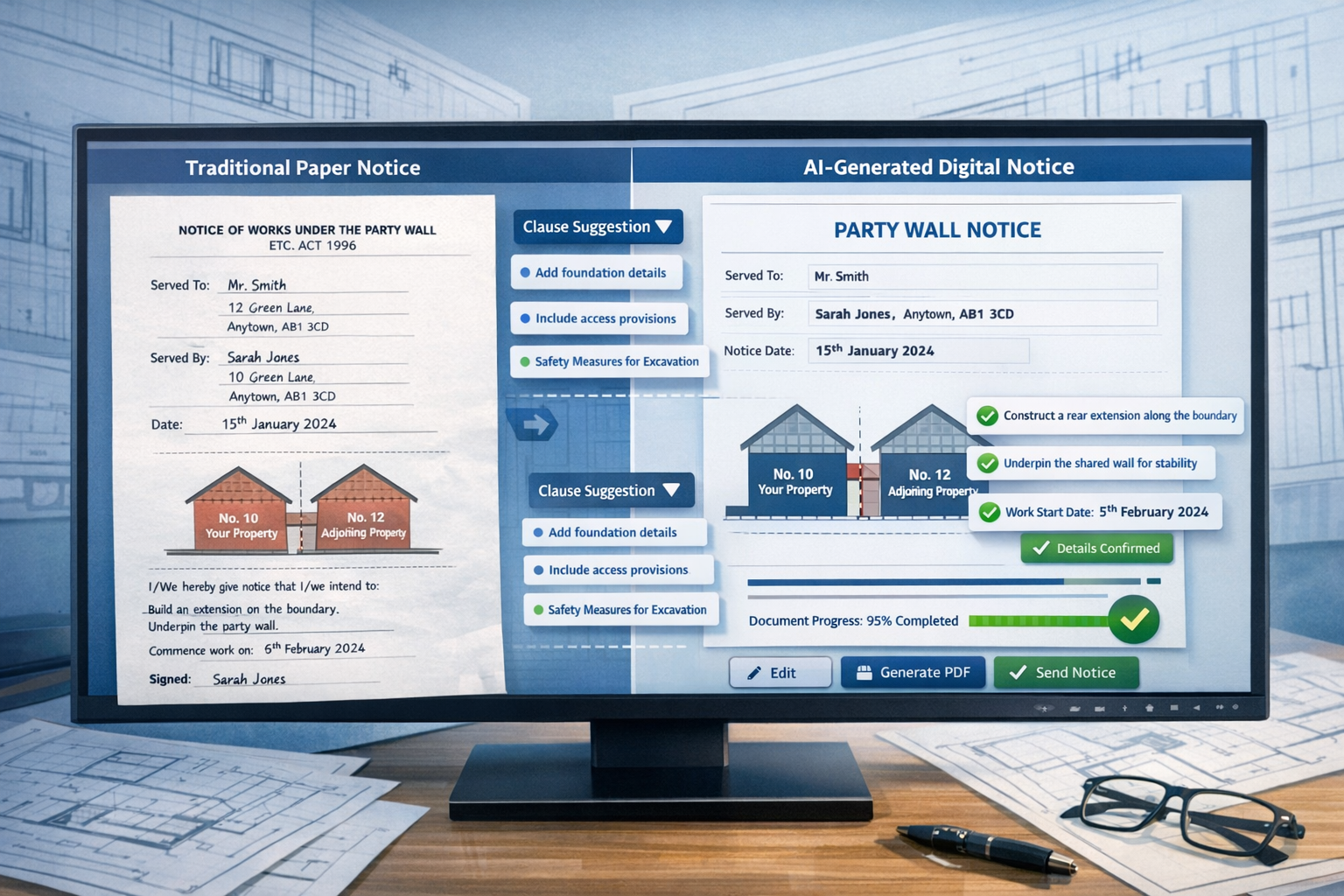
Dispute resolution represents perhaps the most valuable application of AI in party wall work. When disagreements arise between neighbors over proposed construction, AI tools can accelerate resolution while reducing costs and stress for all parties.
Predictive Dispute Analytics
Machine learning models trained on historical party wall disputes can forecast outcomes with remarkable accuracy. These predictive analytics help surveyors and property owners make informed decisions about:
Settlement Probability 🎯
Based on specific dispute characteristics—work type, property values, neighborhood patterns, and parties' stated positions—AI can estimate the likelihood of reaching agreement without formal proceedings.
Timeline Forecasting ⏱️
Predictive models analyze similar historical cases to project realistic timelines for resolution, helping parties plan construction schedules more effectively.
Cost Estimation 💵
AI tools can project likely costs for different resolution paths, enabling more strategic decision-making about whether to compromise or proceed with formal dispute processes.
Outcome Scenarios 📊
Advanced systems generate multiple potential resolution scenarios with probability weightings, helping parties understand the range of possible outcomes and identify mutually acceptable middle ground.
AI-Mediated Negotiation Support
Some platforms now offer AI-assisted mediation tools that facilitate communication between disputing parties:
Neutral Language Suggestions 🤝
AI analyzes communications between parties and suggests rephrasing that reduces confrontational language while maintaining substantive positions. This helps prevent emotional escalation that often derails productive negotiation.
Interest-Based Analysis 🔍
Natural language processing identifies underlying interests and concerns from each party's communications, helping surveyors craft proposals that address core needs rather than stated positions.
Compromise Generation ⚖️
AI systems can propose creative compromise solutions that human negotiators might overlook, drawing on patterns from thousands of successfully resolved disputes.
Communication Timing Optimization 📅
Analytics suggest optimal timing for communications based on response patterns and engagement levels, improving the likelihood of productive dialogue.
Document Comparison for Dispute Resolution
When disputes involve disagreements about what was agreed or what changed, AI-powered document comparison provides clarity:
- Forensic analysis of agreement versions showing exactly when and how specific provisions evolved
- Intent interpretation using semantic analysis to understand what parties likely meant by ambiguous language
- Precedent matching identifying how similar language was interpreted in previous cases
- Consistency checking ensuring proposed resolutions align with other agreement provisions
These capabilities help resolve factual disputes about documentation quickly, allowing parties to focus on substantive disagreements.
Guardrails and Limitations
Construction legal experts emphasize that AI dispute resolution tools require careful oversight to avoid unintended consequences.[5][6]
Human Judgment Remains Essential 👨⚖️
AI can analyze patterns and suggest approaches, but professional surveyors must apply judgment about what recommendations suit specific circumstances. Party wall work involves nuanced neighbor relationships that algorithms cannot fully comprehend.
Liability Considerations ⚠️
When AI tools contribute to dispute resolution strategies that prove unsuccessful, questions arise about professional responsibility. Clear documentation of how AI informed decisions—and where human judgment overrode AI suggestions—becomes critical.[6]
Bias and Fairness ⚖️
Machine learning models reflect patterns in their training data, which may contain historical biases. Surveyors must remain alert to whether AI recommendations systematically favor certain parties or property types.
Confidentiality and Data Security 🔒
Dispute information often involves sensitive details about property conditions, financial situations, and personal relationships. AI platforms must maintain robust security to protect this confidential information.[1]
Integration with Traditional Surveying Practice
The most effective approach to Using AI in Party Wall Agreements: 2026 Tools for Drafting Notices and Resolving Disputes Efficiently combines technological capability with traditional professional expertise:
AI for Analysis, Humans for Decisions 🤖👤
Use AI to rapidly analyze documents, identify issues, and generate options—but rely on experienced surveyors to make final recommendations based on professional judgment and client relationships.
Efficiency Where It Matters ⚡
Deploy AI for time-consuming administrative tasks like document review and data entry, freeing surveyors to focus on relationship management and technical problem-solving that requires human insight.
Transparency with Clients 💡
Clearly communicate how AI contributes to the process while emphasizing that professional surveyors remain responsible for all advice and decisions.
Continuous Learning 📚
Treat AI as an evolving tool requiring ongoing education about capabilities, limitations, and best practices for responsible deployment.
Practical Workflows: Implementing AI in Your Party Wall Practice
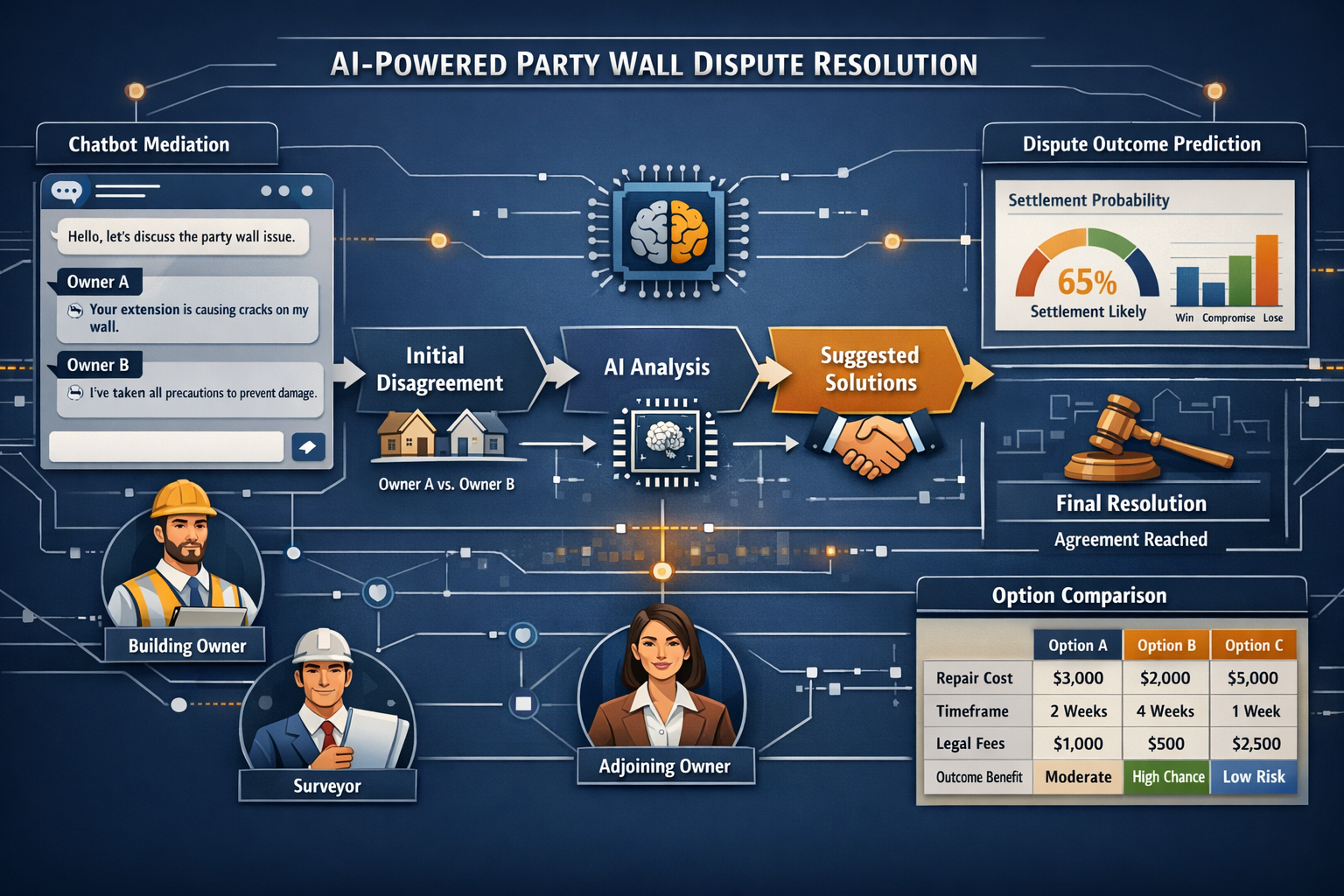
Transitioning from traditional methods to AI-enhanced workflows requires systematic planning and gradual implementation. Here's how forward-thinking surveyors are integrating these technologies in 2026:
Phase 1: Document Automation
Start with low-risk, high-value applications:
- Implement AI-powered notice templates for routine party structure notices
- Use automated compliance checking to verify statutory requirements before serving notices
- Deploy contract summary tools to quickly review incoming agreements from other surveyors
- Establish quality assurance protocols requiring human review of all AI-generated documents
This initial phase builds familiarity with AI capabilities while maintaining rigorous oversight.
Phase 2: Enhanced Analysis
Once comfortable with basic automation, expand to analytical applications:
- Implement redline comparison tools for complex negotiations involving multiple draft iterations
- Use risk assessment algorithms to identify potential dispute triggers early in the process
- Deploy predictive analytics for timeline and cost estimation
- Integrate AI insights into client communications and strategic recommendations
This phase leverages AI's analytical power while maintaining professional judgment about how to apply insights.
Phase 3: Dispute Resolution Support
For practices handling significant dispute work, advanced AI applications offer substantial value:
- Use predictive dispute analytics to inform settlement strategy
- Implement AI-mediated communication tools for complex multi-party negotiations
- Deploy outcome modeling to help clients understand resolution options
- Maintain detailed records of how AI informed decisions for liability protection
Regional Considerations
AI implementation may vary based on practice location and typical project characteristics. Surveyors working in Central London, North London, South London, East London, or West London may encounter different property types, construction patterns, and dispute frequencies that affect which AI tools deliver the greatest value.
Cost Implications and ROI Analysis
Implementing AI tools requires financial investment, but the return can be substantial when properly deployed.
Typical Cost Structure
Software Subscriptions 💳
Most AI platforms use subscription pricing ranging from £50-£500 monthly depending on features and usage volume. Enterprise solutions for larger practices may cost significantly more.
Training Investment 🎓
Initial training requires 10-40 hours of professional time to achieve competency with AI tools. Ongoing education adds 5-10 hours annually.
Integration Costs 🔧
Connecting AI platforms with existing practice management systems may require technical support, typically £500-£2,000 for initial setup.
Efficiency Gains
Practices report significant time savings:
- Notice drafting: 60-75% time reduction
- Contract review: 50-65% time reduction
- Dispute analysis: 40-55% time reduction
- Administrative tasks: 70-80% time reduction
These efficiency gains translate to either increased capacity (handling more cases with existing staff) or improved service quality (dedicating more time to complex issues requiring professional judgment).
Client Value Proposition
AI-enhanced services can justify premium pricing when positioned effectively:
- Faster turnaround on time-sensitive notices and agreements
- More comprehensive analysis identifying risks that manual review might miss
- Data-driven insights about dispute resolution strategy
- Reduced overall costs through efficient process management
Many clients willingly pay for services that deliver superior outcomes, even when AI reduces the surveyor's time investment.
Ethical Considerations and Professional Standards
As AI becomes more prevalent in party wall work, professional bodies and practitioners must address important ethical questions.
Professional Responsibility
Surveyors remain fully responsible for work product regardless of AI involvement. This means:
- Verifying AI-generated content for accuracy and appropriateness
- Maintaining competence to evaluate AI recommendations critically
- Disclosing AI usage when professional standards or client agreements require transparency
- Ensuring AI tools meet professional standards for quality and reliability
Client Consent and Communication
Best practices include:
- Informing clients about AI usage in their matters
- Explaining how AI contributes to service delivery
- Clarifying that professional judgment guides all final decisions
- Addressing concerns about data privacy and confidentiality
Data Privacy and Security
Party wall work involves sensitive information about properties and personal circumstances. AI implementation must include:
- Robust data encryption for information processed by AI systems
- Clear data retention policies aligned with privacy regulations[2]
- Vendor due diligence ensuring AI providers maintain appropriate security standards
- Client data rights allowing individuals to understand and control how their information is used
Future Developments: What's Next for AI in Party Wall Work
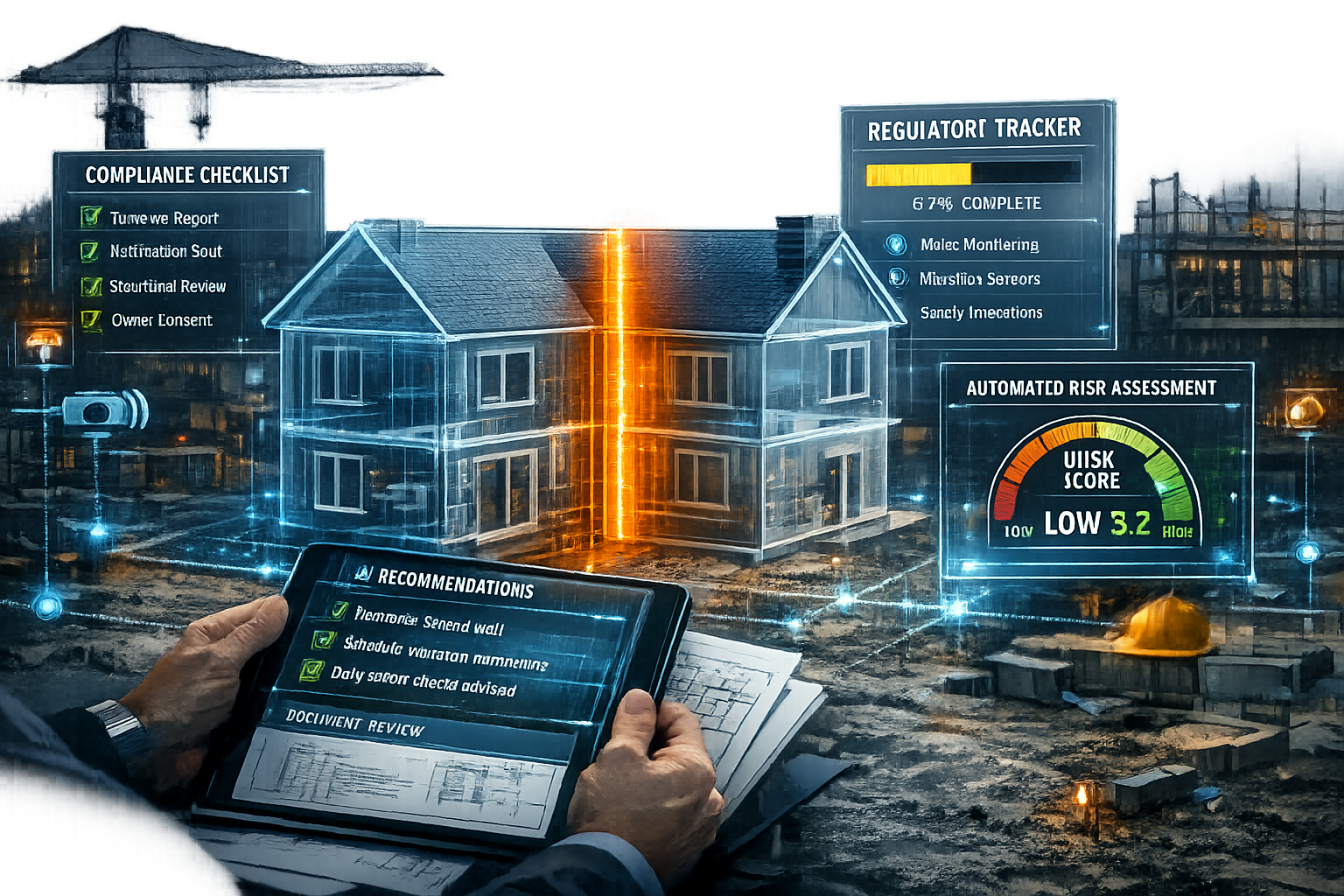
The AI tools available in 2026 represent just the beginning of technological transformation in party wall practice.
Emerging Capabilities
Integrated Property Intelligence 🏘️
Future systems will combine AI analysis with comprehensive property databases, automatically accessing historical records, previous party wall agreements, and construction histories to inform current work.
Augmented Reality Site Assessments 🥽
AI-powered AR tools will overlay property boundary data, party wall locations, and construction impact zones onto real-world views during site inspections.
Automated Monitoring and Compliance 📹
IoT sensors combined with AI analysis will track construction progress and automatically verify compliance with party wall agreement conditions.
Blockchain-Based Agreement Management ⛓️
Distributed ledger technology will create tamper-proof records of party wall agreements, notices, and amendments, reducing disputes about documentation.
Regulatory Evolution
As AI adoption accelerates, expect regulatory frameworks to evolve:[2][3]
- Mandatory disclosure requirements for AI usage in professional services
- Liability standards clarifying responsibility when AI contributes to errors
- Quality benchmarks establishing minimum performance standards for AI tools
- Continuing education requirements ensuring professionals maintain competence with evolving technology
Conclusion: Embracing AI While Maintaining Professional Standards
Using AI in Party Wall Agreements: 2026 Tools for Drafting Notices and Resolving Disputes Efficiently represents a significant advancement for property owners, surveyors, and the construction industry. The technology delivers tangible benefits—faster notice preparation, more thorough contract analysis, and data-driven dispute resolution strategies—that improve outcomes for all parties involved.
However, successful AI implementation requires thoughtful integration that preserves the essential human elements of party wall work: professional judgment, relationship management, and ethical responsibility. The most effective approach combines AI's analytical power and efficiency with surveyors' expertise and client advocacy.
Actionable Next Steps
For surveyors ready to explore AI integration:
- Research available platforms specifically designed for construction legal work and party wall applications
- Start with low-risk applications like document automation and compliance checking
- Establish quality assurance protocols ensuring human oversight of all AI-generated work
- Develop client communication strategies explaining how AI enhances service delivery
- Invest in training to build competence with AI tools and understanding of their limitations
- Monitor regulatory developments affecting AI usage in professional practice
- Join professional discussions about best practices and ethical standards for AI deployment
For property owners planning construction work:
- Ask surveyors about their AI capabilities and how technology might benefit your project
- Understand how AI contributes to notice preparation and agreement analysis
- Ensure human expertise remains central to professional advice and decision-making
- Consider whether AI-enhanced services justify any premium pricing
The future of party wall work will increasingly involve AI collaboration, but the core professional values—competence, integrity, and client service—remain unchanged. By embracing technology thoughtfully while maintaining rigorous professional standards, surveyors can deliver superior outcomes that benefit building owners, adjoining owners, and the broader construction industry.
Whether you're working with a sample party wall agreement template or navigating complex disputes, AI tools offer valuable support. The key is finding the right balance between technological efficiency and human expertise—a balance that will define excellence in party wall practice for years to come.
References
[1] Build Corporate Ai Fortress Walled Gardens 2026 – https://www.baytechconsulting.com/blog/build-corporate-ai-fortress-walled-gardens-2026
[2] 2026 Ai Laws Update Key Regulations And Practical Guidance – https://www.gunder.com/en/news-insights/insights/2026-ai-laws-update-key-regulations-and-practical-guidance
[3] How 2026 Will Reshape Technology And Ai Law – https://founderslegal.com/how-2026-will-reshape-technology-and-ai-law/
[4] Party Wall Surveys For Data Centre Expansions Navigating Agreements In The 2026 Investment Surge – https://nottinghillsurveyors.com/blog/party-wall-surveys-for-data-centre-expansions-navigating-agreements-in-the-2026-investment-surge
[5] constructiondive – https://www.constructiondive.com/news/5-construction-legal-trends-2026/810550/
[6] Ai And Emerging Legal Challenges – https://www.brownejacobson.com/insights/2026-horizon-scanning-in-construction/ai-and-emerging-legal-challenges