


The construction sector is experiencing a remarkable recovery in 2026, with residential extensions and renovation projects surging across England and Wales. However, this growth brings renewed focus on one critical piece of legislation that governs shared property boundaries: the Party Wall Act. As property owners and developers navigate this revitalized market, understanding the 2026 Party Wall Act Updates: Key Changes Impacting Awards and Agreements in Stabilizing Property Markets has become essential for avoiding costly disputes and project delays. Recent amendments address construction recovery challenges while maintaining the protective framework that has governed party wall matters since 1996.
Whether you're planning a loft conversion, basement excavation, or simple boundary wall repair, the implications of these updates directly affect how party wall awards are drafted and agreements secured. This comprehensive guide breaks down the key changes, practical impacts, and actionable strategies for property owners, developers, and construction professionals operating in today's stabilizing property markets.
Key Takeaways
- ⚖️ Statutory notice periods remain unchanged at two months for party wall works and one month for excavation projects, maintaining predictability in project planning timelines
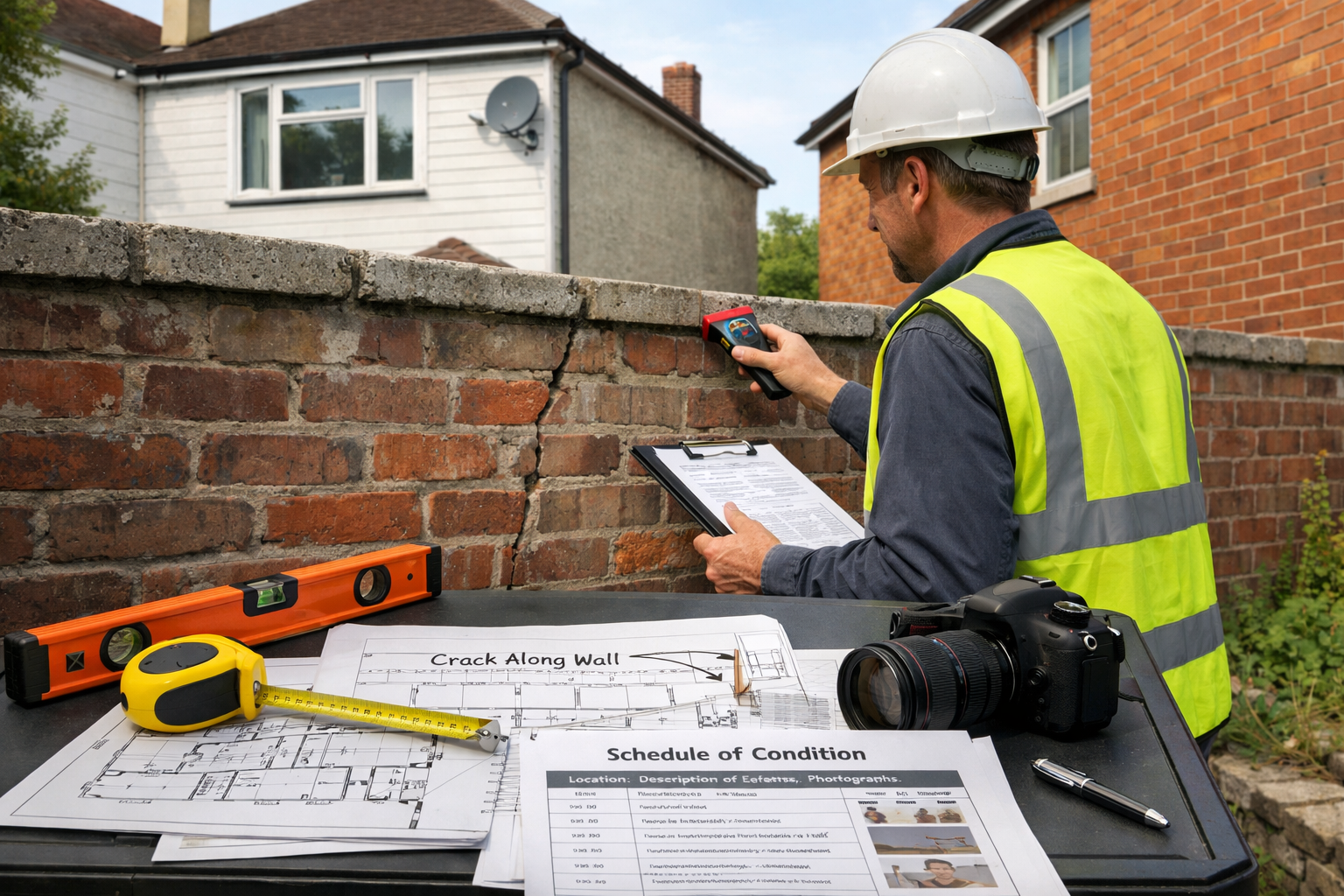
- 📋 Schedule of condition documentation continues as a critical requirement for all party wall agreements, protecting both building and adjoining owners from disputes
- 🏗️ Enhanced clarity on awards provides stronger frameworks for dispute resolution in the context of increased construction activity across residential property markets
- 🌍 Geographic scope unchanged – the Act continues to apply exclusively to England and Wales, with distinct requirements in Scotland and Northern Ireland
- 💼 Professional surveyor engagement remains the gold standard for complex works, ensuring compliance and protecting all parties' interests
Understanding the Party Wall Act Framework in 2026
The Party Wall etc. Act 1996 established the foundational legal framework that governs construction work affecting shared walls, boundaries, and adjacent excavations. Nearly three decades later, this legislation continues to provide the essential structure for managing neighbor relations during building projects.
What Constitutes a Party Wall?
A party wall is a shared structure that stands on the boundary between two properties, owned by different parties. Common examples include:
- Walls separating semi-detached or terraced houses 🏘️
- Walls dividing flats within the same building
- Garden walls built astride the boundary line
- Walls on one owner's land but used by both properties
The Act also covers party structures (such as floors between flats) and party fence walls (boundary walls separating properties). Understanding these distinctions is crucial when determining whether your planned works require formal notices and agreements.
Core Principles That Remain Constant
Despite evolving construction practices and market conditions, several fundamental principles of the Party Wall Act remain unchanged in 2026:
- Mutual protection – The Act balances the building owner's right to develop with the adjoining owner's right to protection from damage
- Formal notification requirements – Written notices must be served before commencing relevant works
- Dispute resolution mechanism – Surveyors appointed under the Act resolve disagreements through binding awards
- Cost allocation – Generally, the building owner bears the costs of works and associated surveyor fees
These principles provide stability and predictability, which are particularly valuable in today's recovering construction market where project certainty directly impacts financing and scheduling decisions.
2026 Party Wall Act Updates: Notice Requirements and Timelines
One of the most frequently asked questions about party wall procedures concerns notice periods. Property owners planning extensions or renovations need clarity on how much advance warning they must provide to neighbors.
Statutory Notice Periods Remain Unchanged
The good news for project planners is that statutory notice periods established under existing legislation continue without modification in 2026. [1] This consistency provides valuable predictability for construction scheduling:
| Type of Work | Required Notice Period | When to Serve |
|---|---|---|
| Building works affecting party walls or boundaries | 2 months | Before work commences |
| Excavation work within 3-6 meters of neighboring structures | 1 month | Before excavation begins |
| New boundary walls on the line of junction | 1 month | Before construction starts |
These timeframes allow adjoining owners sufficient opportunity to review proposed works, seek professional advice, and either consent or dissent to the plans. When serving party wall notices, building owners must include specific details about the proposed works, including drawings, specifications, and the intended start date.
What Happens After Notice is Served?
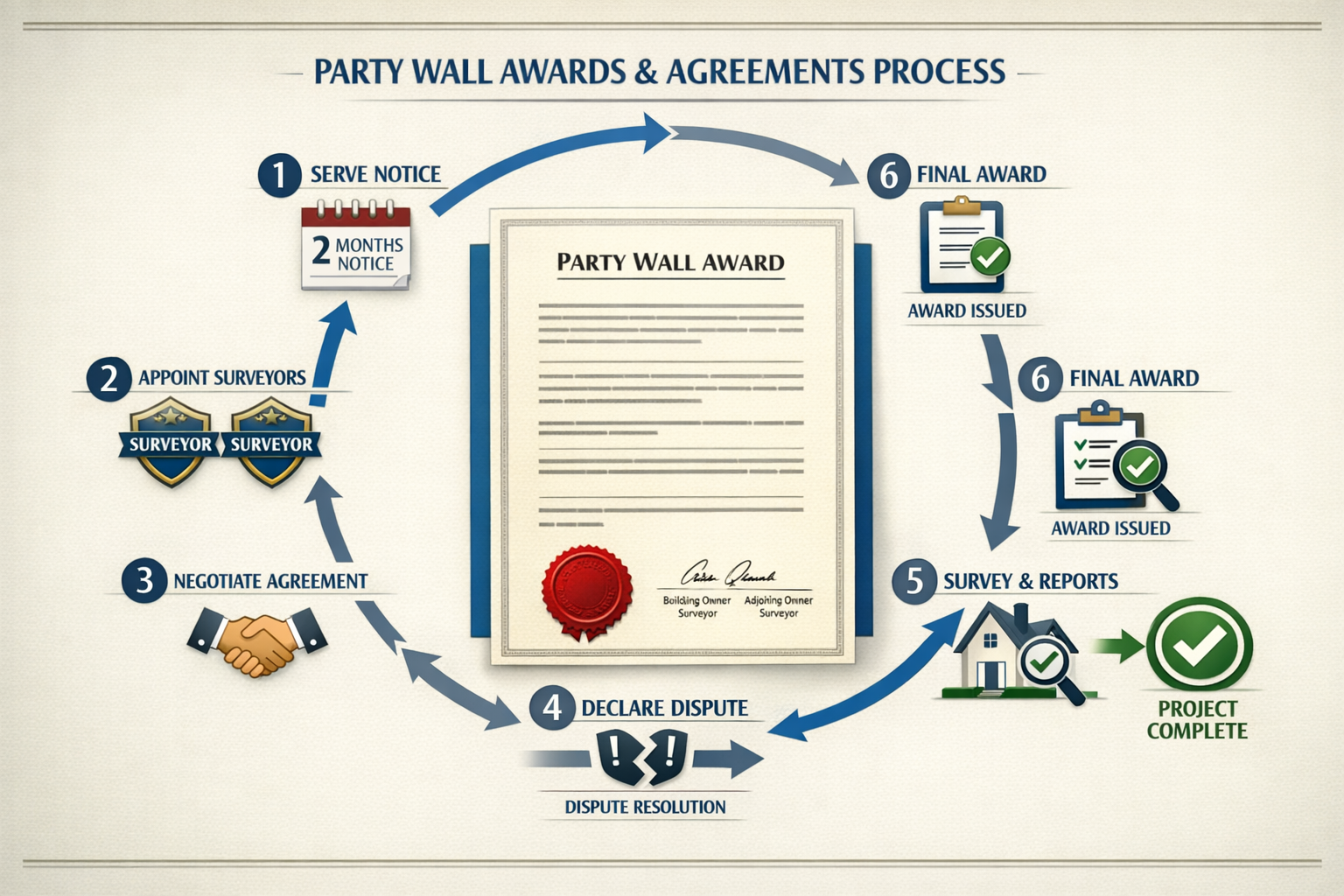
Once a building owner serves a party wall notice, the adjoining owner has 14 days to respond in one of three ways:
- Consent in writing – The simplest outcome, allowing works to proceed without a formal award
- Dissent or fail to respond – Triggers the dispute resolution process requiring surveyor appointments
- Request additional information – Adjoining owners may seek clarification before deciding
It's worth noting that even when neighbors have excellent relationships, many choose to engage surveyors to ensure proper documentation and protection. Having a party wall agreement without a surveyor is possible but carries risks, particularly for complex works.
Enhanced Clarity for Sustainable and Modern Construction
While core notice periods remain stable, 2026 has brought enhanced guidance on how the Act applies to modern construction techniques, particularly sustainable building methods. Party wall notices for eco-friendly extensions now commonly include specific clauses addressing:
- Installation of insulation systems affecting party walls
- Renewable energy infrastructure near boundaries
- Green roof systems adding load to party structures
- Sustainable drainage solutions near adjoining properties [1]
This evolution reflects the construction industry's shift toward environmental responsibility while maintaining the protective framework neighbors depend upon.
Key Changes to Party Wall Awards in 2026
The party wall award is the formal document that sets out the rights and responsibilities of all parties when works proceed under the Act. Understanding recent refinements to how these awards are drafted and enforced is essential for anyone involved in construction projects affecting shared boundaries.
What is a Party Wall Award?
A party wall award is a legally binding document prepared by appointed surveyors (either a single agreed surveyor or two surveyors with a third surveyor available for disputes). The award typically includes:
- Detailed description of the proposed works
- Schedule of condition documenting the adjoining property's pre-work state
- Rights granted to the building owner to carry out works
- Protective measures required during construction
- Access arrangements for inspections and monitoring
- Cost allocation for surveyor fees and any necessary repairs
- Dispute resolution procedures if disagreements arise
The party wall contract template guide on party wall awards provides comprehensive information on standard award structures and clauses.
Strengthened Award Provisions for Market Stability
The 2026 updates have introduced enhanced clarity around several award provisions that directly impact project delivery in today's stabilizing property markets:
1. Schedule of Condition Requirements
Schedule of condition documentation remains not just recommended but critical for all party wall agreements. [2] This photographic and written record of the adjoining property's condition before works commence serves as the baseline for assessing any damage claims.
Recent guidance emphasizes:
- Comprehensive coverage including both internal and external elements
- Professional photography with date stamps and detailed annotations
- Structural assessment noting existing cracks, settlement, or defects
- Digital archiving ensuring long-term accessibility if disputes arise years later
A thorough schedule of condition protects both parties by establishing clear evidence of pre-existing conditions versus construction-related damage.
2. Enhanced Monitoring Provisions
Awards now commonly include more detailed provisions for ongoing monitoring during construction, particularly for substantial projects involving:
- Deep excavations near neighboring foundations
- Structural alterations to load-bearing party walls
- Extended construction timelines spanning multiple seasons
- Works in areas with known ground movement or subsidence risk
These provisions may specify inspection frequencies, reporting requirements, and trigger points for additional protective measures if movement or damage is detected.
3. Clearer Cost Recovery Mechanisms
The 2026 updates provide improved clarity on cost allocation and recovery, addressing common sources of dispute:
- Itemized fee schedules breaking down surveyor costs by activity
- Defined payment timelines establishing when fees become due
- Dispute cost provisions clarifying who bears expenses if disagreements escalate
- Security deposit options allowing adjoining owners to request financial guarantees for high-risk works
This transparency helps all parties budget appropriately and reduces financial surprises during the construction process.
Award Enforcement and Appeals
Party wall awards are legally binding documents, but what happens when parties disagree with an award's terms? The Act provides a structured appeal process:
- 14-day appeal window from the date of award service
- County Court jurisdiction for hearing appeals
- Grounds limited to procedural errors or unreasonable provisions
- Costs considerations where unsuccessful appellants may bear legal expenses
In practice, well-drafted awards prepared by experienced surveyors rarely face successful appeals. The emphasis in 2026 remains on getting awards right the first time through thorough preparation and clear communication.
Securing Party Wall Agreements in Today's Property Market
While party wall awards address disputed matters, many projects proceed smoothly through consensual agreements where neighbors cooperate from the outset. Understanding how to secure these agreements efficiently is valuable for maintaining project momentum.
The Consent Route: Simplest Path Forward
When an adjoining owner receives a party wall notice and agrees to the proposed works, they can provide written consent. This consent route offers several advantages:
✅ Faster project commencement without surveyor appointment delays
✅ Lower costs avoiding surveyor fees (though still recommended for complex works)
✅ Maintained relationships demonstrating neighborly cooperation
✅ Simplified documentation with basic agreement letters rather than formal awards
However, even with consent, building owners should consider obtaining a basic schedule of condition to protect against future claims. A free download sample party wall agreement template can provide a starting framework, though professional review is advisable.
When Formal Awards Remain Necessary
Despite good neighbor relations, certain circumstances make formal party wall awards the prudent choice:
- Complex structural works involving significant alterations to party walls
- High-value properties where potential damage claims could be substantial
- Commercial developments where professional documentation is standard practice
- Multiple adjoining owners requiring coordinated agreements
- Landlord-tenant situations where the adjoining owner may not be the resident
Extensions that involve work on or near shared walls with neighboring properties require formal agreement, as protection mechanisms remain unchanged. [2] This ensures all parties understand their rights and obligations throughout the construction process.
Geographic Considerations for 2026
The Party Wall Act 1996 applies only to England and Wales, with geographic scope unchanged in 2026. [2] Property owners in other regions must follow different procedures:
- Scotland – Separate common law principles govern party walls, with different notice requirements and dispute resolution mechanisms
- Northern Ireland – Distinct legislation applies, though principles are broadly similar
- Cross-border projects – Rare situations involving properties near England-Wales borders require careful legal analysis
For projects in London and surrounding areas, working with experienced local professionals such as a party wall surveyor in Central London, East London, or West London ensures compliance with both national legislation and local construction practices.
Impact on Stabilizing Property Markets
The construction sector's recovery in 2026 has created a dynamic environment where party wall procedures play an increasingly important role in facilitating development while protecting property rights.

Construction Activity Trends Driving Demand
Several market factors are increasing the volume and complexity of party wall matters:
📈 Rising renovation activity – Homeowners investing in extensions rather than moving up the property ladder
🏗️ Urban densification projects – Increased development in areas with closely-spaced properties
💰 Property value growth – Higher stakes making professional party wall management more valuable
🔧 Aging housing stock – Older terraced and semi-detached properties requiring structural work
This activity surge makes understanding the 2026 Party Wall Act Updates: Key Changes Impacting Awards and Agreements in Stabilizing Property Markets essential for anyone involved in property development or ownership.
Risk Management in Development Projects
Professional developers and construction firms increasingly view party wall compliance as a risk management priority rather than merely a legal obligation. Proper procedures deliver tangible benefits:
| Benefit | Impact on Project Success |
|---|---|
| Reduced delays | Projects proceed on schedule without injunction risks |
| Cost certainty | Surveyor fees and protective measures budgeted upfront |
| Damage prevention | Monitoring catches issues before they become expensive |
| Relationship preservation | Professional process maintains neighborhood goodwill |
| Insurance compliance | Proper documentation supports construction insurance claims |
The costs of party wall process are typically modest compared to potential delays or damage claims, making early engagement with qualified surveyors a sound investment.
Implications for Property Transactions
Party wall matters increasingly feature in property conveyancing and due diligence processes:
- Buyers' solicitors routinely inquire about party wall compliance for recent works
- Mortgage lenders may require evidence of proper procedures before advancing funds
- Property valuations can be affected by ongoing party wall disputes or non-compliance
- Seller disclosure obligations require transparency about party wall matters
Property owners who follow proper procedures from the outset protect not just their current projects but also their property's future marketability.
Practical Guidance for Property Owners and Developers
Understanding the theory of party wall legislation is valuable, but practical application determines project success. Here's actionable guidance for navigating the process effectively in 2026.
For Building Owners Planning Works
If you're planning construction that may affect a party wall or boundary, follow this systematic approach:
Step 1: Determine if the Act Applies
Review the types of party wall works to confirm whether your project triggers notice requirements. Common notifiable works include:
- Building on or astride the boundary line
- Cutting into a party wall
- Raising a party wall
- Demolishing and rebuilding a party wall
- Excavating within 3 meters (or 6 meters if deeper than foundations) of a neighboring structure
Step 2: Engage Professional Advice Early
Consult with a qualified party wall surveyor before finalizing project plans. Early engagement allows:
- Design modifications to minimize neighbor impact
- Accurate timeline planning incorporating notice periods
- Budget allocation for surveyor fees and protective measures
- Identification of potential complications requiring additional attention
Step 3: Serve Proper Notices
Prepare and serve compliant party wall notices at least two months before planned commencement (or one month for excavations). Notices must include:
- Your name and address as building owner
- Description of proposed works with drawings
- Intended start date
- Statement of adjoining owner's rights under the Act
Understanding what party wall notices are and how to respond helps ensure your notices meet legal requirements.
Step 4: Respond to Adjoining Owner Decisions
If neighbors consent, document this in writing and consider obtaining a schedule of condition. If they dissent or don't respond, proceed with surveyor appointments according to the Act's procedures.
Step 5: Implement Award Provisions
Once an award is in place, ensure your contractors understand and comply with all protective measures, access requirements, and monitoring provisions. Non-compliance can result in work stoppages and additional costs.
For Adjoining Owners Receiving Notices
If you receive a party wall notice from a neighbor, you have important rights and decisions to make:
Understand Your Options
You can consent to the works, dissent, or request additional information. Don't ignore the notice – silence is treated as dissent, triggering the surveyor appointment process.
Consider Professional Representation
Engaging your own surveyor (or agreeing to a single agreed surveyor) ensures your interests are protected. The building owner typically pays reasonable surveyor fees, so cost shouldn't prevent you from obtaining professional advice. Learn more about adjoining owners' surveyor roles and responsibilities.
Request a Schedule of Condition
Insist on a comprehensive schedule of condition before works commence. This documentation is your primary protection against unfounded damage claims or conversely, your evidence if legitimate damage occurs.
Stay Engaged Throughout
Maintain communication with your surveyor and the building owner throughout the project. Report concerns promptly rather than waiting until damage becomes severe.
Managing Costs Effectively
Party wall procedures involve costs, but strategic approaches can manage expenses:
- Agreed surveyors – Appointing a single surveyor acceptable to both parties typically costs less than separate surveyors
- Proportionate approach – Match surveyor engagement level to project complexity and risk
- Clear communication – Preventing misunderstandings reduces time spent on dispute resolution
- Early resolution – Addressing concerns promptly avoids escalation to formal appeals
For additional strategies, review guidance on how to keep party wall costs down while maintaining proper protections.
Common Questions About 2026 Party Wall Updates
Do I need a party wall agreement for a simple loft conversion?
If your loft conversion involves work on a party wall (common in semi-detached and terraced properties), you'll need to serve party wall notices even if the work seems minor. Cutting into the wall to insert steel beams, for example, definitely triggers the Act. However, internal works that don't affect the party structure may not require notices.
What happens if my neighbor refuses to cooperate?
The Act provides a dispute resolution mechanism specifically for this situation. If your neighbor dissents or doesn't respond to your notice, you proceed with appointing surveyors who will prepare an award. This award is legally binding, allowing your works to proceed even without your neighbor's agreement, provided you comply with the award's terms.
Can I start work before the notice period expires?
No. Starting notifiable works before the statutory notice period expires is a breach of the Act and can result in injunctions forcing work stoppage, plus potential liability for costs and damages. Always wait until the notice period has fully elapsed and any required award is in place.
How long does a party wall award remain valid?
Party wall awards typically specify the period during which works must commence (often 12 months). If works don't start within this timeframe, a new notice and potentially a new award may be required. Once works begin, the award remains operative until completion, though extended delays may require review.
What if damage occurs despite following the award?
Awards don't prevent all damage – they establish procedures for addressing it. If damage occurs, notify all parties immediately, document the damage, and follow the award's provisions for remediation. The building owner remains liable for damage caused by their works, even when an award is in place.
Conclusion: Navigating Party Wall Requirements Successfully in 2026
The 2026 Party Wall Act Updates: Key Changes Impacting Awards and Agreements in Stabilizing Property Markets reflect an evolution in how this nearly 30-year-old legislation adapts to contemporary construction practices while maintaining its core protective functions. Although statutory notice periods and fundamental procedures remain unchanged, enhanced clarity around awards, schedules of condition, and modern construction techniques provides valuable guidance for all parties.
As property markets stabilize and construction activity continues its recovery trajectory, understanding and properly implementing party wall procedures has never been more important. Whether you're a homeowner planning a modest extension or a developer managing complex urban projects, the principles remain constant: early engagement, professional advice, thorough documentation, and clear communication form the foundation of successful party wall management.
Your Next Steps
Ready to move forward with your construction project? Take these actions today:
- Assess your project – Determine whether your planned works trigger party wall requirements
- Consult professionals – Engage a qualified party wall surveyor for guidance tailored to your specific situation
- Plan timelines – Incorporate notice periods and award preparation into your project schedule
- Document everything – Maintain comprehensive records of all notices, communications, and agreements
- Communicate proactively – Keep neighbors informed and address concerns before they become disputes
For expert assistance with party wall matters across London and surrounding areas, explore specialized services for building owners and adjoining owners, or contact experienced professionals who understand the nuances of the 2026 updates and their practical implications.
The party wall process, when handled correctly, protects everyone's interests while allowing necessary construction to proceed smoothly. By understanding the current legislative framework and following proper procedures, you can navigate these requirements confidently, maintain positive neighbor relations, and ensure your project's success in today's dynamic property market.
References
[1] Party Wall Notices For Sustainable Home Extensions In 2026 Eco Compliance Clauses – https://nottinghillsurveyors.com/blog/party-wall-notices-for-sustainable-home-extensions-in-2026-eco-compliance-clauses
[2] Party Wall Agreement – https://hoa.org.uk/advice/guides-for-homeowners/i-am-improving/party-wall-agreement/