


The global construction industry generates roughly 1.3 billion tonnes of waste every year, and a significant share of that comes from interior wall installations that are torn down, discarded, and replaced. Against that backdrop, sustainable party wall design — eco-friendly materials and reusable decor solutions — is no longer a niche preference. It is a practical, cost-effective, and legally sound approach that property owners in 2026 are increasingly adopting.
Whether a homeowner is planning a loft extension, a basement conversion, or a straightforward renovation that touches a shared wall, the materials chosen and the design decisions made at the outset determine both the environmental footprint and the long-term performance of that wall. This article explores how to build and finish party walls using modular, reusable, and responsibly sourced materials — without sacrificing premium aesthetics or structural integrity.
Key Takeaways
- Eco-friendly party wall materials such as recycled PET panels, cork, and flax-based coverings can reduce carbon impact by up to 70% compared to conventional alternatives.
- Reusable modular wall systems eliminate millions of pounds of construction waste and can be repurposed across multiple projects.
- Sustainable finishes, including low-VOC and zero-VOC options, protect indoor air quality for occupants on both sides of a shared wall.
- Compliance with the Party Wall etc. Act 1996 remains essential regardless of the materials used — eco-friendly choices do not bypass legal obligations.
- Combining circular design principles with durable, locally sourced materials delivers long-term savings on maintenance, replacement, and disposal costs.
Understanding Party Walls Before Choosing Materials
Before selecting any surface material or decor system, it is important to understand what a party wall actually is and what legal framework governs work on it. A party wall is a shared structure — typically a wall that sits on the boundary between two adjoining properties, or a wall that forms part of one building but is used by a neighbouring building.
In England and Wales, any work that affects a party wall is regulated under the Party Wall etc. Act 1996. This legislation requires building owners to serve formal notice on their neighbours before commencing certain types of work. The type of notice required depends on the nature of the works. For a detailed breakdown of the different categories, the guide on types of party wall works is a useful starting point.
It is worth noting that choosing sustainable or eco-friendly materials does not change these legal obligations. A party wall surveyor will still need to assess the proposed works, and a party wall award may need to be drawn up to protect both parties. What sustainable material choices can do, however, is reduce the overall disruption to adjoining owners by minimising dust, noise, and the volume of waste generated on site.
Why Material Choice Matters for Shared Walls
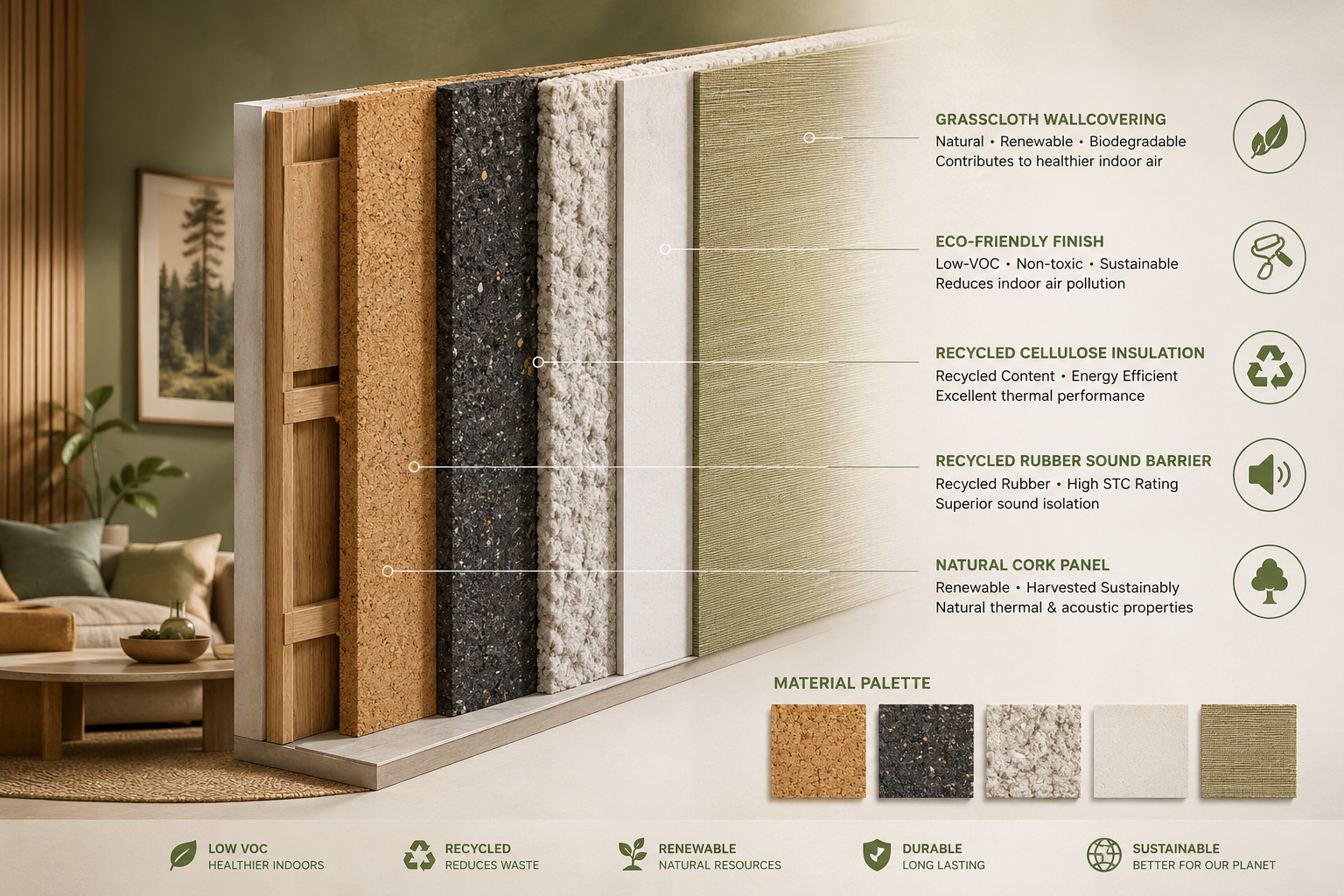
Party walls are unique because they serve two properties simultaneously. Any material applied to or within a party wall must perform well acoustically, thermally, and structurally — and it must do so without causing damage or nuisance to the adjoining owner. Eco-friendly materials, when selected carefully, often outperform conventional alternatives in all three areas.
Recycled rubber panels, for instance, offer superior sound attenuation. Cork provides excellent thermal insulation. Modular systems allow for easy removal and reinstallation, which is particularly valuable when a party wall needs to be accessed for future works. Understanding what a party structure notice involves and how to serve it is an important step before any material installation begins.
Core Eco-Friendly Materials for Sustainable Party Wall Design
Sustainable party wall design — eco-friendly materials and reusable decor solutions — begins with a clear understanding of what is available, how each material performs, and what its environmental credentials look like across its full lifecycle.
Recycled PET and Glass Surfaces
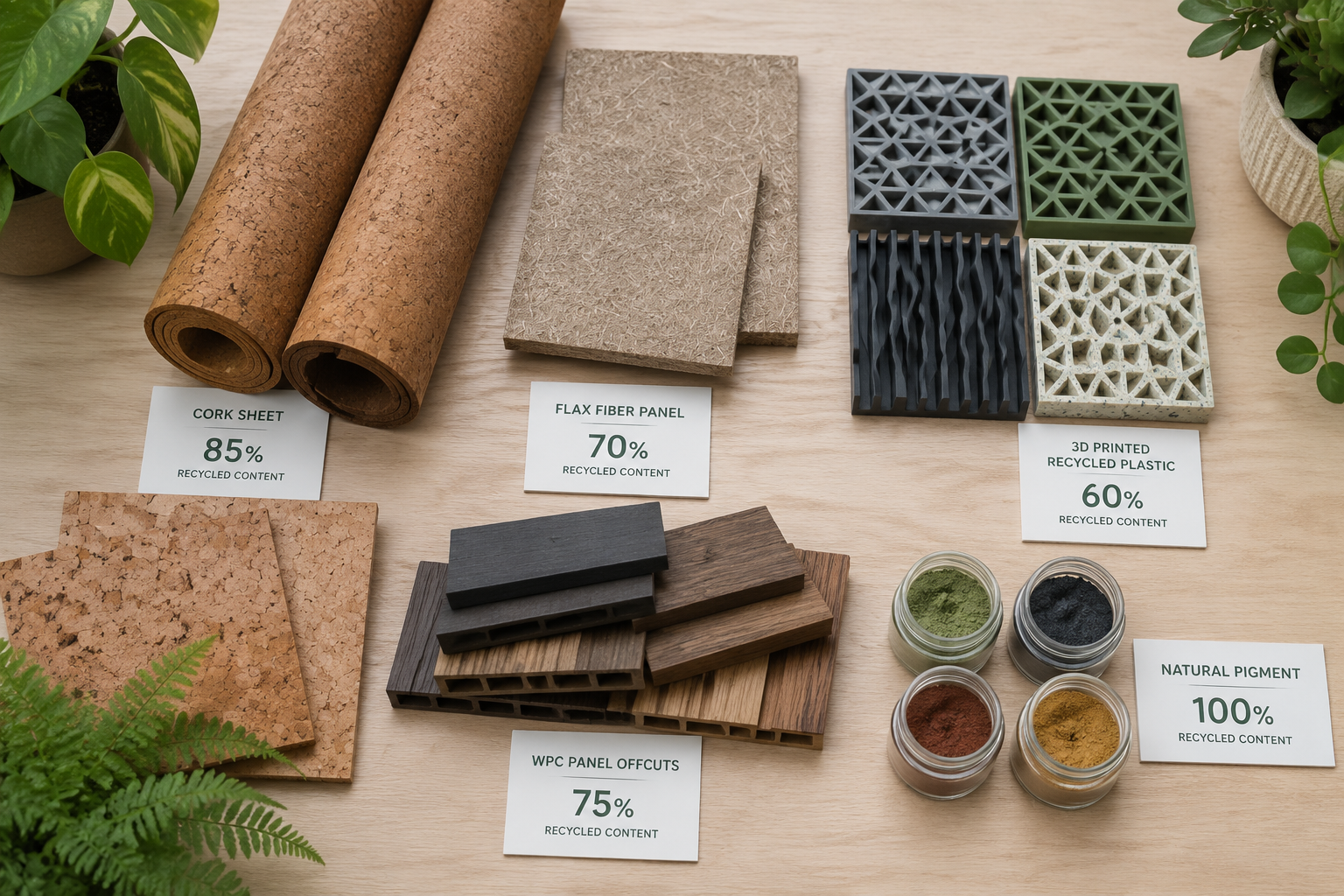
Sustonable produces surfaces made from post-consumer recycled PET bottles and pre-consumer recycled glass. Each square metre of material repurposes 100 PET bottles, and the finished product carries a carbon impact 70% lower than traditional stone. The panels are 99% recyclable at end of life, making them a near-perfect circular economy product. [1]
For party walls that require a premium finish — such as those visible in open-plan living spaces or home offices — these surfaces deliver the aesthetic of natural stone without the associated extraction and transport emissions.
Cork, Grasscloth, and Linen Wallcoverings
A comprehensive ranking of sustainable wallcovering materials identified grasscloth, cork, and linen as the top three options based on renewable sourcing, low VOC emissions, and biodegradability. [6] All three contribute to LEED and WELL building certification credits, which is increasingly relevant for developers and landlords seeking to add measurable sustainability value to their properties.
Cork, in particular, is well suited to party walls because it naturally dampens sound transmission — a common concern for adjoining owners. It is harvested from the bark of cork oak trees without felling the tree, making it a genuinely renewable resource.
Flax-Based Biocomposite Panels
Ekoa offers wall coverings made from rapidly renewable flax fibres and plant-based resins. These biocomposite panels are certified Clean Air GOLD and Red List Free, meaning they contain no harmful chemicals that could off-gas into the living spaces on either side of a shared wall. [9] For properties where indoor air quality is a priority — particularly in homes with young children or occupants with respiratory conditions — flax-based panels represent a compelling choice.
3D-Printed Recycled Plastic Panels
Circdal uses 97% recycled materials to produce customisable 3D-printed wall panels. Their zero-mould, zero-waste manufacturing process transforms discarded plastics into architectural-grade surfaces. Critically, the materials can be reclaimed and reprinted into entirely new forms at end of life, creating a genuinely closed loop. [4]
This approach is particularly relevant for temporary party wall installations — for example, where a wall is being constructed as part of a short-term renovation project and will eventually be removed.
Wood-Plastic Composite (WPC) Panels
WPC panels combine wood fibres with plastic polymers to create a material that is durable, moisture-resistant, and low-maintenance. [8] For party walls in areas prone to damp — basements, ground floors, or walls adjacent to bathrooms — WPC panels offer a sustainable alternative to conventional plasterboard that is far less susceptible to mould and deterioration.
Recycled Rubber Sound Barrier Panels
Eco-Flex's Eco-Wall panels are manufactured from 100% recycled rubber, providing durable, maintenance-free sound attenuation. [7] Given that noise transmission is one of the most common complaints between adjoining property owners, integrating recycled rubber panels into a party wall build delivers both environmental and neighbourly benefits.
Low-VOC and Zero-VOC Finishes
Stonelace Designs specialises in sustainable wall finishes that use post-consumer materials and avoid harmful volatile organic compounds entirely. [3] VOCs from conventional paints and adhesives can linger in interior spaces for years, affecting air quality on both sides of a party wall. Switching to zero-VOC finishes is one of the simplest and most impactful changes a property owner can make.
Reusable and Modular Systems: The Circular Design Approach
The most significant shift in sustainable party wall design — eco-friendly materials and reusable decor solutions — is the move away from single-use construction toward modular, reusable systems that can be adapted, relocated, and reinstalled across multiple projects.
Reusable Temporary Wall Panels
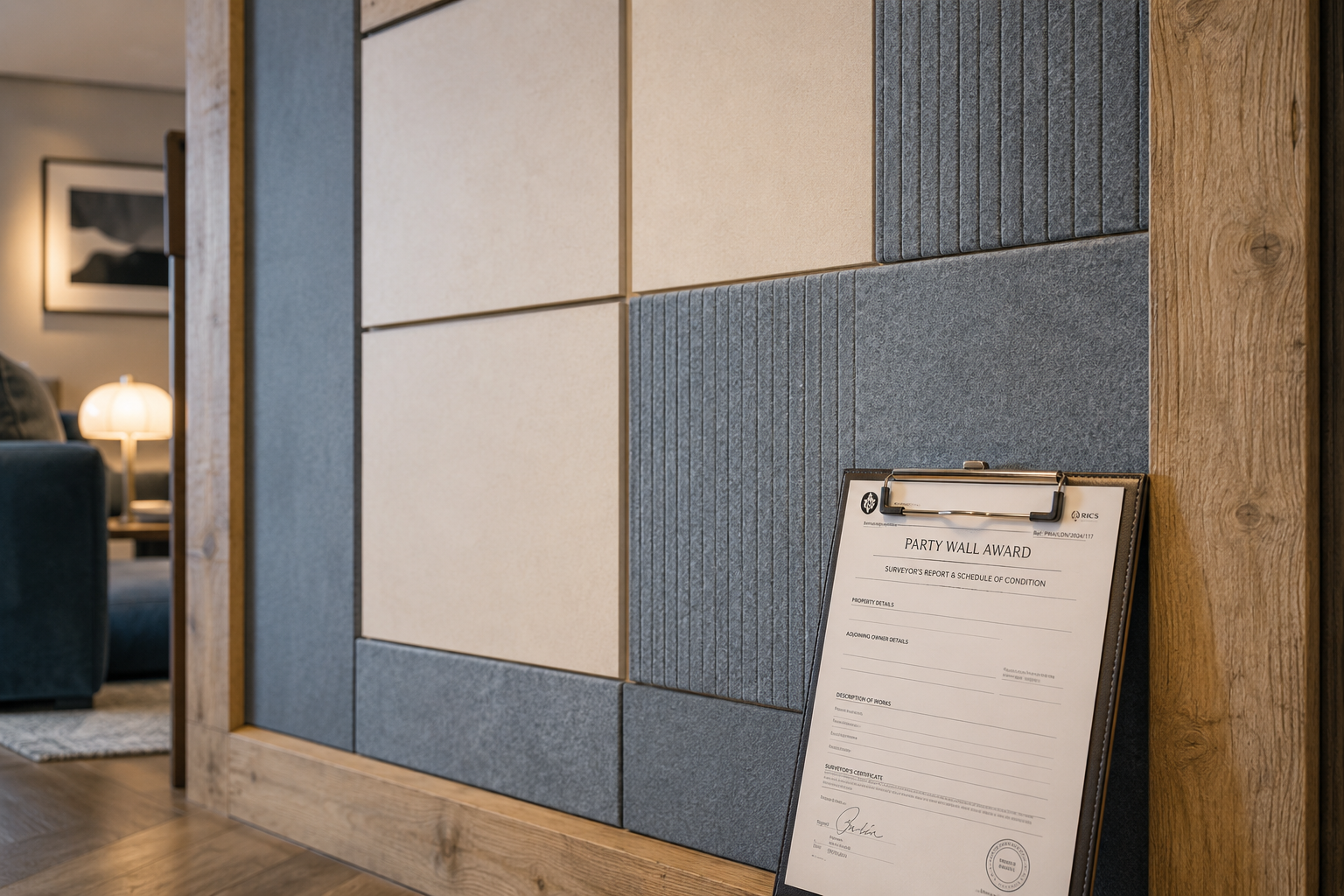
SwiftWall's reusable construction wall panel systems have eliminated approximately 23.9 million pounds of waste from landfills since 2017. Early customers have reused individual panels up to 15 times, representing a dramatic reduction in material consumption compared to traditional drywall. [2]
For party wall projects that involve temporary separation during construction — for example, when one side of a shared wall is being renovated while the other remains occupied — reusable panel systems offer a practical, waste-free alternative to installing and demolishing conventional plasterboard.
Low-Carbon Concrete Alternatives
Sustainable Materials' 'Not' Concrete panels are a high-performance, low-carbon alternative to traditional concrete. These lightweight panels offer durability, fire resistance, and an authentic raw finish. [5] For party walls that require structural mass — particularly in terraced houses or semi-detached properties where sound and thermal performance are critical — low-carbon concrete alternatives deliver the necessary performance without the significant embodied carbon of conventional concrete.
Acoustic Felt Panels from Recycled PET
NF Decor's felt wall panels are made from 60% recycled PET felt, offering superior acoustic performance alongside eco-friendly credentials. [10] These panels are lightweight, customisable in colour and shape, and can be removed and reinstalled without damage — making them ideal for party walls that may need to be accessed for maintenance or future works.
Comparing Key Sustainable Materials
| Material | Recycled Content | VOC Level | Acoustic Performance | Reusability |
|---|---|---|---|---|
| Recycled PET/Glass Panels | High (100 bottles/m2) | Zero | Moderate | High |
| Cork Wallcovering | Renewable | Very Low | High | Moderate |
| Flax Biocomposite | Renewable | Zero | Moderate | Low |
| 3D-Printed Recycled Plastic | 97% Recycled | Low | Moderate | Very High |
| WPC Panels | Mixed | Low | Low | High |
| Recycled Rubber Panels | 100% Recycled | Zero | Very High | High |
| Acoustic PET Felt | 60% Recycled | Zero | Very High | Very High |
Legal Compliance and Sustainability: Working Together
Choosing sustainable materials is only one part of responsible party wall management. Legal compliance under the Party Wall etc. Act 1996 is non-negotiable, and the two considerations must work in parallel.
Before any work begins, the building owner must serve the appropriate party wall notices on all adjoining owners. If the adjoining owner consents, work can proceed. If they dissent or fail to respond, a surveyor must be appointed. Understanding how to keep party wall costs down is valuable here — sustainable material choices that reduce on-site disruption can also reduce the complexity of the surveying process.
A schedule of condition should be prepared before work starts to document the existing state of the adjoining property. This protects both parties and is particularly important when new materials are being introduced that may behave differently from conventional construction materials.
"Sustainable material choices that reduce dust, noise, and waste on site are not just environmentally responsible — they are also a practical way to maintain good relations with adjoining owners throughout a party wall project."
For property owners who are unsure whether their proposed works trigger the Act, the guide on party wall act notices — what they are and how to respond provides clear, accessible guidance.
Practical Steps for Implementing Sustainable Party Wall Design
Translating the principles of sustainable party wall design — eco-friendly materials and reusable decor solutions — into a real project requires a structured approach. The following steps provide a practical framework.
Step 1: Assess the wall's performance requirements. Before selecting materials, identify what the wall needs to achieve. Does it need to block sound? Provide thermal insulation? Resist moisture? The performance requirements will determine which sustainable materials are appropriate.
Step 2: Audit existing materials. If the wall already exists, assess what materials are in place. Can any be retained, repaired, or reused? Demolishing and replacing a functional wall generates unnecessary waste.
Step 3: Source locally where possible. Transporting materials long distances adds embodied carbon that can offset the benefits of using recycled content. Prioritise suppliers with manufacturing facilities in the UK or Europe.
Step 4: Specify modular systems for areas likely to be accessed in future. Party walls sometimes need to be opened up for plumbing, electrical, or structural works. Specifying modular or demountable panels in these areas makes future access far less destructive and wasteful.
Step 5: Serve the correct notices. Regardless of material choices, the legal process must be followed. Use a qualified party wall surveyor to ensure notices are served correctly and that the award — if required — accurately reflects the proposed works and materials.
Step 6: Document material choices in the party wall award. When a party wall award is drawn up, ensure that the agreed sustainable materials and methods are documented. This protects both the building owner and the adjoining owner if disputes arise later.
Step 7: Plan for end-of-life. Before installation, confirm how each material will be disposed of or recycled at the end of its useful life. Prioritise materials with clear take-back schemes or high recyclability rates.
Conclusion
Sustainable party wall design — eco-friendly materials and reusable decor solutions — is a practical and achievable goal for any property owner undertaking work on a shared wall in 2026. The materials are available, the technology is proven, and the environmental case is compelling. Recycled PET panels, cork wallcoverings, flax biocomposites, 3D-printed recycled plastics, and modular reusable systems all offer genuine performance benefits alongside their sustainability credentials.
The key is to approach the project holistically: assess performance requirements first, source materials responsibly, specify modular systems where future access is likely, and ensure full compliance with the Party Wall etc. Act 1996 throughout.
Actionable next steps for property owners:
- Consult a qualified party wall surveyor early to understand legal obligations before any material decisions are finalised.
- Request material data sheets from suppliers that confirm recycled content, VOC levels, and end-of-life recyclability.
- Specify acoustic performance requirements in writing so that sustainable alternatives can be properly evaluated against conventional options.
- Explore modular and reusable panel systems for any temporary or potentially reversible wall installations.
- Document all material choices in the party wall award to create a clear record for both parties.
Building sustainably and building legally are not competing priorities. When approached with care and the right professional support, they reinforce each other — delivering walls that perform better, last longer, and leave a smaller mark on the environment.
References
[1] sustonable – https://www.sustonable.com/?utm_source=openai
[2] Sustainability – https://swiftwall.com/sustainability/?utm_source=openai
[3] stonelacedesigns – https://www.stonelacedesigns.com/?utm_source=openai
[4] circdal – https://www.circdal.com/?utm_source=openai
[5] sustainablematerials – https://www.sustainablematerials.com/?utm_source=openai
[6] Eco Friendly Wallcovering – https://grassclothsupplier.com/guides/eco-friendly-wallcovering.html?utm_source=openai
[7] Eco Wall – https://www.eco-flex.com/eco-wall?utm_source=openai
[8] Wpc Panel – https://jmsdecor.com/wpc-panel/?utm_source=openai
[9] ekoa.design – https://ekoa.design/?utm_source=openai
[10] Felt Wall Panel – https://nfdecor.com/felt-wall-panel/?utm_source=openai