


{"cover":"Professional landscape format (1536×1024) hero image featuring bold text overlay 'GPS and GNSS Enhancements for Party Wall Boundary Precision: Centimeter-Level Accuracy in 2026 Award Documentation' in extra large 72pt white sans-serif font with dark shadow and semi-transparent navy overlay box, positioned in upper third center. Background shows modern surveyor using advanced RTK GPS equipment at urban property boundary between two brick buildings, with visible satellite signals illustrated as glowing lines from sky, digital coordinate display overlay, professional construction documentation scene. Color scheme: deep navy blue, bright white, surveyor orange accents. High contrast, magazine cover quality, editorial style with technical precision aesthetic.","content":["Detailed landscape format (1536×1024) image showing close-up of professional RTK GPS rover equipment mounted on survey pole at brick party wall boundary, with digital display screen showing centimeter-level coordinate readings (52.5234567°N, 0.1234567°W) and accuracy indicator at 0.8cm, base station visible in background transmitting correction signals illustrated as wireless waves, urban London property setting with adjacent buildings, technical blueprint overlay showing boundary line precision, color scheme of metallic silver equipment, bright LED display green, red brick texture, professional surveying aesthetic with data visualization elements","Detailed landscape format (1536×1024) technical diagram illustration showing NAD 83 to NATRF2022 datum shift impact on party wall boundaries, split-screen comparison with left side showing 2025 coordinates and right side showing 2026 shifted coordinates, property boundary lines with measurement annotations indicating 1.5 meter shift, party wall structure in center with before/after GPS positioning overlay, coordinate grids, directional arrows showing datum transformation, color-coded zones (red for old datum, blue for new datum), professional cartographic style with clear labels and measurement callouts, educational infographic aesthetic","Detailed landscape format (1536×1024) image showing professional party wall surveyor reviewing digital tablet displaying GPS-enhanced boundary documentation and award paperwork at construction site, party wall structure visible with precision measurement markers and offset boundary indicators, RTK GPS equipment positioned at property line, legal documentation overlay showing coordinate data and centimeter-level accuracy certifications, neighboring properties visible on both sides, professional consultation scene with technical precision tools, color scheme of construction site realism with digital blue interface elements, documentary photography style with sharp focus on technology integration"}
When two properties share a boundary wall, precision isn't just a technical nicety—it's a legal necessity. GPS and GNSS Enhancements for Party Wall Boundary Precision: Centimeter-Level Accuracy in 2026 Award Documentation represents a fundamental shift in how surveyors establish, verify, and document shared property boundaries. Traditional measurement methods that once achieved accuracy within inches now face competition from satellite-based positioning systems that deliver sub-centimeter precision, transforming the reliability of party wall awards and reducing boundary disputes before they begin.
The stakes are higher than ever in 2026. With urban properties commanding premium values and construction projects pushing boundaries—literally—the difference between a boundary marked at 10.25 meters versus 10.28 meters can mean thousands of pounds in dispute resolution costs. Enhanced GPS and Global Navigation Satellite System (GNSS) technology now enables surveyors to document party wall boundaries with unprecedented accuracy, creating award documentation that stands up to the most rigorous legal scrutiny.
Key Takeaways
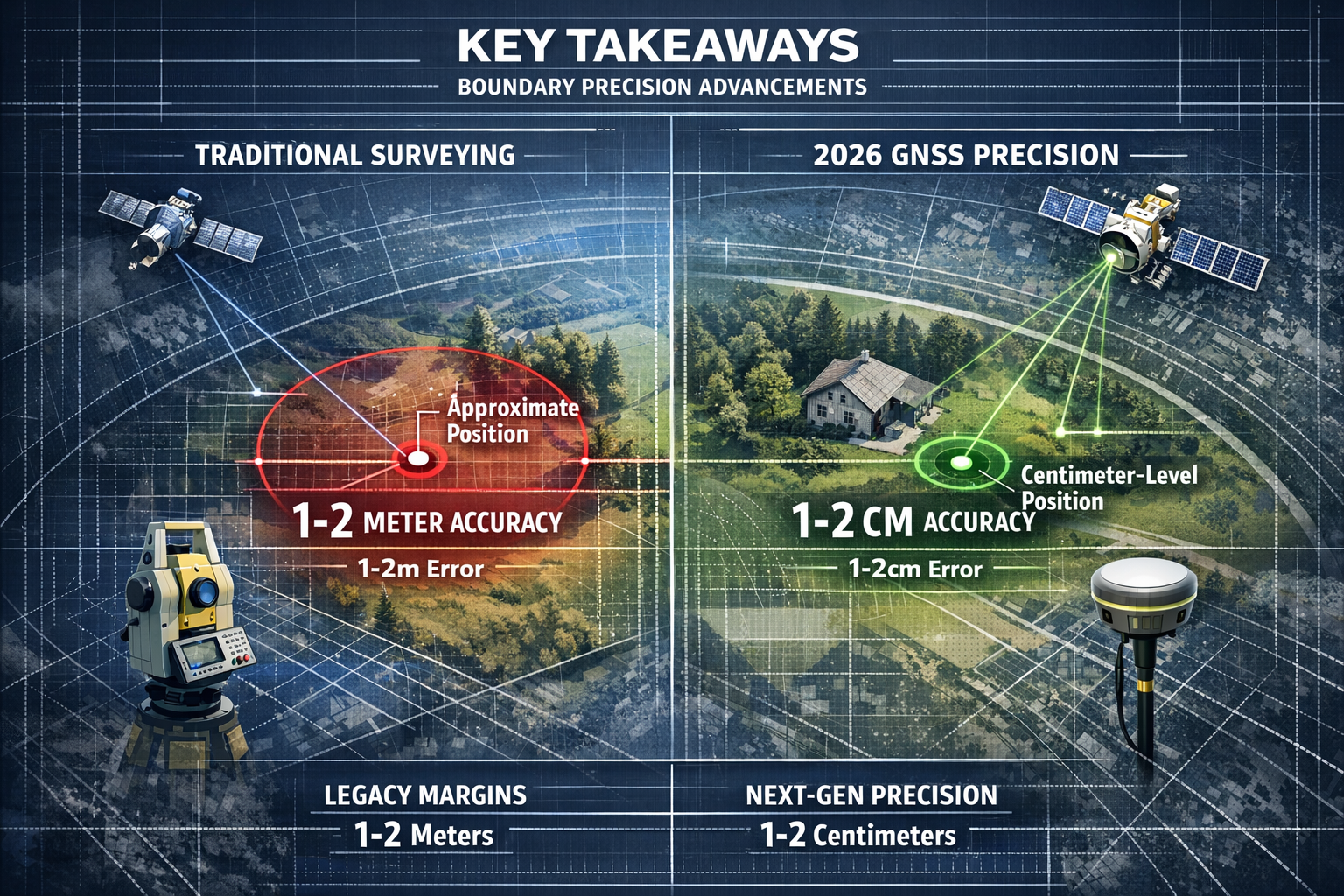
✅ Real-Time Kinematic (RTK) GPS systems achieve centimeter-level accuracy (0.8-2.0 cm) compared to standard GPS accuracy of approximately 3-5 meters, revolutionizing boundary documentation for party wall work.
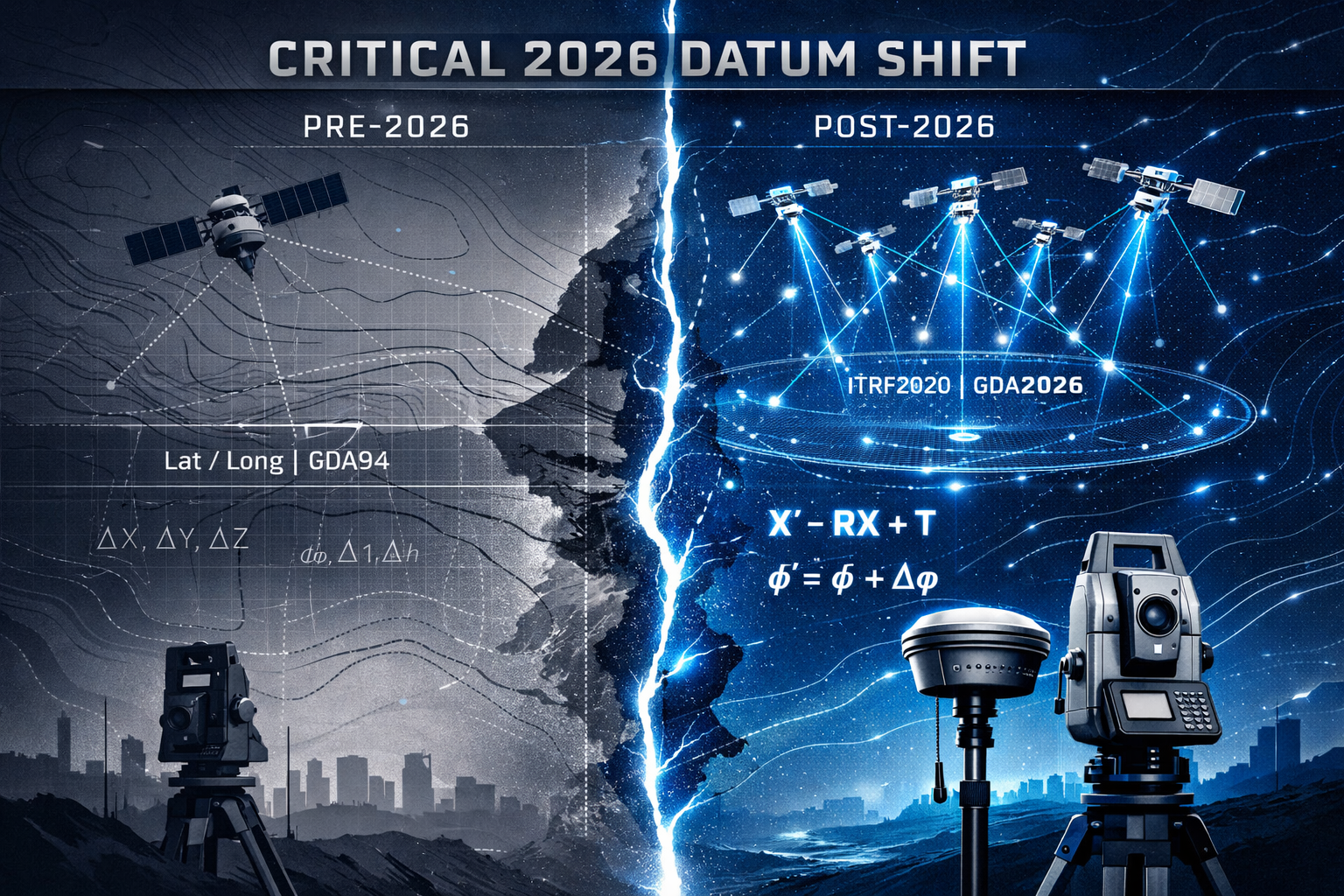
✅ The 2026 datum shift from NAD 83/NAVD 88 to NATRF2022 will cause coordinate shifts of 1-4 meters depending on location, requiring all legacy GPS boundary data to be updated to maintain accuracy.
✅ RTK base station architecture uses fixed reference points with known coordinates to calculate and transmit real-time corrections to mobile receivers, eliminating line-of-sight requirements for boundary establishment.
✅ Enhanced GNSS documentation strengthens party wall awards by providing verifiable, repeatable coordinate data that reduces ambiguity and supports dispute resolution.
✅ Offset boundary capabilities allow surveyors to establish precise fence lines inside property boundaries without manual measurement errors, critical for compliance with boundary wall rules.
Understanding GPS and GNSS Enhancements for Party Wall Boundary Precision
The Evolution from Standard GPS to RTK Precision
Standard GPS technology, while revolutionary for navigation, provides positional accuracy of approximately 3-5 meters (10-16 feet) under optimal conditions[1]. For party wall work where boundaries may be separated by mere centimeters, this level of precision is entirely inadequate. Enter Real-Time Kinematic (RTK) positioning—a game-changing enhancement that achieves accuracy within 0.8-2.0 centimeters horizontally and 1.5-3.0 centimeters vertically[1].
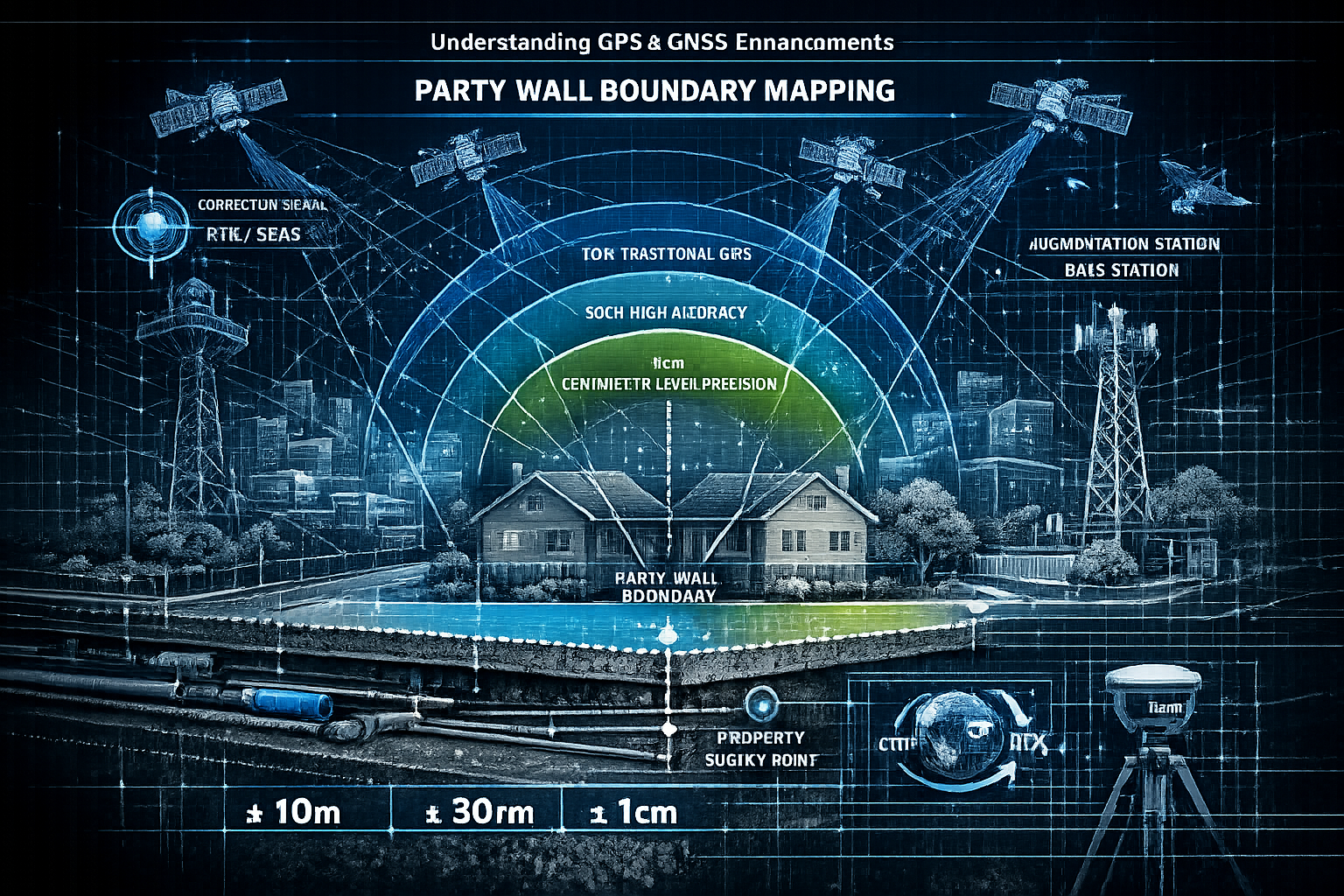
The fundamental difference lies in how RTK systems process satellite signals. While standard GPS receivers calculate position based solely on signals from orbiting satellites, RTK systems employ a dual-receiver architecture:
Base Station Components:
- Fixed receiver at a precisely surveyed location with known coordinates
- Continuous reception and analysis of GPS/GNSS satellite signals
- Real-time calculation of positioning errors caused by atmospheric interference, satellite clock drift, and signal delays
- Transmission of correction data to mobile receivers via radio or internet connection
Rover Components:
- Mobile GPS receiver used at the boundary location
- Reception of both satellite signals and correction data from the base station
- Real-time application of corrections to achieve centimeter-level positioning
- Immediate display of corrected coordinates for documentation
This architecture enables surveyors to establish party wall boundaries with precision previously achievable only through traditional optical surveying methods requiring direct line-of-sight between measurement points[1].
Multi-Constellation GNSS: Beyond GPS Alone
Modern positioning systems don't rely solely on the United States' GPS constellation. GNSS (Global Navigation Satellite Systems) refers to the collective use of multiple satellite positioning systems:
🛰️ GPS (United States) – 31 operational satellites
🛰️ GLONASS (Russia) – 24 operational satellites
🛰️ Galileo (European Union) – 30 operational satellites
🛰️ BeiDou (China) – 35 operational satellites
By receiving signals from multiple constellations simultaneously, modern GNSS receivers achieve several critical advantages for party wall boundary work:
- Increased satellite visibility in urban environments where buildings obstruct portions of the sky
- Improved geometric dilution of precision (GDOP) through better satellite distribution
- Faster position fixing and reduced initialization time at boundary locations
- Enhanced reliability when individual satellites experience signal issues
For surveyors documenting types of party wall works in dense London neighborhoods, multi-constellation GNSS capability can mean the difference between achieving reliable measurements and abandoning GPS methods entirely in favor of traditional techniques.
Centimeter-Level Accuracy Applications in Party Wall Documentation
The practical applications of GPS and GNSS enhancements extend throughout the party wall process:
Boundary Establishment Without Line-of-Sight
Traditional surveying requires visual alignment between measurement points. RTK GPS eliminates this constraint by allowing surveyors to establish precise boundary lines by measuring start and end points, then calculating the exact path between them regardless of terrain obstacles or obstructed visibility[1]. This proves invaluable when documenting boundaries that extend through areas with vegetation, structures, or elevation changes.
Automated Offset Boundary Creation
One of the most powerful features for party wall work is the ability to generate offset lines from established property boundaries[1]. When a fence or structure must be positioned a specific distance inside the legal boundary—a common requirement to avoid encroachment—RTK systems can automatically calculate and mark the offset line with centimeter precision. This eliminates the cumulative errors that occur when manually measuring offsets at multiple points along a boundary.
Repeatable Verification Measurements
GPS coordinates provide an objective, repeatable reference that can be verified by independent surveyors. When preparing party wall awards, this verifiability strengthens the documentation against future disputes. A boundary point recorded as 51.5074° N, 0.1278° W with ±0.8 cm accuracy can be re-measured years later to confirm the original positioning.
The Critical 2026 Datum Shift and Its Impact on GPS Boundary Work
Understanding Geodetic Datums and Coordinate Systems
A geodetic datum is the mathematical model that defines how coordinates relate to physical locations on Earth's surface. All GPS coordinates exist within a specific datum framework, and changing the datum changes the numerical coordinates—even though the physical location remains unchanged.
The 2026 datum transformation represents the most significant change to North American positioning systems in decades. The National Geodetic Survey is replacing two legacy systems[4]:
- NAD 83 (North American Datum of 1983) – horizontal positioning
- NAVD 88 (North American Vertical Datum of 1988) – elevation reference
These are being replaced by NATRF2022 (North American Terrestrial Reference Frame of 2022), a modernized system that accounts for continental plate movement, improved Earth measurements, and integration with global positioning standards[4].
Coordinate Shifts: The 1-4 Meter Problem
Here's where GPS and GNSS enhancements for party wall boundary precision face a critical challenge in 2026: the datum shift will cause coordinate changes of 1-4 meters (3-13 feet) depending on geographic location[4][5].
Consider this real-world scenario adapted from agricultural applications[3][4]:
"A surveyor in Eastern England establishes a party wall boundary using RTK GPS tied to the NAD 83 datum, achieving 0.8 cm accuracy and recording coordinates with confidence. After the 2026 datum shift to NATRF2022, those same coordinates now reference a location 1.8 meters away from the actual physical boundary. If those coordinates are used to guide future construction work, structures could be positioned well beyond the legal boundary line—despite the GPS system reporting centimeter-level accuracy."
The positioning system isn't wrong—it's accurately measuring position within the new datum. But the coordinate values themselves have shifted, creating a disconnect between legacy documentation and current measurements.
Implications for Party Wall Award Documentation
For surveyors preparing party wall contract templates and award documentation in 2026, this datum shift creates several critical considerations:
Legacy Boundary Records Require Updating
Any party wall boundaries previously documented using GPS coordinates in NAD 83 must be transformed to NATRF2022 coordinates. Simply using the old coordinates with new GPS equipment will result in positioning errors of 1-4 meters[4]—far exceeding the precision that RTK systems are capable of achieving.
Datum Specification in Award Documentation
All GPS coordinates included in party wall awards must explicitly state the geodetic datum used. Documentation should specify: "Boundary coordinates referenced to NATRF2022 (2026)" to eliminate ambiguity and ensure future surveyors use the correct reference frame.
Base Station Configuration Updates
RTK base stations must be reconfigured to broadcast corrections in the NATRF2022 datum[5]. Base stations operating with legacy datum settings will transmit corrections that introduce systematic errors into rover measurements, negating the precision advantages of RTK technology.
Verification of Commercial Correction Services
Many surveyors rely on commercial RTK correction services (such as cellular-based RTK networks) rather than maintaining private base stations. These services must update their reference station coordinates and broadcast datum[5]. Surveyors should verify their correction service provider has completed the 2026 datum transition before relying on the data for party wall documentation.
Regional Variation in Datum Shift Magnitude
The coordinate shift magnitude varies significantly by location[4]:
| Region | Approximate Horizontal Shift | Approximate Vertical Shift |
|---|---|---|
| Eastern England | 1.2-1.8 meters | 0.3-0.5 meters |
| Western England | 1.5-2.2 meters | 0.4-0.7 meters |
| Scotland | 1.8-2.5 meters | 0.5-0.9 meters |
| Wales | 1.4-2.0 meters | 0.4-0.6 meters |
Surveyors must obtain location-specific transformation parameters for their service area to accurately convert legacy coordinates. The National Geodetic Survey provides transformation tools, but these must be applied consciously—GPS receivers won't automatically handle the conversion without proper configuration[4].
Implementing GPS and GNSS Enhancements in Party Wall Survey Practice
Equipment Selection for Centimeter-Level Boundary Work
Not all GPS receivers are created equal. Achieving the centimeter-level accuracy required for party wall boundary documentation requires specific equipment capabilities:
Essential RTK GPS Equipment Features:
📡 Multi-constellation GNSS reception – GPS, GLONASS, Galileo, and BeiDou compatibility for maximum satellite availability in urban environments
📡 RTK correction capability – Ability to receive and apply real-time corrections from base stations or network services
📡 Tilt compensation – Advanced receivers include inertial measurement units (IMUs) that maintain accuracy even when the survey pole isn't perfectly vertical, reducing operator error
📡 NATRF2022 datum support – Critical for 2026 and beyond; verify firmware updates support the new datum before purchase
📡 Data logging and export – Ability to record coordinates with timestamps and accuracy metadata for inclusion in party wall award documentation
📡 Cellular connectivity – Enables use of network RTK services, eliminating the need for private base station infrastructure
Establishing RTK Base Stations for Party Wall Projects
For surveyors handling multiple party wall projects within a geographic area, establishing a private RTK base station provides several advantages over commercial correction services:
Base Station Setup Requirements:
-
Known Coordinate Location – The base station must be positioned at a location with precisely surveyed coordinates in the NATRF2022 datum. This typically requires professional surveying to establish the reference point.
-
Stable Mounting – The base receiver must remain stationary during measurements. Permanent installations on building roofs or survey monuments provide optimal stability.
-
Clear Sky View – The base station requires unobstructed satellite visibility across the entire sky hemisphere. Urban environments with tall buildings may limit effective coverage area.
-
Correction Transmission – Base stations broadcast corrections via radio (typically UHF) or internet connection. Radio systems have limited range (5-10 km), while internet-based systems can serve unlimited geographic areas.
-
Power Supply – Continuous operation requires reliable power. Battery backup systems ensure uninterrupted service during power outages.
The base station continuously calculates the difference between its known position and the position calculated from satellite signals, then transmits these corrections to mobile rovers[1]. Rovers apply the corrections in real-time, achieving centimeter-level positioning accuracy.
Integrating GPS Data into Party Wall Awards
When incorporating GPS and GNSS enhancements into party wall award documentation, several best practices ensure the data strengthens rather than complicates the legal record:
Coordinate Documentation Standards:
- Datum specification – Always state "NATRF2022 (2026)" or the applicable datum
- Coordinate format – Use consistent decimal degree format with sufficient precision (e.g., 51.507351° N, 0.127758° W)
- Accuracy metadata – Include the measured accuracy (e.g., "±0.8 cm horizontal, ±1.2 cm vertical")
- Measurement timestamp – Record date and time of boundary measurements
- Equipment identification – Note the GPS receiver model and firmware version used
Supplementary Documentation:
GPS coordinates should supplement, not replace, traditional boundary descriptions. Award documentation should include:
- Written boundary descriptions using physical monuments and features
- Traditional survey measurements (distances and bearings)
- GPS coordinates as verification and future reference
- Site photographs showing boundary markers and GPS equipment in position
This multi-layered approach ensures the award remains interpretable even if GPS technology evolves or datum systems change again in future decades.
Addressing Common GPS Limitations in Urban Party Wall Work
While GPS and GNSS enhancements provide remarkable precision, urban environments present challenges that surveyors must recognize and mitigate:
Signal Obstruction ("Urban Canyon Effect")
Tall buildings can block satellite signals, reducing the number of visible satellites and degrading positioning accuracy. Multi-constellation GNSS receivers partially mitigate this by accessing more satellites, but some locations may still prove unsuitable for GPS methods.
Multipath Interference
Satellite signals reflecting off building facades, windows, and metal structures can create positioning errors. Modern receivers employ sophisticated algorithms to detect and reject multipath signals, but severe multipath environments may still compromise accuracy.
Atmospheric Interference
Ionospheric and tropospheric delays affect satellite signals. RTK correction systems account for these delays, but extreme atmospheric conditions (solar storms, severe weather) can temporarily degrade accuracy.
Practical Mitigation Strategies:
✓ Conduct site reconnaissance to assess satellite visibility before relying on GPS methods
✓ Take multiple measurements at each boundary point and verify consistency
✓ Compare GPS measurements against traditional survey methods for critical boundaries
✓ Document any environmental factors that may affect measurement reliability
✓ Consider hybrid approaches combining GPS with total station measurements in challenging locations
Cost Considerations and ROI for Party Wall Surveyors
Implementing GPS and GNSS enhancements requires upfront investment, but the return on investment can be substantial for active party wall practices:
Equipment Investment:
- Entry-level RTK rover – £3,000-£6,000
- Professional-grade RTK system – £8,000-£15,000
- Base station (if establishing private infrastructure) – £5,000-£10,000
- Annual correction service subscription – £800-£1,500
Time Savings:
Traditional boundary surveys requiring setup of multiple control points, line-of-sight establishment, and manual measurements might consume 3-4 hours for a complex party wall boundary. RTK GPS can reduce this to 45-90 minutes while achieving superior accuracy[1]. For surveyors handling multiple projects monthly, the time savings alone can justify equipment costs within the first year.
Dispute Reduction Value:
The most significant ROI comes from dispute prevention. Boundary ambiguity is a leading cause of party wall disputes that escalate to costly resolution processes. GPS-documented boundaries with centimeter-level accuracy and verifiable coordinates substantially reduce the likelihood of disputes arising from measurement uncertainty.
Training and Competency Development
Effective use of GPS and GNSS enhancements requires specialized knowledge beyond traditional surveying skills:
Essential Training Topics:
- RTK system operation and troubleshooting
- Geodetic datum concepts and coordinate transformations
- GNSS error sources and mitigation strategies
- Data processing and quality control procedures
- Integration of GPS data with traditional survey methods
- Legal and professional standards for GPS-based boundary documentation
Professional organizations and equipment manufacturers offer certification programs specifically for GPS/GNSS surveying. Surveyors should pursue formal training rather than relying solely on equipment manuals, as proper technique significantly impacts measurement reliability.
Legal and Professional Standards for GPS-Enhanced Party Wall Documentation
Regulatory Framework and GPS Boundary Evidence
The Party Wall etc. Act 1996 doesn't prescribe specific measurement technologies, instead requiring that boundaries be accurately established and documented. GPS and GNSS enhancements for party wall boundary precision fit within this framework as a modern measurement methodology, but surveyors must ensure their application meets professional standards.
Professional Standards Considerations:
- RICS (Royal Institution of Chartered Surveyors) guidelines for boundary surveying recognize GPS technology as acceptable when properly applied and documented
- Land Registry requirements for boundary plans may require traditional survey methods to supplement GPS data
- Expert witness testimony in boundary disputes increasingly accepts GPS evidence when accompanied by proper metadata and accuracy documentation
- Professional indemnity insurance may require specific competency documentation for surveyors using GPS methods
GPS Data as Evidence in Party Wall Disputes
When party wall disputes escalate to formal resolution or legal proceedings, GPS-derived boundary data can serve as compelling evidence—if properly documented:
Strengthening GPS Evidence:
- Independent verification – GPS measurements taken by multiple surveyors using different equipment should yield consistent results within the stated accuracy limits
- Comparison with historical records – GPS data should align with existing boundary descriptions, title documents, and physical monuments (accounting for datum transformations if comparing to legacy GPS data)
- Comprehensive metadata – Full documentation of measurement conditions, equipment specifications, and accuracy assessments
- Professional certification – Measurements performed by qualified surveyors following recognized professional standards
Addressing Neighbor Concerns About GPS Technology
Property owners unfamiliar with GPS technology may question its reliability compared to traditional methods. Surveyors should be prepared to explain:
- How RTK GPS achieves accuracy superior to traditional tape measurements
- Why GPS coordinates provide objective, verifiable references that reduce ambiguity
- How the technology complements rather than replaces traditional boundary descriptions
- The professional standards and quality control procedures applied to GPS measurements
Transparency about methodology builds confidence in the documentation and reduces the likelihood of challenges to party wall awards.
Future Developments: Beyond 2026 in GPS and GNSS Technology
Emerging Technologies Enhancing Boundary Precision
The GPS and GNSS landscape continues to evolve rapidly, with several developments on the horizon that will further enhance party wall boundary documentation:
Precise Point Positioning (PPP)
PPP technology achieves centimeter-level accuracy without requiring a local base station by using precise satellite orbit and clock corrections broadcast globally[9]. While current PPP systems require 20-30 minutes of initialization time (unsuitable for rapid boundary work), emerging PPP-RTK systems promise to combine PPP's infrastructure independence with RTK's instant initialization.
Low Earth Orbit (LEO) Satellite Augmentation
New constellations of LEO satellites (orbiting at 500-2,000 km altitude versus GNSS satellites at 20,000+ km) will supplement traditional GNSS signals, improving accuracy and reducing initialization time in challenging environments[9].
Artificial Intelligence Integration
Machine learning algorithms are being developed to automatically detect and compensate for multipath interference, atmospheric anomalies, and equipment errors, potentially improving accuracy and reliability in urban party wall environments.
Integration with Building Information Modeling (BIM)
GPS-documented party wall boundaries can integrate directly with BIM systems, enabling:
- Three-dimensional boundary visualization in relation to proposed construction
- Automated clash detection between design elements and boundary constraints
- Digital documentation workflows linking GPS data directly to party wall notices and awards
- Long-term facility management with precise boundary records
Regulatory Evolution and Standardization
As GPS and GNSS enhancements become standard practice, expect regulatory frameworks to evolve:
- Standardized datum specifications for boundary documentation
- Minimum accuracy requirements for GPS-based boundary surveys
- Certification programs for surveyors using GPS technology in party wall work
- Digital submission standards for GPS data in party wall awards and Land Registry filings
Conclusion: Embracing Precision in Party Wall Practice
GPS and GNSS enhancements for party wall boundary precision represent more than a technological upgrade—they fundamentally transform how surveyors establish, document, and defend shared boundaries. The ability to achieve centimeter-level accuracy through RTK positioning, combined with the verifiability of coordinate-based documentation, provides unprecedented confidence in boundary determinations that form the foundation of party wall awards.
The 2026 datum shift to NATRF2022 marks a critical transition point. Surveyors must actively update their equipment, procedures, and legacy documentation to maintain the precision advantages that GPS technology offers. Those who successfully navigate this transition will deliver party wall services with accuracy and reliability that significantly exceed traditional methods.
Actionable Next Steps for Party Wall Surveyors
For Surveyors New to GPS Technology:
- Assess practice volume – Determine whether GPS investment is justified by your party wall caseload
- Research equipment options – Compare RTK systems with multi-constellation GNSS support and NATRF2022 compatibility
- Pursue formal training – Enroll in GPS/GNSS surveying certification programs before field deployment
- Start with supplementary use – Initially use GPS to verify traditional measurements while building competency
- Develop documentation templates – Create standardized formats for incorporating GPS data into party wall awards
For Surveyors Currently Using GPS:
- Verify datum compatibility – Confirm your equipment and correction services support NATRF2022
- Update legacy records – Transform coordinates in existing documentation from NAD 83 to NATRF2022
- Review professional indemnity coverage – Ensure insurance adequately covers GPS-based boundary work
- Implement quality control procedures – Establish protocols for verifying GPS measurements against independent data
- Stay informed on technology developments – Monitor emerging capabilities that may enhance your practice
For Property Owners and Building Owners:
- Request GPS documentation – When engaging surveyors, ask whether GPS technology will be used for boundary establishment
- Verify datum specifications – Ensure any GPS coordinates in party wall awards specify NATRF2022 (2026) or current datum
- Understand accuracy limitations – Discuss with your surveyor whether site conditions are suitable for GPS methods
- Maintain documentation – Preserve GPS coordinate data from party wall awards for future reference
- Consider GPS verification – For high-value properties or contentious boundaries, independent GPS verification provides additional confidence
The convergence of enhanced GPS technology, the 2026 datum modernization, and increasing urban density creates both challenges and opportunities for party wall practice. Surveyors who embrace these technologies while maintaining rigorous professional standards will deliver documentation that stands as the gold standard for boundary precision—reducing disputes, streamlining party wall processes, and protecting property rights with unprecedented accuracy.
As we move further into 2026 and beyond, GPS and GNSS enhancements will transition from competitive advantage to professional expectation. The question isn't whether to adopt these technologies, but how quickly surveyors can integrate them effectively while navigating the critical datum transition that defines this pivotal year in positioning technology.
References
[1] Using Rtk Gps For Precision Fence Layout – https://rtkgpssurveyequipment.com/using-rtk-gps-for-precision-fence-layout/
[2] Dont End Ditch Update Your Gps Guidance Lines 2026 – https://www.agweb.com/news/business/technology/dont-end-ditch-update-your-gps-guidance-lines-2026
[3] 6763 What You Need To Know About The 2026 Gps Shift – https://www.precisionfarmingdealer.com/articles/6763-what-you-need-to-know-about-the-2026-gps-shift
[4] What You Need Know About 2026 Datum Shift Gps – https://crops.extension.iastate.edu/post/what-you-need-know-about-2026-datum-shift-gps
[5] Gps System Changes 2026 Impact Farmers Ranchers – https://southeastagnet.com/2025/12/05/gps-system-changes-2026-impact-farmers-ranchers/
[9] First Fix Taking A Deeper Dive In 2026 – https://www.gpsworld.com/first-fix-taking-a-deeper-dive-in-2026/