


Over 60% of foundation excavation disputes in England and Wales stem from property owners failing to serve proper Section 6 Notices before digging near party walls. This single oversight can trigger immediate injunctions, halt construction for months, and cost tens of thousands in legal fees and project delays. Understanding Excavating Foundations Near Party Walls: Party Wall Act Compliance and Surveyor Protective Measures for 2026 is no longer optional for building owners—it's essential for project success.
When excavating foundations close to neighbouring properties, the Party Wall Act 1996 imposes strict notification requirements and protective protocols. Whether extending a Victorian terrace or constructing a modern basement conversion, the depth and proximity of your excavation determines your legal obligations. This comprehensive guide examines the Section 6 triggers for deep excavations, surveyor impact assessments, and method statements that safeguard adjoining properties throughout 2026.
Key Takeaways
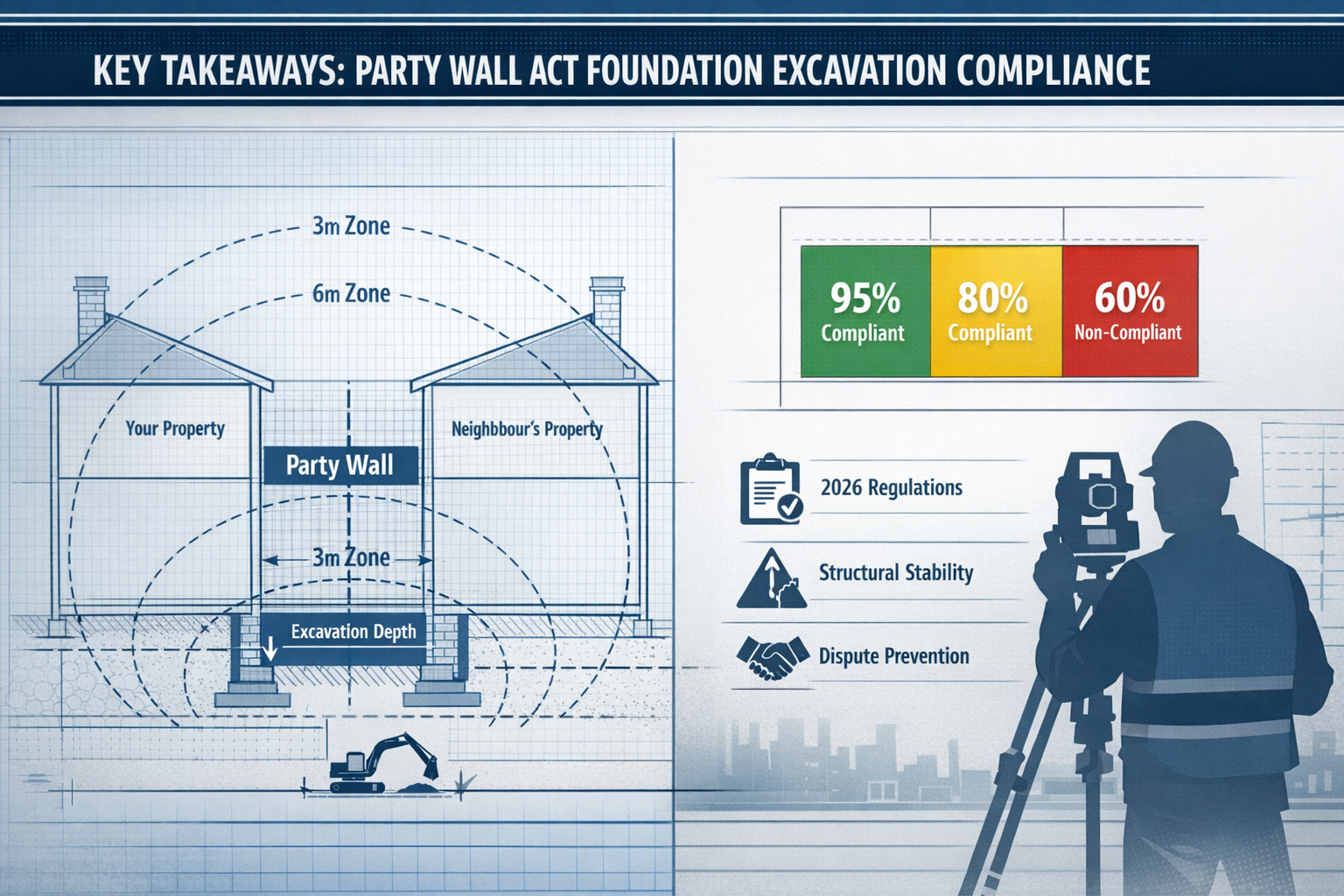
- Section 6 Notices are mandatory when excavating within 3 metres of a neighbour's building if your foundation goes deeper, or within 6 metres for particularly deep excavations
- One-month advance notice is required for foundation work, shorter than the two-month period for general party wall works
- Victorian and 1930s properties typically have shallow 450mm foundations, triggering Section 6 requirements for almost any modern excavation project
- Party Wall Awards specify protective measures including underpinning, excavation sequencing, and monitoring protocols to prevent structural damage
- Non-compliance allows neighbours to seek injunctions that immediately halt construction and escalate project costs significantly
Understanding Section 6: The Foundation Excavation Trigger Rules
The Party Wall etc. Act 1996 establishes specific distance and depth thresholds that determine when foundation excavation requires formal notification. These rules, governed by Section 6 of the Act, apply exclusively to England and Wales—Scotland and Northern Ireland operate under common law principles instead.[3][4]
The 3-Metre Rule Explained
Building owners must serve a Section 6 Notice (Notice of Adjacent Excavation and Construction) when excavating for new foundations within 3 metres of a neighbour's building, provided the new foundation will be deeper than the existing neighbouring foundation.[1] This seemingly straightforward rule becomes complex in practice because foundation depths vary significantly across property ages and construction methods.
Victorian and 1930s properties typically feature shallow strip foundations approximately 450mm deep.[2] This means almost any modern excavation—even for a modest single-storey extension—will exceed this depth and trigger Section 6 requirements. In contrast, properties built after 2010 often have deeper trench fill foundations ranging from 1.2 to 1.5 metres or more.[2] If your excavation matches similar depths, you may avoid Section 6 obligations entirely.
The 6-Metre Rule and Deep Excavations
The 6-metre rule represents the primary concern for basement conversions and deep piling projects.[1] When excavating within 6 metres of a neighbour's property, Section 6 applies if your foundation depth significantly exceeds standard residential depths—typically when creating basements, installing deep piles, or constructing structures requiring substantial foundation support.
This extended distance threshold recognizes that deep excavations can affect soil stability and structural integrity well beyond the immediate 3-metre zone. The rule protects neighbours from subsidence risks, ground movement, and foundation settlement that deep excavations can cause.
Geographic Limitations and Jurisdiction
Property owners must understand that the Party Wall Act 1996 applies only to England and Wales.[3][4] Scottish properties follow common law principles with different notification requirements and dispute resolution procedures. Northern Ireland similarly operates under distinct legal frameworks. Building owners working near borders or managing multi-property portfolios across the UK must verify which jurisdiction governs their specific project location.
Section 6 Notice Requirements and Documentation Standards
Serving a proper Section 6 Notice requires more than simply informing neighbours about upcoming excavation work. The Party Wall Act notices must contain specific technical information and supporting documentation to enable neighbours to assess potential risks accurately.
Mandatory Notice Content
Every Section 6 Notice must specify:[1]
- Proposed depth of foundations with precise measurements
- Intended location of the new structure relative to property boundaries
- Detailed plans and sections showing excavation design and methodology
- Timeline for commencement of excavation works
- Building owner contact information for responses and queries
The notice must be sufficiently detailed to allow the adjoining owner and their surveyor to evaluate whether the proposed excavation poses structural risks. Vague or incomplete notices fail to satisfy legal requirements and can be challenged, delaying projects significantly.
One-Month Notice Period
Foundation excavation work requires a minimum of one month's advance written notice to neighbours.[1][3] This shorter timeframe contrasts with the two-month period required for general party wall works under Sections 1 and 2 of the Act. The reduced notice period reflects the typically shorter duration of excavation work compared to extensive structural alterations.
However, building owners should serve notices earlier when possible. Complex excavations requiring detailed surveyor assessments, protective measures design, or dispute resolution benefit from extended preparation time. Starting the notice process 6-8 weeks before intended excavation provides buffer time for unexpected complications.
Special Foundations and Written Consent
Projects using special foundations—including reinforced concrete, steel pins, or piles—require specific written neighbour consent beyond standard Section 6 notification.[1] These foundation types are frequently necessary for basement conversions and heavy extensions where standard trench fill foundations cannot support structural loads.[1]
The consent requirement exists because special foundations can transmit vibrations, create additional ground disturbance, and pose greater risks to adjoining properties. Building owners must provide comprehensive technical specifications and often commission independent structural assessments to secure neighbour approval. Engaging a party wall surveyor in Central London or other relevant areas early in the design phase helps identify special foundation requirements before finalizing construction plans.
Surveyor Protective Measures and Impact Assessments
Once Section 6 Notices are served, party wall surveyors play a crucial role in assessing excavation risks and designing protective measures. Their technical expertise ensures excavation proceeds safely without compromising adjoining property structural integrity.
Pre-Excavation Condition Surveys
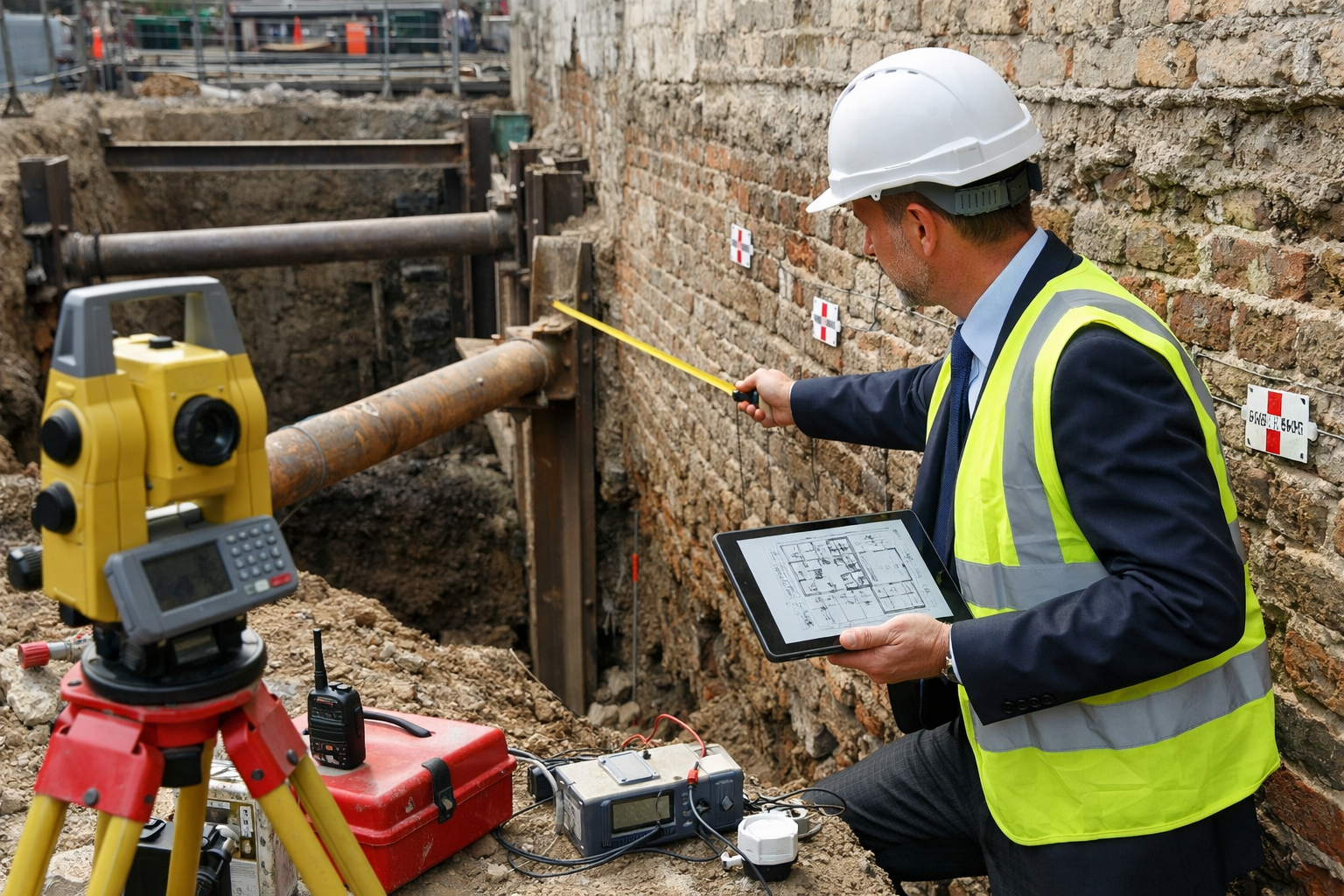
Professional surveyors conduct comprehensive schedules of condition documenting the existing state of adjoining properties before excavation begins. These detailed condition surveys include:
- 📸 Photographic records of all walls, floors, ceilings, and external facades
- 📏 Crack width measurements using precision gauges
- 🏗️ Foundation exposure inspections where accessible
- 📊 Structural integrity assessments identifying pre-existing weaknesses
- 📝 Written descriptions of materials, construction methods, and current condition
These baseline records prove invaluable if disputes arise about excavation-related damage. Without pre-work documentation, distinguishing new damage from pre-existing conditions becomes nearly impossible, leading to protracted disputes and inflated compensation claims.
Structural Impact Analysis
Surveyors analyze proposed excavation depth, proximity, and methodology against the adjoining property's foundation type and structural characteristics. This technical assessment evaluates:
- Soil type and bearing capacity beneath both properties
- Foundation depth differential between new and existing structures
- Excavation methodology and equipment vibration potential
- Groundwater levels and drainage implications
- Load transfer paths and structural interdependencies
The analysis identifies specific risks such as undermining, lateral ground movement, settlement, or foundation exposure. Based on these findings, surveyors recommend protective measures proportionate to identified risks. A party wall surveyor in North London or other regional specialists brings local soil condition knowledge that enhances assessment accuracy.
Method Statements and Excavation Sequencing
Surveyors often require detailed method statements from building owners specifying exactly how excavation will proceed. These documents outline:
✅ Excavation sequence (which sections dug first, in what order)
✅ Support systems (shoring, temporary props, retention walls)
✅ Equipment specifications (machinery types, vibration limits)
✅ Monitoring protocols (crack gauges, settlement markers, inspection frequency)
✅ Emergency procedures (immediate response to unexpected movement or damage)
Method statements transform general excavation plans into step-by-step procedures that minimize risk. They establish clear responsibilities and enable surveyors to verify compliance throughout construction. For complex projects, surveyors may require staged inspections at critical excavation depths before authorizing deeper digging.
Party Wall Awards: Protective Protocols and Underpinning Requirements
When neighbours consent to excavation or surveyors resolve disputes through the Party Wall Award process, the resulting Party Wall Award document specifies legally binding protective measures. Understanding these protocols is central to Excavating Foundations Near Party Walls: Party Wall Act Compliance and Surveyor Protective Measures for 2026.
Award-Specified Protective Measures
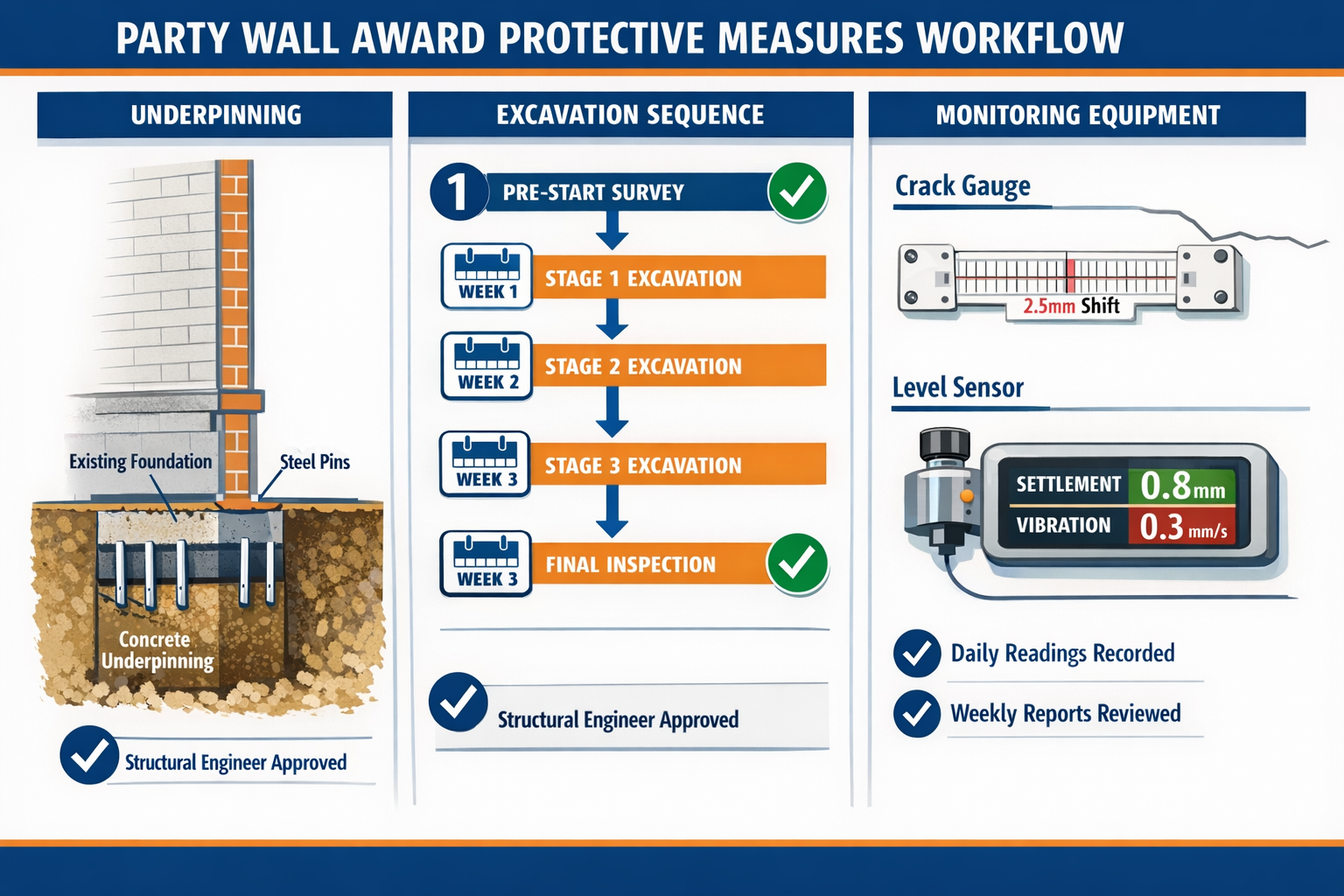
Party Wall Awards detail mandatory protective measures including:[1]
🔧 Underpinning requirements to support adjoining foundations
📐 Excavation depth limits at various distances from the party wall
⏱️ Sequencing requirements for staged excavation
🛡️ Temporary support systems during construction
📊 Monitoring and inspection schedules throughout the project
These measures are not suggestions—they carry legal force. Building owners who deviate from Award specifications breach the Party Wall Act, exposing themselves to injunctions, compensation claims, and project delays. Contractors must receive copies of relevant Award sections and acknowledge their obligation to comply.
Underpinning to Prevent Undermining
When excavation depth significantly exceeds adjoining foundation depth, Awards frequently mandate underpinning to prevent undermining.[1] Underpinning involves extending the neighbour's existing foundation deeper or providing alternative support to maintain structural stability despite adjacent excavation.
Common underpinning methods include:
- Mass concrete underpinning: Sequential excavation beneath existing foundations filled with concrete
- Beam and base underpinning: Reinforced concrete beams supporting the existing foundation
- Piled underpinning: Mini-piles installed beneath existing foundations transferring loads to deeper strata
- Jet grouting: High-pressure grout injection strengthening soil beneath foundations
The Award specifies which underpinning method suits the specific structural conditions. Underpinning costs typically fall to the building owner initiating excavation, though keeping party wall costs down requires early planning and efficient execution.
Monitoring and Inspection Protocols
Awards establish monitoring regimes proportionate to excavation risks. High-risk projects near shallow Victorian foundations may require:
- Daily visual inspections during active excavation
- Crack monitoring gauges with weekly measurements
- Settlement markers on adjoining buildings
- Vibration monitoring during mechanical excavation or piling
- Surveyor site visits at predetermined excavation milestones
Monitoring data provides early warning of unexpected movement or damage, enabling immediate corrective action before minor issues escalate into structural failures. Building owners must maintain monitoring records and provide copies to adjoining owners and their surveyors as specified in the Award.
Compliance Strategies for Building Owners in 2026
Successfully navigating Excavating Foundations Near Party Walls: Party Wall Act Compliance and Surveyor Protective Measures for 2026 requires proactive planning and professional guidance. These practical strategies help building owners achieve compliance while minimizing delays and costs.
Early Surveyor Engagement
Appointing an experienced party wall surveyor during project design—before finalizing architectural plans—prevents costly redesigns. Early surveyor involvement enables:
- Foundation depth optimization balancing structural needs with Party Wall Act triggers
- Notice timing planning ensuring adequate preparation before construction commencement
- Risk identification before committing to specific excavation methods
- Neighbour relationship management through professional communication
Building owners undertaking works can benefit from specialized building owner surveyor services that align technical compliance with project objectives.
Comprehensive Documentation
Maintaining meticulous records throughout the excavation process protects building owners from unfounded damage claims. Essential documentation includes:
📄 Served notices with proof of delivery
📄 Pre-excavation condition surveys
📄 Monitoring data logs
📄 Photographic records at each excavation stage
📄 Contractor method statements and compliance certifications
📄 Surveyor inspection reports
Digital documentation systems with cloud backup ensure records remain accessible throughout multi-month projects and potential future disputes.
Understanding Cost Implications
Party Wall Act compliance involves several cost categories:
| Cost Category | Typical Range | Notes |
|---|---|---|
| Building Owner's Surveyor | £800-£2,500 | Depends on project complexity |
| Adjoining Owner's Surveyor | £800-£2,500 | Building owner typically pays both surveyors |
| Condition Surveys | £300-£800 | Per adjoining property |
| Party Wall Award Preparation | £500-£1,500 | Included in surveyor fees or separate |
| Underpinning (if required) | £5,000-£25,000+ | Highly variable based on extent |
| Monitoring Equipment | £200-£1,000 | Crack gauges, settlement markers |
Understanding the costs of party wall processes enables accurate project budgeting. While compliance costs may seem substantial, they pale compared to injunction-related delays or structural damage compensation.
Avoiding Common Compliance Pitfalls
Building owners frequently make avoidable mistakes that escalate costs and delays:
❌ Starting excavation before notice periods expire
❌ Serving incomplete notices lacking required technical details
❌ Assuming shallow excavations don't trigger Section 6
❌ Failing to obtain written consent for special foundations
❌ Ignoring Award-specified protective measures
❌ Inadequate contractor briefing on Party Wall Act obligations
Each mistake can trigger neighbour objections, surveyor disputes, or legal interventions. Professional guidance from party wall surveyors in West London, East London, South London, or other areas prevents these pitfalls through experienced oversight.
Consequences of Non-Compliance and Dispute Resolution
Understanding enforcement mechanisms and dispute resolution procedures reinforces the importance of proper compliance with Excavating Foundations Near Party Walls: Party Wall Act Compliance and Surveyor Protective Measures for 2026.
Injunction Risks
Starting excavation without serving required Section 6 Notices allows neighbours to seek immediate injunctions to stop work.[1] Courts routinely grant such injunctions because the Party Wall Act establishes clear procedural requirements that protect property rights. An injunction typically:
- ⚠️ Halts all excavation work immediately
- ⚠️ Requires securing the excavation site for extended periods
- ⚠️ Escalates legal costs through court proceedings
- ⚠️ Delays project completion by months
- ⚠️ Damages neighbour relationships irreparably
The building owner bears legal costs for both parties in injunction proceedings, often exceeding £10,000-£20,000 before excavation even resumes. Prevention through proper notice service costs a fraction of injunction consequences.
Dispute Resolution Through Surveyors
When neighbours dissent to Section 6 Notices, the Party Wall Act provides a structured dispute resolution mechanism. Each party appoints a surveyor, or both parties agree on a single "Agreed Surveyor." The surveyors then:
- Assess the proposed excavation and structural risks
- Negotiate protective measures acceptable to both parties
- Prepare a Party Wall Award specifying work conditions
- Resolve cost allocation for surveys and protective works
This process typically takes 4-8 weeks, emphasizing the importance of early notice service. Adjoining owners considering their options can review guidance on responding to party wall notices to understand their rights and responsibilities.
Damage Claims and Compensation
If excavation causes damage to adjoining properties despite Party Wall Act compliance, the building owner remains liable for repairs. However, pre-excavation condition surveys and monitoring data prove invaluable in:
- Distinguishing new damage from pre-existing conditions
- Demonstrating compliance with Award-specified protective measures
- Quantifying actual damage versus exaggerated claims
- Establishing causation between excavation and specific damage
Building owners who follow surveyor recommendations and maintain comprehensive records typically resolve damage claims efficiently through insurance or direct negotiation. Those who cut corners face protracted disputes and inflated compensation demands.
2026 Best Practices for Foundation Excavation Projects
As construction techniques evolve and regulatory scrutiny intensifies, building owners must adopt current best practices for Excavating Foundations Near Party Walls: Party Wall Act Compliance and Surveyor Protective Measures for 2026.
Technology-Enhanced Monitoring
Modern monitoring technology provides real-time data on structural movement during excavation:
- Digital crack gauges with automated alerts when movement exceeds thresholds
- Laser scanning creating precise 3D models for settlement detection
- Vibration monitors ensuring machinery stays within safe limits
- Cloud-based data platforms sharing monitoring results with all parties instantly
These technologies enhance safety while providing irrefutable evidence of compliance and careful execution. Forward-thinking surveyors increasingly incorporate digital monitoring into Party Wall Awards for high-risk excavations.
Sustainable Excavation Methods
Environmental considerations increasingly influence excavation methodology selection. Sustainable approaches include:
🌱 Reduced excavation depths through innovative foundation designs
🌱 Low-vibration equipment minimizing disturbance
🌱 Soil reuse strategies reducing waste disposal
🌱 Groundwater management protecting local hydrology
Sustainable methods often align with Party Wall Act compliance objectives by minimizing disturbance to adjoining properties. Discussing sustainability goals with surveyors during planning can identify synergies between environmental and compliance objectives.
Professional Communication Standards
Maintaining professional, transparent communication with neighbours throughout excavation projects prevents misunderstandings and builds trust. Effective communication includes:
- Pre-notice informal discussions explaining project scope and timeline
- Regular progress updates during excavation
- Immediate notification of unexpected issues or delays
- Accessible contact information for questions or concerns
- Post-completion follow-up confirming satisfactory outcomes
Building owners who invest in neighbour relationships often find greater flexibility and cooperation when unexpected complications arise. Professional communication transforms the Party Wall Act process from adversarial to collaborative.
Conclusion
Excavating Foundations Near Party Walls: Party Wall Act Compliance and Surveyor Protective Measures for 2026 represents a critical knowledge area for any building owner undertaking foundation work near property boundaries. The Party Wall Act's Section 6 provisions establish clear triggers at 3 metres and 6 metres, with specific requirements for notice content, timing, and protective measures that cannot be ignored without serious consequences.
Professional party wall surveyors provide essential expertise in assessing excavation risks, designing protective measures, and ensuring compliance throughout construction. Their involvement transforms complex legal requirements into practical procedures that protect both building owners and neighbours from structural damage and costly disputes.
Actionable Next Steps
Building owners planning foundation excavation near party walls should:
- Determine if Section 6 applies by measuring distances and comparing foundation depths
- Engage a qualified party wall surveyor during project design, not after plans are finalized
- Serve Section 6 Notices with complete technical documentation at least one month before excavation
- Commission pre-excavation condition surveys establishing baseline property conditions
- Implement Award-specified protective measures without deviation or shortcuts
- Maintain comprehensive documentation throughout excavation and construction
- Monitor structural indicators according to surveyor recommendations
- Communicate proactively with neighbours about progress and any issues
Compliance with the Party Wall Act protects property rights, preserves neighbour relationships, and ensures construction projects proceed smoothly without injunctions or costly delays. The investment in professional surveyor services and protective measures represents prudent risk management that pays dividends through successful project completion.
For building owners embarking on excavation projects in 2026, understanding these requirements and engaging qualified professionals early transforms Party Wall Act compliance from a regulatory burden into a strategic advantage. Proper planning, professional guidance, and meticulous execution enable ambitious foundation projects to proceed safely, legally, and successfully.
References
[1] Excavation And The Party Wall Act Navigating The 3 And 6 Metre Rules For Foundations – https://www.partywallslimited.com/blog/excavation-and-the-party-wall-act-navigating-the-3–and-6-metre-rules-for-foundations
[2] Are Foundations Getting Deeper A Look At Modern Building Practice And Party Wall Implications – https://www.peterbarry.co.uk/blog/are-foundations-getting-deeper-a-look-at-modern-building-practice-and-party-wall-implications/
[3] Party Wall Agreement – https://hoa.org.uk/advice/guides-for-homeowners/i-am-improving/party-wall-agreement/
[4] Party Wall Agreements What You Need To Know – https://www.fmb.org.uk/find-a-builder/ultimate-guides-to-home-renovation/party-wall-agreements-what-you-need-to-know.html
[5] Drafting Party Wall Awards For Basement Conversions 2026 Protocols For Deep Excavations Near Boundaries – https://nottinghillsurveyors.com/blog/drafting-party-wall-awards-for-basement-conversions-2026-protocols-for-deep-excavations-near-boundaries