

When two appointed party wall surveyors reach an impasse, the dispute doesn't end—it escalates to a rarely invoked but critically important mechanism. Recent data from 2026 reveals that while third surveyor involvement occurs in less than 5% of party wall cases, these disputes generate average costs exceeding £15,000 and can derail construction projects for months. Understanding Third Surveyor Decisions in Party Wall Awards: Costs, Protocols and Case Studies from Recent Disputes has become essential for building owners navigating complex neighbour relations in today's construction boom.
The third surveyor mechanism under the Party Wall etc. Act 1996 serves as the ultimate dispute resolution tool when appointed surveyors cannot agree on critical elements of a party wall award. This comprehensive guide explores the protocols, cost implications, and real-world case studies that define third surveyor decisions in 2026.
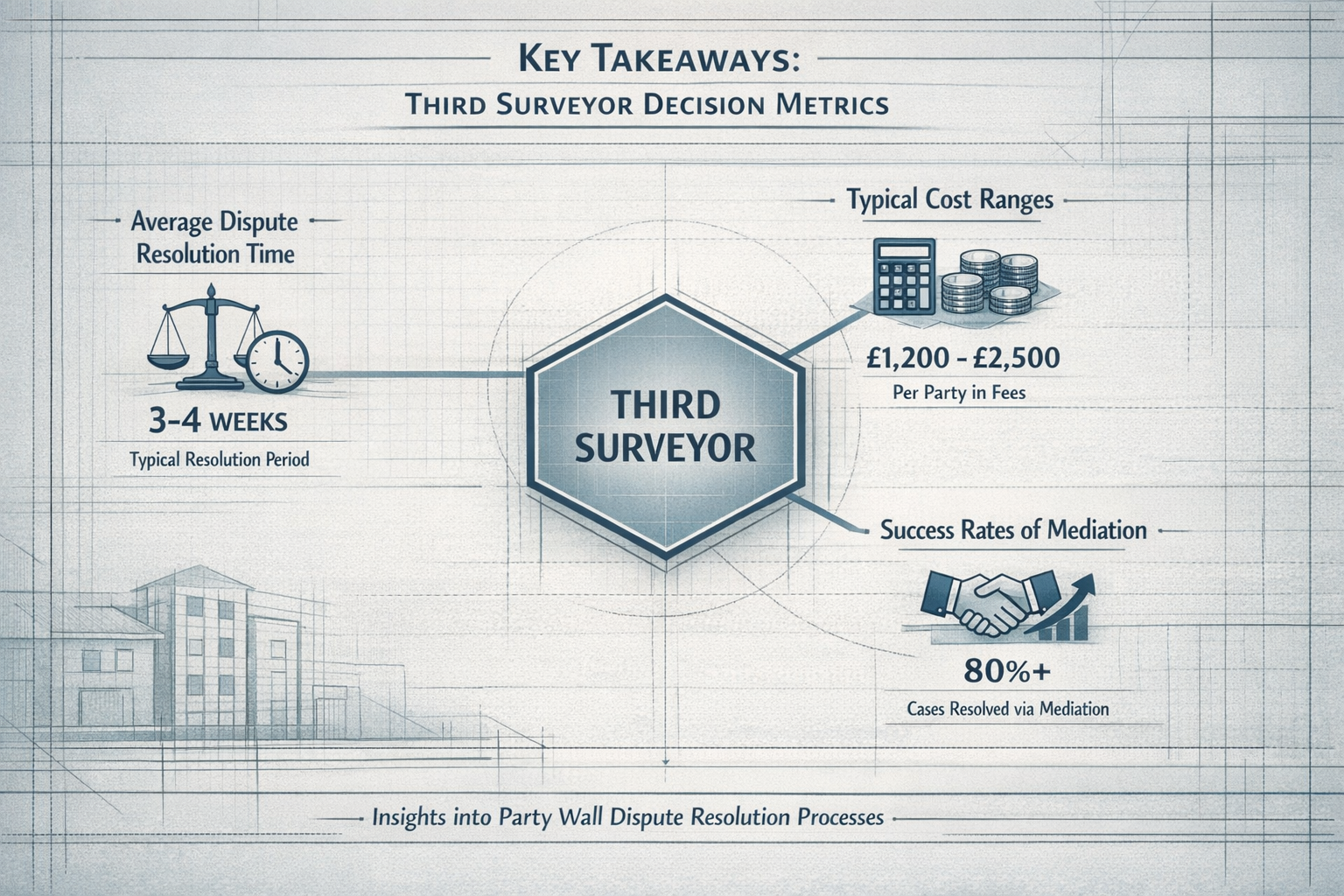
Key Takeaways
- Third surveyors are appointed by mutual agreement between two appointed surveyors under Section 10 of the Party Wall Act, with their selection documented in writing[3]
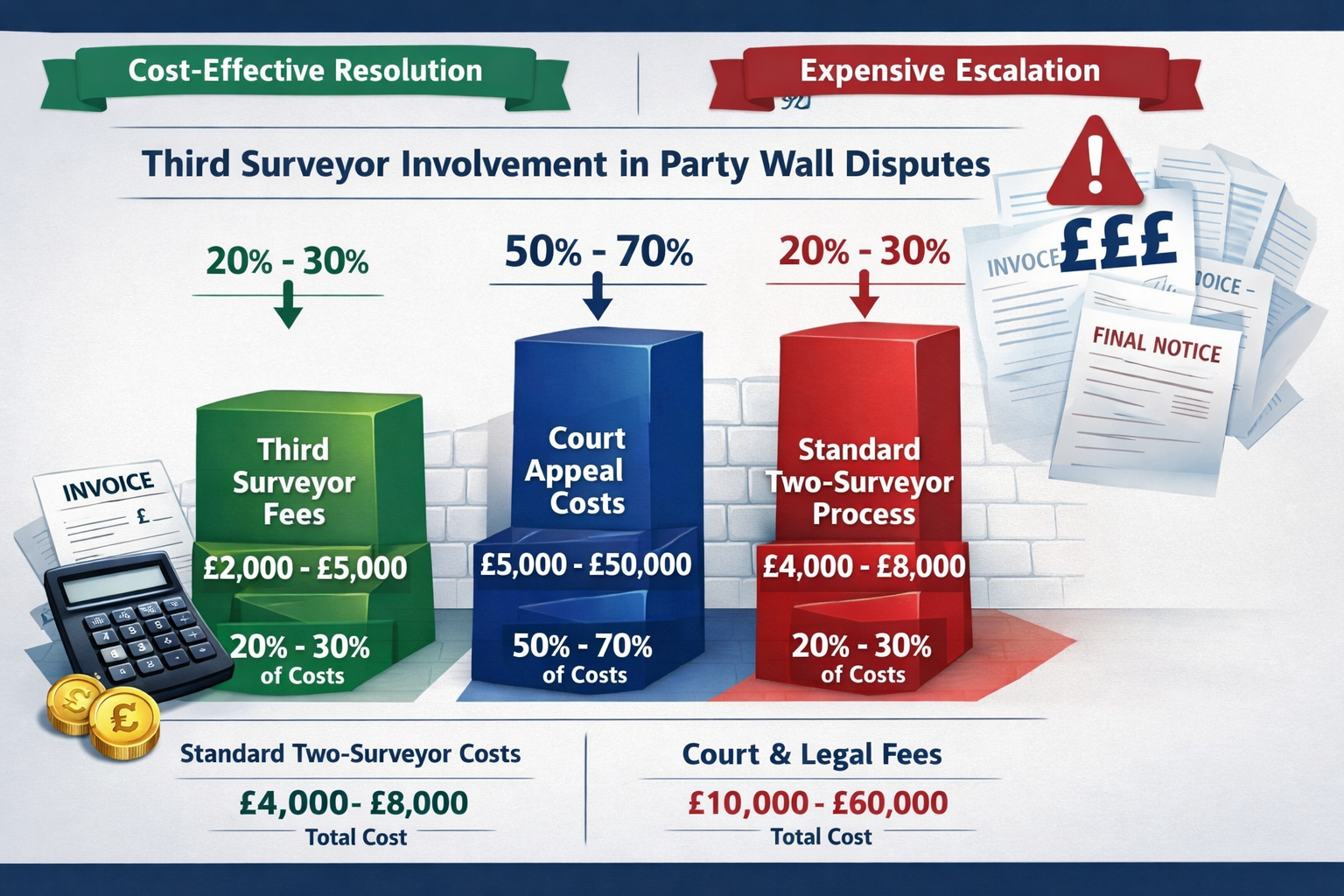
- Cost liability falls on the party initiating third surveyor involvement, regardless of the dispute outcome, with fees typically ranging £2,000-£5,000[3]
- Court appeals of third surveyor decisions cost £5,000-£50,000 with a strict 14-day challenge window and no guarantee of cost recovery[3]
- Recent case law has strengthened jurisdiction requirements, with courts examining whether surveyors acted intra vires and maintained proper impartiality[1]
- RICS guidance updates in 2026 emphasize personal statutory appointments and independent conduct to address jurisdictional challenges[4]
Understanding the Role and Appointment of Third Surveyors in Party Wall Disputes
The Statutory Framework for Third Surveyor Appointments
The Party Wall etc. Act 1996 establishes a clear hierarchy for resolving disputes between neighbours undertaking construction work. When a building owner serves proper party wall notices and the adjoining owner dissents, each party appoints a surveyor to create an award governing the works.
Section 10 of the Act mandates that these two appointed surveyors must select a third surveyor by mutual written agreement.[3] This selection typically occurs at the beginning of the process, even though the third surveyor may never be called upon. The third surveyor serves as a "referee" who can resolve specific disagreements between the two appointed surveyors.
When Third Surveyor Involvement Becomes Necessary
Third surveyors are rarely required in practice because most disputes are resolved through negotiation between the two appointed surveyors.[2] However, escalation to the third surveyor occurs when:
- 🔴 The two surveyors cannot agree on specific award terms
- 🔴 Fundamental disagreements arise about scope of works
- 🔴 Disputes emerge regarding compensation for damage
- 🔴 Technical assessments produce conflicting conclusions
- 🔴 One surveyor believes the other has acted beyond jurisdiction
The Impartiality Mandate for All Surveyors
A critical principle governing Third Surveyor Decisions in Party Wall Awards: Costs, Protocols and Case Studies from Recent Disputes is that all appointed surveyors—including those selected by individual parties—must act with complete impartiality.[2] This means:
✅ Considering the rights and interests of both building owner and adjoining owner
✅ Making decisions based on statutory requirements, not client preferences
✅ Ensuring both parties have opportunity to present relevant matters
✅ Acting within the scope of powers granted by the Act
The 2026 RICS consultation on updated guidance emphasizes that surveyor appointments are personal and statutory, independent of client instruction.[4] This addresses concerns where awards were challenged because surveyors acted without proper jurisdiction.
Documentation Requirements for Third Surveyor Selection
The selection of a third surveyor must be documented in writing to ensure legal validity.[3] This documentation typically includes:
- Written agreement between both appointed surveyors
- Confirmation of the third surveyor's acceptance
- Clarification of the third surveyor's scope of authority
- Agreement on fee structure and payment responsibility
For guidance on minimizing disputes before they escalate, review strategies for keeping party wall costs down.
Costs, Protocols and Financial Implications of Third Surveyor Decisions
Direct Costs of Third Surveyor Involvement
The financial implications of escalating to a third surveyor are substantial and often underestimated by building owners. Understanding the costs associated with Third Surveyor Decisions in Party Wall Awards: Costs, Protocols and Case Studies from Recent Disputes helps parties make informed decisions about dispute resolution.
Third Surveyor Fees:
- Typical range: £2,000 – £5,000 for straightforward disputes
- Complex cases: £5,000 – £10,000+ requiring extensive technical review
- Hourly rates: £150 – £300 depending on surveyor experience
Critical Cost Rule: The party who initiates the third surveyor's involvement bears the cost of their fees, regardless of the dispute outcome.[3] This creates a financial disincentive for frivolous escalations.
Comprehensive Cost Analysis
| Cost Category | Amount Range | Who Pays |
|---|---|---|
| Third Surveyor Fees | £2,000 – £10,000 | Initiating party |
| Court Appeal Costs | £5,000 – £50,000 | Appellant (no guarantee of recovery)[3] |
| Additional Surveyor Time | £1,000 – £3,000 | As per original fee agreement |
| Legal Advice | £2,000 – £15,000 | Party seeking advice |
| Project Delays | Variable | Building owner (opportunity cost) |
For a complete breakdown of standard party wall process costs, consult the guide on costs of party wall procedures.
The 14-Day Challenge Window
If a party wishes to dispute a third surveyor's decision, they must act within 14 days of service of the award through the courts.[3] This narrow window requires:
⏰ Immediate legal consultation
⏰ Rapid evidence gathering
⏰ Quick decision on appeal viability
⏰ Substantial upfront legal costs
Missing this deadline means the award becomes final and binding, with no further recourse except in cases of fraud or procedural irregularity.
Grounds for Challenging Third Surveyor Decisions
Courts will only consider appeals if the third surveyor:
- Acted beyond their jurisdiction (ultra vires)
- Exceeded the scope of the Party Wall Act 1996
- Failed to act impartially or with demonstrable bias
- Did not provide both parties opportunity to present their case
Judges will not reassess the technical merits of a surveyor's decision or substitute their judgment for professional expertise.[3] The standard is procedural correctness, not technical perfection.
Protocols for Minimizing Escalation Costs
Building owners can implement several strategies to avoid third surveyor involvement:
Early Engagement:
- Serve notices with clear, detailed descriptions of works
- Provide comprehensive technical drawings and specifications
- Engage in pre-notice discussions with neighbours
Surveyor Selection:
- Choose experienced party wall surveyors with proven negotiation skills
- Verify surveyor membership in RICS or FPWS
- Check surveyor track record for resolving disputes without escalation
Communication Protocols:
- Establish regular communication channels between surveyors
- Document all agreements and disagreements in writing
- Address concerns promptly before positions harden
Technical Preparation:
- Commission thorough schedules of condition
- Provide detailed method statements for proposed works
- Offer reasonable protective measures and monitoring
Case Studies from Recent Disputes: Lessons from Third Surveyor Decisions
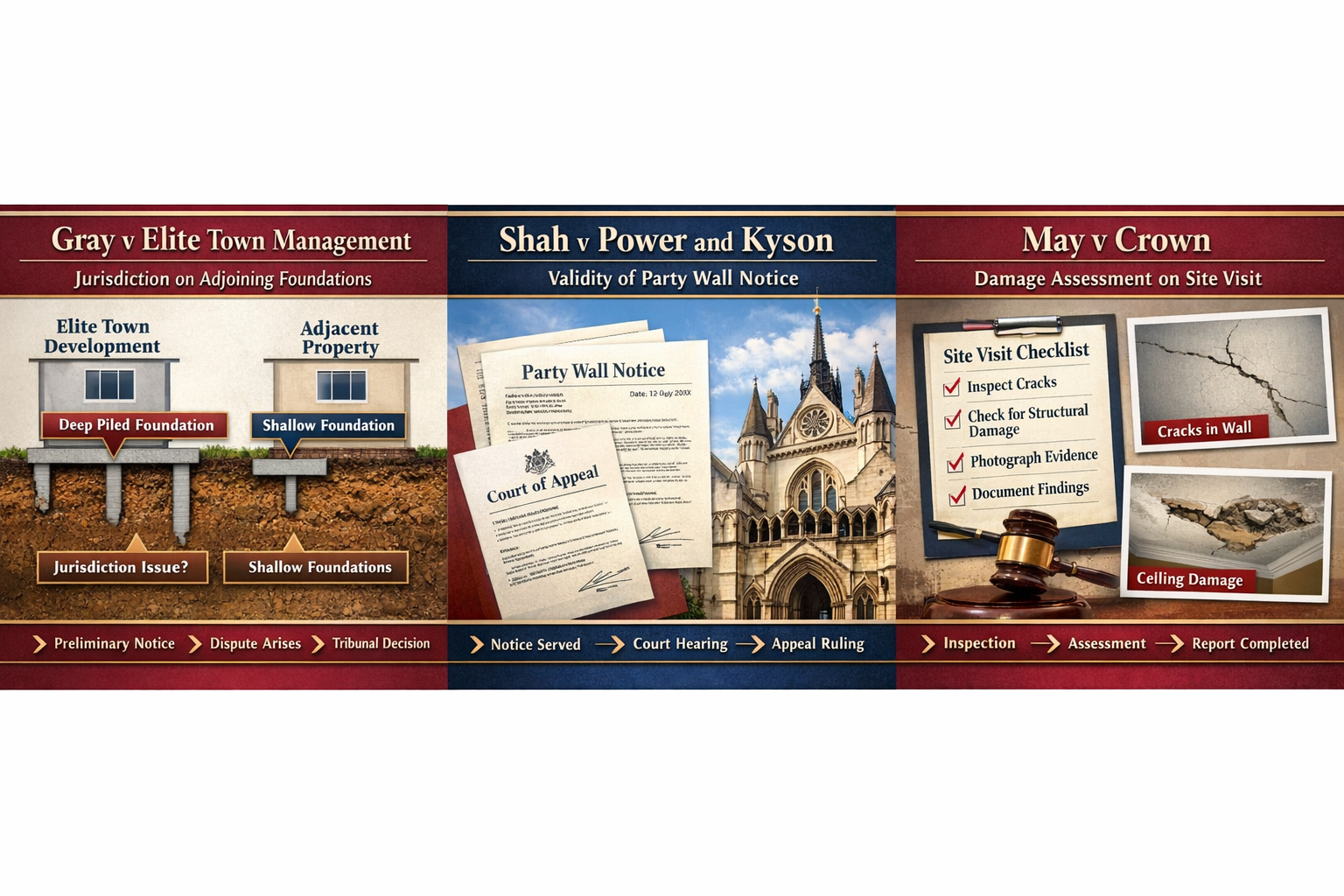
Gray v Elite Town Management (2015): The Jurisdiction Question
This landmark case illustrates how Third Surveyor Decisions in Party Wall Awards: Costs, Protocols and Case Studies from Recent Disputes can be challenged on jurisdictional grounds.
Case Background:
The third surveyor in this dispute unlawfully allowed special foundations that exceeded the scope of the notified works.[1] The building owner had served notice for standard foundation work, but during the process, the scope expanded to include special foundations requiring different technical approaches.
Key Legal Principle:
The court held that surveyors—including third surveyors—cannot authorize works beyond those properly notified under the Act. This established that:
✅ Awards must correspond to the works described in the original notice
✅ Material changes to scope require fresh notices
✅ Third surveyors cannot expand their jurisdiction beyond the statutory framework
Practical Impact:
Building owners must ensure that party wall notices accurately describe all proposed works. Vague or incomplete descriptions create vulnerability to jurisdictional challenges, potentially invalidating awards even after construction begins.
Shah v Power and Kyson (2020-22): The "No Notice, No Act" Principle
This complex dispute generated multiple cases that ultimately reached the Court of Appeal, establishing critical precedents for notice requirements.[1]
Case Background:
The dispute centered on whether works could proceed under the Party Wall Act when proper notices had not been served or when notices contained material defects.
Court of Appeal Ruling:
The court reinforced the principle that without valid notice, the Act's protections do not apply. This means:
- Defective notices cannot be retrospectively corrected through awards
- Adjoining owners retain common law rights when notices are invalid
- Building owners face potential injunctions and damages for proceeding without valid notices
2026 Relevance:
The RICS consultation on updated guidance specifically addresses notice service requirements, emphasizing that surveyors must verify proper notice before accepting appointments.[4] This responds directly to the jurisdictional issues raised in Shah v Power and Kyson.
Lessons for Building Owners:
- Invest in professional notice preparation and service
- Verify receipt and proper service method
- Allow adequate response time before appointing surveyors
- Consider using experienced party wall surveyors in Central London for complex projects
May and Crown Case: Site Visits and Damage Assessment
This case examined whether a third surveyor acted outside jurisdiction by not visiting the site and established important principles about damage claims.[1]
Key Issues:
- Must a third surveyor conduct site visits to make valid decisions?
- What damages can be claimed in party wall awards?
Court Findings:
Site Visit Requirements:
While not strictly mandatory in all cases, site visits are generally expected for disputes involving:
- Physical damage assessment
- Technical feasibility questions
- Disputes about existing conditions
- Complex structural issues
Failure to visit the site when material facts require inspection can constitute acting beyond proper procedure.
Damage Limitations:
The court clarified that damages must be directly related to the notified works.[1] Adjoining owners cannot claim for:
❌ Pre-existing damage unrelated to current works
❌ Consequential losses beyond direct physical damage
❌ Betterment or improvements beyond making good
❌ General inconvenience or distress
✅ Only direct damage caused by the notified works qualifies for compensation
Practical Application:
This case reinforces the importance of comprehensive schedules of condition prepared before works commence. Clear photographic and written evidence of pre-existing conditions protects both parties from unfounded claims.
2026 Dispute Trends and Emerging Issues
Recent disputes in 2026 reflect the construction boom and increased property development across London and other UK cities.[5] Common escalation triggers include:
Technical Complexity:
- Basement excavations near existing foundations
- Complex steel frame insertions
- Party wall removal and rebuilding
- Underpinning works in varied soil conditions
Communication Breakdowns:
- Surveyors failing to engage constructively
- Building owners proceeding without proper consultation
- Adjoining owners making unreasonable demands
- Delays in responding to surveyor correspondence
Cost Disputes:
- Disagreements over reasonable surveyor fees
- Disputes about scope of protective works
- Arguments over monitoring requirements
- Compensation calculations for temporary inconvenience
For regional considerations, building owners should consult specialists familiar with local conditions, such as party wall surveyors in North London or South London.
Best Practices for Building Owners to Minimize Third Surveyor Escalation
Strategic Surveyor Selection
Choosing the right surveyor at the outset significantly reduces escalation risk. Look for:
🔍 RICS or FPWS membership indicating professional standards
🔍 Local experience with similar projects and property types
🔍 Proven negotiation skills and low escalation rates
🔍 Clear fee structures with transparent cost breakdowns
🔍 Strong communication and responsiveness
Consider whether your project requires a building owner's surveyor with specific technical expertise in your type of construction work.
Pre-Notice Neighbour Engagement
Proactive communication before serving formal notices can prevent disputes:
Informal Discussion:
- Explain the project scope and timeline
- Address concerns about noise, dust, and access
- Offer site visits to review plans
- Demonstrate commitment to minimizing disruption
Written Communication:
- Provide clear project descriptions
- Share architect drawings and specifications
- Outline proposed protective measures
- Offer contact information for questions
Comprehensive Documentation
Thorough documentation protects against unfounded claims and provides evidence if disputes escalate:
📋 Pre-Works Documentation:
- Professional photographic schedule of condition
- Structural surveys of adjoining properties
- Detailed drawings and specifications
- Method statements and risk assessments
📋 During Works:
- Daily site logs and progress photos
- Monitoring records (vibration, settlement, etc.)
- Incident reports for any issues
- Communication logs with surveyors and neighbours
📋 Post-Works:
- Completion photographs
- Final monitoring readings
- Making good documentation
- Sign-off records
Understanding Award Components
A properly drafted party wall award should include:
- Description of works corresponding to the notice
- Time and manner of executing works
- Protective measures required during construction
- Monitoring provisions for settlement and vibration
- Access arrangements for surveyors and contractors
- Dispute resolution procedures including third surveyor selection
- Cost allocation for surveyor fees and expenses
When to Consider Alternative Dispute Resolution
Before escalating to a third surveyor, consider:
Mediation:
- Professional mediator facilitates negotiation
- Lower costs than third surveyor involvement
- Preserves working relationship between surveyors
- Faster resolution timeline
Technical Expert Opinion:
- Independent structural engineer assessment
- Clarifies technical feasibility questions
- Provides objective basis for agreement
- Costs less than formal third surveyor process
Legal Consultation:
- Early legal advice on jurisdiction questions
- Assessment of challenge prospects
- Cost-benefit analysis of escalation
- Strategic guidance on negotiation positions
Regulatory Updates and 2026 Guidance Changes
RICS Consultation on Updated Practice Guidance
The Royal Institution of Chartered Surveyors launched a consultation in April 2026 on the draft 8th edition of Party Wall Legislation and Procedure.[4] This updated guidance strengthens requirements in several critical areas:
Fee Practices:
- Clearer guidance on reasonable fee structures
- Transparency requirements for cost estimates
- Standards for fee disputes between surveyors
Third Surveyor Use:
- Enhanced protocols for third surveyor selection
- Clarification of scope and limitations
- Documentation requirements for decisions
Notice Service:
- Detailed requirements for valid notice service
- Guidance on electronic service methods
- Standards for notice content and descriptions
Regulatory Conduct:
- Emphasis on independent, statutory role of surveyors
- Strengthened impartiality requirements
- Disciplinary standards for professional misconduct
Implications for Building Owners
The updated guidance addresses jurisdictional concerns raised in recent case law, particularly the principle that surveyor appointments are personal and statutory, independent of client instruction.[4] This means:
✅ Surveyors must act according to statutory duties, not client preferences
✅ Awards can be challenged if surveyors act as mere agents of appointing parties
✅ Professional conduct standards apply regardless of who pays fees
✅ Impartiality is not optional but mandatory
Building owners should ensure their appointed surveyors understand and comply with these strengthened standards to avoid awards being challenged on jurisdictional grounds.
Conclusion
Third Surveyor Decisions in Party Wall Awards: Costs, Protocols and Case Studies from Recent Disputes represent a critical but rarely invoked mechanism for resolving deadlocked party wall disputes. While third surveyors are needed in less than 5% of cases, understanding their role, the substantial costs involved, and the legal precedents governing their decisions is essential for building owners undertaking construction work in 2026.
The key lessons from recent case law and updated RICS guidance emphasize:
🎯 Jurisdiction is paramount – surveyors must act within the scope of properly served notices
🎯 Impartiality is mandatory – all surveyors must consider both parties' rights equally
🎯 Costs are substantial – third surveyor involvement typically costs £2,000-£5,000, while court appeals range £5,000-£50,000
🎯 Prevention is preferable – strategic surveyor selection and proactive communication minimize escalation risk
Actionable Next Steps for Building Owners
-
Before Starting Your Project:
- Engage experienced party wall surveyors early in the planning process
- Commission comprehensive schedules of condition
- Serve clear, detailed notices describing all proposed works
- Have informal discussions with neighbours about project scope
-
During the Award Process:
- Ensure your surveyor maintains open communication with the adjoining owner's surveyor
- Provide all requested technical information promptly
- Review draft awards carefully before finalization
- Verify that third surveyor selection is documented in writing
-
If Disputes Arise:
- Consider mediation or technical expert opinion before escalating
- Understand the 14-day challenge window for court appeals
- Obtain legal advice on jurisdiction questions early
- Conduct cost-benefit analysis of third surveyor involvement versus negotiated settlement
-
Throughout Construction:
- Maintain detailed documentation of all works
- Comply with award conditions meticulously
- Address any damage or concerns immediately
- Keep communication channels open with surveyors and neighbours
The 2026 construction boom has increased demand for party wall services across London and the UK, making professional guidance more important than ever.[5] By understanding the protocols, costs, and case law governing third surveyor decisions, building owners can navigate complex neighbour relations while minimizing financial and legal risks.
For expert assistance with your party wall matters, consult qualified professionals who understand the evolving regulatory landscape and can help you avoid costly disputes before they escalate.
References
[1] How Has Party Wall Act Changed – https://www.localsurveyorsdirect.co.uk/how-has-party-wall-act-changed
[2] Who Appoints A Party Wall Surveyor – https://www.peterbarry.co.uk/blog/who-appoints-a-party-wall-surveyor/
[3] Disputing Party Wall Third Surveyor – https://stokemont.com/advice/disputing-party-wall-third-surveyor/
[4] Rics Launches Consultation On Updated Party Wall Practice Guidance – https://www.rics.org/news-insights/rics-launches-consultation-on-updated-party-wall-practice-guidance
[5] Party Wall Surveys Amid 2026 Construction Boom Handling Disputes In High Demand Uk Housing Markets – https://nottinghillsurveyors.com/blog/party-wall-surveys-amid-2026-construction-boom-handling-disputes-in-high-demand-uk-housing-markets