

Approximately 90% of self-filed party wall notices contain errors that can delay construction projects by months and cost homeowners thousands in legal disputes[2]. This staggering statistic reveals why understanding party wall legislation remains one of the most critical yet misunderstood aspects of property development in England and Wales. For homeowners planning extensions, loft conversions, or basement excavations in 2026, navigating the Party Wall etc. Act 1996 can feel overwhelming—but it doesn't have to be. These 18 Essential Party Wall FAQs Answered by Chartered Surveyors for Homeowners in 2026 provide the definitive guidance needed to protect both property investments and neighbourly relationships.
Key Takeaways
- The Party Wall etc. Act 1996 requires statutory notification for work on shared walls, new boundary structures, and excavations within 3-6 meters of neighbouring properties[1]
- Professional surveyor costs typically range from £150-£200 per hour, with complete party wall awards averaging £1,000—but building owners usually pay all reasonable costs[3]
- New regulations under the Renters' Rights Act 2026 (effective May 1, 2026) introduce additional compliance requirements for landlords conducting party wall works[7]
- Minor works like plastering, electrical installations, or drilling for shelves do not require party wall agreements[1][3][4]
- The RICS has updated party wall practice guidance in 2026, emphasizing surveyor independence and statutory appointment procedures[6]
Understanding the Fundamentals: What Homeowners Need to Know About Party Walls
1. What Exactly Is a Party Wall?
A party wall is a shared wall or structure that stands on the boundary between two properties and is used by both owners. This includes walls that separate semi-detached or terraced houses, walls dividing buildings in different ownership, and walls on one owner's land but used by two or more owners[1]. Understanding this definition is crucial because it determines whether the Party Wall etc. Act 1996 applies to proposed construction work.
2. Does the Party Wall Act Apply to My Project?
The Act covers three main categories of work:
- Work directly to an existing party wall (cutting into, removing chimney breasts, inserting damp-proof courses)
- Building a new wall at the boundary between properties
- Excavating within 3 meters of a neighbour's structure if the work goes deeper than their foundations, or within 6 meters if excavating below a 45-degree plane from the bottom of their foundations[1]
For homeowners in specific areas, consulting with specialists familiar with local building patterns proves invaluable—whether you're working with a party wall surveyor in North London or South London.
3. What Work Doesn't Require a Party Wall Agreement?
Minor works exempted from the Act include plastering walls, installing electrical wiring, drilling holes for shelves or pictures, and attaching kitchen units[1][3][4]. These activities don't compromise structural integrity or require access to the neighbour's property, making formal agreements unnecessary.
4. Does the Act Apply Throughout the UK?
No—the Party Wall etc. Act 1996 applies only in England and Wales[3]. Scotland and Northern Ireland have different legal frameworks governing boundary and shared wall disputes. Homeowners in these regions should consult local regulations and legal professionals.
The Notice Process: 18 Essential Party Wall FAQs Answered by Chartered Surveyors
5. What Notice Must I Serve?
The Act requires serving specific party wall notices depending on the work type:
| Notice Type | Work Covered | Notice Period |
|---|---|---|
| Party Structure Notice | Work to existing party walls | 2 months |
| Line of Junction Notice | New walls at boundaries | 1 month |
| Notice of Adjacent Excavation | Excavation within 3-6 meters | 1 month |
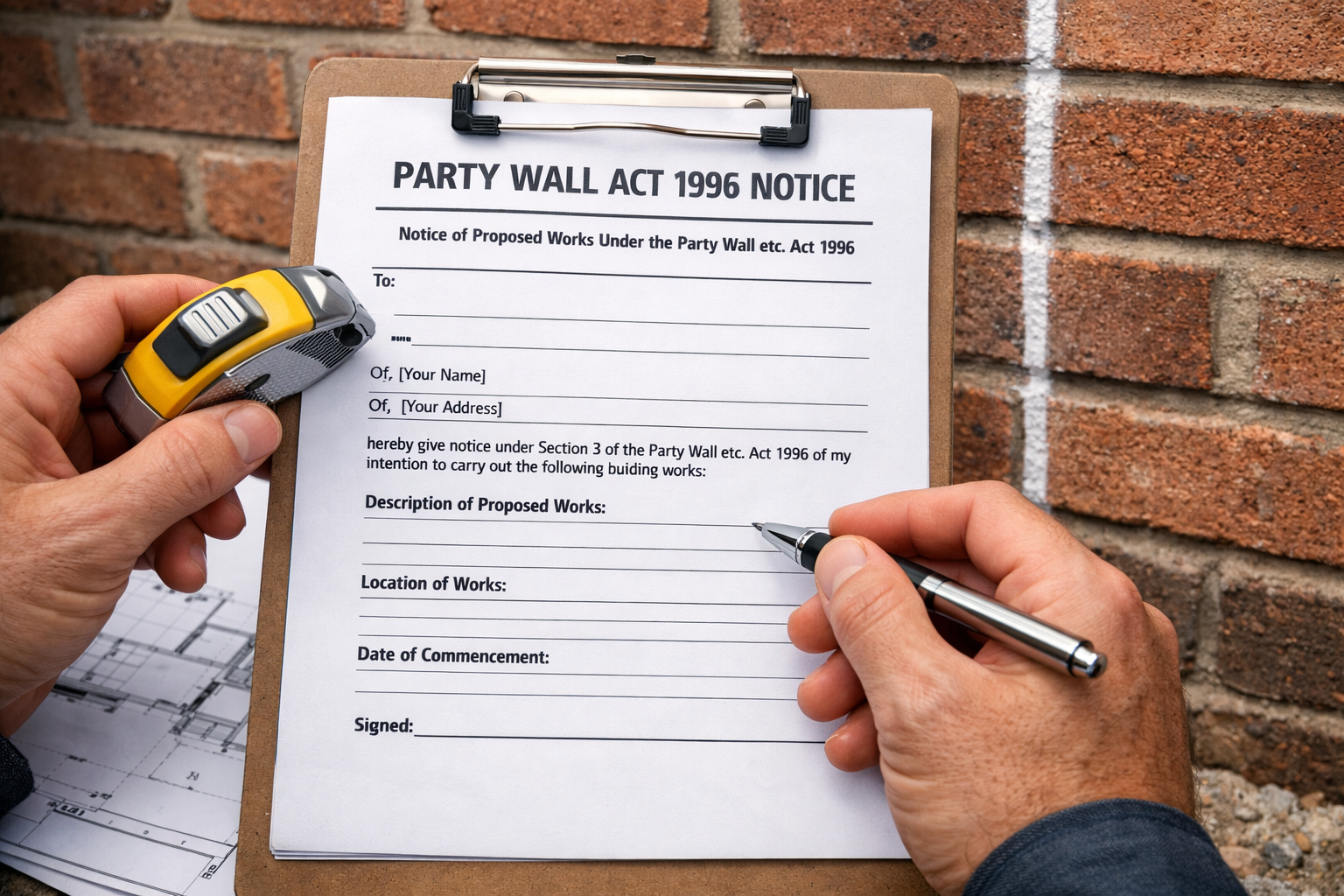
These notices must contain specific information about the proposed works, timing, and nature of the project[2][4].
6. What Happens If My Neighbour Doesn't Respond?
If the adjoining owner (your neighbour) doesn't respond within 14 days of receiving notice, they're deemed to be in "dissent" under the Act[2]. This triggers the surveyor appointment process—it doesn't mean the neighbour objects, merely that formal procedures must be followed.
7. Can I Proceed Without My Neighbour's Consent?
Yes—the Party Wall Act exists precisely to allow building owners to proceed with necessary works even without neighbour consent[5]. The Act provides a statutory framework that balances the building owner's right to develop their property with the adjoining owner's right to protection from damage.
8. What If My Neighbour Refuses to Engage?
When a neighbour refuses to participate in the process, the building owner can appoint a surveyor on their behalf after serving proper notice[5]. This ensures the project can proceed while still protecting the adjoining owner's interests through independent professional oversight.
Surveyor Appointments and Costs: Critical Information for 2026
9. Do I Need to Appoint a Surveyor?
While not legally mandatory, appointing a chartered surveyor is strongly advisable. Given that 90% of self-filed notices contain errors[2], professional guidance prevents costly delays and disputes. Surveyors ensure compliance with the Act, prepare accurate documentation, and protect both parties' interests.
10. Who Pays for the Surveyor?
The building owner (the person undertaking the works) typically pays all reasonable surveyor fees for both parties[3]. This includes fees for the building owner's surveyor, the adjoining owner's surveyor, and any agreed surveyor if both parties choose to share one professional.
11. How Much Do Party Wall Surveyors Cost?
Professional party wall surveyors charge £150-£200 per hour on average, with a complete party wall award costing approximately £1,000[3]. These fees vary based on project complexity, property location, and the number of adjoining owners involved. Understanding costs of the party wall process helps homeowners budget accurately.
12. Can We Use the Same Surveyor?
Yes—both parties can agree to appoint a single "Agreed Surveyor" to act impartially for both sides[2][4]. This approach often reduces costs and streamlines the process. However, the RICS 2026 guidance emphasizes that surveyor appointments remain personal, statutory, and independent of client instruction[6], ensuring professional integrity regardless of appointment structure.
13. What Does the Surveyor Actually Do?
A chartered surveyor's responsibilities include:
✅ Inspecting both properties and preparing a Schedule of Condition
✅ Drafting the Party Wall Award with detailed work specifications
✅ Resolving disputes between building and adjoining owners
✅ Monitoring works to ensure compliance with the Award
✅ Assessing damage claims and determining appropriate remedies
The Schedule of Condition proves particularly valuable, documenting the adjoining property's pre-work state to resolve any subsequent damage claims.
The Party Wall Award and Agreement Process

14. What Is a Party Wall Award?
A Party Wall Award is the legal document that sets out the rights and responsibilities of both parties, describes the works in detail, specifies working hours, and establishes procedures for resolving disputes[2]. This binding document provides legal protection for both building and adjoining owners throughout the construction process.
Homeowners can review a sample party wall agreement template to understand typical Award contents before beginning their projects.
15. How Long Does the Process Take?
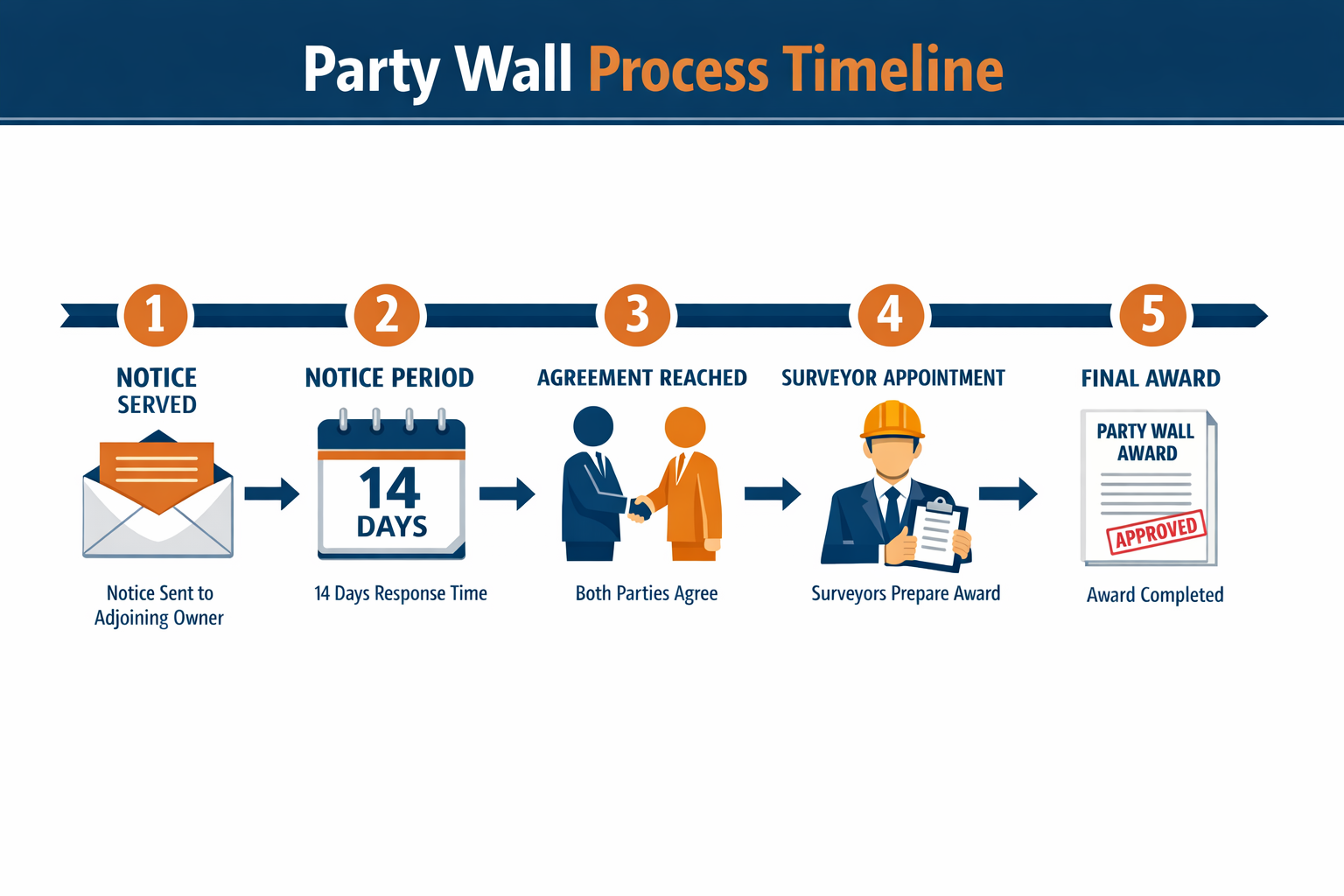
The timeline typically follows this sequence:
- Notice served: 1-2 months before work begins (depending on notice type)
- Response period: 14 days for neighbour to consent or dissent
- Surveyor appointment: 10 days if in dissent
- Award preparation: 2-4 weeks depending on complexity
- Appeal period: 14 days after Award service
Total timeline: Expect 2-4 months from initial notice to commencing work[2][4]. Planning ahead prevents project delays.
16. Can I Start Work Before Receiving the Award?
No—commencing notifiable works before serving proper notice or receiving the Party Wall Award constitutes a breach of the Act[2]. This can result in injunctions, financial penalties, and mandatory work cessation. Always wait for formal documentation before beginning construction.
New Regulations and Special Circumstances for 2026
17. What Changes Under the Renters' Rights Act 2026?
Starting May 1, 2026, landlords conducting party wall works on rental properties face new compliance requirements[7]:
- Enhanced survey protocols for properties in the Private Rented Sector (PRS) database
- Section 8 notice compliance procedures when works affect tenanted properties
- Mandatory documentation linking party wall procedures to tenancy agreements
- Stricter timelines for notifying tenants of disruptive construction work
Landlords should consult specialists familiar with these intersecting legal frameworks to ensure full compliance.
18. What If Damage Occurs During the Works?
The Party Wall Award typically includes provisions for addressing damage. If damage occurs:
🔧 Document immediately with photographs and written descriptions
🔧 Notify the appointed surveyor within the timeframe specified in the Award
🔧 Obtain repair quotations from qualified contractors
🔧 Follow the Award's dispute resolution procedures if parties disagree on remedies
The building owner remains legally responsible for making good any damage caused by the works[1][3].
Essential Checklists for Homeowners in 2026
Party Wall Notice Service Checklist ✅
Before serving notice, ensure you have:
- Detailed architectural drawings of proposed works
- Accurate property boundary measurements
- Contact details for all adjoining owners (including leaseholders)
- Correct notice type for your specific work
- Professional review of notice contents (recommended)
- Proof of service method (recorded delivery advised)
- Calendar reminders for response deadlines
Party Wall Agreement Checklist ✅
When reviewing your Party Wall Award, verify it includes:
- Comprehensive description of proposed works
- Schedule of Condition for adjoining properties
- Specified working hours and days
- Access arrangements and notice periods
- Damage resolution procedures
- Surveyor contact information
- Appeal rights and timeframes
- Cost allocation details
These checklists provide homeowners with practical tools for navigating the party wall process confidently. For additional guidance on specific work types, explore information about types of party wall works.
Understanding Your Rights as Building Owner vs. Adjoining Owner
Rights of the Building Owner
As the building owner, you have the statutory right to:
- Undertake necessary works to your property even without neighbour consent
- Appoint a qualified surveyor to act on your behalf
- Access the adjoining property (with reasonable notice) to execute works
- Request the adjoining owner's surveyor fees be reasonable and proportionate
Rights of the Adjoining Owner
As an adjoining owner, you're entitled to:
- Receive proper notice of proposed works with sufficient detail
- Appoint your own surveyor at the building owner's expense
- Have your property's condition documented before works commence
- Receive compensation for any damage caused by the works
- Appeal the Party Wall Award within 14 days of service
Understanding these reciprocal rights helps both parties approach the process constructively rather than adversarially.
Regional Considerations for London Homeowners
London's dense housing stock and complex property arrangements create unique party wall challenges. Homeowners should consider engaging specialists with local expertise:
- West London party wall surveyors understand Victorian terrace configurations
- East London specialists navigate converted warehouse and new-build developments
- Central London experts handle listed buildings and conservation area restrictions
Regional knowledge proves invaluable when dealing with the capital's diverse architectural landscape and varying construction challenges.
Common Mistakes to Avoid in 2026
❌ Assuming verbal agreements suffice – Always follow statutory notice procedures
❌ Delaying notice service – Serve notices well before planned construction dates
❌ Choosing the cheapest surveyor – Prioritize qualifications and experience over cost
❌ Ignoring minor disputes – Address concerns early before they escalate
❌ Starting work prematurely – Wait for formal Award before commencing
❌ Neglecting proper documentation – Maintain comprehensive records throughout
Learning how to keep party wall costs down doesn't mean cutting corners on essential procedures—it means working efficiently within the statutory framework.
Conclusion
The 18 Essential Party Wall FAQs Answered by Chartered Surveyors for Homeowners in 2026 provide comprehensive guidance for navigating one of property development's most complex legal requirements. Understanding the Party Wall etc. Act 1996 protects homeowners from costly disputes, construction delays, and damaged neighbour relationships. With 90% of self-filed notices containing errors, professional surveyor involvement isn't merely advisable—it's essential for project success.
Your Next Steps
- Assess your project against the three categories of notifiable works
- Calculate your timeline allowing 2-4 months for the party wall process
- Engage a chartered surveyor early in your planning stage
- Serve proper notice using the correct form for your work type
- Maintain open communication with adjoining owners throughout
- Budget appropriately for surveyor fees (typically £1,000 for complete Awards)
- Stay informed about the 2026 regulatory changes affecting rental properties
The new RICS guidance and Renters' Rights Act provisions make 2026 a pivotal year for party wall procedures. Whether you're a building owner planning a loft conversion or an adjoining owner who's received notice of works, understanding these 18 essential FAQs empowers you to protect your property interests while maintaining constructive neighbourly relations.
For immediate assistance with your specific situation, consult qualified professionals who can provide tailored advice based on your property's unique circumstances and local requirements.
References
[1] Party Wall – https://www.allcottassociates.co.uk/advice/party-wall/
[2] Party Wall Faqs 18 Questions You May Be Asking – https://www.kemptoncarr.co.uk/news-and-knowledge/party-wall-faqs-18-questions-you-may-be-asking/
[3] Party Wall Agreement – https://hoa.org.uk/advice/guides-for-homeowners/i-am-improving/party-wall-agreement/
[4] Faqs – https://westvilleassociates.com/party-wall-surveyor/faqs
[5] Party Wall Agreements What If Neighbor Refuses – https://iconsurveyors.co.uk/blog/party-wall-agreements-what-if-neighbor-refuses/
[6] Rics Launches Consultation On Updated Party Wall Practice Guidance – https://www.rics.org/news-insights/rics-launches-consultation-on-updated-party-wall-practice-guidance
[7] Party Wall Implications Of Renters Rights Act 2026 Survey Protocols For Prs Database And Section 8 Notice Compliance – https://nottinghillsurveyors.com/blog/party-wall-implications-of-renters-rights-act-2026-survey-protocols-for-prs-database-and-section-8-notice-compliance