
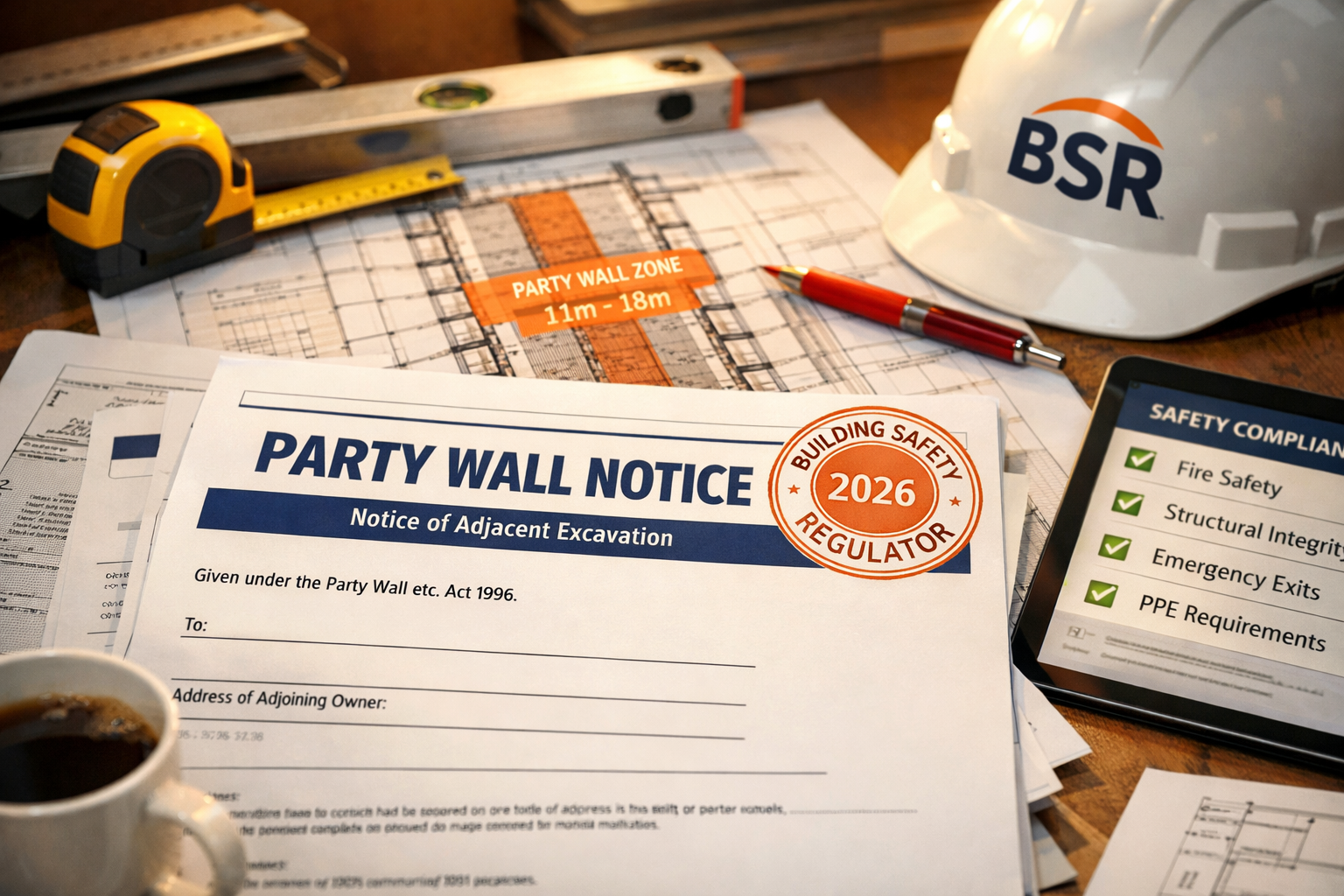
The Building Safety Regulator's transition to independent status on January 27, 2026, marked a watershed moment for construction law in England and Wales—one that fundamentally altered how party wall procedures intersect with building safety compliance[2]. As the regulatory landscape expands to cover buildings between 11 and 18 metres in height, property owners and surveyors face unprecedented scrutiny when serving party wall notices and drafting awards. Understanding the Party Wall Act Updates Post-2026 Building Safety Reforms: Key Changes Affecting Notices and Awards has become essential for anyone undertaking construction work that affects shared structures.
Key Takeaways
- 🏗️ Enhanced surveyor responsibilities now require party wall practitioners to assess fire safety and structural integrity for buildings 11-18 metres tall under expanded Building Safety Regulator oversight
- 📋 Party wall notices must now reference Building Safety Levy obligations for qualifying developments, with levy implementation effective October 1, 2026[1][3]
- ⚖️ Awards require additional clauses addressing evacuation planning, fire safety measures, and compliance with the Building Safety Regulator's strategic priorities
- 💰 Cost implications have increased as surveyors must conduct more comprehensive assessments and maintain documentation for regulatory audits
- 🔍 Building owners face stricter timelines for serving notices when works intersect with high-risk building categories or require Building Control approval
Understanding the 2026 Building Safety Reform Context
The Building Safety Act fundamentally restructured how construction projects are regulated in the United Kingdom. While the Party Wall etc. Act 1996 remains the primary legislation governing shared wall procedures, the 2026 reforms introduced overlapping compliance requirements that directly impact how party wall awards are prepared and executed.
The Building Safety Regulator's Expanded Mandate
From January 2026, the Building Safety Regulator operates as an independent body within the Health and Safety Executive, wielding significant enforcement powers over construction projects[2]. The regulator's strategic plan for 2026-2027 emphasizes three core priorities:
- Preventing serious building safety risks through enhanced oversight
- Driving compliance with new regulatory standards
- Building capability across the construction industry[6]
These priorities directly affect party wall procedures when works involve structures that fall within the regulator's jurisdiction. Buildings between 11 and 18 metres now receive heightened scrutiny, expanding the regulatory net beyond the original focus on high-rise residential buildings over 18 metres[1].
Building Safety Levy Implementation
The Building Safety Levy, which came into force on October 1, 2026, represents a significant financial consideration for building owners undertaking new residential development[1][3]. This levy funds the remediation of historical building safety defects and applies to developments requiring Building Control approval.
Key Levy Parameters:
| Development Type | Levy Rate | Threshold |
|---|---|---|
| New residential buildings | Variable based on gross internal area | Projects over 500m² |
| Mixed-use developments | Calculated on residential portion | Residential component over 500m² |
| Exemptions | None applicable | Affordable housing relief available |
When party wall works form part of a larger development subject to the levy, notices must clearly state this obligation to ensure adjoining owners understand the full scope of the project[3].
Party Wall Act Updates Post-2026 Building Safety Reforms: Critical Changes to Notice Requirements
The intersection of party wall procedures and building safety regulations has created new obligations for those serving notices under sections 1, 3, and 6 of the Party Wall etc. Act 1996.
Enhanced Information Requirements in Party Wall Notices
Traditional party wall notices typically included basic information about proposed works, timelines, and the building owner's details. Post-2026 reforms demand significantly more comprehensive disclosure:
Mandatory Additional Information:
✅ Building Safety Classification – Whether the structure qualifies as a "higher-risk building" under Building Safety Act definitions
✅ Building Control Route – Confirmation of whether works require Building Safety Regulator approval or local authority Building Control
✅ Fire Safety Impact Assessment – Preliminary evaluation of how works may affect fire compartmentation or evacuation routes[4]
✅ Building Safety Levy Status – Declaration if the project triggers levy obligations and estimated levy amount[1]
✅ Principal Designer and Principal Contractor Details – Contact information for key duty holders under CDM regulations
This expanded information requirement stems from the Building Safety Regulator's emphasis on transparency and early identification of potential risks[7]. Surveyors must now conduct preliminary due diligence before notices are served to ensure accuracy.
Timeline Considerations Under Dual Regulatory Frameworks
The standard two-month consent period for party wall notices remains unchanged, but practical timelines have extended due to building safety compliance requirements. When works require Building Safety Regulator approval, property owners should anticipate:
- Pre-notice consultation period: 2-4 weeks for preliminary fire safety and structural assessments
- Standard notice period: 2 months as per Party Wall Act
- Building Control approval process: 4-8 weeks for gateway submissions (if applicable)
- Award preparation with enhanced clauses: 3-6 weeks given additional complexity
For projects involving types of party wall works that affect buildings 11-18 metres in height, early engagement with both party wall surveyors and Building Control is essential to avoid costly delays.
Section 3 Notices and High-Risk Building Considerations
Section 3 notices, which cover works to existing party structures, now require particular attention when the building falls within Building Safety Regulator jurisdiction. The regulator's 2026-2027 strategic plan specifically addresses structural modifications to existing buildings, emphasizing the need for competent professional oversight[6].
When serving a party structure notice, building owners must now include:
- Structural engineer's preliminary assessment confirming works won't compromise building stability
- Fire safety consultant's opinion on compartmentation impacts
- Confirmation of competent person scheme membership for contractors undertaking the works
These requirements align with the Building Safety Regulator's focus on preventing serious safety risks through enhanced professional accountability[8].
Party Wall Act Updates Post-2026 Building Safety Reforms: Transforming Award Content and Surveyor Duties
The preparation of party wall awards has evolved significantly to incorporate building safety considerations, creating new professional responsibilities for appointed surveyors.
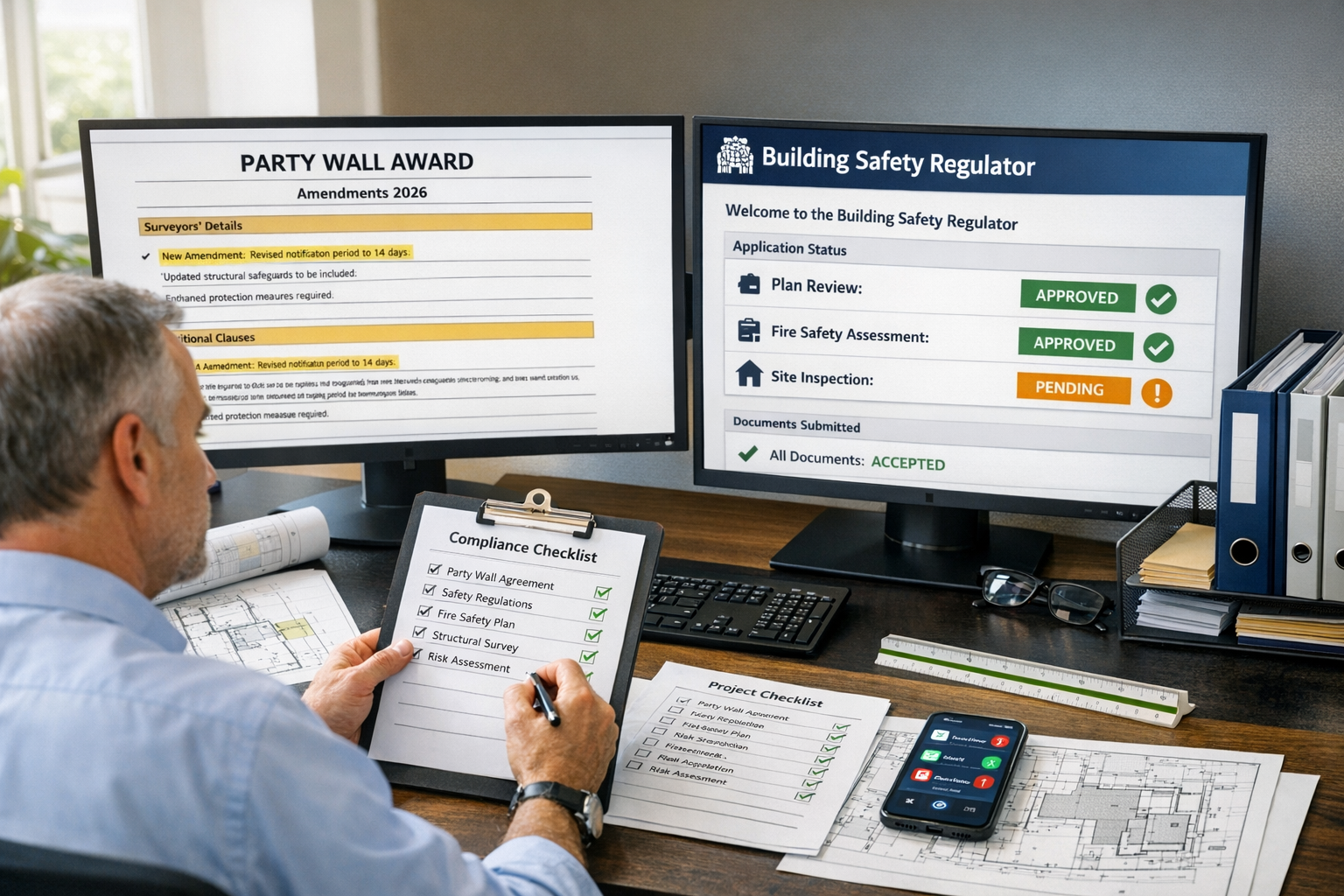
Mandatory Award Clauses Addressing Building Safety
Modern party wall awards must now include specific clauses that address the intersection with building safety regulations:
🔥 Fire Safety and Compartmentation Clause
Awards must explicitly address how works will maintain or improve fire resistance ratings in party walls. This includes:
- Specification of fire-resistant materials meeting current British Standards
- Requirements for fire stopping and cavity barriers
- Inspection protocols to verify fire safety measures during construction
- Post-completion certification requirements[4]
📊 Building Safety Levy Acknowledgment
For developments subject to the levy, awards should include a clause confirming:
- The building owner's obligation to pay the levy
- That levy costs are separate from party wall costs
- Timeline for levy payment relative to project milestones[3]
👷 Competent Person Requirements
Awards must specify that all contractors possess appropriate qualifications and competence, particularly for work affecting structural stability or fire safety. This aligns with the Building Safety Regulator's emphasis on professional capability[6].
📋 Enhanced Condition Schedule Requirements
Schedule of condition documentation now extends beyond cosmetic recording to include:
- Fire safety features (fire doors, smoke seals, emergency lighting)
- Structural elements critical to building stability
- Existing building safety defects requiring remediation
- Photographic evidence with date/time stamps for regulatory compliance
Surveyor Due Diligence and Professional Liability
The expanded regulatory landscape has significantly increased professional liability exposure for party wall surveyors. The Building Safety Regulator's enforcement powers include the ability to investigate professional competence and issue improvement notices[2].
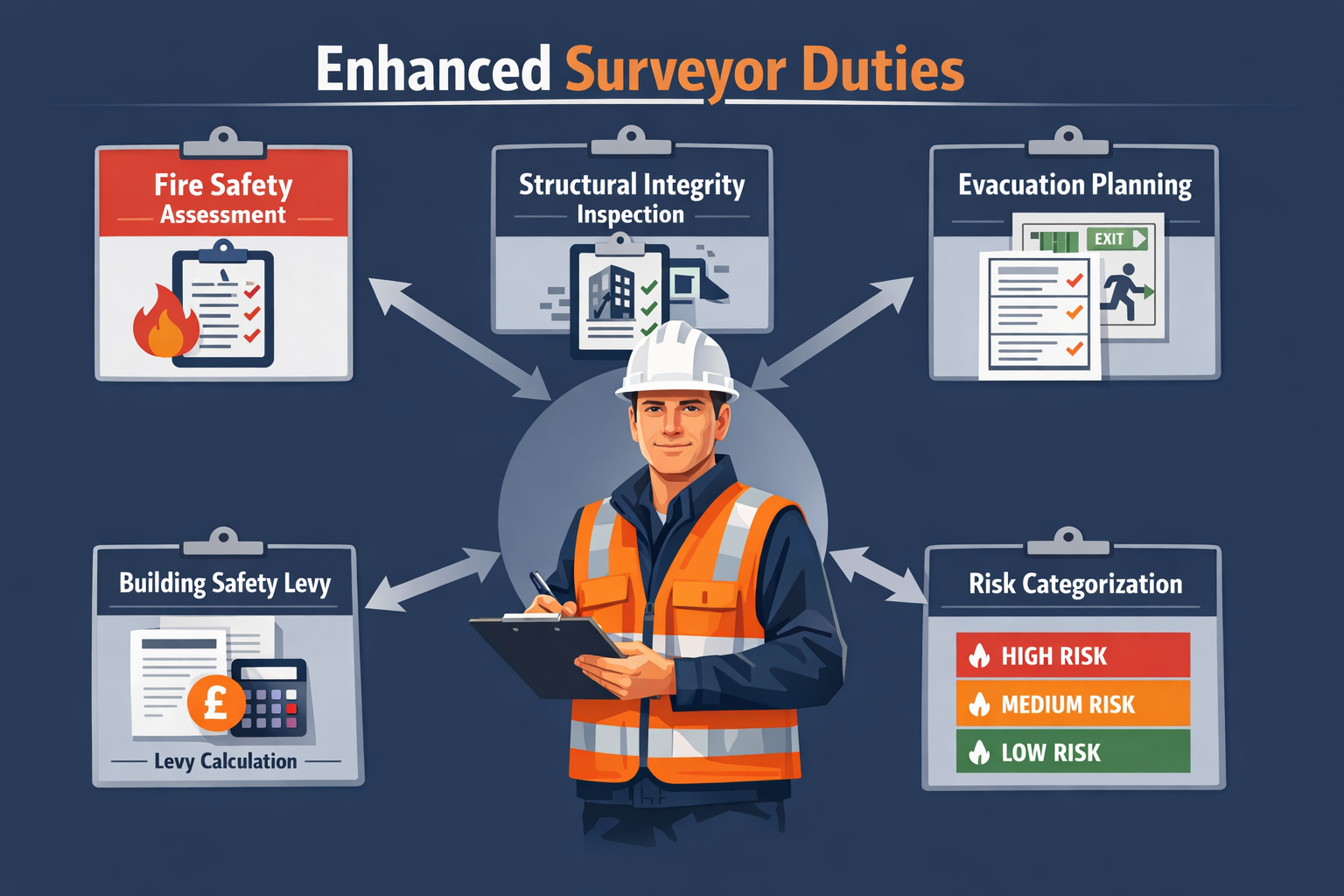
Enhanced Surveyor Responsibilities:
-
Regulatory Compliance Verification – Confirming building owner has obtained necessary Building Control approvals before works commence
-
Risk Categorization – Assessing whether proposed works trigger higher-risk building provisions
-
Documentation Standards – Maintaining comprehensive records suitable for potential regulatory audit
-
Continuing Professional Development – Staying current with building safety legislation changes and technical guidance[8]
-
Multi-Disciplinary Coordination – Liaising with fire safety engineers, structural engineers, and Building Control officers
These responsibilities have practical implications for party wall costs, as surveyors must invest more time in due diligence and coordination activities.
Award Dispute Resolution in the New Regulatory Context
When disputes arise regarding party wall awards that involve building safety considerations, resolution mechanisms have become more complex. The traditional approach of appointing a third surveyor remains valid, but third surveyors must now consider:
- Whether proposed works comply with Building Safety Regulator requirements
- If the building owner has demonstrated adequate competence and resources
- Whether the award adequately protects adjoining owners from building safety risks
In some cases, third surveyors may need to recommend that works be delayed pending resolution of building safety compliance issues—a power that extends beyond traditional party wall considerations[5].
Compliance Checklists for Building Owners Navigating Post-2026 Requirements
Successfully navigating the Party Wall Act Updates Post-2026 Building Safety Reforms: Key Changes Affecting Notices and Awards requires systematic preparation and documentation. The following checklists provide practical guidance for building owners and their advisors.
Pre-Notice Preparation Checklist
Before serving party wall notices, building owners should complete these preliminary steps:
Building Classification Assessment:
- Determine building height and residential unit count
- Confirm whether Building Safety Regulator jurisdiction applies
- Identify if project triggers Building Safety Levy obligations[1]
- Assess if works affect buildings between 11-18 metres
Professional Team Assembly:
- Appoint competent building owner's surveyor with building safety knowledge
- Engage structural engineer registered with appropriate professional body
- Retain fire safety consultant if works affect compartmentation
- Confirm Building Control route (local authority or approved inspector)
Preliminary Assessments:
- Conduct fire safety impact assessment for party wall works[4]
- Obtain structural engineer's preliminary opinion on proposed works
- Review existing building safety records and defects
- Assess potential impact on evacuation routes and fire safety systems
Documentation Preparation:
- Prepare detailed drawings showing party wall works
- Draft method statements for high-risk activities
- Compile evidence of contractor competence and insurance
- Calculate estimated Building Safety Levy (if applicable)[3]
Notice Service Checklist
When serving notices under the Party Wall etc. Act 1996:
Content Verification:
- Include all standard Party Wall Act required information
- Add building safety classification statement
- Specify Building Control approval route
- Declare Building Safety Levy status and estimated amount[1]
- Provide Principal Designer and Principal Contractor details
- Include preliminary fire safety assessment summary
Service Methodology:
- Serve notices to all affected adjoining owners
- Use recorded delivery or hand delivery with acknowledgment
- Maintain proof of service documentation
- Allow full statutory notice period (minimum 2 months)
Follow-Up Actions:
- Track consent or dissent responses
- Appoint surveyors promptly if dissent received
- Provide surveyors with comprehensive project documentation
- Budget for increased surveyor fees reflecting enhanced duties
Award Implementation Checklist
Once a party wall award is issued:
Pre-Commencement:
- Obtain all required Building Control approvals before starting works[2]
- Verify contractor competence certifications are current
- Complete enhanced schedule of condition with fire safety features
- Establish communication protocols with adjoining owners
- Pay Building Safety Levy if applicable[3]
During Works:
- Conduct regular inspections per award schedule
- Document compliance with fire safety specifications[4]
- Maintain photographic records of critical stages
- Report any variations to appointed surveyors immediately
- Ensure fire compartmentation maintained throughout construction
Post-Completion:
- Obtain fire safety certification for party wall works
- Complete final condition survey with adjoining owner
- Address any damage identified in accordance with award
- Provide completion documentation to Building Control
- Archive all party wall and building safety records for minimum 10 years
Regional Considerations and Practical Implementation
The application of party wall procedures varies across London and surrounding areas, with local Building Control authorities implementing building safety reforms at different paces. Property owners in Central London, North London, South London, East London, and West London should consult with local surveyors familiar with area-specific implementation nuances.
Cost Implications of Enhanced Requirements
The additional surveyor duties and documentation requirements have increased party wall costs across the board. Building owners should budget for:
- 15-30% increase in surveyor fees compared to pre-2026 rates
- Additional specialist consultant fees for fire safety and structural assessments
- Extended project timelines adding holding costs for development projects
- Building Safety Levy payments for qualifying developments[1][3]
For guidance on managing expenses, review strategies for keeping party wall costs down while maintaining compliance with enhanced requirements.
When to Proceed Without a Surveyor
While the complexity of post-2026 requirements generally necessitates professional surveyor involvement, some straightforward cases may still proceed through party wall agreement without a surveyor. This remains viable only when:
- Works involve low-risk activities (minor repairs, cosmetic changes)
- Buildings fall outside Building Safety Regulator jurisdiction
- Both parties have construction knowledge and maintain good relations
- No structural modifications or fire safety impacts are involved
However, given the increased regulatory complexity and potential liability, professional advice is strongly recommended for virtually all party wall matters in 2026.
Future Developments and Ongoing Regulatory Evolution
The Building Safety Regulator's strategic plan indicates that regulatory requirements will continue evolving throughout 2026 and beyond[6]. Key developments to monitor include:
Anticipated Regulatory Changes:
🔮 Expanded Gateway Regime – Potential extension of mandatory gateway approvals to smaller buildings and renovation projects
🔮 Digital Reporting Requirements – Implementation of online portals for party wall notice registration and tracking
🔮 Enhanced Enforcement – Increased Building Safety Regulator inspection activity and enforcement actions against non-compliant projects[2]
🔮 Professional Competence Standards – Introduction of mandatory registration schemes for party wall surveyors working on high-risk buildings
The Building Safety Regulator's January 2026 newsletter emphasizes the organization's commitment to "driving up standards across the industry" and "taking robust enforcement action where necessary"[7]. This signals a proactive regulatory approach that will continue shaping party wall practice.
Industry Adaptation and Best Practices
Professional bodies representing party wall surveyors have begun developing guidance documents addressing the intersection of party wall procedures and building safety regulations. Best practices emerging in 2026 include:
- Early multi-disciplinary team meetings bringing together party wall surveyors, fire safety engineers, and Building Control officers
- Standardized award templates incorporating mandatory building safety clauses
- Enhanced professional indemnity insurance covering building safety regulatory risks
- Continuing education programs focusing on building safety legislation for party wall practitioners[8]
Building owners and surveyors who embrace these evolving practices will be better positioned to navigate the complex regulatory landscape while maintaining positive relationships with adjoining owners.
Conclusion: Navigating the New Party Wall Landscape
The Party Wall Act Updates Post-2026 Building Safety Reforms: Key Changes Affecting Notices and Awards represent the most significant evolution in party wall practice since the Party Wall etc. Act 1996 was enacted. The convergence of traditional party wall procedures with comprehensive building safety regulations has created a more complex but ultimately safer construction environment.
Key Action Steps for Building Owners
To successfully navigate this new landscape:
-
Engage qualified professionals early – Appoint party wall surveyors with demonstrable building safety knowledge before serving notices
-
Budget appropriately – Factor in increased professional fees, longer timelines, and potential Building Safety Levy obligations[1][3]
-
Prioritize documentation – Maintain comprehensive records suitable for regulatory audit and future reference
-
Communicate proactively – Keep adjoining owners informed about building safety compliance measures that protect their interests
-
Stay informed – Monitor Building Safety Regulator guidance updates and industry best practice developments[6][8]
The Path Forward
While the enhanced requirements may seem burdensome, they ultimately serve important public safety objectives. The tragic events that prompted building safety reforms underscore the critical importance of robust oversight for construction projects affecting shared structures.
Property owners who view these requirements as an opportunity to demonstrate commitment to safety—rather than merely regulatory obstacles—will find the process more manageable. By working with experienced professionals familiar with both party wall procedures and building safety regulations, building owners can successfully deliver projects that meet all legal requirements while maintaining positive neighbour relations.
The evolution of party wall practice will continue as the Building Safety Regulator refines its approach and industry practitioners develop more efficient compliance methodologies. Those who adapt proactively to this new regulatory environment will be best positioned for success in the transformed construction landscape of 2026 and beyond.
References
[1] Building Safety Act 2026 Developers Guide – https://www.procterandstreet.co.uk/post/building-safety-act-2026-developers-guide
[2] Building Safety Regulator Key Changes From January 2026 – https://connections.nortonrosefulbright.com/post/102m2l3/building-safety-regulator-key-changes-from-january-2026
[3] Building Safety Legislation In 2026 – https://awh.co.uk/thought-leadership-articles/building-safety-legislation-in-2026/
[4] Building Safety Developments Expected In 2026 – https://www.shoosmiths.com/perspectives/stories/articles/building-safety-developments-expected-in-2026
[5] Building Safety What To Expect In 2026 – https://wedlakebell.com/insights/building-safety-what-to-expect-in-2026/
[6] Building Safety Regulator Strategic Plan 2026 To 2027 – https://www.gov.uk/government/publications/building-safety-regulator-strategic-plan-2026-to-2027/building-safety-regulator-strategic-plan-2026-to-2027
[7] January 2026 Welcome To Our New Building Safety Newsletter – https://assets.publishing.service.gov.uk/media/696f638c5b6060ca6736a085/January_2026_-_Welcome_to_our_new_Building_Safety_Newsletter.pdf
[8] Inside The Building Safety Regulators 2026 Plan – https://www.riba.org/work/insights-and-resources/professional-features/inside-the-building-safety-regulators-2026-plan/