
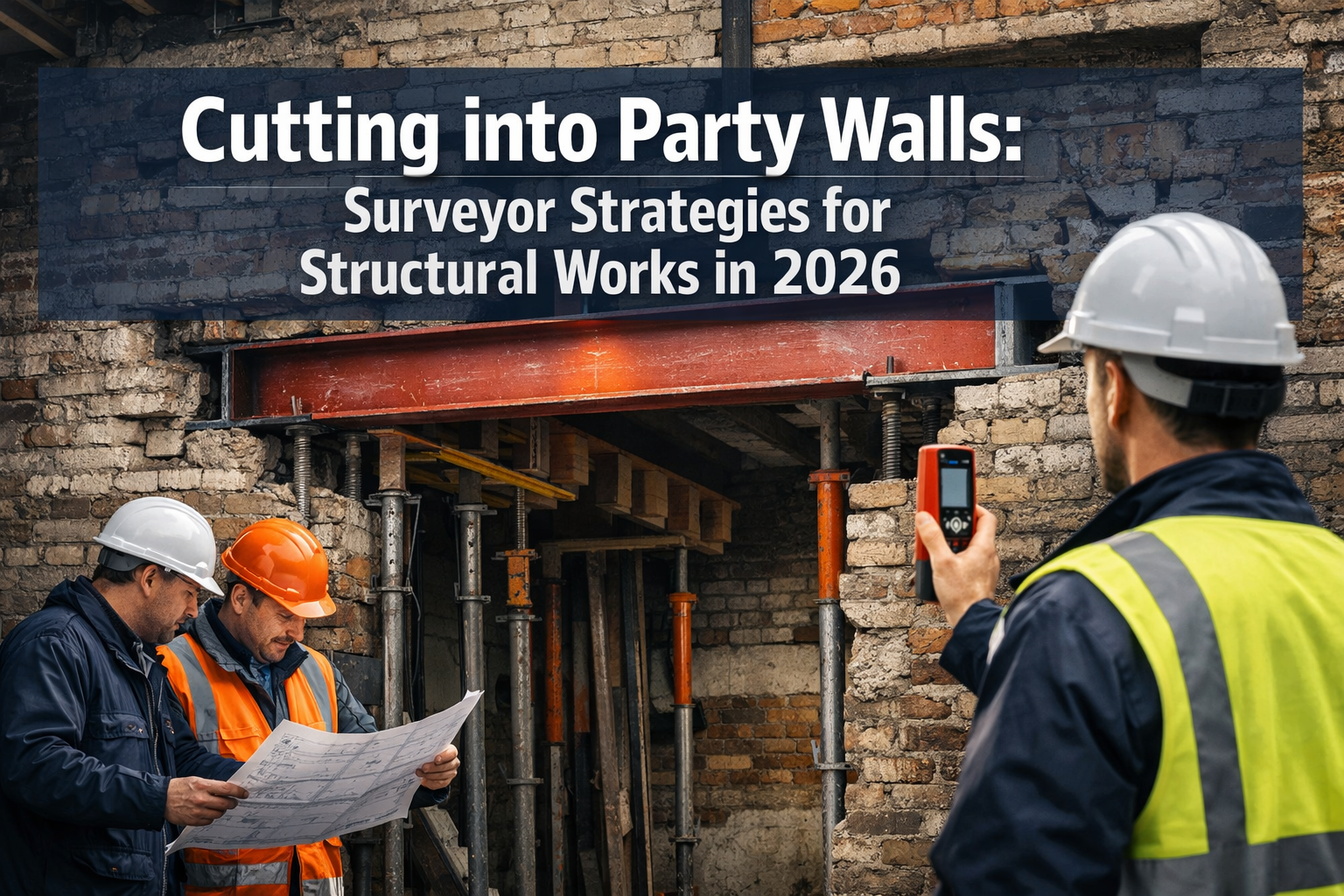
More than 70% of party wall disputes in England and Wales stem from inadequately planned structural alterations—specifically cutting into shared walls for beam insertions, chimney removals, and opening creations. As construction activity surges across London and other urban centers in 2026, understanding Cutting into Party Walls: Surveyor Strategies for Structural Works in 2026 has become critical for property owners, contractors, and construction professionals navigating complex neighbor relations and legal obligations.
The stakes are remarkably high. A single miscalculated cut into a party wall can trigger structural instability affecting multiple properties, generate tens of thousands of pounds in damage claims, and halt construction projects for months. Yet with proper surveyor oversight, strategic planning, and comprehensive protective measures, these risks become manageable. This article explores the essential surveyor strategies, protective protocols, and award clauses that safeguard all parties when structural works demand cutting into shared walls.
Key Takeaways
- Early surveyor engagement (minimum 3 months before works) prevents costly delays and ensures compliance with the Party Wall etc. Act 1996
- Comprehensive schedules of condition document pre-existing wall states, protecting both building and adjoining owners from unfounded damage claims
- Strategic award clauses for structural alterations must specify beam specifications, working hours, insurance requirements, and damage resolution procedures
- Risk mitigation protocols including temporary support systems and monitoring equipment reduce structural failure likelihood by over 80%
- Professional RICS-certified surveyors provide impartial oversight that balances property owners’ construction rights with neighbors’ protection needs
Understanding Party Wall Structural Alterations in 2026
What Constitutes Cutting into Party Walls?
Cutting into party walls encompasses any structural intervention that penetrates, removes material from, or alters the load-bearing capacity of a shared wall between properties. Common scenarios requiring such works include:
- Steel beam insertions for open-plan conversions or loft extensions
- Chimney breast removals affecting the party wall structure
- New doorway or opening creations between previously separate spaces
- Damp-proof course installations requiring horizontal cuts
- Foundation underpinning affecting party wall stability
- Flue or vent installations penetrating the wall thickness
Under the Party Wall etc. Act 1996, these works fall primarily under Section 2 (works directly to the party wall) and require formal notice to adjoining owners.[6] The legislation provides a statutory framework protecting both the building owner’s right to develop their property and the adjoining owner’s right to prevent damage to their structure.
The Legal Framework Governing Structural Works
The Party Wall etc. Act 1996 establishes three notice categories, with structural cutting works typically requiring a Party Structure Notice. This notice must be served at least two months before the intended start date, providing adjoining owners sufficient time to:
✅ Review the proposed works in detail
✅ Appoint their own surveyor or agree to use the building owner’s surveyor
✅ Request modifications to protect their property
✅ Establish baseline conditions through inspections
When cutting into party walls to insert structural elements like steel beams, property owners must provide neighbors with minimum advance notice before commencing works, with specific timelines depending on the type of work.[3] Failure to serve proper notice can result in injunctions halting construction, regardless of project urgency or financial investment already committed.
For property owners planning various types of party wall works, understanding these legal requirements prevents costly mistakes and neighbor disputes.
Why Surveyor Involvement Is Non-Negotiable
Professional surveyors serve as the essential intermediaries in party wall matters, providing technical expertise and impartial judgment that protects all parties. A qualified Chartered Surveyor certified by RICS should be instructed ideally at least 3 months prior to proposed building works involving party walls.[6]
The surveyor’s role extends far beyond simple paperwork processing:
🔍 Technical assessment of proposed structural alterations
📋 Risk identification for both properties
📝 Award preparation with protective clauses
👁️ Construction monitoring ensuring compliance
⚖️ Dispute resolution when disagreements arise
Professional party wall surveyors should prepare comprehensive agreements detailing the proposed work, preventative measures against damage, dispute resolution methods, project timelines, and damage handling procedures.[4] This comprehensive approach transforms potentially adversarial neighbor relationships into professionally managed construction processes.
Whether you’re carrying out works or your neighbor is carrying out works, qualified surveyor involvement provides essential protection.
Risk Assessment and Protective Measures for Structural Cutting
Identifying Structural Risks Before Cutting Begins
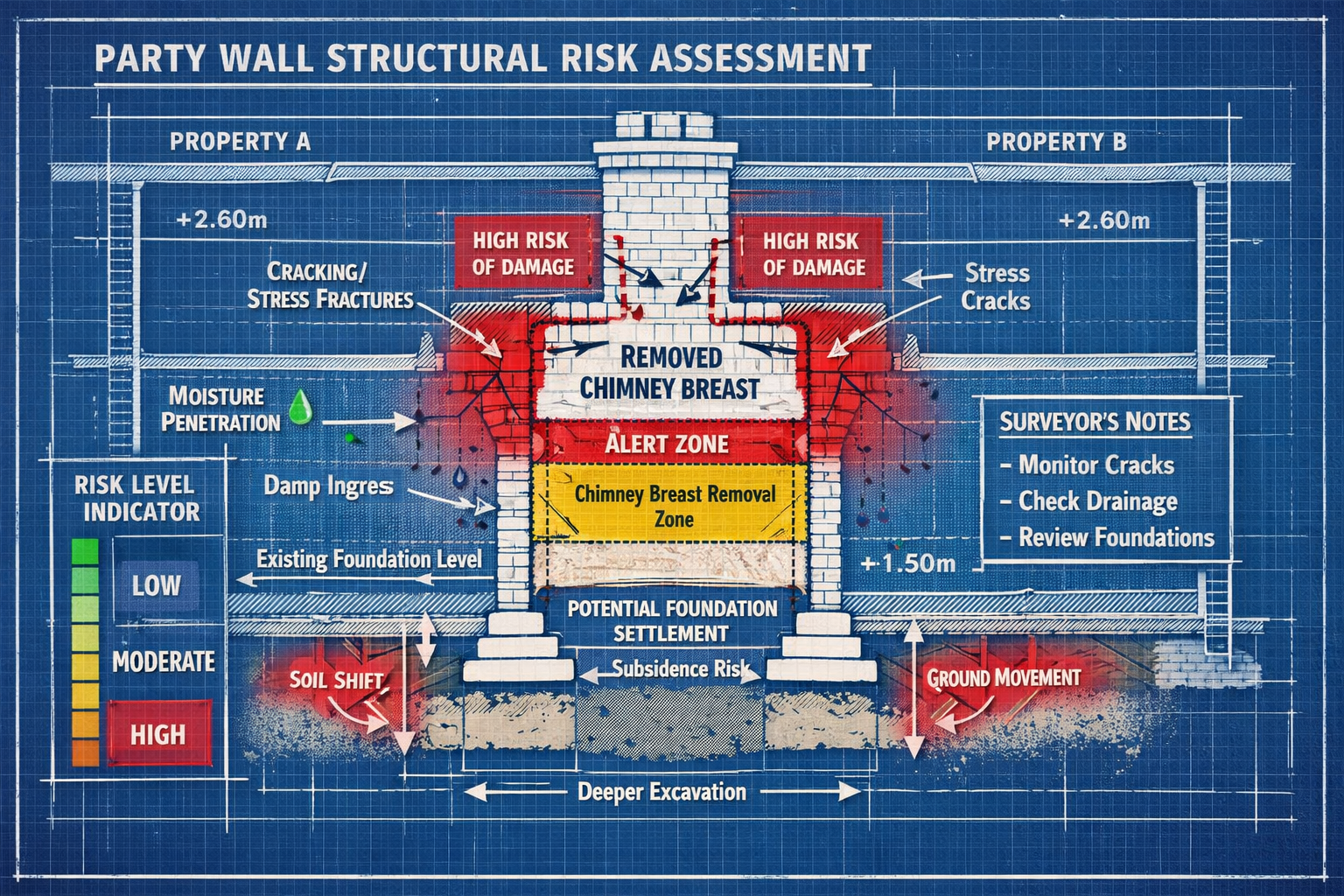
Before any cutting into party walls commences, thorough risk assessment identifies potential failure points and damage scenarios. Professional surveyors evaluate multiple risk categories:
Structural Stability Risks:
- Load redistribution effects when removing chimney breasts or creating openings
- Lateral support compromise affecting wall integrity
- Foundation settlement from vibration or excavation
- Crack propagation from stress concentration points
Property Damage Risks:
- Plaster cracking from vibration or movement
- Decorative finish damage in adjoining property
- Floor level changes from structural settlement
- Moisture ingress through newly created penetrations
Construction Process Risks:
- Dust and debris migration through party wall gaps
- Noise disturbance exceeding reasonable levels
- Temporary instability during beam installation phases
- Contractor access requirements affecting adjoining property
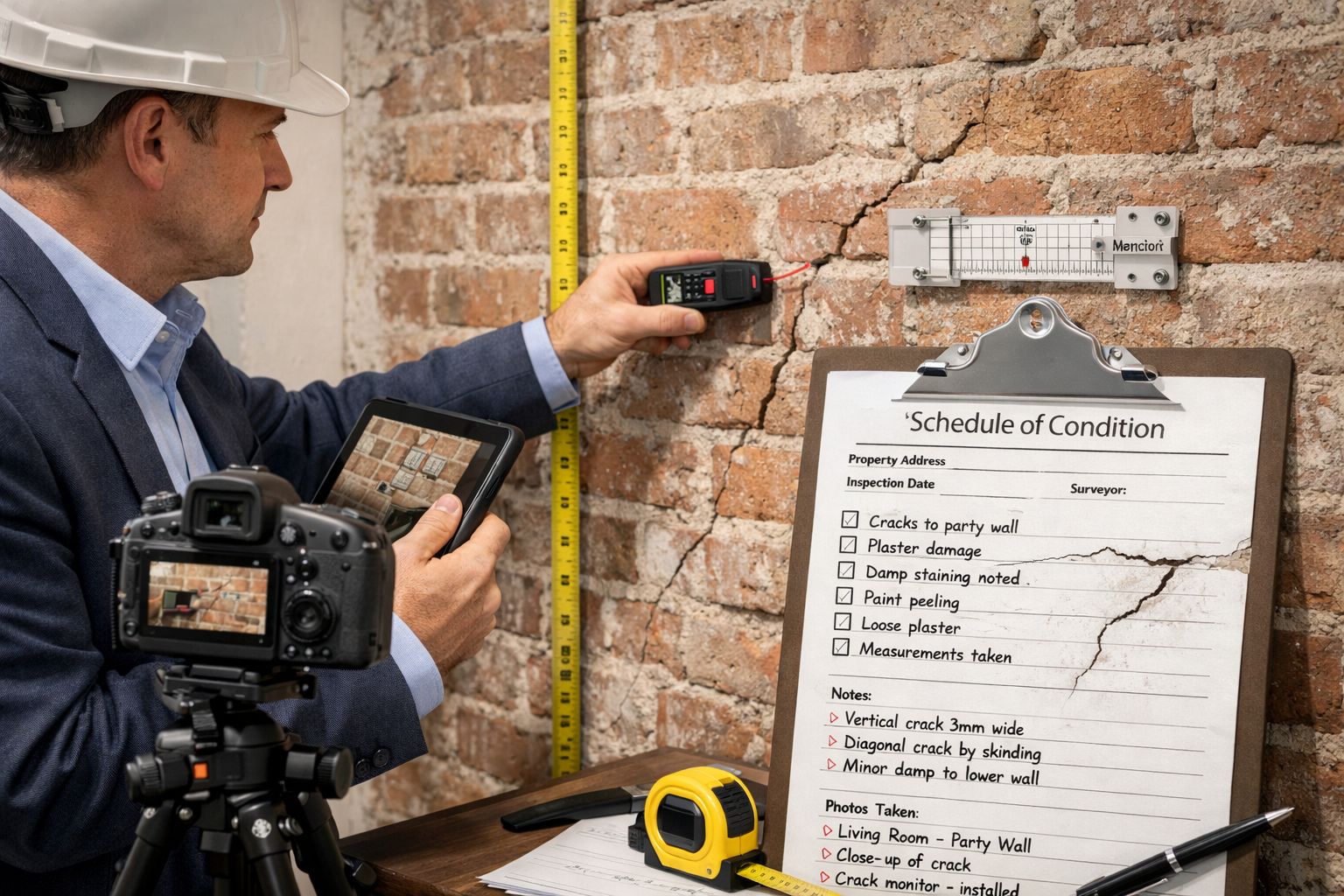
A comprehensive schedule of condition documents the pre-existing state of both properties, creating an objective baseline for assessing any construction-related damage. This photographic and written record proves invaluable when disputes arise about whether specific cracks or defects existed before works commenced.
Temporary Support Systems and Structural Protection
When cutting into party walls for beam insertions or opening creations, temporary support systems prevent catastrophic structural failure during the vulnerable construction phase. Professional surveyors specify:
Needling and Shoring:
Horizontal steel needles inserted through the wall above the cutting area, supported by adjustable props on both sides, transfer loads around the work zone. This creates a temporary load path while the permanent beam is installed.
Acrow Props and Strongboys:
Adjustable steel props with strongboy attachments support floor joists and structural elements during chimney breast removal or beam installation, preventing sudden load transfer that could crack plasterwork or compromise structural integrity.
Sequence Specifications:
The party wall award should detail the exact sequence of cutting, support installation, and permanent work completion. For example: “Install needling → cut wall in 500mm sections → insert steel beam → pack and grout → remove needling → make good.”
Vibration Monitoring:
Electronic vibration monitors placed in the adjoining property provide real-time alerts if cutting equipment generates excessive vibration that could damage the structure. Surveyors typically specify maximum vibration limits (measured in mm/s peak particle velocity) that contractors must not exceed.
Monitoring Protocols During Construction
Active monitoring throughout the construction phase allows early detection of problems before they escalate into significant damage. Cutting into Party Walls: Surveyor Strategies for Structural Works in 2026 emphasizes continuous oversight rather than post-completion inspection.
Tell-Tale Crack Monitors:
Simple graduated strips installed across existing cracks detect movement during construction. Any widening indicates the works are causing structural stress requiring immediate attention.
Regular Inspection Schedules:
Party wall awards typically specify inspection points: before works commence, during critical phases (beam installation, temporary support removal), and upon completion. Surveyors document conditions at each stage, creating a comprehensive construction record.
Photographic Documentation:
High-resolution photography from consistent angles at each inspection creates visual evidence of the construction progression and any emerging issues. Modern practice includes timestamped digital images with metadata preservation.
Neighbor Communication Protocols:
Effective surveyor strategies include establishing direct communication channels allowing adjoining owners to report concerns immediately. Prompt investigation of reported vibration, cracking, or other issues prevents minor problems from escalating into major disputes.
For those seeking to keep party wall costs down, investing in comprehensive monitoring actually reduces overall expenses by preventing damage claims and construction delays.
Award Clauses and Surveyor Strategies for Specific Alterations
Chimney Breast Removal: Special Considerations
Chimney breast removal represents one of the highest-risk party wall alterations, as these structures often provide lateral support to the party wall and adjoining property’s corresponding chimney breast. Cutting into Party Walls: Surveyor Strategies for Structural Works in 2026 requires specific award clauses addressing these unique challenges.
Critical Award Provisions for Chimney Removal:
| Award Clause | Purpose | Example Specification |
|---|---|---|
| Structural Survey Requirement | Assess load-bearing function | “Structural engineer’s calculations confirming party wall stability after removal” |
| Support Beam Specification | Maintain structural integrity | “150x200mm steel universal beam spanning chimney breast width with minimum 225mm bearing each end” |
| Adjoining Breast Inspection | Verify neighbor’s chimney stability | “Access granted for inspection of adjoining chimney breast before and after works” |
| Making Good Standards | Define finish quality | “Plaster finish to match existing, decorated to adjoining owner’s satisfaction” |
| Insurance Requirements | Financial protection | “Minimum £5 million public liability insurance with party wall works endorsement” |
The surveyor must verify that removing the chimney breast won’t compromise the adjoining owner’s remaining breast, which could become unstable without lateral support from the removed section. This often requires installing gallows brackets or cantilever support systems on the adjoining side—works requiring separate consent and careful specification in the award.
Steel Beam Insertions and Opening Creation
Creating new openings through party walls for doorways, pass-throughs, or structural alterations demands precise award specifications addressing beam sizing, installation methodology, and finish standards.
Essential Beam Installation Clauses:
🔧 Beam Specification Details:
- Exact steel grade and dimensions (e.g., “Grade S275 universal beam 203x133x25 kg/m”)
- Bearing length requirements on each side
- Padstone specifications and dimensions
- Damp-proof course integration requirements
📐 Installation Methodology:
- Maximum cutting section size before support installation
- Temporary propping requirements and locations
- Sequence of cutting and beam insertion
- Grouting and packing specifications for load transfer
⏰ Working Hours Restrictions:
- Permitted construction hours (typically 8:00-18:00 weekdays, 8:00-13:00 Saturdays)
- Advance notice requirements for particularly noisy operations
- Restrictions for sensitive periods (e.g., home working arrangements)
🛡️ Damage Prevention Measures:
- Dust suppression requirements and barriers
- Vibration limits for cutting equipment
- Protection for adjoining owner’s decorations and finishes
- Access routes minimizing disruption
Professional surveyors working across central London, north London, and other urban areas recognize that these detailed specifications prevent the majority of construction disputes.
Award Clauses for Damage Resolution
Despite comprehensive protective measures, some damage occasionally occurs during structural cutting works. Well-drafted party wall awards include clear damage resolution mechanisms that prevent disputes from escalating into costly litigation.
Effective Damage Resolution Framework:
1. Damage Definition and Threshold
The award should distinguish between:
- Actionable damage: Structural cracks, plaster failures, decoration damage requiring repair
- Inconvenience: Temporary dust, noise, or disruption not requiring compensation
- Pre-existing conditions: Defects documented in the schedule of condition
2. Notification and Investigation Process
“The adjoining owner shall notify the building owner’s surveyor within 7 days of discovering damage. The surveyor(s) shall inspect within 14 days and determine whether damage resulted from the works.”
3. Repair Standards and Timelines
“Damage confirmed as resulting from the works shall be repaired to a standard matching the pre-existing condition within 60 days of determination, unless alternative timescales are mutually agreed.”
4. Compensation Alternatives
Some awards include provisions for financial compensation instead of physical repairs when the adjoining owner prefers this option, typically based on quotations from qualified contractors.
5. Dispute Escalation Procedures
When surveyors cannot agree on damage causation or appropriate remediation, the award should specify the dispute resolution mechanism—typically appointment of a third surveyor whose determination becomes binding.
Understanding party wall awards and their protective clauses provides essential knowledge for anyone undertaking structural alterations.
Surveyor Selection and Professional Standards
Qualifications and Certifications for 2026
The construction industry landscape in 2026 demands higher professional standards than ever before. When selecting a surveyor for structural party wall works, verification of proper qualifications protects all parties from inadequate oversight.
Essential Surveyor Credentials:
✅ RICS Membership: Royal Institution of Chartered Surveyors membership (MRICS or FRICS) demonstrates professional training and ongoing competency requirements
✅ Party Wall Specialism: Specific experience with party wall matters, not just general building surveying
✅ Professional Indemnity Insurance: Minimum £1 million coverage protecting against surveyor errors
✅ Local Knowledge: Familiarity with regional construction practices and typical building types
✅ Continuing Professional Development: Evidence of ongoing training in party wall legislation and practice
Professional surveyors operating across east London, south London, and west London maintain these standards while understanding area-specific construction characteristics.
The Role of Building Owner’s Surveyor vs. Adjoining Owner’s Surveyor
The Party Wall etc. Act 1996 provides for three surveyor appointment scenarios, each with distinct advantages and considerations:
Single Agreed Surveyor:
Both parties appoint the same surveyor, who acts impartially for both. This approach typically reduces costs but requires high confidence in the surveyor’s impartiality. The building owner’s surveyor role merges with the adjoining owner’s surveyor function.
Two Surveyors:
Each party appoints their own surveyor, who then work together to prepare the award. This provides dedicated representation for each party’s interests while maintaining professional cooperation. The two surveyors jointly inspect, assess risks, and agree on award terms.
Three Surveyors:
When the two appointed surveyors cannot agree on specific matters, they select a third surveyor whose determination resolves the dispute. This mechanism ensures deadlocks don’t prevent construction from proceeding.
Cost Responsibility:
The Party Wall etc. Act 1996 typically makes the building owner responsible for reasonable surveyor fees for both parties. However, if the adjoining owner appoints an unnecessarily expensive surveyor or causes unreasonable delays, they may bear their own costs. Understanding party wall costs and the process helps building owners budget appropriately.
Red Flags When Selecting a Party Wall Surveyor
Not all surveyors possess equal competence in party wall matters. Recognizing warning signs prevents appointment of inadequate professionals:
🚩 Lack of RICS Membership: Non-chartered surveyors lack professional oversight and accountability
🚩 Unclear Fee Structures: Reputable surveyors provide transparent fee estimates before appointment
🚩 Pressure to Proceed Without Proper Notice: Ethical surveyors insist on compliance with statutory notice periods
🚩 Inadequate Inspection Protocols: Competent surveyors conduct thorough pre-construction inspections, not cursory walk-throughs
🚩 Poor Communication: Surveyors should respond promptly to queries and keep parties informed throughout the process
🚩 Bias Toward One Party: Even when appointed by one party, surveyors must act impartially within their statutory role
Guidance on having a party wall agreement without a surveyor explains when professional involvement becomes essential rather than optional.
Emerging Trends and Technology in Party Wall Surveying
Digital Documentation and 3D Scanning
The surveying profession has embraced technological advancement, with 2026 seeing widespread adoption of digital tools that enhance accuracy and reduce disputes.
3D Laser Scanning:
High-precision laser scanners create detailed three-dimensional models of party walls and adjoining properties, documenting existing conditions with millimeter accuracy. These digital records provide indisputable evidence of pre-construction states, virtually eliminating disputes about whether cracks or defects existed before works commenced.
Photogrammetry:
Advanced photography techniques create measurable 3D models from multiple overlapping images, offering a cost-effective alternative to laser scanning for smaller projects. The resulting models allow precise measurement of any feature visible in the photographs.
Digital Award Management:
Cloud-based platforms enable real-time award access for all parties, automatic notification systems for inspection schedules, and centralized document storage eliminating lost paperwork issues.
Predictive Risk Modeling
Sophisticated software now analyzes proposed structural alterations against building characteristics, predicting likely risk areas and optimal protective measures. These systems draw on databases of thousands of previous party wall projects, identifying patterns that inform better decision-making.
Machine learning algorithms can assess factors including:
- Building age and construction type
- Proposed alteration specifications
- Soil conditions and foundation types
- Historical settlement patterns in the area
- Typical damage scenarios for similar works
This predictive capability allows surveyors to specify targeted protective measures rather than generic precautions, optimizing both safety and cost-efficiency.
Remote Monitoring Systems
Internet-connected sensors provide continuous monitoring of critical parameters during structural works:
📡 Vibration Sensors: Real-time alerts when cutting equipment exceeds safe vibration thresholds
📡 Crack Monitors: Automated measurement of crack width changes with instant notification of concerning movement
📡 Tilt Sensors: Detection of structural movement or settlement during construction
📡 Environmental Monitors: Tracking dust levels, noise, and other environmental impacts
These systems transform surveyor oversight from periodic inspections to continuous monitoring, catching problems at the earliest possible stage.
Practical Case Studies: Lessons from Structural Alterations
Case Study 1: Victorian Terrace Chimney Breast Removal
Project: Removal of ground and first-floor chimney breasts in Victorian terrace property in North London
Challenge: The party wall chimney breast provided lateral support to the adjoining property’s corresponding breast, which the neighbor wished to retain. Standard removal would have left the adjoining breast unstable.
Surveyor Strategy:
- Detailed structural engineer’s assessment of lateral support requirements
- Award specification requiring installation of gallows brackets on adjoining side before removal
- Phased removal starting from first floor to minimize instability period
- Continuous monitoring of adjoining property for movement
- Extended making-good period to allow settlement before final decoration
Outcome: Works completed without damage to adjoining property. The comprehensive award clauses and monitoring protocol prevented the structural instability that commonly occurs in such scenarios.
Key Lesson: Chimney breast removal affecting party walls requires structural engineering input beyond standard surveyor expertise. Award clauses must address support for retained adjoining structures.
Case Study 2: Steel Beam Insertion for Open-Plan Conversion
Project: Creation of open-plan ground floor requiring 4.5-meter steel beam insertion through party wall in Edwardian semi-detached property
Challenge: The existing party wall showed pre-existing settlement cracks. The adjoining owner expressed concern that construction works would worsen these defects.
Surveyor Strategy:
- Comprehensive schedule of condition with high-resolution photography of all existing cracks
- Installation of tell-tale monitors on significant cracks before works commenced
- Specification of hand-cutting (not power tools) for the final 100mm of wall thickness adjacent to neighbor’s property
- Daily vibration monitoring during beam pocket cutting
- Weekly surveyor inspections during construction phase
Outcome: Minor plaster cracking occurred during beam installation but tell-tale monitors confirmed no movement of pre-existing structural cracks. The detailed schedule of condition prevented dispute about crack causation. Minor making-good resolved the new plaster damage.
Key Lesson: Thorough pre-construction documentation protects all parties when pre-existing defects exist. Vibration control measures prevent worsening of existing structural issues.
Case Study 3: Dispute Resolution Through Third Surveyor
Project: Loft conversion requiring party wall cutting for steel beam insertion
Challenge: The building owner’s and adjoining owner’s surveyors disagreed on whether proposed working hours (7:00 AM start time) were reasonable given the adjoining owner’s night-shift work schedule.
Surveyor Strategy:
- The two surveyors jointly appointed a third surveyor to determine appropriate working hours
- Third surveyor considered construction requirements, neighbor’s circumstances, and typical practice
- Determination specified 8:30 AM start time on weekdays, with provision for earlier start on specific days with 48 hours’ advance notice
Outcome: The third surveyor’s determination satisfied both parties’ core concerns. Construction proceeded without further dispute, and the neighbor’s sleep schedule was reasonably protected.
Key Lesson: The three-surveyor mechanism effectively resolves deadlocks without requiring expensive litigation. Early appointment of the third surveyor prevents construction delays.
Common Mistakes and How to Avoid Them
Inadequate Notice Periods
The Mistake: Property owners frequently underestimate the time required for proper party wall procedures, serving notices too close to desired construction start dates or commencing works before the notice period expires.
The Consequence: Adjoining owners can obtain injunctions halting construction, regardless of financial investment already committed. Courts consistently enforce statutory notice requirements.
The Solution: Engage surveyors at least 3 months before desired construction start dates. Serve party wall notices at least 2 months before works (for party structure notices) or 1 month (for party fence wall notices). Factor additional time for award preparation and potential disputes. Understanding party wall act notices and how to respond helps both building and adjoining owners navigate the process correctly.
Insufficient Schedule of Condition
The Mistake: Cursory pre-construction inspections that fail to document existing defects in sufficient detail, or complete omission of schedule of condition preparation.
The Consequence: Disputes about whether damage resulted from construction or existed previously. Without clear baseline documentation, adjoining owners may successfully claim for pre-existing defects, while building owners face difficulty proving damage didn’t result from their works.
The Solution: Comprehensive photographic and written documentation of all visible defects, cracks, stains, and finishes in both properties before works commence. High-resolution photography from consistent angles, with date stamps and metadata preservation. Detailed written descriptions complementing photographs.
Vague Award Specifications
The Mistake: Party wall awards containing generic language about “appropriate protective measures” or “reasonable care” without specific technical requirements.
The Consequence: Contractors interpret vague requirements loosely, potentially using inadequate protective measures. When damage occurs, disputes arise about whether the building owner fulfilled their obligations.
The Solution: Detailed technical specifications in awards including: exact beam sizes and grades, specific temporary support requirements, defined working hours, explicit vibration limits, clear making-good standards, and precise inspection schedules. The award should function as a construction specification document, not merely a legal formality.
Ignoring Pre-Existing Structural Issues
The Mistake: Proceeding with structural cutting works without addressing pre-existing party wall defects such as settlement cracks, damp problems, or inadequate foundations.
The Consequence: Construction works can exacerbate existing problems, causing disproportionate damage. Even when the building owner didn’t cause the original defect, they may become liable for worsening it.
The Solution: Pre-construction structural assessment identifying existing defects. Award clauses addressing how pre-existing issues will be managed during construction. Consideration of remedial works to stabilize existing problems before commencing new structural alterations. Clear documentation distinguishing pre-existing from construction-related damage.
Conclusion: Mastering Surveyor Strategies for Safe Structural Works
Cutting into Party Walls: Surveyor Strategies for Structural Works in 2026 demands professional expertise, comprehensive planning, and meticulous execution. The difference between successful structural alterations and costly disputes lies in the quality of surveyor involvement and the thoroughness of protective measures implemented.
The essential elements of effective party wall management for structural cutting works include:
🎯 Early professional engagement at least 3 months before desired construction start dates
🎯 Comprehensive risk assessment identifying structural vulnerabilities and damage potential
🎯 Detailed award specifications providing clear technical requirements and protective measures
🎯 Thorough baseline documentation through schedules of condition preventing causation disputes
🎯 Active construction monitoring catching problems before they escalate into significant damage
🎯 Clear damage resolution mechanisms enabling prompt remediation when issues occur
The surveyor’s role extends far beyond bureaucratic compliance—they function as the essential safeguard protecting structural integrity, neighbor relationships, and project viability. Qualified RICS-certified surveyors bring technical expertise, impartial judgment, and dispute resolution capabilities that transform potentially adversarial situations into professionally managed construction processes.
Actionable Next Steps
For property owners planning structural works involving party wall cutting:
- Engage a qualified surveyor immediately upon deciding to proceed with structural alterations—ideally 3-4 months before desired construction start
- Obtain structural engineering input for complex alterations like chimney breast removals or large beam insertions
- Serve proper statutory notices within required timeframes, allowing adequate response periods
- Insist on comprehensive schedules of condition documenting existing states in both properties
- Verify contractor competence in party wall works, ensuring they understand protective measure requirements
- Maintain open communication with adjoining owners throughout the process, addressing concerns promptly
- Budget realistically for surveyor fees, protective measures, and potential making-good requirements
For adjoining owners receiving notice of neighbor’s structural works:
- Respond within statutory timeframes to preserve your rights under the Party Wall etc. Act 1996
- Consider appointing your own surveyor for complex structural works, ensuring dedicated representation of your interests
- Participate in schedule of condition preparation documenting your property’s existing state
- Establish clear communication channels with surveyors and contractors for reporting concerns
- Understand your rights regarding access for inspections, protective measures, and damage remediation
The construction landscape of 2026 offers unprecedented technological tools for managing party wall risks, from 3D scanning creating indisputable baseline records to real-time monitoring systems detecting problems instantly. Yet technology enhances rather than replaces the fundamental requirement for qualified professional oversight.
By implementing the surveyor strategies outlined in this guide—comprehensive risk assessment, detailed award specifications, thorough documentation, active monitoring, and clear damage resolution mechanisms—property owners can confidently proceed with structural alterations while protecting their neighbors’ legitimate interests. The result is successful construction projects that enhance property value without generating the disputes and damage claims that plague inadequately managed party wall works.
For expert guidance on your specific party wall structural works, consult qualified professionals who understand both the technical requirements and the human dynamics of neighbor relations. The investment in proper surveyor involvement pays dividends through smoother construction, protected relationships, and avoided disputes that could otherwise cost many times the professional fees involved.
References
[1] Party Wall – jnpgroup.co.uk
[2] Party%20wall%20notice%20response%20options – designingbuildings.co.uk
[3] Watch – youtube.com
[4] How Do I Know If The Party Wall Surveyor I Choose Is Any Good – adamjoseph.co.uk
[5] Party Walls – cardinalsurveying.com
[6] Party Wall Faqs 18 Questions You May Be Asking – kemptoncarr.co.uk
[7] Party Walls The Fundamentals – rics.org
Speak to a RICS chartered party wall surveyor
Free initial consultation. Notices, awards and schedules of condition across London and nationwide.