


Roughly 80% of party wall disputes that end up requiring a formal Award could have been avoided with a single signed letter from a neighbour. That figure is not widely advertised by the surveying industry, but it sits at the heart of how the Party Wall etc. Act 1996 actually works in practice. Understanding the route of Party Wall Awards Without Disputes: Securing Written Consent and Optional Condition Schedules to Skip Full Surveyor Fees can save building owners hundreds — sometimes thousands — of pounds while still protecting everyone involved.
This guide explains exactly when neighbour agreement bypasses the need for surveyors, how to document property conditions with pre-notice photographs and basic condition schedules, and how to protect against future claims without paying for a full formal Award.
Key Takeaways
- Written consent from an adjoining owner after a valid Party Wall Notice is served legally removes the requirement for a Party Wall Award and its associated surveyor fees.
- A Schedule of Condition is optional when consent is given, but strongly recommended — it protects both the building owner and the neighbour from future claims about pre-existing damage.
- Pre-notice photographs taken by the building owner can serve as basic evidence even before a formal Schedule of Condition is prepared.
- Verbal consent has no legal standing; the case Nutt v Podger and Veda Road Ltd [2021] confirmed that consent must be written and come from the person with the relevant legal interest. [5]
- If the neighbour dissents, a Party Wall Award becomes mandatory, and surveyor fees typically range from £800 to over £1,295 depending on project complexity. [2][6]
How the Party Wall etc. Act 1996 Creates Two Distinct Paths
The Party Wall etc. Act 1996 establishes a clear legal framework for notifiable works near shared walls, boundaries, and excavations. What many building owners miss is that the Act does not automatically require surveyors or formal Awards. It creates two distinct paths depending on how the adjoining owner responds to the notice.
Path 1 — Consent: The adjoining owner agrees in writing within 14 days of receiving the notice. Works can proceed. No Award is needed. No surveyor is legally required.
Path 2 — Dissent or No Response: A dispute is deemed to have arisen. Surveyors must be appointed. A Party Wall Award is drawn up before works begin.
The entire cost-saving strategy of Party Wall Awards Without Disputes: Securing Written Consent and Optional Condition Schedules to Skip Full Surveyor Fees hinges on Path 1. The Act permits it. Case law supports it. The only requirement is that the consent is valid.
What Makes Consent Legally Valid
The 2021 case Nutt v Podger and Veda Road Ltd is a critical reference point. The court ruled that verbal agreement from a neighbour carries no legal weight under the Act. Consent must be:
- In writing — a signed letter, email, or completed consent form
- From the correct person — the freeholder or leaseholder with the relevant legal interest, not a tenant or occupier
- Given after a valid notice — the notice itself must be correctly served [5]
The 2023 case Power and Kyson v Shah reinforced this further, establishing that without a valid notice, the Act is not engaged at all, leaving both parties without the Act's protective framework. [5] This means that cutting corners on the notice itself — even when aiming to save money — can backfire significantly.
For guidance on serving notices correctly, the detailed resource on Party Wall Notices covers the requirements for each type of notifiable work.
The Real Cost Difference: Consent vs. Full Award
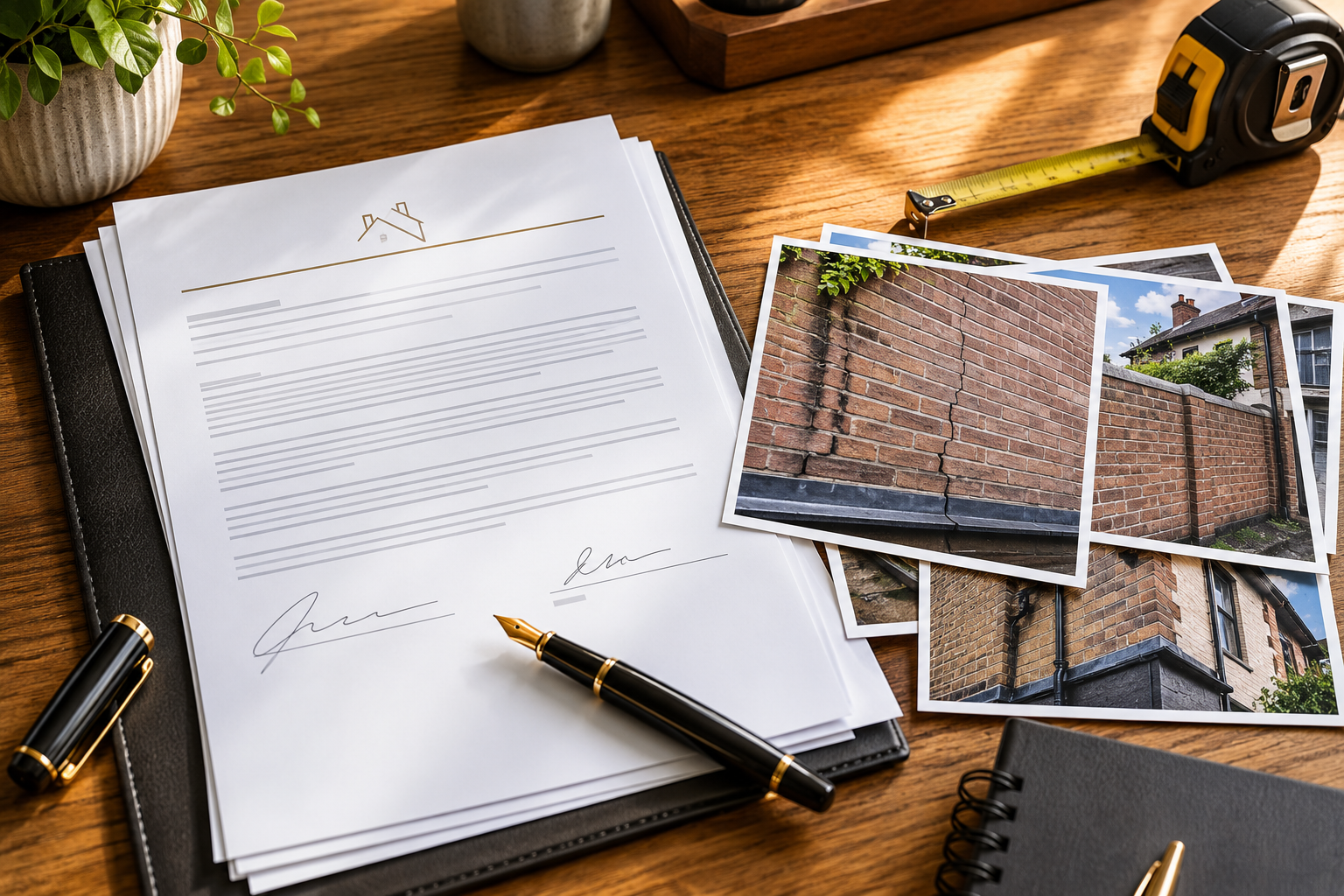
Understanding the financial stakes makes the consent route far more compelling. The table below summarises typical fee ranges in 2026 based on current market data.
| Scenario | Typical Cost Range |
|---|---|
| Serving a Party Wall Notice (DIY) | £0 (self-served) |
| Serving a Party Wall Notice (professional) | £50 – £200 per notice [2] |
| Schedule of Condition only | £450 – £695 [2] |
| Party Wall Award (single surveyor) | £800 – £1,295 [2][6] |
| Party Wall Award (two surveyors) | £1,500 – £2,500+ [3] |
| Agreed Surveyor (both parties) | £1,000 – £1,295 [4] |
When an adjoining owner consents and a Schedule of Condition is conducted voluntarily, the total outlay can be as low as £450 to £695 — or even less if the building owner prepares basic photographic evidence themselves. [1] Compare that to a contested Award involving two surveyors, and the savings are substantial.
"By securing written consent and conducting a Schedule of Condition, building owners can potentially save on surveyor fees associated with Party Wall Awards — particularly beneficial for straightforward projects where both parties maintain amicable relations." [1]
Why DIY Notices Carry Risk
Building owners can legally serve their own Party Wall Notices without professional help, which eliminates professional notice fees entirely. [7] However, errors in the notice — wrong dates, incorrect property descriptions, missing information about the type of works — can invalidate it. An invalid notice means the Act is not engaged, which removes legal protections and can cause significant delays. [5]
For building owners who want to self-serve, reviewing a party wall contract template and guide on party wall awards before drafting anything is a sensible first step.
Schedules of Condition: Optional but Highly Recommended

A Schedule of Condition is a documented record of the adjoining property's state before notifiable works begin. It typically includes photographs, written descriptions of existing cracks, damp patches, structural features, and any visible defects.
When an adjoining owner consents without a formal Award, there is no legal obligation to prepare a Schedule of Condition. However, skipping it creates a significant risk: if the neighbour later claims that the building works caused damage, there is no baseline evidence to refer to. Without documentation, disputes become a matter of one person's word against another's.
What a Good Schedule of Condition Covers
A thorough schedule of condition typically documents:
- Internal walls and ceilings adjacent to the works, noting any pre-existing cracks
- External brickwork and pointing on the shared or boundary wall
- Floors and skirting boards in rooms closest to the works
- Any existing damp, settlement, or structural movement
- Garden features, paths, or outbuildings near the excavation zone
Photographs should be date-stamped, well-lit, and taken from multiple angles. Each image should be cross-referenced with a written description.
The Pre-Notice Photography Approach
For building owners on tight budgets, taking their own photographs before serving the notice is a practical protective measure. This does not replace a professional Schedule of Condition, but it creates a timestamped record that can be useful if a dispute arises later.
Tips for effective pre-notice photography:
- Use a smartphone with location and date metadata enabled
- Photograph every room in the adjoining property that shares a wall with the works — if the neighbour permits access
- Focus on cracks, damp stains, and areas of previous repair
- Take wide shots for context and close-up shots for detail
- Store images in a cloud folder with a clear date record
If the neighbour does not grant access for internal photography, focus on external walls, the boundary area, and any shared structures. Even partial documentation is better than none.
For a downloadable starting point, a free sample party wall agreement template can help building owners understand what a basic consent document should contain.
Practical Steps to Achieve Party Wall Awards Without Disputes: Securing Written Consent and Optional Condition Schedules to Skip Full Surveyor Fees

The process of achieving Party Wall Awards Without Disputes: Securing Written Consent and Optional Condition Schedules to Skip Full Surveyor Fees follows a logical sequence. Rushing any step increases the risk of the consent being invalid or the neighbour becoming uncooperative.
Step 1 — Early Informal Communication
Before any formal notice is served, speak with the adjoining owner. Explain the planned works, the likely timeline, and any disruption they might experience. This is not a legal requirement, but it dramatically increases the likelihood of consent. [1]
Neighbours who feel informed and respected are far more likely to sign a consent form quickly. Those who feel blindsided by a formal legal notice are more likely to dissent out of caution or frustration.
Step 2 — Serve a Valid Party Wall Notice
Serve the correct notice for the type of works being carried out. The three main notice types under the Act are:
- Party Structure Notice — for works directly to a shared wall or structure
- Line of Junction Notice — for building on or near the boundary
- Three Metre or Six Metre Notice — for excavations near neighbouring foundations
Each notice has specific content requirements and minimum notice periods. For works directly to a party wall, two months' notice is required. For excavations, one month is standard.
Detailed guidance on what a Party Structure Notice is and how to serve it covers the specific requirements for London properties.
Step 3 — Request Written Consent
Include a consent form with the notice, making it as easy as possible for the adjoining owner to respond. The form should:
- Confirm the adjoining owner's name and address
- Reference the notice date and the works described
- Include a signature line and date field
- State clearly that by signing, the owner consents to the works proceeding under the Act
Give the adjoining owner the full 14-day response period. Do not pressure them for an early response, as this can create friction.
Step 4 — Arrange a Schedule of Condition
Once consent is received, arrange a Schedule of Condition before works begin. This can be commissioned from a surveyor for between £450 and £695 [2], or the building owner can prepare a basic photographic record themselves if budget is the primary concern.
A professionally prepared Schedule carries more weight in any future dispute, but even a thorough DIY photographic record provides meaningful protection. If the works are extensive — loft conversions, basement excavations, rear extensions — professional documentation is strongly advisable.
Step 5 — Keep Records Throughout the Works
Retain copies of:
- The served notice and proof of delivery
- The signed consent form
- The Schedule of Condition or photographic record
- Any correspondence with the adjoining owner during the works
- Contractor records and site photographs showing the progress of works
These records collectively provide a robust paper trail that protects the building owner against claims long after the works are complete.
When the Consent Route Is Not Appropriate
The consent route works well for straightforward projects with cooperative neighbours. It is less suitable in certain situations:
- High-risk structural works — underpinning, basement excavations, or significant load-bearing wall alterations where the risk of damage to the adjoining property is genuinely elevated
- Difficult neighbour relationships — where there is an existing history of disputes or where the neighbour has expressed concerns about the works
- Complex or multi-party scenarios — where multiple adjoining owners are involved, or where the boundary situation is unclear
- Leasehold properties — where identifying the correct legal interest holder requires careful verification
In these cases, a formal Party Wall Award — even with its associated costs — provides stronger legal protection for both parties. Understanding the costs of the party wall process helps building owners weigh the investment against the risk.
For building owners who do proceed to a formal Award, appointing a single Agreed Surveyor rather than two separate surveyors can reduce costs to the £1,000 to £1,295 range, compared to the higher fees associated with two-surveyor appointments. [4] More detailed guidance on how to keep party wall costs down covers this and other cost-reduction strategies.
Regional Considerations for London Properties
Party wall matters in London carry particular complexity due to the density of terraced and semi-detached properties, the prevalence of leasehold ownership, and the frequency of loft conversions and basement works. Building owners in different parts of the capital may find it useful to consult local specialists.
Resources are available for those seeking a party wall surveyor in South London, North London, and East London, each with familiarity in local property types and common works in those areas.
Conclusion
The path of Party Wall Awards Without Disputes: Securing Written Consent and Optional Condition Schedules to Skip Full Surveyor Fees is not a loophole — it is the intended operation of the Party Wall etc. Act 1996 when neighbours cooperate. The Act was designed to facilitate works, not obstruct them, and written consent is the mechanism that allows straightforward projects to proceed without the full apparatus of formal Awards and dual surveyor appointments.
Actionable next steps for building owners in 2026:
- Start with an informal conversation with the adjoining owner well before serving any notice.
- Serve a correctly drafted Party Wall Notice with a consent form attached, giving the full 14-day response window.
- If consent is given, arrange a Schedule of Condition — professional where the works are complex, photographic where budget is tight.
- Keep all records: notice, consent form, condition documentation, and site photographs throughout the works.
- If the neighbour dissents or the works are high-risk, engage a surveyor promptly — the cost of a proper Award is far lower than the cost of an unresolved dispute.
The investment of time in early communication and basic documentation consistently delivers the best outcome: works completed smoothly, neighbours satisfied, and legal exposure minimised.
References
[1] Party Wall Surveyor Cost – https://hoa.org.uk/advice/guides-for-homeowners/i-am-improving/party-wall-surveyor-cost/?utm_source=openai
[2] Our Fees – https://www.partywall-surveyors.com/our-fees/?utm_source=openai
[3] Fees – https://www.partywall.info/fees.html?utm_source=openai
[4] Our Fees – https://www.assentpartywall.co.uk/our-fees?utm_source=openai
[5] Party Wall Notice Explained – https://www.surveyofpartywall.co.uk/party-wall-notice-explained/?utm_source=openai
[6] Surveyor Fees – https://www.mrpartywall.co.uk/surveyor-fees/?utm_source=openai
[7] Party Wall Agreement Cost – https://partywalldiy.com/2020/02/06/party-wall-agreement-cost/?utm_source=openai