
Nearly 40% of party wall disputes in 2026 stem from foundation work near property boundaries—yet most conflicts are entirely preventable with proper notice procedures and surveyor oversight. When excavating close to a neighbour’s building, the Party Wall etc. Act 1996 imposes strict legal obligations that protect both parties while enabling necessary construction work.
Understanding Party Wall Notices for Foundations Near Boundaries: Surveyor Checklists for Compliance is essential for building owners, developers, and construction professionals working in England and Wales. This comprehensive guide details the notice requirements for excavations near party walls, surveyor impact assessments, and protective measures to avoid disputes under the Act.
Key Takeaways
- ✅ Section 6 notices are mandatory when excavating within 3 metres of a neighbour’s building if digging deeper than their foundations, or within 6 metres under the 45-degree rule
- 📋 One-month advance notice must be served before any foundation or excavation work begins, including complete technical documentation
- 🛡️ Party Wall Awards specify protective measures such as underpinning, shoring, and excavation sequencing to safeguard adjacent properties
- ⚖️ Missing or invalid notices carry legal consequences including potential court action, work stoppage, and compensation claims
- 👷 Professional surveyors ensure compliance through detailed checklists, condition surveys, and ongoing monitoring throughout construction
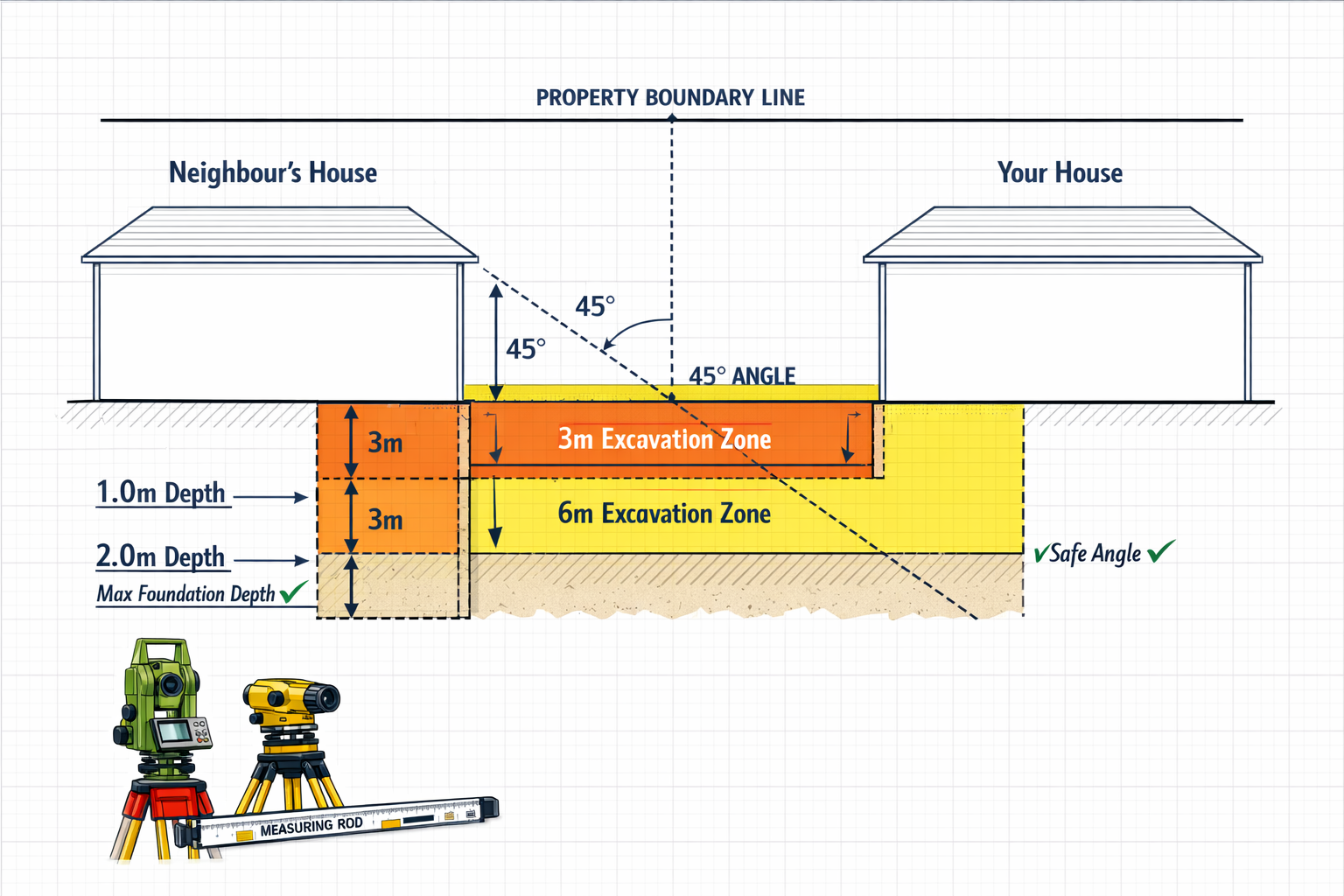
Understanding Section 6 Notice Requirements for Foundation Work
The Party Wall etc. Act 1996 establishes clear distance-based rules that trigger mandatory notice requirements for foundation excavations near boundaries. These rules exist to protect neighbouring properties from potential structural damage caused by nearby digging.
The 3-Metre Rule Explained
Section 6 triggers require two distance-based rules that determine when notices become mandatory. The first is the 3-metre rule: you must serve a Section 6 Notice if excavating for new foundations within 3 metres of a neighbour’s building AND the intended foundation is deeper than the bottom of their existing foundations[1].
This rule applies to:
- New building foundations for extensions or separate structures
- Foundation underpinning work
- Deep drainage trenches and inspection chambers
- Basement excavations near boundaries
The 6-Metre Rule and 45-Degree Line
The second trigger extends protection further from the boundary. A notice is required when excavating within 6 metres of a neighbour’s building if a line drawn downward at 45 degrees from the bottom of their existing foundation would be cut by your proposed excavation[1].
| Distance from Boundary | Depth Requirement | Notice Required? |
|---|---|---|
| Within 3 metres | Deeper than neighbour’s foundation | ✅ Yes |
| Within 3 metres | Shallower than neighbour’s foundation | ❌ No |
| 3-6 metres away | Cuts 45-degree line from neighbour’s foundation | ✅ Yes |
| 3-6 metres away | Below 45-degree line | ❌ No |
| Beyond 6 metres | Any depth | ❌ No (Section 6) |
What Section 6 Covers
Section 6 covers multiple excavation types beyond just building foundations[2]. The notice requirements apply to:
- 🏗️ Foundation excavations for new walls, extensions, or buildings
- 🚰 Drainage work including deep trenches for pipes and sewers
- 🔍 Inspection chambers and manholes near boundaries
- 🏠 Basement construction or conversion projects
- ⚒️ Underpinning work to existing structures
Understanding these triggers is the first step in Party Wall Notices for Foundations Near Boundaries: Surveyor Checklists for Compliance. Professional party wall surveyors can assess whether your planned work falls within these distance parameters.
Serving Valid Party Wall Notices: Documentation and Timing
Proper notice service forms the legal foundation of party wall compliance. One-month advance notice is mandatory: a Section 6 Notice (Notice of Adjacent Excavation and Construction) must be served a minimum of one month before excavation or foundation work begins[1].
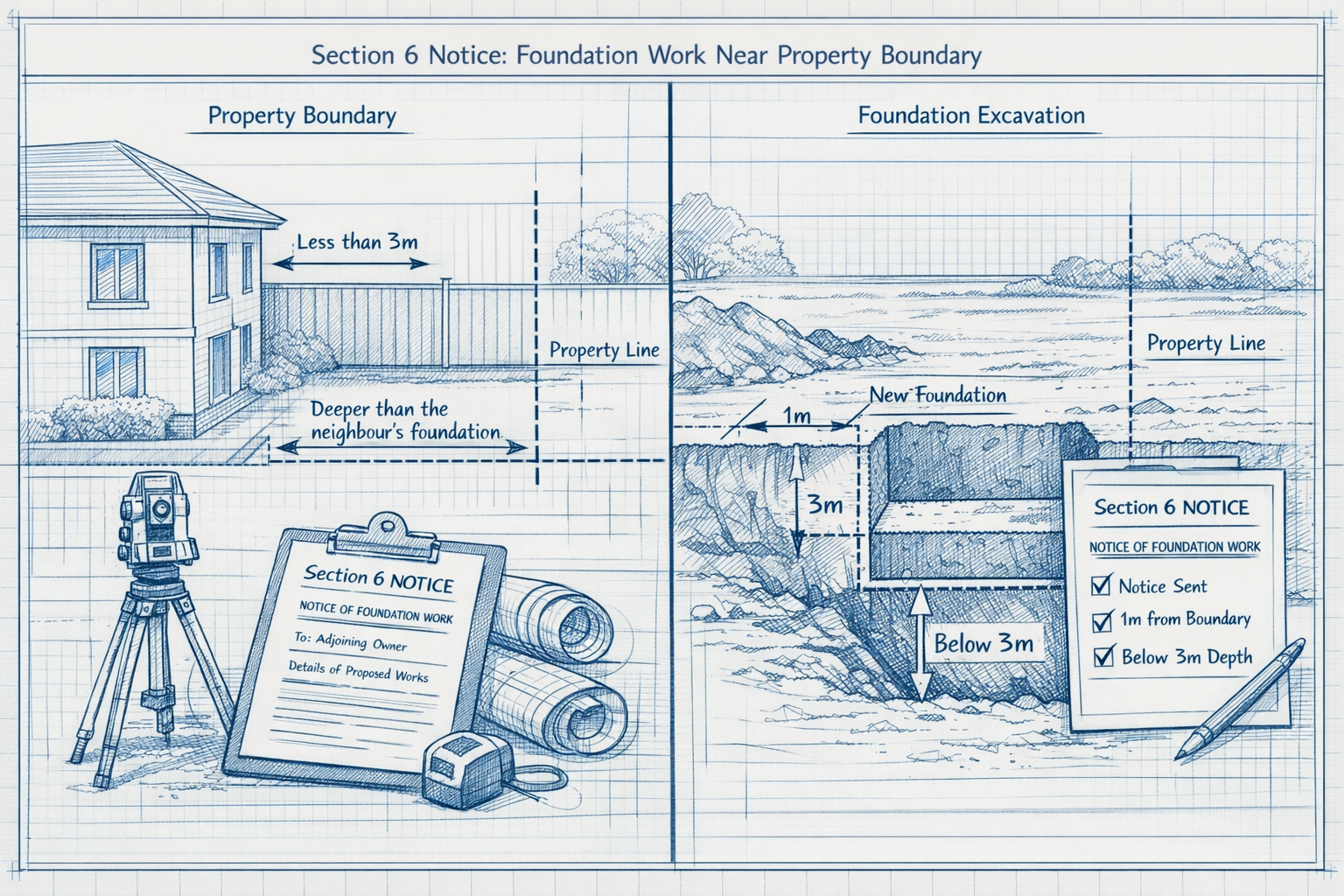
Essential Components of a Valid Notice
Notice documentation must include specific technical details to be considered valid[1]. Missing key information can invalidate the entire notice, causing delays and potential legal issues[2].
A compliant Section 6 Notice must contain:
- Building Owner’s Details: Full name and address of the person undertaking the work
- Affected Neighbour’s Details: Name and address of all adjoining owners
- Proposed Foundation Depth: Exact measurements of how deep excavations will go
- Location of New Structure: Precise position of the wall or building relative to the boundary
- Technical Drawings: Plans and cross-sections showing the excavation in detail
- Existing Foundation Depths: Measurements or estimates of the neighbour’s current foundation levels
- Start Date: When work is intended to commence (must be at least one month from service)
Important: Planning permission is not required to serve notice. Homeowners can serve a party wall notice independently of the planning permission process[3].
Timeline for Notice Service
Understanding the timeline is crucial for project planning:
- Minimum 1 month before work starts: Section 6 Notice must be served
- 14 days for neighbour response: Adjoining owners have two weeks to consent or dissent
- Up to 12 months to commence: Once served, homeowners can begin work within one year, allowing flexibility in project scheduling[3]
Common Notice Mistakes to Avoid
Missing key wording can invalidate notices[2]. Avoid these frequent errors:
❌ Insufficient technical detail about excavation depths
❌ Vague location descriptions without proper plans
❌ Incorrect measurements of distances from boundaries
❌ Missing cross-section drawings showing foundation relationships
❌ Incomplete neighbour identification (missing all affected parties)
❌ Serving notice too late (less than one month before starting)
For guidance on proper notice procedures, consult our detailed guide on party wall act notices and how to respond.
Written Agreement or Award Required
Written agreement or surveyor award required before work begins: Before party wall building works can commence, the building owner must obtain either a written party wall agreement from all affected neighbours or a Party Wall Award prepared by an appointed surveyor[3].
The two paths forward after serving notice:
- Consent Path: Neighbour agrees in writing → work can proceed with agreed conditions
- Dissent or No Response Path: Neighbour objects or doesn’t respond → surveyors must be appointed → Party Wall Award issued
Understanding the types of party wall works helps clarify which notices apply to your specific project.
Surveyor Checklists for Foundation Compliance and Protection
Professional surveyors play a critical role in ensuring Party Wall Notices for Foundations Near Boundaries: Surveyor Checklists for Compliance throughout the excavation process. Their systematic approach protects both building owners and adjoining owners from disputes and structural damage.
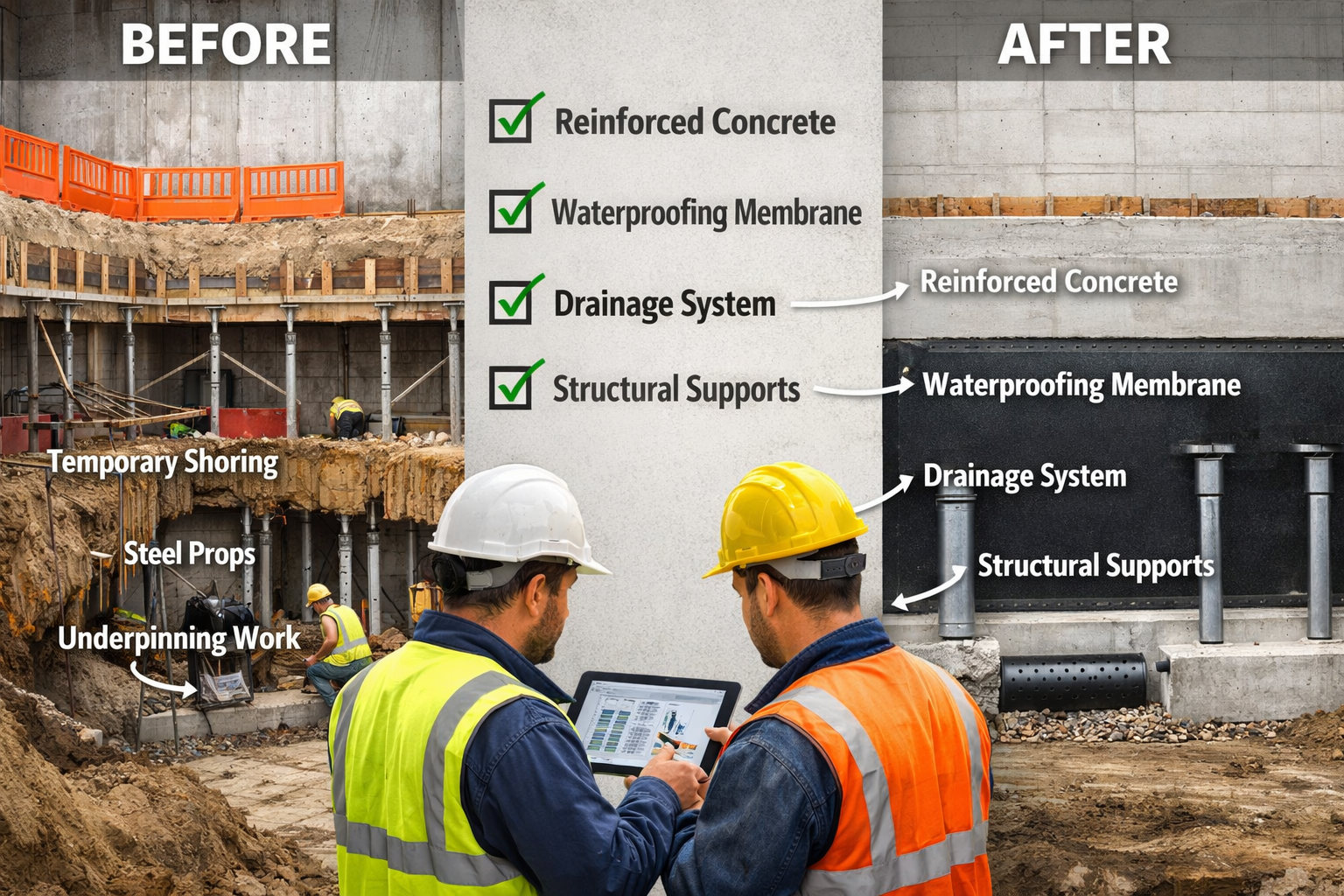
Pre-Work Surveyor Assessment Checklist
Before any excavation begins, appointed surveyors conduct thorough assessments using detailed checklists:
📋 Site Investigation Checklist
- ✅ Verify exact boundary locations with title deeds and surveys
- ✅ Measure distances from proposed excavation to neighbouring buildings
- ✅ Determine existing foundation depths (via trial holes if necessary)
- ✅ Assess soil conditions and ground stability
- ✅ Identify underground services and utilities
- ✅ Evaluate existing structural condition of both properties
- ✅ Document current state with photographs and videos
📋 Schedule of Condition Requirements
A schedule of condition forms a crucial baseline record. Surveyors document:
- Existing cracks, settlement, or structural defects
- Interior and exterior condition of walls, floors, and ceilings
- Condition of finishes, decorations, and fixtures
- Photographic evidence with date stamps
- Detailed written descriptions of all defects
This record protects both parties by establishing what damage existed before work commenced versus what may occur during construction.
Party Wall Award Protective Measures
Party Wall Award specifies protective measures: Once the notice process concludes, the Party Wall Award details protective measures needed, which may include specific sequencing of digging or adequate underpinning if work is particularly close and deep[1].
Common protective measures specified in awards include:
🛡️ Structural Protection Methods
- Underpinning: Strengthening the neighbour’s existing foundations before excavating nearby
- Temporary shoring: Installing support systems during excavation phases
- Excavation sequencing: Digging in controlled stages to maintain stability
- Concrete thrust blocks: Installing supports to prevent lateral movement
- Monitoring systems: Setting up crack gauges and level monitoring points
🛡️Construction Method Requirements
- Maximum excavation depths per stage
- Required curing times for concrete before adjacent digging
- Dewatering controls to prevent ground movement
- Vibration limits for machinery and piling work
- Working hours restrictions to minimize disruption
For building owners, understanding the costs of party wall processes helps with budget planning for these protective measures.
During-Work Monitoring Checklist
📋 Active Construction Monitoring
Professional surveyors conduct regular site visits during foundation work:
- ✅ Inspect excavation depths and methods weekly (minimum)
- ✅ Check monitoring points for any movement or settlement
- ✅ Verify protective measures are properly installed and maintained
- ✅ Document compliance with Award conditions through photographs
- ✅ Respond promptly to any concerns raised by adjoining owners
- ✅ Ensure contractors follow specified excavation sequences
- ✅ Monitor for unexpected ground conditions requiring Award variations
Post-Work Completion Checklist
📋 Final Assessment Requirements
- ✅ Conduct final condition survey of neighbouring property
- ✅ Compare post-work condition against original schedule
- ✅ Identify any damage attributable to the works
- ✅ Arrange remedial works if damage occurred
- ✅ Obtain sign-off from all parties
- ✅ Archive all documentation for future reference
Regional Surveyor Resources
Access to experienced local surveyors ensures compliance with regional building practices:
- Party Wall Surveyor East London
- Party Wall Surveyor Central London
- Party Wall Surveyor West London
- Party Wall Surveyor North London
- Party Wall Surveyor South London
Legal Consequences of Non-Compliance
Understanding the risks of failing to follow proper procedures is essential for all building owners planning foundation work near boundaries.
What Happens Without Proper Notice
Failure to serve notice has legal consequences: Not serving a Party Wall Notice can result in legal action requiring the homeowner to undo work or pay compensation to affected neighbours[4]. The adjoining owner can:
- 🚫 Obtain an injunction to stop work immediately
- ⚖️ Sue for damages if their property is affected
- 💰 Claim compensation for diminished property value
- 🔨 Require removal or modification of completed work
- 📋 Force retrospective party wall procedures at building owner’s expense
Financial Implications
Non-compliance typically costs far more than following proper procedures:
- Legal fees for both parties (building owner pays)
- Court costs if disputes escalate to litigation
- Remedial work expenses to repair neighbour’s damage
- Project delays while legal issues are resolved
- Increased insurance premiums due to claims history
For guidance on managing expenses, see our tips on how to keep party wall costs down.
Protecting Your Rights as an Adjoining Owner
If your neighbour is carrying out works without proper notice, you have rights under the Act. Adjoining owners should:
- Request written confirmation that proper notices were served
- Appoint an adjoining owner’s surveyor to protect your interests
- Ensure a schedule of condition is completed before work starts
- Document any concerns or damage immediately
- Understand your rights regarding party wall awards
Best Practices for Building Owners
Following these best practices ensures smooth foundation projects near boundaries:
Early Planning Strategies
🎯 Start the party wall process early (3-4 months before intended construction)
🎯 Engage a qualified surveyor before serving notices
🎯 Communicate proactively with neighbours about your plans
🎯 Budget adequately for party wall costs and protective measures
🎯 Coordinate party wall procedures with planning and building control applications
Choosing the Right Professionals
Select experienced professionals who understand Party Wall Notices for Foundations Near Boundaries: Surveyor Checklists for Compliance:
- Chartered surveyors with RICS accreditation
- Specialists in party wall matters (not general surveyors)
- Local expertise familiar with regional construction methods
- Clear fee structures with transparent cost breakdowns
- Good communication skills to liaise with all parties
For building owners, appointing a building owner’s surveyor early in the process helps navigate complex requirements.
Documentation Best Practices
Maintain comprehensive records throughout:
- 📁 Keep copies of all served notices with proof of delivery
- 📁 Retain all correspondence with neighbours and surveyors
- 📁 Archive photographs, drawings, and technical specifications
- 📁 Document any verbal agreements in writing
- 📁 Store Party Wall Awards securely for future property sales
Conclusion
Party Wall Notices for Foundations Near Boundaries: Surveyor Checklists for Compliance represents a critical legal framework protecting property owners throughout England and Wales. The Section 6 notice requirements—particularly the 3-metre and 6-metre rules—exist to prevent structural damage and disputes when excavating near neighbouring buildings.
Successful compliance requires three essential elements: proper notice service with complete technical documentation at least one month before work begins, professional surveyor oversight through detailed checklists and condition surveys, and protective measures specified in Party Wall Awards to safeguard adjacent properties during construction.
The consequences of non-compliance extend far beyond simple inconvenience—legal action, work stoppages, compensation claims, and damaged neighbour relations can derail projects and multiply costs significantly. Conversely, following proper procedures protects all parties, facilitates smoother construction, and creates documented evidence that benefits future property transactions.
Take Action Now
Whether you’re a building owner planning foundation work or an adjoining owner concerned about nearby excavations, take these steps:
- Assess your project against the 3-metre and 6-metre rules to determine if Section 6 notices apply
- Engage qualified surveyors early in your planning process—at least 3-4 months before intended construction
- Serve proper notices with complete technical documentation and accurate measurements
- Document everything through schedules of condition, photographs, and written correspondence
- Maintain open communication with neighbours to prevent misunderstandings and disputes
For professional guidance on your specific situation, explore our comprehensive resources on party wall notices or contact experienced local surveyors who can ensure your foundation project proceeds smoothly, legally, and without damaging valuable neighbour relationships.
Remember: proper party wall procedures aren’t obstacles to construction—they’re essential protections that enable development while preserving the structural integrity and rights of all property owners involved.
References
[1] Excavation And The Party Wall Act Navigating The 3 And 6 Metre Rules For Foundations – partywallslimited.com
[2] Party Wall Notices Explained A Simple Guide For Home Extensions – prideroad.co.uk
[3] Party Wall Agreement – hoa.org.uk
[4] Navigating The World Of Party Walls A Comprehensive Guide – warrenpropertymatters.online
Speak to a RICS chartered party wall surveyor
Free initial consultation. Notices, awards and schedules of condition across London and nationwide.