Between April and May 2026, the Royal Institution of Chartered Surveyors (RICS) launched a critical eight-week consultation that could fundamentally reshape how party wall surveyors operate across England and Wales. With growing concerns about jurisdictional challenges, fee disputes, and inconsistent professional standards threatening the integrity of party wall procedures, the draft 8th edition guidance represents the most significant overhaul of professional practice standards in years.
The RICS 8th Edition Party Wall Guidance: Key Changes and Implications for Surveyors in 2026 consultation seeks input from surveyors, legal professionals, and dispute resolution practitioners on enhanced procedural frameworks, strengthened regulatory direction, and updated templates designed to address mounting challenges in the field[1]. For the thousands of surveyors navigating the Party Wall etc. Act 1996 daily, these proposed changes carry profound implications for professional conduct, liability exposure, and operational procedures.
Key Takeaways
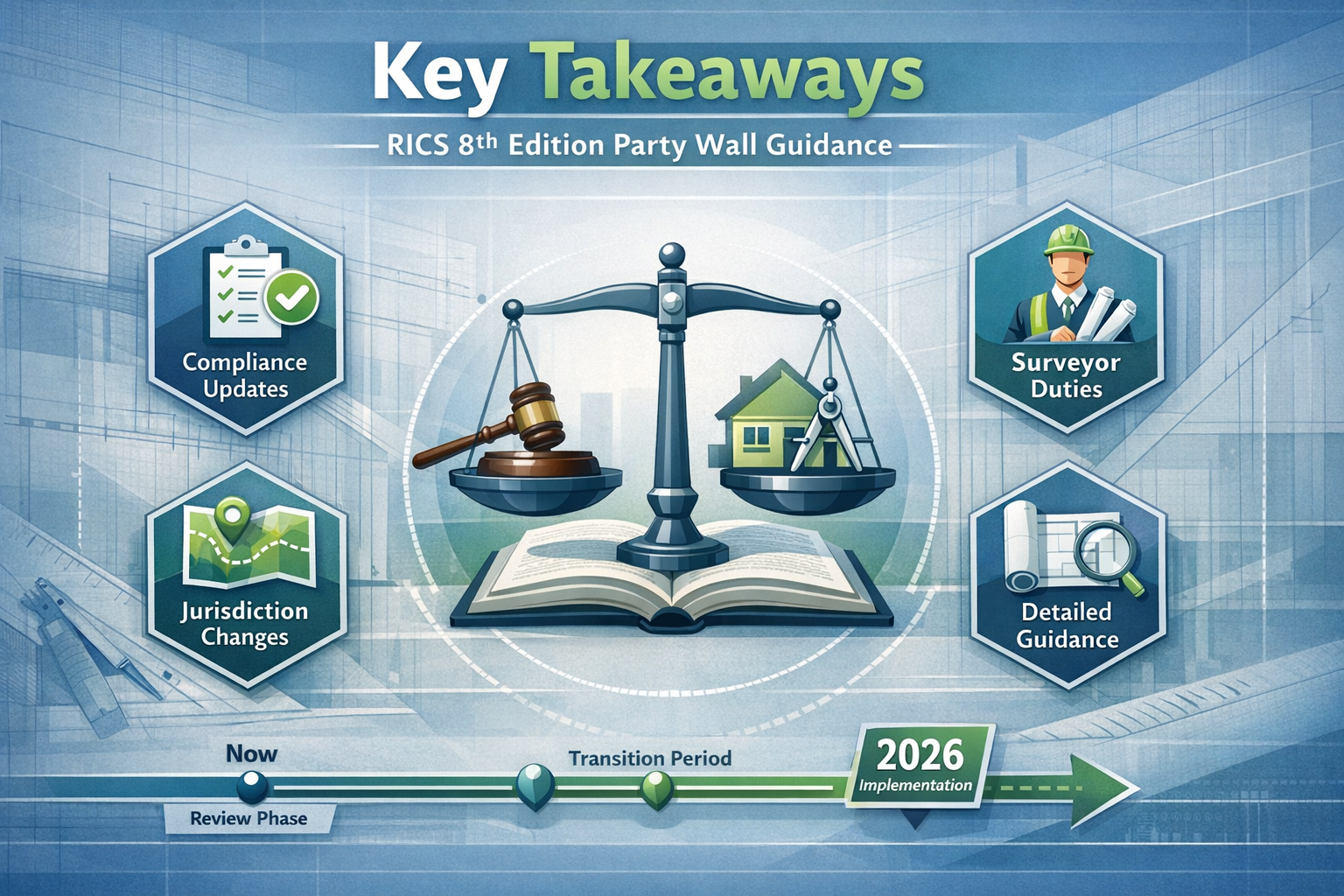
- 🔍 Consultation Period: Eight-week feedback window running through April-May 2026 targets surveyors, legal professionals, and dispute resolution practitioners across England and Wales
- ⚖️ Enhanced Independence Standards: Draft guidance strengthens emphasis on surveyors’ personal and statutory appointments, clarifying independence from client instructions
- 📋 Comprehensive Template Updates: Revised letters of appointment, enhanced appendices, and modernized award templates provide clearer procedural frameworks
- ⚠️ Jurisdictional Clarity: New provisions address growing concerns about awards challenged due to lack of proper authority or absence of genuine disputes
- 💼 Expanded Regulatory Direction: Strengthened guidance on fee practices, Third Surveyor use, notice service, and public engagement standards
Understanding the Context Behind the RICS 8th Edition Party Wall Guidance
The Party Wall etc. Act 1996 has governed building works affecting shared boundaries for nearly three decades, yet its practical application continues to generate confusion, disputes, and legal challenges. The 7th edition of RICS guidance, while comprehensive, has proven insufficient to address emerging issues in modern property development and dispute resolution.
Why This Update Matters Now
Several factors have converged to make the RICS 8th Edition Party Wall Guidance: Key Changes and Implications for Surveyors in 2026 particularly timely and necessary:
Rising Jurisdictional Challenges 🏛️
Recent cases have exposed vulnerabilities where awards were successfully challenged because surveyors acted without proper jurisdiction or where no genuine dispute existed between parties[1][2]. These challenges have created uncertainty and increased professional liability risks for surveyors operating under the Act.
Inconsistent Professional Standards 📊
Variations in how surveyors interpret their duties, calculate fees, and engage with the Third Surveyor mechanism have led to complaints and erosion of public confidence in the party wall process. The need for greater consistency and clarity has become increasingly apparent to both practitioners and stakeholders.
Evolving Property Market Dynamics 🏗️
The property development landscape in 2026 looks dramatically different from when the 7th edition was published. Urban densification, complex multi-unit developments, and the integration of new construction technologies require updated guidance that reflects contemporary practice realities.
For property owners undertaking various types of party wall works, these changes will directly impact how their projects proceed and what standards they can expect from appointed surveyors.
Core Changes in the RICS 8th Edition Party Wall Guidance: Key Changes and Implications for Surveyors in 2026
The draft 8th edition introduces substantial revisions across multiple domains of party wall practice. Understanding these changes is essential for surveyors preparing to adapt their procedures and for property owners navigating the party wall process.
Enhanced Appendices and Procedural Templates
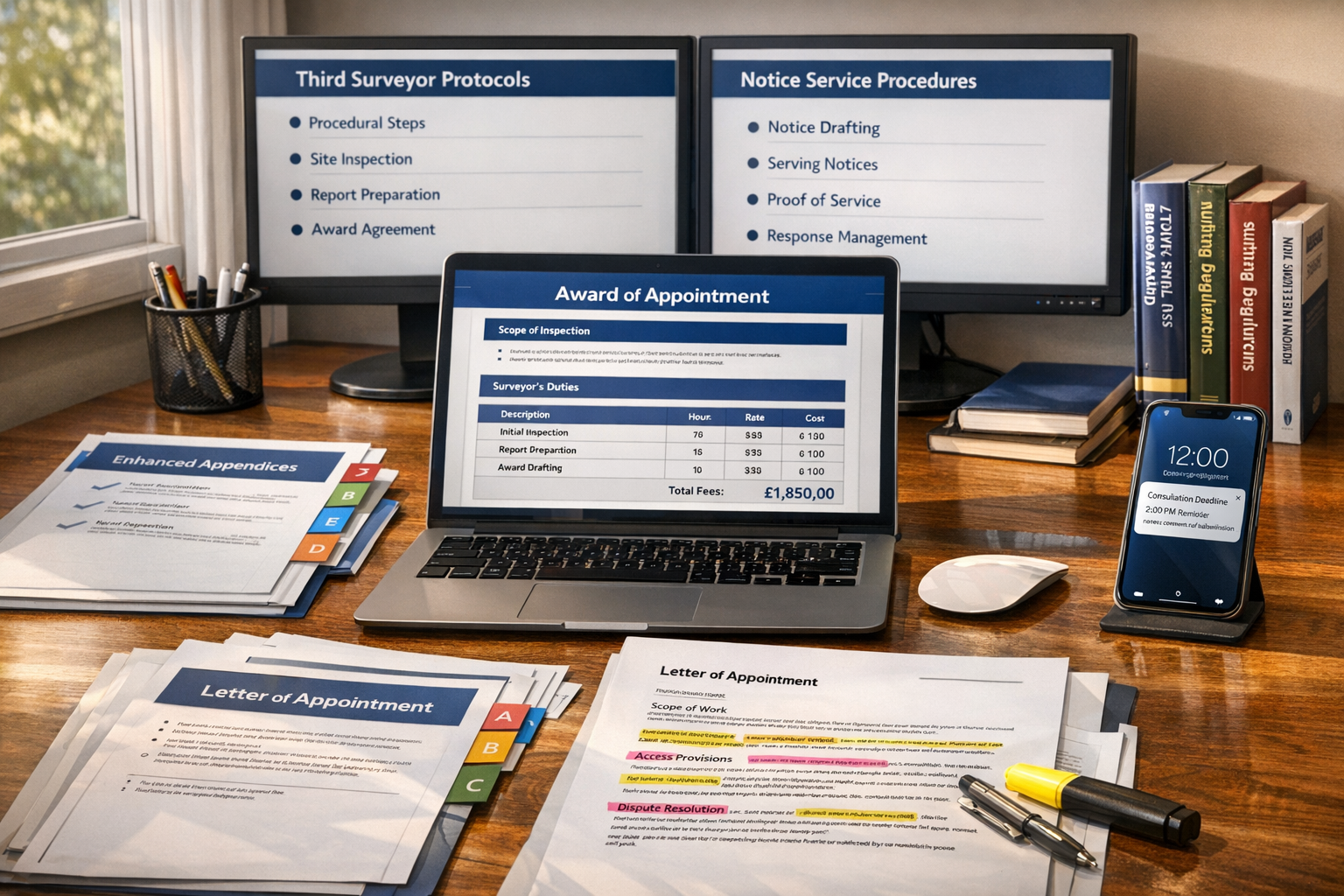
One of the most immediately practical changes involves comprehensive updates to supporting documentation and templates that surveyors use daily[1][2].
Revised Letters of Appointment ✉️
The updated appointment letters now include:
- Clearer scope definitions outlining the surveyor’s statutory role versus any additional services
- Enhanced fee transparency requirements specifying how fees will be calculated and when they become payable
- Explicit independence statements reinforcing the surveyor’s statutory obligations
- Jurisdictional prerequisites confirming that proper notice has been served and a dispute exists
Modernized Award Templates 📄
The draft award template has been substantially revised to provide:
- Structured sections ensuring all statutory requirements are addressed
- Clearer condition of property descriptions
- Enhanced special condition formatting for complex works
- Improved fee schedule presentation
- Standardized dispute resolution provisions
These templates aim to reduce ambiguity and provide consistent frameworks across different surveyors and jurisdictions. For those seeking to understand party wall awards more thoroughly, these changes represent a significant improvement in clarity and accessibility.
Strengthened Regulatory and Conduct Guidance
Perhaps the most significant aspect of the RICS 8th Edition Party Wall Guidance: Key Changes and Implications for Surveyors in 2026 involves enhanced direction on professional conduct and regulatory compliance[1][3].
Fee Practices and Transparency 💰
The draft guidance addresses long-standing concerns about fee practices:
| Aspect | Enhanced Requirement |
|---|---|
| Fee Basis | Clear explanation of hourly rates or fixed fees before appointment |
| Disbursements | Separate identification of third-party costs |
| Payment Terms | Specification of when fees become due and payable |
| Fee Disputes | Procedures for addressing disagreements about fees |
| Reasonableness | Guidance on proportionality relative to works complexity |
These provisions respond to complaints about unexpected fees and lack of transparency that have undermined confidence in the party wall process. Property owners looking to keep party wall costs down will benefit from these enhanced transparency requirements.
Third Surveyor Utilization ⚖️
The guidance strengthens direction on when and how the Third Surveyor mechanism should be engaged:
- Appropriate circumstances for Third Surveyor appointment
- Selection procedures ensuring independence and expertise
- Scope of authority clarifying what matters can be referred
- Timeline expectations for Third Surveyor determinations
- Cost allocation principles for Third Surveyor fees
Notice Service Standards 📮
Enhanced guidance addresses proper service of party wall notices, including:
- Verification that notices contain all required information
- Confirmation of proper service methods and timing
- Documentation requirements proving service occurred
- Procedures when service is disputed or uncertain
Personal and Statutory Appointment Emphasis
A cornerstone principle reinforced throughout the draft guidance is that a party wall surveyor’s appointment is personal and statutory, independent of client instruction[1][2].
What This Means in Practice 🎯
This emphasis clarifies that surveyors appointed under the Party Wall etc. Act 1996 have obligations that transcend typical client-professional relationships:
- Statutory duties take precedence over client preferences when conflicts arise
- Independence must be maintained even when appointed by one party
- Impartiality in award drafting regardless of which party appointed the surveyor
- Professional judgment cannot be compromised by client pressure
This principle has profound implications for how surveyors conduct themselves and how they explain their role to appointing parties. Whether acting as a building owner’s surveyor or an adjoining owner’s surveyor, this independence requirement remains paramount.
“The consultation aims to help shape updated guidance supporting high standards of competence, conduct and consistency, while helping practitioners navigate the statutory process with greater clarity and confidence.” — James Kavanagh, RICS Head of Professional Practice (Land & Development)[1][3]
Jurisdictional Clarity and Authority Concerns

One of the most critical areas addressed in the RICS 8th Edition Party Wall Guidance: Key Changes and Implications for Surveyors in 2026 involves jurisdictional prerequisites and proper authority to act.
The Growing Problem of Invalid Awards
Recent legal challenges have exposed situations where awards were set aside because:
- No genuine dispute existed between the parties when surveyors were appointed
- Notices were defective or improperly served, undermining the statutory process
- Surveyors acted prematurely before the 14-day response period expired
- Jurisdiction was assumed without proper verification of prerequisites
These challenges have created significant professional liability concerns and undermined the finality that awards are meant to provide.
Enhanced Jurisdictional Verification Requirements
The draft guidance now includes strengthened provisions requiring surveyors to verify:
Before Accepting Appointment ✅
- Confirmation that proper notice has been served
- Evidence of service method and date
- Verification that the 14-day response period has expired (or consent given)
- Assessment of whether a genuine dispute exists
- Clarity on which section of the Act applies
During the Award Process 📋
- Ongoing verification that jurisdiction remains valid
- Documentation of any changes in circumstances
- Procedures if jurisdiction questions arise mid-process
- Clear record-keeping demonstrating proper authority
For property owners carrying out works or responding to neighbour’s works, these enhanced verification requirements provide greater assurance that the process is being followed correctly.
When the Act is Engaged
The updated guidance provides clearer direction on determining when the Party Wall etc. Act 1996 applies[1][3]:
Section 1 Works (New Building on the Line of Junction)
- Building a new wall astride the boundary line
- Building wholly on the building owner’s land but with foundations encroaching
Section 2 Works (Existing Party Structures)
- Repairs, alterations, or modifications to existing party walls
- Underpinning party structures
- Demolition and rebuilding party walls
Section 6 Works (Excavations Near Boundaries)
- Excavations within 3 meters of neighbouring structures going deeper than their foundations
- Excavations within 6 meters going deeper than a 45-degree plane from neighbouring foundations
Understanding what constitutes a party structure and distinguishing it from boundary walls remains essential to proper application of the Act.
Implications for Different Stakeholder Groups
The RICS 8th Edition Party Wall Guidance: Key Changes and Implications for Surveyors in 2026 will affect various stakeholders differently, depending on their role in the party wall process.
For Professional Surveyors
Chartered surveyors will need to adapt their practices across multiple dimensions:
Operational Changes 🔧
- Template updates: Revising standard letters, appointment terms, and award formats
- Verification procedures: Implementing enhanced jurisdictional checks before accepting appointments
- Fee transparency: Adopting clearer fee disclosure and agreement practices
- Documentation standards: Maintaining more comprehensive records demonstrating compliance
Professional Development 📚
- Training requirements: Familiarizing with new guidance provisions and updated standards
- Competence assessment: Ensuring knowledge remains current with evolving best practices
- Risk management: Updating professional indemnity considerations based on enhanced standards
Practice Management 💼
- Client communication: Explaining the surveyor’s statutory independence more clearly
- Quality assurance: Implementing checks ensuring compliance with enhanced standards
- Peer consultation: Engaging more systematically with Third Surveyor mechanisms when appropriate
For Property Developers and Building Owners
Those undertaking construction projects affecting party walls will experience several impacts[2]:
Planning Considerations 📅
- Timeline adjustments: Enhanced verification procedures may extend initial appointment phases
- Cost implications: Greater fee transparency may reveal actual costs more clearly upfront
- Documentation requirements: More comprehensive record-keeping throughout the process
Quality Assurance ✨
- Consistent standards: Greater uniformity in how different surveyors approach similar situations
- Reduced disputes: Clearer procedures may reduce disagreements and challenges
- Award reliability: Enhanced jurisdictional verification should produce more defensible awards
For Adjoining Owners
Neighbouring property owners affected by party wall works will benefit from:
Enhanced Protection 🛡️
- Surveyor independence: Clearer understanding that even building owner’s surveyors have statutory duties
- Transparent fees: Better visibility into what fees are reasonable and how they’re calculated
- Procedural clarity: More consistent approach across different surveyors and situations
Improved Engagement 🤝
- Clearer communication: Standardized templates and procedures facilitate understanding
- Dispute resolution: Enhanced Third Surveyor guidance provides clearer escalation paths
- Rights awareness: Better documentation of rights and protections under the Act
Impact on Rental Properties and the Renters’ Rights Act 2026
An emerging consideration involves the intersection of party wall procedures with rental property regulations. Chartered surveyors appointed under Section 10 of the Party Wall Act now carry expanded responsibilities when rental properties are involved, reflecting the impact of the Renters’ Rights Act 2026[6].
Key Considerations 🏢
- Tenant notification: Enhanced requirements for informing tenants of planned works
- Access coordination: Procedures respecting tenant rights while facilitating necessary inspections
- Condition documentation: Additional scrutiny when rental properties are affected
- Landlord obligations: Clarity on landlord responsibilities throughout the party wall process
Enhanced Procedural Frameworks and Compliance Standards
The RICS 8th Edition Party Wall Guidance: Key Changes and Implications for Surveyors in 2026 introduces more robust procedural frameworks designed to standardize practice and reduce inconsistencies.
Schedule of Condition Enhancements
Proper documentation of existing conditions before works commence remains critical to resolving post-construction disputes. The updated guidance strengthens requirements for schedules of condition:
Documentation Standards 📸
- Photographic requirements: Minimum standards for image quality, coverage, and annotation
- Written descriptions: Structured formats ensuring comprehensive condition recording
- Dating and authentication: Procedures confirming when and by whom schedules were prepared
- Distribution protocols: Requirements for sharing schedules with all relevant parties
Scope Considerations 🔍
- Areas to be covered: Guidance on determining appropriate extent of condition recording
- Detail level: Standards for describing existing defects, cracks, and conditions
- Baseline establishment: Creating clear benchmarks against which post-work conditions can be compared
Public Engagement and Transparency
The draft guidance includes enhanced provisions regarding public engagement and transparency in party wall procedures[1]:
Communication Standards 💬
- Plain language: Encouraging surveyors to explain technical matters in accessible terms
- Response timeframes: Reasonable expectations for responding to queries and concerns
- Accessibility: Ensuring procedures accommodate parties with different needs and circumstances
Complaint Handling 📢
- Clear procedures: Established pathways for raising concerns about surveyor conduct
- Resolution mechanisms: Frameworks for addressing complaints before they escalate
- Professional accountability: Reinforced standards for professional conduct and ethics
Integration with Broader RICS Standards
The party wall guidance doesn’t exist in isolation but connects with broader RICS professional standards:
Conflicts of Interest ⚠️
- Enhanced guidance on identifying and managing potential conflicts
- Disclosure requirements when relationships or circumstances might affect independence
- Procedures for declining appointments when conflicts cannot be managed
Continuing Professional Development 🎓
- Expectations for maintaining current knowledge of party wall law and practice
- Recommended training and development activities
- Competence assessment considerations
Regional Considerations Across London and England
While the Party Wall etc. Act 1996 applies uniformly across England and Wales, practical implementation varies by location and property type. The updated guidance acknowledges these regional variations while promoting consistent standards.
Urban vs. Rural Applications
Dense Urban Areas 🏙️
In areas like North London, West London, South London, East London, and Central London, party wall matters arise frequently due to:
- Terraced housing: Continuous party walls between multiple properties
- Basement excavations: Section 6 works in areas with limited surface space
- Complex ownership: Multiple stakeholders in converted buildings and developments
- High property values: Greater scrutiny and higher stakes in dispute resolution
Less Dense Areas 🌳
In suburban and rural contexts:
- Fewer party structures: Semi-detached and detached properties reduce frequency
- Larger plots: Section 6 excavation provisions less commonly triggered
- Different construction types: Varied building methods and materials
- Local surveyor availability: Potential challenges finding experienced practitioners
Property Type Variations
Residential Properties 🏠
- Standard procedures for extensions, loft conversions, and basement excavations
- Balance between technical rigor and proportionality to works scale
- Cost sensitivity considerations for homeowners
Commercial Developments 🏢
- More complex structural works and larger-scale projects
- Multiple adjoining owners and stakeholders
- Integration with broader construction management processes
Mixed-Use Buildings 🏬
- Coordination between residential and commercial interests
- Varied access requirements and scheduling constraints
- Complex ownership and management structures
Preparing for Implementation: Practical Steps
As the consultation period concludes and the final 8th edition approaches publication, surveyors and stakeholders should take proactive steps to prepare.
For Surveyors
Immediate Actions ⚡
- Review the draft guidance thoroughly, understanding proposed changes
- Assess current practices against enhanced standards
- Identify gaps where procedures need updating
- Participate in consultation providing feedback on practical implications
- Plan training for yourself and team members
Medium-Term Preparations 📆
- Update templates aligning with revised formats and requirements
- Revise appointment terms incorporating enhanced transparency provisions
- Strengthen verification procedures for jurisdictional prerequisites
- Enhance documentation systems ensuring compliance evidence
- Review insurance coverage considering enhanced professional obligations
Long-Term Adaptations 🔮
- Embed new standards into routine practice workflows
- Monitor emerging case law interpreting updated guidance
- Engage in peer learning sharing experiences and best practices
- Contribute to profession supporting continued guidance evolution
For Property Owners and Developers
Before Starting Projects 🚀
- Engage surveyors early allowing time for proper procedures
- Budget appropriately for professional fees based on enhanced transparency
- Understand the process including your rights and obligations
- Maintain records of all notices, correspondence, and agreements
- Consider alternatives such as party wall agreements without surveyors where appropriate
During Projects 🔨
- Cooperate with surveyors providing requested information promptly
- Respect procedures even when they seem bureaucratic or time-consuming
- Communicate openly with neighbours and appointed professionals
- Document everything maintaining comprehensive project records
- Address issues promptly rather than allowing problems to escalate
For Adjoining Owners
When Notified of Works 📬
- Understand your options including consent, dissent, or surveyor appointment
- Seek advice if uncertain about appropriate response
- Act within timeframes respecting the 14-day response period
- Appoint qualified surveyors ensuring they understand enhanced standards
- Maintain engagement throughout the process
Protecting Your Interests 🔐
- Ensure proper schedules of condition are prepared before works commence
- Understand fee arrangements and your potential liability
- Monitor compliance with award conditions during construction
- Document concerns if problems arise during or after works
- Know escalation paths including Third Surveyor and dispute resolution options
The Consultation Process and Timeline
Understanding the consultation process itself helps stakeholders engage effectively with the RICS 8th Edition Party Wall Guidance: Key Changes and Implications for Surveyors in 2026 development.
Consultation Structure
Duration and Timeline ⏰
The consultation period runs for approximately eight weeks across April and May 2026, providing sufficient time for thorough review and considered responses[1].
Target Participants 👥
RICS actively seeks feedback from:
- Chartered surveyors practicing in party wall matters
- Legal professionals specializing in property and construction law
- Dispute resolution practitioners and Third Surveyors
- Property developers and construction industry representatives
- Professional bodies and trade associations
- Academic and research institutions
- Property owners and community representatives
Submission Methods 📧
Stakeholders can provide feedback through:
- Formal written submissions addressing specific consultation questions
- Online survey responses to structured questions
- Participation in consultation workshops and roundtables
- Email correspondence highlighting specific concerns or suggestions
Key Consultation Questions
While the specific consultation questions are detailed in the RICS consultation documents, they generally address:
Technical Provisions 🔧
- Clarity and practicality of revised templates and procedures
- Appropriateness of enhanced jurisdictional verification requirements
- Effectiveness of strengthened conduct and regulatory guidance
Implementation Considerations 📋
- Feasibility of proposed changes within current practice models
- Resource implications for surveyors and stakeholders
- Transition arrangements from 7th to 8th edition standards
Broader Impact 🌐
- Effects on different property types and development scales
- Regional variations and local practice considerations
- Balance between standardization and flexibility for unique situations
Post-Consultation Process
Following the consultation closure:
- Response analysis: RICS reviews all submissions, identifying themes and concerns
- Guidance refinement: Draft provisions are revised based on feedback
- Final publication: The 8th edition is formally published and released
- Implementation support: RICS provides training, webinars, and resources
- Ongoing monitoring: Effectiveness is assessed with potential future updates
Future Outlook: Party Wall Practice Beyond 2026
The RICS 8th Edition Party Wall Guidance: Key Changes and Implications for Surveyors in 2026 represents not just an update but a foundation for evolving practice in coming years.
Emerging Trends Shaping Practice
Technology Integration 💻
- Digital award preparation and distribution systems
- Electronic notice service and consent mechanisms
- Virtual inspection and condition recording technologies
- Online dispute resolution platforms
Sustainability Considerations 🌱
- Party wall implications of retrofit and energy efficiency works
- Guidance on sustainable construction methods affecting shared structures
- Environmental impact considerations in award conditions
Regulatory Evolution ⚖️
- Potential legislative amendments to the Party Wall etc. Act 1996
- Integration with building safety and fire safety regimes
- Coordination with planning and building control processes
Professional Development Imperatives
Competence Standards 📊
- Ongoing assessment ensuring practitioners maintain current knowledge
- Specialization recognition for experienced party wall surveyors
- Quality assurance mechanisms protecting public confidence
Ethical Practice 🎯
- Continued emphasis on independence and statutory obligations
- Enhanced transparency and accountability standards
- Professional integrity in fee practices and client relationships
Stakeholder Collaboration
Effective party wall practice requires cooperation among:
- Surveyors: Maintaining professional standards and peer support
- Legal professionals: Providing clarity on statutory interpretation
- Property industry: Understanding practical implications and constraints
- Regulatory bodies: Ensuring appropriate oversight and guidance
- Property owners: Engaging constructively with the process
Conclusion
The RICS 8th Edition Party Wall Guidance: Key Changes and Implications for Surveyors in 2026 represents a pivotal moment in the evolution of party wall practice across England and Wales. Through enhanced procedural frameworks, strengthened regulatory guidance, and improved templates, the draft 8th edition addresses critical challenges that have emerged in recent years—from jurisdictional concerns and inconsistent standards to fee transparency and professional independence.
For surveyors, these changes demand proactive adaptation: updating templates and procedures, strengthening verification processes, enhancing fee transparency, and reinforcing the statutory independence that defines their role. The emphasis on personal and statutory appointments, separate from typical client-professional relationships, clarifies expectations and reduces ambiguity about professional obligations.
Property developers, building owners, and adjoining owners will benefit from more consistent, transparent, and reliable party wall procedures. Enhanced standards should reduce disputes, provide clearer cost expectations, and produce more defensible awards that withstand scrutiny. The integration of considerations from the Renters’ Rights Act 2026 ensures the guidance remains relevant to contemporary property dynamics.
As the consultation period concludes and implementation approaches, all stakeholders have opportunities to shape the final guidance through meaningful engagement. The success of the 8th edition will ultimately depend not just on the quality of the written guidance but on how effectively the profession embraces and implements these enhanced standards in daily practice.
Next Steps
For Surveyors 📋
- Review the draft 8th edition guidance thoroughly
- Participate in the consultation process with constructive feedback
- Begin planning operational updates and training programs
- Engage with professional peers to share insights and concerns
For Property Owners 🏗️
- Familiarize yourself with enhanced procedural requirements
- Budget appropriately for party wall procedures in project planning
- Engage qualified surveyors who understand evolving standards
- Maintain comprehensive documentation throughout the process
For Additional Information 📞
Whether you’re navigating party wall matters in urban areas or seeking guidance on specific aspects of the process, professional support remains essential. Understanding the costs of party wall procedures and the Party Wall etc. Act 1996 provides a foundation for effective engagement with this evolving regulatory landscape.
The 8th edition guidance promises to strengthen professional standards, enhance public confidence, and provide clearer frameworks for navigating one of property law’s most practical and frequently encountered regimes. By embracing these changes proactively, the surveying profession can continue delivering high-quality, ethical, and effective party wall services that protect the interests of all stakeholders while facilitating necessary property development and improvement.
References
[1] Rics Launches Consultation On Updated Party Wall Practice Guidance – rics.org
[2] Rics Opens Consultation On Party Wall Guidance Update – propertywire.com
[3] Rics Launches Consultation – propertyindustryeye.com
[4] Rics Launches Consultation On Party Wall Guidance – thenegotiator.co.uk
[5] Rics Consults On Updated Party Wall Practice Guidance – lexisnexis.co.uk
[6] Party Wall Surveys Under Renters Rights Act 2026 Protocols For Landlord Improvements Without Section 21 Evictions – https://nottinghillsurveyors.com/blog/party-wall-surveys-under-renters-rights-act-2026-protocols-for-landlord-improvements-without-section-21-evictions
Speak to a RICS chartered party wall surveyor
Free initial consultation. Notices, awards and schedules of condition across London and nationwide.