Looking for expert solutions?
Request a Quote

Tag: bill

  • Remediation of Unsafe Cladding Bill London Flat Owners Party Wall October 2026: What You Need to Know Now

    Seven days ago, a new Bill reached Parliament that could pull thousands of London flats into mandatory fire-safety regulation for the first time, and nobody has told most leaseholders what it means for their next building survey, their service charge, or their sale.

    Nine years after the Grenfell Tower fire killed 72 people, thousands of buildings across England still have unsafe cladding. On 14 October 2026, the Building Safety (Remediation of Unsafe Cladding etc) Bill was introduced to Parliament, with second reading in the House of Commons its next stage. For London flat owners, freeholders and managing agents, this is the most significant piece of building safety legislation since the Building Safety Act 2022, and it arrives alongside new Building Safety Levy charges and falling flat prices. Understanding the Remediation of Unsafe Cladding Bill London flat owners party wall October 2026 implications now could save months of delay and thousands of pounds later.

    Key Takeaways

    • A new register will capture every residential building in England between 11 and 18 metres, catching thousands of previously unregulated London mid-rise blocks.
    • Responsible entities face legal duties to assess, plan and remediate unsafe cladding, with FRAEW audits, resident communication requirements, and a 2029 completion target.
    • Penalties are severe: up to £500,000 for non-compliance with a Remediation Order, and up to £40,000 or prosecution for failing to register a building.
    • Recladding work on attached London terraces and blocks will frequently trigger Party Wall etc. Act 1996 notices, scaffolding and access issues with neighbours.
    • Leaseholders should ask now about FRAEW status, EWS1 forms, remediation plans and funding routes, this directly affects valuations and mortgage lending.

    What the Remediation of Unsafe Cladding Bill Actually Does

    First announced in the July 2025 Remediation Acceleration Plan, the Bill creates a clear legal duty for “responsible entities” of medium- and high-rise residential buildings to assess and remediate life-critical external wall fire-safety risks. Key provisions include:

    • A new register of all residential buildings between 11 and 18 metres in England.
    • Duties to assess risk, produce remediation compliance plans, and carry out remediation and mitigation works.
    • A consistent, independently audited approach to Fire Risk Appraisals of External Walls (FRAEWs).
    • A legal requirement for responsible entities to share remediation plans and timescales with residents.

    The target is clear: by the end of 2029, every building over 11 metres with unsafe cladding should either be remediated or have a confirmed completion date.

    Building Safety Minister Baroness Blake said: “It’s unacceptable that so many people have been left living in homes with dangerous cladding.” Amy Rees CB, Chief Executive of Homes England, added: “Everyone deserves to feel safe in their home.”

    Enforcement and Backstops Under the Bill

    The Bill has teeth. The First-tier Tribunal can impose financial penalties of up to £500,000 on responsible entities that fail to comply with a Remediation Order. Failing to register a building can bring civil penalties of up to £7,000, rising to £40,000, or prosecution. Anyone obstructing remediation work could face criminal penalties, and the worst cases of delay could lead to criminal prosecution.

    Where responsible parties repeatedly fail to act, Homes England or local authorities can step in and carry out the remediation themselves. Where a building has no effective owner, leaseholders will get clearer legal routes to take over management so safety work can continue, a significant change for orphaned or absentee-freeholder blocks common in parts of London.

    The Bill also makes it simpler for developers, contractors and others who paid for safety works to recover costs from cladding manufacturers whose products contributed to unsafe buildings, widening who can bring claims.

    Charlie Pugsley, Acting CEO of the Building Safety Regulator, said: “BSR is fully engaged with stakeholders to support building owners in fixing known buildings faster.” Kate Henderson of the National Housing Federation said the measures send a clear message that “no building will be left behind.”

    Funding Behind the Remediation of Unsafe Cladding Bill

    The government has committed over £5 billion to remediation, plus an extra £1 billion for social housing providers. Funding also remains available for buildings under 11 metres in exceptional circumstances, and fire alarm funding has been extended to replace waking watches. Since the Remediation Acceleration Plan began, over 470 buildings have completed cladding remediation, helping around 35,000 residents. The new Bill is expected to speed up remediation for around 12,000 residents, including roughly 3,000 whose buildings might otherwise never have been fixed. An independent Chief Construction and Scientific Adviser has also been appointed to oversee technical standards.

    Why London’s Mid-Rise Blocks Are Now in Scope

    London has an unusually dense stock of 11-18 metre residential buildings, former office conversions, 1960s-70s estates, and newer mid-rise developments along transport corridors. Many of these have never been formally assessed for external wall fire risk. The new register changes that overnight, bringing them under the same assessment and remediation duties as taller towers.

    For managing agents and freeholders, this means FRAEWs, compliance plans and resident communication obligations are no longer optional extras, they are statutory requirements with financial penalties attached for inaction.

    Party Wall Implications of the Remediation of Unsafe Cladding Bill London Flat Owners Party Wall October 2026 Works

    This is where the Bill meets everyday London building practice. Recladding and external wall remediation on terraced, semi-detached or directly attached blocks will very often affect neighbouring owners’ property, triggering obligations under the Party Wall etc. Act 1996.

    Points responsible entities and leaseholders should understand generally:

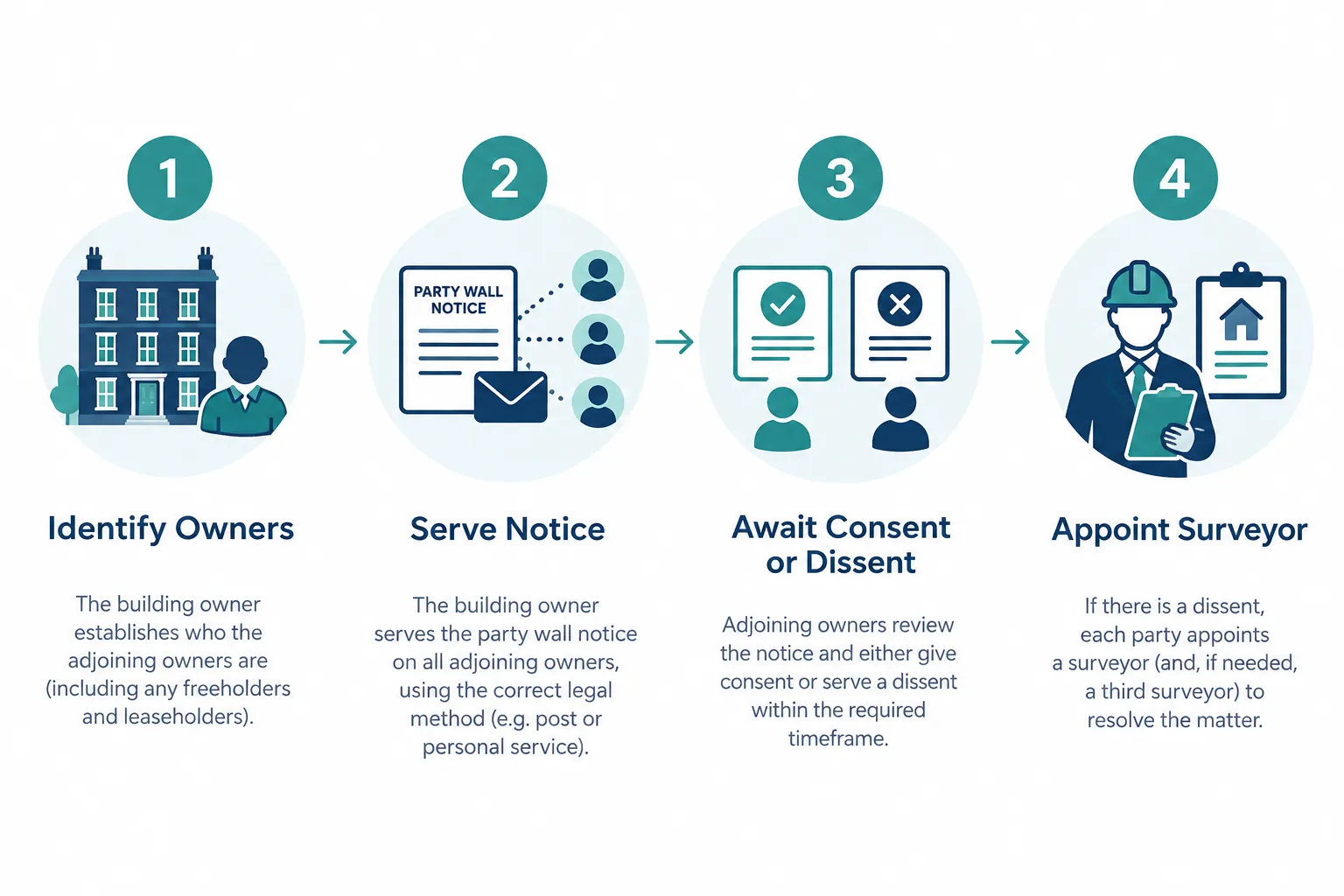
    • Notices: Works to a party wall, party structure, or excavations near a boundary typically require formal notice to adjoining owners before work starts. See our guidance on what a party structure notice is and how to serve it and the broader Party Wall Act notices process.
    • Schedules of condition: Before scaffolding or cladding removal begins, a schedule of condition on neighbouring elevations protects both parties if disputes arise later.
    • Access to Neighbouring Land: Where recladding requires access over a neighbour’s land or airspace, separate statutory access routes may need to be considered alongside Party Wall Act notices.
    • Party Wall Awards: Where notices are served and disputes arise, surveyors agree a Party Wall Award setting out the works, timing and protections for both owners.

    These are general principles, every building and boundary situation differs, and responsible entities should take specific advice before serving notices.

    Scaffolding, Crane Oversailing and Access Licences

    Major recladding projects almost always involve scaffolding that oversails neighbouring boundaries, and sometimes cranes that swing over adjoining airspace. This raises practical and legal questions distinct from fire safety compliance:

    Early engagement with a party wall surveyor avoids costly delays once remediation contractors are mobilised.

    What London Leaseholders Should Ask Right Now

    With the register and compliance duties approaching, leaseholders should proactively ask their freeholder or managing agent:

    1. Has a FRAEW been carried out, and what did it find?
    2. Is there a written remediation compliance plan with dates?
    3. Is an EWS1 form available or needed for mortgage purposes?
    4. What funding route applies, government remediation funding, developer contribution, or leaseholder liability?
    5. Will party wall notices be needed for the works, and has a surveyor been instructed?

    Impact on Sales, Valuations and Lending

    The timing is pointed. The Building Safety Levy started on 1 October 2026, adding cost pressure to new developments, while the UK House Price Index for August 2026 shows England flats down 2.9% year on year and London’s overall average price down 2.2% to £554,430. Buildings without clear FRAEW status or remediation plans risk further valuation discounts, mortgage delays, and reduced buyer interest. A documented compliance plan, by contrast, can reassure lenders and purchasers that a building is on a clear path to resolution.

    Frequently Asked Questions

    Does the Bill apply to all London flats? It applies to medium- and high-rise residential buildings, with a new register specifically covering buildings between 11 and 18 metres, plus existing duties for taller buildings.

    What happens if my freeholder ignores the new duties? The First-tier Tribunal can impose penalties up to £500,000, and Homes England or the local authority can step in to remediate the building directly if responsible parties repeatedly fail to act.

    Will recladding work need party wall notices? Often yes, where works affect a shared or neighbouring structure, boundary, or require access over adjoining land. This should be assessed case by case with a party wall surveyor.

    Can leaseholders take over a building with no effective owner? The Bill gives leaseholders clearer legal routes to take over management of such buildings so remediation can proceed.

    How does this affect selling a flat now? Lenders and buyers are increasingly asking for FRAEW results, EWS1 forms and remediation plans before proceeding, particularly given current price pressure on London flats.

    Conclusion

    The Remediation of Unsafe Cladding Bill marks a decisive shift for London flat owners, freeholders and managing agents, bringing thousands of mid-rise buildings into formal fire-safety scope, with hard deadlines and real financial penalties behind them. Where recladding touches neighbouring structures, boundaries or airspace, Party Wall etc. Act 1996 obligations will frequently run alongside these safety duties. Responsible entities and leaseholders planning works should seek a schedule of condition, serve notices correctly, and secure a proper Party Wall Award before scaffolding goes up. For practical guidance tailored to your building, from party wall notices to full party wall surveyor services across North, South, East, West and Central London, contact Party Wall Surveyor London today to protect your building, your neighbours and your remediation timeline.

    LANGUAGE: en
  • Commonhold Leasehold Reform Bill Party Wall London: What Flat Owners Need to Know Before Christmas 2026

    Commonhold Leasehold Reform Bill Party Wall London: What Flat Owners Need to Know Before Christmas 2026

    A single paragraph buried in a government press notice on 7 October 2026 could quietly reshape how thousands of London flat owners handle building works next year. The Prime Minister confirmed plans to introduce the Commonhold and Leasehold Reform Bill before Christmas 2026, a move that will eventually touch something far more mundane than headline politics: the party wall notice that lands through your letterbox before a neighbour builds a loft extension. For anyone weighing up a renovation in a converted Victorian terrace or a purpose-built mansion block, the commonhold leasehold reform bill party wall London question is no longer theoretical. It is a practical planning issue for 2027.

    This article explains what the draft Bill actually says, how today’s Party Wall etc. Act 1996 rules apply to leasehold flats, and what might change once commonhold tenure and new fee caps take effect.

    Key Takeaways

    • The Commonhold and Leasehold Reform Bill is expected before Christmas 2026, following a draft published in January 2026 and reviewed by a Select Committee, it is not yet law.
    • The draft Bill would make commonhold the default tenure for new flats, cap ground rents, and replace forfeiture with a new lease enforcement system.
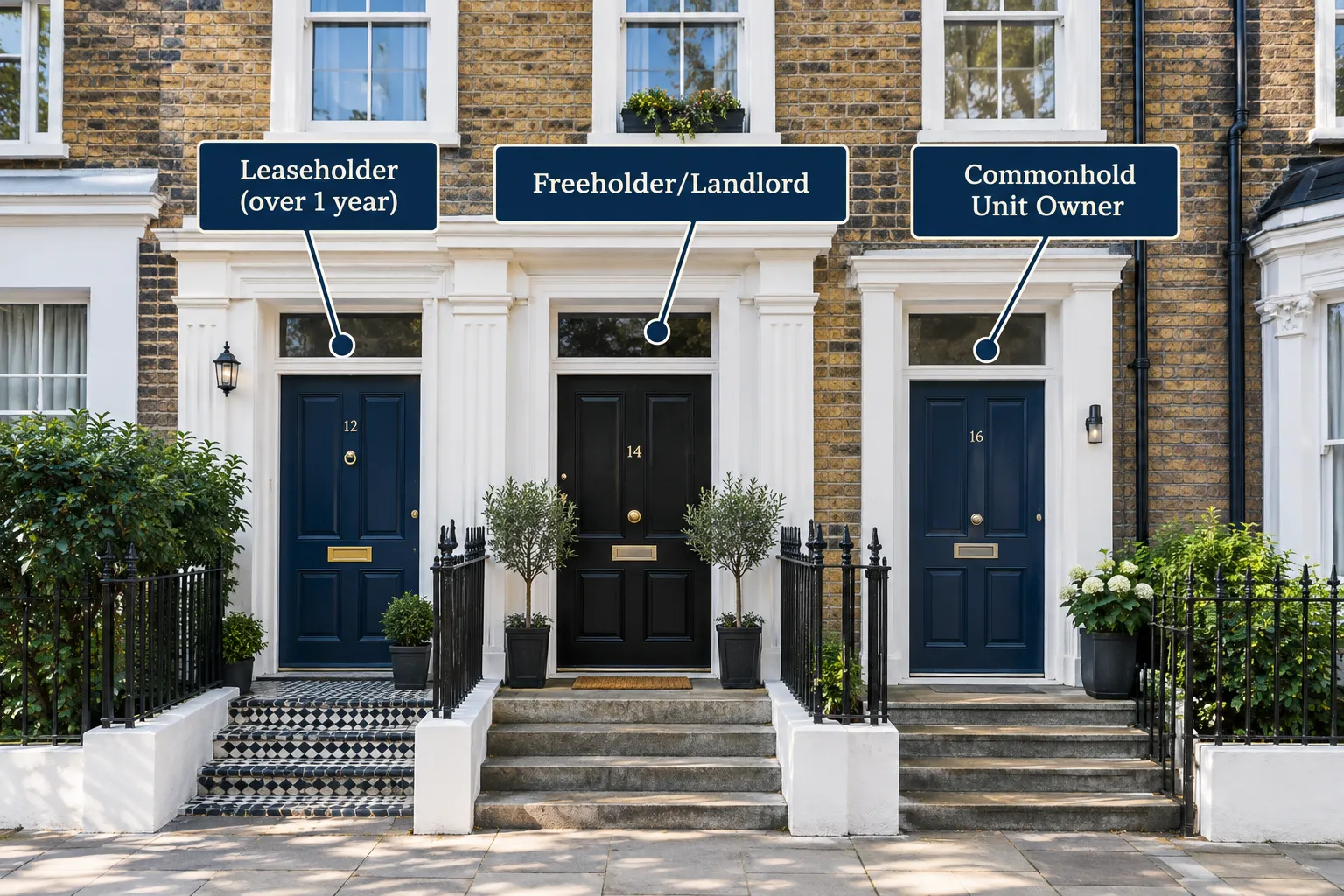
    • Under current rules, both leaseholders with more than a year left on their lease and freeholders/landlords can count as “owners” for party wall purposes, so multiple notices are often required.
    • Commonhold would replace freeholder/leaseholder notice chains with unit owners and a commonhold association, changing who signs party wall awards.
    • Separate proposals announced 29 September 2026 would cap permission and administration fees (pets, alterations, documents) charged to leaseholders, relevant to anyone planning works.

    What the Commonhold and Leasehold Reform Bill Actually Proposes

    The government’s draft Bill, published in January 2026, sets out three central reforms. First, commonhold would become the default tenure for new residential flats in England and Wales, gradually reducing reliance on traditional leasehold structures. Second, ground rents would be capped, addressing years of complaints about escalating charges. Third, forfeiture, the controversial power allowing landlords to repossess a flat over unpaid charges, would be replaced with a proportionate lease enforcement system.

    The Housing, Communities and Local Government Select Committee scrutinised the draft earlier in 2026, and Dr Kion Ahadi, Chief Executive of the Leasehold Advisory Service (LEASE), welcomed the direction of travel. Separately, on 29 September 2026, ministers announced plans to cap certain permission and administration fees charged to leaseholders and estate homeowners, covering things like keeping a pet, minor alterations, providing information packs, or recording a change of mortgage lender. A consultation on these fee caps is expected to follow, alongside independent regulation requiring property agents to hold licences and qualifications.

    None of this is law yet. The Bill still needs to pass through both Houses of Parliament, and based on the stated timetable, formal introduction before Christmas 2026 would likely mean committee stages and votes running well into 2027.

    Why the Commonhold Leasehold Reform Bill Party Wall London Question Matters

    London has the highest concentration of leasehold flats in England, many in converted houses, mansion blocks, and purpose-built developments where party walls separate individually owned units. Any shift in how ownership is structured has a direct knock-on effect on the Party Wall etc. Act 1996, the law that governs notices for work on shared walls, floors, and excavations near a boundary.

    Why the Commonhold Leasehold Reform Bill Party Wall London Question Matters
    Why the Commonhold Leasehold Reform Bill Party Wall London Question Matters

    Right now, a leaseholder planning a loft conversion or basement dig must work out exactly who else holds a legal interest in the building before serving notices. Get this wrong, and an award can be challenged or delayed. The commonhold leasehold reform bill party wall London conversation matters because it touches the very definitions the 1996 Act relies on: “building owner” and “adjoining owner.”

    Party Wall Act Basics: Building Owners and Adjoining Owners in Flats

    Under the current system, the Party Wall etc. Act 1996 does not just look at who owns the freehold. It recognises anyone with a legal or equitable interest exceeding one year as a potential building owner or adjoining owner. In a typical London conversion, that can mean:

    • The freeholder or landlord, who owns the building structure.
    • Long leaseholders, whose leases usually run for 90 to 999 years and clearly exceed the one-year threshold.
    • Short-term tenants under a year, who generally fall outside the Act’s notice requirements.

    This layered ownership is why multiple notices are often needed for a single project. A leaseholder in Flat 2 planning works to a party wall shared with Flat 3 may need to notify both the Flat 3 leaseholder and the building’s freeholder, because both qualify as “adjoining owner” under the Act. Awards must then be agreed or appointed surveyors must adjudicate, sometimes involving three or more parties for one shared wall.

    How Commonhold Could Change Party Wall Notices and Awards

    Commonhold tenure works differently from leasehold. Instead of a freeholder and multiple leaseholders, each flat becomes a freehold “unit,” and a commonhold association, owned and run by the unit owners collectively, manages shared structures and common parts.

    If commonhold becomes the default tenure for new flats, as the draft Bill proposes, the practical effect on party wall notices could be significant:

    Aspect Current Leasehold Model Proposed Commonhold Model
    Who serves notice Leaseholder or freeholder undertaking works Commonhold unit owner undertaking works
    Who receives notice Adjoining leaseholder and freeholder separately Adjoining unit owner and commonhold association
    Who signs the award Building owner, adjoining owner, freeholder (often) Unit owner and association representative
    Typical notice count Multiple, layered by interest Potentially fewer, more direct

    This table reflects professional interpretation based on how commonhold structures generally operate elsewhere, not a confirmed government position. The Bill has not yet specified exactly how party wall procedures would map onto commonhold associations, and surveyors will be watching closely for guidance once the legislation progresses through Parliament.

    Permission Fee Caps, Landlord Consent, and Works Planning

    Party wall notices are only one piece of the puzzle for a London flat renovation. Most leases also require landlord consent before structural alterations, and that consent often comes with an administration fee. The 29 September 2026 announcement proposing caps on permission and administration fees could directly reduce the cost of getting that consent, though the detail depends on the promised consultation.

    “Multiple layers of consent, lease terms, party wall notices, and now potential fee caps, mean London flat owners should budget time as carefully as money.”

    For anyone planning works in 2027, it is sensible to:

    1. Check the lease for consent and fee requirements before instructing contractors.
    2. Identify every adjoining owner, including both leaseholders and freeholders, early.
    3. Serve party wall notices with the standard two-month lead time for most works.
    4. Keep an eye on the fee cap consultation, since administration charges may fall once rules change.

    Separately, the Remediation of Unsafe Cladding Bill, introduced 14 October 2026, will create a register of medium-rise residential buildings and penalties up to £500,000 for breaching remediation orders, a reminder that building-related legislation is moving on several fronts at once, not just leasehold reform.

    Quick Reference: Where Things Stand (as of October 2026)
    • Draft Bill published: January 2026
    • Bill due before Parliament: before Christmas 2026
    • Legal/valuation cost consultation: closed 23 September 2026
    • Valuation rates consultation: closes 21 October 2026
    • Marriage-value abolition: not yet in force

    FAQ: Commonhold Leasehold Reform Bill Party Wall London

    Is the Commonhold and Leasehold Reform Bill already law? No. It is expected to be introduced to Parliament before Christmas 2026 and will need to pass through further readings and committee stages before becoming law, likely stretching into 2027 or beyond.

    Do I still need to serve party wall notices under current leasehold rules? Yes. Until the Bill passes and any transitional rules are set, the Party Wall etc. Act 1996 continues to apply exactly as it does now, including the need to identify every qualifying owner.

    Will commonhold apply to existing London flats automatically? Not based on current proposals. Commonhold is expected to become the default for new flats; converting existing leasehold blocks is a separate, voluntary process requiring unit owner agreement.

    Could fee caps reduce the cost of a party wall project? Potentially, but only for landlord permission and administration fees, not party wall surveyor fees, which are governed separately by the 1996 Act.

    Who should I contact to check who needs a party wall notice for my flat? A qualified party wall surveyor can review the lease, title, and building structure to confirm every adjoining owner before notices are served.

    Conclusion

    The commonhold leasehold reform bill party wall London story is still unfolding, and nothing in the draft legislation changes the Party Wall etc. Act 1996 today. London flat owners planning structural works should continue to follow the current rules: identify every leaseholder and freeholder with a qualifying interest, serve notices correctly, and allow the standard notice periods. At the same time, anyone with a 2027 renovation in mind should track the Bill’s progress through Parliament and watch for consultation outcomes on fee caps and valuation rates, since both could affect project costs and consent processes. The practical next step is simple: get professional advice on notice requirements before any work starts, and revisit that advice once the Bill’s final text is published.

    References

    • Leasehold Advisory Service (LEASE), “Government confirms plans for Commonhold and Leasehold Reform Bill,” 7 October 2026.
    • Ministry of Housing, Communities and Local Government, draft Commonhold and Leasehold Reform Bill, January 2026.
    • Housing, Communities and Local Government Select Committee, pre-legislative scrutiny report, 2026.
    • Gov.uk announcement on permission and administration fee caps for leaseholders, 29 September 2026.
    • Party Wall etc. Act 1996 (as currently in force).
    • Leasehold and Freehold Reform Act 2024, valuation rates consultation, closing 21 October 2026.
    .cg-pw-wrap{font-family:Arial,Helvetica,sans-serif;max-width:600px;margin:0 auto;padding:16px;border:1px solid #d6dbe1;border-radius:10px;background:#f7f9fb;} .cg-pw-wrap h3{margin:0 0 10px;color:#13263b;font-size:18px;} .cg-pw-wrap label{font-size:14px;font-weight:bold;color:#13263b;display:block;margin-bottom:6px;} .cg-pw-select{width:100%;padding:8px;border-radius:6px;border:1px solid #b8c2cc;font-size:14px;margin-bottom:14px;} .cg-pw-result{background:#fff;border-left:4px solid #1d6fa5;border-radius:6px;padding:12px 14px;font-size:14px;color:#1b2b3a;min-height:60px;} .cg-pw-note{font-size:12px;color:#5a6b7a;margin-top:10px;}

    Party Wall Notice Checker: Who Needs One?

    Tenant on lease under 1 year Leaseholder with over 1 year remaining Freeholder / landlord Commonhold unit owner (future tenure)
    Choose an option above to see who typically counts as an “owner” under the Party Wall etc. Act 1996.

    General guidance only, based on the Party Wall etc. Act 1996. The Commonhold and Leasehold Reform Bill is not yet law and may change how commonhold notices work. Always confirm with a party wall surveyor.

    var cgData={ short:”A tenant with under a year left on a lease usually does NOT count as an owner under the Act. Notices are normally served on the freeholder or longer leaseholder instead.”, long:”A leaseholder with more than a year remaining typically IS an adjoining owner or building owner. They can serve and must receive party wall notices for shared structures.”, free:”Freeholders and landlords almost always count as owners under the Act, often alongside their leaseholders, which is why multiple notices are frequently required for one project.”, common:”Under proposed commonhold tenure, the unit owner would likely serve and receive notices directly, with the commonhold association involved for shared structural elements. This is not yet confirmed in law.” }; document.getElementById(‘cg-pw-select’).addEventListener(‘change’,function(){ document.getElementById(‘cg-pw-result’).textContent=cgData[this.value]; });

    commonhold leasehold reform bill, party wall notices London, Party Wall Act 1996, leasehold reform 2026, ground rent cap, commonhold association, London flat renovations, lease extension valuation, forfeiture reform, property agent regulation, building owner adjoining owner, LEASE advisory service